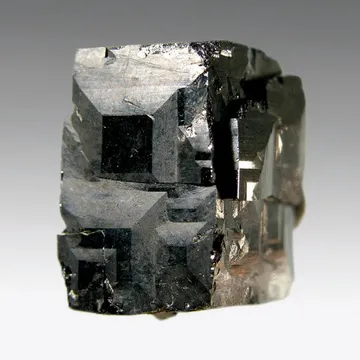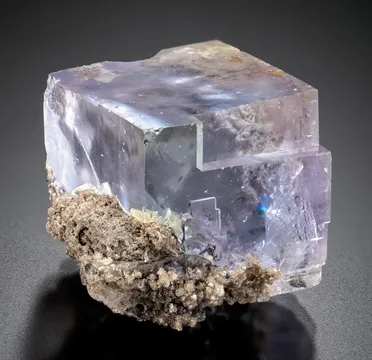
St. Lawrence County, USA — premier locality with Balmat zinc district and Gouverneur–Fowler belt, yielding tremolite, tourmaline, diopside, and danburite.
Key facts
St. Lawrence County is the great northern New York collecting province: a broad Adirondack Lowlands terrain where Mesoproterozoic Grenville marbles, calc-silicate rocks, talc-tremolite schists, pegmatites, iron formations, and metamorphosed zinc ores have yielded a specimen suite unlike any other in the eastern United States. For collectors, the name most often calls up the Balmat-Edwards zinc district and the neighboring Gouverneur–Fowler talc belt, but the county’s mineralogical reach is wider than one mine camp: Pierrepont’s black tourmalines on quartz, De Kalb’s green diopside, Russell’s antique danburite, the Rossie and Macomb lead-zinc occurrences, the Benson and Jayville iron districts, and a scatter of roadcuts and farms that have filled New York cabinets for generations.
The county’s finest pieces have a highly recognizable northern Grenville look. Lavender to purple manganoan tremolite, long known in the trade as hexagonite, may occur as silky layers, bladed crystals, or rare translucent prisms rising from paler tremolite matrix. Power’s Farm tourmalines are stout, black, trigonal crystals on white quartz, more architectural than colorful but immediately classic. De Kalb diopside is valued for glassy green crystals with translucency and broad terminations; Russell danburite is usually older, warmer, and more archaeological in feel, with tan blocky crystals from nineteenth-century finds; and modern Balmat sphalerite, when it escapes the mine undamaged, can be honey-yellow, orange, red, or dark brown, sometimes perched on white calcite or quartz and sharp enough to tempt the gem cutter.
Regional View
Country View
The scientific appeal is as strong as the cabinet appeal. Balmat alone is tied to type-locality minerals, unusual manganese silicates, boron-bearing species, halite-bearing metamorphic assemblages, fluorescent amphiboles and apatite-group minerals, and a zinc orebody whose origin and metamorphic history have been debated in a substantial literature. St. Lawrence County is therefore not merely “a place with good New York minerals”; it is one of the few American districts where a collector can build a serious suite around metamorphosed carbonate-hosted ore, calc-silicate crystallization, and classic nineteenth- and twentieth-century specimen localities within the same county.

Photo: Rob Lavinsky, iRocks.com / Wikimedia Commons

Search for specimens: View all specimens from St. Lawrence County, USA
The collector’s St. Lawrence County is best understood as a set of related Grenville Province environments rather than a single mine. In the Balmat-Edwards district, zinc mineralization occurs in a northeast-trending belt of marble in the Grenville Lowlands of the northwestern Adirondacks. The economically important ore is a metamorphosed, stratiform sphalerite-pyrite system hosted by siliceous dolomitic and calcitic marbles, with local galena, pyrrhotite, anhydrite, quartz, calcite, diopside, tremolite, and other gangue or metamorphic minerals. The district includes the Balmat, Edwards, Hyatt, and Pierrepont camps, and modern descriptions of the Empire State Mines complex emphasize the Balmat No. 4 workings, the Mud Pond orebody, and associated zones such as Davis, Mahler, Fowler, Upper Fowler, and New Fold.
The old talc and tremolite deposits around Fowler, Balmat, Talcville, and Gouverneur are closely allied in collector reputation, though not every old label is precise. These rocks include talc-tremolite-anthophyllite-serpentine schists and adjacent carbonate rocks, the setting that produced much of the county’s purple manganoan tremolite, including hexagonite specimens attributed to Balmat, Edwards, Talcville, Fowler, and the Gouverneur Mine. Nearby carbonate and calc-silicate assemblages also account for diopside, phlogopite, spinel, scapolite, fluorapatite, and a host of specialty species that turn a simple “talc district” label into something far more interesting mineralogically.
Mining history in the zinc district began long before the present Empire State Mines name. Zinc was recognized on the Balmat farm in the nineteenth century, and by the early twentieth century the Edwards and Balmat areas had become serious mining targets. Edwards was producing zinc by 1915, Balmat No. 2 entered production in 1930, and the district was operated for decades by St. Joe Minerals and predecessor companies before passing to Zinc Corporation of America in 1987. OntZinc, later Hudbay, acquired the idle assets in the early 2000s; Star Mountain Resources acquired them in 2015; Titan Mining acquired the Balmat assets in 2016, renamed the operation Empire State Mines in 2017, and restarted production at the No. 4 mine in January 2018. Historic production from the greater Balmat-Edwards-Pierrepont district exceeded 43 million tons at high zinc grade, while the Balmat No. 2, No. 3, and No. 4 mines alone account for tens of millions of tons of ore.
Collectors should separate mining access from collecting localities. The active Empire State Mines operation is an industrial underground zinc mine, not a collecting site, and old shafts, dumps, and mine property in the Balmat-Edwards district should be treated as private, restricted, and hazardous unless explicit current permission is obtained. Power’s Farm in Pierrepont has been reported as a fee locality operated by the landowners, with permission required before collecting. Many of the old farm localities, roadcuts, and quarries in the county have changed ownership, been overgrown, been reclaimed, or become unsafe; historical locality names remain valid for labels, but they should never be read as an invitation to enter.
The county’s best specimen-producing events fall into several families. The classic nineteenth-century Russell danburite occurrence, associated with the old Van Buskirk farm or Dana Hill area, produced museum-grade material from seams and cavities in a coarse crystalline rock where calcite had partly dissolved away, leaving danburite crystals exposed but often iron-stained and internally rifted. Power’s Farm produced the iconic black tourmalines with quartz in several named veins, including the Phosphate Vein, Middle Vein, Waddell Vein, and Wallace-Carlin Vein. The Selleck Road locality at West Pierrepont added an important modern tremolite-tourmaline occurrence, with tremolite, fluor-uvite, dolomite, quartz, and calcite in a calc-silicate setting. At Balmat, old-time sphalerite is joined by more recent underground pocket finds, including gem-grade and specimen-grade sphalerite recovered from deep levels of the Empire State No. 4 mine, as well as notable calcite, quartz, halite, pyrrhotite, pyrite, and anhydrite associations.
St. Lawrence County tremolite ranges from ordinary pale amphibole in calc-silicate rocks to some of the most distinctive American tremolite specimens ever collected: the lavender to purple manganoan variety hexagonite from the Balmat-Edwards–Fowler–Talcville area. Good hexagonite is judged by color first—clean lilac, grape, magenta, or pink-purple is far more desirable than grayish or washed-out material—then by crystal definition, translucency, and freedom from crushing along amphibole cleavage. The finest cabinet pieces show a bold prismatic or bladed crystal in the several-centimeter range on paler tremolite matrix; more common pieces are silky fibrous-looking masses or foliated layers. At the Selleck Road locality in West Pierrepont, tremolite is a collector species in its own right, typically associated with fluor-uvite, dolomite, quartz, and calcite, and the best pieces there are crisp, clean amphibole groups rather than undistinguished greenish-white calc-silicate fragments.
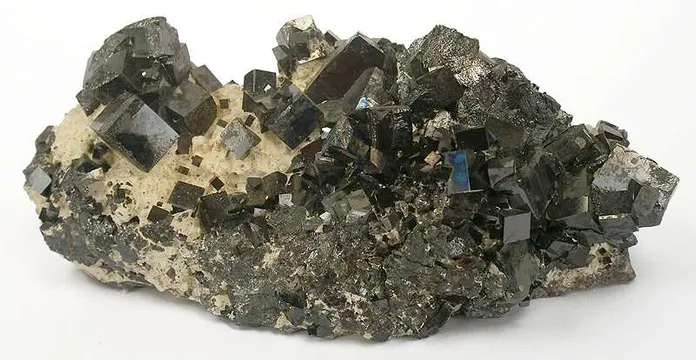
“Uvite” from St. Lawrence County demands a careful label. The classic Power’s Farm tourmalines in Pierrepont were historically called schorl, then iron-rich uvite, and many old labels still use uvite; modern work has shown that some crystals fall in dravite, fluor-uvite, uvite, or zoned combinations, so visual identification alone is unsafe. As collector specimens, the important pieces are the stout black trigonal crystals—often squat, lustrous, and non-prismatic in the characteristic Power’s Farm style—set on white quartz, with associated actinolite or tremolite, diopside, phlogopite, fluorapatite, and pyrite in the broader assemblage. The best examples have sharp terminations, full 360-degree form, strong contrast against quartz, and minimal edge bruising; ordinary examples are partial black tourmaline lumps detached from matrix. Reddish-brown translucent fluor-uvite from the Dale Bush/Reese Farm area near Gouverneur adds a second St. Lawrence County tourmaline style, scarcer on the market and more dependent on sharp faces and good luster than size.
Diopside is widespread in St. Lawrence County calc-silicate rocks, but the collector’s eye usually goes first to De Kalb, especially the Calvin Mitchell farm area, where green diopside crystals can be transparent to translucent, glassy, and well terminated on pale matrix. Fine De Kalb pieces show distinct light- to medium-green crystals with broad lustrous faces; darker, opaque, or poorly separated crystals are much more common. Around Russell, diopside forms the green calc-silicate matrix and association for some danburite specimens, commonly with phlogopite, while the Rose Road–Pitcairn area includes dark forest-green diopside in contrasting matrix and the aptly named Purple Diopside Mound, a fluorescent-mineral locality where diopside occurs with scapolite, phlogopite, fluorapatite, calcite, and related calc-silicate species. St. Lawrence diopside is at its best when it retains both color and geometry: a single clean green crystal, or a small spray on quartz or white calc-silicate matrix, usually outranks a larger but massive pyroxene-rich rock.
Sphalerite is the ore mineral that made Balmat-Edwards economically famous, and it is also one of the district’s most exciting specimen species. Most ore is massive or coarse granular, but pockets in the Balmat and Empire State No. 4 workings have produced sharp crystals in yellow, orange, red, brown, and black, commonly associated with calcite, quartz, pyrite, pyrrhotite, halite, or galena. The celebrated 1946 Balmat gem-sphalerite find established the district’s potential for transparent, facetable material, and later deep-level finds in the Mud Pond and New Fold areas added specimen-grade crystals, including crystals around 1 cm and rarer examples several centimeters across. Top collector pieces combine high transparency, strong resinous luster, bright color, intact modified crystal form, and a clean white calcite or quartz matrix; because sphalerite is soft and has perfect cleavage, many otherwise attractive crystals show edge nicks, bruised corners, or internal dark zoning that reduces both cabinet and gem value.
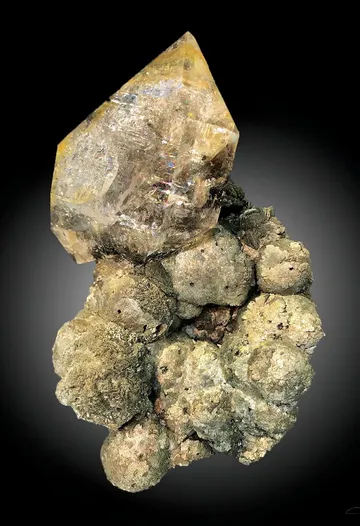
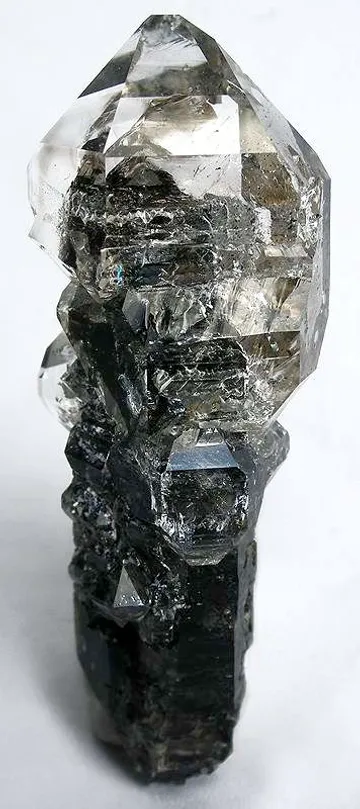
Quartz in St. Lawrence County is usually a matrix and association species rather than the headline mineral, but it is essential to the look of several classic specimens. At Power’s Farm it forms the white prismatic quartz matrix that sets off black tourmaline crystals; at Balmat it appears as gray to white “bull” quartz in silicified ore zones and as pocket quartz with sphalerite, calcite, pyrite, pyrrhotite, and halite; and at the Russell-Hermon Road roadcut it lines vugs with calcite and pale green fluorite, with smoky quartz also reported in association with lamellar amphibole. The best quartz-bearing pieces from the county are not judged as quartz specimens in the Herkimer sense, but by what the quartz supports: a sharp tourmaline on white quartz from Pierrepont, gemmy sphalerite on quartz and calcite from Balmat, or a small roadcut vug where quartz gives scale and contrast to fluorite or calcite. Clean white matrix, open cavities, and lack of iron staining matter greatly here.
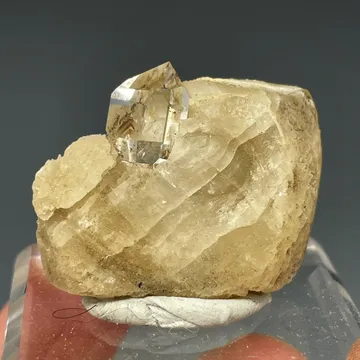
Russell danburite is one of St. Lawrence County’s great antique mineral stories: tan to cream, blocky prismatic crystals from the classic occurrence south of Russell, especially the old Van Buskirk farm or Dana Hill area. The crystals occur in seams and cavities in a coarse crystalline host, with diopside and phlogopite among the characteristic associations, and early descriptions noted that calcite had naturally dissolved away from cavities, freeing the danburite crystals but often leaving them iron-stained, internally rifted, or dulled. Good Russell pieces are unmistakably old-time: multiple terminated crystals, preferably still on greenish diopside-rich matrix, with honest luster and minimal repaired or cleaved faces. Large individual crystals and groups from nineteenth-century or early twentieth-century collections are much more desirable than isolated, chalky, broken fragments, and a surviving old label can be a major part of the specimen’s historical value.
Beyond the headline species, St. Lawrence County is rich in minerals that make specialists slow down. Type-locality minerals include geerite from De Kalb, donpeacorite from the Balmat No. 4 mine, and turneaureite from Balmat as one of its co-type localities. Balmat also documents clino-suenoite, pyroxmangite, rhodonite, spessartine, braunite, lazurite, willemite, anhydrite, halite, magnetite, fluorapatite, and unusual tourmalines including Al-rich chromium-dravite from the American No. 1 talc mine. The county’s broader list includes almandine, scapolite, spinel, chondrodite, norbergite, phlogopite, wollastonite, fluorite, calcite, dolomite, galena, chalcopyrite, pyrite, pyrrhotite, barite, hematite, and magnetite, reflecting the overlap of carbonate metamorphism, ore mineralization, pegmatite activity, and iron-deposit geology across the northwestern Adirondacks.
St. Lawrence County labels are sometimes harder to interpret than the minerals. “Balmat,” “Edwards,” “Talcville,” “Fowler,” “Gouverneur,” and “Gouverneur Mine” have all been used loosely on old hexagonite and tremolite labels, and the name Gouverneur can be especially treacherous because the mining district, town, village, and old talc operations are not all the same thing. A specimen labelled “Gouverneur Talc Quarry” may not be from St. Lawrence County at all if it actually refers to the Gouverneur Talc Company No. 4 quarry in neighboring Lewis County. For serious collection records, retain the old label wording but add a modern interpreted locality only when the provenance supports it.
The tourmalines are an even more technical labeling trap. Many Power’s Farm specimens sold for decades as uvite are now better treated as tourmaline, dravite, uvite, fluor-uvite, or dravite-uvite/fluor-uvite material depending on analysis. Color and form will not reliably separate these species; a black, squat Pierrepont crystal on quartz can look “exactly right” and still require chemical data for a modern species name. In an advanced cabinet, “tourmaline group, historically labelled uvite, Power’s Farm” is often more honest than a confident but unanalyzed species assignment.
Condition is central to value. Tremolite and hexagonite have amphibole cleavage and can show bruising, separation, or matted fibrous surfaces; the best pieces have undamaged terminations and clean color rather than merely purple mass. Danburite from Russell is commonly internally cracked, iron-stained, or partly dull because much of the classic material weathered in cavities after calcite was removed naturally; sharp luster and complete crystals are therefore prized. Sphalerite is soft, cleavable, and easily nicked, so even recently mined Balmat crystals need close inspection under magnification. Quartz matrices on Power’s Farm tourmaline specimens are often broken where the pocket wall was removed; acceptable contact is common, but prominent front-side bruising should be reflected in price.
Fluorescence adds another collecting dimension. Purple tremolite/hexagonite from the Balmat-Fowler-Talcville area may show pink to purple responses under long-wave ultraviolet, and some St. Lawrence amphibole assemblages show vivid short-wave colors that can be hard to identify without analysis. Turneaureite from Balmat is noted for bright orange short-wave fluorescence. Sphalerite fluorescence is variable and should not be used alone for locality or species authentication.
Handling deserves common sense. Tremolite is an amphibole, and some amphiboles can occur in asbestiform habits. Most collector-grade St. Lawrence hexagonite and tremolite pieces are kept safely as intact specimens, but friable fibrous material should not be abraded, trimmed dry, sawed, blown with compressed air, or handled in a way that raises dust. Store delicate amphibole, danburite, and sphalerite specimens in fitted boxes; avoid acid cleaning unless you know the full assemblage, because calcite, dolomite, sulfides, and delicate pocket minerals may be more important than the stain you are trying to remove.
Market availability is uneven. Power’s Farm tourmalines and massive to bladed hexagonite appear regularly, but truly sharp, aesthetic, old-time pieces are much less common. De Kalb diopside is sought after and can be surprisingly expensive when green, transparent, and well terminated. Russell danburite is a finite classic; pieces with strong old provenance are more desirable than newer fragments. Modern Balmat sphalerite and calcite specimens have brought the district back into the contemporary market, but fine examples are still pocket-dependent, and the best transparent sphalerites are scarce because damage and dark zoning eliminate many crystals from the top tier.
The Russell danburite story begins like many nineteenth-century mineral tales: with a local finder, a few promising specimens, and a decision by academics to wait because the ground might yet produce something better. Mr. Nims, the collector associated with the early Russell material, told the mineralogists that more abundant and better material might be obtained the following spring. The delay paid off. When the next shipment arrived, Brush and Dana found that the Russell occurrence was no curiosity; it supplied both quantity and quality, and enough crystallized material to justify a serious description.
The physical setting was memorable. The danburite occurred along the brow of a hill for roughly half a mile, in cavities and seams in a coarse rock that the early description called granitic. Calcite had once occupied many of those openings. Over time, groundwater removed it, and that natural etching did what a collector’s chisel could not: it freed brittle danburite crystals from their carbonate packing with relatively little mechanical injury. The same process robbed some pieces of freshness. Iron oxide stained the crystals, many were internally rifted, and a few were dull or opaque. That is why a really lustrous Russell danburite with intact terminations feels so different in hand—it survived both growth and geological cleaning.
One described Russell opening reads like the dream version of a northern New York pocket. It ran east-west, lay only about eight feet below the surface, and its top, bottom, and sides were lined with “a magnificent sheet of crystals,” the individuals ranging from one to six inches across and growing as parts of larger composite groups. For a locality now represented mostly by old specimens, labels, and scattered pieces in institutional and private collections, that image remains the standard: not isolated tan fragments, but a chamber glittering with blocky danburite.
Power’s Farm has a very different rhythm. It is a working collector locality in the old farm-field sense, not a deep industrial mine, and its mineralogy is organized by named veins rather than by shafts and levels. Collectors speak of the Phosphate Vein, Middle Vein, Waddell Vein, and Wallace-Carlin Vein, cut across the property in relation to the stream and the older “Top of the Hill” workings. The iconic prize is deceptively austere: a black, sharp, trigonal tourmaline set on white quartz. But that simplicity hides a modern nomenclature problem. A specimen that an old collector confidently called schorl, another called uvite, and a modern analyst may call dravite or fluor-uvite is the same physical object, carrying a century of changing tourmaline science on a single label.
Balmat’s more recent stories come from a world of levels, orebodies, and miners rather than farm veins. In the Empire State No. 4 mine, crystallized cavities encountered around the 3,800-foot level of the Mud Pond orebody produced calcite, halite, pyrrhotite, quartz, and sphalerite. Beginning in November 2019, additional pockets at that level yielded several hundred sphalerite crystals over roughly three months. Many averaged about a centimeter, some reached beyond five centimeters, and many were too damaged or too dark-cored to become first-rate specimens or gems. A small amount of “sulphur yellow” material from a separate pocket was the kind of find that changes how collectors look at an old ore district.
Then came the deeper calcite-and-sphalerite excitement. A large pocket was opened on June 8 on the 4,051-foot level of the mine, with several openings yielding collector-grade calcite, sphalerite, quartz, pyrite, halite, pyrrhotite, and related species. The calcites ranged from colorless to yellow-brown, pink, and rare purple. One 3,981-foot-level pocket, only about 6 x 5 x 2.5 feet, produced colorless, pink, and purple calcite crystals with exceptional luster and transparency before it was eventually filled in during mining. Nearby, a larger opening nicknamed the “Bear Den” on the 3,990 level yielded a different style of calcite—yellow-brown to water-clear, commonly parallel-growth rhombohedral or twinned. For a district once known chiefly as an ore producer and an old hexagonite source, these pockets put Balmat back into active conversation among specimen collectors.
Brush, G. J., and Dana, E. S. “On Crystallized Danburite from Russell, Saint Lawrence County, New York.” American Journal of Science, 1880. The foundational nineteenth-century description of Russell danburite occurrence, habits, and crystallography.
Brown, C. E., and Engel, A. E. J. “Revision of Grenville Stratigraphy and Structure in the Balmat-Edwards District, Northwest Adirondacks, New York.” Geological Society of America Bulletin, 1956. A key paper for the stratigraphic and structural framework of the Balmat-Edwards district.
Doe, B. R. “Distribution and Composition of Sulfide Minerals at Balmat, New York.” Geological Society of America Bulletin, 1962. Important treatment of the sulfide mineralogy and replacement relationships in the Balmat area.
Engel, A. E. J. “The Precambrian Geology and Talc Deposits of the Balmat-Edwards District, Northwest Adirondack Mountains, New York.” U.S. Geological Survey Open-File Report 62-43, 1962. Major USGS work on the marble belt, talc deposits, and regional geology of the district.
Whelan, J. F., Rye, R. O., and deLorraine, W. “The Balmat-Edwards Zinc-Lead Deposits; Synsedimentary Ore from Mississippi Valley-Type Fluids.” Economic Geology, 79, 1984. A major ore-genesis paper using isotope data from Balmat-Edwards sulfides and gangue minerals.
Peterson, E. U., Anovitz, L. M., and Essene, E. J. “Donpeacorite, (Mn,Mg)MgSi2O6, a New Orthopyroxene and Its Proposed Phase Relations in the System MnSiO3-MgSiO3-FeSiO3.” American Mineralogist, 69, 1984. Type-mineral description for donpeacorite from Balmat.
Dunn, P. J., Petersen, E. U., and Peacor, D. R. “Turneaureite, a New Member of the Apatite Group from Franklin, New Jersey, Balmat, New York and Långban, Sweden.” The Canadian Mineralogist, 23, 1985. Original description of turneaureite, with Balmat as one of the defining localities.
Goble, R. J., and Robinson, G. W. “Geerite, Cu1.60S, a New Copper Sulfide from DeKalb Township, New York.” The Canadian Mineralogist, 18, 1980. Type description of geerite from De Kalb in St. Lawrence County.
deLorraine, W. F., and Johnson, J. T. “Geologic Field Guide to the Balmat Zinc Mine, St. Lawrence County, New York.” New York State Geological Association Field Trip Guidebook, 1997. Detailed field guide to the Balmat mine geology, ore zones, structure, and mineralization.
Smith, A. E., and Pressler, C. D. “A 1946 Find of Gem Sphalerite Crystals at the Balmat Zinc Mine, St. Lawrence County, New York.” Rocks & Minerals, 73, 1998. The classic published account of Balmat’s historic gem-sphalerite pocket.
Robinson, G. W., and Chamberlain, S. C. “Gazetteer of Major New York State Mineral Localities.” Rocks & Minerals, 82, 2007. Concise locality guide listing many St. Lawrence County mineral sites and their principal species.
Lupulescu, M. V., Chamberlain, S. C., Walter, M., and Wallace, S. “Diagenetic Uvite with Overgrown Dravite at Bigelow, St. Lawrence County, New York.” Rocks & Minerals, 85, 2010. Important tourmaline nomenclature and paragenesis paper for St. Lawrence County material.
Lupulescu, M. V., and Rowe, R. “Al-Rich Chromium-Dravite from the #1 Mine, Balmat, St. Lawrence County, New York.” The Canadian Mineralogist, 49, 2011. Description of unusual chromium-rich tourmaline from the Balmat talc setting.
Lupulescu, M. V., and Chiarenzelli, J. R. “Geochemistry of Tourmaline from Some Adirondack Locations: Indicator of the Host Environment.” New York State Geological Association Field Trip A-3, 2014. Useful modern tourmaline classification and geochemical treatment, including multiple St. Lawrence County localities.
Chamberlain, S. C., Lupulescu, M. V., and Bailey, D. G. “The Classic Danburite Occurrence Near Russell, St. Lawrence County, New York.” Rocks & Minerals, 90, 2015. Modern reassessment of the Russell danburite occurrence and associated minerals.
Chamberlain, S. C., Robinson, G. W., Walter, M. R., and Bailey, D. G. “The Selleck Road Tremolite and Tourmaline Locality, West Pierrepont, St. Lawrence County, New York.” Rocks & Minerals, 91, 2016. Dedicated paper on one of the county’s important modern tremolite-tourmaline collecting localities.
Lupulescu, M. V., Ehlers, A., Hughes, J., and Bailey, D. “Warwickite from St. Lawrence County, New York: Mineral Association, Chemical Composition, Cation Ordering, and Splitting of the Warwickite M1 Site.” The Canadian Mineralogist, 58, 2020. Documents warwickite from the Edwards and Balmat No. 3 mines, including associated spinel, forsterite, phlogopite, pyrite, anhydrite, galena, and marble assemblages.
Chamberlain, S. C., and Walter, M. R. “Collector’s Note: Balmat Mining District Update, St. Lawrence County, New York.” Rocks & Minerals, 95, 2020. Collector-focused update on recent Balmat/Empire State mine specimen discoveries.
Walter, M. R. “The Tremolites of St. Lawrence County, New York.” Rocks & Minerals, 97, 2022. Focused treatment of St. Lawrence County tremolite, including the collector-important localities.
Laurs, B. M. “Sphalerite from Balmat, New York, USA.” The Journal of Gemmology, 38, 2023. Gem note summarizing recent Empire State mine sphalerite finds and faceted stones.
Mindat: St. Lawrence County, New York, USA — The broad county-level mineral list, sublocalities, references, and photo links.
Mindat: Balmat-Edwards Zinc Mining District — Best starting point for the district-level zinc, tremolite, diopside, and ore-mineral assemblage.
Mindat: Balmat, Fowler, St. Lawrence County — Detailed locality page for the Balmat area, including type-locality minerals and collector species.
Mindat: Empire State No. 4 Mine, Balmat — Essential for modern Balmat/Empire State mine minerals, including sphalerite, donpeacorite, turneaureite, and recent pocket species.
Mindat: Power’s Farm, Pierrepont — Key reference for the classic Power’s Farm tourmaline-quartz locality and its modern vein names.
Mindat: Selleck Road Locality, West Pierrepont — Tremolite-tourmaline locality page with associated minerals and references.
Mindat: Russell, St. Lawrence County — Main reference page for Russell danburite and related calc-silicate minerals.
Titan Mining: Empire State Mines Zinc Operations — Current operator overview, history, production data, and mine-complex context.
New York State DEC 2023 Mineral Fact Sheets — State-level mining context, including Balmat sphalerite and New York zinc production.
Visit St. Lawrence County: Mineral Collecting — Local tourism overview of the county’s mineral-collecting heritage and notable species.
Wikimedia Commons: Minerals of Balmat-Edwards Zinc District — Freely licensed images of selected Balmat-Edwards minerals.
Wikimedia Commons: Minerals of Russell — Freely licensed images from Russell, including danburite.