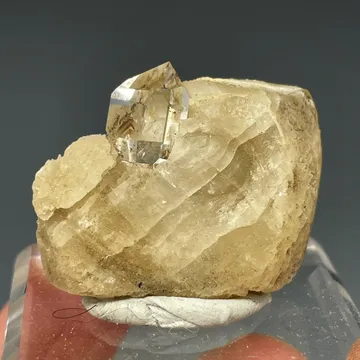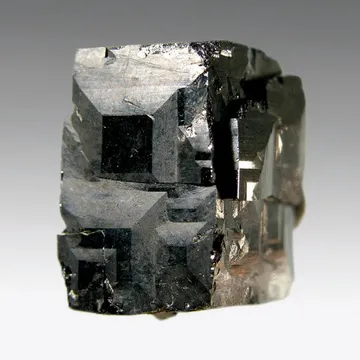
Empire State No. 2 Mine - classic Balmat zinc locality in St. Lawrence County, NY, famed for sphalerite-rich ore and a historic scientific pedigree.
Key facts
Empire State No. 2 Mine—better known on older labels as Balmat #2, St. Joe No. 2, or ZCA No. 2—is one of the classic underground zinc workings of the Balmat camp in St. Lawrence County, northern New York. For collectors, its importance is twofold. First, it is part of the great Balmat-Edwards-Pierrepont zinc district, where sphalerite-rich ore bodies were mined from highly deformed Grenville marble and calc-silicate rocks. Second, it is the historic No. 2 unit: the shaft and its levels gave geologists early access to the Balmat ore system and supplied much of the material behind foundational studies of Balmat sphalerite, supergene willemite, galena, ilvaite, hematite, and magnetite.
The geological setting is distinctly northern Adirondack: Proterozoic siliceous dolomitic marble of the Upper Marble Formation, folded, sheared, and recrystallized during Grenvillian metamorphism, then overprinted by structurally focused zinc sulfide mineralization. The ore is not a simple vein system in the collector’s sense. It is a folded and locally remobilized zinc deposit in which sphalerite and pyrite replace parts of marble units, with galena, chalcopyrite, magnetite, hematite, quartz, calcite, diopside, tremolite, serpentine-group minerals, and supergene zinc minerals appearing in particular zones and alteration assemblages.
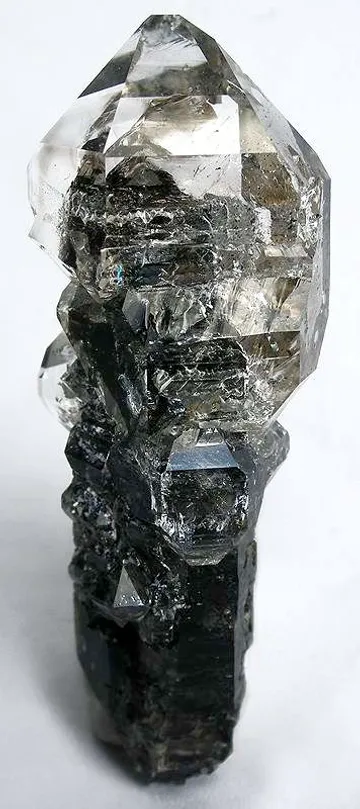
The best Empire State No. 2 specimens are quieter than the spectacular modern calcites and anhydrites from the later Empire State No. 4 mine, but they are deeply collectible because of their label history and scientific pedigree. Sphalerite tends to be dark, iron-rich, resinous to submetallic, and closely tied to pyrite, quartz, calcite, diopside, and galena. The old supergene assemblage produced unusual willemite and associated hematite, chloritic material, ilvaite, galena, and magnetite. Magnetite pieces from Balmat require special care in labelling: the celebrated early-1990s cubic magnetites are overwhelmingly associated with the ZCA No. 4 mine, while No. 2 material belongs to an older and more geologically complex part of the Balmat story.
Regional View
Country View
The mine area lies immediately east of the Balmat-Fowler Road in the town of Fowler. The No. 2 inclined shaft was sunk to a depth of about 2,500 feet, with a 500-ton-per-day mill built in 1929, and production began in 1930. Although the historic No. 2 mine is inactive, the name remains important because older specimen labels may read Balmat #2, St. Joe No. 2, ZCA No. 2, or Empire State No. 2, depending on when the specimen entered the trade.
Search for specimens: View all specimens from Empire State No. 2 Mine, USA
Empire State No. 2 is the historic Balmat #2 mine, an inactive group of workings at Balmat, Fowler, St. Lawrence County, New York. The locality has also appeared on specimen and mining labels as ESM No. 2, ZCA No. 2 Mine, Balmat #2, and St. Joe No. 2 Mine. Zinc mineralization was recognized in the wider Balmat area long before modern mining; Titan’s historical summary records zinc discovered in a prospect pit on the Balmat farm in 1838, with the Balmat #2 mineral resource defined by core drilling in 1928 after gossan was recognized. The No. 2 inclined shaft and mill followed in 1929, and zinc production began in 1930.
The deposit belongs to the Balmat-Edwards marble belt of the northwest Adirondacks. The zinc ore bodies are hosted by metamorphosed, polydeformed Proterozoic siliceous dolomitic marbles and evaporite-bearing marble units. In older literature the rocks were commonly assigned to the Grenville Series; modern descriptions place the deposits in the Upper Marble Formation within the Balmat-Edwards marble belt. The mineralization is generally treated as a metamorphosed sedimentary-exhalative or carbonate-hosted stratiform zinc system, though its present geometry is strongly governed by later folding, ductile shear, and remobilization.
The No. 2 mine was one of the underground access points that allowed early researchers to study Balmat ore directly. Bruce R. Doe’s work on the No. 2 and No. 3 mines described tabular sulfide deposits roughly parallel to layering in folded siliceous magnesian marbles, with sphalerite, pyrite, and locally pyrrhotite and galena replacing carbonate minerals. Contacts between ore and marble can be diffuse rather than knife-sharp, with sulfide grains occurring from inches to hundreds of feet away from massive ore. In the No. 2 mine, sphalerite chemistry was important enough to become the subject of a 1956 thesis on FeS-ZnS geothermometry, using samples from the 500-foot and 1,500-foot levels.
Structurally, Balmat is not a neat, diagrammatic deposit. The mine area sits in the complex core of the Sylvia Lake syncline, a major doubly plunging fold system. Ore shoots at Balmat were historically grouped by the shafts that served them—No. 2, No. 3, and No. 4—even though the underground system became increasingly interconnected. A 1997 field guide described many ore bodies as massive stratabound to stratiform sulfides locally concentrated along fold hinges, shear zones, and lithologic boundaries such as dolomite-diopside contacts. Individual ore bodies may be tabular, podiform, or lenticular, with thicknesses on the order of a few feet to several tens of feet, and with very long plunge dimensions following fold hinges.
The No. 2 area is especially important in the older mineralogical literature because it preserves more than just primary zinc ore. Brown’s 1936 papers and Pough’s 1940 study documented the famous Balmat supergene assemblage: secondary sphalerite, galena, and willemite with chloritic alteration, hematite, ilvaite, tremolite, barite, garnet, and related minerals. Pough described willemite occurring in a lens below a strongly oxidized part of the deposit, in talc-chlorite replacement rock with hematite; some crystals were embedded as small tabular grains, while other later willemites lined small drusy cavities with specular hematite and minute galena.
Mining ownership changed repeatedly across the district. St. Joe Minerals and its predecessor companies operated the district from 1915 until 1987. Zinc Corporation of America purchased the mines in 1987 and operated them until 2001, when Balmat operations were shut down after high-grade feed from Pierrepont was exhausted. OntZinc, later renamed Hudbay Minerals, acquired the idle Balmat assets in 2003. Star Mountain Resources acquired Empire State Mines from Hudbay in 2015, and Titan Mining acquired the Balmat holding company in late 2016; the mine was renamed Empire State Mines in February 2017. Modern production has centered on the No. 4 mine, while the No. 2 shaft area has remained part of the broader Empire State Mines property and infrastructure.
The No. 2 mine itself is inactive and is not a public collecting site. The Empire State Mines property is an industrial mining operation with active facilities elsewhere in the Balmat complex, private surface and mineral ownership, underground workings, regulated discharge, and mine-safety controls. Collectors should treat any No. 2 material as an old-stock, miner-saved, dealer-distributed, museum, or estate-collection specimen unless it comes with current documented mine authorization. The best No. 2 labels are often old and plain, but they matter: “St. Joe No. 2,” “ZCA No. 2,” “Balmat #2,” and “Empire State No. 2” all place a specimen in a narrower and historically richer context than the looser “Balmat, New York.”
Magnetite is documented from Empire State No. 2 as part of the Balmat zinc-mine mineral suite, especially in the older oxidized and calc-silicate replacement assemblages rather than as the familiar octahedral iron-ore style seen at many other localities. No. 2 magnetite should be judged with care: strong pieces show distinct black metallic to submetallic crystals or crystal aggregates on a Balmat matrix with sphalerite, hematite, willemite-zone alteration, chloritic or serpentine-group material, diopside, tremolite, quartz, or calcite, while ordinary pieces are little more than dark massive ore or ambiguous magnetic fragments. The collector premium here is locality precision and association; the celebrated lustrous cubic Balmat magnetites of the early 1990s are chiefly a No. 4-mine phenomenon, so a No. 2 label should not be upgraded by assuming it belongs to that famous cubic find unless the provenance explicitly supports it.
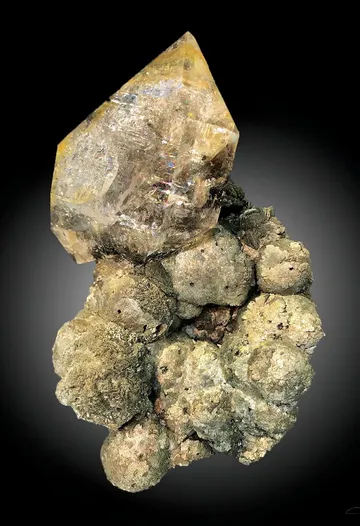
Sphalerite is the defining ore mineral of Empire State No. 2, and published work on Balmat No. 2 shows why it is more interesting than a simple zinc-ore label suggests: it occurs as massive to disseminated coarsely crystalline aggregates with pyrite in gangue of quartz, carbonate, and diopside, but it can also form subhedral crystals reaching several centimeters and, in ore descriptions, more than 8 cm in length. The No. 2 material is characteristically dark chocolate-brown and iron-rich compared with lighter material from some other Balmat zones, and it commonly shows polysynthetic twinning, resinous to submetallic luster, and close association with pyrite, galena, quartz, calcite, diopside, tremolite, and locally secondary zinc assemblages. For collectors, the desirable pieces are those that escape the look of broken ore: lustrous, identifiable crystal faces; aesthetic contrast against pale carbonate or quartz; credible old No. 2 provenance; and, in rare cases, green to multicolor fluorescence in sphalerite from ZCA No. 2 material.
Other documented minerals from Empire State No. 2 include calcite, celestine, chalcopyrite, chlorite-group minerals, diopside, dufrénoysite, fluorapatite, galena, gypsum, haüyne, hematite, ilvaite, lazurite, lizardite, pyrite, quartz, sepiolite, serpentine-subgroup minerals, siegenite, smithsonite, tetrahedrite-subgroup minerals, tremolite, and willemite. The most historically distinctive of these is willemite: Balmat’s supergene willemite was important enough to receive a dedicated 1940 American Mineralogist paper, where it was described as small tabular crystals, commonly colorless in the center but clouded or reddened by chlorite and hematite inclusions, with later drusy crystals associated with specular hematite and minute galena. Ilvaite is another old No. 2 curiosity, appearing in the supergene literature as distinct crystals in chloritic replacement material rather than as a modern showy specimen species.
Empire State No. 2 specimens demand unusually careful label reading. Balmat labels are often imprecise, and “Empire State Mine,” “Balmat,” “ZCA Mine,” and “St. Joe Mine” can refer to different shafts, different operators, and different collecting eras. A specimen labelled simply “Balmat, New York” may be from No. 2, No. 3, No. 4, the older Balmat mine area, or the wider district. Conversely, a modern relabel to “Empire State No. 2” should be supported by an older label, mine-level notation, dealer provenance, museum record, or a credible chain of custody.
The most common mislabelling problem is confusion between No. 2 and No. 4. The famous lustrous cubic magnetites, many modern gemmy sphalerites, and the widely publicized recent calcite and anhydrite pockets belong principally to Empire State No. 4 or to the broader modern Empire State Mine, not to the inactive No. 2 workings. This distinction matters financially. A cubic Balmat magnetite is a classic specimen, but a No. 2 label alone is not evidence that the specimen came from the early-1990s No. 4 cubic-magnetite find. Likewise, purple calcite, halite-associated sphalerite, and the recent 3,800- to 4,051-foot-level pockets should not be assigned to No. 2 unless the specimen’s documentation is explicit.
Condition issues are typical of Balmat ore and supergene material. Sphalerite may show bruised edges, cleaved corners, dull fracture surfaces, or contact damage where crystals grew in tight ore. Pyrite can be fractured, microbrecciated, or oxidized, and hematitic coatings may be natural rather than “dirt.” Willemite-bearing material can be deceptively fragile because small tabular crystals sit in chloritic or talcose replacement matrix; aggressive washing or ultrasonic cleaning is unwise. Halite-bearing Balmat material from the modern mine should be kept dry, though such specimens are more characteristic of No. 4 pockets than No. 2.
Fluorescence is a useful but not universal diagnostic feature. Some ZCA No. 2 sphalerite has been documented with bright green fluorescence under all ultraviolet wavelengths, modest green afterglow after longwave exposure, and scattered blue or orange fluorescent grains. That response is attractive and collectible, but it is not a blanket rule for all No. 2 sphalerite. Balmat willemite, unlike Franklin willemite, has been reported as nonfluorescent in the classic morphological study, so collectors should not reject a No. 2 willemite merely because it lacks the bright green shortwave response familiar from Franklin-Sterling Hill material.
Market availability is uneven. Sphalerite and magnetite attributed to Empire State No. 2 appear, but precise No. 2 examples are scarcer than broadly labelled Balmat material. Fine old-stock specimens with original St. Joe or ZCA labels, level information, or publication/museum pedigree deserve a premium over loose district attributions. The best buying practice is to ask for photographs of all labels, not just the specimen, and to preserve every scrap of associated paper.
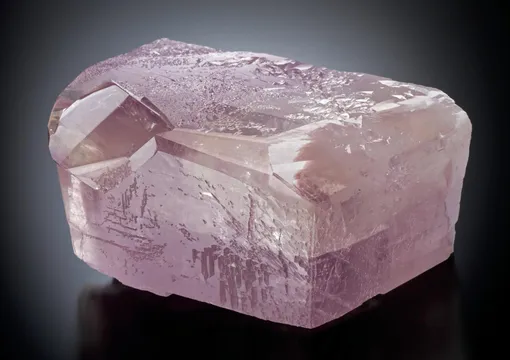
On June 8, 2023, miners opened the largest crystal pocket yet reported from Balmat’s modern Empire State Mine: a void on the 4,051 level filled with calcite crystals ranging from pale tan and pink to peach and lavender, with some larger crystals showing a deeper purple color. The forms were not monotonous. Simple rhombohedra, scalenohedra, highly modified crystals, Rossie-habit penetration twins, and twins on the basal pinacoid of scalenohedral crystals all appeared from the same opening. The surfaces were as memorable as the colors: some faces were glassy, some satin-like, some stepped, some showed organized dissolution, and others had a fine sandy texture caused by microscopic pyrite inclusions. The pocket also carried baryte, anhydrite, pyrite, and halite.
The previous year had already changed the reputation of the mine. In 2022, a pocket on the 3,981-foot level produced colorless, pink, and purple calcites—large, translucent to transparent, often exceptionally lustrous, and commonly seen as Rossie-habit twins. The opening was not a cavernous room but a finite mineralized space roughly 6 by 5 by 2.5 feet. Miners worked it through the summer and early fall before it was eventually filled in. On September 4, 2022, a second opening of comparable size was broken into beside the original pocket, yielding additional specimens. Nearby, another pocket on the 3,990 level, nicknamed the “Bear Den,” produced a different style: mainly yellow-brown parallel-growth rhombohedral calcite, plus water-clear twinned crystals and tabular twinned crystals.
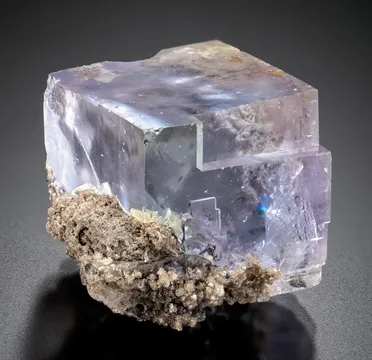
The sphalerites from the modern Empire State Mine pockets added another chapter to the Balmat story. In the New Fold area, between the 3,931 and 3,971 levels, sphalerite occurred with colorless calcite in red, amber, black, and yellow varieties. The transparent red, amber, and yellow examples could be beautifully formed and lustrous, with crystals to several centimeters. For collectors who knew Balmat mainly as a zinc mine and a source of dark ore, these pockets proved that the same district could produce cabinet minerals of genuine display quality.
The older No. 2 story is quieter but scientifically elegant. Frederick H. Pough’s study of Balmat willemite described tiny tabular crystals only about 1 mm thick and roughly 2 to 2.5 mm across, embedded in compact chloritic material. Many had colorless transparent centers but became gray or red toward the edges from dendritic chlorite and hematite inclusions. In small druses, later willemite appeared as still smaller limpid crystals with specular hematite. Pough noted that hematite was such a useful visual guide that its bright dark crystals were easier to see than the clear willemite itself. In one memorable passage, he described the last fibrous serpentinous material in the pockets as resembling “wisps of smoke,” a bluish haze through which one looked at the tiny crystals.
Doe, Bruce R. “Geothermometry at the Balmat No. 2 mine, New York by the FeS-ZnS system.” M.S. thesis, Missouri School of Mines and Metallurgy, 1956. A No. 2-specific sphalerite study using samples from the 500-foot and 1,500-foot levels.
Doe, Bruce R. “Distribution and composition of sulfide minerals at Balmat, New York.” Geological Society of America Bulletin, vol. 73, no. 7, 1962, pp. 833–854. DOI: 10.1130/0016-7606(1962)73[833:DACOSM]2.0.CO;2. Foundational work on No. 2 and No. 3 sulfide mineralogy, sphalerite chemistry, pyrite, pyrrhotite, galena, and ore temperatures.
Brown, John Stafford. “Structure and primary mineralization of the zinc mine at Balmat, New York.” Economic Geology, vol. 31, no. 3, 1936, pp. 233–258. The classic early paper on Balmat zinc-mine structure and primary mineralization.
Brown, John Stafford. “Supergene sphalerite, galena, and willemite at Balmat, New York.” Economic Geology, vol. 31, no. 4, 1936, pp. 331–354. DOI: 10.2113/gsecongeo.31.4.331. The key source for the oxidized and secondary zinc assemblage that made old Balmat material mineralogically distinctive.
Pough, Frederick H. “Willemite Morphology and Paragenesis at Balmat, New York.” American Mineralogist, vol. 25, 1940, pp. 488–496. A detailed description of Balmat willemite habits, inclusions, drusy pockets, hematite, ilvaite, galena, and paragenesis.
deLorraine, William F., and Dill, D. B. “Geologic Field Guide to the Balmat Zinc Mine, St. Lawrence County, New York.” New York State Geological Association field guide, 1997. A detailed field guide to Balmat stratigraphy, structure, ore-body geometry, and the No. 2/No. 3/No. 4 mine framework.
Knight, Richard H. “Recent Zinc Ore Discoveries in the Balmat-Edwards District, Northwest Adirondacks, New York State: A Case History.” Geological Society of America Abstracts with Programs, vol. 37, no. 1, 2005, p. 64. A concise district-scale summary of production, ore-body clusters, and modern exploration thinking.
Walter, Michael R., and Dixon, Kevin. “The Empire State Mine, Balmat, St. Lawrence County, New York.” Rocks & Minerals, vol. 99, no. 3, 2024, pp. 236–247. DOI: 10.1080/00357529.2024.2303950. A modern collector-oriented article on the Empire State Mine and its recent mineral specimens.
Brizendine, J. K., and Stefano, C. J. “Balmat Zinc Mines, St. Lawrence County, New York.” The Mineralogical Record, vol. 56, no. 1, 2025, pp. 11–66. A major recent collector reference cited by dealers and locality specialists for the Balmat zinc mines.
Empire State No. 2 Mine, Balmat, Fowler, St. Lawrence County, New York, USA — Mindat Locality page with coordinates, historical names, mine status, discovery date, and mineral list.
Titan Mining Corporation — Zinc / Empire State Mines Operator history, ownership, production summaries, modern mine information, and technical-report access.
Distribution and composition of sulfide minerals at Balmat, New York — U.S. Geological Survey Authoritative abstract and citation for Bruce R. Doe’s 1962 Balmat sulfide-mineral study.
Geothermometry at the Balmat No. 2 mine, New York by the FeS-ZnS system — Missouri S&T Scholars’ Mine The No. 2-specific 1956 thesis on sphalerite chemistry and geothermometry.
Geologic Field Guide to the Balmat Zinc Mine, St. Lawrence County, New York — NYSGA Detailed structural and stratigraphic guide to the Balmat mine system.
Willemite Morphology and Paragenesis at Balmat, New York — RRUFF / American Mineralogist Essential reading for the old Balmat willemite, hematite, ilvaite, and galena assemblage.
The Balmat-Edwards zinc-lead deposits; synsedimentary ore from Mississippi Valley-type fluids — USGS Publications Warehouse District-scale Economic Geology paper record on ore genesis and sulfur isotope work.
Recent Zinc Ore Discoveries in the Balmat-Edwards District — Geological Society of America Short but useful overview of the district’s ore-body clusters and exploration history.
Town of Fowler — ESM Balmat Mines and Mill — New York State Department of Environmental Conservation Current regulatory context for the active Empire State Mines industrial facility.
Balmat Purple Calcite Discovery — Geologic Desires Dealer-locality report summarizing the 2022–2025 specimen discoveries and citing recent Rocks & Minerals, Mineral News, and Mineralogical Record articles.
Green Fluorescent Sphalerite from Balmat, New York — Fluorescent Mineral Society FMDB Documented fluorescent sphalerite specimen from Empire State No. 2 / ZCA No. 2.