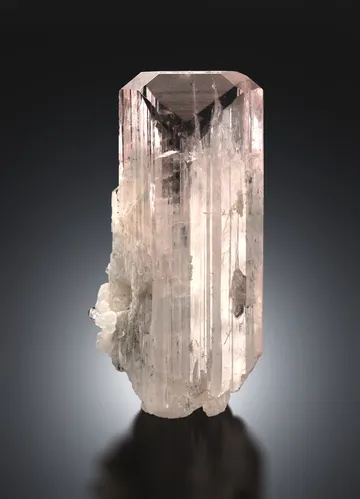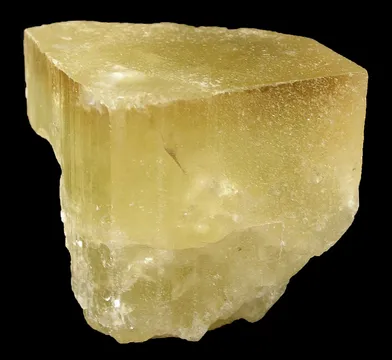
Danburite: colorless to pale straw-yellow crystals with brilliant vitreous luster and wedge terminations; UV fluorescence aids ID, prized for clarity and form.
Key facts
Danburite is a calcium borosilicate admired for its brilliant vitreous luster, glass-clear transparency, and crisp wedge-like terminations. Typically colorless to pale straw-yellow or champagne, it forms elongated orthorhombic prisms with strong vertical striations and sharp, multi-faceted terminations that can recall topaz at first glance. Under shortwave UV, many danburites fluoresce yellow to creamy white, a fun diagnostic and display feature. Collectors value danburite for its clean crystal geometry, high clarity, and the elegance of single crystals or parallel-growth clusters. The species sits at that sweet spot of being refined and aesthetic yet still attainable—common sizes of 3–8 cm are accessible, but truly pristine, larger or matrix examples can be remarkably impressive.
While not as universally known as quartz or tourmaline, danburite has a loyal following among collectors who appreciate “crystal perfection” in a neutral or pastel palette. Its heyday in the specimen market was propelled by steady production from Charcas, Mexico, plus classic finds from Dalnegorsk, Russia, and occasional surprises from Mogok (Myanmar) and Merelani (Tanzania). Because many crystals are gemmy and limpid, they display beautifully with simple lighting and complement colorful suite displays. Prices vary widely: clean, undamaged Charcas singles remain affordable, whereas large, undamaged matrix pieces or fine classic localities (notably Dalnegorsk or Japanese skarn pieces) can command strong premiums. The species’ relative durability and light stability also make it popular for open-shelf display and for collectors who enjoy UV fluorescence.
The following localities are renowned for producing particularly desirable danburite specimens. Each is known for distinct habits or associations that help define the species for collectors.
Charcas is the workhorse source for fine danburite. Crystals are typically colorless to pale straw-yellow, water-clear, and sharply striated, often with textbook wedge terminations. Sizes range from thumbnail to large cabinet, and parallel-growth “candelabra” clusters occur. Matrix pieces—on sulfide-rich rock or with calcite or quartz—exist but are scarcer than loose singles. The best Charcas crystals feature razor-lustrous faces, excellent clarity, and undamaged tips; such examples remain staples of modern collections for their combination of beauty and availability.
Mogok’s marble-hosted deposits occasionally yield gemmy danburite crystals ranging from colorless to soft champagne. Although typically less abundant than Mexico or Russia, the finest Mogok pieces show excellent clarity and crisp terminations, sometimes with subtle pastel tones. Given Mogok’s storied gem history, these danburites carry strong provenance appeal, and undamaged crystals—especially on matrix—are classic and scarce.
Color and clarity:
Luster and terminations:
Crystal form and size:
Matrix and associations:
Fluorescence:
Comparison and identification:
Repairs:
Polishing and enhancements:
Handling:
Light and temperature:
Cleaning:
Storage and display:
By focusing on sharp terminations, superb luster, and high clarity—ideally with attractive matrix—collectors can secure danburites that embody the species’ refined elegance and enduring appeal.