Sounion, Greece — Lavrion locality famed for supergene smithsonite, aurichalcite, malachite and aragonite; notable for named workings and kapellasite’s type lo…
Key facts
Sounion is the southern, sea-facing end of one of the most mineralogically important mining landscapes on Earth: the Lavrion Pb-Zn-Cu-Ag district of southeastern Attica. To a tourist, Sounion is the promontory of the Temple of Poseidon and the Aegean sunset; to a collector, it is the oxidized fringe of a vast, structurally complex ore system in marbles and schists of the Attic-Cycladic belt, where ancient silver mining, nineteenth-century industrial redevelopment, and modern specimen collecting overlap in an unusually tight geographic space. The best specimens from Sounion are not merely “Lavrion” pieces with vague labels. They are tied to named workings such as Sounion Mine No. 6, the “Exi Mine,” Sounion Mine No. 19, the Cato Sounio mines, the Apo Sounio mines, the Sounion Cove slag locality, and associated workings around Agrileza, Spitharopoussi, and Agia Varvara.
The collector signature of Sounion is supergene color on brown gossan: apple-green to olive cuprian smithsonite in rounded, translucent botryoids and sparkling mammillary crusts; pale-blue aurichalcite as soft fibrous accents; malachite replacing azurite in velvety blue-green pseudomorphs; white to colorless hemimorphite and calcite; light-blue etched fluorite; and sculptural aragonite, including flos ferri forms from the Sounion mines. Sounion Mine No. 6 is especially important for modern green smithsonite finds, while Sounion Mine No. 19 is scientifically important as the type locality for kapellasite, Cu3Zn(OH)6Cl2, a rare copper-zinc hydroxychloride named for Christos Kapellas, a miner, collector, and mineral dealer deeply associated with Lavrion.
Regional View
Country View
Geologically, Sounion belongs to the same Lavrion ore-forming system that made the wider district famous: Miocene magmatism, detachment-related deformation, carbonate replacement, vein and breccia mineralization, and deep oxidation of polymetallic sulfides. Primary sphalerite, galena, pyrite, chalcopyrite, arsenopyrite, sulfosalts, fluorite, and carbonate gangue were overprinted by one of the world’s great oxidation-zone mineral assemblages. In the Sounion area, that overprint produced specimens whose beauty is often in the combination rather than a single species: green smithsonite against iron oxides, white calcite “cat’s tail” aggregates on goethite, malachite pseudomorphs after azurite perched on smithsonite, and micro-to-thumbnail rarities hidden in chloride- and sulfate-rich pockets.
Search for specimens: View all specimens from Sounion, Greece
Sounion is a mining subdistrict within the Lavrion Mining District, Lavreotiki, East Attica, Greece. In collector usage the name may appear as Sounion, Sounio, Sounion mines, Laurion, Laurium, Lavrion, or Lavrion District; more precise labels may name Sounion Mine No. 6, “Exi Mine,” Sounion Mine No. 19, Cato Sounio mines, Apo Sounio mines, Agia Varvara mines, Agrileza, Spitharopoussi, Russia Mine or Pefka Mine, Barbara Mine, or Sounion Cove. For serious specimens, the mine number matters. Sounion Mine No. 6 and Sounion Mine No. 19 are not interchangeable labels: No. 6 is the modern collector’s key source for many green smithsonite combinations, while No. 19 is the kapellasite locality and a chloride-rich rarity source.
The ore system is part of a polymetallic Pb-Zn-Cu-Ag district hosted mainly by marbles and schists of the Attic-Cycladic crystalline belt. Lavrion’s mineralization is controlled both by structure and lithology, especially marble-schist contacts, detachment-related zones, breccias, and replacement bodies. The broader district contains several genetically related styles of mineralization: porphyry Mo-W, Fe-Cu-Bi-Au skarn, high-temperature carbonate-replacement Pb-Zn-Cu-Ag-Au, and Pb-Zn-Ag-Au vein and breccia systems. At the collector scale, the important fact is that the oxidized parts of these ores supplied zinc, copper, lead, arsenic, sulfate, carbonate, chloride, and iron to countless late minerals. Sphalerite altered to smithsonite, hydrozincite, and hemimorphite; chalcopyrite and other copper-bearing sulfides fed malachite, azurite, atacamite-group species, brochantite, antlerite, rosasite, and related phases; galena produced cerussite, anglesite, and other secondary lead minerals.
Sounion Mine No. 6, commonly called the Exi Mine because “exi” means “six” in Greek, is one of the names collectors should remember. It has two entrances recorded in the locality literature: a southern entrance in Spitharopoussi, now collapsed, and a northern entrance in Agrileza; the southern entrance was the principal active entrance during mining. The mine is associated in the specimen trade with apple-green to forest-green cuprian smithsonite, commonly on oxidized brown gossan and often accompanied by aurichalcite, calcite, hemimorphite, rosasite, aragonite, cerussite, and occasional fluorite. A winter 2020/2021 find from No. 6 was widely noted by dealers and collector reports for vivid green smithsonite combinations, and later material has included malachite pseudomorphs after azurite on smithsonite.
Sounion Mine No. 19, in the Cato Sounio mines, is a very different collector proposition. It is a major systematic-mineral locality rather than a source of large showy smithsonite plates. The mine is tied to chloride-rich oxidation assemblages and is the type locality for kapellasite. Older German collector usage sometimes applied the name “Chloridstollen” to the adit, but that name is unnecessary and can confuse labels. No. 19 also has aragonite var. flos ferri records and a long list of secondary species, including lead-copper chlorides, sulfates, arsenates, carbonates, and oxidation-zone rarities. Many No. 19 specimens are micromounts or small cabinet pieces that reward careful labeling, analytical confirmation, and magnification.
The mining history around Sounion cannot be separated from Lavrion. The Lavreotiki mines were worked from prehistoric times, with archaeological evidence for activity around the Final Neolithic/Early Helladic period, and they became central to Athenian silver production in the Classical period. The district’s argentiferous galena and related ores helped fund Athens’ coinage, naval power, and public works. Ancient mine workings, washeries, cisterns, shafts, and metallurgical remains occur throughout the region between Thorikos, Lavrio, Legrena, and Cape Sounion. Modern mining revived in the nineteenth century after the exploitation of ancient slags and tailings and the opening or reopening of underground workings. Giovanni Battista Serpieri, Andreas Kordellas, the Greek Lavrion Metallurgical Company, and the Compagnie Française des Mines du Laurium are central names in the modern industrial history of the district. Modern production continued into the twentieth century, with major activity declining after the Second World War; the main mining era ended in the late 1970s, and district-scale mining activity finally ceased by 1990.
For collectors today, Sounion is a locality to approach with restraint. Much of Lavreotiki is archaeologically sensitive, protected, or environmentally regulated, and the Sounion area lies within a landscape that includes the Sounion National Park / forest reserve, Natura 2000 values, ancient mining remains, and the Lavreotiki UNESCO Global Geopark. Old shafts and adits are hazardous, unstable, and in some cases legally restricted. The responsible path for most collectors is not underground collecting but acquisition of well-documented specimens from old collections, reputable Greek dealers, museum deaccessions where legitimate, or modern pieces with clear, legal provenance. Labels that preserve “Sounion Mine No. 6” or “Sounion Mine No. 19” are far more useful than simplified “Lavrion, Greece” labels, especially for rarities and recent finds.
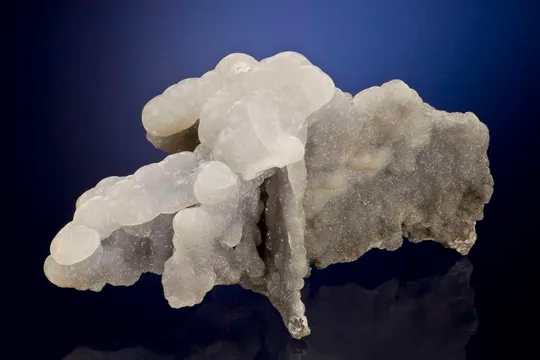
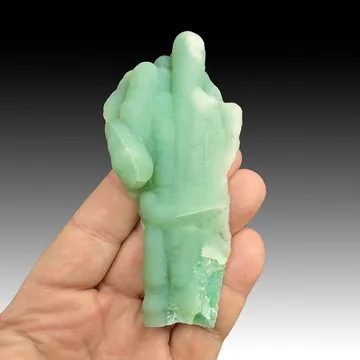
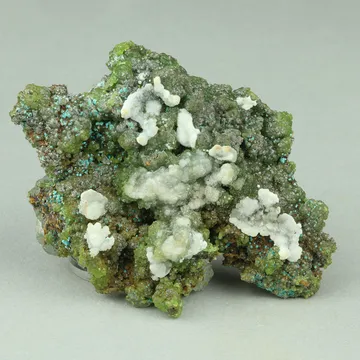
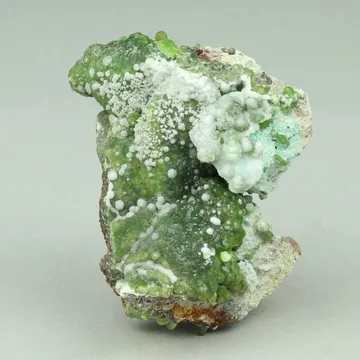
Smithsonite is the defining display mineral of modern Sounion collecting, especially from Sounion Mine No. 6, where recent finds yielded apple-green to forest-green cuprian smithsonite as translucent rounded crystals, botryoidal clusters, sparkling mammillary crusts, and isolated spheroids on brown gossan. Documented specimens range from thumbnails and miniatures with 3–5 mm domes to small-cabinet pieces around 5–8 cm across, with exceptional green examples reaching the high-end international market because they combine unusually saturated color, glassy to resinous luster, and clean coverage. The best pieces show sharp contrast with oxidized matrix, white calcite or hemimorphite, blue aurichalcite, minor rosasite, or etched light-blue fluorite; ordinary pieces tend to be duller, patchier, rubbed on the dome tops, or too iron-stained to show the internal glow that makes the finest Sounion No. 6 smithsonites so compelling.
Aurichalcite from Sounion is usually a companion mineral rather than the dominant showpiece, appearing as pale sky-blue to blue-green fibrous tufts, silky crusts, and delicate acicular sprays on gossan or among green smithsonite, calcite, hemimorphite, and rosasite. Sounion Mine No. 6 specimens from the recent smithsonite finds commonly show aurichalcite as the color accent that turns a good green zinc-carbonate specimen into a classic Lavrion combination; No. 19 and other Cato Sounio workings also carry aurichalcite in the broader secondary assemblage. Good Sounion aurichalcite is clean, bright, and visibly fibrous under magnification, with undisturbed silky tufts and a strong color contrast against green smithsonite or brown limonite; poor pieces show the species only as ambiguous powdery blue stains that are better described cautiously unless confirmed.
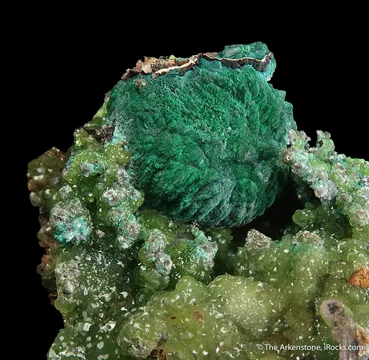
Malachite from Sounion is most collectible where it records replacement: velvety blue-green to green pseudomorphs after azurite, especially from Sounion Mine No. 6, set on sparkling or mammillary green smithsonite over oxidized matrix. Recent dealer-documented pieces include miniatures and small-cabinet specimens in the 4–5 cm range, with individual malachite pseudomorphs reported to about 1.6 cm across, sometimes accompanied by tiny light-blue rosasite and semi-spherical olive-green smithsonite aggregates. Good Sounion malachite pieces preserve the azurite crystal shape crisply, carry an even velvety surface without rubbed high points, and sit aesthetically on contrasting smithsonite; ordinary pieces are patchy replacements, broken casts, or visually confused blue-green coatings where malachite, rosasite, and other copper-zinc carbonates may be difficult to separate without analysis.
Azurite at Sounion is important both as a preserved copper carbonate and as the parent form for the area’s malachite pseudomorphs. In the Sounion Mine No. 6 assemblage, azurite is commonly represented by crystal shapes later replaced by malachite, though specimens also appear in the trade as azurite with smithsonite or as blue remnants in copper-rich gossan. The aesthetic range is generally miniature scale rather than the large cabinet azurites known from some copper mines; value comes from sharp form, saturated blue where azurite remains, and associations with cuprian smithsonite, malachite, rosasite, calcite, or hemimorphite. The best Sounion pieces make the paragenesis visible: blue azurite or azurite form, green malachite replacement, and zinc-carbonate matrix in one specimen; less convincing examples are merely blue stains on limonite or old Lavrion pieces labeled “azurite” without enough morphology or analysis to support the name.
Hemimorphite from Sounion is typically found as colorless to white crystalline crusts, small blades, drusy coatings, or pale secondary zinc-silicate accents in the same oxidized matrix that hosts smithsonite. Sounion Mine No. 6 specimens from the green cuprian smithsonite finds may show hemimorphite with vivid green smithsonite, blue aurichalcite, white or colorless calcite, and minor rosasite; in good pieces, the hemimorphite gives sparkle and texture rather than dominating the specimen. The most desirable Sounion examples have clean, undamaged hemimorphite in direct association with strongly colored smithsonite, because the contrast confirms the mixed zinc-carbonate and zinc-silicate character of the pocket; ordinary specimens show only chalky white crusts on gossan that can be difficult to distinguish visually from hydrozincite, calcite, aragonite, or other pale oxidation products.
Calcite from Sounion is a gangue and late-stage carbonate mineral that becomes collectible when it contributes shape, contrast, or fluorescence to the specimen. At Sounion Mine No. 6, “cat’s tail” calcite has been documented as snowy white, brilliant, stalactitic aggregates of acute crystals on goethite matrix, accompanied by small opaline rhombohedral calcites and showing long-wave ultraviolet fluorescence. In the green smithsonite assemblage, calcite may occur as colorless to white crystals or coatings with cuprian smithsonite, aurichalcite, and hemimorphite, sometimes softening the color contrast and making a specimen look distinctly Lavrion rather than generically gossanous. Good Sounion calcite has intact tips, clean white or transparent luster, and a balanced position on matrix; lesser examples are bruised, iron-stained, or so dominant that they obscure the more diagnostic secondary zinc and copper species.
Fluorite is not the headline mineral for Sounion in the way smithsonite is, but it is significant because fluorite is part of the Lavrion vein and breccia gangue system and appears in attractive Sounion combinations. A documented Sounion Mine No. 6 small-cabinet specimen showed deep green crystallized smithsonite across highly etched light-blue translucent fluorite, with the fluorite noted as brightly fluorescent. The best Sounion fluorite specimens are therefore combination pieces: etched blue fluorite providing architecture and fluorescence, green smithsonite adding color, and minimal matrix keeping the form readable. Ordinary fluorite from the area may be incomplete, heavily etched without aesthetics, or poorly localized to the broader Lavrion district rather than Sounion Mine No. 6.
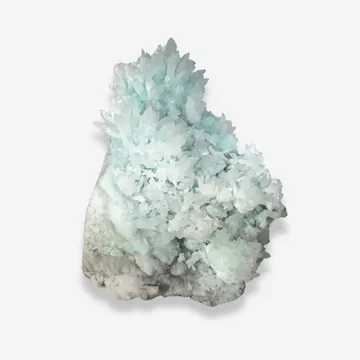
Aragonite from Sounion is most attractive in sculptural and secondary-carbonate forms: white to pale blue-green flos ferri, branching coral-like aggregates, crusts, botryoidal coatings, and large flos-ferri-like clusters from Sounion Mine No. 6 and Sounion Mine No. 19. No. 19 is documented for aragonite var. flos ferri, while a large Sounion Mine No. 6 specimen on the modern market measured 25 x 17 x 13 cm and was described as from a single find of large flos-ferri-like clusters. Earlier Sounion flos ferri material is known as pale blue to blue-green, often stained or tinted by copper-bearing secondary minerals. The best pieces preserve open, undamaged branching growth with minimal bruising, clean color, and a precise Sounion mine label; ordinary pieces are broken white carbonate masses that may be difficult to separate visually from calcite without habit, context, or testing.
Beyond these display species, Sounion is prized by systematic collectors for a dense suite of secondary copper, zinc, lead, arsenate, sulfate, carbonate, chloride, and slag-related minerals. Sounion Mine No. 19 is the type locality for kapellasite, Cu3Zn(OH)6Cl2, which forms green-blue crusts and small aggregates of bladed to needle-like crystals associated with gypsum, paratacamite, atacamite, gordaite, beaverite-(Cu), hydrozincite, smithsonite, glaucocerinite, plumbojarosite, bianchite, herbertsmithite, anglesite, cumengéite, serpierite, ktenasite, calcite, quartz, pyrite, and galena. No. 19 has also yielded or recorded notable rarities such as diaboleite, claringbullite, boleite, caledonite, arseniosiderite, reevesite, and botallackite, though botallackite requires special caution because many historic “zincian botallackite” labels from No. 19 proved to be kapellasite. The Sounion Sulfate Locality documents sulfate species such as metavoltine, confirmed by XRD and SEM-EDS, and Sounion Cove belongs to the famous Lavrion slag-mineral story, where seawater and ancient metallurgical waste created a secondary anthropogenic mineral world of its own.
Sounion specimens reward precision. A label reading “Sounion Mine No. 6, Lavrion” or “Sounion Mine No. 19, Cato Sounio mines” carries more value than a broad “Lavrion, Greece” label because the sublocalities have distinct mineralogical personalities. Sounion No. 6 is the main name to expect on green cuprian smithsonite combinations; Sounion No. 19 is the critical name for kapellasite and chloride-rich micromount associations. Old labels may use Laurion, Laurium, Attika, St. Barbara, Agia Varvara, Exi Mine, or Sounion; those spellings should be preserved rather than discarded.
The most important authenticity issue is species ambiguity in blue-green secondary minerals. Malachite, rosasite, aurichalcite, chrysocolla-like material, hydrozincite, hemimorphite, zincolivenite, and other Lavrion secondaries can be visually similar in small crusts. Malachite pseudomorphs after azurite from Sounion No. 6 are especially appealing, but some specimens described in the trade already note uncertainty about whether the replacement is pure malachite or includes rosasite. For high-value pieces, analytical confirmation is sensible, especially where the species name rather than the aesthetics drives the price.
Sounion Mine No. 19 has a documented labeling trap: many specimens once called botallackite or “zincian botallackite” from this mine were later shown to be kapellasite. True botallackite is reported from No. 19 but is sparse and distinctive, so an old No. 19 botallackite label should not be accepted uncritically. Another broader Lavrion issue is fictitious or imprecise mine naming; labels such as “Km 2,” “Km 4,” or vague district names occur in the trade, though this affects Lavrion more broadly rather than Sounion alone. The Barbara Mine also has a notable caution attached to descloizite: a reported Barbara descloizite locality has been identified as falsified, with the real material attributed to the C&B Mine in Arizona.
Condition is central for Sounion specimens. Smithsonite domes abrade on high points, and the best pieces should be checked under magnification for flattened luster, bruised edges, rubbed mammillary surfaces, and detached crusts. Malachite pseudomorphs after azurite can look excellent from the front while having chipped terminations or broken backs. Aragonite flos ferri is inherently fragile and often suffers broken branches. Calcite cat’s-tail aggregates should be inspected for missing tips, and hemimorphite crusts can be friable. Brown gossan matrix may shed grains and should be packed carefully.
Cleaning should be conservative. Much of the assemblage is carbonate-rich or includes delicate hydrous sulfates, chlorides, or porous oxidation products. Avoid acids, aggressive ultrasonic cleaning, prolonged soaking, and harsh mechanical cleaning. Even water can be risky for some sulfate-rich or friable matrix specimens. Fluorite-bearing pieces can be tested for fluorescence, and documented Sounion calcite and fluorite may respond under long-wave UV, but ultraviolet display should be brief and gentle; the main handling concern remains physical fragility rather than light sensitivity.
Market availability is active but uneven. Small to mid-sized Sounion No. 6 smithsonites, including green cuprian material with aurichalcite, calcite, hemimorphite, rosasite, or malachite after azurite, appear periodically from Greek and international dealers. Affordable miniatures exist, but top green smithsonites with saturated color, translucency, strong luster, and undamaged coverage can rise sharply in price. Sounion No. 19 rarities are more often systematic or micromount specimens, where value depends on analytical confidence, exact mine attribution, and rarity rather than cabinet-scale beauty.
The Sounion landscape is one of the few places where a collector can stand within sight of the Aegean and feel three different histories pressing in at once: prehistoric extraction, Classical Athenian silver, and modern industrial mining. The wider Lavreotiki workings reach from Thorikos toward Cape Sounion and Legraina, and the surface is still marked by ancient shafts, washeries, cisterns, dumps, smelting remains, and later industrial scars. The famous temple on the headland is not a picturesque afterthought to the mining district; it belongs to the same cultural landscape. Ancient miners were cutting ore from the marble and schist below the region while architects and sculptors raised sanctuaries above the sea.
The ancient story is astonishing in scale. Lavreotiki was worked for more than five millennia, and its Classical silver helped Athens mint its famous “Owl” coinage and finance the naval and civic power of the city-state. The deep workings were not casual pits. Ancient vertical shafts could reach around 100 m and connect to networks of galleries. The district preserves ore washeries, cisterns, kilns, galleries, shafts, and metallurgical workshops in a way that makes the mining process visible as a landscape-scale machine: ore broken underground, lifted or moved through galleries, crushed, washed with carefully managed water, smelted, and transformed into metal.
The modern collector story is more intimate. In a Mineralogical Society of Washington program report, Fred Paraskevoudakis showed the realities of moving through the Lavrion underground with fellow mine researchers. One photograph showed him crawling on his stomach through a passage called a “Squeeze Through,” with the reminder that not only the person but also equipment and specimens had to pass that same bottleneck on the way out. Another episode described researchers taking turns with a feather wedge and two chisels, carefully hammering for a long time to extract smithsonite safely from marble. It is a useful corrective to the polished mineral-show version of Sounion: the green smithsonite miniatures that look effortless in a case often begin as fragile pockets reached through cramped, unstable, physically demanding ground.
The underground evidence of older work is equally vivid. Fred’s account described discarded wooden explosive boxes, broken tools, carts, writing or torch marks on mine walls, small shafts for ventilation or ore dumping, staircases, support walls, and cart tracks. Large empty galleries, puzzling at first glance, were the spaces left after miners removed the valuable copper and zinc ores. For a collector, those details matter because they connect a miniature smithsonite or malachite pseudomorph to the human geometry of the mine: narrow passages, lower levels, ore chutes, and the labor of generations before the specimen entered a drawer.
Sounion Mine No. 6 has its own human thread through Christos Kapellas. Kapellas, born in 1938 and remembered as a miner, collector, and mineral dealer from the Lavrion area, spent much of his working life in ore haulage at the Exi Mine. He became one of the foremost practical experts on the district’s mineral assemblages, the kind of miner-collector whose field knowledge helps scientists understand individual orebodies. His collection became part of the Lavrion Mineral Museum, and his name lives in kapellasite, the Sounion No. 19 type-locality mineral. That bridge—from ore haulage at No. 6 to a new mineral named from No. 19—is exactly why Sounion has stature beyond attractive green smithsonite.