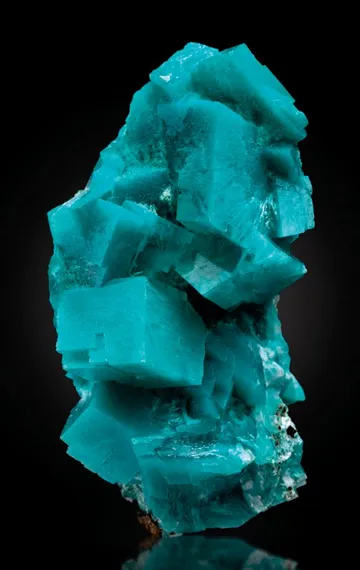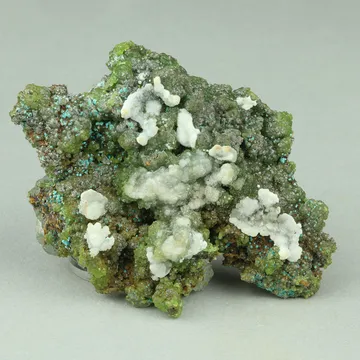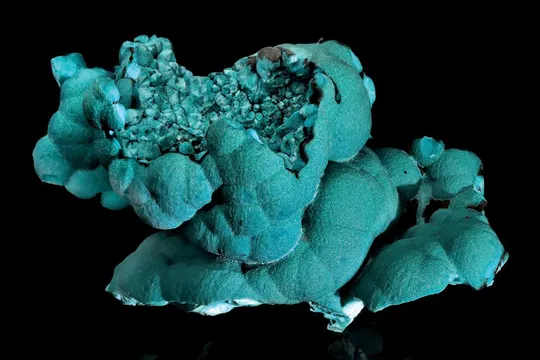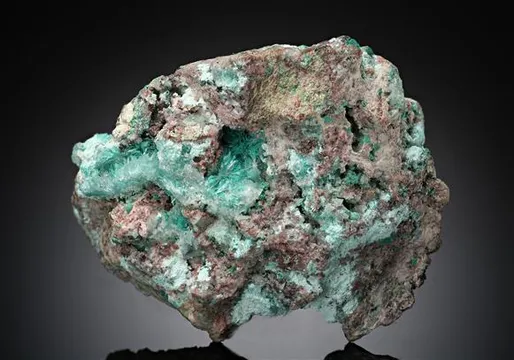
Aurichalcite: blue to blue-green acicular sprays with silky luster; fragile, prized by collectors; notable localities include Ojuela, Kelly, Tsumeb.
Key facts
Aurichalcite is a delicate copper-zinc carbonate hydroxide [formula (Zn,Cu)5(CO3)2(OH)6] treasured for its ethereal blue to blue‑green color and feathery, silky luster. It typically forms as fine, acicular needles grouped in radiating sprays and tufted “fuzzy” aggregates, often draping over brown gossan, limonite-goethite, or contrasting white calcite and dolomite. While crystals can be microscopic to a few centimeters across, the visual impact of a well-placed, vivid cyan spray is high—especially when perched on dark matrix or paired with complementary species such as smithsonite, hemimorphite, rosasite, and calcite. Because the needles are extremely soft and fragile (Mohs ~1–2), pristine, undisturbed sprays and superb compositions are much rarer than the mineral’s overall abundance suggests, making fine pieces surprisingly hard to find.
Collectors prize aurichalcite for pure color and delicate aesthetics. It is a mainstay for thumbnail and miniature collectors, micromounters, and those who love oxidized-zone copper suites. Classic localities—Ojuela Mine (Mexico), Kelly Mine (USA), Tsumeb (Namibia), and Lavrion (Greece)—have produced iconic pieces spanning “cottony” carpets, radiating starbursts, and sculptural combinations with calcite or smithsonite. Although smaller sprays and modest specimens remain accessible, truly outstanding examples with vivid saturation, intact terminations, and strong contrast command significant premiums. The fragility of the species, the difficulty of extraction without shedding, and the dwindling of production at historic mines all contribute to the enduring desirability of top aurichalcite.
While aurichalcite occurs worldwide in the oxidized zones of copper-zinc deposits, a handful of localities are especially renowned for aesthetics and quality.
The Ojuela Mine is the modern benchmark for aurichalcite. It has yielded vibrant sky‑blue to blue‑green sprays, often as thick carpets and hemispherical radiating clusters on chocolate-brown limonite and goethite. The color is usually intense, and specimens frequently feature attractive contrasts with calcite, hemimorphite, and rosasite. Textbook pieces show dense, silky needles with excellent coverage and minimal shedding, sometimes forming sweeping veils across cavernous gossan pockets. Production has been cyclical; early-2000s pockets produced large, showy pieces, but fine, undamaged sprays on aesthetic matrix are increasingly selective.
Famous for smithsonite, the Kelly Mine also produced classic aurichalcite in delicate, sky‑blue sprays on limonite and calcite. The best pieces feature superb color and graceful, radiating tufts perched on contrasting dark matrix or nestled among snow-white calcite rhombs. These are old finds; true Kelly aurichalcites with great composition and minimal damage are scarce and highly sought by collectors of American classics.
Tsumeb material is distinctive: sharper, more isolated radiating sprays that can be remarkably three‑dimensional and sometimes perched on dolomite, calcite, or iron oxides. Colors range from cool blue to turquoise, typically with high silky luster and excellent definition of individual needles. As with most Tsumeb species, top specimens combine elegance, balance, and historic provenance—qualities that keep them in strong demand.
Lavrion is a Mediterranean classic, producing fine, feathery aurichalcite in sky‑blue tufts, often intergrown with rosasite, smithsonite, hemimorphite, and aragonite in ancient slag- and ore‑rich workings. The best pieces show vivid color with attractive associations—white aragonite needles or calcite rhombs can provide superb contrast. While not as abundant as Ojuela, top Lavrion aurichalcite has an old‑world charm, with specimens valued for historic significance as much as their beauty.
The Ophir and Tintic regions of Utah's old mining country have produced aurichalcite blooms in brilliant sky-blue to blue-green tufts—needle-thin crystals lining cavities in oxidized zinc-copper ore. Feathery sprays of aurichalcite are often associated with malachite, azurite, smithsonite, hemimorphite, and rosasite. Good specimens from older finds are rarely on the market today and highly valued by collectors.
Aurichalcite is one of the most delicate common secondary copper minerals. Thoughtful care is essential.
With conscientious handling and protective display, aurichalcite’s luminous blue sprays will retain their otherworldly beauty for years to come.