Shigar Valley, Pakistan — premier pegmatite locality yielding blue aquamarine and pocket-quality minerals; prized for provenance and collectible diversity.
Key facts
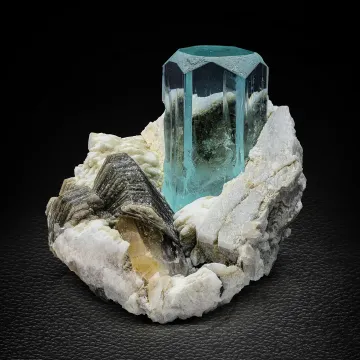
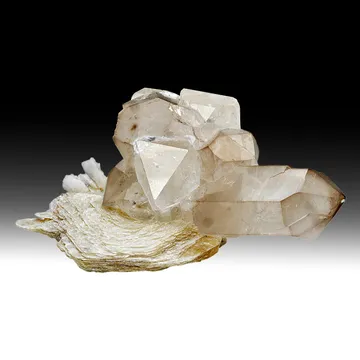
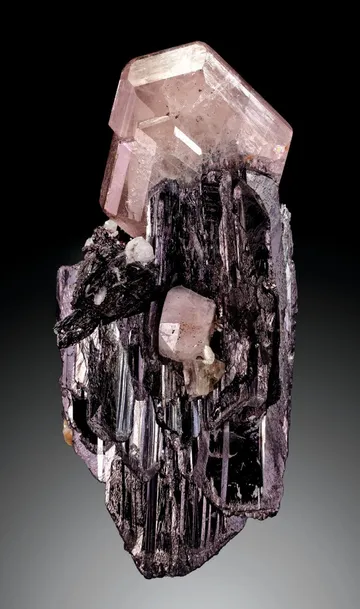
Shigar Valley is one of the great modern pegmatite provinces of the Karakoram: a high, dry, structurally complex belt of granitic pegmatites and alpine-type clefts north of Skardu, where pocket minerals have emerged from steep mountainside workings rather than from a single conventional mine. For collectors, “Shigar” is shorthand for pale to saturated blue aquamarine, white albite and cleavelandite, black schorl, silvery muscovite, quartz, fluorapatite, topaz, fluorite, garnet and rare Nb-Ta-Be phosphate and oxide species. The valley’s best specimens have the unmistakable Pakistani pegmatite look: a glassy blue beryl prism rising out of snow-white feldspar, sometimes accompanied by black tourmaline rods, mica books, smoky or colorless quartz, and reddish spessartine-almandine garnets.
Geologically, the productive bodies are evolved granitic pegmatites intruded into rocks of the Karakoram Metamorphic Complex, with gemstone pockets concentrated in coarse intermediate zones and core-margin cavities. The broader valley lies along the Main Karakoram Thrust, a major tectonic boundary that helps explain why the mineralized ground is both structurally broken and locally rich in evolved pegmatite fluids. Recent geochronological and geochemical work has sharpened the picture: the Shigar pegmatite field records a protracted post-collisional history, including evolved Be-Li-Nb-Ta-bearing systems in the upper Shigar sector, especially around the Dassu-Yuno area.
Regional View
Country View
Historically, Shigar matters because it helped make Pakistan a first-rank source of display-quality pegmatite specimens during the late twentieth and early twenty-first centuries. The older literature recorded aquamarine from Dassu and other villages, while modern collecting has emphasized matrix preservation, pocket-by-pocket provenance, and the difference between broad “Skardu” or “Shigar” labels and more precise localities such as Yuno, Kashmol, Mungo, Haiderabad, Alchuri, Hashupa, Dassu, Nyet Bruk and related Braldu or Basha Valley sites.
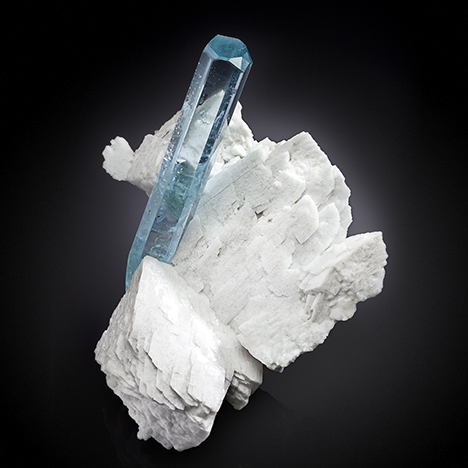
Photo: GIA Gems & Gemology
Search for specimens: View all specimens from Shigar Valley, Pakistan
Shigar Valley lies north to northeast of Skardu in Gilgit-Baltistan and is drained by the Shigar River and its tributaries. In mineral commerce the name has been used broadly, sometimes covering material from the main Shigar Valley and sometimes including specimens from adjacent or tributary systems such as Braldu and Basha. That loose usage is old enough to be entrenched on many labels, but it is also the source of much confusion: “Shigar Valley,” “Skardu,” “Skardu District,” “Northern Areas,” “Baltistan,” “Braldu Valley,” “Basha Valley,” and specific village or mine names may all appear on specimens of broadly similar pegmatite style.
The principal specimen deposits are granitic pegmatites, mostly evolved and locally zoned. Field studies distinguish simple gemstone-barren pegmatites from evolved, gemstone-bearing pegmatites, with the most favorable class characterized by muscovite-schorl-beryl-garnet assemblages. The gem-bearing pegmatites are commonly miarolitic: pockets and cavities, rather than massive ore shoots, are where the best crystals formed. In the classic model for Shigar, a fine-grained border zone gives way inward to a coarser intermediate zone and a blocky core or core-margin zone. The pockets tend to occur in the coarse intermediate and core-margin parts of the pegmatite, often lined with clayey material and surrounded by albite, quartz, muscovite and black tourmaline.
The Shigar pegmatites intrude metasedimentary and meta-igneous rocks of the Karakoram Metamorphic Complex, and the valley runs along the Main Karakoram Thrust. Studies of the pegmatites and associated leucogranites describe strongly peraluminous S-type granitic rocks derived from crustal sources. A recent synthesis recognizes two broad pegmatite stages: an older, late Oligocene garnet-bearing stage in the lower Shigar Valley and a younger, late Miocene to Pliocene beryl-tourmaline stage in the upper Shigar Valley. For collectors, the practical consequence is that the district contains both classic gem pegmatites rich in beryl, tourmaline, feldspar and quartz and alpine-type cleft localities such as Alchuri and Hashupa that yield a very different suite of epidote-group, quartz, titanite, rutile, adularia and related metamorphic-cleft minerals.
The named pegmatite and specimen areas repeatedly cited in the literature include Yuno, Kashmol, Mungo, Haiderabad, Goyungo, Nyit or Nyet Bruk, Baha, Dassu and nearby Braldu Valley sites. Yuno is important for aquamarine, beryl, fluorite, apatite, topaz and garnet; Kashmol is noted for schorl, beryl, topaz, fluorite and Mn-rich apatite; Dassu is historically famous for aquamarine and garnet-bearing pegmatites; Mungo high mines are documented for aquamarine, topaz, fluorite, schorl, albite, apatite, hydroxylherderite and tantalite-(Mn). Alchuri and Hashupa, by contrast, are better treated as alpine-type cleft localities, important for quartz, epidote, clinozoisite, zoisite, titanite, rutile, adularia, axinite-(Fe), vesuvianite and related species.
Mining is pocket-driven and small-scale. The literature and trade accounts describe remote high-altitude workings, local claims, family or village control, adits and tunnels, and a market chain that commonly runs through local miners, Skardu or Peshawar dealers, and then international mineral shows and specialist dealers. Some workings at lower elevation can be active for more of the year, while higher prospects are constrained by snow, weather, access and the short mountain season. These are not recreational collecting sites in the Western sense; access is controlled locally and the terrain is steep, exposed and dangerous.
Production has been episodic. A single pocket may put a run of aquamarines, fluorapatites, topaz or matrix combinations onto the market, followed by long periods with little comparable material. Earlier mining often favored loose gem crystals because they were easier to extract and transport; recent specimen-conscious work has preserved more matrix pieces, especially aquamarine on albite or feldspar, aquamarine with garnet, and multi-species pegmatite plates.
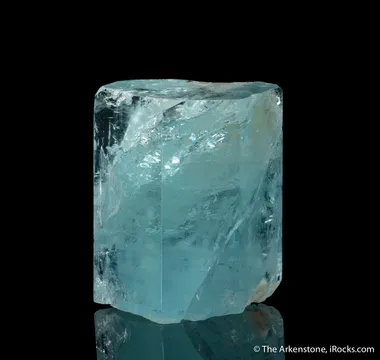
Aquamarine is the mineral that made Shigar Valley famous to most collectors: pale greenish blue to clean sky-blue beryl in long hexagonal prisms, generally transparent to translucent, commonly standing on albite, cleavelandite, muscovite, quartz and schorl. Published work records transparent light-blue aquamarine from the Dassu pegmatites in the 5–15 x 1–7.5 cm range, with older reports of crystals up to about 16 cm long and 7 cm wide, and GIA illustrated a 17 cm crystal on feldspar from Shigar Valley. The best pieces here are not merely blue crystals; they are architectural matrix specimens with strong vertical stance, intact terminations, glassy luster, saturated but natural iron-blue color, and convincing associations, especially white feldspar, black tourmaline and, rarely, red garnet.
Beryl from Shigar Valley ranges from aquamarine to goshenite and, more rarely in the broader district, pale pink beryl reported as morganite; the valley’s academic studies specifically document colorless goshenite and light to dark blue aquamarine from zoned pegmatites. Typical small beryl crystals in the studied pegmatites are 1–3 cm, while better aquamarines can be much larger, especially from Dassu and related pegmatite zones. Collectors should separate clean, well-terminated, naturally attached crystals from broken gem rough: the strongest Shigar beryl specimens show sharp hexagonal form, clarity without excessive internal frost, and an albite-muscovite-schorl matrix that confirms the pegmatite pocket context.
Albite is the essential white architecture of Shigar pegmatite specimens, forming blocky crystals, sugary aggregates and bladed cleavelandite masses that host aquamarine, schorl, topaz, fluorapatite, fluorite, garnet and rare oxides. Petrographic work on Shigar pegmatites emphasizes albite enrichment in the gemstone-bearing class, and specimen records show albite with thousands of Shigar Valley associations, especially beryl, aquamarine, muscovite, schorl, quartz, fluorapatite, spessartine, microcline and topaz. In hand specimens, the best albite is bright, clean and undamaged, providing contrast and open space around the main crystal rather than forming a chalky, battered mass.
Quartz occurs in both pegmatite and alpine-cleft settings in Shigar Valley, so its appearance varies from ordinary pegmatitic colorless or smoky crystals associated with beryl, feldspar and schorl to highly lustrous Alpine-style quartz from cleft localities such as Hashupa and Alchuri. In pegmatite specimens it is often a supporting mineral beside aquamarine, topaz, fluorite, muscovite and feldspar; in cleft specimens, clarity, sharp habit, chlorite inclusions, adularia association and undamaged terminations are more important. Good Shigar quartz is valued when it improves the composition—lifting an aquamarine, framing a topaz, or adding clean Himalayan luster—rather than when it is a generic matrix filler.
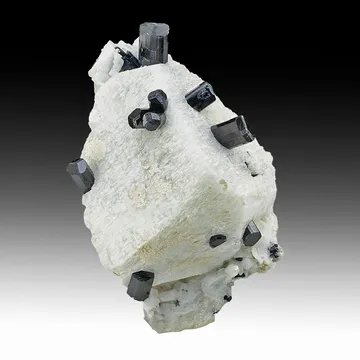
Schorl is ubiquitous in the gem-bearing Shigar pegmatites and is one of the best visual indicators of the aquamarine-producing assemblage. Published analyses classify the black tourmalines as schorl, with crystals scattered through pegmatite groundmass but especially concentrated at border and core-margin zones; a studied Kashmol crystal measured about 4 x 1 cm and showed well-developed trigonal faces with striations parallel to the prism. Fine specimens use schorl as contrast—black vertical rods or lustrous prisms against white albite and blue aquamarine—while mediocre pieces show only fractured, embedded, dull tourmaline masses.
Feldspar is not a footnote in Shigar Valley; it is the framework that determines whether many specimens look sculptural or merely broken. The pegmatites contain albite, microcline, orthoclase and broader K-feldspar, with white albite and cleavelandite serving as the most common display matrix for aquamarine, topaz, muscovite, schorl, fluorapatite and garnet. The best feldspar-rich specimens have crisp, fresh faces, a clean white or cream tone, natural pockets and cavities, and enough openness to display the associated crystals; heavily altered, clay-stained, sawn-looking or bruised feldspar weakens otherwise good Shigar pieces.
Topaz from Shigar Valley is documented as colorless to light yellow in pegmatites at Yuno, Kashmol, Dassu, Nyit Bruk and Goyungo, with studied colorless crystals about 1 x 3 cm from Kashmol, Yuno and Goyungo. The usual association is albite, quartz and muscovite, and better market specimens may add schorl or feldspar matrix. Shigar topaz is at its best when sharply terminated, bright and transparent, preferably perched on white cleavelandite or albite; ordinary examples are small, colorless, edge-bruised crystals that can be difficult to distinguish visually from quartz without close inspection of form, cleavage and luster.
Muscovite is both a matrix mineral and an exploration clue in Shigar Valley, because higher muscovite and little to no biotite characterize the more favorable gemstone-bearing pegmatites in published classifications. On specimens it appears as silvery to pale mica books, rosettes and sheets with aquamarine, albite, schorl, quartz, fluorite, fluorapatite, topaz and garnet; the Yuno assemblage illustrated in the literature includes large muscovite sheets with light pink apatite, green fluorite and reddish garnet. For collectors, muscovite adds value when it is lustrous, well placed and intact, but can become a liability when it is crushed, flaky, loose or conceals repairs around beryl attachments.
Cleavelandite, the platy variety of albite, is one of the classic Shigar Valley matrix textures: white, bladed feldspar that creates a snowy platform for aquamarine, topaz, schorl, fluorapatite, spessartine and rare tantalite. Mindat records cleavelandite from the Shigar Valley, including Kashmal and Yuno high-mine material, and specimen photography repeatedly shows it as the best contrast for blue beryl and dark tourmaline. The finest cleavelandite specimens are crisp, airy, and undamaged; poor ones are chalky, flattened, heavily iron-stained or reduced to broken blades clinging to a repaired main crystal.
Shigar Valley garnets commonly fall in the almandine-spessartine range, and the best collector pieces show reddish orange to red-brown garnets scattered over albite, feldspar, quartz or aquamarine matrix. Academic work records gem-quality garnet as usually small—commonly less than 2 cm—from the Dassu and Yuno areas, with studied crystals typically translucent, reddish brown and dodecahedral; a Dassu garnet showed increasing MnO from core to rim, implying an increasing spessartine component. The most desirable Shigar spessartine-associated pieces have sharp, lustrous garnets that look deliberately placed rather than sprinkled at random, especially when they decorate aquamarine-feldspar compositions.
Apatite from Shigar Valley is documented as pink to light pink gem-quality crystals in pegmatites, especially from Yuno and Kashmol, with the literature noting Mn-rich apatite from Kashmol and higher MnO and FeO in Kashmol material than in Yuno material. It is often associated with green fluorite, reddish garnet and muscovite, and the Yuno mine assemblage is specifically illustrated with light pink apatite, green fluorite, garnet and large mica sheets. Fine Shigar apatite is clean, distinctly pink, well crystallized and visibly integrated into a pegmatite pocket assemblage; pale fragments or anonymous phosphate grains on mica are far less compelling.
Microcline occurs as K-feldspar in the pegmatite suite and is most important to collectors as a blocky, pale matrix mineral in aquamarine, quartz, schorl, muscovite and garnet combinations. In the wider Shigar-Braldu collecting district, microcline appears on high-profile aquamarine matrix specimens, including large aquamarine-spessartine-quartz-microcline combinations from the Dassu area. Collectors should be cautious with exact K-feldspar species names on old labels: microcline, orthoclase and undifferentiated feldspar have often been used loosely unless XRD or reliable documentation supports the identification.
Tourmaline from Shigar Valley is overwhelmingly documented in the gem-bearing pegmatites as black schorl, a ubiquitous accessory concentrated in border and core-margin zones and associated with albite, muscovite, aquamarine and quartz. A small number of specimens in commerce have been described as elbaite or green tourmaline, especially from Kashmal-type pegmatites, but the literature is far stronger for schorl than for lithium-rich colored tourmaline from the valley itself. Good Shigar tourmaline specimens therefore tend to be schorl-centered compositions: lustrous black prisms with sharp striations, well placed among feldspar, aquamarine, quartz or mica.
Fluorapatite is recorded from several Shigar Valley localities and is part of the evolved phosphate-bearing pegmatite assemblage that also includes beryl, schorl, albite, muscovite, fluorite and garnet. The most collector-relevant Shigar apatite material is pink to light pink, and Kashmol material can be Mn-rich, fitting the manganese-bearing pegmatite chemistry that also supports spessartine-rich garnet compositions. The best fluorapatites are distinct, bright and identifiable crystals on feldspar or mica with clear association data; small rounded pink grains need careful labeling because “apatite” and “fluorapatite” are not always separated rigorously in older dealer descriptions.
Fluorite from Shigar Valley is documented as pale to dark green crystals in pegmatites at Yuno, Mungo, Kashmol, Baha and Nyit Bruk, with studied crystals averaging about 2 x 3 cm and typically associated with tourmaline, beryl, quartz, topaz and muscovite in cavities. The literature describes Shigar fluorite as chemically close to pure CaF2, and Yuno material is illustrated as transparent light green fluorite with pink apatite, garnet and muscovite. The best pieces show saturated green color, transparency, clean cubic or modified forms and a true pocket association; broken green chips on feldspar are commoner and far less desirable.
Orthoclase is documented in the Shigar pegmatite and alpine-cleft environment as part of the K-feldspar suite, but its role differs by setting: in simple pegmatites it may be abundant yet gemstone-barren, while in alpine-type clefts it can appear as adularia-style K-feldspar with quartz, chlorite, epidote-group minerals and titanite. The 2011 pegmatite classification work notes orthoclase, plagioclase, quartz and biotite as diagnostic in some gemstone-barren pegmatites, contrasting with albite-rich gemstone-bearing bodies. Collectors should prize orthoclase only when crystal form, setting and label are convincing; otherwise “feldspar” or “K-feldspar” is often the more honest field name.
Triplite is a rare phosphate in the Shigar Valley collector suite, most familiar from small brown to reddish-brown specimens attributed to Alchuri and related Shigar material rather than from the common aquamarine-albite pockets. It belongs to the phosphate-rich side of the region’s evolved pegmatite and cleft mineral inventory and is much scarcer than apatite or fluorapatite on the market. A good Shigar triplite specimen is usually valued for rarity, provenance and association rather than size or brilliance; accurate locality documentation matters more here than for common aquamarine or feldspar pieces.
Garnet from Shigar Valley is best understood as an almandine-spessartine series mineral in the gem-bearing pegmatites, especially around Dassu and Yuno, where small euhedral reddish-brown crystals occur with beryl, albite, quartz, muscovite and fluorite. Published XRD work classified studied Shigar garnets as almandine, while chemical data show substantial spessartine components and a Mn-rich rim trend in a Dassu crystal. The most collectible garnets are sharp, translucent dodecahedra that contribute color and rhythm to a matrix specimen; large gem-quality garnets are described as rare, so claims of big, flawless Shigar garnets deserve scrutiny.
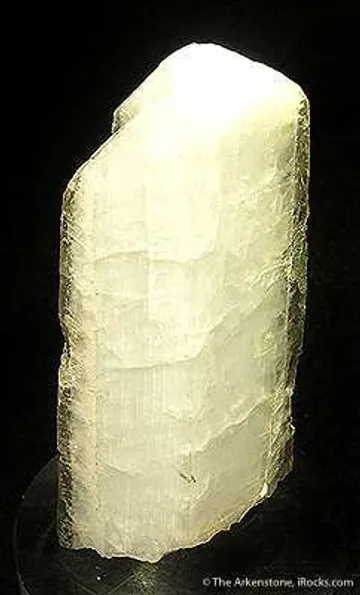
Beryllonite is one of the rarer Be-phosphate species reported from the Shigar Valley specimen suite, occurring in the evolved pegmatite context rather than as a common display mineral. It is far less visible in the literature than beryl, topaz, fluorapatite or fluorite, but its presence fits the Be- and phosphate-enriched character of the more fractionated pegmatites. Collectors should expect small, pale, easily overlooked crystals or cleavage fragments and should require reliable analytical or pedigree support, because beryllonite can be confused visually with feldspar, quartz, topaz or other pale pegmatite minerals.
Mica in Shigar Valley specimens is usually muscovite in collector terms, though biotite is important petrographically because its presence helps distinguish some simpler, gemstone-barren pegmatites from the more favorable muscovite-rich, schorl-bearing bodies. Mica books and sheets form part of the classic matrix for aquamarine, fluorite, apatite, garnet and feldspar combinations, especially at Yuno-type pegmatites. Fine mica specimens from Shigar are lustrous, silvery, well formed and structurally supportive; weak ones shed flakes, obscure more important crystals, or indicate a heavily damaged matrix that has been trimmed too aggressively.
Tantalite from Shigar Valley is recorded mainly as tantalite-(Mn), including material from the Mungo high mines and the broader Shigar Valley, with nearby occurrences also known from Dassu and Chhappu in the Braldu Valley. It occurs as small dark brown to reddish-brown, high-density crystals in evolved Nb-Ta pegmatites, sometimes associated with albite, cleavelandite, aquamarine, spessartine and mica; a documented Shigar specimen measured 1.4 x 1.4 x 1.3 cm and was noted for a distinctive reddish color and beveled edges. The best pieces are complete, lustrous, sharply edged crystals with real heft and good provenance, while nondescript black grains need analysis before a confident label.
Microlite-group minerals from Shigar Valley belong to the rare-metal side of the pegmatite system and are represented in records by fluornatromicrolite and related microlite-group entries rather than by abundant cabinet specimens. They reflect the same evolved Be-Li-Nb-Ta chemistry that makes the upper Shigar pegmatites important beyond gem aquamarine alone. Collectors should treat Shigar microlite as a rarity: small, dense, usually dark to greenish isometric crystals or grains on feldspar or in pegmatite matrix, best purchased only with analytical confidence or a trusted old collection pedigree.
Elbaite is a problematic name on Shigar Valley labels. Some specimens have been attributed to Kashmal and to the broader Shigar trade, but Mindat explicitly notes the lack of firm references for elbaite in Shigar Valley and warns that some material labeled as Shigar elbaite resembles Afghan material; published Shigar tourmaline chemistry strongly supports schorl rather than lithium-rich elbaite as the normal tourmaline species. If a collector buys an “elbaite from Shigar,” the premium should rest on analysis, documented provenance and unmistakable matrix association, not on a dealer’s loose regional label.
Smoky quartz from Shigar Valley appears in both pegmatite and alpine-cleft material, ranging from lightly smoky prismatic quartz associated with feldspar, mica and schorl to more Alpine-looking crystals from cleft localities. In pegmatite combinations it is a supporting mineral beside aquamarine, topaz or feldspar; in cleft specimens its value depends on clarity, smoky zoning, luster, habit and damage-free terminations. Strong Shigar smoky quartz pieces have a high-mountain clarity and natural color, while suspiciously uniform or oddly colored quartz should be examined for treatment or inaccurate locality attribution.
Epidote is most important in the Shigar Valley’s alpine-type and metamorphic-cleft localities, especially Alchuri and Hashupa, rather than in the classic aquamarine pegmatite pockets. Studies describe clinozoisite-epidote minerals from Alchuri and Hashupa as vein and fracture-fill material in metamorphic rocks, with colors ranging from dark brown opaque crystals to translucent greenish brown, light brown and yellowish green varieties; Alchuri has also produced gemmy epidote-group specimens noted in mineral literature. The best epidote from Shigar is sharp, lustrous, richly green to brown-green and clearly from the cleft assemblage, while ordinary material may be confused with clinozoisite, zoisite or dark amphibole without testing.
Goshenite, the colorless variety of beryl, is documented from Shigar Valley pegmatites with aquamarine and can occur as transparent colorless crystals in the same zoned pocket systems. The studied distinction is chemical and optical as much as aesthetic: Shigar aquamarine contains more FeO and is therefore blue, while goshenite is colorless. Fine goshenite specimens must be exceptionally sharp, lustrous, transparent and well placed to compete with aquamarine from the same locality; otherwise they are easily dismissed as pale beryl or trimmed gem rough.
Morganite is recorded from the Shigar Valley pegmatite assemblage but is much less common and less central to the locality’s reputation than aquamarine or goshenite. Reports of pink beryl from these pegmatites fit the evolved beryl-bearing system, yet collector-quality Shigar morganite is scarce compared with the broader supply of Pakistani aquamarine. The best examples should show true pink color, beryl crystal form, natural association with albite, mica, schorl or quartz, and a credible Shigar provenance; very pale or loose stones require caution because regional labels can be broad and pink beryl from other Pakistani or Afghan pegmatites may enter the same trade channels.
Beyond these main collecting species, Shigar Valley has a deep recorded mineral inventory that reflects both pegmatite and alpine-cleft environments. The pegmatite side includes cassiterite, columbite-(Fe), columbite-(Mn), tantalite-(Mn), stibiotantalite, wodginite-questioned material, hydroxylherderite, hambergite, beryllonite, lepidolite, calcite and rare microlite-group minerals; the cleft and metamorphic side includes actinolite, byssolite, axinite-(Fe), titanite, rutile including sagenite, hematite, prehnite, diopside, zoisite, clinozoisite, vesuvianite, siderite, aragonite, dolomite, scapolite-group minerals, phenakite and zircon. I found no verified modern type-locality mineral whose type locality is Shigar Valley itself; the locality’s importance is instead its unusually broad, specimen-rich overlap of gem pegmatites, rare-element pegmatite minerals and alpine-cleft species.
Locality precision is the first collecting issue. Many specimens sold as “Shigar Valley” are genuinely from the Shigar mineral province but not necessarily from the main valley as narrowly mapped; Braldu and Basha Valley specimens have long circulated under Shigar or Skardu labels. Conservative labeling is better than false precision: if the specimen is only known as “Shigar Valley,” do not upgrade it to Dassu, Yuno, Kashmol or Nyet Bruk without a reliable chain of custody.
Repairs and restoration are common concerns on Pakistani pegmatite specimens, especially aquamarine on feldspar or mica. Tall beryl crystals break easily during extraction and transport, and the contact between beryl and matrix is a natural weak point. Examine the base of aquamarine crystals under magnification for glue lines, mismatched clay, unnatural luster, colorless resin, concealed pins, overfilled feldspar, or mica deliberately packed around an attachment. A repaired Shigar specimen is not automatically undesirable, but it should be disclosed and priced accordingly.
Mislabeled tourmaline is a persistent issue. Schorl is well documented from Shigar; elbaite is not comparably supported for the main Shigar Valley, and some elbaite-labeled pieces attributed to Shigar may be Afghan or from other regional pegmatites. Green tourmaline on albite should be bought with caution unless the provenance is unusually strong or the piece has analytical backing.
Aquamarine treatment deserves attention. GIA work on Shigar Valley aquamarine identified typical iron-related blue coloration rather than Maxixe-type irradiation in the studied samples, but the broader beryl market includes heated, irradiated, oiled, repaired and otherwise enhanced material. For collector specimens, treatment is less often about changing color than about stabilization, resin in cracks, cosmetic cleaning, and reattachment to matrix.
Condition standards should be strict. The best Shigar specimens are cleanly extracted pocket pieces, not broken gem rough glued to feldspar. Look for complete terminations, minimal edge wear, natural contact textures, no excessive bruising on feldspar blades, and an aesthetic relationship among the minerals. Cleavelandite is fragile, muscovite sheds, fluorite bruises, apatite can chip, and topaz cleaves readily; a “perfect” multi-species specimen should be examined with skepticism but not dismissed if it comes from a trusted source.
Fluorescence is most relevant for aquamarine, which has been reported to show weak bluish-white fluorescence to long- and short-wave UV in studied Shigar samples. Do not use fluorescence alone as a locality test. Instead, combine crystal habit, inclusions, matrix association, chemistry where available, and provenance.
Market availability is strong for small aquamarine, albite, muscovite, schorl and quartz specimens, but the market is uneven. Affordable miniatures and small cabinet specimens appear regularly. Fine cabinet aquamarines with natural matrix, sharp schorl, clean feldspar and no significant repair are much scarcer. Topaz, fluorapatite, green fluorite and garnet combinations are less common than aquamarine, and rare species such as beryllonite, tantalite-(Mn), microlite-group minerals and triplite require patience and careful documentation.
The most memorable modern Shigar story is not just a pocket story; it is a change in mining culture. For years, high-end mineral dealers and Pakistani partners tried to persuade local miners that the “mother-rock” mattered. The old approach made sense in a harsh mountain economy: knock out the crystal, carry down what is saleable, leave the awkward matrix behind. But that method destroyed many specimens that collectors would now regard as irreplaceable. Diamond chainsaws and better extraction tools were introduced for the 2014 season, yet the idea was slow to take hold. The saws reportedly sat in a nearby village while miners continued with the familiar hammer-and-chisel methods.
In 2018, the Dassu miners encountered the pocket that finally made the lesson visible. It was named the “Aqua-Garnet” Pocket, and the name was accurate: blue aquamarine and red garnet occurred together with quartz, albite, feldspar and muscovite in showpiece-scale combinations. Instead of reducing everything to loose crystals, the miners used drilling methods and breaking bars to extract plates of matrix with crystals still attached. Some of the plates were so large that lowering them from cliffside workings tested the cable system. A diamond chainsaw was then used in the Dassu region for the first time—not to reshape a specimen cosmetically, but to reduce huge pocket plates to transportable size without destroying the mineral relationships.
One of the great pieces from that pocket measured 55 cm wide and entered the Mim Museum collection in Beirut. It had aquamarine, spessartine, quartz and microcline, with a flowerlike cluster of aquamarine rising from a matrix decorated by red garnets. Other figured specimens from the same pocket included an 18 cm aquamarine and garnet, a 12 cm piece nicknamed “The Waterfall,” and a 21 cm aquamarine with spessartine. The pocket became important not only because of what it produced, but because it showed local miners, dealers and collectors that Shigar matrix specimens could be world-class when extracted with patience.
The broader landscape adds to the drama. In the Braldu-Shigar region, pegmatitic intrusions are visible from the valley floor toward the peaks, and individual cliff edges or mine portals may be claimed by a particular family, tribe or mining group. Every season, miners carry supplies up to exposed workings, knowing that one pocket can change the year and that many other groups will come down empty-handed. That tension—risk, patience, secrecy, sudden discovery—is part of why Shigar specimens still feel alive in the market. A fine aquamarine on albite is not simply a pretty object; it is a saved fragment of a mountain pocket that might easily have been broken into gem rough.