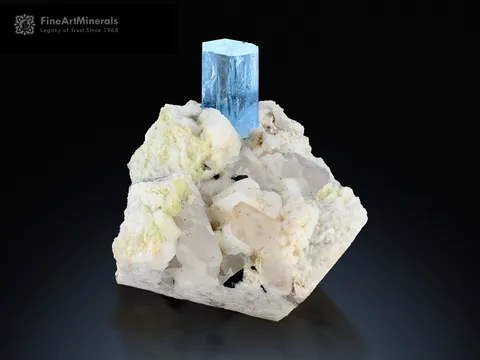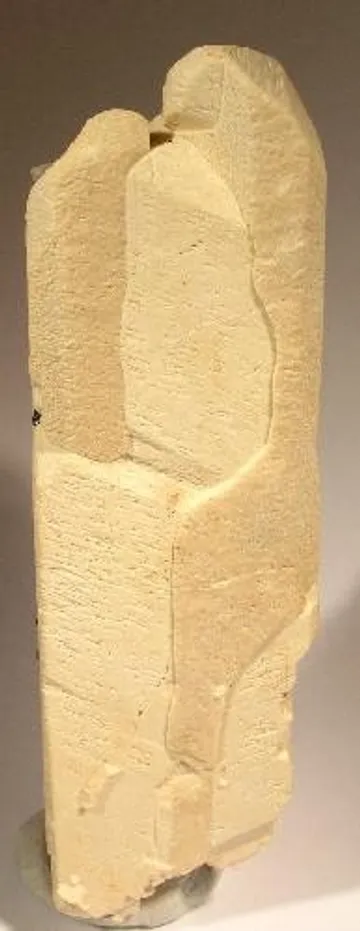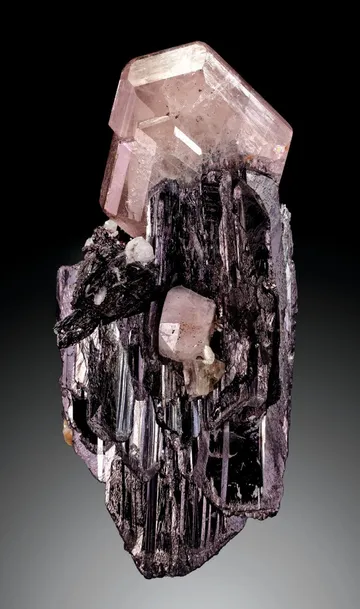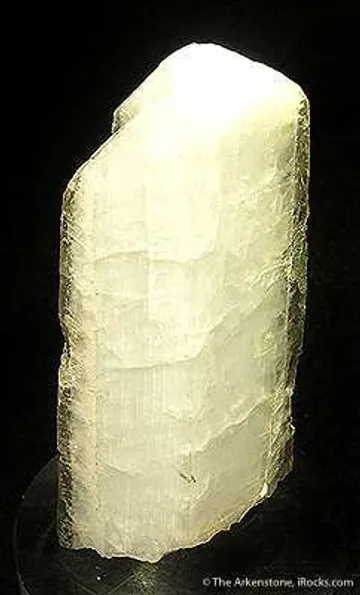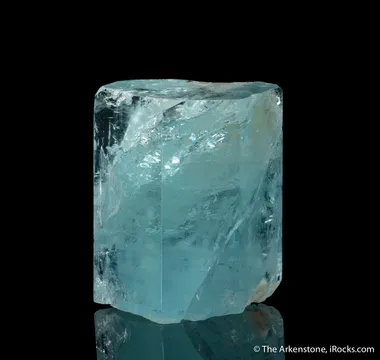
Microcline from Shigar Valley, Pakistan — white to pale cream crystals in open pockets, creating display-worthy assemblages with aquamarine; prized by collecto…
Key facts
Microcline from Shigar Valley is a collector’s feldspar in the most classical pegmatite sense: not usually valued for saturated amazonite color, but for sculptural white to pale cream crystals that serve as architecture for Pakistan’s finest aquamarine combinations. The best pieces have the clean, blocky geometry that feldspar specialists prize—broad cleavage faces, stepped growth, crisp edges, Baveno-style twinning, and a porcelain to pearly luster—set against ice-blue beryl, glassy quartz, black schorl, muscovite, albite, topaz, fluorite, fluorapatite, and the occasional rare phosphate.
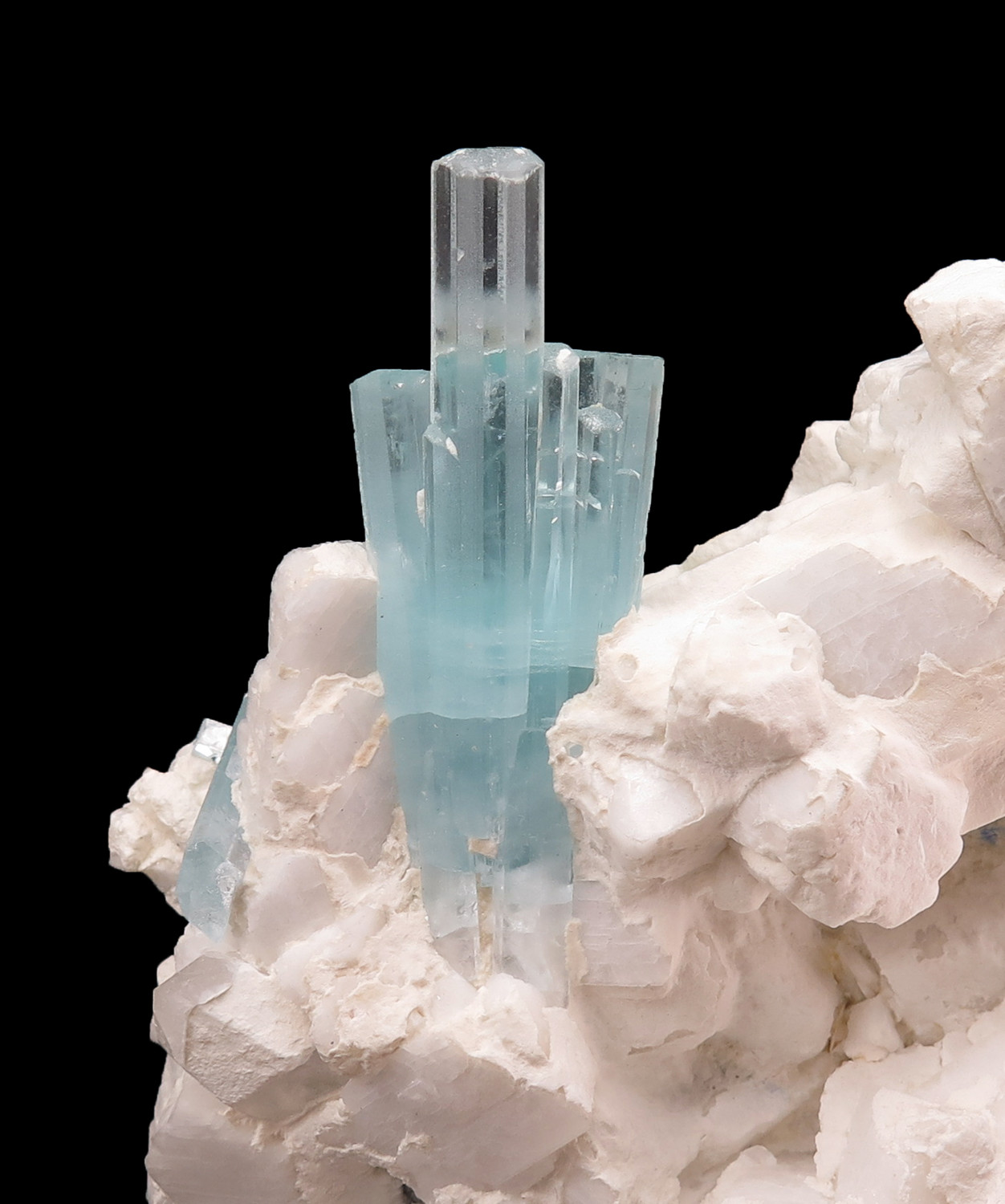
Photo: Mineral Auctions
The Shigar Valley mineral province lies in the central Karakoram, north of Skardu, where pegmatite dikes and sills cut metamorphic and gneissic country rocks. For microcline collectors, the important point is not simply that K-feldspar is present—it is that open miarolitic pockets allowed feldspar, beryl, quartz, and accessory minerals to crystallize with enough space to form freestanding, display-quality combinations. In many Shigar pieces, microcline is the visual “stage”: a white, angular feldspar platform against which the blue of aquamarine becomes electric.
Scientifically, Shigar pegmatites have attracted attention because they belong to a highly evolved granitic pegmatite province with simple and zoned pegmatites, gem-bearing cavities, and rare-metal indicators. Recent work distinguishes older garnet-bearing pegmatites from younger, more evolved beryl-tourmaline pegmatites in the upper valley. In those evolved pegmatites, K-feldspar, albite, and quartz are major constituents, with muscovite, biotite, tourmaline, beryl, and accessory rare-metal phases recording a highly fractionated melt history.
Historically, Shigar is inseparable from the rise of Pakistani pegmatite minerals in international collections. The valley and its tributary mining areas—Dassu, Nyet Bruk, Yuno, Mungo, Haiderabad, Basha, Braldu, and nearby named pockets—have supplied aquamarine combinations that changed collector expectations for Pakistani matrix specimens. Microcline gained status through those same finds: once seen mainly as matrix, it is now appreciated as a specimen-forming feldspar in its own right, especially when sharp, twinned, unrepaired, and compositionally balanced with aquamarine or quartz.
Search for specimens: View all microcline specimens from Shigar Valley, Gilgit-Baltistan, Pakistan
Shigar Valley is a regional collecting name as much as a single point on a map. In specimen commerce it may cover material from the main Shigar Valley and associated pegmatite districts in the Braldu and Basha drainage systems, including Dassu, Nyet, Nyet Bruk, Haiderabad, Yuno, Mungo, Kashmal, and related high mines. This is why the best labels go beyond “Shigar Valley” and preserve the mine, village, pocket, or sub-valley when known.
The deposit type is granitic pegmatite, commonly miarolitic where specimens are concerned. Academic studies describe Shigar pegmatites as granitic bodies intruding the Dassu orthogneiss and rocks of the Karakoram Metamorphic Complex, with simple and evolved pegmatite types. The evolved gem-bearing bodies are the collector’s focus: they carry feldspar, albite, quartz, muscovite, tourmaline, beryl, garnet, and locally topaz, fluorite, apatite, cassiterite, columbite-tantalite minerals, and other rare accessories.
At the specimen scale, the most important geological feature is open space. In a solid pegmatite, microcline may be nothing more than massive perthitic feldspar. In a pocket, it can crystallize as blocky, sharply bounded forms with enough relief to hold aquamarine prisms, quartz points, schorl needles, or cleavelandite blades. In many Shigar matrix specimens, the microcline grew as a rigid feldspar framework before later or overlapping growth of gem beryl and quartz completed the pocket assemblage.
Mining is small-scale, seasonal, and physically demanding. Pegmatite workings are commonly reached from valley villages by steep foot trails, with high-elevation mines active only during the workable warm season. At Yuno, the high mines are described as a pegmatite mining area roughly 1,500 m above the village, at about 3,500–4,000 m elevation. At Haiderabad, pegmatite outcrops lie more than 1,000 m above the hamlet near the ridge west of the Mungo high mines. These numbers matter to collectors because they explain both the rarity of large intact matrix pieces and the long history of damage, trimming, repairs, and reassembly in material extracted under difficult conditions.
Production has not been a single episode. Fine aquamarine and pegmatite minerals from the Shigar region have circulated internationally for decades, and the quality of matrix specimens has improved as local miners, dealers, and outside specialists have learned to preserve pocket specimens rather than simply remove loose gem crystals. Recent market examples show continuing output: modern Shigar microcline combinations with aquamarine, quartz, schorl, kaolinite coatings, and even hyalite opal have appeared in auction listings from the mid-2020s, while older labels from collections such as Jack Halpern and Kurt Hefendehl document earlier collecting and dealing history.
Notable finds include the 2018 “Aqua-Garnet” Pocket at the Dassu mine, which produced aquamarine with spessartine, quartz, feldspar, muscovite, and microcline, including a 55 cm-wide specimen now in the MIM Museum collection in Beirut. The even more famous 2019 “King of Kashmir” find at the Biangsapi Gon mine, Nyet Bruk, was principally an aquamarine discovery, but its specimen matrix of white albite and microcline made it part of the same feldspar-supported aesthetic tradition that defines the finest Shigar combinations.
Collecting access for independent visitors should be treated as restricted. These are working mines, family and tribal claims, and high-risk mountain sites; many lie on steep cliffs or remote ridges requiring local knowledge, permission, and safety planning. For most collectors, the responsible route is acquisition through established dealers who can document the locality chain and, ideally, the mine or pocket history.
Shigar Valley microcline is most familiar as white, cream, bone-white, porcelain-white, pale beige, or faintly pink feldspar. It may appear as individual blocky crystals, intergrown clusters, stepped platforms, prismatic twins, cleaved masses with sharp re-entrant geometry, or large architectural matrices. The surfaces range from pearly and cleavage-bright to matte where coated by kaolinite, clay, or minor iron staining. Fresh crystals can show a porcelain-like luster that is surprisingly attractive even without a colorful associated mineral.
The most collectible habit is a sharp, blocky to prismatic crystal with clean faces and visible twinning. Baveno-style twins from the Dassu–Braldu–Shigar area are especially desirable because they turn a normally background feldspar into the main subject. A documented auction example from Dassu measured 10.5 x 4.6 x 3.8 cm and featured a sharp, lustrous, prismatic microcline Baveno twin with smaller microcline and slightly smoky quartz. These pieces are not the commonest Shigar feldspars; they sit closer to the specialist end of the market.
On combination specimens, microcline commonly forms broad white shelves, cavities, or stepped aggregates supporting aquamarine. Shigar aquamarines may be isolated prisms, parallel-growth clusters, sprays, or doubly terminated crystals, and their blue color is strongest visually when contrasted against white microcline or albite. A large modern auction piece from Shigar measured 17.0 x 10.3 x 8.7 cm and carried a 6.8 cm parallel-growth aquamarine cluster on intergrown microcline with kaolinite coatings, a 4.5 cm quartz crystal, small schorl, and hyalite opal crusts visible under shortwave ultraviolet light. Another Mindat-recorded specimen, 13.2 x 9.8 x 6.8 cm, carried a 5.9 cm doubly terminated aquamarine on a sculptural bone-white microcline crystal with quartz points to 2.0 cm.
Associated minerals are a major value driver. Across Shigar microcline occurrences and photographed combinations, the common and important associates include aquamarine, quartz, albite and cleavelandite, schorl, muscovite, topaz, fluorite, fluorapatite, garnet including spessartine or almandine-spessartine series, cassiterite, columbite-tantalite minerals, lepidolite, microlite-group minerals, hydroxylherderite or herderite-hydroxylherderite series, and locally hyalite opal. Not every mine produces the full list; Yuno, for example, is especially noted for fluorite, topaz, cleavelandite, fluorapatite, schorl, quartz, and microcline in its pegmatite paragenesis, while Haiderabad is more narrowly documented for aquamarine, microcline, and muscovite.
Typical sizes range widely. Small cabinet aquamarine-on-microcline pieces around 6 cm are common enough to appear in mainstream auctions, while sharp microcline twins and major matrix plates can reach cabinet and large-cabinet size. At the high end, the best Shigar feldspar-bearing aquamarine plates enter museum scale, not because microcline alone is enormous, but because the feldspar matrix preserves a pocket surface large enough to carry multiple major beryl crystals.
Quality in Shigar microcline is judged by four overlapping standards. First is form: sharp feldspar geometry, obvious twinning, three-dimensional structure, and attractive stepping. Second is condition: undamaged edges and intact terminations are far more important than absolute size. Third is association: aquamarine, topaz, fluorite, schorl, quartz, or rare phosphates should be naturally positioned, not merely attached-looking. Fourth is composition: the finest pieces have balance, with the microcline visible and sculptural rather than hidden under accessory minerals.
The main authenticity issue is not synthetic microcline—there is no meaningful collector market for synthetic feldspar imitating Shigar microcline—but correct identity, correct locality, and honest disclosure of repairs. Microcline and orthoclase can be confused on labels, especially on older Pakistani feldspar specimens. Some trade labels use “feldspar” or “orthoclase” loosely, while specimens may be microcline or perthitic K-feldspar. Without X-ray diffraction or thin-section work, the distinction can be difficult; visible perthitic texture supports a K-feldspar identification but does not automatically prove every structural detail. For valuable feldspar-dominant pieces, ask whether the identification is analytical, visual, or inherited from an old label.
Locality precision is another concern. “Shigar Valley” is often used broadly, and older labels may say “Skardu,” “Gilgit,” “Northern Areas,” “Dassu,” or simply “Pakistan.” A broad Shigar label is acceptable for older material when no better information survives, but high-end specimens should preserve whatever is known: Dassu, Braldu Valley, Yuno high mines, Haiderabad pegmatites, Nyet Bruk, Basha Valley, or a named pocket. A vague label does not make a specimen bad, but it should affect price when the piece is sold as a locality specimen rather than as a purely aesthetic object.
Repairs and reattachments are the most important condition issue. Shigar matrix pieces are mined in severe terrain, often from pockets in cliff-side tunnels, and many aquamarine-on-feldspar specimens have had crystals reattached, stabilized, cleaned, or trimmed. Some repairs are conservation-grade and fully disclosed; others are not. The “King of Kashmir” article is a useful reminder that even world-class specimens may be reassembled from recovered pocket components using high-quality epoxy when the work restores crystals to their original positions. For collectors, the question is not whether every repair is unacceptable, but whether the work is accurate, stable, minimal, and disclosed.
Common condition problems include bruised feldspar edges, cleaved corners, chipped aquamarine terminations, quartz bruises, clay-filled contacts, iron staining, and differential cleaning that leaves microcline chalky or unnaturally white. Kaolinite coatings are natural and can be visually appealing, but over-cleaning can strip texture from feldspar surfaces. On aquamarine combinations, check the base of each beryl crystal carefully: a natural pocket contact should show coherent growth relationships, while a repaired attachment may show adhesive, unnatural gaps, mismatched dirt lines, or a suspiciously clean junction.
Rarity depends strongly on what is being collected. White microcline matrix from Shigar is not rare in the broad sense. Sharp, undamaged, aesthetic microcline crystals are less common. Baveno twins, attractive microcline-quartz specimens, and microcline as the dominant mineral are decidedly scarcer. The most competitive category is fine aquamarine on sculptural microcline matrix, especially unrepaired or minimally repaired specimens with strong blue color, gem transparency, and balanced three-dimensional composition.
Market availability remains active. Small to medium aquamarine-on-microcline pieces appear with some regularity through dealers and auctions, sometimes in the low hundreds of dollars when modest or included, and much higher when the aquamarine is gemmy, the matrix is sculptural, and the piece is unrepaired. Specialist feldspar pieces, old-collection Baveno twins, and major Shigar matrix combinations are less predictable and can be expensive when they combine provenance, form, and condition.
The modern story of Shigar matrix preservation is, in part, the story of learning not to destroy the feldspar. For decades, Pakistani aquamarine mining often rewarded the loose gem crystal first. A pocket might be opened by blasting; individual beryl prisms could be knocked free, wrapped, and carried down, while the white feldspar-and-quartz matrix that once held them was left behind, broken, or reduced to rubble. Collectors saw fine single aquamarines, but far fewer intact pocket compositions.
By the late 2000s and 2010s, dealers and collectors working with local partners began pushing a different idea: preserve the “mother-rock.” Daniel Trinchillo’s account of the King of Kashmir recovery describes repeated attempts to introduce diamond chainsaws, better extraction methods, and a matrix-first mindset to miners in northern Pakistan. Early on, the tools were available but sat unused long enough for parts to dry out and rust. The breakthrough came slowly, family by family and season by season, until miners began to see that an aquamarine still rooted in its microcline, albite, quartz, and muscovite could be vastly more important than the same crystal broken away.
In 2018, that change showed itself at the Aqua-Garnet Pocket at the Dassu mine. The miners encountered an extraordinary aquamarine-spessartine association and used drilling, breaking bars, and—significantly—a diamond saw to remove large matrix plates. Some plates were so large they tested the cable system used to lower specimens from the high cliffs. One of the great survivors was a 55 cm-wide plate of aquamarine with spessartine, quartz, microcline, albite, feldspar, and muscovite rosettes, later in the MIM Museum collection. For microcline collectors, that specimen is a landmark not because feldspar is the flashiest mineral on it, but because the feldspar matrix is the reason the pocket scene survived as a coherent mineral object.
The following season produced the episode that became the “King of Kashmir.” In late April 2019, miners at the Biangsapi Gon mine in the Nyet Bruk region set off explosives that cracked the rim of a pocket but did not destroy the main chamber. They opened a small viewing window and saw loose aquamarines on the pocket floor; above them, still hanging from the ceiling, was a great cluster of nearly 30 aquamarine crystals intergrown with quartz on a white albite and microcline matrix. Instead of hacking it apart, the miners paused. That pause may be the most important moment in the story.
The negotiations began in June. On June 5, photos and videos reached Marco Amabili and Daniel Trinchillo. By June 17, a technician had reached base camp after a four-hour Jeep ride from Skardu along the Shigar and Braldu valleys. He and the miners climbed in headlamps up an extremely steep 300 m cliff face, then went roughly 30 m into the mountain. The tunnel opening was so tight that he had to remove his helmet to see the cluster. He shot a short video, descended, and the strategy work began.
For nearly a week the deal was uncertain. The technician waited at Ali’s house while calls moved back and forth; at one point he considered abandoning the mission. On June 20 and 21, Amabili was reportedly on the phone with Ali almost continuously. On the night of June 22, the agreement was finally reached. The team still did not know exact crystal sizes, color, or whether all loose crystals recovered from the pocket floor belonged to the ceiling cluster. They had only photographs, a five-second in situ video, and enough experience to recognize that hesitation could cost the specimen.
The extraction diary reads like a mountain-rescue operation conducted around minerals. Work began June 24. The crew widened the tunnel with a diamond saw, drilled holes, and tried to split rock with small wedges only 2 cm in diameter before larger 3–4 cm wedges could be obtained. On June 28, a drill struck one miner in the jaw, bursting his lip and nearly breaking teeth; hours later a 50–70 kg outer section came free as planned. On July 1, rain soaked gear at the portal, another drill accident cracked a miner’s front tooth, and the diamond saw failed when a metal chain-register pin snapped. Ali’s son was sent to Peshawar for a spare saw, and by 2 p.m. the replacement was back at the mine.
The main specimen remained suspended from the pocket ceiling. The crystals were “bandaged” for protection, the outlines were marked, and the crew had to cut between crystals with almost no margin for error. In one critical operation, the saw had to pass through a space where adjacent crystals were less than 2 cm apart; being off by a centimeter would have been disastrous. The team eventually decided the specimen was too large and unbalanced to remove whole, so the tail section was taken out first, creating working room for the main cut.
On July 5, the final release succeeded. Foam had been packed below so the cluster could drop safely when cut loose. The freed mass then had to be moved through the tunnel, wrapped, tied into ropes, and lowered down the same 300 m cliff. The cable system became the lifeline. Four men in harnesses maneuvered the bundle to the steel cable while two miners from another tunnel helped guide ropes from above. If the cable or anchor failed, the specimen would have fallen to destruction. Instead it descended safely, reached the ground, and the crew cheered.
The work did not end at the mine. The specimen and associated pieces were taken to Haji-Ali’s house in Skardu for documentation, then eventually to the MCP laboratory in Italy, where Dr. Federico Pezzotta and colleagues cleaned, trimmed, stabilized, and reassembled the recovered components. Bags of dust, sand, and small fragments from the pocket floor had been saved so that even small missing pieces could be found. After trimming about 10 cm of rock from the bottom, the specimen weighed just under 200 kg. Detached aquamarine, quartz, feldspar, and minor schorl crystals were restored to their original sockets; small cracks in some quartz were locally stabilized; and the finished piece became one of the defining mineral recoveries of the modern era.
For the Shigar microcline collector, the lesson is clear. The white feldspar under the aquamarine is not incidental. It is the pocket wall, the growth record, the composition, and the difference between a loose gem crystal and a world-class mineral specimen.
Daniel Trinchillo, “Collecting the King of Kashmir Aquamarine,” The Mineralogical Record, Vol. 51, No. 6, November–December 2020, pp. 755–780 — The essential narrative source for the 2019 Nyet Bruk/Biangsapi Gon recovery, including the aquamarine-quartz-albite-microcline matrix, extraction chronology, and preparation history.
Muhammad Hassan Agheem, Mohammad Tahir Shah, Tahseenullah Khan, Mamoru Murata, Humaira Dars, and Muhammad Zafar, “Petrogenetic evolution of pegmatites of the Shigar Valley, Skardu, Gilgit-Baltistan, Pakistan,” Arabian Journal of Geosciences, 8, 9877–9886, 2015 — Key peer-reviewed paper distinguishing evolved and simple Shigar pegmatites and placing them in a peraluminous, syn-collisional petrogenetic framework.
Malik Aoun Murtaza Karim, Qin Kezhang, Junxing Zhao, and Changtong He, “Texture, origin and two-stage evolution of Be–Li–Nb–Ta pegmatites in the Shigar Valley, northern Pakistan,” Gondwana Research, Vol. 156, August 2026, pp. 218–238 — Recent geochronological, isotopic, and geochemical study that separates older garnet-bearing pegmatites from younger evolved beryl-tourmaline systems and documents the major K-feldspar–albite–quartz framework.
S. Badar and coauthors, “X-ray Diffraction Study of Aquamarine from Shigar Deposits, Skardu Valley, Gilgit-Baltistan, Pakistan,” International Journal of Economic and Environmental Geology, Vol. 8, No. 4, 2017, pp. 33–40 — Useful for Shigar aquamarine deposit context, including Kashmol, Yuno, Mungo, Goyungo, Gone, and Dassu, and for the gem-bearing pegmatite setting.
Russell E. Behnke, “Quarterly Crystal: β-Quartz Morphology in Beryl,” Gems & Gemology, Winter 2025, Vol. 61, No. 4 — Documents an 80.60 ct Shigar aquamarine crystal grown on microcline feldspar crystals and containing a rare quartz inclusion with preserved β-quartz morphology.
Mindat specimen KHU-RT6: Beryl var. aquamarine, microcline, quartz, Shigar Valley — Photo-documented 13.2 x 9.8 x 6.8 cm specimen with a 5.9 cm doubly terminated aquamarine on a sculptural bone-white microcline crystal, photographed by Robert Lavinsky.
Heritage Auctions Lot 60024: Aquamarine on Microcline, Shigar Valley, sold March 7, 2023 — Market record for a 6.3 x 8.1 x 7.7 cm aquamarine-on-microcline specimen with a staircase-like feldspar matrix.
Mindat: Shigar Valley, Shigar District, Gilgit-Baltistan, Pakistan — Regional mineral list and locality framework for Shigar Valley, including reported microcline and associated pegmatite minerals.
Mindat: Microcline from Nyet, Braldu Valley, Shigar District — Photo-rich occurrence page for microcline from Nyet, with associated schorl, aquamarine, quartz, and albite.
Mindat: Microcline from Bisil, Basha Valley, Shigar District — Useful occurrence page showing microcline in the Basha Valley part of the broader Shigar District pegmatite province.
Mindat: Haiderabad pegmatites, Shigar Valley — Locality page for a pegmatite mine zone near the Braldu–Basha confluence, documenting aquamarine, microcline, and muscovite.
Mindat: Yuno high mines, Shigar Valley — Important high-elevation pegmatite locality page with microcline, aquamarine, fluorite, topaz, cleavelandite, schorl, fluorapatite, and related accessories.
Mineral Auctions: Microcline Baveno twin with quartz, Dassu, Braldu Valley — Valuable market reference for a feldspar-dominant Shigar/Dassu microcline specimen with strong twinning and provenance.
Mineral Auctions: Aquamarine, Microcline, etc., Shigar Valley — Recent large-cabinet market example showing aquamarine on intergrown microcline with quartz, schorl, kaolinite coatings, and hyalite opal.
Mineral Auctions: Beryl var. aquamarine on microcline, Shigar Valley — Small-cabinet market example illustrating the common collector appeal of icy-blue aquamarine sprays on white microcline.
Wikimedia Commons: Minerals of Shigar Valley — Open image category with Shigar mineral photographs, including feldspar-bearing aquamarine and apatite-microcline examples.