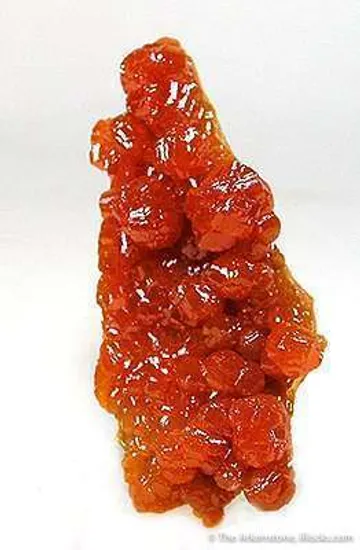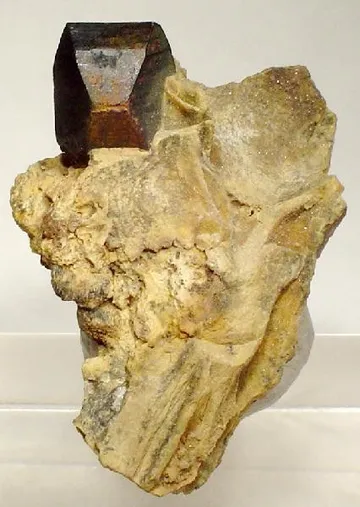
Sawtooth Mountains, USA — renowned for blue aquamarine from pink Eocene granite pockets, plus smoky quartz and rare minerals, a top locality for collectors.
Key facts
The Sawtooth Mountains of central Idaho occupy a peculiar place in American mineral collecting: they are not a great metal-mining camp, nor a fee-dig pegmatite district, but a rugged, high-granite wilderness whose best specimens came from scattered miarolitic cavities in the Sawtooth Batholith. For collectors, the name means blue aquamarine above all—slender, saturated, naturally colored beryl crystals from vugs in pink Eocene granite—but the same system also produced sharp smoky quartz, microcline and albite druses, colorless to golden topaz, rare helvite, bertrandite after beryl, spessartine, fluorite, hematite, zinnwaldite-series mica, and the type-locality mineral potassic-carpholite.
Geologically, the productive ground is tied to the Sawtooth Batholith, a shallowly emplaced, Eocene, high-K granitic body exposed along the bare backbone of the range and related to the Challis volcano-plutonic event. Its pockets are classic volatile-rich granite cavities: small to occasionally large open spaces formed late in crystallization, commonly associated with aplite, pegmatitic segregations, and fracture-controlled zones. In the best cavities, the walls carried white, buff, or pink feldspar with smoky quartz and albite, while accessory minerals recorded the unusual fluorine-, lithium-, manganese-, beryllium-, and rare-element chemistry of the system.
Regional View
Country View
The Sawtooth look is distinctive. Aquamarines are typically strong blue to blue-green rather than the pale washed-blue common in many North American beryl occurrences; even small crystals can carry color that reads clearly in hand. The finest are lustrous, gemmy hexagonal prisms, commonly etched or partially corroded, and only rarely preserved as clean matrix pieces. Smoky quartz, by contrast, may occur as lustrous prismatic crystals, parallel groups, or matrix plates on albite and microcline; topaz is much rarer and is usually colorless, pale golden, or etched. In the field literature and collector accounts, the recurring scene is alpine granite, talus, small lakes, and inconspicuous vug openings that might yield nothing—or, very occasionally, a pocket remembered for decades.
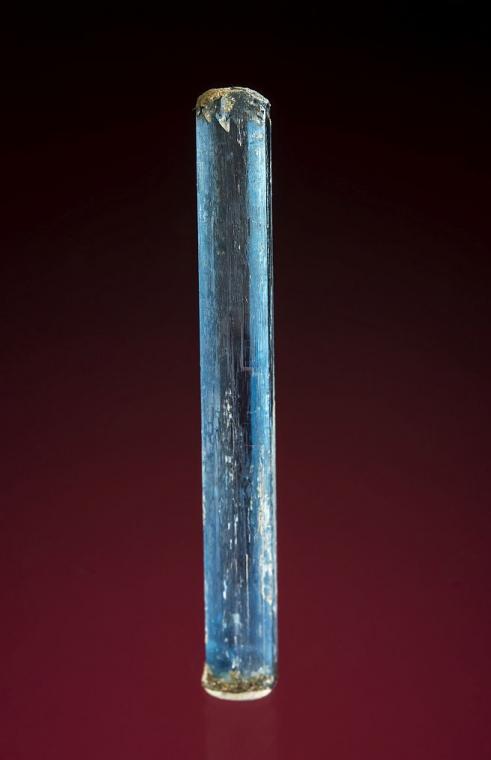
Photo: Dave Bunk Minerals
Search for specimens: View all specimens from Sawtooth Mountains, USA
The specimen-producing Sawtooth localities are best understood as a district of miarolitic-cavity and pegmatitic occurrences in the Sawtooth Batholith rather than as a mine in the normal sense. The batholith is a pink to leucocratic granite to quartz monzonite body, with textures varying locally from aplitic through granitic to pegmatitic. In the mineralized zones, the rock may be very low in mafic minerals and has been described as alaskitic. Miarolitic cavities occur from microscopic openings to large vugs, and their distribution is notoriously irregular: some are isolated specks in granite, some follow healed joints and fracture systems, and some collectors believed productive cavities could be anticipated by tracing structural offsets and elevations.
The classic assemblage is smoky quartz, microcline, albite, and topaz, with beryl variety aquamarine as the great prize. Accessory minerals include fluorite, bertrandite, helvite, carpholite, potassic-carpholite, hematite, apatite-group minerals, spessartine, zircon, columbite-group minerals, and zinnwaldite-series mica. The cavities are not compositionally uniform. Some are nearly barren feldspar-quartz druses; others are topaz-rich; others show beryl or beryl molds with bertrandite alteration; and a few carried the blue aquamarine crystals that made the locality famous.
The broader aquamarine belt includes upper Pinchot Creek, upper Fall Creek, Benedict Creek, and areas around Spangle Lakes, Ardeth Lake, Edna Lake, Toxaway Lake, Imogene Lake, Camp Lake, Heart Lake, Glens Peak, Mount Everly, Upper Cramer Lake, and Devil’s Den. Older government work emphasized that aquamarine was widespread but discontinuous: stringers, blebs, pods, streaks, disseminations, joint coatings, micropegmatites, pegmatite lenses, and occasional vugs, not a mineable ore body on the scale of an industrial beryllium deposit. At Camp Lake, one described Blue Gem occurrence included a vertical pegmatite lens about 9 feet long and 3.5 feet wide with a central aquamarine-quartz-orthoclase zone; nearby, aquamarine filled small fractures and occurred as disseminations over a small cliff-side area. At the Inama prospect near Ardeth Lake, beryl and quartz pods were described in pegmatite, with quartz crystals in vugs.
Historically, local packers knew of aquamarine in the Sawtooths before formal geological study. By the 1960s, Roland Reid and the U.S. Bureau of Mines had described the geology and beryllium occurrences, and Kenneth Liddiard of Atlanta, Idaho, was one of the people associated with bringing the deposits to the attention of government investigators. Serious specimen collecting accelerated in the late 1970s and 1980s, when backcountry collectors such as Geary Murdock, Rich Kosnar, Lanny Ream, William C. van Laer, Michael Menzies, Russell Boggs, and others explored pockets that were difficult to reach and harder to work. The famous material was never the product of a sustained commercial mine; it came from pocket finds, claims, backpack trips, scattered prospects, and highly localized vugs in a landscape better known for lakes and granite walls than for formal mining infrastructure.
Collecting access today is the central practical issue. Much of the classic ground lies within the Sawtooth National Recreation Area and Sawtooth Wilderness or adjacent administered lands, and the U.S. Forest Service stepped up enforcement by 1991 to stop removal of smoky quartz, aquamarine, and other crystals except under special permit, such as for scientific research. As a collecting locality, Sawtooth is therefore largely historical. Specimens on the market should be treated as old-stock, documented collection pieces, permitted/scientific material, or material whose precise legal origin must be established before purchase. Do not assume that a place-name on an old label implies present-day access.
The pockets that produced the most memorable specimens were often small, weathered, and partly breached. Aquamarine commonly survived as loose float below a cavity because the enclosing feldspar and granite weathered away; many crystals are etched, contacted, or corroded by late fluids, while fresh, lustrous, well-terminated crystals are exceptional. Matrix aquamarine is especially scarce because the crystals often separated from the pocket wall. Smoky quartz pockets could be much larger and more productive, including pockets at Devil’s Den and near Edna Lake that yielded plates and loose crystals by the flat. Topaz pockets were rarer still, and the best topaz is prized for sharp form, transparency, intact terminations, and association with smoky quartz, albite, or microcline.
Sawtooth aquamarine is the locality’s signature mineral: blue to blue-green beryl occurring as hexagonal prisms in miarolitic cavities, pegmatitic lenses, joint surfaces, pods, blebs, stringers, and loose float derived from weathered vugs. The best crystals are richly saturated, lustrous, transparent to gemmy, and naturally colored, with many measuring in the thumbnail to miniature range but documented examples reaching well over 10 cm and exceptional reported crystals up to roughly 18 cm. Important producing areas include the Glens Peak–Ardeth Lake–Fall Creek–Camp Lake–Heart Lake belt and related high Sawtooth localities, with associations including smoky quartz, microcline, albite, fluorite, hematite, bertrandite, fluorapatite, zinnwaldite-series mica, and occasionally columbite-group minerals; top examples are judged by depth of blue color, gemminess, sharpness, complete terminations, and freedom from the heavy etching, corrosion, contacts, and fractures that are very common here.
Beryl from the Sawtooth Mountains is overwhelmingly aquamarine in collector terms, but the species also occurs here as less showy, non-gem masses, pods, disseminations, fracture fillings, micropegmatitic streaks, and embedded grains in the pink granite and associated pegmatitic bodies. Field descriptions from Camp Lake, Pinchot Creek, Mount Everly, Glens Peak, and the Ardeth–Edna–Toxaway region show beryl as both a cavity mineral and a rock-forming accessory in beryllium-enriched portions of the batholith, commonly with quartz, feldspar, mica, albite, garnet, and fluorite. Good beryl specimens here are not simply blue material in granite; they show recognizable crystal form, strong aquamarine color, convincing Sawtooth-style etching or pocket texture, and preferably a verifiable old collection history, while massive blue patches and sawn or broken fragments are more geological than specimen-grade.
Quartz is one of the essential minerals of the Sawtooth miarolitic cavities, occurring as smoky, colorless, milky, and locally overgrown crystals with microcline, albite, topaz, beryl, mica, and accessory rare species. In the best pocket specimens it forms sharp prismatic crystals rising from white albite or pale feldspar plates; in altered cavities it may be cloudy, fractured, coated, or partially overgrown by later white quartz, and some crystals contain inclusions or casts related to topaz, beryl, zircon, columbite, zinnwaldite, helvite, or carpholite. Collectors value Sawtooth quartz most when it preserves clean cavity architecture—terminated crystals on matrix, balanced association, and intact luster—rather than merely as loose smoky fragments, which are much more common.
Sawtooth topaz is a scarce miarolitic-cavity mineral, most often recorded as colorless crystals but also known in etched golden to deep-gold examples from certain pockets, especially in the Devil’s Den and high Sawtooth cavity systems. Crystals range from small millimetric individuals on quartz-feldspar plates to cabinet-significant crystals reported from the batholith, with literature summaries noting topaz crystals to about 12 cm; some cores have been reported to fluoresce bright yellow under long-wave ultraviolet light. Fine examples are sharp, glassy, transparent, and undamaged along the basal cleavage, ideally associated with smoky quartz, albite, microcline, or zinnwaldite, while many field pieces are etched, broken, cleaved, or present only as small accessory crystals in quartz-feldspar druse.
Smoky quartz is the commonest showy crystal species in the Sawtooth pockets, ranging from pale gray-brown to nearly black prismatic crystals, parallel aggregates, float crystals, and plates on albite or microcline. Devil’s Den, Upper Cramer Lake, Edna Lake, and other high-granite areas produced memorable smoky pockets, including vugs yielding quantities of crystals, matrix plates, and specimens associated with topaz, albite, microcline, mica, bertrandite, and accessory minerals. The most desirable smokies are lustrous, glassy, undamaged, well terminated, and naturally positioned on clean white albite or pinkish feldspar matrix; lesser pieces are dull, chipped, heavily coated, milky-overgrown, or represented by isolated float with no pocket context.
Microcline is nearly ubiquitous in Sawtooth granite druses and usually appears as white, buff, cream, or pinkish feldspar crystals lining miarolitic cavities with quartz and albite. It is generally not large by international feldspar standards, but the batholith has produced respectable Baveno twins as well as common Carlsbad and Manebach twins, including chevron-like forms noted by collectors. Microcline is most important as the architectural matrix for aquamarine, smoky quartz, topaz, albite, zinnwaldite, and rare accessory minerals; a fine Sawtooth microcline specimen is crisp, clean, and well twinned, or it supports significant blue aquamarine or smoky quartz without the broken, chalky, iron-stained, or weathered surfaces typical of exposed cavity material.
Beyond the headline species, the Sawtooth Batholith is important for rare Be-, F-, Li-, and Mn-bearing accessory minerals. Potassic-carpholite, K(Mn2+Li)Al4Si4O12(OH)4F4, is the locality’s scientific jewel: a type-locality mineral from the Fall Creek drainage near Glens Peak, occurring as tiny white to straw-yellow radiating acicular-to-fibrous tufts in miarolitic cavities. Carpholite itself was a notable U.S. occurrence here before potassic-carpholite was formally described. Helvite occurs as rare yellow to brown tetrahedral crystals or masses and has been reported to about 2.5 cm, an outstanding size for the species. Bertrandite is especially important as an alteration mineral after beryl and as cavity encrustations, while fluorite, hematite, spessartine, fluorapatite, zircon, columbite-group minerals, cassiterite, bastnäsite-(Ce), monazite-group minerals, anatase, calcite, and zinnwaldite-series mica round out a surprisingly sophisticated rare-mineral assemblage for a locality better known to the public as wilderness granite.
Provenance is the first issue with Sawtooth specimens. The best aquamarines are rare, highly desirable, and often old-stock, and historical labels can be problematic. “Centerville, Idaho” appears on some older aquamarine and rare-mineral material connected with Geary Murdock and others, but published discussion has shown that at least some material so labeled almost certainly came from the Sawtooth Batholith, particularly the Fall Creek–Glens Peak area, rather than from Centerville proper. For serious collections, a Sawtooth aquamarine with an old Centerville label should not be dismissed, but it should be catalogued carefully with the label history preserved and the attribution explained.
Documented Sawtooth-specific mislabeling also includes the old rumor of yellow beryl from the district, which was challenged by collectors familiar with the locality; examined material behind that rumor was reportedly yellow apatite from Durango, Mexico, not Sawtooth beryl. No credible Sawtooth suite should include heliodor, morganite, emerald, or red beryl from the batholith unless backed by rigorous analytical and provenance documentation. The beryl here is aquamarine in shades of blue.
Condition expectations must be realistic. Many Sawtooth aquamarines are etched, corroded, fractured, contacted, or partly clouded; complete, lustrous, transparent crystals are a premium subset. Matrix aquamarine is very scarce because the crystals tend to loosen from decomposed cavity walls, and many attractive clusters show contacted or incomplete terminations. Smoky quartz is more available but often chipped, dull, rehealed, or coated with later quartz or clay. Topaz needs particular care because of perfect basal cleavage; even transparent crystals may be cleaved, reassembled, or damaged at the base and termination.
Treatments are not the dominant problem with Sawtooth aquamarine specimens; provenance and legality matter more. The best material is prized specifically for strong natural, unheated blue color. Still, because aquamarine in the gem trade is commonly heated elsewhere to improve color, faceted Sawtooth stones or loose gem rough should be bought with conservative assumptions unless accompanied by testing and trustworthy history. For crystallized specimens, look for natural etching, pocket contacts, feldspar or smoky quartz association, and documented collection lineage rather than overly perfect “loose gems” without context.
Fluorescence is a useful curiosity rather than a routine diagnostic. Some Sawtooth topaz has been reported with bright yellow long-wave UV fluorescence in the core, but the cause was not resolved in the classic literature and not every topaz specimen should be expected to show it. Potassic-carpholite, by contrast, was described as non-fluorescent under ultraviolet light. Handle rare-matrix material gently: mica plates, albite blades, feldspar twins, and bertrandite coatings are all susceptible to abrasion, and the best Sawtooth specimens often owe their value to fragile pocket associations.
Market availability is thin. Smoky quartz and small aquamarine crystals appear periodically, but top-quality aquamarine—strong blue, gemmy, sharp, complete, and well documented—is genuinely scarce. Geary Murdock, Rich Kosnar, Stan Esbenshade, and other older collection names add value when provenance is credible. Recent dealer records show that small lots and isolated crystals still surface, including named-pocket material such as Wormhole Pocket, but buyers should ask direct questions about collection date, land status, permits if applicable, and previous labels. For Sawtooth, a clean chain of custody can be as important as crystal quality.
The Sawtooth story begins before the famous specimens reached glass cases. Local packers already knew of aquamarine in the range before the government studies of the 1960s, and Kenneth Liddiard of Atlanta, Idaho, helped bring the deposits to the attention of investigators. What they found was tantalizing: broad alpine ground with scattered blue beryl in granite, not a conventional mine. The beryllium was real, the color was real, and yet the deposits were maddeningly discontinuous—veinlets here, blebs there, a pocket once in a great while.
By the late 1970s, a handful of determined collectors were treating the Sawtooths as a backcountry mineral frontier. Geary Murdock, formerly of Stanley, became the central figure in the best aquamarine finds. His crystals—rich blue, gemmy, and in some cases large enough to rank among the finest aquamarines ever found in North America—entered the market under labels that later became controversial. To keep localities secret and to avoid the legal consequences of selling wilderness-collected material, specimens were reportedly sold as “Centerville, Idaho.” That label took on a life of its own. Years later, the provenance question became scientific rather than merely commercial when potassic-carpholite was described from material attributed to “near Centerville.” William C. van Laer later argued that the type locality was actually in the Fall Creek drainage near Glens Peak, a Sawtooth locality kept secret for 22 years.
One of the most vivid Sawtooth aquamarine scenes concerns a pocket near Camp Lake. Van Laer described an opening so small that the loose crystals inside could not escape until the surrounding granite was removed. Once accessed, the cavity was “completely choked” with loose aquamarine crystals. It is exactly the kind of Sawtooth pocket collectors dream about: not a great open cave glittering from a distance, but a tight, weathered granite cavity that held its contents only because the entrance was too narrow.
Devil’s Den supplied the hard-country chapters. Collectors approached by long hikes from Yellow Belly Lake, Sand Mountain Pass, Edna Lake, Redfish Lake, Grandjean, Benedict Creek, and other routes, often camping for weeks and carrying specimens nearly 20 miles out on their backs. One trip produced a topaz-smoky quartz-albite pocket on a huge boulder in the western boulder field. The specimen that stayed in memory was a plate of pure white albite with a shiny smoky quartz crystal standing upright from its center; the topaz crystals in the pocket were deep gold, transparent, and badly corroded. Recovering them required clinging to the side of a steep granite face for more than an hour.
The 1985 Edna Lake smoky quartz pocket became one of the legends. It was worked by at least three groups and produced hundreds of pounds of fine smoky quartz crystals, some over 12 inches long. Among the most memorable pieces was a quartz crystal penetrated by an aquamarine crystal—one of those improbable associations that explains why collectors kept returning despite mosquitoes, storms, long trails, and uncertain legal ground.
Another Devil’s Den pocket reads like a field collector’s perfect day. After a storm in which hail covered the ground an inch deep and lightning struck within a few hundred feet, Van Laer found a large miarolitic cavity in a granite boulder. The vug measured about 24 by 18 inches at the opening and plunged at least 40 inches into the boulder. A smoky quartz crystal nearly five inches long lay visible at the entrance, and a large matrix slab about 15 inches across and weighing more than 10 pounds was covered with smoky quartz, topaz, microcline, albite, and small zinnwaldite crystals. Altogether, the pocket yielded about four flats of crystals.
Not all Sawtooth drama was triumphant. On one trip, a collector climbed several hundred feet across an inclined snowfield, cutting steps into the snow to reach a pegmatitic patch on a cliff above a bergschrund. Broken smoky quartz on the way up promised success. At the ledge, however, the pocket was empty except for a roll of used masking tape left behind by someone who had already worked it. A few hematite specimens remained, but the prize was gone. For a locality built on secrecy, long approaches, and pocket-by-pocket luck, it is a perfectly Sawtooth moment: danger, effort, evidence, and disappointment all on the same granite wall.