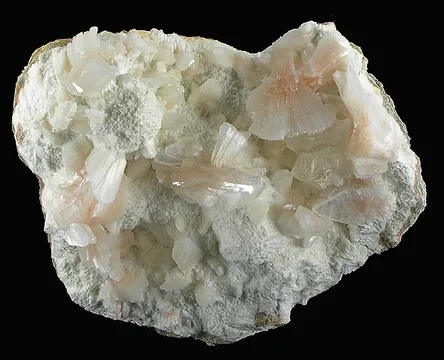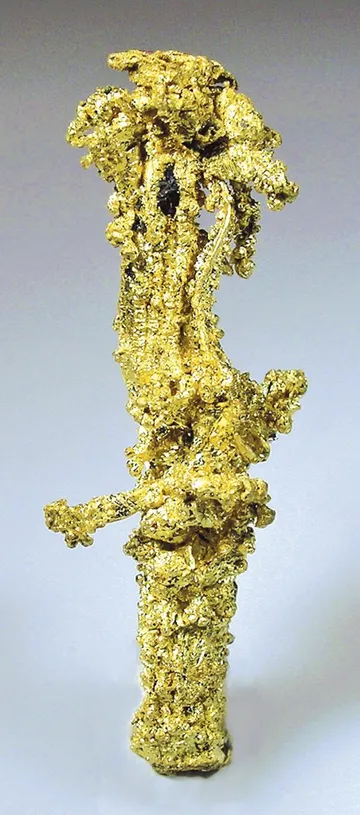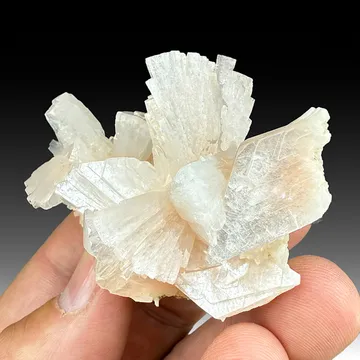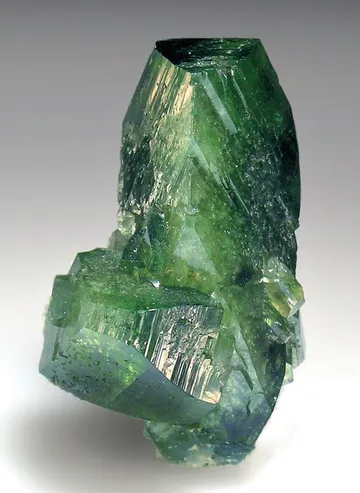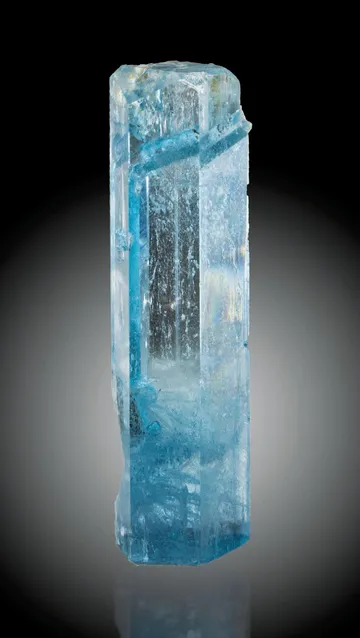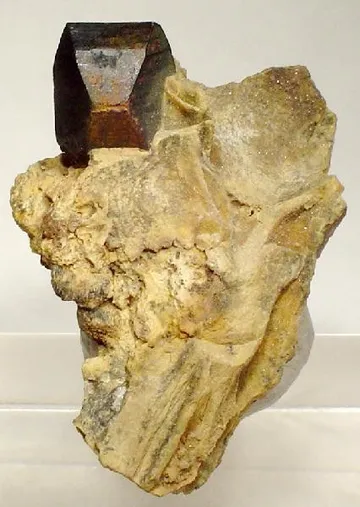
Bunker Hill Mine, USA - renowned for orange to yellow-green pyromorphite and cerussite from oxidized veins; a Coeur d’Alene locality prized by collectors.
Key facts
Bunker Hill is the great American pyromorphite locality: a deep, industrial-scale silver-lead-zinc mine whose collector reputation rests on a narrow, oxidized slice of a much larger polymetallic vein system. The mine lies at Kellogg and Wardner in Idaho’s Coeur d’Alene District, where ore shoots were opened in hard quartzite beds of the Upper Revett Formation, part of the Belt-Purcell Supergroup. The primary ore was built around argentiferous galena, sphalerite, pyrite, siderite, quartz and subordinate copper-antimony sulfosalts; the specimens collectors prize came where that ore was oxidized and reworked into secondary lead minerals. Bunker Hill’s best pyromorphites are unmistakable: lustrous orange, honey-yellow, yellow-green, olive and green crystals, commonly barrel-shaped, hoppered, prismatic, botryoidal or multi-generational, many from the 9 Level Jersey Vein. Fine cerussites, anglesites and rarer secondary species give the locality breadth, but pyromorphite is the mineral that made Bunker Hill a cabinet name.
Regional View
Country View
The mine matters historically as much as mineralogically. It began as one of the defining mines of the Silver Valley, became the dominant lead-zinc-silver producer in the Coeur d’Alene District, and later stood at the center of labor conflict, environmental crisis, Superfund cleanup and modern redevelopment. For the mineral collector, however, the drama condenses into small pieces of oxidized vein: gossanous ribs carrying glossy pyromorphite, pale blades of cerussite in vugs, occasional native silver, yellow massicot associated with cerussite, and older sulfide specimens recording the primary ore that paid for nearly a century of mining.

Photo: Rob Lavinsky, iRocks.com / Wikimedia Commons

Photo: Rob Lavinsky, iRocks.com / Wikimedia Commons
Search for specimens: View all specimens from Bunker Hill Mine, USA
Bunker Hill is an underground polymetallic vein deposit in the western part of Idaho’s Coeur d’Alene mining district, centered around Kellogg and Wardner in Shoshone County. The productive mine workings exploited veins hosted almost entirely in the Upper Revett Formation, a sequence of quartzite-dominant rocks within the Ravalli Group of the Middle Proterozoic Belt-Purcell Supergroup. The important point for collectors is that the best crystallized secondary minerals did not come from a broad, open oxidized pit, but from very specific oxidized stopes and vugs within a huge underground vein system whose primary ore was overwhelmingly industrial.
Mine geologists describe the mineralization in two principal structural families. The earlier Bluebird-type veins trend west-northwest to northwest, dip southwest, and are characterized by sphalerite, pyrite and siderite. Younger galena-quartz veins trend east to northeast, dip generally south to southeast, and carry quartz with argentiferous galena, locally with siderite, sphalerite, chalcopyrite and tetrahedrite-group minerals. The richest hybrid ore formed where the galena-quartz veins cut the earlier, sideritic Bluebird veins: open-space filling and replacement produced high-value lead-silver-zinc shoots, especially where structures refracted through competent quartzite beds. Historic mining followed these shoots vertically and laterally through a complicated faulted system, and more than forty mineralized zones were exploited over the life of the complex.
The great names in the mine’s ore history include the March orebody, discovered in 1904 after completion of the long Kellogg Tunnel, and mined for decades. The mine used several underground methods over time, including square sets, top slicing, room-and-pillar work and block caving. Production began in the late 1880s, and before the long shutdown in 1981 the Bunker Hill complex had produced on the order of tens of millions of tons of lead-zinc-silver ore. A modern technical report gives historic production of 42.77 million tons averaging 8.43% lead, 4.52% zinc and 3.52 oz/ton silver, and notes that Bunker Hill accounted for roughly 42% of the lead, 41% of the zinc and 15% of the silver produced from the Coeur d’Alene District.
Ownership history is equally layered. Noah Kellogg’s 1885 discovery led quickly to claims, litigation and outside capital. Simeon Reed of Portland acquired the property and the Bunker Hill and Sullivan Mining and Concentrating Company was incorporated in 1887. The Kellogg Tunnel, driven to create efficient access, was completed in 1903 and was followed by the March orebody discovery in 1904. The company added a primary lead smelter at Kellogg in 1917 and an electrolytic zinc plant in the 1920s, transforming Bunker Hill from a mine into a full mining, milling and metallurgical complex. Gulf Resources acquired control in 1969. The mine and smelting complex closed in 1981 amid weak metal prices, ore and concentrate problems, and tightening environmental requirements.
For specimen collectors, the decisive oxidized ground was far smaller than the industrial mine. Stopes on the Jersey Vein encountered oxidized lead-silver mineralization near their northern extent, and that zone produced the pyromorphite for which Bunker Hill is famous. The most cited collector labels read “9 Level, Jersey Vein,” commonly with more exact stope or floor information. Some dealer and collector records identify the Jersey Vein pyromorphites as coming from the 9 Level, 17-23 floors. A first run of superb pyromorphite appeared in 1981, and later specimen mining in the 1990s under Bob Hopper reopened the locality’s collector potential. These post-mining specimen operations produced much of the material now circulating through advanced collections: orange arsenian-variety pieces, yellow-green crystal groups, hoppered or barrel-shaped crystals, botryoidal masses, and multi-generational miniatures and small cabinet specimens.
Cerussite came from related oxidized lead zones, particularly on the 9 Level. The Cherry Vein is repeatedly cited for cerussite collected during organized collecting access in the 1990s, while specimen labels also record detailed 9 Level stope designations such as 09-23-21. Bunker Hill cerussite is usually much less flamboyant than the pyromorphite, but good pieces show colorless to gray, twinned blades and reticulated groups on altered galena-rich matrix, locally with massicot and, more rarely, native silver. Quality cerussite is much harder to obtain than the number of Bunker Hill pyromorphites on the market might lead a new collector to expect.
Today the property is not a collecting site. It is private, industrial ground within the Bunker Hill Superfund area, and modern redevelopment has returned the mine to production work rather than recreational access. Bunker Hill Mining Corp. purchased the mine in 2022, produced first concentrate from the redeveloped mine on June 29, 2026, and announced the first concentrate shipment to Teck’s Trail smelter on July 31, 2026. Any collector material now available should be treated as legacy production from mine operations, specimen-mining campaigns, old collections or dealer inventories, not as something accessible for casual field collecting.
Bunker Hill pyromorphite is the locality’s signature mineral and one of the classic American expressions of Pb5(PO4)3Cl. The best specimens came from oxidized lead-silver ore, especially the 9 Level Jersey Vein, where pockets and seams produced lustrous orange, honey-yellow, yellow-green, olive and green crystals. Habits range from stout hexagonal prisms and barrel-shaped to hoppered crystals through botryoidal orange masses and later druses of tiny sparkling crystals over earlier pyromorphite. Specimens are commonly miniatures and small cabinet pieces, though larger groups exist; individual crystals on good pieces may reach several millimeters to around centimeter scale, with exceptional examples displaying sharp form, wet luster, saturated color and sculptural multi-generational growth. The orange material is often marketed as arsenian pyromorphite, but collectors should remember that this is a varietal or compositional description, not a separate species, and analyses have not always supported every “arsenian” label. The best Bunker Hill pyromorphites are clean, bright, three-dimensional and minimally bruised; ordinary pieces tend to be duller crusts, edge-worn botryoidal material or small druses with little contrast.
Bunker Hill cerussite is a quieter but highly collectible companion to the pyromorphite, occurring in the oxidized lead ore of the 9 Level, including the Cherry Vein and nearby stope areas associated with the pyromorphite ground. Typical specimens show colorless, gray-white or slightly smoky PbCO3 crystals as thin blades, flattened twins, reticulated groups and vug linings on altered galena-rich matrix. Larger, aesthetic clusters are uncommon; many pieces are thumbnails or small miniatures, and the paper-thin bladed crystals are easily chipped. Associations include galena, pyromorphite, native silver and yellow massicot on some specimens, giving the best pieces both mineralogical context and visual contrast. A superior Bunker Hill cerussite has transparent to translucent blades with recognizable twinning, open reticulated architecture, and intact terminations; ordinary pieces are massive white carbonate, crushed vug fragments or heavily damaged plates.
Beyond pyromorphite and cerussite, Bunker Hill has a broad but distinctly lead-zinc-silver assemblage. Documented species include galena, sphalerite, pyrite, chalcopyrite, tetrahedrite-group minerals, pyrargyrite, stephanite, acanthite, native silver, native copper, bournonite, boulangerite, anglesite, caledonite, linarite, wulfenite, smithsonite, hemimorphite, hydrocerussite, massicot, plattnerite, pyrolusite, quartz, siderite, calcite, barite, gypsum, goethite and muscovite-sericite. Acanthite has been specifically recorded as minute black blade-shaped crystals from the Orr orebody. Native silver specimens are much rarer than the mine’s silver production might suggest, and good anglesite, cerussite-massicot and linarite pieces are sought as supporting cast members from the oxidation zone. Bunker Hill’s fame is not built on type-locality species; it is built on the quality, variety and documentation of secondary lead minerals from a world-class base-metal mine.
Bunker Hill specimens are generally straightforward, but provenance matters. The strongest pyromorphite labels are specific: “Bunker Hill Mine, Kellogg/Wardner, Shoshone County, Idaho,” ideally with “9 Level, Jersey Vein,” floor or stope data, and a date or collector history from the 1981 finds, the early 1980s mine-era material, or the Bob Hopper specimen-mining period of the 1990s. Vague “Idaho pyromorphite” labels should be treated cautiously because the Coeur d’Alene District contains multiple lead-silver-zinc mines that have produced pyromorphite. Conversely, some yellow-green or orange pyromorphites from the district have been tentatively reassigned by dealers when matrix, habit or label history did not fit the named locality.
The commonest naming issue is “arsenian pyromorphite.” Orange Bunker Hill material has long been sold under that varietal description, and arsenic-bearing pyromorphite is plausible in a lead oxidation environment; however, “arsenian pyromorphite” is not a separate mineral species, and not every orange, rounded or botryoidal Bunker Hill specimen should be assumed to have a meaningful arsenic content without analysis. Do not pay a premium for the word alone. Pay for the specimen: color, luster, crystal form, lack of bruising, three-dimensionality and reliable provenance.
Condition is the great practical issue. Bunker Hill pyromorphite commonly occurs as dense crystal clusters or botryoidal crusts on oxidized, friable matrix. Edges can be abraded, small prisms can be cleaved or bruised, and botryoidal surfaces can lose their wet luster if rubbed. Some specimens have fragile matrix or crystal-to-crystal contacts and may have been stabilized for preservation; stabilization is not automatically disqualifying if disclosed, but it should be reflected in price and handled transparently. Cerussite is even less forgiving: thin Bunker Hill blades are easily chipped, and many otherwise attractive pieces show broken edges under magnification.
The locality is also a lead mine, so normal lead-mineral handling discipline applies. Do not lick, soak or acid-clean specimens; avoid generating dust from friable matrix; wash hands after handling; keep pieces away from children and food-preparation areas. Some green and yellow-green Bunker Hill pyromorphites have been reported to fluoresce weak orange under both longwave and shortwave ultraviolet light, but fluorescence is a curiosity here, not a primary value driver. Current market availability is decent for pyromorphite thumbnails and miniatures, especially orange to yellow-green pieces from old specimen mining, while top small-cabinet examples with sharp crystals and saturated color have become strongly competitive. Fine Bunker Hill cerussite, native silver and unusual secondary species are much scarcer and should be judged with more patience than the better-known pyromorphites.
The Bunker Hill story begins in the half-light between fact and mining legend. In 1885, Noah Kellogg was an aging prospector doing odd jobs around Murray when the discovery story places his jackass on a shining outcrop of lead ore. In the retelling, the animal brayed from the outcrop and the galena glittered in the sun “like a mirror.” Kellogg staked the Bunker Hill and Sullivan claims, but even the paperwork became part of the legend: a discarded claim notice, Cooper and Peck, a lawsuit, and an award that split ownership before the mine had fully become the mine. It is a perfect Silver Valley origin story because it contains almost everything that followed: luck, ore, animals, lawyers, outside money and contested ownership.
The mine’s labor history is no less dramatic. On April 29, 1899, during the Coeur d’Alene labor confrontation, armed union miners seized a Northern Pacific train at Burke and rode toward Wardner. The train became known as the “Dynamite Express.” Contemporary accounts describe a train of nine cars and two engines, and the explosive charge carried to Bunker Hill was no symbolic gesture: 3,000 pounds of dynamite, taken from the Frisco mine at Gem, were placed at the mill. The blast demolished the concentrator; the company office, books and papers were destroyed, and a boarding house roughly 300 feet from the mill burned to ashes. Two men died. Governor Frank Steunenberg declared martial law, federal troops arrived, and hundreds of men were arrested. For collectors holding a quiet orange pyromorphite from Bunker Hill, it is worth remembering that the same mine name once meant troop movements, dynamite, blacklists and one of the defining labor crises of the American West.
The pyromorphite story is more intimate but, in mineral terms, just as astonishing. A pocket hit in July 1981 yielded the first batch of superb specimens, and three pockets were opened that summer. The third was later described in collector literature as one of the spectacular American mineral finds. The discovery was not a broad production run; it was the kind of event serious collectors dream about: color suddenly appearing in an old oxidized lead zone, crystals instead of ore, and small volumes of rock worth more as specimens than as metal.
After the main mine closed, Bob Hopper’s 1990s specimen work gave the locality a second life. One 1993 local newspaper account described Hopper taking over mineral rights after bankruptcy, repairing rail, restoring power, replacing timber, pressure-washing and sealing concrete areas, and then turning to the crystals. Earlier operators had installed a steel gate in the drift leading to the stope to stop miners from looting the pyromorphite, but Hopper found they had only “scratched the surface.” He worked along a mud seam by what he called “finger mining,” and eventually found the prize: an air pocket only about three feet wide and twelve inches deep. Hopper estimated that the crystals from that little space were worth a conservative $30,000; one flat of pyromorphites was appraised and sold for more than $15,000. The scale is deliciously disproportionate: a vast mine, a tiny cavity, and a flat of orange crystals worth more than a truckload of ordinary rock.
Collectors who visited during the 1990s encountered the locality as an underground mine, not a casual dump. On an October 1994 collecting trip remembered by Ron Zeilstra, the group split in two: one party went to the Jersey Vein for pyromorphite, while the other rode deeper toward the Cherry Vein for cerussite. The mine train suffered a minor derailment before continuing. At the collecting area, the group climbed a short ladder into the stope, then worked seams and vugs with hammer and chisel, screwdriver and small brush. Micromount cerussites were easy; larger crystals were rare. That detail rings true to anyone who has worked oxidized lead vugs: the wall may be full of promise, but an intact thumbnail can be the day’s treasure.
The environmental chapter is darker and inseparable from the modern locality. On September 3, 1973, fire damaged the smelter’s baghouse, the primary filtration system for the lead smelter. Rather than stopping for a full remedy, operations continued through a period of high metal prices with drastically reduced pollution control. Emissions rose to extraordinary levels, and state and federal records describe high-lead particulates affecting Kellogg, Smelterville and surrounding communities. Dozens of children were diagnosed with acute lead poisoning in 1974. The Superfund designation and decades of cleanup that followed are not footnotes; they are part of why the locality is closed, controlled and industrial today. Bunker Hill specimens carry beauty from an oxidation zone, but the mine’s history is also a reminder that lead is never merely a cabinet mineral.