R. A. Kosnar claim, USA — Lake George area locality yielding amazonite and smoky quartz; prized old Colorado stock pieces with strong color and provenance.
Key facts
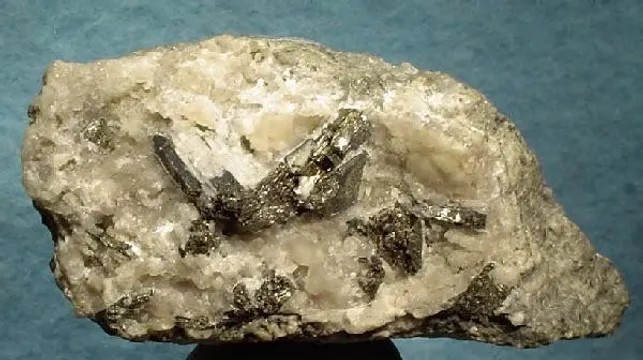
The R. A. Kosnar claim is a classic Lake George-area miarolitic pegmatite occurrence on Yucca Hill, in the Steven’s Ranch area near Lake George, Park County, Colorado. For collectors it belongs to the great Pikes Peak batholith amazonite–smoky quartz tradition: small, volatile-rich pegmatite pockets in granitic host rock, opened not for ore but for crystallized display specimens. Its reputation rests on the color and preservation of its microcline, especially the amazonite variety, together with smoky quartz, albite, pale fluorite, iron oxides and siderite-related pseudomorphs. The best pieces have the unmistakable Lake George look—blocky blue-green feldspar with satiny to lustrous faces, dark gemmy quartz projecting from the feldspar, white albite accents, and, in the more unusual associations, hematite after siderite or golden-black goethite sprays.
Regional View
Country View
The locality’s collector history is tightly bound to Richard A. Kosnar and the Kosnar family collecting tradition. Documented specimens record important collecting episodes in August 1976, summer 1977, summer 1978, and August–September 1980, with later pieces passing through the Richard, Brian, Tresa Kosnar, and Dave Bergman collections. Those dates matter: they identify the claim’s most desirable material as old Colorado stock rather than modern field-trip production, and they help separate true R. A. Kosnar-claim specimens from the far more general “Lake George” or “Crystal Peak” labels that often appear in commerce.

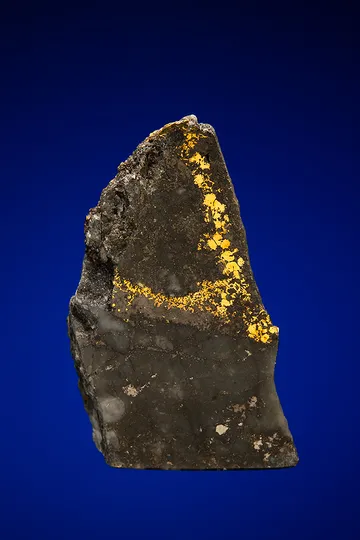
Photo: Wikimedia Commons / Rob Lavinsky, iRocks.com

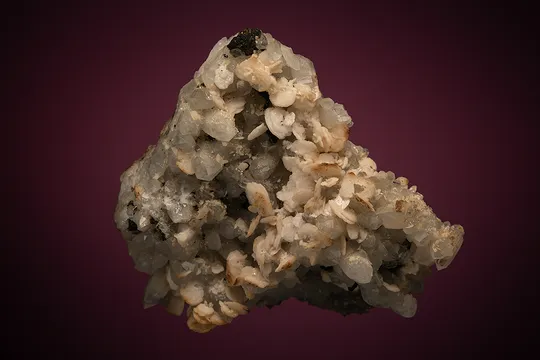
Photo: Wikimedia Commons / Rob Lavinsky, iRocks.com
Search for specimens: View all specimens from R. A. Kosnar claim, USA
The claim is catalogued as a claim-level locality on Yucca Hill at Steven’s Ranch, near Lake George in Park County, Colorado. It lies within the broader Lake George pegmatite district of the Pikes Peak batholith, a region famous since the nineteenth century for miarolitic pegmatites that yield amazonite, smoky quartz, albite, fluorite, goethite and related accessories. The productive bodies here are not veins of metallic ore in the usual sense; they are pegmatite dikes, lenses, and pocket zones in granitic rock. Where late-stage fluids and vapor phases collected, open cavities formed, allowing euhedral feldspar and quartz crystals to grow into space rather than as massive intergrowths.
In the regional Lake George model, the Pikes Peak batholith is a Mesoproterozoic, anorogenic A-type granitic complex, and the Lake George intrusive center is a composite body with both granitic and more sodic ring-complex rocks. Productive amazonite–smoky quartz pegmatites in the district are concentrated in granitic units and commonly show aplite, graphic granite, blocky feldspar, quartz, and open miarolitic cavities. The Kosnar claim’s specimens fit that pattern exactly: crystallized microcline and amazonite as the principal feldspar, quartz as smoky prismatic crystals, albite as white cleavelandite-like accents, and a late iron-oxide/carbonate suite represented by siderite, hematite pseudomorphs after siderite, goethite, and locally fluorite.
The specimen record indicates several productive collecting phases. August 1976 is repeatedly attached to the finest blue-green amazonite from the claim, including miniature and small-cabinet pieces with white striping, white caps, albite, smoky quartz, fluorite, and hematite. Summer 1977 is tied to hematite-after-siderite material on smoky quartz and microcline, while summer 1978 produced sharp siderite-form pseudomorph clusters on pink microcline. August 1980 yielded goethite–fluorite and goethite–hematite associations, and September 1980 is recorded for a R. A. Kosnar #7 Prospect microcline specimen. Taken together, those dates suggest a small number of pocket discoveries rather than continuous commercial mining.
Because the locality is a named claim in a heavily collected and historically claimed district, it should not be treated as a casual public collecting site. Modern access in the Lake George area is complicated by private land, National Forest land, federal mining claims, and long-standing collecting agreements. Serious collectors should regard any digging at or near the Kosnar localities as permission-only, with the added practical warning that Mindat’s coordinate for the claim is approximate at regional scale rather than a precise dig-site location. In commerce, the secure provenance is the label: “R. A. Kosnar claim, Yucca Hill, Steven’s Ranch, Lake George, Park County, Colorado,” ideally backed by an old Kosnar, Bergman, iRocks/Arkenstone, or Mindat photo record.
Microcline from the R. A. Kosnar claim occurs as the dominant pocket feldspar, ranging from cream, buff, pinkish and white matrix crystals to blue-green amazonitic crystals where color is strong enough to warrant the varietal name. Documented non-amazonitic examples include blocky cream crystals from the R. A. Kosnar #7 Prospect and pink microcline matrices carrying hematite-after-siderite pseudomorphs; the finest microcline specimens here are judged not simply by crystal size, but by sharp blocky habit, clean terminations, luster, and the way the feldspar frames more dramatic associates such as smoky quartz, albite, goethite, fluorite, siderite forms, or metallic hematite.
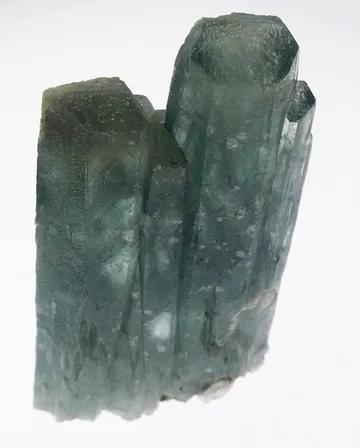
Amazonite is the claim’s signature mineral and the reason R. A. Kosnar-claim labels command attention: the best documented pieces show sharp, well-formed, blue-green to rich turquoise-green microcline crystals, commonly miniature to small-cabinet in scale, with classic off-white striping along prism faces or highly desired white “caps” on the terminations. The August 1976 find is repeatedly cited for especially fine color; standout specimens pair amazonite with gemmy smoky quartz, minor white albite, small pale lilac fluorite octahedra, or reddish-brown botryoidal hematite, and the highest-grade pieces are those with saturated color, unrepaired composition, undamaged display faces, and a balanced Colorado aesthetic rather than isolated single crystals.
Quartz at the R. A. Kosnar claim is chiefly represented in the specimen record by smoky quartz, but the broader quartz entry is important because the claim’s pocket paragenesis depends on quartz as a major cavity mineral with microcline and albite. Documented pieces show quartz crystals perched on, flaring from, or rising through feldspar groups, including deep smoky crystals on pink and white microcline and amazonite–quartz–albite combinations; ordinary pieces are simple pocket quartz or broken smoky fragments, whereas collectible Kosnar-claim quartz shows sharp prism faces, intact terminations, transparency, good contrast with feldspar, and, in the better association pieces, hematite-after-siderite or goethite placed naturally on the quartz faces.
Hematite from the claim is especially desirable where it preserves the rhombic form of siderite, producing sharp metallic gray to reddish-brown pseudomorphs perched on microcline or smoky quartz; documented examples include 1.0 cm pseudomorphs on smoky quartz and a 1.3 cm pseudomorph on pink microcline from material collected by Richard Kosnar in the late 1970s. The locality also produced botryoidal hematite on amazonite–smoky quartz and metallic disc-like hematite associated with goethite, making the best hematites here association specimens first and iron-oxide specimens second: crisp form, contrast, and undamaged placement matter far more than bulk.
Smoky quartz from the R. A. Kosnar claim appears as lustrous, translucent to gemmy, dark smoky crystals in the classic Lake George association with amazonite and microcline, often as compressed or tabular-looking points that flare from the feldspar rather than standing as isolated quartz singles. The most appealing pieces combine deep color with clarity, sharp termination, and a natural junction with blue-green amazonite; larger matrix examples with multiple smoky points exist, but because Colorado amazonite–smoky quartz combinations are often repaired or restored, an unrepaired cabinet-sized Kosnar-claim plate with both components intact is substantially rarer than a thumbnail or small miniature.
Siderite is central to the claim’s iron-oxide assemblage even when little fresh carbonate remains, because many of the best hematite specimens are described as sharp rhombic siderite crystals replaced by hematite. In documented R. A. Kosnar material the siderite habit is seen as aesthetic rhombs grouped on pink microcline, sometimes with goethite or quartz nearby; the pieces collectors prize are those where the siderite form is unmistakable after replacement, with crisp rhomb outlines, minimal bruising, and strong contrast against pale feldspar, rather than massive brown iron staining or indistinct oxidized patches.
Goethite from the R. A. Kosnar claim is documented as golden-black to dark brown needles, blades, sprays, and lustrous crystalline aggregates, most notably on fluorite, with hematite, or as sharp sprays on matrix. The best pieces differ sharply from ordinary iron-oxide coatings: they show visible bladed or acicular structure, bright luster, and a sculptural spray habit, with some specimens reaching cabinet scale; the most distinctive associations include gemmy lilac fluorite under goethite needles and metallic hematite with golden goethite sprays, both of which are much less common than the standard amazonite–smoky quartz pairing from the Lake George district.
Other documented minerals from the R. A. Kosnar claim include albite, commonly as white accents on amazonite or microcline, and fluorite, photo-documented as pale lilac octahedra with amazonite or as gemmy lilac crystals under goethite needles. No verified type-locality mineral is known from the claim itself. The name Kosnarite belongs elsewhere mineralogically—it was described from Maine pegmatites—but it honors Richard A. Kosnar of Black Hawk, Colorado, which gives the claim an additional historical resonance for collectors who know the Kosnar name from Colorado specimens and mineral literature.
The first authenticity issue is locality precision. “Lake George,” “Crystal Peak,” “Pikes Peak batholith,” “Yucca Hill,” “R. A. Kosnar claim,” and “R. A. Kosnar #7 Prospect” are not interchangeable labels. True Kosnar-claim specimens should carry a more specific provenance than “Colorado amazonite,” and the most convincing examples are supported by old Kosnar-family, Dave Bergman, iRocks/Arkenstone, MineralAuctions, or Mindat-linked records. A specimen with only a broad Lake George label may be excellent, but it should not be upgraded to the Kosnar claim without documentation.
The second concern is restoration. Colorado amazonite–smoky quartz combinations from the Pikes Peak batholith are famous for being cleaned, trimmed, glued, repaired, or stabilized, partly because pocket extraction often separates feldspar from quartz and partly because attractive combinations have high market value. There is no need to assume every Kosnar-claim combination is repaired, but the buyer should inspect crystal junctions, bases, old breaks, feldspar terminations, and smoky quartz contacts under magnification. An unrepaired, balanced combination—especially cabinet size—is a notably stronger specimen than a visually similar reconstructed plate.
Condition is critical on amazonite. Edge wear on feldspar corners, bruised terminations, cleaved back faces, and dull or etched areas can reduce value dramatically, while clean blue-green color, sharp form, white striping, white caps, and attractive albite or quartz placement raise desirability. Smoky quartz should be checked for rehealed breaks, chips at the termination, and glued roots. Hematite-after-siderite and goethite pieces should be handled carefully because fine blades, needles, and pseudomorph edges are vulnerable to abrasion; iron oxides also make small areas of damage visually obvious when bright metallic surfaces are dulled.
Fluorescence is not a defining feature of the classic Kosnar-claim amazonite, but Lake George-area feldspar and albite specimens may show short-wave ultraviolet responses, particularly pink to reddish fluorescence in feldspar or albite on some related pieces. Fluorescence should be treated as an added observation rather than a primary authentication tool.
Market availability is thin but not absent. Old Kosnar-claim thumbnails and miniatures surface periodically through dealer inventories and auction archives, often with Brian Kosnar, Richard Kosnar, Tresa Kosnar, Dave Bergman, iRocks, or Arkenstone provenance. Strong-color amazonite with smoky quartz remains the most liquid material. Hematite-after-siderite, goethite–fluorite, and well-composed iron-oxide association specimens are scarcer and appeal to more specialized Colorado collectors, especially when they carry a specific late-1970s or 1980 collection date.
The defining field story of the R. A. Kosnar claim is the August 1976 amazonite find. The surviving specimen record is unusually consistent: multiple pieces, later dispersed through important Colorado collections and dealer archives, point back to that month as the moment when Richard Kosnar recovered some of the finest-color amazonite attributed to the claim. One small specimen, only 3.8 x 2.5 x 2.2 cm, carries nearly the full vocabulary of the find in miniature: sharp blue-green amazonite, gemmy smoky quartz, white albite, and the old Richard Kosnar collection provenance. Another 3.6 x 2.7 x 1.5 cm piece adds the rarer accent of pale lilac fluorite at the base of lustrous amazonite crystals, proving that the pocket system was not merely feldspar and quartz, but capable of producing the kind of accessory association that Colorado specialists remember.
The 1976 material also produced the white-cap and striped amazonites that collectors now prize as immediately recognizable Kosnar-claim pieces. One auctioned small-cabinet crystal measured 5.3 x 4.3 x 3.1 cm and was described as a sharp blue-green amazonite with a distinctive white cap and minor smoky quartz. Another miniature, 4.3 x 3.7 x 2.7 cm, showed the classic off-white striping along the prism. These are not just decorative quirks: on Lake George amazonite, the pale striping and caps give a crystal identity, and they help separate a memorable specimen from a merely colorful feldspar.
The iron-oxide pockets tell a different chapter. In summer 1977, Richard Kosnar collected hematite-after-siderite material that looks, at first glance, almost unlike the famous amazonite pieces. One 6.2 x 3.7 x 3.6 cm specimen carries sharp metallic gray pseudomorphs after siderite, the largest about 1.0 cm, perched along the prism faces of deep smoky quartz on minor pink and white microcline. Another 3.2 x 2.1 x 2.0 cm specimen shows the same mineralogical idea more compactly: siderite rhombs replaced by hematite, sitting on contrasting microcline. For collectors who love pseudomorphs, these are among the claim’s most characterful pieces, because the value lies in what the crystals used to be as much as in what they are now.
By summer 1978 the claim had yielded another classic pseudomorph association: a 4.8 x 3.8 x 3.3 cm group of sharp siderite-form crystals replaced by hematite on pink microcline, with the largest pseudomorph 1.3 cm across. The date and provenance matter here. Many Lake George labels drift in the marketplace, but a specimen tied to Richard Kosnar’s own collecting, with a specific summer 1978 recovery date, occupies a firmer historical place.
The August 1980 finds shifted the spotlight again, this time to goethite. One 4.3 x 3.3 x 3.2 cm specimen paired sharp golden-black goethite needles with gemmy lilac fluorite, a combination noted as uncommon for the area. Another 4.0 x 3.7 x 2.3 cm piece combined golden goethite sprays with metallic gray hematite discs. These are the specimens that broaden the claim beyond the usual amazonite–smoky quartz story: they show the same pocket environment moving into late iron-rich mineralization, where delicate sprays, pseudomorphs, and fluorite accents could form after the main feldspar-quartz show was largely over.