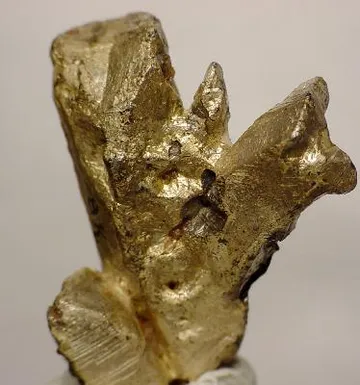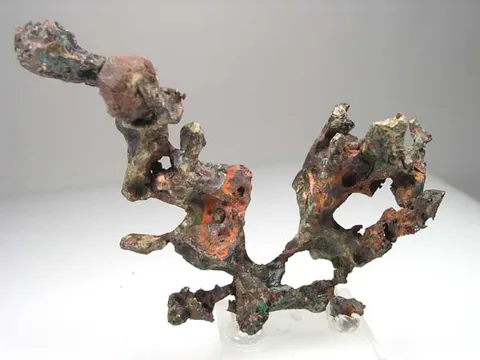
Quincy Mine, USA — Keweenaw locality famed for native copper in glassy calcite, peach-to-orange inclusions, arborescent copper, and datolite nodules prized by…
Key facts
Quincy Mine stands on Quincy Hill above Hancock, Michigan, in the heart of the Keweenaw Peninsula native-copper district: one of the few places on Earth where copper was mined chiefly as native metal rather than as sulphide ore. For collectors, Quincy is not merely a big historic copper mine; it is one of the defining localities for the most poetic of all Lake Superior associations—native copper suspended inside transparent to translucent calcite. The deposit belongs to the Mesoproterozoic Portage Lake Volcanics of the Midcontinent Rift, where hydrothermal fluids moved through porous amygdaloidal flow tops, brecciated zones, and fractures, depositing copper, silver, calcite, prehnite, epidote, quartz, datolite, pumpellyite, zeolites, and later oxidation products.
Quincy’s best specimens are instantly recognizable: peach, salmon, rose, or metallic orange copper inclusions glowing through glassy calcite scalenohedrons; sharp bronze-brown copper crystals stacked in arborescent groups; white to yellow-orange datolite nodules with thin brown rims; rare white-to-colorless analcime trapezohedra; and silver-copper “halfbreed” pieces where Ag and Cu meet in rounded, hackly, or crystallized masses. The mine’s production history gives those specimens unusual gravity. Quincy was “Old Reliable,” the dividend-paying industrial giant that turned the Pewabic amygdaloid into one of America’s great nineteenth-century copper sources, supplied Civil War and electrical-age demand, and ultimately sank the No. 2 shaft more than 9,000 feet down the inclined lode.
Regional View
Country View
The classic collector’s Quincy specimen is small enough to fit in the palm yet complex enough to hold attention under changing light. Fine calcites show complete scalenohedral form, internal copper that is not merely a stain but visible metal, and preferably a little matrix—dark native copper, altered basalt, quartz, prehnite, epidote, or secondary calcite—to place the crystal in context. The very best examples have copper inclusions that seem to echo the calcite’s own growth zones, producing internal “phantoms” in peach and pink. Such pieces are overwhelmingly old stock, commonly attributed to the pre-World War I mining era, and top examples now move from collection to collection rather than from mine to market.

Photo: James St. John / Wikimedia Commons
Search for specimens: View all specimens from Quincy Mine, USA
Quincy Mine is an underground native-copper mine on Quincy Hill at Hancock, Houghton County, Michigan, on the north side of Portage Lake. The collector locality is part of the larger Quincy Mining Company landscape, including mine shafts, rockhouses, hoist houses, surface buildings, stamp-mill and smelter history, poor-rock piles, and the preserved No. 2 industrial core now interpreted by the Quincy Mine Hoist Association within the Keweenaw National Historical Park setting.
The ore deposit is a stratiform native-copper system hosted chiefly by amygdaloidal basalt of the Portage Lake Volcanics. At Quincy, the productive horizon was the Pewabic amygdaloid, a porous flow-top interval whose vesicles, breccias, and fractures were later filled or partly replaced by secondary minerals and native metal. The lode was tilted with the volcanic sequence, and the mine followed that inclined copper-bearing layer to great depth. The Hancock Fault and the larger Keweenaw structural system are important in the local geologic context because they helped provide pathways and gradients for the mineralizing fluids that charged the amygdaloid.
Quincy’s early work began with exploration in 1846, and the company was organized and incorporated in the late 1840s. The first decade was difficult because the operation sought fissure-style copper with disappointing results. The mine’s fortunes changed when the Pewabic amygdaloid was recognized crossing Quincy ground in the mid-1850s. Unlike the great mass-copper fissure mines, the amygdaloid contained smaller pieces, sheets, grains, and crystals of copper distributed through the rock; this could be drilled, blasted, hoisted, stamped, and concentrated far more efficiently than wrestling enormous masses from a fissure vein.
The main ore minerals of collector interest are native copper and native silver. The principal gangue and cavity minerals include calcite, prehnite, epidote, quartz, pumpellyite, chlorite, K-feldspar or adularia, laumontite, analcime, datolite, and ankerite, with oxidation minerals such as cuprite, malachite, azurite, chrysocolla, and paratacamite documented from the mine. In the ore, copper occurs in amygdules, interstitial spaces, fractures, and calcite-rich seams; old descriptions of the Pewabic material note large irregular patches and veins of calcite with copper passing through them and small amounts of native silver associated with some of the larger copper.
The operation was owned and developed by the Quincy Mining Company. In the nineteenth century it became one of the nation’s major copper producers, and during the Civil War years it ranked among the most important American copper sources. The company’s reputation for steady returns produced the nickname “Old Reliable”: after early dividends in the 1860s, it paid annual dividends for more than half a century, ending in 1920. Its major productive period on the Pewabic lode ran from the 1850s until the Depression closure in 1931, with a reopening in 1937 and wartime production continuing until 1945. Reclamation of stamp sands for residual copper continued after underground mining had ceased, extending Quincy’s industrial afterlife into the 1960s.
The No. 2 shaft became the mine’s great engineering emblem. By the early twentieth century it extended more than 9,000 feet down the incline, making it one of the deepest and longest shafts in the Western Hemisphere. The 1908 No. 2 shaft-rockhouse and the 1918–1920 Nordberg steam hoist complex were built to move rock from these extreme depths. The hoist could raise large skips at high speed, and the surviving machinery is one of the iconic industrial artifacts of the Copper Country.
Specimen production was a by-product of mining rather than the reason for mining. The finest copper-in-calcite pieces came from vugs, calcite seams, and amygdaloidal openings where calcite grew around native copper or where copper remained exposed on the exterior of calcite crystals. Old Centennial Exhibition descriptions already singled out “vugs, with crystallized copper” and “spar containing native copper” from the Pewabic Belt at Quincy, showing that these pieces were recognized as display-worthy in the nineteenth century. Later generations of miners, collectors, dealers, and museum curators preserved the best examples when they emerged from ore or poor rock.
Collecting access today is tightly constrained. The preserved mine site is not an open collecting locality: collecting artifacts or copper specimens on Quincy Mine Hoist Association or National Park Service property is prohibited. Visitors can take guided tours of the hoist house, shaft-rockhouse, and underground workings, and the gift shop has historically offered local geology and mineral specimens, but serious collectors should treat field-collected Quincy labels with care unless they come with old documentation, a mine-era label, a known collection history, or a credible modern legal source. The annual local rock-swap culture around the Keweenaw remains important for old Copper Country specimens, but the historic Quincy workings themselves are a preservation landscape, not a digging site.
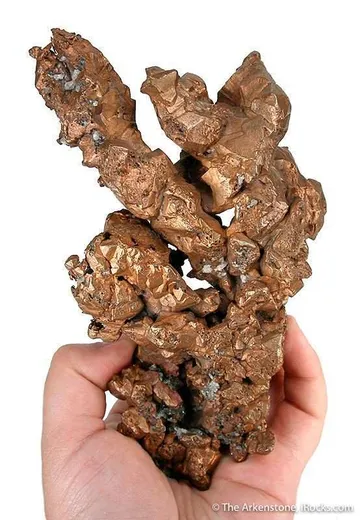
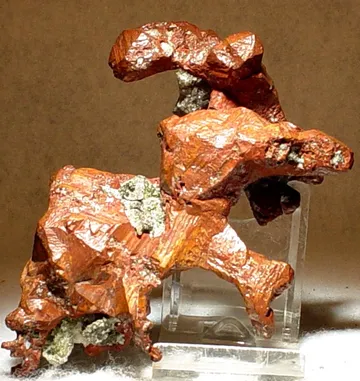
Native copper from Quincy occurs as sharp to rounded isometric crystals, stacked crystal groups, arborescent sprays, leaf and vein copper, blebs in basalt, and the celebrated copper inclusions inside calcite; the A. E. Seaman Mineral Museum notes fine Quincy crystals, many with dodecahedral habit, as well as microcrystals in amygdules. The most desirable loose copper pieces show recognizable crystal form rather than merely massive or smoothed “poor-rock” metal, with warm bronze to chocolate patina, minimal bruising, and contrasting matrix of calcite, quartz, prehnite, epidote, datolite, or altered amygdaloid; the top calcite-associated examples add a second visual register, with fresh peach-orange native copper seen through clear calcite while exterior copper has darkened naturally.
Calcite is Quincy’s signature display mineral because it grew as sharp, lustrous, commonly scalenohedral crystals that trapped native copper during growth, tinting otherwise colorless to white calcite pink, peach, salmon, or reddish orange. Fine specimens range from thumbnails of a single complete scalenohedron to small-cabinet groups, with documented examples around 2–6 cm and exceptional market pieces larger; the best are gemmy enough to reveal discrete copper blebs, grains, leaves, or phantom-like zones inside the crystal, and many old pieces are doubly terminated or perched on copper-rich matrix. Ordinary Quincy calcite is massive, cleaved, white, or only vaguely included; elite Quincy calcite has clarity, undamaged terminations, good luster, strong internal copper, and, ideally, exterior native copper or old matrix proving the natural association.
Native silver at Quincy is much scarcer than copper but an essential part of the mine’s collector identity, appearing as crystallized silver, hackly to rounded silver masses, and silver-copper “halfbreed” specimens where bright white Ag and copper-red to brown Cu occur in the same piece. Old ore descriptions mention small quantities of native silver associated with large copper masses in calcite-rich parts of the lode, and collector examples include silver on copper, silver with prehnite and copper, and rounded halfbreed nuggets recovered from poor-rock material. Quality is determined by the amount and visibility of silver, the separation or contrast between the two native metals, preserved crystal or hackly texture, and a trustworthy label, since many Copper Country halfbreeds circulate with broad regional attributions rather than mine-specific provenance.
Datolite from Quincy is a classic Keweenaw accessory rather than the mine’s most abundant show mineral, but it is well documented as white masses with thin brown rims, yellowish veins, and bright orange-red nodules, locally with native copper inclusions or copper in direct association. Most collector datolite from Quincy is seen as cut and polished nodular material or as compact porcelaneous masses rather than free, glassy crystals; good pieces show strong locality color, clean polish, sharp contrast between rind and interior, and clear evidence of copper-rich association when present. Because Keweenaw datolite nodules can often resemble one another across mines, old labels and distinctive Quincy associations are especially important for attribution.
Analcime is a rare and desirable Quincy zeolite, occurring as white to colorless trapezohedral crystals in association with quartz, calcite, prehnite, chabazite, and native copper; the A. E. Seaman Mineral Museum records Quincy crystals up to 6 cm, while collector specimens commonly show smaller gemmy crystals draped on quartz or perched in copper-bearing assemblages. The best pieces are not merely locality curiosities but real crystallized zeolite specimens: sharp, bright, transparent to translucent trapezohedra with clean faces, attractive spacing, and visible Keweenaw matrix. Because large, aesthetic analcime is unusual in the Michigan copper deposits, a confirmed Quincy example with old provenance commands attention well beyond the usual copper-in-calcite audience.
Other documented Quincy minerals include ankerite, azurite, malachite, cuprite, chrysocolla, paratacamite, gypsum, epidote, pumpellyite-(Mg), pumpellyite-(Mg) var. chlorastrolite, possible shuiskite-(Mg), prehnite, muscovite var. sericite, quartz, chlorite-group material, laumontite, chabazite, and halite. The mine does not owe its fame to a formal type-locality mineral; rather, its importance lies in preserving an unusually complete native-copper hydrothermal assemblage, with collector-grade examples of inclusions, native-metal associations, and rare zeolite/datolite accessories tied to one of the great named amygdaloid lodes of the Lake Superior district.
Quincy labels matter. Copper, calcite, datolite, and halfbreed specimens from the Keweenaw district have circulated for more than a century, and many were labeled only “Lake Superior,” “Michigan,” “Keweenaw,” or “Houghton Co.” before later owners tried to narrow them to a famous mine. A confident Quincy attribution is strongest when backed by an old mine or dealer label, museum deaccession history, collection provenance, or a specimen style specifically consistent with the Pewabic lode material. Broad regional copper-in-calcite pieces should not be upgraded to Quincy without evidence.
For copper-in-calcite, the authenticity concern is usually not elaborate laboratory faking but over-restoration, aggressive cleaning, wrong locality, or artificially improved appearance. Calcite is soft, cleaves easily, and reacts with acids; an acid bath that may brighten native copper can permanently frost, etch, or undercut calcite. Copper-in-calcite specimens should never be treated like rough native-copper nuggets. Avoid vinegar, muriatic acid, prolonged chemical dips, ultrasonic cleaning, or heavy brushing. A dry air bulb, soft brush, and controlled display environment are usually all that is appropriate for fine pieces.
Condition is critical. Calcite scalenohedrons from Quincy often show edge wear, contacted backs, cleaved terminations, or bruised points; some damage is acceptable on old mine-era pieces, but top value requires a complete, lustrous, undissolved crystal with copper visible throughout. Strong specimens display internal copper as metal, not just reddish staining. Matrix is a bonus when it is natural and balanced, but crude chunks of copper-bearing basalt with broken calcite seldom rise beyond locality value.
Native copper pieces are often cleaned, lacquered, waxed, or artificially brightened. Old Quincy copper is most convincing when it has a stable brown to bronze patina, hackly or crystallized surfaces, and no oily film, garish polish, or unnatural uniform shine. Conversely, not all dark copper is better: heavy oxidation can obscure crystal form, and green secondary copper minerals may be attractive but can also mask damage or cleaning residues.
Silver and halfbreed specimens require particular scrutiny. True silver is heavy, white to gray, sectile, and usually tarnishes more softly than copper; it should not look like solder, foil, or plated metal sitting on a surface. The best Quincy silver pieces show natural textural continuity between copper, silver, and matrix. Because halfbreeds occur across the Michigan native-copper district, the mine name is often the weakest part of the label unless provenance is strong.
Datolite from Quincy is much more often encountered cut and polished than as free crystals. Judge it as a locality datolite: color, pattern, rind, polish quality, and label integrity are all part of value. Old polished nodules can have scratches, saw marks, or oiling; examine under oblique light. Analcime is rarer and should be protected from abrasion; good crystals should be sharp, bright, and securely seated, with no glue-filled contact points.
Current market availability is uneven. Small copper pieces and lower-grade calcite associations appear regularly, while fine copper-in-calcite, confirmed Quincy silver, strong datolite, and large analcime are scarce. The best material is effectively finite: the mine is preserved, collecting on the historic property is prohibited, and top specimens now surface mainly through old collections, specialist Keweenaw dealers, museum duplicates, and occasional high-end auctions.
Quincy began with a mistake and became a monument. In the 1840s copper rush, two predecessor companies found themselves holding leases to the same mineral lands on the hillside above Portage Lake. The solution was corporate surgery: close out the confused beginnings, fold the interests together, and form the Quincy Mining Company. In September 1846 the company bought Section 26, Township 55 North, Range 34 West—much of the hill and hilltop that would later become one of the most recognizable mining landscapes in the Upper Peninsula. For years the promise came slowly. Small crews prospected, trenches were dug, and money was spent with little reward. Quincy was not born “Old Reliable”; it had to survive nearly a decade of disappointment first.
The signposts that saved the company were older than the company itself. Ancient Indigenous copper workings on Quincy Hill helped guide nineteenth-century prospectors toward the copper-bearing ground. The early Quincy lode was located in 1854 and abandoned the same year. The neighboring Pewabic discovery in 1855 changed everything. By 1856 Quincy understood that the Pewabic amygdaloid crossed its property, and the mine shifted from the less reliable fissure search to a copper-bearing basalt flow top. In collector terms, that decision matters: the porous amygdaloid was precisely the kind of host that could produce copper in cavities, copper in calcite, and the secondary mineral assemblage for which Quincy is still collected.
The mine’s nickname was earned in ledgers. Quincy paid early dividends in 1862–1864, missed during 1865–1866, and then began the famous run: dividend payments for more than fifty consecutive years, ending in 1920. That corporate steadiness was not because the lode was effortless. Historians describe the Pewabic as good but not magically rich; Quincy’s success came from careful management, relentless technology, and a willingness to follow the inclined ore body downward. By 1910 the mine had produced about 458,000,000 pounds of copper. By the end of World War II, after underground mining and wartime revival, the total stood near 848,000,000 pounds.
The descent of No. 2 shaft gives Quincy its grand physical drama. The shaft followed the dip of the lode for more than 9,000 feet—over a mile and a half down the incline—and reached more than 6,000 feet below the surface vertically. Men working at the bottom spent ten-hour shifts more than a mile underground. Rock traveled upward in skips to the shaft-rockhouse, where gravity and machinery turned the tall building into a processing machine. At a shaft-rockhouse, three men could move about 1,000 tons of rock in twelve hours. For mineral collectors, the romance of a copper-in-calcite thumbnail must be set against that scale: the pretty specimen was a tiny survivor of an enormous industrial flow.
The Nordberg hoist was Quincy’s answer to depth. By 1916 the older No. 2 hoist had reached its practical limit, so Quincy ordered a new machine from the Nordberg Manufacturing Company. War delayed delivery, but the hoist house was built in 1918 and installation carried into 1920. The finished machine was a giant: a cross-compound steam hoist with a massive cylindro-conical drum, built to raise ten-ton loads of rock at speeds reported around 3,200 feet per minute—about 36 miles per hour. It was designed for a shaft approaching 10,000 feet on the incline. The irony is sharp: this world-class machine arrived just as the economics of copper were turning against the old district.
The human landscape around the mine was as structured as the underground one. By 1905 Quincy employed about 1,400 people. Cornish miners, Irish, Germans, Scandinavians, Finns, Italians, Croatians, Slovenians, Austrians, and French-Canadians all appear in the social record, often with jobs shaped by ethnicity and seniority. Cornish experience mattered underground; French-Canadian timbermen handled a skilled and dangerous trade; newer immigrants were more likely to be muckers, trammers, and rock-house laborers. Mining captains were conspicuous in white clothing, a small visual hierarchy set against the candlelit mine.
The 1913–1914 Copper Country strike reached Quincy as part of a regional crisis. Workers demanded an eight-hour day, higher pay, and an end to the one-man drill, a technology that increased output but left a driller alone if injured and cut the labor needed for a drilling team. Quincy was a paternalistic company town, with houses, schools, medical care, and community institutions tied to the employer; that made conflict over wages and control feel personal as well as economic. The strike lasted eight months. The tragedy that seared the Copper Country came on December 24, 1913, at the Italian Hall in Calumet, where a false cry of “fire” during a Christmas party for strikers’ families led to the deaths of seventy-three people, including fifty-nine children. Mining continued at Quincy, but the old order had cracked.
The mine closed in 1931 during the Great Depression, reopened in 1937, and worked through World War II before ending underground production in 1945. Even then, Quincy was not quite finished. Stamp sand—the crushed waste from earlier milling—still held copper missed by older processes, and by 1943 the company was processing it through reclamation. In that afterlife, the mine no longer depended on spectacular depths but on reworking its own discarded past. For collectors, many later finds came not from active stopes but from poor-rock piles, old dumps, and the long memory of miners who had recognized attractive copper, silver, datolite, and calcite when it crossed their hands.
Mindat.org — Quincy Mine, Quincy Township, Houghton County, Michigan, USA — The most useful current locality checklist, documenting native copper, native silver, calcite, datolite, analcime, prehnite, epidote, pumpellyite, laumontite, and other species reported from Quincy.
A. E. Seaman Mineral Museum — Copper in Michigan — Notes Quincy native copper as fine crystals, many with dodecahedral habit, and microcrystals in amygdules; an essential museum-based reference for Michigan copper collectors.
A. E. Seaman Mineral Museum — Calcite in Michigan — Places Quincy among the Houghton County sources for the “crown jewels” of Michigan calcite: crystals colored pink and orange by native copper inclusions.
A. E. Seaman Mineral Museum — Datolite in Michigan — Records Quincy datolite as white masses with thin brown rims, yellowish veins, and bright orange-red nodules.
A. E. Seaman Mineral Museum — Analcime in Michigan — Documents rare Quincy analcime, including crystals up to 6 cm in the museum collection and smaller white-to-colorless trapezohedra from the Pontiac/Quincy No. 9 association.
Tom Rosemeyer, “A Copper Bowl with a Silver Lining,” 42nd New Mexico Mineral Symposium Abstracts and Program, 2022 — A concise collector-focused treatment of Michigan native silver and halfbreed specimens, including a pictured 9 cm silver specimen from Quincy.
“Some Minerals of the Keweenawan Copper Deposits,” American Mineralogist, vol. 10, 1925 — Classic mineralogical discussion of Keweenaw secondary minerals, including pumpellyite in the Pewabic lode at Quincy.
USGS Open-File Report 50-4 — Detailed geologic map of the recently active copper mines; Houghton and Keweenaw Counties, Michigan — Foundational mapping reference for the lodes, structures, and mine geology of the active Keweenaw copper belt.
USGS Annual Report, 1897 — “Operations of the Quincy mine” — Primary production-era data on Quincy output, costs, wages, and refined copper production.
Michigan Geological Survey, Publication 19 — Copper-bearing rocks of Michigan — Historic geological descriptions of the Pewabic lode and Quincy ore, including calcite-rich zones, copper, silver, prehnite, epidote, and amygdaloidal textures.
Wikimedia Commons — Calcite-Copper-289032.jpg — Rob Lavinsky photograph of a 4.7 x 2.8 x 2.2 cm Quincy calcite-copper miniature, useful for the old-stock copper-in-calcite style.
Wikimedia Commons — Native copper in calcite crystal, Quincy Mine MI.jpg — James St. John photograph of a small copper-in-calcite crystal from Quincy with geological notes on the Portage Lake Volcanics and mineralization age.
Keweenaw Stories — “Quincy Mine’s Shaft-Rockhouse,” National Park Service — A 2:24 interpretive video on the No. 2 shaft-rockhouse, hoisting, technology, and Quincy’s public tour setting.
“Quincy Mine | Underground Tours,” Visit Keweenaw — Short visitor-oriented video featuring Tom Wright of the Quincy Mine Hoist Association introducing the underground tour.
“Copper and Calcite with Copper inclusions from Quincy Mine, Hancock, USA,” Fabre Minerals — Specimen video showing the classic scalenohedral calcite with copper inclusions and exterior native copper association.
Quincy Mine Hoist Association — Official site for tours, preservation work, visitor access, and the modern stewardship of the historic mine property.
National Park Service — Quincy Mine — Concise official overview of the preserved mine, “Old Reliable” history, tours, and surviving structures.
National Park Service — Quincy Unit Cultural Landscapes — Strong landscape-history account of the Quincy and Pewabic lodes, amygdaloid mining, and the mine’s built environment.
National Park Service — “The No. 2 Quincy Shaft-Rockhouse: 9,240 Feet into the Earth” — Detailed teaching resource with history, labor context, mining process, production figures, strike history, and shaft-rockhouse interpretation.
Michigan Tech Keweenaw Geoheritage — Quincy Mine — Geologic locality page emphasizing the Pewabic Amygdaloid, Hancock Fault context, and mine-map relationships.
Mindat.org Gallery — Quincy Mine — Photo gallery for comparing Quincy copper, calcite, datolite, silver, analcime, and associated specimens.
Quincy Mine visitor brochure — Useful site map and preservation/access note, including the prohibition on collecting artifacts or copper specimens on the property.
Fabre Minerals — Copper and Calcite with copper inclusions, Quincy Mine — High-quality dealer description of a classic scalenohedral calcite-copper specimen, with dimensions and association notes.
Mineral Auctions — Calcite with Copper inclusions, Quincy Mine — Market record illustrating current demand for small, gemmy Quincy copper-in-calcite specimens.
Heritage Auctions — Copper included Calcite, Quincy Mine — Auction description of a gem-clear, doubly terminated scalenohedral calcite with copper inclusions and phantom-like internal zoning.