






A collector's guide to Queensland, Australia: its geology, mining history and notable minerals, illustrated with the 143 specimens documented from this locality on EarthWonders.
Key facts
Queensland is not a single mineral locality in the tidy European sense; it is a continent-scale collecting province compressed into one Australian state. Its specimen identity rests on three very different geological worlds. In the west and southwest, weathered Cretaceous sandstones of the Great Artesian Basin host the boulder opal fields of Yowah, Koroit, Quilpie, Opalton, Winton and their satellites, where precious opal fills seams, ironstone concretions and the celebrated “Yowah nuts.” In the northwest, the Proterozoic Mount Isa–Cloncurry province has produced copper, lead, zinc, silver, cobalt, uranium, rare-earth and phosphate assemblages from a dense chain of mines and prospects, including Mount Isa, the Great Australia Mine, Mount Cobalt, Kuridala, Mary Kathleen, Mount Elliott, Mount Oxide and Pegmont. In the north and northeast, the Paleozoic tin–tungsten–molybdenum belt around Herberton, Dimbulah, Wolfram Camp, Bamford and Chillagoe adds heavy metallic classics: molybdenite, native bismuth, wolframite, scheelite, bismuthinite and fluorite in quartz-rich greisen and pipe-style systems.
For collectors, Queensland is famous above all for boulder opal: blue-green lightning and rolling play-of-colour locked into chocolate to red-brown ironstone, sometimes as polished freeforms, sometimes as split nuts with a precious opal kernel still framed by concentric ironstone rind. But the state’s mineralogical range is much broader. Wolfram Camp native bismuth can be a sharp, silvery-grey metallic mass with quartz casts and traces of molybdenite; Mount Cobalt erythrite is a vivid raspberry-pink arsenate coating, spray or velvety crust on dark cobalt-bearing matrix; Black Star pyromorphite from Mount Isa appears as yellow, ochre, greenish or honey-brown hexagonal crystals on gossan; the Cloncurry copper mines yield malachite, azurite, chrysocolla, cuprite and native copper; and the older goldfields of Gympie, Charters Towers, Palmer River, Ravenswood and Mount Morgan anchor Queensland in Australian mining history.
Regional View
Country View
The best Queensland specimens have a particularly Australian look: ironstone opal with desert colours and electric fire; lustrous black-brown gossan dotted with pyromorphite or copper secondaries; heavy, greasy, metallic molybdenite roses; bright pink cobalt bloom from remote Selwyn workings; and old cabinet labels from mines that were important before many modern mineral species had even been described. Much of the state’s finest specimen output came as a by-product of small mining, early underground work, shallow oxidized zones and dumps that are now exhausted, regulated, rehabilitated, privately held or simply picked clean.
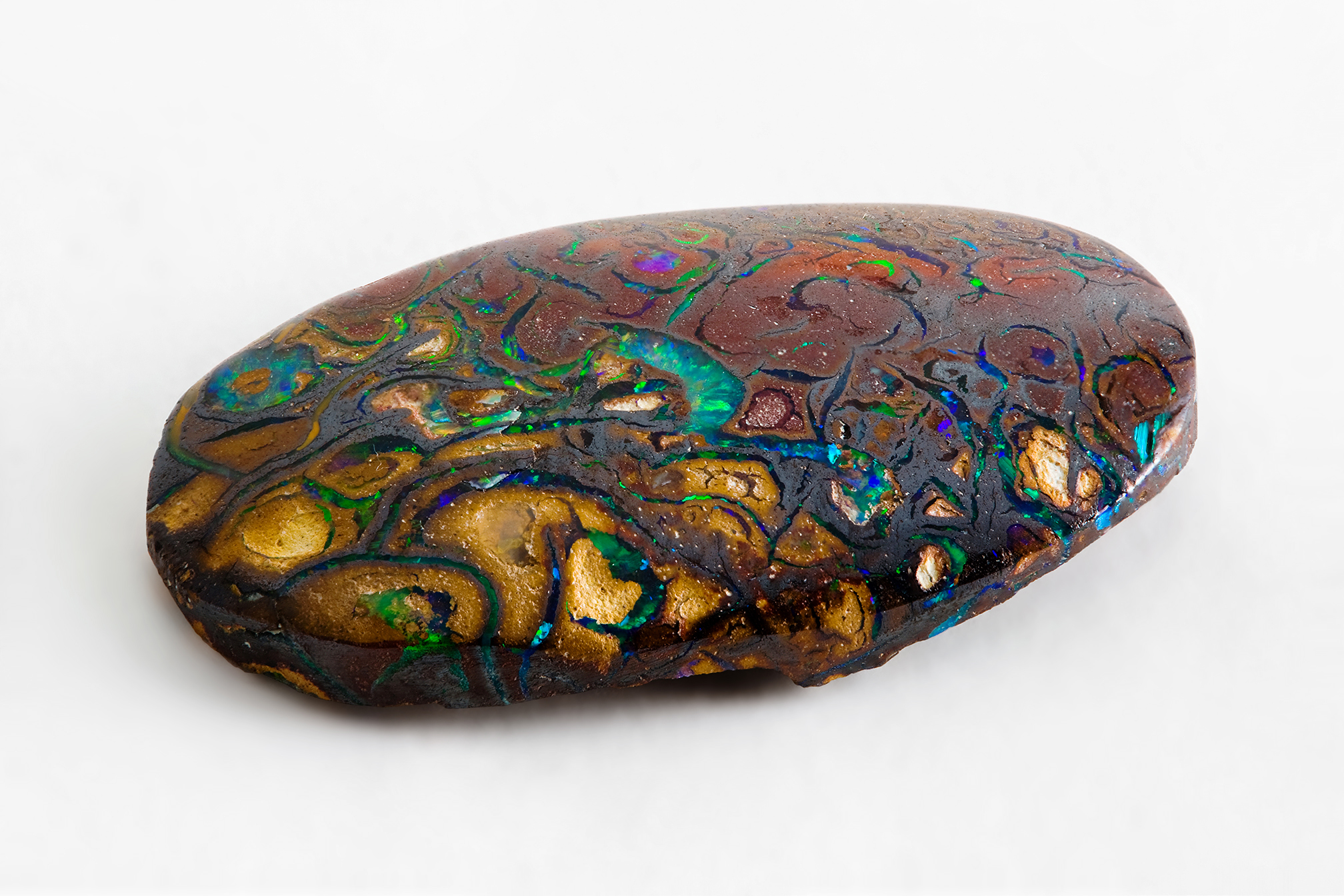
Photo: Wikimedia Commons

Photo: Wikimedia Commons
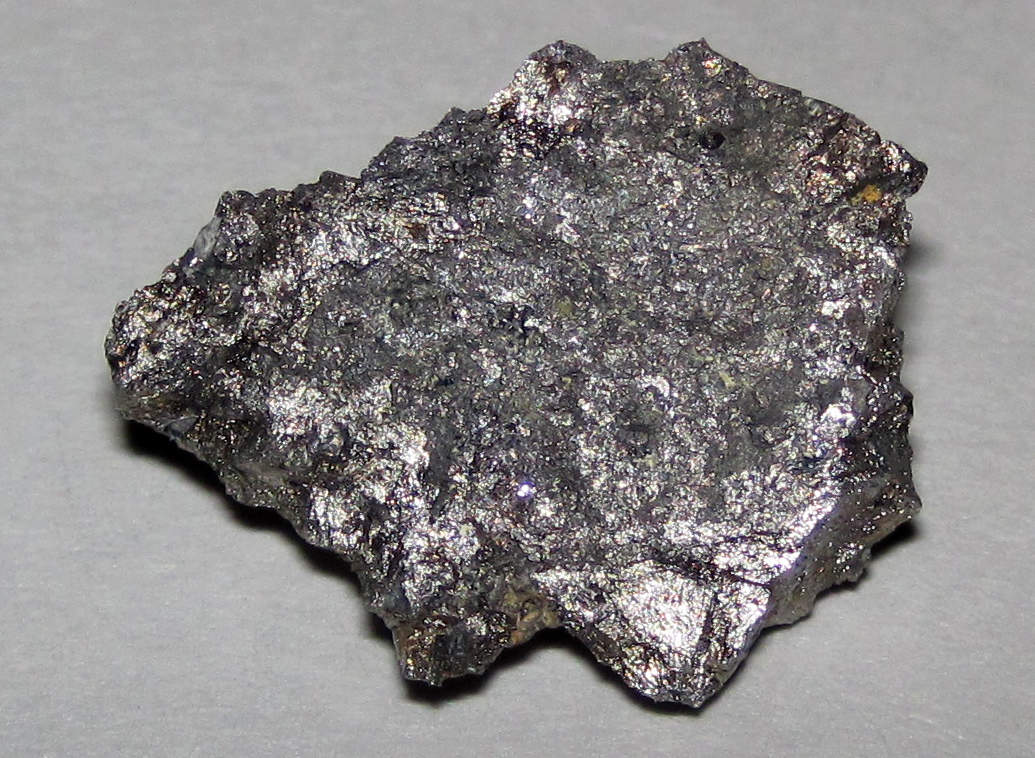
Photo: Wikimedia Commons
Search for specimens: View all specimens from Queensland, Australia
Queensland’s specimen geology is best understood by separating the state into collecting belts. The western opal fields form a long northwest-trending belt from near the New South Wales border through Cunnamulla, Quilpie, Longreach and Winton toward Kynuna. Commercial boulder opal is tied to deeply weathered Cretaceous sedimentary rocks, historically grouped by miners and older literature with the Desert Sandstone and widely associated with the Winton Formation. The precious opal occurs as thin seams, fracture fillings, coatings and kernels in ironstone concretions composed largely of hematite and goethite. At Yowah and Koroit, the classic specimen is not a loose nodule of solid opal but an ironstone body in which precious opal occupies internal cracks, shells or central cavities; in the northern Winton–Opalton fields, larger seam and boulder material can yield broad faces with ribbon, flash, rolling-fire and picture-stone effects.
The Mount Isa–Cloncurry region is a far older terrain: a Proterozoic metallogenic province in northwest Queensland containing sediment-hosted zinc-lead-silver systems, copper orebodies, iron-oxide copper-gold systems, uranium-rare-earth deposits and a remarkable oxidized-zone mineralogy. Mount Isa itself is famous as a major base-metal camp with adjacent copper and zinc-lead-silver systems. The Black Star open cut and older oxidized lead-zinc workings produced pyromorphite, cerussite, anglesite and related gossan minerals; the copper side of the camp yielded native copper, cuprite, malachite, azurite and chrysocolla from oxidized and supergene zones. Nearby Cloncurry localities such as the Great Australia Mine and Mount Glorious supplied copper phosphates, secondary copper silicates and rare halide-bearing copper species, while Mount Cobalt became a classic Australian source of erythrite from cobalt-arsenic mineralization in the Selwyn district.
Farther north, Wolfram Camp and Bamford belong to the old rare-metals country west of Cairns and Mareeba. Here tungsten, molybdenum and bismuth mineralization is structurally controlled in quartz-rich greisen veins, pipes and altered granitic or metasedimentary host rocks. The collector minerals are heavy, metallic and often deceptively fragile: molybdenite as flexible silvery plates, rosettes and lamellar books; native bismuth as lead-grey to silver masses or crude crystals; bismuthinite as slender metallic crystals; and scheelite or wolframite in quartz. Wolfram Camp was worked intermittently from the late 19th century, with historic underground workings followed by modern open-cut mining that was commissioned in 2008 and later abandoned in 2018; the Queensland Government now manages the site as an abandoned mine remediation project, including water management and prevention of unauthorized entry.
Queensland’s mining history is long and uneven, as mineral collecting histories often are. Gold drove the early population surges at Gympie, Charters Towers, the Palmer River, Ravenswood and Mount Morgan; copper shaped Cloncurry and Mount Isa; bismuth, tungsten and molybdenum made small northern camps internationally interesting; and opal sustained a distinctive small-mining culture in the dry western interior. Mount Isa Mines remains a major industrial complex under Glencore, but the company’s underground copper operations reached the end of their economic lives in July 2025, while zinc-lead-silver assets, processing, smelting and refining infrastructure continue to define the district. For specimen collectors, that distinction matters: most classic cabinet material was produced from earlier oxidized zones, small pockets, open cuts, old dumps and mine access windows, not from present-day industrial ore flow.
Collecting access today varies sharply. Queensland has designated fossicking areas, including opal ground at Yowah, Toompine and Opalton, and fossicking requires a Queensland fossicking licence. Fossicking is not permitted on mining leases or claims without the holder’s permission, and old workings must be treated as dangerous; open shafts, unstable ground, snakes, spiders, bad air, heat and remote-road conditions are practical hazards, not romantic inconveniences. The western opal fields are best visited in the cooler dry months, and summer heat or rain can make remote access genuinely unsafe. Major mines, historic industrial sites, rehabilitated workings and active leases around Mount Isa, Cloncurry, Wolfram Camp, Biggenden and Mount Morgan are not casual collecting grounds; legitimate specimens from these places usually come from old collections, dealer stock, museums, estate lots or material collected with permission decades ago.
The most important specimen “pockets” in the broad Queensland sense were often zones rather than single cavities. Yowah nuts came from concretion-bearing horizons in the soft lower sandstone; Koroit produced patterned boulder opal from ironstone concretions and seams traced along structures; Quilpie-area mines recovered concretions from sandstone benches beneath hard siliceous caps; Mount Cobalt dumps supplied erythrite-rich cobalt bloom long after primary mining had ended; Wolfram Camp produced bismuth and molybdenite from quartz-rich rare-metal pipes and veins; and Black Star produced pyromorphite from oxidized lead-rich material associated with the Mount Isa lead-zinc system. Fine examples from these zones are finite, and the best old pieces increasingly trade by provenance as much as by species name.
Queensland opal is the definitive boulder opal: precious opal in intimate contact with ironstone, appearing as narrow seams, patches, fracture fillings, concretion linings and kernels rather than the broad homogeneous nodules associated with some South Australian fields. Yowah is renowned for “Yowah nuts,” ironstone concretions from peanut to lemon size that may split to reveal a central precious opal kernel; Koroit is prized for intricate web, ribbon and picture patterns through brown ironstone; Quilpie and nearby fields can yield larger boulder faces, seams and replacement material, including opalized wood, from sandstone-hosted ironstone concretions; and Winton–Opalton material is commonly judged by brightness, directionality, face size and whether the opal seam is naturally supported by attractive host rock. Top collector pieces retain the geological drama of the matrix while showing saturated play-of-colour—electric green, blue, orange or red—across a stable face; ordinary pieces may have attractive ironstone pattern but only thin, dull or poorly oriented colour.
Queensland molybdenite is most collectible from Wolfram Camp and the related Bamford rare-metals field, where molybdenite occurs with quartz, wolframite, native bismuth, bismuthinite, scheelite, fluorite, pyrite and altered granite or metasedimentary gangue. The best pieces show the species’ characteristic lead-grey to bright silvery metallic lustre as broad flexible plates, rosettes, lamellar books or curved “crystal rose” aggregates, sometimes on white quartz or associated directly with native bismuth. Wolfram Camp material is especially valued when the molybdenite is not merely smeared through ore but forms discrete lustrous blades or rose-like groups with displayable relief; the chief condition issue is softness and cleavage, so fine pieces with intact plate edges, minimal bruising and old provenance are appreciably better than massive, rubbed ore fragments.
Native copper from Queensland is chiefly a Mount Isa–Cloncurry collector story, appearing in oxidized and supergene copper zones with cuprite, tenorite, malachite, azurite, calcite, quartz and chrysocolla. Mount Isa’s Black Rock lode and related copper workings are known for spongy, branching or hackly masses and crystal groups, often darkened or partly coated with green malachite and red-brown cuprite; Mount Elliott and other Cloncurry-area mines add more massive and arborescent copper associations. The best specimens show distinct native-metal form—branching, crude crystallization or sculptural masses—rather than just copper-stained rock, and contrast is important: bright or naturally patinated copper against green malachite, white calcite, red cuprite or dark gossan gives a Queensland copper piece far more cabinet presence.
Quartz from Queensland ranges from utilitarian gangue in ore specimens to attractive standalone material from fossicking fields and amethyst deposits. Around Wolfram Camp, quartz is the chief host for molybdenite, native bismuth, wolframite, scheelite and bismuth minerals; in the Cloncurry district it appears with copper secondaries and as amethyst or smoky quartz, including the Kuridala amethyst fields where shallow workings in clay and cobble overburden have yielded clear to dark purple blocky crystals, many on quartz matrix and some double terminated; at Agate Creek, microcrystalline quartz as agate and chalcedony forms brightly patterned nodules from a famous northern fossicking area. The best Queensland quartz specimens are locality-specific: a sharp Kuridala amethyst cluster, a quartz-bismuth association from Wolfram Camp, or a well-patterned Agate Creek agate carries more collector value than an anonymous milky vein piece.
Queensland erythrite is most strongly identified with the Mount Cobalt Mine in the Selwyn district near Cloncurry, a classic Australian locality for cobalt bloom. It occurs as vivid pink to raspberry, purple-pink or magenta acicular crystals, sprays, fibrous crusts and velvety coatings on dark iron- and cobalt-bearing matrix, with associations reported from the cobalt-arsenic oxidation assemblage, including heterogenite and other secondary arsenates in better documented suites. Mount Cobalt pieces are judged by intensity and freshness of colour, coverage, visible acicular crystal form and contrast against the matrix; old specimens with rich, unbleached crystal carpets are far more desirable than rubbed pink stains, and the locality is now sufficiently depleted that strong examples with reliable labels are treated as classics rather than routine field material.
Native bismuth from Queensland is most famous from Wolfram Camp and Biggenden, with Wolfram Camp supplying some of the state’s most recognizable natural bismuth specimens: heavy, lead-grey to silver metallic masses, crude crystals and sharp-faced fragments, commonly associated with molybdenite and quartz in tungsten-molybdenum-bismuth mineralization. Unlike the iridescent hopper crystals grown in laboratories and sold by the ton, natural Wolfram Camp bismuth is usually grey, matte to bright metallic, irregular, dense and sometimes shaped by quartz casts or constrained growth in cavities and fractures. The best pieces show natural crystal faces, heft, sharp form, old provenance and undisturbed association with molybdenite or quartz; Biggenden material adds a historic gold-bismuth-magnetite context, where native bismuth and bismuthinite were part of a skarn-like ore assemblage worked since the late 19th century.
Queensland pyromorphite is best known from Mount Isa, especially the Black Star open cut and associated oxidized lead-zinc zones, where the mineral occurs as hexagonal crystals and crusts on gossan with cerussite, anglesite and other oxidized lead minerals. The classic colour is not the brilliant apple green of some European localities but more often yellow, golden-brown, mustard, olive or honey-toned, with crystals ranging from small drusy coatings to cabinet-size plates in major museum collections. Good Black Star pieces have crisp barrel-shaped or prismatic crystals, even coverage and a lively contrast against dark iron oxide matrix; ordinary examples are dull, sugary crusts, badly bruised coatings or pieces with only scattered grains on unattractive gossan.
Azurite from Queensland belongs to the oxidized copper systems of Mount Isa, Cloncurry, Mungana, Chillagoe and related districts, where it occurs with malachite, chrysocolla, cuprite, native copper, quartz, calcite and iron oxides. Most pieces are not Bisbee-style crystal plates; they are blue crusts, small crystals, nodular patches, earthy masses or pseudomorphic associations in copper gossan, though localities such as the Dorothy Mine at Mungana became famous for azurite replaced by chrysocolla in flower-like forms. The best Queensland azurite specimens show rich, unfaded blue colour, identifiable crystal or pseudomorphic form, and tight association with green malachite or pale blue chrysocolla; common low-grade material is often mixed blue-green copper ore where azurite, chrysocolla and malachite are visually hard to separate without close examination.
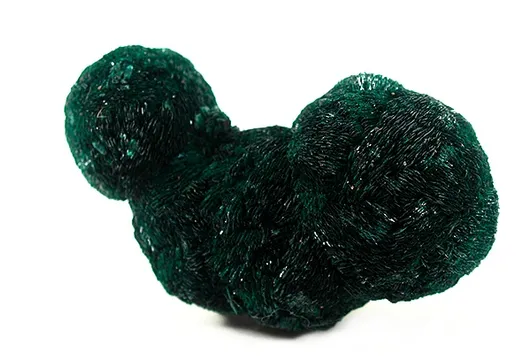
Malachite is widespread through Queensland’s oxidized copper deposits, especially in the Mount Isa–Cloncurry belt, occurring as green botryoidal coatings, fibrous crusts, earthy masses, pseudomorphs, stains on native copper and cuprite, and mixed blue-green ore with azurite and chrysocolla. The Great Australia Mine, Mount Isa copper workings, Mount Elliott and other Cloncurry-area localities produced malachite as both an ore-zone indicator and a cabinet companion mineral, and some Great Australia material shows complex replacement relationships among malachite, chrysocolla, cuprite and native copper. The best pieces have saturated colour, silky or botryoidal texture, visible association with copper or cuprite, and enough matrix contrast to avoid looking like generic polished copper ore; weak pieces are crumbly, powdery, acid-brightened-looking or simply green-stained rock with no mineral form.
Queensland gold specimens reflect both reef mining and alluvial history, with major historic fields at Gympie, Charters Towers, Palmer River, Ravenswood, Croydon and Mount Morgan. Charters Towers was a quartz-reef goldfield whose Christmas Day 1871 discovery triggered a rush and later supported deep mining, crushing batteries and a stock-exchange culture; Gympie’s reefs helped earn the town its “saved Queensland” reputation in the late 1860s; and Mount Morgan was one of Australia’s great gold-copper deposits, worked for nearly a century. Collector pieces are most desirable when they retain visible native gold in quartz, ironstone or gossan with reliable old field provenance, or as natural nuggets from legitimate alluvial ground; because much Queensland gold entered bullion channels, true specimen-grade pieces with crystallization, leaf form or attractive quartz matrix are scarcer than the state’s production history might suggest.
Queensland chrysocolla is a hallmark of deeply weathered copper systems, particularly in the Cloncurry–Mount Isa region and at Mungana, where it occurs as blue to blue-green coatings, replacements, vein fillings, crusts and mixed masses with malachite, azurite, cuprite, pseudomalachite, quartz and iron oxides. The Dorothy Mine at Mungana produced the state’s most memorable chrysocolla specimens: flower-like pseudomorphs after azurite, saved in only small numbers and prized for their unusual “coral” or garden-like forms. The Great Australia Mine and Mount Glorious Mine add important chrysocolla-bearing copper-phosphate associations, including replacements and coatings in supergene zones. Fine pieces are judged by saturated turquoise colour, botryoidal or pseudomorphic form, stability, and whether the chrysocolla sits as a distinct mineral rather than an amorphous blue-green stain.
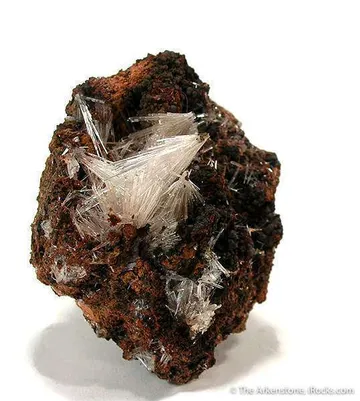
Queensland is also important for rare and type-locality minerals. The Great Australia Mine at Cloncurry is the type locality for cloncurryite, a sky-blue to colourless vanadium-copper aluminium phosphate, and barlowite, Cu4BrF(OH)6, a rare copper halide-hydroxide. The broader Cloncurry district includes type-locality or notable rare species records such as sieleckiite from Mount Oxide and pyrosmalite-(Fe) from Pegmont. Mary Kathleen is the type locality of stillwellite-(Ce), a rare-earth borosilicate from the famous uranium-rare-earth mine east of Mount Isa. Southeastern Queensland adds amamoorite from the Mary Valley near Amamoor, and the McBride volcanic province in far north Queensland is the type region for silvialite, a sulfate-dominant scapolite-group mineral from mantle-derived xenolith assemblages. Even the Tenham meteorite from western Queensland matters mineralogically: it is the type locality for ringwoodite, the high-pressure spinel-structured Mg2SiO4 polymorph that later became central to discussions of Earth’s transition zone.
Queensland labels deserve close reading. “Queensland opal” is often accurate but imprecise; Yowah, Koroit, Quilpie, Opalton and Winton material can look different, but visual attribution alone is not always reliable, especially once a piece has been cut and polished. “Yowah nut” should mean an ironstone concretion from the Yowah field with opal developed internally, not merely any brown boulder opal cabochon. Koroit-style webbing is widely imitated in loose trade descriptions, and some attractive pieces are simply sold under the more marketable field name. Provenance from the miner, cutter or an old collection is far more valuable than a confident-looking handwritten label added late in the specimen’s life.
Opal treatment issues are practical. Queensland boulder opal is commonly cut with ironstone backing because that is its natural form, not necessarily because it is a doublet. Still, buyers should distinguish natural boulder opal from assembled doublets or triplets, dyed or impregnated matrix, resin-filled cracks and polished “opal matrix” whose colour may be enhanced. Fine boulder opal should be examined under magnification for glue lines, backing seams, filled fractures and suspiciously uniform darkening. Unlike hydrophane opals from some localities, Queensland boulder opal is generally regarded as stable when properly cut, but thin seams can craze, lift from ironstone, or chip at the opal-ironstone boundary if knocked.
Natural bismuth from Queensland is one of the state’s most commonly misunderstood metallic specimens. Wolfram Camp and Biggenden native bismuth is naturally grey to silvery and massive to crude-crystalline; it does not resemble the rainbow, stair-stepped hopper crystals produced synthetically by melting and cooling refined bismuth. Brilliant iridescent hopper bismuth sold as “from Queensland” should be rejected unless it is plainly labelled as laboratory-grown bismuth and not a mineral specimen. Genuine Wolfram Camp pieces may show quartz casts, attached molybdenite or old collection provenance, and they are heavy but brittle enough to bruise along edges.
Mount Cobalt erythrite is beautiful but delicate. Its acicular crystals and velvety coatings crush easily, and the colour can suffer from abrasion, dust, handling oils and prolonged bright display. Because erythrite is a hydrated cobalt arsenate, specimens should be handled sensibly: do not lick, cut or grind them; keep dust contained; wash hands after handling; and store away from children. Similar caution applies to other arsenates and lead minerals from Queensland, including pyromorphite, mimetite, scorodite, pharmacosiderite-group species and uranium-bearing minerals from Mary Kathleen and related localities.
Pyromorphite from Black Star and Mount Isa can be confused with mimetite or arsenian pyromorphite-series material, and some old labels use varietal or obsolete terms. Colour alone is not a reliable separator in the pyromorphite–mimetite series. Strong specimens should show crisp hexagonal crystal form and an old Mount Isa or Black Star label; damaged plates are common because oxidized lead-zone material is often friable, and the crystals may have been collected from blast-broken gossan. As with any lead phosphate, avoid creating dust and wash after handling.
Copper, malachite, azurite and chrysocolla from Queensland are often sold as mixed “copper ore” rather than species-specific specimens. That is acceptable for lapidary or display material but not for higher-level mineral collecting. Chrysocolla can replace malachite or azurite and may form soft, porous masses; malachite can be fibrous and splintery; azurite can dull or alter at the surface; and native copper commonly carries cuprite, tenorite and malachite coatings. Acid cleaning can damage carbonates and silicates, and over-cleaned copper secondaries can look unnaturally bright or etched. Original surfaces and honest patina are preferable.
Current market availability is uneven. Boulder opal remains available because Queensland still has active small-scale opal mining and a living cutting culture, though top colour in large, naturally aesthetic ironstone pieces commands serious prices. Wolfram Camp bismuth and molybdenite, Mount Cobalt erythrite, Black Star pyromorphite, Dorothy Mine chrysocolla-after-azurite and old Cloncurry copper-phosphate specimens are much less available; the best examples generally come from older collections, established dealers or museum-quality dispersals. For serious collectors, locality precision, condition and provenance are often more important than species alone.
The Queensland opal story begins with a curious commercial problem: fine stones with no established market. Saleable precious opal was being recovered near Listowel Downs Station around 1870, and by the mid-1870s discoveries in the Kyabra Hills had drawn the attention of Herbert Bond, a Toowoomba jeweller. Bond understood that the field had colour but not customers. In 1879 he organized mine owners into a syndicate and took Queensland opal to London, where he floated a company for £2500. The first push did not immediately conquer the market, but it reached the one person whose notice mattered in Victorian Britain: Queen Victoria. An admirer of opal, she granted Bond a 40-acre freehold lease over the Aladdin Mine, giving Queensland boulder opal a royal thread in its otherwise dusty outback origin story.
The GIA field team’s 2015 visit to Koroit, Yowah and Quilpie captured the small-mining character of the fields better than any production table can. At Koroit, Mark Moore—part-time boulder opal miner and part-time surf coach—worked both an open pit and a small underground operation. The open pit exposed ironstone concretions in soft sandstone, and the mine was about 10 metres deep and 50 metres long when visited. The target was not a continuous ore seam in the base-metal sense but scattered concretions and structures that had to be followed, broken, sawn or cracked before anyone knew whether the colour inside would pay. Underground, Moore traced a visible fault line because the opal-bearing ironstone could follow structures, and beside his house he cut and polished the best pieces himself.
At Yowah, the field’s fame rests on a deceptively plain object: an ironstone nodule that may look worthless until it is split. The classic Yowah nut ranges from peanut size to lemon size, with a shell of brown ironstone and, if luck intervenes, a kernel of precious opal in the centre. When the GIA team visited, they saw one enormous bright bluish boulder opal that had reportedly been extracted only two days earlier. Asked what he would do with it, the owner said he wanted to donate it to a museum. It is a revealing answer: at Yowah, the best finds are not merely gems to be cut down for yield; they are natural sculptures, and sometimes their value is measured by whether the story survives intact.
Quilpie supplied a different scene. In town, opal jeweller Mark Anthony Hodges showed locally mined and locally finished boulder opal in his main-street store, while rough waited in his backyard for processing. North of town, near Alaric, Eric Stelzer and his family operated a large mechanized open-pit mine cut into a sandstone ridge beneath a hard red siliceous cap 4.5 to 15 metres thick. The opal-bearing ironstone concretions lay predominantly in the softer lower unit. The contrast is memorable: a field that can be worked by a near one-man operation, yet on a scale large enough to expose a hill’s geology like a textbook cross-section. The same report ends with the team leaving after sunrise in an ultralight aircraft, looking down over the opal country with what opal expert Len Cram called the “opal bug.”
Wolfram Camp’s story is a rare-metals boom in miniature. The settlement grew on Bulluburrah Creek as Upper Wolfram and Lower Wolfram, or Top Camp and Bottom Camp, named for the tungsten mineral wolframite. By late 1900, about 100 men were working the district for wolfram, molybdenite and bismuth. In 1912, La Société Française des Métaux Rares erected a 100-ton-per-day plant with wet and magnetic separation to treat mixed rare-metal ore. The town at its First World War peak had four hotels—Wright’s Commonwealth, Blakney’s Miner’s Home, Cumming’s Exchange and Petersen’s Wolfram—along with stores, a butcher, a stationer, refreshment rooms, an ice works and ore buyers competing for metal that the modern world suddenly needed for lamp filaments, alloys, engineering and armaments. The camp later saw revivals, government battery operation during the wartime period, Mount Arthur Molybdenum work in the late 20th century and a modern open cut, but the collector’s romance remains those heavy metallic specimens pried from quartz-rich pipes in a once-busy rare-metals town.
The Dorothy Mine at Mungana produced one of Queensland’s most poetic mineral forms: chrysocolla replacing azurite in flower-like pseudomorphs. George Smith, later a legendary Australian collector and New South Wales Inspector of Mines, moved to Chillagoe in 1899 as mine manager for the Chillagoe Railway and Mining Company. While the company’s fortunes faltered, Smith had the good sense and opportunity to save outstanding specimens from the district, including the unusual Dorothy Mine chrysocolla-after-azurite pieces. Only a small handful survived. Their forms have been described as “coral or floral gardens,” and a large 22 x 25.5 x 12 cm example entered the Australian Museum through Smith’s 1500-piece mineral collection in 1907.
Biggenden’s bismuth history has a different rhythm: quieter, older, and tied to a rural hill rather than an industrial camp. The Mount Biggenden Mine, also known historically as the Biggenden gold-bismuth mine, was worked for magnetite, bismuthinite, native bismuth, gold and chalcopyrite from the late 19th century. Between 1888 and 1915, it produced a striking share of Queensland’s bismuth—reported locally as half the state’s output. For collectors, the importance is not tonnage alone but the mineralogical character of the ore: native bismuth and bismuthinite associated with magnetite and gold-bearing skarn-style mineralization, yielding old metallic specimens that are now far less common than the mine’s historical significance might suggest.


_2.jpg)