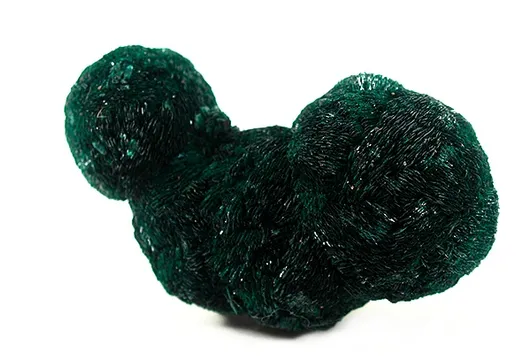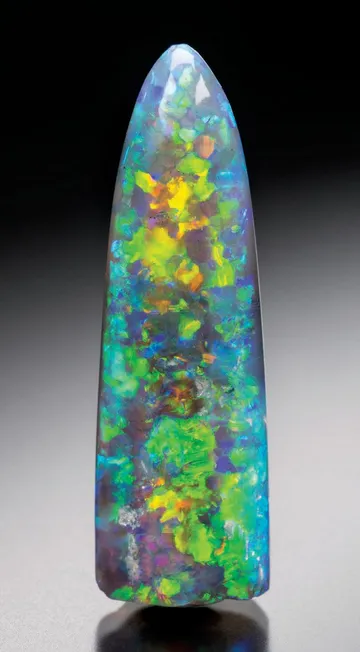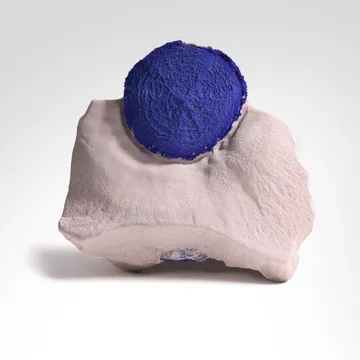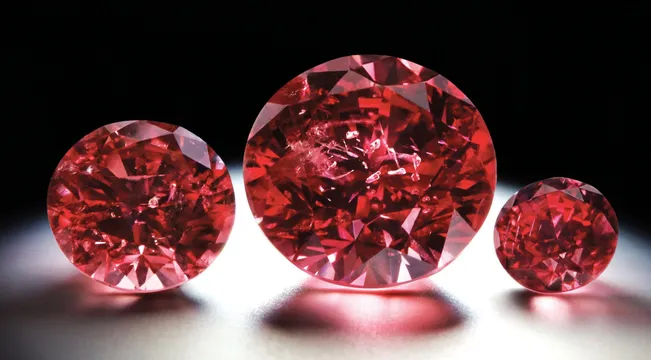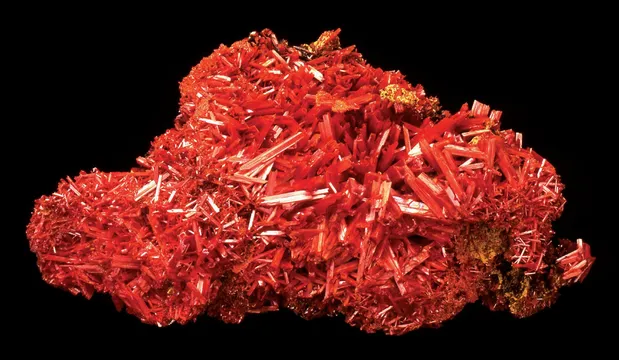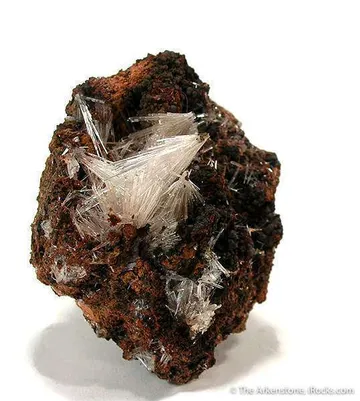
Wallaroo Mine, Australia: classic source of dark green atacamite with prismatic crystals on oxidised copper matrix, prized for color, form, and context.
Key facts
Wallaroo Mine belongs to the great Moonta–Wallaroo copper field of northern Yorke Peninsula, South Australia: a nineteenth-century copper district whose best mineral specimens are inseparable from its industrial history. The Wallaroo lodes are shear-hosted Cu-Au-Ag mineralisation in intensely deformed Doora Schist, including mica schist, amphibolitic schist, quartzite, gneiss and iron formation. The ore shoots were not broad, simple bodies; they were stacked, en echelon lodes, disrupted by cross faults and worked through a named system that included Daveys, Harveys, Main, Milnes, North Mairs, North Youngs and South Lodes. To the economic geologist, Wallaroo is a structurally controlled Proterozoic copper-gold system in the Olympic Domain. To the collector, it is one of the classic Australian sources of dark green atacamite, with a supporting cast of copper oxides, carbonates, sulphides, arsenides, tungstates and quartz gangue.
Regional View
Country View
The finest Wallaroo pieces have the look that made old South Australian copper specimens famous: blackish emerald-green atacamite prisms and bladed clusters, often lustrous enough to appear almost lacquered, set on oxidised copper-stained matrix or in quartz-bearing vein material. Unlike many modern atacamite localities dominated by sprays of tiny needles, Wallaroo material can show distinct prismatic form, terminated individuals, and dense groups whose appeal is strongest under a hand lens or microscope. Quartz is not the glamorous mineral here in the way it is at alpine clefts; it is the structural and visual stage on which the copper minerals sit, the gangue that records the lode system and, in the best association pieces, gives contrast to green atacamite, brassy chalcopyrite or silvery molybdenite.

Photo: Ralph Bottrill and Rock Currier via Wikimedia Commons
A useful collector’s caution is built into the name itself. Historic “Wallaroo Mines” are associated with Kadina and the surrounding mining field, not simply with the modern seaside town of Wallaroo. Labels may read Wallaroo Mine, Wallaroo Mines, Kadina, Yorke Peninsula, or Moonta–Wallaroo, and older labels may be vague. That ambiguity matters: the Copper Coast includes several nearby mines that also produced atacamite, and careful attribution is part of the value of a good Wallaroo specimen.

Search for specimens: View all specimens from Wallaroo Mine, Australia
Wallaroo is a shear-hosted copper-gold-silver deposit in the Moonta–Wallaroo mineral district of the northern Yorke Peninsula. The host is Doora Schist, a strongly deformed package of metasedimentary and metavolcanic rocks that includes mica schist, amphibolitic schist, quartzite, gneiss and iron formation. The main ore bodies were confined to east-west to east-southeast-trending shears and formed as stringer, quartz-vein and laminated ores. The principal primary sulphide assemblage was chalcopyrite with pyrite and pyrrhotite, accompanied in lesser amounts by bornite, chalcocite, molybdenite, galena and sphalerite, with quartz, biotite, feldspar and tourmaline as key gangue constituents.
The structure of the deposit explains both its mining history and its specimen character. Wallaroo was not a single open cavity or a simple vein; it was a lode field. The lodes were offset by northeast-trending faults and shears, and the ore shoots frayed at their ends rather than terminating cleanly. The Wallaroo Main Lode system was arranged as stacked en echelon bodies over roughly a kilometre, passing from the Wallaroo Main Lode in the south through North Young, Milne, North Mair and Harvey lodes to the north. Minor mineralisation also occurred in axial-planar north-northeast-trending lodes. This structural complexity is why old specimens may carry precise lode or shaft names when they have superior provenance, and why other examples simply carry broad “Wallaroo Mines” labels.
The primary mineralisation is Proterozoic and has been tied to the broader Olympic copper-gold province. Re-Os dating of molybdenite has given an age around 1577 Ma for Wallaroo mineralisation, placing it within the Mesoproterozoic hydrothermal history of the Gawler Craton. Later studies of massive bornite- and chalcopyrite-bearing ore from Moonta and Wallaroo have emphasised textural overprinting: abundant pyrrhotite indicates comparatively reduced conditions, while later hematite points to a subsequent shift toward more oxidising conditions. Replacement relationships between chalcopyrite and bornite suggest multiple episodes of ore crystallisation rather than a single simple pulse.
Mining began after the famous Wallaroo copper discovery of 17 December 1859, credited to James Boor, a shepherd on Walter Watson Hughes’s Wallaroo sheep run. The mine was developed by the Wallaroo Mining Company, and by the early 1860s the workings, town, railway, smelting plant and port connection were expanding rapidly. The early bonanza relied on oxidised copper ores, but the enriched near-surface zone extended only to limited depths; as mining deepened, Wallaroo became a sulphide mine requiring roasting, concentration, smelting and refining on an industrial scale.
Wallaroo’s production span is usually given as 1861 to 1923 for the mine, with smelting at Port Wallaroo continuing from 1861 to 1926. Government mineral-deposit records estimate Wallaroo Mine area production at about 4.2 million tonnes for 1861–1923, with dressed ore averaging around 10% Cu where grade figures were available. Combined Moonta–Wallaroo production was of national importance: copper dominated the field, but gold and silver were also recovered. When mining ceased in 1923, remaining deeper resources were estimated at about 520,000 tonnes grading 3.8% Cu.
The corporate history is as important as the mineralogy. For nearly three decades the Wallaroo and Moonta mines operated as nominally separate companies that nevertheless shared investors, directors, transport and smelting infrastructure. In 1889–1890 they amalgamated as the Wallaroo and Moonta Mining and Smelting Company, then the largest industrial operation in South Australia and often described as the largest company in Australia of its time. The operation modernised repeatedly: horse tramways and early engine houses gave way to deeper workings, concentration plants, improved pumping, electric power, waterjacket blast furnaces, converters and electrolytic refining.
Collecting access today must be treated as heritage-site access, not as a free collecting field. The old mining area is largely fenced or restricted, and local visitor material makes clear that the mining area itself is not to be entered casually. Visitors can still experience the site through the Wallaroo Mines heritage area, the Kadina heritage trail, the Copper Coast Rail Trail corridor, and surviving features such as Harvey’s Enginehouse, but responsible collectors should assume that removal of material from the historic mine site is prohibited unless explicit permission is obtained from the relevant landholder or authority. Most collectible Wallaroo specimens now come from old collections, dealer stock, estate material and museum duplicates, not from active collecting.
The notable specimen finds were associated with the oxidised and near-surface copper zone, old lode workings and dump material, especially where copper chlorides and carbonates developed in cavities and fractures in altered matrix. The classic pieces are atacamite, with crystals ranging from micro material to small cabinet-size groups; larger, well-formed, sharp and lustrous examples are significantly scarcer. Wallaroo is also represented by old specimens of cuprite, chalcopyrite, cobaltite, native copper, molybdenite with quartz, calcite, dolomite over chalcopyrite, and a number of rare or locally interesting sulphide, arsenide and tungstate species.
Atacamite is the collector mineral for Wallaroo: deep green to blackish green, commonly prismatic or bladed, and most attractive when the crystals are sharp, lustrous and visibly terminated rather than dull crusts or powdery coatings. Wallaroo pieces occur as groups on oxidised copper-bearing matrix and in quartz-rich or limonitic vein material, with associations including malachite, cuprite, quartz and other secondary copper minerals. Cabinet specimens with discrete, glassy prisms are much less common than small clusters and micromount material, and the best pieces are judged by crystal definition, depth of colour, freedom from bruising, and how well the matrix frames the green crystals. Because several Copper Coast localities produced atacamite, a strong old label specifying Wallaroo Mine or Wallaroo Mines, Kadina is a major part of desirability.
Quartz at Wallaroo is chiefly a lode and gangue mineral rather than the headline species, but it is essential to understanding and appreciating the specimens. The Wallaroo ores included quartz-vein and laminated sulphide material, and quartz occurs with the copper sulphides and later secondary copper minerals in the shear-hosted lodes. Collectible quartz examples are generally valued as association pieces: milky to colourless crystals or vein sections carrying atacamite, chalcopyrite, molybdenite, calcite or dolomite are more meaningful than ordinary massive white quartz. The most desirable pieces preserve open-space growth, visible crystal faces, and a clear relationship between quartz and the copper mineralisation rather than being simply broken vein quartz from dump rock.
Beyond atacamite and quartz, Wallaroo has a broad documented suite. Primary and hypogene minerals include chalcopyrite, bornite, chalcocite, pyrite, pyrrhotite, molybdenite, galena, sphalerite, acanthite, native gold and native copper. Oxidised-zone copper species include cuprite, tenorite, azurite, malachite, chrysocolla, covellite, chalcanthite, paratacamite and turquoise. Notable rarities and specialist species include cobaltite, skutterudite, ferberite, scheelite, fluorapatite, fluorite, meionite, epidote, titanite, celestine, erythrite, rhodochrosite, siderite and ankerite. Wallaroo is not chiefly valued as a type-locality mine, but it is significant in copper-chloride mineralogy: a South Australian Museum specimen from Wallaroo Mines, Kadina was among the localities in which clinoatacamite was later recognised during work untangling the relationships among atacamite, paratacamite, clinoatacamite and the discredited “anarakite.”
The most important authenticity issue with Wallaroo specimens is locality attribution. Old Australian copper specimens are often labelled broadly as “Wallaroo,” “Wallaroo Mines,” “Kadina,” “Moonta–Wallaroo,” or “Yorke Peninsula,” and those labels do not always distinguish the Wallaroo Mine from nearby Copper Coast mines such as New Cornwall, Doora, Wandilta, Kurilla or Moonta. This is particularly important for atacamite. New Cornwall Mine, east of Wallaroo Mines, produced famous large atacamite crystals and has its own complicated label history, including specimens historically misattributed to Burra and modern confusion with somewhat similar Mount Gunson material. A fine atacamite labelled simply “South Australia” should not be upgraded to Wallaroo without corroborating label history, collection provenance, or matrix and habit consistent with known Wallaroo material.
Condition is central. Atacamite has good colour but is not a tough mineral for careless handling; slender prisms chip, terminations bruise, and sprays shed edges when wrapped tightly. Many old Wallaroo pieces have passed through several collections, so look for repaired sprays, glued fragments, trimmed matrix, or old dust and wax in recesses. The deep green colour can also make edge damage hard to see until the specimen is tilted under strong light. High-quality examples should have intact terminations, visible lustre, and no obvious modern oiling or artificial gloss.
Quartz association pieces require a different standard. Massive quartz with only stains or indistinct green crusts is common-looking and not particularly desirable unless the label is historically important. Better specimens show a readable paragenesis: quartz crystals or vein texture with discrete atacamite, chalcopyrite, molybdenite, cuprite, calcite or dolomite. Wallaroo quartz is more attractive as context than as a standalone display mineral.
Hydrated sulphates such as chalcanthite, melanterite and epsomite should be treated cautiously in any old copper-mine suite. They may be post-mining efflorescences rather than stable collectible minerals, and they should be kept dry, isolated from delicate labels, and away from specimens that could be stained by migrating salts. Copper chlorides and carbonates should not be cleaned with acids or aggressive chemicals; even water cleaning can mobilise salts and loosen friable matrix.
Market availability is limited but not impossible. Small atacamite specimens and micromounts appear periodically from Australian collections, while good cabinet pieces with sharp, lustrous crystals and old provenance are scarce. Wallaroo labels attached to cobaltite, skutterudite, ferberite, molybdenite, cuprite or well-associated quartz are of special interest to locality collectors because these minerals are encountered far less often than routine copper-stained matrix.
The Wallaroo story begins with a shepherd and a date: 17 December 1859. James Boor, working on Walter Watson Hughes’s Wallaroo sheep run, is credited with finding copper minerals where the Wallaroo Mines would develop. Local tradition adds a wonderfully earthy detail: the copper-bearing stones may have been dug up by a wombat. It is exactly the sort of origin story mineral districts acquire when a quiet pastoral landscape becomes, almost overnight, a mining field.
The next act is a race. In 1861, after Patrick Ryan found copper-bearing rocks near Moonta and reported them through Joseph Johnson, rival claimants hurried to secure the lease. W. A. Horn, riding for Hughes, travelled non-stop for twenty-two hours and exhausted eight horses in the dash back to Adelaide. The legal fight over ownership did not end quickly; it continued until 1868, when the court ruled in Hughes’s favour. By then the copper field had already transformed the northern Yorke Peninsula.
The pace of development at Wallaroo was astonishing. By the end of 1859, only days after the discovery, thirty or forty men were reportedly working at the site. By August 1860 the new copper mines employed about 150 men and were producing rich ore; by the end of that year the population was around 500. Kadina was surveyed in 1860, and by March 1861 town blocks were being sold. The camp around the workings was a raw mining settlement of cottages, sheds, shafts, engine houses and offices, but it was already becoming a permanent industrial town.
The mine needed the sea, and the sea needed the mine. In June 1862, the Kadina and Wallaroo Railway and Pier Company opened a horse-drawn railway from the mines to Port Wallaroo, with a branch into Kadina. For collectors holding a small green atacamite specimen today, it is worth remembering that its locality was not a romantic isolated mine in the desert; it was part of a complete industrial organism — shafts at Kadina, tramway to the port, smelters on the foreshore, ships carrying copper and bringing fuel, and a growing townscape built around the movement of ore.
Wallaroo’s smelters were spectacular in scale. The first furnace was fired on 11 November 1861, and the great Hughes Stack carried Walter Watson Hughes’s initials and the date “W.W.H. 1861” in brickwork. By 1868 the works had 36 furnaces: 22 reducers, 10 roasters and 4 refineries. The draft went to 13 large stacks and many smaller ones, producing what one period description called a “forest of chimneys.” The works consumed firebricks at a staggering rate — about 10,000 a month — and refined copper output averaged around 4,200 tons a year, rising to 6,400 tons a year by 1876.
The ores themselves forced innovation. Near-surface oxidised ore was comparatively easy; deeper sulphide ore was not. Wallaroo and Moonta ore had to be roasted, smelted, roasted again and refined, so that some copper might be fired four times before becoming saleable metal. The works evolved from Welsh reverberatory furnaces toward American-style waterjacket blast furnaces, converters and electrolytic refining. Thomas Cloud travelled to Europe and America in 1890 to study new metallurgical methods, and later developments included a sulphuric acid plant, a bluestone plant, a lead works, and gold and silver recovery. By 1905, the old Welsh smelting methods had largely given way to state-of-the-art American technology.
There was disaster as well as progress. In January 1904, fire broke out in Taylor’s Shaft just as the afternoon shift was leaving. The miners escaped, but smoke poured from the shaft, the poppet heads burned fiercely, and hundreds of men were involved in fighting the fire. The damage was severe enough to help trigger a modernisation program at the mine, including replacement of older steam-engine arrangements with electric pumps and steam winches on Taylor’s and Young’s shafts. It is a vivid reminder that behind every old specimen label are mine levels, timber, machinery, smoke, and men working in a deepening sulphide mine.
By the end, Wallaroo had reached extraordinary depths for a nineteenth- and early twentieth-century South Australian copper mine. The mine struggled after the First World War as copper prices fell, ore quality declined, and pumping and mining costs increased. By 1923 the Moonta and Wallaroo mines were reportedly down to about 1,000 m below ground in the broader field, with patchy ore bodies and rising costs. The company went into voluntary liquidation in November 1923, and the mines closed. The smelters followed in 1926. The closure emptied more than workings; it changed the population, churches, clubs and daily life of Kadina and Wallaroo Mines.
Today the story is told through ruins and walking trails rather than active workings. Harvey’s Enginehouse, dating from the 1870s, remains one of the key visible links to the mine’s pumping history. The Kadina heritage trail records places such as the pioneer cemetery, the mine explosives magazine, captains’ residences, manager’s residence ruins, Devon Mine site and Matta House. The Copper Coast Rail Trail now follows part of the old route that once connected the mines at Kadina with the port and smelters at Wallaroo. For the collector, visiting the heritage landscape gives old specimens a scale that photographs rarely convey.