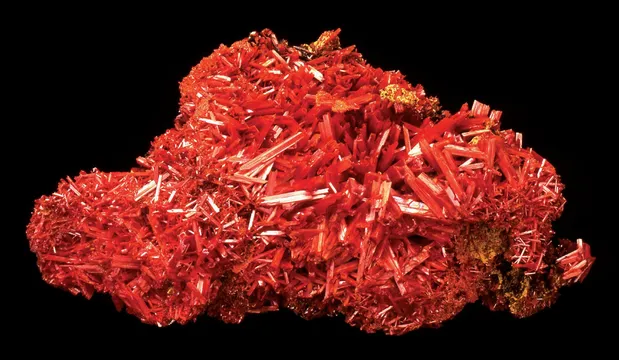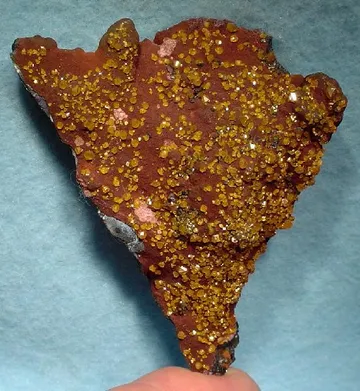
Argyle mine, Lake Argyle area, Kimberley, Australia - famed for its pink diamonds and etched roughs; a collector favorite for rarity and color.
Key facts
Argyle is one of the great modern paradoxes in mineral collecting: a locality famous worldwide for diamonds, yet geologically unlike the classic kimberlite mines that shaped the diamond trade before it. The mine worked the AK1 olivine lamproite diatreme in the Matsu Range, southwest of Lake Argyle, near the eastern margin of the Kimberley Craton in the Halls Creek Orogen. Its discovery changed diamond exploration because it proved that a very large, commercial diamond deposit could occur in lamproite in a Proterozoic mobile belt rather than in the expected kimberlite pipes of stable Archean cratons.
For collectors, Argyle’s signature is not large flawless octahedra. It is a distinctive population of small, strained, etched, often brown to cognac or champagne-coloured diamonds, with the incomparable pink, purplish pink, violet, red, greyish blue and green stones representing a minute but celebrated fraction of total output. Good rough specimens from Argyle tend to have strong locality character: frosted or etched surfaces, rounded dodecahedral to irregular resorbed forms, macles, polycrystalline aggregates, and occasionally sharper octahedral-dodecahedral crystals. The best collector pieces are attractive not only because they are diamond, but because they carry the visual evidence of Argyle’s extraordinary mantle and volcanic history.
Regional View
Country View
The mine was historically immense by carat volume. It operated first on alluvial and surface material, then from the AK1 open pit, and finally underground by block caving. By the time mining ceased on 3 November 2020, Argyle had produced more than 865 million carats of rough diamonds. Its global importance was amplified by colour: during its operating life it supplied more than 90% of the world’s pink diamonds, even though pink stones made up far less than 1% of Argyle’s own production.
Collectors should also recognize Argyle as a mineralogical locality beyond diamond. The lamproite and associated concentrates have yielded a suite of mantle-derived and lamproite minerals, including chromite, magnesiochromite, pyrope, chromium-bearing diopside, forsterite, phlogopite, priderite, wadeite, jeppeite, moissanite and the type-locality species lucasite-(Ce). Most of these do not circulate as cabinet specimens in the way diamonds do, but they make Argyle a serious locality in the mineralogical literature as well as in the gem trade.
Search for specimens: View all specimens from Argyle mine, Lake Argyle area, Kimberley, Australia
Argyle’s orebody was the AK1 pipe, also called the Argyle lamproite or Smoke Creek lamproite pipe. It lies in the East Kimberley region of Western Australia, a few miles south of Lake Argyle, at the headwaters of Smoke Creek in a small valley of the Matsu Range. Geologically, AK1 is a diamondiferous olivine lamproite diatreme emplaced into the Proterozoic rocks of the Halls Creek Orogen near the southeastern edge of the Kimberley Craton. The deposit was preserved unusually well because resistant ridges of the Matsu Range protected the upper pipe and crater from erosion, while comparable intrusions farther south were cut down closer to their root zones.
The pipe was not a neat vertical cylinder. In plan it was famously elongate, broader in the north and tapering southward, with early descriptions comparing its outline to a tadpole. It was nearly 2 km long, about 600 m wide in the northern “head” and roughly 150 m wide in the southern “tail.” The body was tilted northward and internally complicated by faulting. More recent modelling describes Argyle as a complex of coalesced diatremes or vents, trending generally north-northeast and compartmentalized by north-northwest faults.
The host rock assemblage was dominantly volcaniclastic olivine lamproite. Much of the ore consisted of quartz-rich lapilli tuffs and coarse ash tuffs, commonly called sandy tuff, formed by explosive interaction between rising lamproite magma and water-saturated sediments. A contrasting non-sandy tuff was recognized in the northern part of the diatreme. Minor olivine lamproite dikes also cut the complex. For a collector trying to understand Argyle diamonds, the important point is that the diamonds were not in elegant open cavities or crystal pockets; they were liberated industrially from crushed lamproite tuff, reworked crater material, surface rubble, and related alluvial gravels.
The earliest economic diamonds were traced through drainage sampling. In August 1979, a 40 kg gravel sample from Smoke Creek yielded two diamonds. Further upstream work led the exploration team to the headwaters of Smoke Creek, and in early October 1979 the primary AK1 olivine lamproite pipe was found. The associated alluvial deposits were not incidental: Smoke Creek drained the pipe northward toward Lake Argyle, while Limestone Creek and Gap Creek drained parts of the system to the southeast. Smoke Creek alluvials were divided into Upper and Lower Smoke Creek deposits, and alluvial grades declined sharply with distance from the pipe.
Evaluation between 1980 and 1983 showed that the deposit was exceptionally rich in diamonds but dominated by small, lower-value stones. Early reserve calculations emphasized the southern part of the pipe as the economically strongest area, with grades far above those typical of many primary diamond deposits. Later work confirmed strong grade variation between ore domains, with high to extremely high grades in parts of the central and southern orebody and lower grades toward the north.
Mining began in 1983 on alluvial deposits and loose surface material. Open-pit mining of the AK1 lamproite followed in 1985. The open pit became one of the world’s best-known diamond operations by volume, producing huge quantities of rough and transforming the economics of small brown to near-colourless diamonds through large-scale sorting, cutting and marketing. Underground development was undertaken to access deeper ore, and Argyle moved fully underground in 2013. Mining ended on 3 November 2020 after 37 years of operations, with Rio Tinto citing exhaustion of economic reserves.
The mine was developed by the Ashton Joint Venture and later became part of Rio Tinto’s diamond business. Its early ownership and marketing history was complex, involving Ashton, CRA and marketing arrangements with De Beers, but the collector-facing legacy is clearer: Argyle became the best-known provenance name for natural pink diamonds and an important source for rough diamond specimens in small sizes.
Collecting access today should be considered closed. Argyle is a former commercial mine undergoing closure, rehabilitation, monitoring and cultural-landscape handback processes. The mine lease is on the traditional country of the Miriwoong, Gija, Malgnin and Wularr peoples, and the Barramundi Gap area is culturally significant to Miriwoong and Gija Traditional Owners. Modern specimen availability comes from previously recovered rough diamonds, old dealer stock, historic parcels, certified Argyle Pink Diamonds, and a limited number of photographed mineralogical specimens from concentrates or research collections. There is no legitimate casual collecting access to the former mine workings.
The locality did not produce “pockets” in the pegmatite or alpine-cleft sense. Notable finds were instead production and sorting events: exceptional pink and red stones selected for the annual Argyle Pink Diamond Tender, unusual violet and blue stones, the large 42.6 ct rough diamond retained in a company exhibit, and the 12.76 ct Argyle Pink Jubilee rough discovered in 2011. For mineral collectors, the notable non-diamond finds came from heavy-mineral concentrates and lamproite studies rather than from specimen pockets: lucasite-(Ce) from non-sandy tuff concentrate is the classic example.
Argyle diamonds are characteristically small, highly strained and commonly etched or resorbed, with a mean rough size reported at less than 0.10 ct for stones above the mine’s small-size cutoff; a 0.5–1 ct rough crystal from Argyle is already larger than typical production, and cabinet-scale crystals are exceptional. More than 60% of crystals were described as irregular, with macles making up about a quarter, naated or polycrystalline aggregates about a tenth, and only a small remainder showing rounded dodecahedral or sharper octahedral-dodecahedral forms. Brown stones dominated the output, followed by yellow to near-colourless and colourless material; pink, greyish blue and green stones were each far rarer, together representing less than 1% of production. The most desirable rough specimens for collectors show strong colour, locality-typical frosted or etched surfaces, intact form rather than broken fragments, and clean provenance; in polished stones, Argyle provenance is most consequential for pink, red, violet and purplish pink colours, where saturation, even colour distribution and documentation separate important stones from ordinary melee.
Other minerals recorded from Argyle reflect its lamproite, mantle xenolith, alteration and heavy-mineral concentrate assemblages. Mindat lists almandine, pyrope, chromite, magnesiochromite, ilmenite, rutile, titanite, zircon, forsterite, enstatite, diopside including chromium-bearing diopside, kyanite, coesite, phlogopite, tetraferriphlogopite, richterite, priderite, wadeite, jeppeite, moissanite, native selenium and lucasite-(Ce), among others. Lucasite-(Ce), CeTi2(O,OH)6, is the locality’s formal type-mineral: it was described from heavy-mineral concentrate derived from olivine lamproite tuff at Argyle, occurring as brown subhedral grains about 0.5–1 mm across, associated with calcite, talc, titanite, dolomite, amphibole and manganoan ilmenite. Natural moissanite from Argyle is also notable, though most specimens known to collectors are tiny grains rather than display pieces.
The principal collector issue with Argyle material is provenance. “Argyle” is a valuable name, particularly for pink, red, violet and purplish pink diamonds, and undocumented stones are commonly offered in the broader market with locality claims that cannot be independently confirmed by appearance alone. For coloured diamonds, insist on laboratory documentation establishing natural diamond, natural colour origin and treatment status; for stones represented specifically as Argyle, original Argyle documentation, laser inscription, secure chain-of-custody paperwork, or credible older dealer provenance is essential. Since 2005, Argyle Pink Diamonds operated a chain-of-custody programme in which qualifying stones were laser-inscribed with unique lot numbers and issued with Argyle identification and authenticity documents. Absence of such paperwork does not prove a stone is not from Argyle, especially for older or smaller material, but it does reduce what a serious collector should pay for the locality claim.
Treatments are a separate concern from locality. Pink colour can be produced or modified in diamonds by irradiation, annealing, HPHT-related processes, coating and combinations of treatments; laboratory-grown pink diamonds and treated natural diamonds are now routine identification challenges. Natural Argyle pink colour is associated with plastic deformation and characteristic strain-related features, but a loupe and a seller’s story are not adequate proof. GIA, Argyle Pink Diamonds documentation, or an equivalent high-level gem laboratory report should be considered mandatory for important coloured stones.
Rough diamond specimens from Argyle are often small, etched, frosted, included or irregular; those features are normal and may be desirable when they are natural surface textures rather than damage. Broken chips, abraded alluvial fragments and poorly documented industrial parcels are common at the low end. The better rough specimens have complete morphology, visible colour, aesthetic surface texture, and old labels or dealer records tying them to the mine before closure.
Fluorescence should be interpreted cautiously. Published gemological summaries describe many Argyle near-colourless and pink-to-red diamonds as showing blue fluorescence stronger under long-wave than short-wave UV, while brown diamonds may show dull green fluorescence and dull yellow or inert phosphorescence. These reactions are useful observations, not stand-alone proof of origin. Handle rough specimens as you would any diamond: avoid unsecured trays, keep them away from sink drains and carpeted work areas, and remember that a sub-carat diamond can be lost far more easily than damaged.
Market availability has changed since mining ended in 2020. Small brown, champagne, cognac and near-colourless Argyle diamonds remain obtainable, though good rough with specimen appeal is scarcer than ordinary melee. Documented pink, red, violet and purplish pink Argyle stones are finite, increasingly traded as provenance gems, and often priced more like collectible artworks than like mineral specimens. The collector sweet spot is often a small but well-formed rough diamond with unquestionable Argyle provenance, where the specimen shows the mine’s distinctive character without entering the extreme pricing tier of certified fancy pink polished stones.
The Argyle story begins with people staring at heavy-mineral concentrates grain by grain. In the early 1970s, the Kimberley search was vast, hot and speculative. The first campaign covered about 200,000 sq km, roughly three times the area of Tasmania, and produced 1,600 screened gravel samples from creek trap sites in only three months. Each sample had to be reduced to a heavy concentrate and examined under a binocular microscope, with the hope that a single grain of pyrope, picroilmenite, chrome diopside or chromite might betray a diamond-bearing source somewhere upstream.
Ewen Tyler’s account of the early search has the flavour of old-school exploration: limited funds, improvised logistics, and a consortium built from $20,000 contributions toward a $100,000 budget. The Kalumburu Joint Venture, later the Ashton Joint Venture, was assembled because no single party wanted to shoulder the whole risk. Chris Smith, with De Beers experience in Africa, trained Maureen Muggeridge and Rob Mosig in the art of recognizing indicator minerals and diamonds in concentrates. In those days, a heavy concentrate was not a bag of glitter; it was a test of eyesight, discipline and patience.
One of the best anecdotes comes before Argyle itself, at the King George River. Bruno Morelli of Sibeka was panning gravels when he found a diamond and, in his excitement, cried in French, “We’ve got the fox by the tail!” The place became known as Morelli’s Fox. It was a real success but also, in Tyler’s telling, a diversion: alluvial diamonds were seductive because they hinted at immediate revenue, while the true prize was still an undiscovered primary source.
The decisive Argyle trail appeared in August 1979. A sample taken in Smoke Creek by Maureen Muggeridge showed two diamonds. The next day another sample from the same creek yielded four, and another yielded five. At first, there was uncertainty over whether the diamonds might have been shed from a conglomerate farther upstream, and access was complicated by another company’s temporary reserve. When the tenement obstacle cleared, sampling pushed onward to the headwaters.
On 2 October 1979, Frank Hughes and Warren Atkinson reached the source area and found the Argyle pipe tucked between two ridges beyond the Devonian conglomerate. Hughes sent a piece of rock to Chris Smith at Ellendale after seeing a diamond sticking out of an anthill. It is one of the great images in Australian mineral exploration: not a glittering vein or a cave of crystals, but a tiny hard clue in the work of termites, pointing to the most prolific diamond pipe then known.
The title rush that followed was pure frontier mining law. Truckloads of pegs were assembled, hire cars and maps were gathered in Kununurra, and the claims were pegged quickly in what Tyler called a military operation. Then the matter became tangled when a junior company over-pegged the joint venture’s claims after discovering that CRA’s Miner’s Right had lapsed. The dispute might have dragged toward the Privy Council in London, but Western Australian Premier Sir Charles Court backed special legislation to secure title for the joint venture and keep the project moving.
The first evaluation results were startling and awkward in equal measure. Argyle was rich in diamonds, with grades around six to seven carats per tonne, but many stones were small and low in value. A 1980 reserve calculation put the deposit at 74 million tonnes grading 6.7 carats per tonne with an average value of about US$6.50 per carat. That arithmetic created the public impression of a bonanza even while the company faced a difficult commercial question: could the world market absorb a flood of small, brownish diamonds?
Argyle’s answer reshaped diamond marketing. Brown diamonds, once a hard sell, were recast as champagne and cognac. Exceptional pinks were separated for tender sales beginning in the mid-1980s, and those invitation-only events became an annual ritual for the most coveted stones. In the language of collectors, Argyle turned what could have been a bulk industrial product into a locality-branded suite of colours.
The most famous single rough stone was the Argyle Pink Jubilee, found in 2011 and announced publicly in 2012. At 12.76 ct, it was the largest pink rough diamond then found in Australia. Josephine Johnson of Argyle Diamonds noted that Christie’s had sold only 18 pink diamonds heavier than 10 carats in 244 years, and said the stone would “hold its own on the world stage of pink diamonds.” The plan was to polish it in Perth and send it on an international tour, but the stone had an internal fault that limited cutting. It was ultimately left partially polished at 8.01 ct and donated to Museum Victoria, where its imperfect survival arguably made it more interesting: a rare giant that refused to become the gem the market expected.
The mine’s closing day, 3 November 2020, was not simply an industrial shutdown. Traditional Owners welcomed employees in ceremony, stockpiles were still to be processed for months, and the great pit entered a new phase as a rehabilitation landscape. Miriwoong traditional owner and tour operator Ted Hall, who had taken thousands of visitors through the mine since 2007, described a cultural story linking the Dreamtime barramundi and the discovery of diamonds: “The story of the Dreamtime barramundi depositing eggs and the discovery of diamonds — there’s a link.” For a locality so often discussed in carats, tenders and prices, that is an essential part of Argyle’s meaning.
Shigley, J. E., Chapman, J., and Ellison, R. K. (2001). “Discovery and Mining of the Argyle Diamond Deposit, Australia.” Gems & Gemology, 37(1), 26–41. A foundational, well-illustrated account of Argyle’s discovery, geology, mining, processing, diamond characteristics and marketing.
Smith, C. B., and Boxer, G. L. (1984). “The Discovery and Geology of the Argyle Diamond Deposits, Kimberley, Western Australia.” OneMine. Early technical paper on the discovery and geology of the AK1 diatreme and its alluvial deposits.
Atkinson, W. J., Hughes, F. E., and Smith, C. B. (1984). “A review of the kimberlitic rocks of Western Australia.” Developments in Petrology, 11, 195–224. Regional treatment of Western Australian kimberlitic and lamproitic rocks cited in later Argyle mineral and geology work.
Jaques, A. L., Lewis, J. D., and Smith, C. B. (1986). “The kimberlites and lamproites of Western Australia.” Geological Survey of Western Australia Bulletin 132. Important regional bulletin for the broader petrology of Western Australian diamond-bearing lamproites and kimberlites.
Nickel, E. H., Grey, I. E., and Madsen, I. C. (1987). “Lucasite-(Ce), CeTi2(O,OH)6, a new mineral from Western Australia: Its description and structure.” American Mineralogist, 72, 1006–1010. Original description of lucasite-(Ce), the type-locality mineral from Argyle heavy-mineral concentrate.
Webmineral: Lucasite-(Ce) mineral data. Useful summary of lucasite-(Ce) formula, crystallography, occurrence and naming after Hans Lucas of CRA Exploration.
Rayner, M. J., Jaques, A. L., Boxer, G. L., et al. (2018). “Evaluation of the AK1 Deposit at Argyle Diamond Mine.” In Geoscience and Exploration of the Argyle, Bunder, Diavik, and Murowa Diamond Deposits. Detailed modern evaluation history of AK1, including ore domains, grade distribution, size-frequency behaviour and underground resource work.
Olierook, H. K. H., et al. (2023). “Emplacement of the Argyle diamond deposit into an ancient rift zone triggered by supercontinent breakup.” Nature Communications. Modern geochronological and tectonic interpretation of Argyle’s emplacement in the context of rifting and supercontinent breakup.
GIA: “Exceptional Pink to Red Diamonds: A Celebration of the 30th Argyle Diamond Tender.” Gems & Gemology, Winter 2014. Gemological review of Argyle’s pink-to-red tender stones and their colour range, rarity and identification context.
GIA: “Natural-Color Pink, Purple, Red, and Brown Diamonds: Band of Many Colors.” Gems & Gemology, Winter 2018. Broader study of pink, purple, red and brown diamonds, including Argyle comparison data and identification concerns.
“Last Argyle pink diamonds going on sale by Rio Tinto | The Business | ABC News” — ABC News. News segment on the final Argyle pink diamond tender and the transition of supply after mine closure.
“Argyle Diamond Mine, World’s Biggest Pink Diamond Mine Shuts Down After Exhausting its Reserve” — YouTube news clip. Short video overview of the 2020 closure and Argyle’s role in world pink diamond supply.
Rio Tinto: “The next life of a diamond mine.” Rio Tinto media story on rehabilitation work at the former Argyle mine, including closure execution and monitoring.
ABC News: “Rio Tinto’s Argyle diamond mine stops production after 37 years.” Article with images and interviews from the final mining period and closure transition.
Mindat: Argyle Diamond Mine, Wyndham-East Kimberley Shire, Western Australia, Australia The best locality database entry for Argyle’s mineral list, rock types, references and locality hierarchy.
Mindat: Moissanite from Argyle Diamond Mine Occurrence page documenting natural moissanite at Argyle with a large photo set.
Rio Tinto: Argyle operation page Current operator page covering mine closure, cultural heritage agreements, rehabilitation and the continuing Argyle Pink Diamonds brand.
Argyle Pink Diamonds: The Argyle Pink Diamond Mine Official Argyle Pink Diamonds page summarizing the mine’s history, underground transition, 2020 closure and coloured-diamond legacy.
Argyle Pink Diamonds: Gem Identification and Authenticity Essential reference for collectors evaluating Argyle provenance, laser inscriptions and authentication documents.
GIA: Diamond Treatments Practical overview of diamond treatments relevant to coloured diamond authentication.
GIA: “Why are Pink Diamonds Pink?” Accessible GIA explanation of pink diamond colour, plastic deformation and the distinction from treated or laboratory-grown pink material.
Jeweller Magazine: “Mines and tribulations: Searching for Aussie diamond mines” Ewen Tyler’s first-hand exploration narrative, rich in Argyle discovery details.
ABC News: “Australia’s biggest pink diamond unearthed” Contemporary report on the 12.76 ct Argyle Pink Jubilee.
Wikimedia Commons: Category Argyle Diamond Mine Open media category for mine, lamproite and diamond images.
Wikimedia Commons: Category Argyle Mine diamonds Useful image archive of photographed rough Argyle diamond specimens.
NASA ASTER Image Gallery: Argyle Diamond Mine, Australia Satellite perspective on the mine and its remote East Kimberley setting.