A collector's guide to Opongguwe Prospect, Kaokoveld Plateau, Namibia: its geology, mining history and notable minerals, illustrated with the 40 specimens documented from this locality on EarthWonders.
Key facts
Opongguwe Prospect is a new-generation Kaokoveld locality: not an old, deeply mined classic like Tsumeb, but a small 2023 dig in northwestern Namibia’s remote Kunene copper country that has already put a sharply recognizable suite into collectors’ hands. Its specimens belong to the broader Kaokoveld copper-lead mineral province, where oxidized sediment-hosted sulfide mineralization in carbonate and breccia zones produces brilliant secondary copper silicates, carbonates, vanadates, and lead species. The Opongguwe look is unmistakably Kaokoveld—blue shattuckite and plancheite, emerald dioptase, velvety malachite sprays, quartz-lined vugs, and the particularly interesting mottramite-after-vanadinite pieces that emerged from the 2023 work.
Regional View
Country View
For collectors, Opongguwe matters because it gives the Kaokoveld suite a fresh, locality-specific chapter. The best pieces are not simply “blue copper minerals from Namibia.” They show pocket architecture: concave quartz vugs with shattuckite in or on the quartz; malachite sprays partly dusted by quartz and mottramite; dioptase perched against blue copper silicates; and vanadinite crystal forms overprinted by olive to dark green mottramite. That combination of sharp mineralogy, strong color contrast, and modest but displayable miniature-to-small-cabinet sizes is what separates Opongguwe material from more anonymous Kaokoveld copper-silicate matrix.
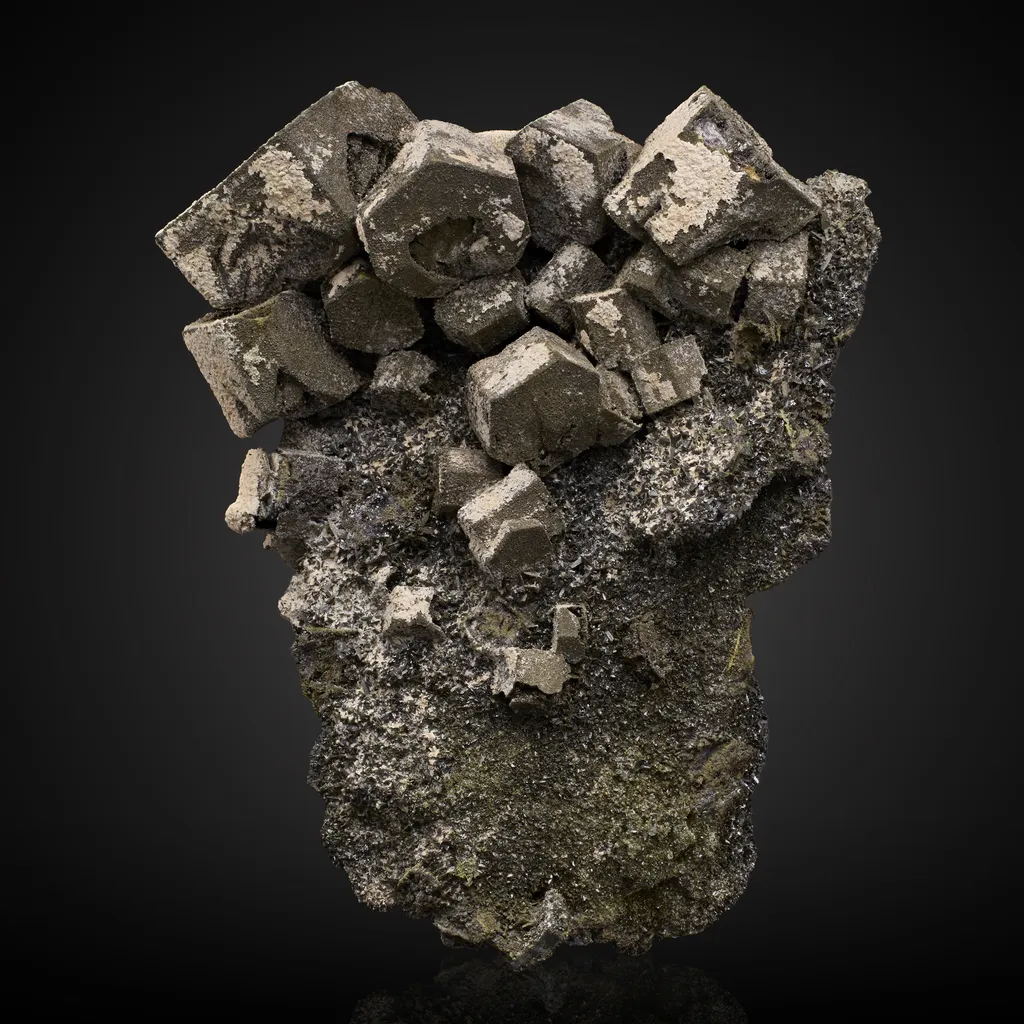
Photo: EarthWonders specimen record
Search for specimens: View all specimens from Opongguwe Prospect, Kaokoveld Plateau, Namibia
Opongguwe Prospect sits within the Kaokoveld Plateau copper district of Kunene Region, a dry, rugged sector of northwestern Namibia between the Opuwo and Sesfontein areas. Regionally, the mineralized prospects are part of the Kaoko Belt / Damara orogenic system and are hosted by Neoproterozoic sedimentary rocks, especially carbonate-rich successions of the Otavi Group and related rift-basin units. The broader district is famous for oxidized copper mineralization developed in dolomite, limestone, shale, slate, quartzite, and breccia zones, with primary copper-lead sulfides converted in the weathered zone into some of the world’s most attractive copper silicate and copper-lead secondary assemblages.
The useful geological model for Opongguwe is the same one that explains the better-known Kaokoveld specimen pits: stratiform and structurally controlled copper-lead mineralization, with chalcocite, bornite, galena, pyrite, and related sulfides as the primary ore suite, overprinted by oxidation and supergene enrichment. Quartz-carbonate veins, stockworks, and breccias provide the cavities and open-space textures that make collector specimens possible. In the oxidized zone, copper released from sulfides is fixed as shattuckite, plancheite, chrysocolla, malachite, and dioptase, while lead and vanadium produce species such as cerussite, wulfenite, mottramite, and vanadinite where the chemistry is favorable.
The 2023 Opongguwe material is described in the specimen trade as coming from a small operation or small dig, rather than from a long-established industrial mine. That is important. Much of the best Kaokoveld collecting history has come from shallow workings, hand-dug pockets, and small-scale mineral extraction, where specimens survive better than they would in large mechanized ore production. Opongguwe appears in the market as a pocket-style locality: quartz vugs, delicate sprays, and replacement textures rather than large tonnages of ore.
The most documented Opongguwe specimens to date are miniatures and small-cabinet pieces. Collector’s Edge and EarthWonders records show pieces roughly in the 4–11 cm range, including shattuckite-included quartz vugs, malachite sprays with mottramite and quartz coatings, dioptase with shattuckite or plancheite on quartz, and mottramite pseudomorphs or replacements after vanadinite. The vanadinite-mottramite pieces are especially noteworthy because older published summaries of the Kaokoveld district treated vanadinite as uncommon and highly localized; Opongguwe adds a modern occurrence in which vanadinite crystal forms and mottramite overgrowth or replacement are central to the locality’s identity.
Access should be understood conservatively. The Kaokoveld mineral areas lie in remote country, with poor local roads, seasonal access problems in the wet season, active claims or prospects, and a history of local and company-controlled specimen digging. Opongguwe specimens on the market should be treated as mined material from a specific small prospect, not as an invitation to casual collecting. Serious locality labels should preserve the full wording “Opongguwe Prospect, Kaokoveld Plateau, Kunene Region, Namibia,” because Kaokoveld labels have long suffered from broad regional naming, overlapping prospect names, and dealer shorthand.
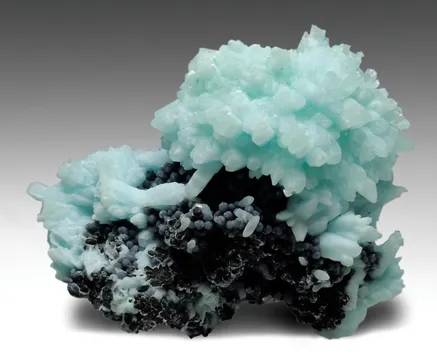
At Opongguwe, shattuckite is the blue signature mineral, occurring in and on quartz vugs, as coatings associated with malachite sprays, and with dioptase or plancheite on quartz; documented specimens are mostly miniature to small-cabinet size, including pieces around 5–9 cm across. The best examples show saturated dark to electric blue shattuckite following the contours of quartz crystals or lining concave pocket surfaces, sometimes with sparkling druse or glassy quartz faces adding light. Ordinary pieces are massive or patchy blue matrix; the desirable Opongguwe pieces have intact vug architecture, strong blue coverage, visible quartz terminations, and contrasting green malachite or dioptase.
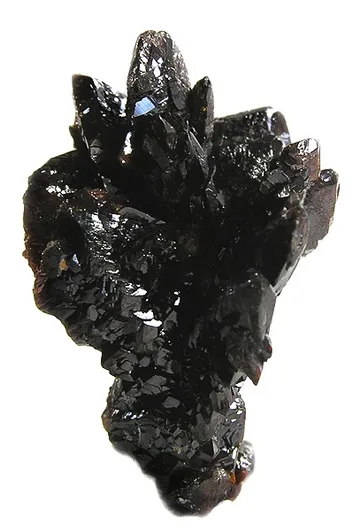
Opongguwe mottramite is best known from the 2023 mottramite-after-vanadinite material: olive to dark green mottramite preserving, coating, or replacing vanadinite crystal forms, with specimens recorded from small miniature size up to small-cabinet pieces about 9 cm across. It also appears as a coating on malachite sprays with quartz and shattuckite association. Good examples are those in which the vanadinite morphology remains readable—crystal outlines, clustered form, and relief—rather than being reduced to an indistinct green crust; luster, coverage, and contrast with quartz or malachite are the practical grading points.
Vanadinite from Opongguwe is important less as the familiar red Moroccan-style display species and more as the precursor or partner in the locality’s mottramite-after-vanadinite specimens. The recorded Opongguwe examples show vanadinite with mottramite, commonly described as mottramite pseudomorphous after vanadinite, from a new 2023 find; known specimens include compact miniatures and small-cabinet pieces several centimeters across. The best pieces retain recognizable vanadinite crystal architecture under or alongside the green mottramite, making them more mineralogically interesting than visually simple coatings; pieces with sharp relief and minimal abrasion are preferable.
Opongguwe malachite occurs as lustrous green sprays and grouped fibrous aggregates, often partly coated by mottramite and quartz and commonly associated with shattuckite; some specimens are described as possible calcite- or cerussite-bearing combinations. Documented examples range from miniatures to small-cabinet pieces around 5–7 cm or more, with the most attractive showing upright, undamaged sprays against blue shattuckite or pale quartz rather than flat, mossy crusts. A fine Opongguwe malachite should have bright silky luster, intact spray terminations, balanced placement on the matrix, and no distracting rubbing on the fibrous tips.
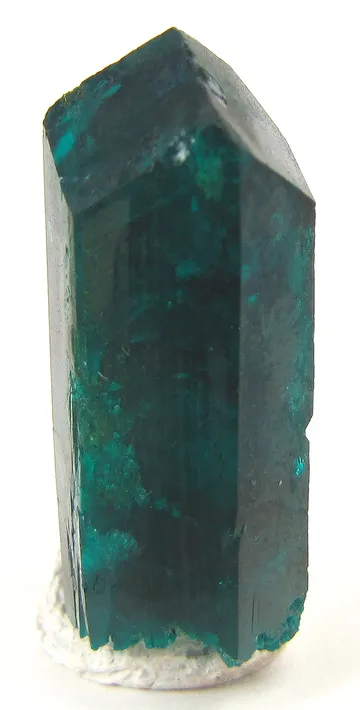
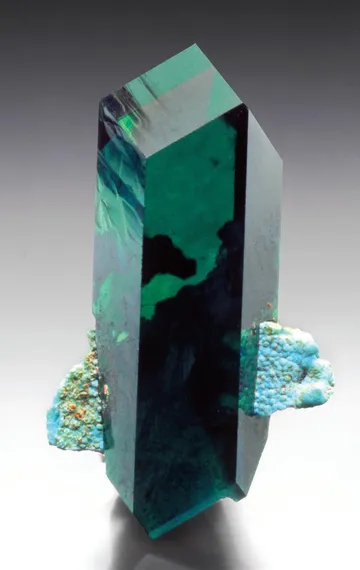
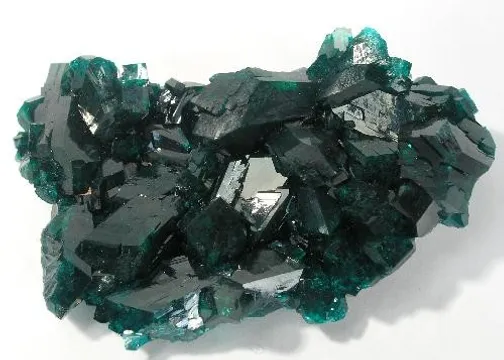
Dioptase at Opongguwe appears in vugs and groups of lustrous green crystals, most memorably with shattuckite or plancheite on quartz; documented examples include miniatures around 4 cm and small-cabinet pieces to about 8 cm. The appeal is the classic Kaokoveld color contrast: emerald-green dioptase against blue copper silicates rather than only on pale carbonate. Fine specimens show glassy, sharp dioptase crystals with strong color and clean faces; lesser pieces have bruised crystal edges, dull surfaces, or dioptase so subordinate that it becomes a minor accent rather than the visual center.
Quartz is the main display framework for much Opongguwe material, forming vugs, crystal-lined pockets, drusy coatings, and shattuckite-included or shattuckite-coated crystals. The best Opongguwe quartz specimens are not valued as quartz alone, but as architecture: white to glassy terminations carrying deep blue shattuckite, malachite sprays, possible cerussite twins, or dioptase. Good pieces preserve complete terminations and an open pocket form; ordinary ones are broken quartz blocks with scattered blue-green coatings and little sense of the original cavity.
Other minerals documented from Opongguwe material include plancheite, wulfenite, cerussite, and possible calcite, with chrysocolla also expected in the broader Kaokoveld oxidized copper-silicate environment. The prospect is not known as a type locality; its rarities are locality-context rarities rather than new species. Plancheite is especially important because it is part of the blue copper-silicate sequence with shattuckite, and wulfenite or cerussite adds lead-oxide-zone character to pieces otherwise dominated by copper minerals.
The chief authenticity issue for Opongguwe is locality precision. Kaokoveld specimens have long circulated under broad or overlapping names—Kaokoveld, Kaokoland, Kandesi, Okandawasi, Old German mine, Otjikotu, and other labels have all been used in ways that can blur exact source. Opongguwe is a newer prospect name tied to a 2023 small dig, so older specimens should not be relabeled as Opongguwe unless provenance supports it. A strong label should name the prospect and region together, not merely “Kaokoveld, Namibia.”
No widely documented fakes or systematic treatments are specifically associated with Opongguwe. The more realistic concerns are misidentification and over-simple labeling: mottramite-after-vanadinite may be sold as vanadinite, mottramite, or both; blue copper silicates may be called shattuckite without distinguishing plancheite or chrysocolla; and pale coatings may be assumed to be quartz, calcite, hemimorphite, or cerussite without testing. For valuable pieces, especially those involving plancheite, vanadinite, or cerussite, analytical confirmation or a reputable dealer history is worth having.
Condition is central. Shattuckite and malachite surfaces can be velvety or fibrous and are easily scuffed; dioptase is brittle and has prominent cleavage; quartz druse can hide small bruises; and pseudomorphous mottramite-after-vanadinite pieces are best when crystal form remains crisp. Avoid aggressive cleaning. The Kaokoveld suite commonly includes lead and vanadium minerals such as mottramite, vanadinite, cerussite, and wulfenite, so normal mineral-collector hygiene applies: do not create dust, do not lick or soak unknown coatings, wash hands after handling, and keep small fragments away from children and pets.
Market availability is limited but not vanishingly rare. The 2023 Opongguwe dig supplied a compact suite that reached major dealers and EarthWonders in 2026, with prices depending strongly on aesthetics: modest malachite or dioptase miniatures sit at the accessible end, while shattuckite-rich quartz vugs and the best small-cabinet combinations command more. Because the locality is new and the total production appears small, top examples with a complete pocket form, sharp contrast, and unambiguous Opongguwe provenance should be kept with original dealer labels and digital specimen records.
The larger Kaokoveld story is one of beautiful minerals coming from difficult country. The mining areas lie off the Opuwo–Sesfontein road, with access roads that can be rough even in the dry season and dry riverbeds that become unreliable in the rains. The annual rhythm matters: by early December, specimen work in the district typically stops, and it may not resume until mid-April. That seasonal interruption is part of why Kaokoveld material tends to appear in pulses rather than as a steady industrial stream.
Another memorable feature of the district is its naming maze. Kaokoveld collectors have had to learn that a specimen label may preserve a prospect name, a farm name, an operator’s name, an older German-era name, or a dealer’s shorthand. The same ground has sometimes been called by different names depending on who was digging, who was selling, and who wanted to keep a pocket quiet. Opongguwe enters that tradition as a fresh 2023 prospect name, attached to a small dig whose pieces are now recognizable by their mottramite-after-vanadinite, malachite-quartz-shattuckite, and dioptase-shattuckite combinations.
The most appealing human detail is that many of the finest Kaokoveld specimens survived because they were not blasted out as anonymous ore. Much of the district’s specimen production has come from shallow workings and hand extraction by local miners and prospectors. That kind of work is slow, seasonal, and physically demanding, but it preserves cavities, sprays, and crystal coatings that heavy ore mining would destroy. Opongguwe’s best pieces—the little quartz vugs with blue shattuckite, the malachite sprays dusted with quartz, the green mottramite preserving vanadinite form—belong to that tradition of pocket-by-pocket recovery.