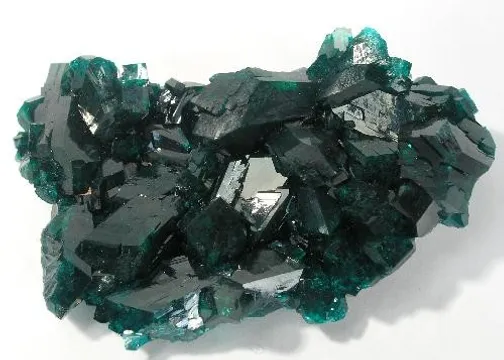
Warmbad, Namibia - a notable zinc locality producing tarbuttite, smithsonite, skorpionite; gemmy greens and rare secondary crystals prized by collectors.
Key facts
Warmbad, Namibia, as used on many modern collector labels for the tarbuttite–smithsonite suite, points collectors toward one of the strangest zinc localities in southern Africa: the Skorpion Mine near Rosh Pinah in the ǁKaras Region. This is not a Tsumeb-like sulfide cave system, nor a conventional vein mine, but a large supergene, non-sulphide zinc deposit developed in the arid southern Namib Desert. Its economic ore was chiefly zinc-bearing clay, carbonate, and silicate material—especially sauconite, hemimorphite, and smithsonite—with lesser but specimen-famous zinc phosphates such as tarbuttite, scholzite, and the type-locality mineral skorpionite.
The best Warmbad/Skorpion specimens have a look that immediately separates them from ordinary “zinc oxide” ore: translucent to gemmy, pale apple-green tarbuttite in sharply bladed, fan-like, radial, and swirling sprays; botryoidal white to greenish blue smithsonite crusts; glittering white hemimorphite or hydroxylapatite microcrystals; and, in the rarer pockets, colorless acicular skorpionite growing like frost in open vugs. Many pieces are small-cabinet to miniature scale, but the finest have architectural space, crisp terminations, and a high wet luster unusual for a phosphate better known elsewhere as a drab secondary zinc mineral.
Regional View
Country View
Geologically, the locality belongs to the Skorpion–Rosh Pinah part of the Gariep belt, where Neoproterozoic volcano-sedimentary rocks were metamorphosed, folded, broken, and later deeply oxidized. The orebody sat above primary base-metal sulphide mineralization and formed by weathering, remobilization, and reprecipitation of zinc into porous, fractured, and brecciated host rocks. That open-space story matters directly to collectors: the most desirable tarbuttite and skorpionite are not massive ore minerals but late secondary crystals grown into solution-collapse cavities and pore spaces.

Photo: Wikimedia Commons
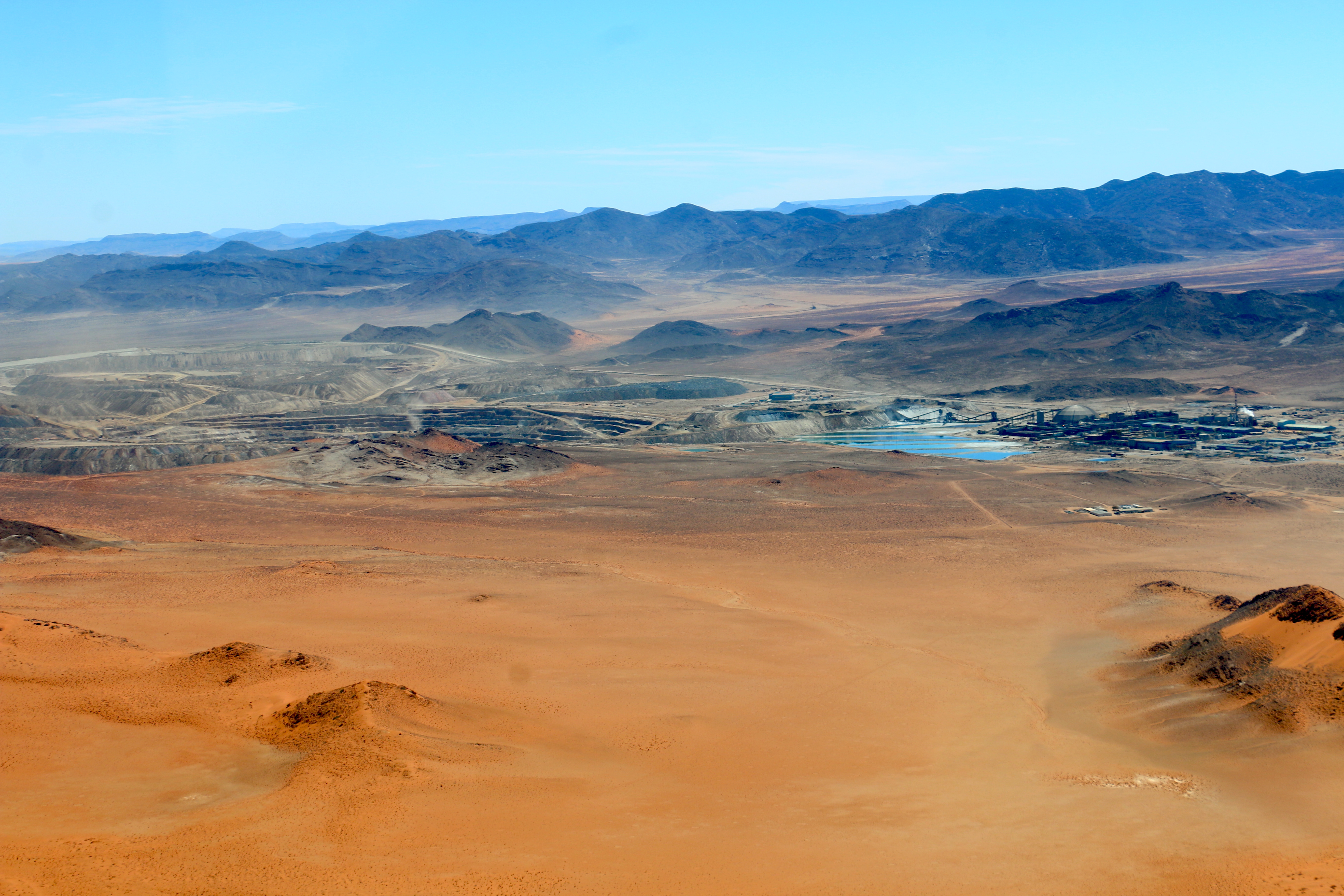
Photo: Wikimedia Commons
Search for specimens: View all specimens from Warmbad, Namibia
The collector locality is best understood through the Skorpion Mine, an oxidic zinc mine and refinery complex north to northwest of Rosh Pinah in southern Namibia. Scientific and mining references place the Skorpion deposit in the Port Nolloth Zone of the Neoproterozoic Gariep belt, hosted mainly by metamorphosed arkosic to subarkosic sedimentary rocks, with subordinate felsic metavolcanic and volcaniclastic units. The deposit is important because it is a large non-sulphide zinc orebody formed above and from earlier sulphide mineralization; instead of sphalerite-rich ore being concentrated and smelted by ordinary sulphide methods, Skorpion’s economic zinc occurred in oxidized mineral phases including sauconite, hemimorphite, smithsonite, and related secondary zinc minerals.
The mineable orebody was reported in the principal Economic Geology study as about 24.6 million metric tonnes at an average grade of 10.6 wt. percent Zn. The dominant nonsulphide ore minerals were sauconite, hemimorphite, and smithsonite, with subordinate hydrozincite, tarbuttite, scholzite, chalcophanite, atacamite, and related minerals. For specimen collectors, the important point is not merely that these species occur, but where and how they occur: secondary zinc minerals filled fractures, intergranular pore space, vugs, and solution-collapse breccias, and they also replaced weathered host-rock minerals. Open-space growth allowed the green tarbuttite blades and colorless skorpionite needles to develop as recognizable crystals rather than anonymous ore.
The most specimen-rich tarbuttite material described in the geological literature came from solution-collapse breccias in the eastern part of the Skorpion open pit, especially around the 640–645 m levels. There, friable tan metasedimentary breccia clasts mineralized by sauconite and/or smithsonite were cemented by tarbuttite, and in cavities the tarbuttite grew freely as euhedral crystals. Minor scholzite was intergrown with tarbuttite, and some scholzite-dominated breccias were also noted. This is the setting behind the best collector specimens: green tarbuttite as the visible framework of the piece, locally dusted or veiled by white hydrozincite, hemimorphite, hydroxylapatite, or rare skorpionite.
Mining history at Skorpion is unusually tied to metallurgy. The zinc oxide orebody was known decades before mining because the ore was unconventional and difficult to treat by established routes. Reunion Mining’s work in the 1990s and subsequent Anglo American development turned the deposit from geological curiosity into a mine by solving the processing problem with a hydrometallurgical route. Anglo American approved the project in 2000, construction and mining followed in the early 2000s, first zinc metal was produced in May 2003, and the mine and refinery were officially opened in September 2003 by Namibian President Sam Nujoma. The operation was designed to produce special high-grade zinc and became famous in metallurgical circles for the first commercial application of solvent extraction to primary zinc production at this scale.
Ownership later passed into the Vedanta Zinc International portfolio. The mine and refinery were placed under care and maintenance from 1 May 2020 after geotechnical instabilities and slope failures in the open pit created safety concerns. Current corporate reporting continues to describe Skorpion as under care and maintenance while restart or refinery-conversion options are assessed. For collectors, that means the locality is not a casual collecting ground: it is an industrial mine site, historically inside a tightly controlled area, and modern access should be treated as restricted unless arranged through the operator and in accordance with Namibian law. Most specimens available today entered the market through mine-period collecting, geologists, dealers, and older stock rather than open field collecting by visitors.
The principal collector production appears to cluster around the mid-2000s through roughly the early 2010s, with dealers recording notable tarbuttite, tarbuttite–hydroxylapatite–hemimorphite, and smithsonite–hemimorphite specimens from about 2006–2010 and later attractive tarbuttite–smithsonite pieces from around 2014. The 2007 tarbuttite find is especially important in the collector record because it brought bright, gemmy green, sharply formed material to market and changed the status of Skorpion from a mining and metallurgical case study into a serious phosphate locality.
Tarbuttite from Warmbad/Skorpion is the locality’s signature collector mineral: light to apple-green, commonly translucent to transparent, and developed as bladed, acicular, radial, fan-like, or swirling aggregates on weathered matrix. The best pieces are from solution-collapse breccia and open pore-space zones in the Skorpion open pit, especially the eastern pit levels described around 640–645 m, where tarbuttite cemented friable metasedimentary breccia clasts and locally grew unhindered into cavities. Specimens range from thumbnail sprays to cabinet plates, with dealer-recorded main crystals commonly around a few millimeters to about 2 cm; associations include smithsonite, hemimorphite, hydroxylapatite, hydrozincite, scholzite, chalcophanite, skorpionite, and rarer phosphate or carbonate species. Good Warmbad tarbuttite is separated from ordinary material by saturated pale green color, glassy luster, intact fan terminations, open three-dimensional placement on matrix, and minimal masking by later white coatings.
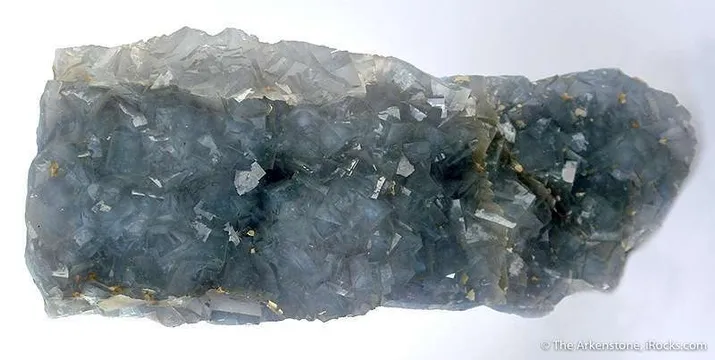
Smithsonite from Warmbad/Skorpion is important less for large classic rhombohedra than for its role in the supergene zinc assemblage: white, pale greenish blue, and violet to lilac botryoidal or crystalline crusts on matrix, commonly associated with sparkling hemimorphite and, in the finest mixed pieces, sharp green tarbuttite. Documented collector specimens from the 2007–2010 period include botryoidal white smithsonite on bright hemimorphite-coated matrix and greenish blue botryoidal aggregates with individual smithsonite crystal areas around the centimeter scale; later tarbuttite–smithsonite pieces show violet botryoidal smithsonite contrasting strongly with pale green tarbuttite fans. The strongest examples have clean color contrast, fresh botryoidal surfaces, clear species association, and enough relief that the smithsonite reads as a distinct sculptural mineral rather than simply a pale crust on oxidized ore.
Other documented minerals from the locality make the Warmbad/Skorpion suite far richer than a two-species occurrence. Skorpionite, Ca3Zn2(PO4)2(CO3)(OH)2 · H2O, is the type-locality mineral, first recognized as colorless needle-like crystals in Skorpion material and formally described in 2008; it commonly occurs with tarbuttite, hydrozincite, and gypsum and is a major prize for systematic collectors. The locality has also produced hemimorphite, hydrozincite, scholzite, sauconite, chalcophanite, hydrohetaerolite, hetaerolite, atacamite, paratacamite, herbertsmithite, zincolibethenite, parádsasvárite, pseudomalachite, malachite, chrysocolla, churchite-(Y), hydroxylapatite, fluorapatite, baryte, calcite, gypsum, quartz, goethite, hematite, and relict sulphides including sphalerite, galena, chalcopyrite, chalcocite, pyrite, and pyrrhotite. Several of these are micromount or analytical-specimen minerals rather than showy cabinet species, but they document the chemically complex oxidation system that made Skorpion so distinctive.
Warmbad/Skorpion specimens need locality and species discipline. The most common marketplace problem is not deliberate fakery so much as optimistic or outdated identification in a visually crowded secondary zinc assemblage. Green tarbuttite, white hemimorphite, hydroxylapatite coatings, hydrozincite, scholzite, and colorless skorpionite can occur together on the same specimen, and some individual white sprays or needles require analytical confirmation. Skorpionite is particularly treacherous: authoritative references note that it may be confused with sword-shaped scholzite, and at least one collector-photo note on Mindat records material originally sold as skorpionite that was considered almost certainly scholzite. Any specimen sold primarily as skorpionite should be accompanied by credible analytical history, an old reliable label, or a clear provenance from a specialist dealer.
Condition is a serious value factor. Tarbuttite crystals are not hard, and the fan-like sprays that make Skorpion material beautiful are easily bruised along exposed edges. The best pieces should be examined for broken blade tips, rubbed high points, powdery white overgrowths obscuring the green crystal faces, and repaired matrix. Smithsonite botryoids should be checked for dull abrasion, chipped bubbles, and iron-stained or clay-filled depressions. On mixed tarbuttite–smithsonite specimens, strong color contrast and open display are more important than sheer size.
Fluorescence is worth testing but not worth overpaying for without aesthetics. Some Skorpion tarbuttite specimens have been recorded as fluorescent under shortwave UV with weaker longwave response, and skorpionite-bearing specimens can also show useful UV behavior depending on the associated minerals. Because this is a mixed secondary assemblage, fluorescence may come from more than one phase; record what fluoresces on the specimen rather than assuming the entire response belongs to tarbuttite or skorpionite.
Market availability is limited and uneven. Tarbuttite is the most obtainable serious species from the locality, but high-end examples—transparent, bright apple-green, undamaged, and architectural—are much scarcer than small massive or coated pieces. Smithsonite is less common as a locality-labeled collector specimen than tarbuttite, and the best smithsonite pieces tend to be attractive mixed specimens with hemimorphite or tarbuttite rather than stand-alone classics. Skorpionite remains a rarity; many specimens are micromount scale or require magnification to appreciate, and type-locality examples with convincing documentation command a premium among systematic collectors.
Skorpion’s story begins as a contradiction: a zinc mine whose zinc was obvious enough to measure but awkward enough to leave alone. The deposit sat in the remote southern Namib, not far from Rosh Pinah and the Orange River, but its ore was not a friendly sulphide concentrate waiting for a smelter. It was a strange oxidized body of zinc-bearing clays, carbonates, and silicates—material that conventional zinc metallurgy could not easily use. For years, the deposit remained a geological problem rather than an operating mine.
The turn came through process engineering. Reunion Mining’s work in the 1990s helped solve the extraction problem, and Anglo American ultimately carried the project into development. The mine was approved at a capital cost of about US$454 million, an enormous commitment for southern Namibia at the time. By May 2003 the first metal had been produced, and by September the mine and refinery were formally opened. Anglo American presented Skorpion as one of the lowest-cost zinc producers in the world and a project capable of making 150,000 tonnes per year of special high-grade zinc. For mineral collectors, that industrial success had an unintended consequence: benches, stockpiles, breccias, and open-pit exposures began to reveal the delicate secondary zinc phosphates that would never have been found in such abundance from surface outcrop alone.
The most vivid collector transformation came with tarbuttite. Before Skorpion, tarbuttite had a reputation among many collectors as a drab secondary zinc phosphate, interesting to systematists but seldom beautiful. Then the Skorpion pieces appeared: translucent, bright, pale green crystals with sharp fan-like growths and open sprays. A 2007 market appearance was widely noted because it seemed to reset the aesthetic ceiling for the species. Suddenly tarbuttite was not merely a name to fill a Dana or Strunz slot; it was a display mineral.
The discovery of skorpionite adds a quieter, more scientific chapter. Material collected at the Skorpion Mine in October 2003 was later examined closely, and colorless needle-like crystals resisted ordinary identification by powder X-ray diffraction. Microchemical tests pointed to calcium, zinc, phosphate, and carbonate, suggesting something unusual. Single-crystal X-ray work and microprobe analysis confirmed a new species, approved by the IMA as skorpionite and formally described in 2008. The crystals themselves are tiny—needles and laths for the microscope rather than the show case—but the mineral carries the full locality name in its identity. A specimen with skorpionite is not merely from Skorpion; it contains a mineral born from Skorpion’s own unusual oxidation chemistry.
There is also a modern, sobering epilogue. The same open pit that exposed the ore and specimen zones later became the reason the operation stopped. Geotechnical instability and slope failure led Vedanta to place the mine and refinery under care and maintenance from 1 May 2020. The future of mining and processing at the site has been discussed in terms of restart options, refinery conversion, and safe extraction of remaining ore, but for collectors the implication is simple: the old specimen-producing window is closed for now, and the best Warmbad/Skorpion pieces on the market carry the aura of a short, distinctive collecting era.