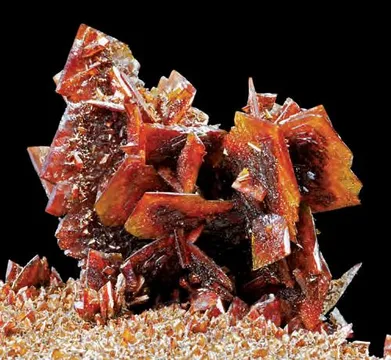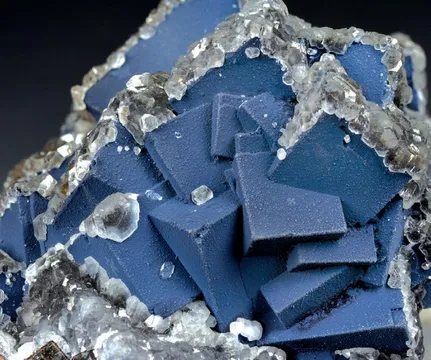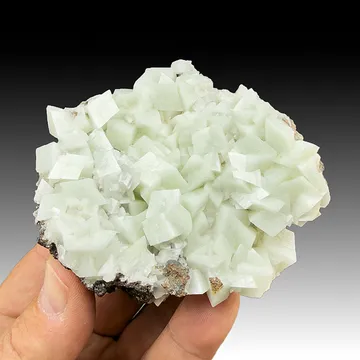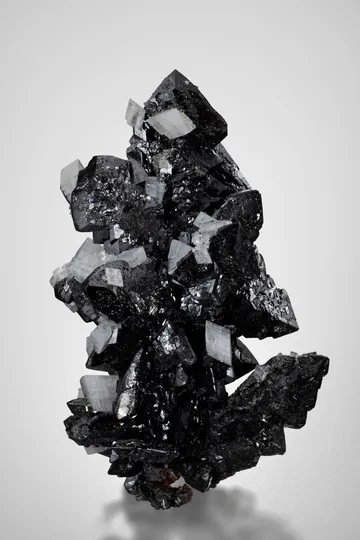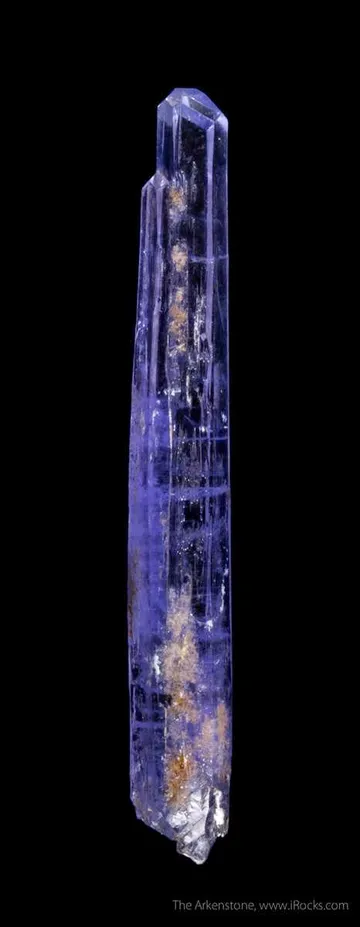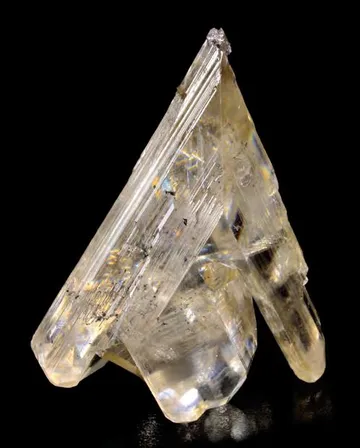
Otjozondjupa Region — premier collector locality for vanadates and Zn-Pb deposits, yielding iconic descloizite, vanadinite, and Okorusu fluorite crystals.
Key facts
Otjozondjupa is one of the great collector regions of southern Africa, not because it is a single mine locality, but because the region holds several of Namibia’s classic specimen-producing systems: the Zn-Pb-V deposits of Berg Aukas, Abenab and Abenab West in the Otavi Mountainland; the rare-mineral furnace of the Kombat Mine; and, farther southwest near Otjiwarongo, the Okorusu fluorite mine. For collectors of vanadium minerals, the name is especially weighty. Berg Aukas set the world standard for descloizite, while Abenab produced the giant red vanadinite crystals and vanadinite-descloizite combinations that are unlike ordinary vanadinite from Morocco, Arizona, or Mibladen-style barite veins.
The geological engine behind the region’s famous vanadates is the Otavi Mountainland: a carbonate platform sequence of the Neoproterozoic Otavi Group, later mineralized by base-metal sulphides and then deeply altered by supergene fluids in arid karst. In the best collector zones, zinc, lead, copper and vanadium were reorganized in collapse breccias, solution cavities, red muds, fractures and vugs. That is why the finest Otjozondjupa vanadate specimens have such strong three-dimensional character: glossy brown spear-points of descloizite, blackish to reddish brown bladed aggregates, olive-green descloizite after vanadinite, and, from Abenab, thick red to orange-red hexagonal vanadinite crystals mantled or frosted by dark descloizite.
Historically, these were not little curiosity pits. Abenab and Berg Aukas were important vanadium, lead and zinc producers, and their vanadate ore bodies were once regarded among the greatest of their kind. Their closure left the collector market with a finite supply of classic old-stock material. Kombat, meanwhile, remains a mineralogical landmark for another reason: its chemically unusual Cu-Pb-Mn-Fe system has yielded a remarkable suite of type-locality species and rare manganese, lead oxychloride and silicate minerals, many of them represented by microscopic or research-grade material rather than display cabinet specimens.
Regional View
Country View
A fine Otjozondjupa specimen usually has an old-world look: dense, heavy, and mineralogically serious rather than merely colorful. Berg Aukas descloizite can appear almost metallic black in low light, then reveal warm chocolate-brown or reddish internal tones along broken edges and thin crystal margins. Abenab vanadinite is often less bright and glassy than Moroccan material, but it compensates with size, age, and association: thick, red, blunt prisms and crystals partly replaced or coated by descloizite, sometimes standing in strange relief from dolomite, mud-filled cavities or carbonate matrix.

Photo: Wikimedia Commons
Search for specimens: View all specimens from Otjozondjupa Region, Namibia
Otjozondjupa’s best-known collector localities lie in and around the Otavi Mountainland, the triangular mining province between Otavi, Tsumeb and Grootfontein. The relevant host rocks are carbonate units of the Otavi Group, especially dolostone and limestone sequences that were fractured, folded, karstified and repeatedly mineralized. In the vanadium deposits, the ore was not a simple primary vein. The classic descloizite and vanadinite formed after earlier Pb-Zn sulphide mineralization, when oxidizing meteoric fluids moved through karst cavities, collapse breccias, faults and open fractures, concentrating lead, zinc, copper and vanadium as secondary vanadates.
Berg Aukas is the region’s name locality for collectors of descloizite. The mine, near Grootfontein, was discovered in 1913, worked intermittently from the 1920s, and became a significant underground Zn-Pb-V producer in the mid-20th century. The ore bodies were hosted in dolostone and associated breccias, with primary sphalerite and galena overprinted by oxidized zinc and lead minerals including willemite, smithsonite, cerussite and descloizite. Descloizite occurred through the supergene portion of the deposit, especially as vug and fracture fillings adjacent to oxidized zinc ore. Mineralization was traced to great depth, but the mine closed in 1978 after decades of production, leaving remaining resources in the ground and fixing the supply of classic specimens.
The Berg Aukas ore system is usually discussed in terms of several distinct ore bodies and horizons rather than a single pocket zone. Published descriptions recognize the Northern Ore Horizon and the Central, Intermediate and Hanging Wall ore bodies. For specimen collectors, the important point is that the best descloizite came from cavities, vugs and breccia-related voids within or near the oxidized ore, where the crystals had space to develop spear-point terminations, bladed rosettes, jackstraw clusters and glossy tabular groups. Calcite, dolomite, smithsonite, willemite, cerussite and occasional vanadinite are the associations to watch for on old labels and matrix.
Abenab and Abenab West form the other great vanadate chapter of Otjozondjupa. Abenab was mined by the South West Africa Company from the early 1920s until the late 1940s as an open-pit and underground operation. Its pipe-like karst body lay along a sheared contact between carbonate units and was filled with collapse breccia, compacted red muds, coarse calcite and descloizite-vanadinite mineralization. Abenab West, a related stratiform karst deposit, produced high-grade lead-vanadium concentrates and contained ferruginous clay, collapsed country-rock fragments, calcite cement, descloizite, vanadinite, willemite, sphalerite and galena. In collector language, “Abenab” is the locality to scrutinize when a Namibian vanadinite specimen shows large red crystals with dark descloizite overgrowth.
The Abenab vanadate body has been described in zones: an upper pyrite-galena zone, a middle vanadate zone rich in descloizite, mottramite and vanadinite, and a lower willemite-rich zone. The vanadium mineralization appears in several textural forms: breccia clast infill, fine fracture fill, druses and open-space crystal growth, and clay-filled cavities. That variety explains why Abenab specimens range from dense ore pieces to dramatic old-time cabinet specimens with stout vanadinite crystals partly masked by descloizite.
Kombat lies southwest of the Abenab-Berg Aukas vanadate localities, at the southern margin of the Otavi Mountainland. It was discovered in the 19th century, saw copper mining around the beginning of the 20th century, and has had a complex operating history involving Tsumeb Corporation, Ongopolo, Weatherly International and, more recently, Trigon Metals. Unlike Berg Aukas and Abenab, Kombat is not chiefly a descloizite-vanadinite specimen locality. It is a copper-lead-silver mine and one of Namibia’s great rare-mineral laboratories, with carbonate-hosted replacement mineralization and extraordinary Mn-Fe-Pb assemblages in dolomite of the Hüttenberg Formation. Banded magnetite, hausmannite, hematite, baryte, calcite, tephroite, alleghanyite, pyrochroite, leucophoenicite, kutnohorite and many lead oxychlorides and manganese silicates are part of its scientific personality.
Okorusu, north of Otjiwarongo, adds a different collecting flavor to Otjozondjupa. It is a carbonatite-related fluorspar deposit, mined by open pit, and famous among fluorite collectors for cubic crystals with green, cranberry, yellow, violet and phantom zoning. The major specimen-producing areas are known as the “A” Pit, “B” Pit, “B Satellite,” “C” Pit and “D” Pit, each with its own visual style. Although Okorusu is not central to the descloizite and vanadinite story, it is essential to understanding Otjozondjupa as a collector region rather than merely a vanadate district.
Access today should be treated as industrial, private and legally restricted. Berg Aukas is a historic underground mine with remaining infrastructure and modern redevelopment interest; Abenab and Abenab West have seen renewed exploration; Kombat is an active or recently active mining operation; and Okorusu is an industrial fluorspar and critical-minerals site with controlled access. Serious collectors should expect Otjozondjupa specimens to come from old mine production, dealer stocks, estate collections, museum exchanges, or documented modern recovery under permission—not from casual field collecting.
Otjozondjupa descloizite means, above all, Berg Aukas, where the species occurs as lustrous brown, reddish brown, dark chocolate, olive-black to nearly black crystals in vugs, fractures and karst-collapse breccias adjacent to oxidized Zn-Pb ore; the best pieces show sharp spear-point or bladed orthorhombic crystals, tabular clusters, rosettes, cogwheel-like groups and jackstraw aggregates, commonly with calcite, dolomite, smithsonite, willemite, cerussite, anglesite or minor vanadinite. Good miniature and small-cabinet specimens may have individual crystals to the centimeter scale, with the very best showing complete terminations, bright greasy-to-vitreous luster, sculptural separation and a warm reddish-brown glow on thin edges; ordinary pieces are massive, dull, bruised on exposed tips, or so densely intergrown that they read as black ore rather than crystallized descloizite. Abenab and Abenab West also produced descloizite, often in red-mud and calcite-cemented karst material and as coatings or pseudomorphic-looking overgrowths on vanadinite, but the crisp, species-defining spear-point aesthetic belongs most strongly to Berg Aukas.
Otjozondjupa vanadinite is most important from Abenab, where old specimens can show unusually large red to orange-red hexagonal crystals, stout prisms, elongated crystals and crystal groups associated with descloizite, dolomite, calcite-rich karst fill and ferruginous red mud; some crystals are partly or largely coated by black to brown descloizite, giving them a distinctive “red core, dark skin” character that is frequently misread by collectors accustomed to bright Moroccan vanadinite. Abenab has long been cited for producing some of the world’s largest vanadinite crystals, and documented specimens include red crystals several centimeters long with dark descloizite overgrowth; the most desirable pieces retain recognizable vanadinite form, good red color, coherent matrix or attractive contrast, and minimal edge chipping, while lesser examples are isolated broken prisms, dark overgrown fragments, or poorly labelled “Berg Aukas” pieces whose habit and association point more convincingly to Abenab. Smaller occurrences are documented around Abenab West, Okarundu, Berg Aukas, Harasib and Uitsab, but Abenab remains the locality name that gives Otjozondjupa vanadinite its collector importance.
Beyond descloizite and vanadinite, Otjozondjupa is rich in documented collector and research minerals. Berg Aukas is also noted for smithsonite, willemite, calcite, dolomite, cerussite, anglesite, mimetite, wulfenite, mottramite and associated sulphides. Abenab and Abenab West add willemite, mottramite, galena, sphalerite, pyrite and calcite-rich karst assemblages. Kombat is the region’s rare-mineral powerhouse and the type locality for asisite, erikjonssonite, grootfonteinite, hereroite, holdawayite, jaffeite, janchevite, johninnesite, kombatite, milanriederite, ribbeite, roymillerite, vladkrivovichevite, yangite, damaraite and carlfrancisite; it is also famous among specialists for nambulite, glaucochroite, hausmannite, baryte, tephroite, leucophoenicite, barysilite, pyrochroite, serandite, rhodonite, kentrolite and a long list of copper and lead secondary species. Okorusu contributes a very different suite, dominated for collectors by fluorite—green cubes, cranberry and yellow phantoms, violet-zoned crystals and fluorite with calcite or quartz.
The greatest authenticity issue for Otjozondjupa specimens is locality precision, not artificial treatment. Old Namibian labels may read “South West Africa,” “Grootfontein,” “Otavi,” “Berg Aukus,” “Abenab,” or simply “Namibia,” and these labels were not always applied with modern locality discipline. Berg Aukas descloizite, Abenab descloizite, Abenab vanadinite-descloizite combinations and Uitsab vanadates can be confused, especially when specimens are detached from matrix. A red to orange-red vanadinite with black descloizite overgrowth is more characteristic of Abenab than Berg Aukas, even when an old label says otherwise.
For descloizite, watch for broken spear tips, rubbed high points, glue repairs to prominent blades, and dark massive pieces sold as “crystals.” The mineral is dense and relatively soft, and the best Berg Aukas crystals often project from the matrix in exactly the places most likely to be bruised. Strong luster, intact terminations, visible individual crystals and aesthetic contrast with pale carbonate or zinc minerals distinguish fine specimens from ordinary ore pieces. Many attractive pieces are old thumbnails or miniatures; size alone does not make a Berg Aukas descloizite important if the crystal definition is poor.
For Abenab vanadinite, the chief condition problem is edge damage on large prisms and loss of red color under heavy descloizite coating. Some specimens are naturally overgrown to the point that the vanadinite is only partly visible, so a good label, old provenance, and visible hexagonal morphology matter. Bright red, undamaged Abenab crystals with strong form are much rarer than generic Moroccan vanadinite of similar size, and should be judged as historical classics rather than by the same aesthetic rules used for modern Moroccan cabinet pieces.
Kombat rare minerals require extra caution. Many are microscopic, compositionally unusual, or visually similar to other lead oxychlorides and manganese silicates. Red asisite from Kombat has specifically been reported as having been erroneously sold as “chubutite” or “lorettoite,” so unusual red or yellow lead oxychloride material should not be accepted on appearance alone. For high-value Kombat rarities, analytical confirmation or trustworthy provenance is far more important than a dramatic hand-written label.
Lead-bearing minerals are common in the Otjozondjupa suite: descloizite, vanadinite, cerussite, anglesite, mimetite, wulfenite, many Kombat oxychlorides and several other species all contain lead. Normal cabinet display is not a problem, but collectors should avoid creating dust, should not clean friable lead minerals aggressively, and should wash hands after handling. Descloizite and vanadinite are not fluorescence minerals of primary interest here; fluorescence notes are more relevant to Okorusu fluorite and willemite-bearing material.
Market availability is uneven. Berg Aukas descloizite appears regularly enough that collectors can be selective, but fine, undamaged, old-stock specimens with strong form are finite and increasingly expensive. Abenab vanadinite-descloizite combinations are much scarcer and often hide in old collections under broad “Namibia” or “Otavi” labels. Kombat rare minerals are usually specialist pieces, often micro or thumbnail scale, with pricing driven by species rarity and documentation. Okorusu fluorite remains the most broadly available Otjozondjupa mineral on the collector market, but top phantom pieces and large, clean, well-zoned cubes are still premium specimens.
One of the most vivid modern collecting stories from Otjozondjupa comes not from the closed vanadate mines but from Okorusu, where specimen recovery was deliberately integrated into a working fluorspar operation. Beginning in 2002 and continuing until open-pit active mining ceased in 2014, Mine Rat Minerals/Open Adit West dealt directly with Okorusu Fluorspar under contract for specimens. Mark Kielbaso’s account reads like the working end of the mineral trade: a turnoff in the Namibian bush, a guard shack conference about where to go, biltong at the mine, and the “Specimen Shed” where crystals were kept for buyers rather than being lost to the crusher.
The mine itself had a geography collectors learned by pit name. The “A” Pit was the green-cube locality, the source of the classic Okorusu green fluorite. The “B” Pit was less generous, with some yellow material. “B Satellite” produced strange lustrous cranberry-and-clear phantom fluorites. The “C” Pit yielded cranberry and yellow phantoms in 2003, found only four to five meters below the surface before the ore body was developed and those shallow pockets were mined out. Deeper in the “C” body came the classic cranberry “Diamond” shaped phantom fluorites. The “D” Pit added its own green fluorite and quartz-fluorite “dice” specimens. That pit-by-pit identity is exactly what collectors crave: not just “Okorusu fluorite,” but A Pit green, B Satellite cranberry-clear phantom, C Pit shallow cranberry-yellow phantom, or D Pit dice.
The cast of characters is unusually well preserved. Mark Kielbaso, Claus Hedegaard, Mike New of Top Gem Minerals, Chris Johnston, Roy Verburgt, Peter Eysselein and John Lucking appear in the field photographs and captions: inspecting pockets, discussing prices, loading specimens, hand-digging in B Satellite, standing in the mineral shed, and reviewing mine operations. Mark Dawe, the managing director, and Roy Verburgt, the project manager, are singled out for having the foresight to preserve specimens for collectors. That matters. In a working industrial mine, the default fate of pockets is destruction. At Okorusu, at least for a meaningful window of time, attractive fluorite was separated, stored, prepared and released into the collector market.
The Okorusu story also has its desert-mine hazards. Kielbaso’s field notes include Roy Verburgt having caught a Zebra Snake and a Puff Adder outside the mine office, and another photograph records a Black Mamba killed in the “C” Pit. These are not decorative anecdotes; they place the collecting story in a real Namibian open-pit environment of heat, machinery, loose rock, venomous snakes, long drives and carefully managed access. The resulting specimens—green cubes, cranberry phantoms, yellow zoning, quartz-fluorite combinations—carry that industrial field history with them.
Berg Aukas has a different kind of story, written into fossils and karst sediment rather than recent field photographs. At the Central Ore Body, a studied wall of an opencast pit showed stratified sediments filling a cavern system developed in dolomite country rock. The lower, largely mined-out strata were rich in descloizite and included mammalian fossils of middle Miocene age. In one sample, descloizite crystals had grown directly on a chunk of fossil-rich pink breccia, with the base of the crystals molding the breccia’s original surface texture. That is an extraordinary image: a classic mineral specimen also acting as a cast of a Miocene karst surface, the vanadium ore and the fossil-bearing cave fill locked into the same geological episode.
Boni, M., Terracciano, R., Evans, N. J., Laukamp, C., Schneider, J., and Bechstädt, T. (2007). “Genesis of Vanadium Ores in the Otavi Mountainland, Namibia.” Economic Geology, 102(3), 441–469. A foundational modern study of the descloizite-, mottramite- and vanadinite-bearing Zn-Cu-Pb vanadate ores of the Otavi Mountainland.
Pickford, M. (1993). “Age of supergene ore bodies at Berg Aukas and Harasib 3a, Namibia.” Communications of the Geological Survey of Namibia, 8, 157–160. Important note on the Miocene age of descloizite-rich supergene ore at Berg Aukas and its fossil-bearing karst breccias.
Cairncross, B. (1997). “The Otavi Mountain Land Cu-Pb-Zn-V deposits, Namibia.” The Mineralogical Record, 28, 109–130. Classic collector-mineralogical overview of the Otavi Mountainland deposits, including Abenab, Berg Aukas and vanadium minerals.
Cairncross, B. (2021). “Minerals of Berg Aukas, Otavi Mountainland, Namibia.” Rocks & Minerals, 96(2). Modern locality article focused specifically on Berg Aukas minerals and specimen history.
Dunn, P. J. (1991). “Rare Minerals of the Kombat Mine.” The Mineralogical Record, 22(6), 421–425. Concise classic reference for Kombat’s rare-mineral assemblage.
Mindat Type Locality Report for Kombat Mine, Otjozondjupa Region, Namibia. Useful checklist of type-locality species from Kombat, including asisite, grootfonteinite, hereroite, janchevite, johninnesite, kombatite and related rare species.
Chukanov, N. V., Nekrasova, D. O., Siidra, O. I., Polekhovsky, Y. S., and Pekov, I. V. (2018). “Janchevite, Pb7V5+(O8.5□0.5)Cl2, A New Mineral From the Kombat Mine, Namibia.” The Canadian Mineralogist, 56(2), 159–165. Type-species reference page for janchevite, a rare lead oxychloride from Kombat.
Siidra, O. I., et al. (2018). “Grootfonteinite, Pb3O(CO3)2, a new mineral species from the Kombat Mine, Namibia, merotypically related to hydrocerussite.” Type-species reference page for grootfonteinite, named for the Grootfontein district that includes Kombat.
Cairncross, B. (2020). “Connoisseur’s Choice: Nambulite, Kombat Mine, Grootfontein, Otjozondjupa Region, Namibia.” Rocks & Minerals, 95(6), 530–534. Specialist collector article on one of Kombat’s best-known rare minerals.
Southwood, M., and Carr, P. (2023). “The Where of Mineral Names: Kombatite, Kombat Mine, Grootfontein, Otjozondjupa Region, Namibia.” Rocks & Minerals, 98(3), 282–289. Mineral-name and locality-focused article on kombatite from its type locality.
Cairncross, B. (2018). “The Okorusu mine, Otjozondjupa Region, Namibia.” The Mineralogical Record, 49(3), 375–398. Key collector reference for Okorusu fluorite, cited in Mindat’s literature record for the locality.
“Prep Work: Fluorite Crystals, Okorusu Mine, Otjiwarongo, Otjozondjupa, Namibia - Part 1 of 4” — Mine Rat Minerals A specimen-preparation video tied to Okorusu fluorite recovered from the Otjozondjupa fluorspar mine.
“Prep Work: Fluorite Crystals, Okorusu Mine, Otjiwarongo, Otjozondjupa, Namibia - Part 4 of 4” — Mine Rat Minerals Later segment in the Okorusu fluorite preparation series, useful for seeing how mine-run fluorite specimens are cleaned and prepared.
Mindat: Otjozondjupa Region, Namibia Regional locality index for mines and species recorded from Otjozondjupa.
Mindat: Berg Aukas Mine, Grootfontein Constituency, Otjozondjupa Region, Namibia Essential locality page for Berg Aukas descloizite, associated species, coordinates and references.
Mindat photo gallery: Berg Aukas Mine Large visual reference for Berg Aukas descloizite habits, sizes and associations.
Mindat: Abenab Mine, Abenab, Grootfontein Constituency, Otjozondjupa Region, Namibia Core locality page for Abenab vanadinite, descloizite and vanadate ore geology.
Mindat photo gallery: Abenab Mine Useful image reference for vanadinite-descloizite combinations and Abenab habits.
Mindat: Kombat Mine, Kombat, Otavi Constituency, Otjozondjupa Region, Namibia Main reference for Kombat minerals, type-locality species, history and rare-mineral assemblages.
Mindat Type Locality Report: Kombat Mine Quick list of minerals first described from Kombat and its sublocalities.
Golden Deeps: Abenab Mineralisation Current exploration-company summary of Abenab’s carbonate-hosted karst vanadate mineralization.
Golden Deeps: Abenab Mine History Concise mining-history overview for Abenab, including operating dates, mining depth and historical concentrate production.
Consolidated Copper Corp: Berg Aukas Current operator/developer page summarizing Berg Aukas history, grades, care-and-maintenance status and restart interest.
Mine Rat Minerals: Okorusu Fluorspar Mine, Part 1 Photo-heavy field account of Okorusu’s pits, specimen shed, people and mine history.
Mine Rat Minerals: Okorusu Fluorspar Mine, Part 2 Collector-focused account of the distinct Okorusu fluorite-producing pits and specimen styles.
Wikimedia Commons: Minerals of Berg Aukas Open image archive for Berg Aukas descloizite, smithsonite, willemite and related specimens.
Wikimedia Commons: Abenab Mine Small open-image category for Abenab descloizite and vanadinite-related material.
Wikimedia Commons: Descloizite-239949.jpg Rob Lavinsky photograph of a classic two-toned Berg Aukas descloizite miniature.