






Ontonagon County, USA - famed for native copper and silver, diverse mineral styles from Keweenawan lodes to White Pine, and a Lake Superior palette.
Key facts
Ontonagon County is the southwestern anchor of Michigan’s Copper Country: a place where collectors meet both the classic Keweenaw native-copper lodes and the very different White Pine sediment-hosted copper-silver deposit. The county’s collector identity is built on native copper, native silver, and the copper-district gangue suite—datolite, calcite, quartz, epidote, adularia, prehnite, pumpellyite, chlorite, and zeolites—formed in and around Mesoproterozoic rift rocks on the south shore of Lake Superior. In the Greenland–Mass City–Rockland belt, copper occupies amygdules, fractures, fissures, and flow-top breccias in the Portage Lake Volcanic Series and related Keweenawan rocks; at White Pine, copper and silver occur mainly in the lower Nonesuch Formation as a stratiform shale-siltstone ore body dominated by chalcocite, with native copper and native silver as important accessory ore minerals.
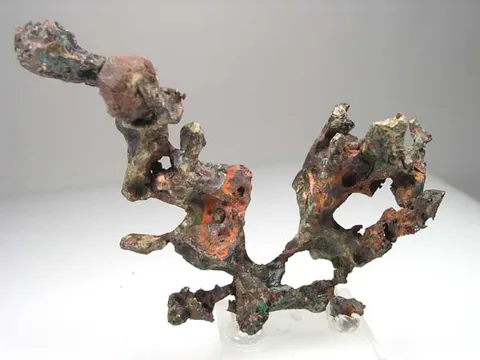
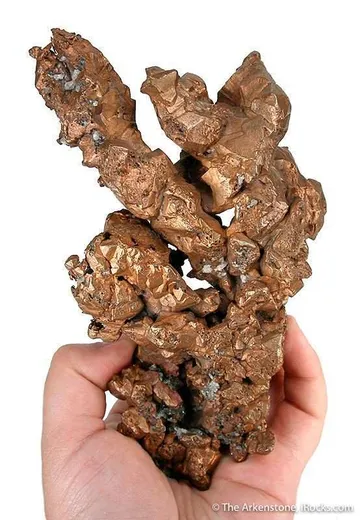
For specimen collectors, the county is not one locality but a family of sharply different specimen styles. The Adventure, Caledonia, Mass, Minesota, National, Victoria, and related mines supplied hackly copper, crystallized copper, copper in calcite, copper-silver “halfbreed,” copper-bearing amygdaloidal basalt, and nodular datolite. White Pine, by contrast, is remembered for sheet and fracture copper in dark sedimentary matrix, plus chalcocite-bearing ore and native silver in a copper-silver stratiform setting. The best Ontonagon pieces show a distinctly Lake Superior palette: metallic rose-orange copper, cool silver-white native silver, white to smoky calcite, green epidote and chlorite, and datolite nodules whose polished interiors may be porcelain-white, pink, red, yellow, or greenish.
Regional View
Country View
The county’s fame began long before organized mining. Prehistoric copper workings are widespread in the district, and the legendary Ontonagon Boulder—a multi-thousand-pound mass of native copper from the Ontonagon River area—became one of the great mineral objects in early American geology. Later, the Minesota Mine near Rockland became one of the most celebrated early native-copper mines in the United States, while White Pine prolonged Michigan copper mining into the late twentieth century after most of the native-copper mines had closed.

Photo: James St. John / Wikimedia Commons


Search for specimens: View all specimens from Ontonagon County, USA
Ontonagon County lies within the Midcontinent Rift copper province, where Keweenawan volcanic and sedimentary rocks host one of the most remarkable concentrations of native copper known. The collector localities most often represented by fine specimens are clustered around Greenland, Mass City, Rockland, Silver City, Victoria, and White Pine. The older, classic native-copper mines worked lodes in the Portage Lake Volcanic Series and associated Keweenawan units: copper occurs in amygdaloidal basalt, flow tops, fractures, fissures, and locally in conglomeratic or feldspathic matrices. Gangue and late-stage cavity minerals include calcite, quartz, epidote, adularia and other K-feldspar, prehnite, pumpellyite, chlorite-group minerals, laumontite, saponite, and datolite.
The White Pine district is geologically distinct from the amygdaloid and fissure mines of the Greenland–Mass–Rockland belt. Its ore is a sediment-hosted stratiform copper-silver deposit developed chiefly near the base of the Nonesuch Formation, above the Copper Harbor Conglomerate. The main copper mineral at White Pine is chalcocite, but the deposit also contains native copper and native silver; the native copper there commonly appears as disseminations, grains, seams, sheets, and fracture fillings in dark shale-siltstone rather than as the classic basalt-hosted masses of the older native-copper mines. White Pine specimens therefore belong to the same broad Keweenaw metallogenic story but look and behave differently in a cabinet.
Mining history in Ontonagon County is unusually deep. Indigenous copper working preceded Euro-American mining by thousands of years, and many nineteenth-century mines were opened at or near ancient pits. The famous Ontonagon Boulder drew explorers, investors, and geologists to the region and helped create the publicity that fueled the Lake Superior copper rush. Organized nineteenth-century mining followed on a patchwork of properties: Minesota near Rockland, National, Victoria, Adventure, Mass, Caledonia, Algomah, Nonesuch, and many smaller ventures. Some were short-lived prospects; others became nationally important mines or later collector localities.
The Minesota Mine is central to the county’s early reputation. Discovered in 1847 after prospectors encountered a six-ton mass of native copper in an ancient pit, it began mining in 1848 and was, from 1855 through 1862, one of the leading copper producers in the United States. Its fame rests on immense native-copper masses, including the enormous 527-ton mass encountered underground in 1856. The name “Minesota” is not a typo in serious locality work: the mine’s legal spelling traditionally lacks the second “n,” and that spelling should be preserved on labels.
Adventure Mine, near Greenland, worked from 1850 into the early twentieth century and produced more than eleven million pounds of refined copper. The property included Adventure, Hilton, and Knowlton workings, and its dumps and underground exposures have produced native copper, native silver, quartz, calcite, datolite, epidote, prehnite, pumpellyite, adularia, laumontite, cuprite, tenorite, and chloritic matrix pieces. Today Adventure is one of the county’s best-known accessible historic mines, with underground tours rather than free collecting as its main public role.
Caledonia Mine, near Mass City on the north side of Caledonia Bluff above the Flint Steel River valley, is especially important to collectors because it has remained a specimen-oriented locality long after industrial production ended. It was organized in 1863 after the Caledonia Mining Company acquired the Nebraska and Kansas properties. Early mining emphasized the Knowlton and Butler lodes, later work explored and mined the Knowlton Lode from the No. 4 adit, and the property connects historically and geologically with the Nebraska, Knowlton, and Mass workings. Commercial production, tribute mining, Calumet & Hecla exploration, later Red Metal Exploration work, and the modern Evergreen Explorations era all left rock and ore that have fed the collector market. Caledonia is particularly noted for copper, silver, datolite, copper in calcite, copper-silver halfbreed, and microminerals.
The Mass Mine and Mass Consolidated properties near Mass City produced copper from multiple lodes and are also specimen sources for copper, silver, datolite, and microminerals. The Old Mass Mine began as the Johnson Tract and worked intermittently through the nineteenth century, later becoming part of Mass Consolidated. The broader Mass–Greenland district is less famous to casual collectors than the great Houghton County mines, but it is critical for Ontonagon specimens because it supplied an attractive balance of copper, silver, datolite, calcite, epidote, and feldspar-lined amygdaloidal matrix.
Victoria Mine, near Rockland, also began from near-surface copper discovered in old workings and produced native copper from the Forest Lode and related workings. Modern visitors know the Old Victoria site for its restored historic cabins and its association with the Ontonagon River and Victoria Dam area. The remaining mine piles have yielded copper and silver crystals and occasional datolite nodules. National Mine, also in the Rockland area, is another of the important nineteenth-century native-copper operations in the county, remembered alongside Minesota as part of the rich southern end of the Copper Country fissure-mine belt.
Collecting access today is mixed and must be treated seriously. Many mines are private, dangerous, reclaimed, flooded, collapsed, or on lands where collecting is restricted. Caledonia operates as a private fee-collecting locality with prepared ore piles and a separate datolite pile; material is brought out and sorted under the mine’s rules. Adventure Mine is primarily a tour locality with guided underground access and historic interpretation. White Pine is a closed industrial mine area with modern mineral rights and development considerations; old mine ground should not be assumed open. Old dumps, road cuts, river gravels, and Lake Superior beaches may yield copper-country material in the broader region, but permission, land status, and state or local rules matter, and old shafts and adits should be considered lethal unless operated as formal tours.
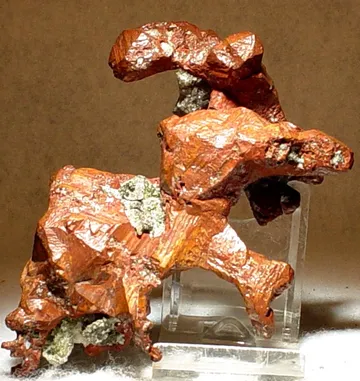
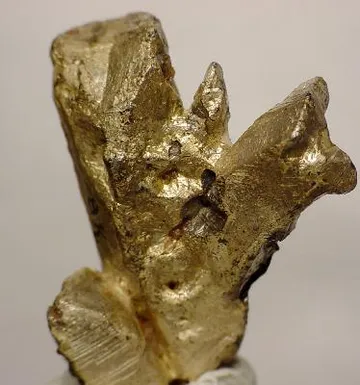
Copper is the defining mineral of Ontonagon County, appearing as hackly masses, sheets, nuggets, fracture fillings, amygdule fillings, crude to sharp crystals, and polished or naturally patinated float pieces. In the Adventure–Caledonia–Mass–Minesota–Victoria belt, the most desirable cabinet specimens are not simply heavy copper lumps; they are copper with architecture—arborescent or spinose forms, sharp crystal faces, bright exposed metal contrasting with dark basalt or green epidote, copper perched in calcite, or copper-silver halfbreed with clear separation of the two native metals. Minesota is legendary for huge historical masses, while Caledonia and Adventure are more important to the modern collector for obtainable small-cabinet and hand specimens with matrix and associated calcite, datolite, epidote, adularia, quartz, or silver; White Pine copper is a different style altogether, prized as sheet or fracture copper in dark Nonesuch sedimentary rock when locality documentation is solid.
Ontonagon County datolite is best known from Caledonia, Adventure, Mass, Minesota, Victoria, and related copper-mine dumps, where it occurs mainly as compact to porcelaneous nodules, vein fillings, and small cavity-related masses rather than as the free-standing glassy crystals familiar from some other borosilicate localities. Caledonia nodules are especially prized when cut and polished to reveal saturated red, pink, or maroon interiors caused by copper coloration, with rarer yellow, green, blue, and patterned examples also sought; externally they may look drab, cauliflower-like, or basalt-coated, so collector experience matters. Good Ontonagon datolite is judged by color, polish, lack of fractures, attractive rind-to-core contrast, and association with native copper, epidote, calcite, or basalt matrix, while ordinary pieces are pale, cracked, poorly colored, or overcut into featureless slices.
Native silver from Ontonagon County occurs with native copper in the classic Keweenaw “halfbreed” association and, at White Pine, as part of the sediment-hosted copper-silver system. In the basalt-hosted mines such as Adventure and Caledonia, silver may appear as wires, leaves, patches, blebs, or small crystals intergrown with copper, sometimes on epidotized basalt or in calcite-bearing matrix; Caledonia specimens with distinct silver standing proud of copper or green matrix are particularly desirable. Good pieces show unmistakable silver color and texture, sharp separation from copper, and undamaged surfaces; lesser examples require magnification to confirm tiny blebs, have silver smeared by trimming or sawing, or are labelled only generally as “Michigan halfbreed” without a mine attribution.
Calcite is a common but highly effective display associate in Ontonagon copper specimens, especially from Adventure, Caledonia, the Ontonagon Silver Mine, and other county workings where late carbonate fills cavities and fractures around native copper. The finest pieces show colorless to gray or white scalenohedral or rhombohedral crystals, drusy coatings, or cleavable masses with copper included in or emerging from the calcite, often with epidote providing a green accent. Collector-grade calcite from the county is usually valued less as a stand-alone calcite locality specimen and more as a compositional partner: sharp copper in clean calcite, undamaged crystal faces, and a natural matrix relationship separate good specimens from common calcite-coated dump rock.
Quartz in Ontonagon County belongs to the copper-district vein and amygdule suite and is documented from Adventure, Caledonia, Minesota, the Ontonagon Silver Mine, White Pine, and other localities, commonly as milky to colorless vein quartz, drusy linings, small crystals, or quartz-rich matrix associated with native copper, silver, calcite, epidote, chlorite, and feldspar. Historical mineralogical accounts specifically noted quartz crystals from the Minesota Mine, but most Ontonagon quartz specimens on the collector market are valued for association rather than species perfection. The best examples carry visible copper or silver in or on quartz, or show quartz as part of a clean amygdaloidal assemblage; ordinary examples are indistinct white vein material with weak locality or mineral context.
Epidote is one of the visual signatures of Ontonagon copper-country matrix, forming pistachio-green to dark green granular, massive, radiating, or microcrystalline material in altered basalt, amygdules, and vein selvages at Adventure, Caledonia, Victoria, the Ontonagon Silver Mine, and related workings. It commonly accompanies native copper, native silver, calcite, quartz, prehnite, pumpellyite, chlorite, and datolite, and it is especially important aesthetically because the green matrix makes copper and silver stand out. Good Ontonagon epidote specimens are typically association pieces—copper on epidotized basalt, silver-copper halfbreed on epidote, or calcite-copper-epidote combinations—where freshness, contrast, and natural texture matter more than large isolated epidote crystals.
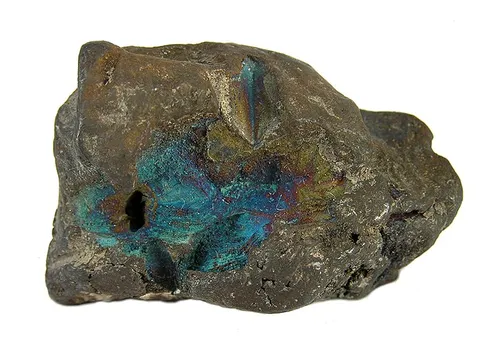
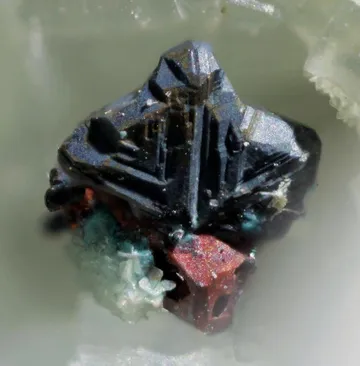
Beyond the six principal collector species, Ontonagon County has a rich supporting mineral list. Caledonia is documented for brochantite, cuprite, tenorite, malachite, goethite, hematite, clinochlore variety pennine, saponite, prehnite, pumpellyite-(Mg), laumontite, adularia, microcline, gerhardtite, likasite, and the rare borate jacquesdietrichite. The Algomah Mine is notable for rare supergene copper mineralization, especially paramelaconite reported with malachite, dioptase, cuprite, chrysocolla, tenorite, atacamite, paratacamite, and nantokite; later work has shown that some apparent paramelaconite crystals are composite pseudomorphs involving tenorite, hematite, and possibly cuprite. White Pine adds the sediment-hosted suite of chalcocite, native copper, native silver, galena, anhydrite, gypsum, hydromagnesite, barite, and related shale-hosted minerals. No valid mineral species appears to have its type locality specifically in Ontonagon County in the verified locality records used here; the county’s mineralogical importance rests instead on world-class native-copper history, unusual copper-silver associations, and rare occurrence records within the Lake Superior copper district.
Ontonagon specimens reward careful labels. A copper or silver piece labelled simply “Keweenaw” is far less useful than one tied to Caledonia, Adventure, Mass, Minesota, Victoria, National, White Pine, or another precise mine. “Minesota” should not be corrected to “Minnesota” on historic labels unless there is independent evidence that a different locality is meant; the missing “n” is part of the mine’s accepted historical spelling. White Pine copper should not be casually mixed with basalt-hosted native-copper specimens from the Greenland–Mass–Rockland belt, because the geology, matrix, and specimen style are different.
Most commercial confusion is not outright fakery but overbroad labelling. Glacial float copper from the Upper Peninsula is commonly sold as “Michigan copper” or “Ontonagon copper,” but without collection history it may be impossible to assign it to a county, let alone a mine. Sawn and polished datolite nodules are normal and desirable when honestly described; the treatment becomes a problem only when polishing, dyed fractures, resin fills, or reassembled nodules are not disclosed. Copper specimens may be brushed, cleaned, acid-treated, lacquered, oiled, or artificially brightened, so collectors should examine recesses for unnatural color, powdery residues, remaining acid smell, or a glossy coating inconsistent with natural patina.
Condition issues are species-specific. Native copper is tough but easily bent, flattened, or wire-brushed; delicate crystal groups lose value when high points are rounded. Native silver tarnishes and can be physically smeared into copper during trimming, sawing, or aggressive cleaning. Calcite is soft and acid-sensitive; any attempt to remove carbonate with acid will also destroy the calcite association that makes many Ontonagon specimens desirable. Datolite takes a handsome polish but can show internal fractures, rind cracks, and bruised edges. Laumontite, when present, is dehydration-prone and not a mineral to leave in dry heat. Old mine material may carry dirt, iron oxides, chloritic coatings, or loose matrix; stabilization should be conservative, because overcleaning can erase the copper-country texture that supports locality confidence.
Availability is better than for many classic American mining districts because Caledonia remains an active fee-collecting specimen locality and Adventure is a maintained historic mine, but truly fine Ontonagon pieces are not common. Strong Caledonia datolite nodules, sharp copper-in-calcite pieces, definite copper-silver halfbreeds, old Minesota or National specimens with early labels, and documented White Pine sheet copper all command a premium over generic Lake Superior copper. The most collectible pieces combine mineral quality, attractive matrix, and credible chain of locality information.
The first great Ontonagon mineral story is a boulder. Long before the county’s shaft houses and stamp mills, Indigenous people knew the great copper mass on the Ontonagon River, and travelers heard accounts of copper in such quantity that the reports sounded improbable to outsiders. Alexander Henry saw the region in the eighteenth century and tried to turn the legend into a mine. In 1771 he brought miners to the river, built a camp, and attacked the problem as if the boulder were the signpost to a lode. The men drove an adit into a frozen bluff where green copper-bearing water seeped out. When spring thaw released the frost from the ground, the unsupported tunnel caved in, injuring several of the workers. Nothing like a payable vein had been found, and the first English attempt at mining copper in the Upper Peninsula ended in failure.
In 1820, the Cass–Schoolcraft expedition came to the boulder and turned it into an image for the young science of American geology. Schoolcraft described a mass at the foot of a high clay bluff, irregular in form, battered by water and ice, and scarred by earlier attempts to cut off pieces. The expedition’s men tried a brutal experiment: they piled roughly thirty cords of wood around the copper, fired the pile, heated the mass, and dashed water over it. The copper did not split apart in the way they hoped. Only adhering quartz broke away, and the party left having moved the boulder only a few feet.
Julius Eldred, a Detroit hardware merchant, became obsessed with succeeding where others had failed. According to the later Smithsonian account, he spent sixteen years scheming about how to move the copper rock. The boulder was eventually dragged, hauled, rafted, argued over, weighed, claimed, and seized into public custody; after pieces had already been cut from it, its recorded weight was 3,708 pounds. Today the original resides at the Smithsonian, while Ontonagon keeps the story alive with a faithful model. The boulder was not merely a specimen. It was an advertisement for a mineral province, and its fame helped pull prospectors, politicians, geologists, investors, and opportunists into Copper Country before the California gold rush.
The Minesota Mine supplied the county’s next great chapter, and even its name carries a collector’s warning. The old mine near Rockland is “Minesota,” not “Minnesota,” a spelling embedded in the mine’s legal history. The discovery was dramatic: in 1847 prospectors found a six-ton native-copper mass in a pit dug by earlier Indigenous miners. A hemlock growing in the pit was reported to have nearly 400 growth rings, a quiet botanical measure of how old the abandoned working already was when nineteenth-century miners arrived. Organized mining began in 1848, and the mine became the pride of the southern Copper Country.
Then came the underground mass that made Minesota legendary. In 1856 miners encountered an immense body of native copper, reported at 527 tons—one of the largest masses ever found in the district. This was not ore in the ordinary sense of scattered grains through rock; it was copper on a scale that defeated simple handling. The old Lake Superior mines often had to cut, chisel, and break native copper underground because the metal was too tough and too massive to blast like brittle rock. Minesota’s great masses made fortunes and headlines, but by 1870 the richest massive copper had been worked out, shafts were deep enough to strain existing hoisting equipment, and falling copper prices helped push the company into tributing and decline.
Ontonagon also had a short silver fever. In the Iron River silver district near Silver City, the Ontonagon Silver Mining Company organized in 1873 to work a silver-bearing vein along the Iron River. A shaft was sunk, ore assays looked exciting, and a reduction mill was built on the east bank of the Big Iron River. On July 2, 1875, the plant began operating. During the next two weeks, 22 tons of Ontonagon mine rock were processed, and at two o’clock in the afternoon on July 17, the first Iron River silver brick was poured. It weighed 523 ounces and was worth $732. The romance was better than the economics: that run averaged only $33.28 per ton. Later tests from the Scranton mine produced smaller bricks and better per-ton numbers, but the district never became the silver camp its promoters hoped for. For today’s collector, the episode explains why a county synonymous with copper also has mines, labels, and specimens tied to a brief, very real silver boom.
Caledonia’s modern story is unusually pleasant for collectors because it did not end with a locked portal and a warning sign. The mine sits in Caledonia Bluff above the Flint Steel River valley, with old adits intersecting lodes that tie the property into the larger Mass–Knowlton–Nebraska system. Commercial miners, tribute miners, Calumet & Hecla geologists, Red Metal Exploration, and later Evergreen Explorations all left their marks. Modern visitors sort prepared piles, search for copper and silver, and learn the hard lesson of datolite: the best nodule in a pile may look like a dull lump until it is cut. The mine’s present specimen culture—private ore piles, a datolite pile, cutting and polishing, and staff helping collectors identify copper-country minerals—has made Ontonagon County one of the few classic American copper districts where new collectors can still have a hands-on experience with real mine material.
_(16691572374).jpg)

.jpg)