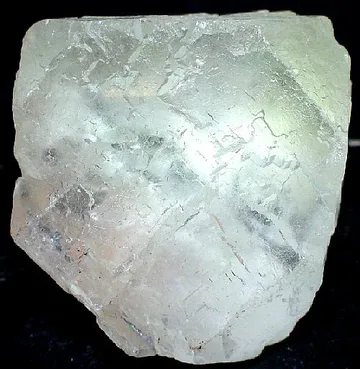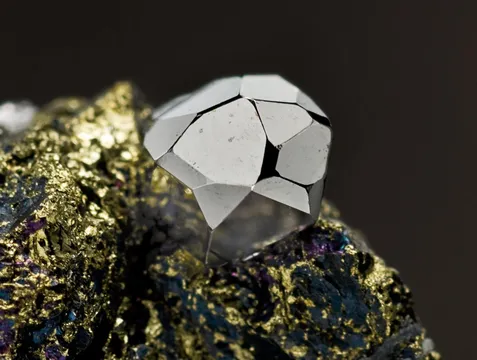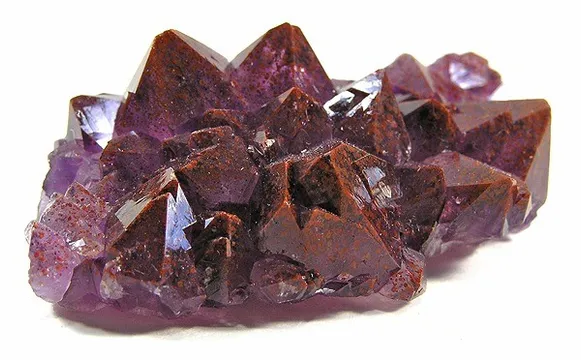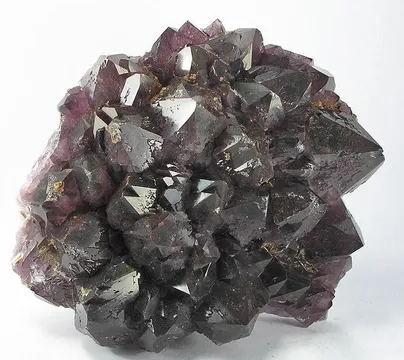
A collector's guide to Ontario, Canada: its geology, mining history and notable minerals, illustrated with the 143 specimens documented from this locality on EarthWonders.
Key facts
Ontario is not a single specimen locality so much as a mineral province: a continent-scale collecting field whose great specimens come from several very different geological worlds. In the northeast, the Cobalt–Gowganda district made Ontario legendary for native silver—heavy, hackly, dendritic, sheet-like and wire-like Ag in calcite-carbonate veins with cobalt-nickel-iron arsenides. Farther west and north, the Abitibi and related Archean greenstone belts made Ontario one of Canada’s great gold provinces, with native gold in quartz-carbonate veins and altered schists from camps such as Timmins, Kirkland Lake and Red Lake. In the southeast, the Grenville Province around Bancroft, Tory Hill, Wilberforce and Lake Clear supplied a very different collector’s language: calcite vein-dikes, skarns, nepheline-syenite bodies and pegmatites carrying titanite, fluorapatite, zircon, amphiboles, betafite-group pyrochlores, calcite and rare-element minerals.
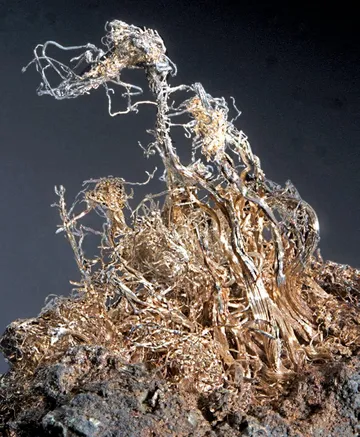
The best Ontario specimens have an unmistakable physicality. Cobalt silver is dense and sculptural, often darkened by natural tarnish but flashing bright white where freshly exposed, with calcite and steel-gray arsenides giving the pieces a severe, old-mine look. Bancroft-area specimens are more architectural: brown wedge-shaped titanite on white calcite, green to reddish fluorapatite in calcite, black amphibole crystals standing out of pale feldspar or carbonate, and radioactive betafite crystals as cubo-octahedral to dodecahedral black or gray masses with a waxy to submetallic skin. Ontario’s specimen importance comes from that breadth: few collecting regions can place native silver, orogenic gold, calcite vein-dike classics, radioactive rare-element minerals and type-locality species under one provincial label.
Regional View
Country View
The province’s collecting history is equally layered. Cobalt turned from railway construction camp to silver boomtown after the 1903 discoveries along the Temiskaming and Northern Ontario Railway; Bancroft became “Canada’s Mineral Capital” through decades of mica, feldspar, sodalite, uranium and collector-mineral activity; and Ontario’s gold camps trained generations of Canadian prospectors, mine geologists and specimen salvagers. A cabinet drawer labelled simply “Ontario” can therefore contain several chapters of Canadian mining history at once.

Photo:

Search for specimens: View all specimens from Ontario, Canada
Ontario’s collectible minerals are best understood by dividing the province into a few major specimen-producing geological provinces. The Cobalt–Gowganda camp in northeastern Ontario is a hydrothermal silver-cobalt-nickel-arsenide vein province. Its classic veins are steep, narrow carbonate veins and vein clusters cutting Keewatin volcanic and sedimentary rocks, pre-Algoman intrusives, Huronian sediments and Nipissing diabase. The ore shoots carried native silver, cobalt arsenides and nickel arsenides in carbonate gangue, with calcite and dolomite dominant and quartz, chlorite and sulfides locally important. The richest silver shoots were spectacularly high grade by any standard, and the district became famous for native silver occurring as masses, veinlets, slabs, grains and dendritic or wire forms, commonly intimate with skutterudite, safflorite, cobaltite, nickeline, rammelsbergite, arsenopyrite, native bismuth and silver sulfosalts.
The mining history of Cobalt began with the 1903 railway-era discoveries around Cobalt Lake and quickly became one of the decisive episodes in Canadian hard-rock mining. By the early boom years, mines such as McKinley-Darragh, La Rose, Nipissing, O’Brien, Coniagas, Kerr Lake, Buffalo, Trethewey, Temiskaming, Silver Queen and others were producing ore and attracting capital. The small claim sizes and the abundance of near-surface veins produced a crowded mining landscape of shafts, open cuts, adits, rockhouses, mills, tailings and tramway remnants. Cobalt is now a National Historic Site, and its surviving headframes, capped shafts, open cuts and the Heritage Silver Trail preserve a rare above-ground record of a silver camp that helped make Toronto a mining-finance centre. Collecting in the district today is not a matter of wandering into old workings: ownership, heritage protections, unstable ground and arsenic-bearing tailings all matter. Serious collectors usually acquire older material with good mine attribution, visit legal interpretive sites and the Cobalt Mining Museum, or collect only where permission and safety are absolutely clear.
The Bancroft–Tory Hill–Wilberforce–Lake Clear region belongs to the Grenville Province and is a collector’s world of high-grade metamorphic rocks, alkaline intrusions, pegmatites, skarns and calcite vein-dikes. The most distinctive deposits for collectors are the calcite vein-dikes: steep carbonate bodies emplaced into gneiss, amphibolite, marble and related metamorphic rocks. At Bear Lake, Gibson Road East, Lake Clear-area properties, Silver Crater and related localities, coarse calcite served as a pale matrix for euhedral crystals of titanite, fluorapatite, feldspar, amphibole, biotite/phlogopite, zircon and other species. Weathering has dissolved calcite along some vein-dikes, leaving crystals loose in soil-filled trenches or projecting from wall rock; at other sites, specimens must be trimmed from tough calcite or feldspathic matrix. The scientific literature treats these deposits as unusual hybrid bodies with characteristics of both veins and dikes, and some authors have compared the more carbonate-rich examples to crust-derived carbonatitic melts.
Silver Crater Mine in Faraday Township is the key Ontario locality for the betafite-style pyrochlore-supergroup specimens that have long circulated under the name “betafite.” The deposit is a calcite body in amphibolitic and syenitized gneiss country rock, with syenites and nepheline syenites nearby and marble to the south. Ontario Geological Survey records describe the calcite body as roughly 400 feet long, 150 feet wide and as much as 90 feet thick, carrying black mica, soda hornblende, apatite, betafite, zircon, albite, fluorite, molybdenite, pyrrhotite and titanite. The same records note the exceptional scale of accessory crystals: black mica to about 2 feet, soda hornblende to about 3 feet, apatite to about 2 feet and betafite to about 3 inches. Prospecting in the area began in the late nineteenth and early twentieth centuries for mica, phosphate and feldspar; S. Orser and D. J. Wilson worked the mine in 1925, and the Bancroft Mining Company excavated there in 1927. Later uranium-era interest returned attention to the radioactive minerals, but the enduring collector value of Silver Crater lies in sharp black to gray betafite crystals, green to brown apatite, biotite books and associated calcite-fluorite-titanite assemblages.
Bear Lake diggings, west of Tory Hill, are another cornerstone locality. The site is a classic calcite vein-dike occurrence in rocks of the Glamorgan complex, and scientific work describes narrow steep east-west carbonate dikes, commonly 1 to 2 meters across and locally swelling beyond 3 meters, carrying coarse crystals of amphibole, biotite, feldspar, titanite, augite, zircon and fluorapatite. Collectors know Bear Lake for lustrous brown titanite—occasionally very large—green to reddish fluorapatite, excellent biotite and important amphiboles, including ferri-fluoro-katophorite, for which Bear Lake is the type locality. The historic public collecting situation has changed: Bear Lake was long a famous collecting stop and was described as the first publicly protected collecting site in Ontario, but it closed to public digging after sale to new owners in 2016. Nearby fee or guided opportunities have appeared and changed through time, so current permission must always be confirmed before planning a trip.
Gibson Road East, often called Titanite Hill in collector usage, belongs to the same Bancroft calcite vein-dike family. Collectors report fluorapatite, titanite, amphiboles including fluoro-richterite/richterite-series material, microcline and phlogopite in calcite trenches and hillside float. The locality’s appeal is that the collecting method mirrors the geology: the calcite has partly dissolved from the vein-dikes, leaving pockets and depressions filled with roots, soil, glacial till and loose crystals. Good specimens from this style of occurrence are rarely pristine without work; they reward patient trimming, washing and mechanical preparation more than brute force.
Ontario’s gold specimens belong mostly to Archean greenstone-belt gold systems, especially the Abitibi and Red Lake regions. These are structurally controlled orogenic gold systems in deformed volcanic and sedimentary belts of the Superior Province, with gold in quartz-carbonate veins, altered shear zones, pyritic schists, tourmaline-bearing veins, telluride-bearing assemblages and related hydrothermal systems. Timmins–Porcupine, Kirkland Lake and Red Lake are mining camps first and specimen localities second; most gold was milled rather than saved as cabinet material. Nonetheless, visible native gold in quartz, gold with pyrite or tellurides, and polished ore slabs from mines such as the Lake Shore, Macassa, Hollinger-McIntyre, Campbell/Red Lake and related camps are important to collectors when provenance is strong.
Access across Ontario is variable and must be treated locality by locality. Some Bancroft-area sites are fee collecting operations, some are guided-tour properties, some are managed public-style rock dumps, some are roadcuts where traffic and municipal rules matter, and many famous old mines are private, rehabilitated, capped or closed. The Bancroft collecting community, mineral museum, Rockhound Gemboree and local guides remain useful starting points, but serious collectors should verify land ownership, mineral rights, collecting permissions, protected-area rules and seasonal access every time. In the Cobalt district, old mine workings and tailings add arsenic-bearing minerals and physical hazards to the usual trespass concerns. For radioactive Bancroft specimens—betafite, uraninite, uranothorite, thorite, euxenite and related minerals—collecting and owning small specimens is common among hobbyists, but storage, labelling, transport and handling require a level of care beyond ordinary cabinet minerals.
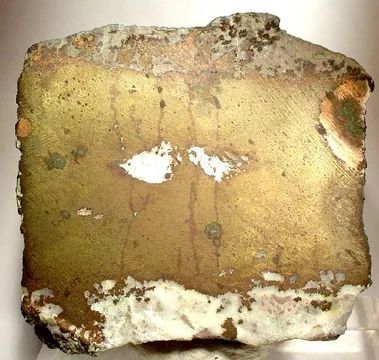
Ontario silver means, above all, the Cobalt–Gowganda native-silver camp, where Ag occurs in calcite-dolomite-carbonate veins with cobalt and nickel arsenides such as skutterudite, safflorite, cobaltite, nickeline and rammelsbergite. Good pieces range from thumbnails of curling wire or dendritic silver in white calcite to heavy cabinet specimens of hackly sheets, slabs and vein sections; old Cobalt specimens commonly show gray to black tarnish, sawed backs, pink erythrite staining or steel-gray arsenide matrix. The best collector pieces have visible three-dimensional silver rather than merely polished ore, strong mine attribution—McKinley-Darragh, La Rose, Nipissing, Kerr Lake, Coniagas, Silverfields, Castle, Langis and others—and a pleasing contrast between bright or naturally toned silver, carbonate gangue and dark cobalt-nickel arsenides.
Ontario gold specimens come chiefly from Archean greenstone-belt camps such as Timmins–Porcupine, Kirkland Lake, Red Lake, Geraldton-Beardmore and smaller northern deposits, where native gold occurs in quartz-carbonate veins, pyritic schists, breccias, altered shear zones and, in some camps, telluride-rich assemblages. Fine cabinet pieces are much less common than production ore because most Ontario gold was mined for milling, so locality integrity is critical: visible leaves, blebs or wires in milky to gray quartz, gold with pyrite, arsenopyrite, tourmaline or tellurides, and polished slabs from named mines carry far more interest than anonymous “Ontario gold quartz.” The strongest pieces show visible native gold without excessive cutting or enhancement and retain a specific mine or camp label rather than a vague northern-Ontario attribution.
Quartz is widespread in Ontario but collectible examples differ sharply by district: in the Cobalt camp it appears as a subordinate gangue mineral in silver-cobalt veins and wall-rock fractures; in the gold camps it is the dominant vein mineral carrying pyrite, arsenopyrite, tourmaline, carbonates, tellurides and visible native gold; and in the Bancroft region it occurs in pegmatites, gneisses, skarns and collecting roadcuts, including smoky and milky material. Ordinary quartz from Ontario is abundant, so specimen value depends on context—gold-bearing quartz from a named mine, smoky quartz from a documented Bancroft occurrence, or quartz associated with unusual Grenville minerals is far more desirable than loose, unprovenanced material. Good Ontario quartz specimens are those that preserve the geological story: vein texture, sulfide association, pocket surfaces, or matrix relationships rather than isolated broken crystals.
Ontario betafite is essentially a Silver Crater Mine specialty, occurring in the Faraday Township calcite-carbonatite-style body with fluorapatite, biotite/lepidomelane, zircon, albite, fluorite, titanite, pyrrhotite and molybdenite. Specimens occur as black to gray, waxy to submetallic cubo-octahedral or dodecahedral crystals and fragments, historically reported up to about 3 inches, though modern finds are more commonly smaller or incomplete; recent mineralogical work treats the material as U-bearing pyrochlore-supergroup “betafite” in the older Hogarth sense, commonly metamict from self-irradiation. The best pieces have sharp form, intact faces, minimal fracturing, attached calcite or apatite, and old Silver Crater provenance; ordinary pieces are dark radioactive fragments with little crystal morphology, and many require analytical caution because pyrochlore-supergroup nomenclature has changed substantially since classic labels were written.
Ontario titanite reaches collector-grade importance in the Bancroft-area calcite vein-dikes, especially Bear Lake, Gibson Road East/Titanite Hill, Lake Clear-area properties and related Grenville occurrences. The classic habit is the sharp, wedge-shaped brown to reddish-brown titanite crystal perched on or partly embedded in calcite, feldspar, amphibole or fluorapatite-bearing matrix; Bear Lake material is especially prized for luster and size, with crystals from the district reported to impressive cabinet scale. Fine pieces are judged by complete wedge form, glossy faces, strong contrast against pale calcite or feldspar and lack of edge bruising, while lower-grade examples are cleaved brown fragments recovered loose from weathered calcite trenches.
Calcite is both specimen mineral and geological stage in Ontario: in the Cobalt camp it is the white to gray carbonate gangue that encloses native silver and cobalt-nickel arsenides, while in the Bancroft region it forms the coarse calcite vein-dikes that host titanite, fluorapatite, amphiboles, feldspar, zircon, biotite and betafite. Cobalt calcite specimens are prized when they carry bright silver, erythrite staining or dark arsenide rosettes; Bancroft calcite specimens are prized when transparent to white crystalline calcite frames well-formed accessory minerals rather than merely enclosing them. Because calcite is soft, soluble in acids and easily bruised, the best Ontario pieces retain sharp carbonate surfaces, good contrast, and evidence of natural pocket or vein context rather than over-etched, chalky, or heavily sawed material.
Skutterudite from Ontario is a Cobalt–Gowganda arsenide mineral, occurring with native silver, calcite, nickeline, rammelsbergite, safflorite, cobaltite, erythrite and related Co-Ni-Fe arsenides in the carbonate veins. On old labels it may appear as “smaltite,” a traditional name often used for hard steel-gray cobalt-nickel arsenide mixtures, so analytical or well-documented provenance matters; true collector pieces may show metallic gray massive areas, granular to cubo-octahedral crystals, rosettes or intergrowths with native silver and calcite. The best skutterudite specimens from Ontario are not just gray ore chunks but pieces with visible crystal form, silver association, contrasting carbonate matrix, or classic mine labels such as Silverfields, Castle, Langis, Beaver, Hargrave or other Cobalt-area workings.
Fluorapatite is one of the signature Bancroft-area minerals, especially in calcite vein-dikes and related carbonatite-style bodies at Bear Lake, Silver Crater, Lake Clear-area properties, Gibson Road East/Titanite Hill, Schickler-type fluorite-calcite occurrences and the Wilberforce-Cardiff district. Crystals range from green to reddish brown, yellowish, blue-green or darkened by inclusions, commonly hexagonal and embedded in white calcite with biotite, titanite, amphiboles, feldspar, fluorite or betafite; at Silver Crater, apatite is notable for occurring in direct contact with metamict radioactive pyrochlore-supergroup material while remaining crystalline. The best Ontario fluorapatites show complete hexagonal form, strong color, glassy luster and attractive calcite or fluorite association, while ordinary pieces are partial etched prisms or loose weathered crystals lacking matrix and locality precision.
Cobaltite is an important but visually tricky Ontario species from the Cobalt–Gowganda silver-cobalt-nickel arsenide veins, where it occurs with native silver, skutterudite, safflorite, nickeline, rammelsbergite, arsenopyrite, calcite, dolomite and quartz. Much Cobalt-camp cobaltite is massive to granular or intermixed with visually similar arsenides, and old “smaltite” or “cobalt arsenide” labels may conceal several species, so crystals or analytically confirmed specimens are especially desirable. Good Ontario cobaltite pieces show bright steel-gray metallic areas, sharp crystal faces where present, strong association with silver or erythrite-stained carbonate, and a precise mine label; ordinary examples are undifferentiated gray arsenide ore without proof of species.
Ontario richterite-series specimens are best known from the Wilberforce–Tory Hill–Bancroft calcite vein-dike and skarn environment, where labels often read fluoro-richterite or fluororichterite and the amphiboles occur as black to dark green prismatic crystals in calcite, feldspar, nepheline-bearing matrix, phlogopite and associated fluorapatite or clinohumite. Wilberforce-area pieces are especially recognizable when lustrous black crystals sit in pale calcite or ivory feldspathic matrix; some specimens reach cabinet size and may show doubly terminated crystals. The best pieces have intact terminations, undamaged prism faces, matrix contrast and a specific occurrence such as Wilberforce, Earle’s Farm/Greenmantle, Essonville Road or Gibson Road East, while vague “Bancroft amphibole” labels should be treated cautiously because the region hosts many visually similar amphiboles.
Ontario’s broader mineral list is enormous and includes many species of serious collector interest beyond these ten. The Cobalt district has yielded a suite of rare arsenides, antimonides, sulfosalts and secondary cobalt minerals, including allargentum and several species new to science. The Bancroft region is important for ferri-fluoro-katophorite from Bear Lake, kainosite-(Y) from the uranium mines, euxenite-(Y), uraninite, uranothorite, thorite, zircon, fluorite, clinohumite, diopside, scapolite, phlogopite, nepheline, sodalite, cancrinite and corundum. Southern Ontario adds sedimentary-rock classics such as calcite, celestine, sphalerite, marcasite and fossils from limestone and dolostone quarries, while the Thunder Bay district contributes the province’s most famous amethyst. For collectors, the challenge is not whether Ontario produced a species, but whether a specimen carries enough locality precision to connect it to the correct Ontario geological chapter.
Ontario specimens reward provenance. A label that says only “Ontario” is too broad for serious collecting unless the piece is unmistakable or historically important; “Cobalt, Ontario” is better, but a named mine—McKinley-Darragh, La Rose, Nipissing, Silverfields, Castle, Langis, Kerr Lake, Coniagas, Beaver, Hargrave or another specific working—is far better. The same applies in the Bancroft region: “Bancroft area” may cover many kilometers and several distinct geological settings, while Silver Crater, Bear Lake, Gibson Road East, Lake Clear, Wilberforce, Beryl Pit, Princess Sodalite and individual roadcuts each imply different mineral assemblages.
The most common authenticity problem is mislabelling rather than outright fakery. Cobalt arsenide ore is notoriously difficult by eye: skutterudite, safflorite, cobaltite, rammelsbergite, nickeline-rich mixtures and old “smaltite” labels overlap in color and habit. Unless the specimen shows diagnostic crystals or has reliable analytical history, treat specific arsenide names cautiously. Native silver can also be confused with bright arsenides or sawn metallic surfaces; true silver is sectile, very dense, tarnishes gray to black, and often occurs as hackly, dendritic, veinlet or sheet-like metal in calcite-carbonate gangue. Pink erythrite staining is a useful contextual clue in the Cobalt camp, not proof by itself.
Condition issues differ by district. Cobalt silver is often naturally tarnished and may have been acid-cleaned, wire-brushed, sawed, or polished to expose metal. Saw cuts are normal on vein sections but should be disclosed; aggressive polishing can turn a mineral specimen into an ore slice. Calcite on Cobalt and Bancroft pieces bruises easily and reacts to acid, so avoid acid cleaning unless you are deliberately sacrificing carbonate to expose associated minerals. Many Bancroft apatites and titanites were weathered from calcite and may have contact marks, dull etched faces, healed fractures or cleavage damage. Titanite chips along sharp wedge edges; fluorapatite can show internal fractures and is less hard than many beginners expect.
Radioactive Ontario specimens require special handling. Silver Crater betafite, uraninite, uranothorite, thorite, euxenite and related Bancroft minerals should be clearly labelled, kept out of children’s handling collections, stored with awareness of radiation and radon, and not abraded or cut without appropriate precautions. Metamict betafite may be physically fractured and chemically altered; a glossy black crystal can still be internally damaged by its own radiation history. Fluorapatite associated with betafite at Silver Crater is scientifically notable precisely because it may sit against highly radioactive material, so keep such combinations intact and documented.
Market availability is uneven. Cobalt native silver appears regularly from old collections, estate material and occasional modern recovery, but fine three-dimensional pieces with named-mine provenance are increasingly selective and command strong premiums. Ontario gold specimens are much less common as attractive mineral specimens than as ore or bullion material; visible gold in quartz with a named mine or camp is worth preserving intact. Bancroft titanite, fluorapatite, richterite-series amphiboles and betafite remain available, but the best older pieces from Bear Lake, Silver Crater and classic Lake Clear localities are no longer casual field finds. Modern Bancroft material can still be excellent, especially from legal fee or guided collecting, but serious buyers should ask exactly where and how it was collected.
The Cobalt silver story has one of the most durable legends in Canadian mining: Fred LaRose, the railway blacksmith, a hammer, and a fox. The tidy version says LaRose threw his hammer at the animal, missed, struck rock and exposed silver. It is the sort of discovery myth every mining camp wants—one blow, one flash of metal, a wilderness transformed. The historical record is more interesting. McKinley and Darragh had already found silver-bearing material near Long Lake in August 1903 while supplying railway ties, and LaRose himself later tried to explain that he was not merely lucky; he recognized mineral signs and looked for the vein. The fox survived in the storytelling because it sold the dream of Cobalt: a place so rich that even a missed throw could make a fortune.
McKinley and Darragh’s discovery was no small prospecting show. Their samples assayed in the thousands of ounces of silver per ton, and the find helped ignite a rush around what became Cobalt Lake. Within a few short years the camp was a dense industrial landscape of shafts, open cuts, mills, headframes, financial offices, boarding houses and hastily built streets. The names that now appear on specimen labels—La Rose, Nipissing, McKinley-Darragh, O’Brien, Coniagas, Kerr Lake—were not abstract localities but competing pieces of a boomtown whose veins were rich enough to make international capital move.
The Bancroft stories are quieter but very familiar to field collectors. At Gibson Road East in 2019, David K. Joyce and Raymond McDougall described a perfect fall collecting season in the woods near Tory Hill: no mosquitoes, no black flies, bright hardwood colors, and a new calcite vein-dike that delivered real specimens. The work was not glamorous. They scraped leaves, chopped through roots, lifted glacial till and followed the strike of a dissolved calcite body, looking for crystals left behind where carbonate had weathered away. That is the essence of Bancroft collecting: the pocket is not always an open cavity; sometimes it is a trench of soil, roots and old dissolved calcite hiding fluorapatite, titanite, amphibole and feldspar.
Silver Crater supplied one of Ontario’s great radioactive-mineral collecting memories. In a reminiscence published by the Walker Mineralogical Club, a collector recalled going there in 1958, after its days as a mica producer, and reaching into pockets of black disintegrated calcite to pull out “superb crystal after superb crystal” of cubo-octahedral betafite along with apatite, zircon and mica. That image explains why Silver Crater retains such power among collectors. The locality is not just a name on a label; it is a place where a soft, decayed carbonate matrix once released sharp, dense, radioactive crystals into a collector’s hand.
Ann P. Sabina, 1986. Rocks and Minerals for the Collector: Bancroft–Parry Sound Area and Southern Ontario. Geological Survey of Canada, Miscellaneous Report 39, 182 pp. A foundational field and locality reference for Bancroft, Parry Sound and southern Ontario collecting. https://www.mindat.org/reference.php?id=12987207
A. O. Sergiades, 1968. Silver Cobalt Calcite Vein Deposits of Ontario. Ontario Department of Mines, Mineral Resources Circular No. 10. The classic compiled reference for Ontario’s silver-cobalt-calcite vein deposits, including Cobalt-area mineralization, mine records and species terminology. https://cobalthistoricalsociety.ca/wp-content/uploads/2023/04/Sergiades-1968.pdf
W. Petruk, 1971. Ore Deposits of the Cobalt Area. Canada Department of Energy, Mines and Resources, Mines Branch Reprint Series RS 44. A concise geological and mineralogical treatment of the Cobalt silver deposits, including vein geometry, ore shoots and native-silver occurrence. https://publications.gc.ca/site/eng/9.840389/publication.html
David K. Joyce, Kimberly T. Tait, Vince Vertolli, Malcolm E. Back and Ian Nicklin, 2012. “The Cobalt Mining District, Cobalt, Ontario, Canada.” The Mineralogical Record, Vol. 43, July–August 2012, pp. 685–713. A modern collector-mineralogical survey of the Cobalt district with history, specimens and rare species. https://www.taitlab.com/_files/ugd/839128_c72c12f0358141f580112d23047fcf9b.pdf
Christopher Emproto, Austin Alvarez, Christian Anderkin and John Rakovan, 2020. “The Crystallinity of Apatite in Contact with Metamict Pyrochlore from the Silver Crater Mine, ON, Canada.” Minerals, 10, 244. A focused study of Silver Crater fluorapatite in direct contact with radioactive pyrochlore-supergroup “betafite.” https://www.mdpi.com/2075-163X/10/3/244
F. C. Hawthorne, R. Oberti, G. Della Ventura and R. F. Martin, 2006. “Short-range order in amphiboles from the Bear Lake diggings, Ontario.” The Canadian Mineralogist, Vol. 44, pp. 1171–1179. A detailed crystallographic study tied to one of the Bancroft area’s classic calcite vein-dike localities. https://www.rruff.net/odr/view/downloadfile/70765
Ontario Geological Survey, Mineral Deposit Inventory Record MDI31E01SE00054, Basin / Silver Crater. Official record summarizing the Faraday Township calcite body, accessory mineral sizes and Silver Crater mineralization. https://www.geologyontario.mndm.gov.on.ca/mndmfiles/mdi/data/records/MDI31E01SE00054.html
Ontario Geological Survey, Miscellaneous Paper 70, 1977. A Catalogue of the Ontario Localities Represented by the Mineral Collection of the Royal Ontario Museum. A major locality catalogue for Ontario minerals represented in the ROM collection. https://prd-0420-geoontario-0000-blob-cge0eud7azhvfsf7.z01.azurefd.net/lrc-geology-documents/publication/MP070/MP070.pdf
“Rockhound Gemboree, Bancroft Ontario” — Town of Bancroft. A short visual introduction to Canada’s largest annual gem and mineral show in Bancroft. https://www.youtube.com/watch?v=WvLM8lf0SM8
“Bancroft Gemboree 2022, Canada’s largest ROCK and MINERAL show” — Hawks View Drone. A visitor-oriented overview of the Bancroft Rockhound Gemboree and its collector culture. https://www.youtube.com/watch?v=hPic7tNuLxM
“Heritage Silver Trail, Cobalt: Road tour of a historic silver mining camp” — GeoTours Northern Ontario. A government geotour PDF with mapped interpretive stops through the Cobalt silver camp. https://files.ontario.ca/ndmnrf-geotours-1/ndmnrf-geotours-heritage-silver-trail-cobalt-en-2021-12-13.pdf
Mindat: Ontario, Canada — Broad mineral and locality database entry for the province, useful for navigating Ontario’s many sublocalities and type-locality species.
Mindat: Silver Crater Mine, Faraday Township, Ontario — Mineral list, photos and locality hierarchy for Ontario’s classic betafite and fluorapatite locality.
Mindat: Silverfields Mine, Cobalt area — Useful skutterudite-specific photo and association reference from a named Cobalt-area mine.
Parks Canada: Cobalt Mining District National Historic Site — Official heritage description of the Cobalt mining landscape, including pre-1930 mine and townsite features.
Cobalt Historical Society: Heritage Silver Trail — Visitor and historical resource for the preserved Cobalt silver-camp route.
Cobalt Historical Society: 2025 Heritage Silver Trail Guide — Detailed self-guided trail booklet for Cobalt’s mines, townsite and silver-rush history.
Cobalt Mining Museum — Museum site for the major Cobalt silver display and underground tour information.
University of Waterloo Earth Sciences Museum: Cobalt-Nickel Vein — Accessible geological explanation of the Nipissing diabase, fractures and cobalt-silver vein setting.
Ontario.ca: Mineral Exploration and Production Values and Commodities — Current provincial context for Ontario mining districts and commodities.
Bancroft Ontario: Mineral Collecting Sites — Practical overview of Bancroft-area collecting sites, museums, fee localities and access cautions.
Bancroft Rockhound Gemboree — Official site for Canada’s largest gem and mineral show, held annually in Bancroft.
McDougall Minerals: Bancroft Area Mineral Collecting — Collector-focused field report with Bear Lake, Lake Clear and Bancroft-area specimen context.
D. Joyce Minerals: Gibson Road East Collecting in the Calcite Vein-Dykes — Detailed field account of Bancroft calcite vein-dike collecting and specimen recovery.
Hastings County: Bancroft Gem & Mineral Museum — Visitor information for the Bancroft museum and its local mineral displays.
Wikimedia Commons: Native silver from the McKinley-Darragh Mine — Licensed photograph of a Cobalt native silver specimen.
Wikimedia Commons: Fluororichterite from Wilberforce — Licensed photograph of a Wilberforce richterite-series amphibole specimen.