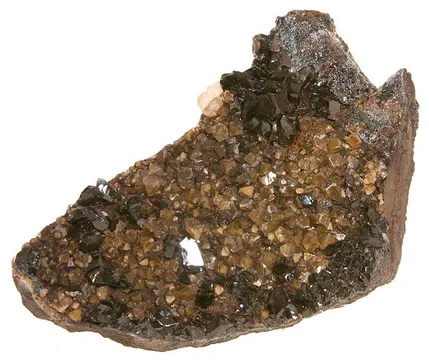
Keeley-Frontier Mine, Canada: premier Silver Centre locality producing silver; oxidized veins yield native silver and sulfosalts, with rare chapmanite.
Key facts
Keeley-Frontier is the classic Silver Centre locality: a paired silver-cobalt mine group in South Lorrain Township, southeast of Cobalt, where narrow calcite veins in and near Nipissing diabase and Archean metavolcanic rocks produced an outsized share of one of Ontario’s most storied silver camps. To collectors, it matters for three intertwined reasons. First, the mine was a major producer, ultimately yielding about 19.2 million ounces of silver together with substantial cobalt. Second, it exposed one of the most remarkable oxidized silver-vein environments in the Cobalt-Gowganda region, especially along Wood’s vein, where secondary enrichment helped generate showy native silver, acanthite, proustite, xanthoconite, stephanite, and other silver sulfosalts. Third, it is a mineralogical locality of record: Keeley material is tied to the description or validation of several uncommon species, including chapmanite, burgessite, pararammelsbergite, and benjaminite.
Regional View
Country View
The best Keeley-Frontier specimens have a different presence from the heavy, sawn ore slabs that many people associate with the Cobalt camp. Yes, the mine produced massive arsenide-carbonate ore and rich native silver in calcite, but the collector pieces that made its reputation are more delicate: curled and coiled native silver wires, sprouting silver on black acanthite, red proustite in oxidized vein material, and vuggy calcite-arsenide pieces carrying tiny but sharp sulfosalt crystals. The most desirable examples show the vein story at once—white to pink carbonate, black acanthite or silver sulfide masses, metallic cobalt-nickel arsenides, and native silver rising from the darker ore like bright growths from an old wound in the vein.

Photo: Wikimedia Commons
Search for specimens: View all specimens from Keeley-Frontier Mine, Canada
The Keeley-Frontier mine group lies in South Lorrain Township, Timiskaming District, Ontario, in the Silver Centre part of the broader Cobalt-Gowganda silver-cobalt region. The deposit belongs to the classic Cobalt-type silver-cobalt-nickel arsenide vein family: narrow, structurally controlled carbonate veins carrying native silver, silver sulfides and sulfosalts, cobalt-nickel arsenides, and minor base-metal sulfides. The veins are localized around the Nipissing diabase and its contacts with older Archean metavolcanic rocks, with lamprophyre dikes and local felsic intrusions also intersected in the workings.
Geologically, the mine sits in the Cobalt Basin/Southern Province setting of northeastern Ontario. Archean mafic metavolcanic rocks are cut by the Nipissing diabase sill, and the historically productive veins were concentrated near the diabase contact. In the Silver Centre area the richest productive horizon differs somewhat from the main Cobalt camp: much of the ore came from metavolcanic rocks overlying the upper contact of the Nipissing diabase rather than from the Huronian sedimentary sequence more typical of some Cobalt mines. The essential geometry is structural. Wood’s vein is the dominant vein-fault, striking roughly north-south and dipping east; No. 16 and No. 28 are important intersecting structures, and several Keeley ore shoots developed where east-west branches met or approached Wood’s vein. Ore shoots could be short but extraordinarily rich, commonly a few decimetres to about a metre wide, and controlled by bends, intersections, and changes in the attitude of the fault-vein structures.
The Keeley and Frontier were originally separate mines on different parts of the same system. The Keeley discovery dates to 1907, when J. M. Wood and R. J. Jowsey found silver on what became the Keeley property; Wood’s vein was recognized the following year and later became the “mother lode” of the productive South Lorrain section. The Frontier side developed later. Henry Newburger of Memphis bought the south half of claim H.R. 16 from the Haileybury Silver Mining Company in 1912 and formed the Haileybury Frontier Company, but the early shafts showed smaltite without visible silver and the operation stalled after Newburger’s death. Horace F. Strong reopened the story in 1920–1921 while seeking cobalt ore and soon located high-grade silver shoots; the Mining Corporation of Canada acquired the Frontier interest and developed it as a major producer.
Production was episodic but substantial. Keeley Silver Mines produced intermittently from 1908 to 1942, with its strongest years in the 1920s. Frontier operated chiefly from 1921 to 1943. Keeley-Frontier Mines Limited consolidated the two in the early 1960s, dewatered and rehabilitated the workings, and connected the mines underground, including a main haulage connection between the Frontier 6th level and the Keeley 8th level. Workings ultimately reached roughly 427 m, or about 1,400–1,455 ft, depending on how the workings are summarized, and the property hosted numerous shafts and winzes. The final production period, 1963–1965, included ore from the Keeley workings and reprocessed tailings. The combined Keeley-Frontier production is consistently reported at about 19.2 million ounces of silver, about 3.3 million pounds of cobalt, and minor nickel and copper.
Collectors should understand that many of the fine specimens came from very specific structural and supergene settings rather than from broad, open cavities. Wood’s vein was famous for unusually deep oxidation and secondary enrichment. Early geologists documented weathering in the Keeley workings to at least the 480-ft level, with pale greenish-grey clayey altered diabase, red iron oxides, oxidized arsenides, and secondary native silver. In that environment silver appeared not only as vein ore but as leaves, wires, sponge-like material, and matted forms. Vein No. 26 on the Keeley 480-ft level was especially rich: it was reported to have produced 250,000 ounces of silver from 74 ft of drifting before stoping. Frontier’s Wood’s vein workings also yielded important vug material, including argentite/acanthite with wire silver “sprouting” from it.
The surface locality today is an abandoned mine site, not a casual collecting ground. Ontario’s abandoned mine inventory records multiple active hazard features on the Keeley site, including open or partly covered shafts, stopes, open cuts, trenches, and an unconfined tailings area. Some features were described as timbered, log-capped, water-filled, collapsed, or only partly rehabilitated. The district has also been part of modern exploration land packages, including the Silver Kings project. Access therefore depends on current land and mineral-rights control, safety restrictions, and permission from the appropriate rights holders; the old dumps are historically important but physically hazardous.
Native silver is the signature Keeley-Frontier species and occurs here in a wider range of habits than many collectors realize: leaf and flaky silver in calcite-arsenide vein matter, matted masses, mossy aggregates, delicate wires, and the especially prized curled or spiral wires. Early descriptions note leaf silver in vugs and on botryoidal or kidney-like smaltite, soft spongy secondary silver resting on arsenide masses, and “matted” silver in high-grade vein material; later collector literature also records slabs and rich native silver ore from Wood’s vein. The best cabinet-quality pieces are not merely rich ore—they show sculptural silver free of carbonate, ideally with tight wire coils or branching silver visibly emerging from acanthite or arsenide matrix. Ordinary pieces tend to be massive, bruised, arsenide-coated, or enclosed in calcite, whereas the finest examples preserve bright form, contrast, and the unmistakable Silver Centre association of silver with dark acanthite and cobalt-nickel arsenides.
Acanthite from Keeley-Frontier is most valued when it does more than sit as black massive silver sulfide: the locality produced crystallized acanthite associated with native silver, including small crystals and groups in which wire silver rises from or beside the black sulfide. Historic literature often used “argentite” for these silver sulfide crystals, and older labels may still read that way, but collector descriptions now treat the room-temperature species as acanthite, commonly after argentite where the crystal form suggests the high-temperature phase. Fine Keeley-Frontier acanthite crystals are small by world standards but important for Canada; documented specimens include crystallized groups in the thumbnail range and mine examples with crystals reported to about 1.25 cm. The most appealing pieces combine black, lustrous acanthite, white or granular calcite, and native silver wires, while ordinary examples are massive black vein margins with little form or contrast.
Keeley is one of the important Canadian localities for proustite, the red silver arsenic sulfosalt long known to collectors as “ruby silver.” At this mine it is tied to the oxidized portions of the silver veins, where it occurs with acanthite, calcite, arsenides, xanthoconite, and stephanite; early Canadian mineralogical notes specifically recorded crystallized proustite with xanthoconite and stephanite from the Keeley mine at South Lorrain. The best crystals are deep red, transparent to translucent where fresh, and sharply scalenohedral; Cobalt-Gowganda collector literature reports excellent proustite crystals to about 0.8 inch, with Keeley examples among the best and represented by notable Royal Ontario Museum specimens. Because proustite is light-sensitive and easily dulled, the most desirable Keeley specimens retain red color, recognizable crystal faces, and clear association with acanthite or silver-bearing vein material rather than appearing as darkened, indistinct ruby-silver patches.
Beyond the three collector staples, Keeley-Frontier has an unusually rich species list for a narrow-vein silver-cobalt mine. Documented minerals include cobalt-nickel arsenides such as nickeline, skutterudite, safflorite, löllingite, cobaltite, breithauptite, and pararammelsbergite; silver and bismuth sulfosalts such as stephanite, polybasite, matildite, pavonite, benjaminite, and stromeyerite; and secondary minerals including erythrite, annabergite, scorodite, goethite, malachite, azurite, and chapmanite. Chapmanite, an iron antimony silicate associated at Keeley with native silver, is one of the locality’s classic type-species connections. Burgessite, a hydrated cobalt arsenate, is a modern new-mineral description from Keeley supergene material. Pararammelsbergite is also historically tied to Keeley material, and benjaminite’s revalidation involved material from the Canadian Keeley mine at Silver Centre. Among collector rarities, xanthoconite and stephanite are especially evocative of the oxidized silver pockets, and one documented Keeley specimen carries notably large stephanite for the Cobalt-Gowganda camp.
Keeley-Frontier labels deserve careful reading. Specimens may appear as “Keeley,” “Frontier,” “Canadian Keeley,” “Keeley-Frontier,” “South Lorrain,” or “Silver Centre,” and older labels may use obsolete or broad names such as argentite, smaltite, chloanthite, niccolite, or “ruby silver.” In modern cataloguing, argentite on old labels should generally be treated as acanthite or acanthite after argentite unless analytical evidence supports a more precise interpretation; “smaltite” and “chloanthite” on old Cobalt-camp labels also cover mineral-series names that often require analysis to resolve as skutterudite, nickelskutterudite, safflorite, rammelsbergite, pararammelsbergite, or related arsenides. Sight identification of the silvery cobalt-nickel arsenides is unreliable.
No widely documented class of fabricated Keeley-Frontier specimens emerged in the sources reviewed, but the usual silver-specimen risks apply. Native silver can be artificially brightened by acid cleaning or mechanical polishing, and carbonate etching may improve exposure while leaving an unnatural surface if overdone. Strongly curled wire silver is natural here and should not be dismissed merely because it looks sculptural; however, suspiciously fresh silver set into unrelated matrix, broken wires glued back into place, or wires too cleanly mounted on crumbly arsenide ore warrant magnification. Look for continuity into the matrix, old contact points, consistent tarnish, and natural attachment rather than bright solder-like joins or adhesive gloss.
Condition is central. Keeley silver wires and leaves are soft and easily bent; many old pieces have flattened tips, crushed curls, or missing wire ends. Acanthite crystals are dark and can be visually unforgiving: small chips, dull surfaces, and bruised edges disappear in poor light but matter to connoisseurs. Proustite is the most sensitive of the headline species. It should be stored away from strong light because ruby-silver minerals can darken; antique examples often survive as blackish or brownish crystals with only internal red flashes at broken or protected edges. For display, low light and limited exposure are prudent.
Market availability is uneven. Massive arsenide ore, silver in calcite, and small wire-silver miniatures appear periodically, but sharp acanthite with native silver and well-preserved proustite from Keeley-Frontier are much less common. The locality has cachet among Canadian-mineral specialists because it combines production history, Silver Centre romance, and type-mineral significance. A modest but well-documented thumbnail of wire silver from Keeley-Frontier can be more desirable than a larger, anonymous Cobalt-camp silver mass, especially if the old label preserves whether it came from Keeley, Frontier, Wood’s vein, or a named level.
In the fall of 1907, the South Lorrain camp began with the sort of discovery that can distort every decision afterward. J. M. Wood and R. J. Jowsey found silver on the Keeley ground, and the district quickly passed through the familiar sequence: staking, shafts, rumors, money, disappointment, and then renewed pursuit. The early Keeley workings around No. 1 shaft produced only a modest recorded total by later standards—24,337 ounces of silver by 1911—but the property had already become entangled in a much larger financial drama. Keeley, Jowsey, and Wood sold the property for $300,000, and the Farmers Bank became deeply involved through advances on a million dollars’ worth of bonds issued by Keeley Mine, Limited. When the bank’s affairs collapsed, the liquidators found themselves in possession of the Keeley mine. For a silver prospect on a rough road west of Lake Timiskaming, that was an unusually public burden.
The camp then went nearly silent. Cyril W. Knight, writing for the Ontario Department of Mines in the early 1920s, did not soften the point: after the first flush, South Lorrain was regarded “to all intents and purposes” as a dead camp. The revival came through Dr. J. Mackintosh Bell, who obtained an option on Keeley in 1913 and spent eight years before the new ore shoots rewarded the theory. Bell believed the deep weathered zone along Wood’s vein could host secondary silver leached from higher parts of the vein and redeposited below. By 1921, the mine was no longer a failed curiosity. It had become the focus of a second South Lorrain boom.
The most cinematic moments belong to the 480-ft level of the Keeley mine. On October 12, 1922, a north face on Wood’s vein showed a band only about 10 inches wide, but the assays ran from 8,000 to 14,800 ounces of silver per ton. The ore sat in the Nipissing diabase sill roughly 50 or 60 ft below the top of the sill, with Major Leonard G. Smith in the photograph for scale. Elsewhere on that level, part of the same high-grade shoot ran for 40 ft and assayed from 500 to 14,800 ounces per ton. A 12-ft section, six to fifteen inches wide, returned 8,000 to 14,800 ounces per ton. Knight happened to be at the mine when the October shoot was discovered and recorded the moment not as hearsay but as a direct field observation.
Then came No. 26 vein—the “Birthday” vein in some accounts. Discovered in December 1922, it became the most consistent high-grade shoot known in the Keeley mine up to March 1923. It was only 74 ft long, averaging 15 inches wide, yet the company reported an average return of 2,600 ounces of silver per ton. In that 74 ft of drifting, management stated that 250,000 ounces of silver had been mined before any stoping was needed. At one place the vein swelled abruptly to four or five feet, only to pinch back again, the sort of sudden widening that makes a miner believe in geometry as much as luck. Knight examined the face on January 24 and 25, 1923, and described little calcite but abundant smaltite, some of it vuggy and “kidney-like or grape-like,” with native silver as thin leaves in vugs and on top of the rounded arsenide masses.
Frontier had its own improbable turn. Henry Newburger of Memphis paid $100,000 cash in 1912 for the south half of claim H.R. 16 and formed the Haileybury Frontier Company. The company sank two shafts, one to 90 ft and another to 150 ft, with crosscutting and drifting that exposed a strong smaltite vein but no visible silver. Newburger died, the company entered liquidation in 1914, and the mine sat closed. Horace F. Strong later recounted how, during a cobalt shortage, he argued that the property could cheaply develop several hundred tons of high-cobalt, low-silver ore while retaining a chance of high-grade silver. Dewatering began, the first machine started on December 16, 1920, and by May 1, 1921 drifting at roughly 200 ft per month had outlined about 400 tons of high-cobalt, low-silver ore plus two short shoots of 500-ounce silver ore.
By April 1923 the Frontier third level had become the mine’s most extensive and productive level, with about 2,850 ft of workings. The Watson vein there contained a compact bonanza: a shoot only 22 ft high and 30 ft long, reported to have yielded 125,000 ounces of silver, in places 23 inches wide and composed mainly of smaltite and native silver. Wood’s vein on the same level produced another celebrated vuggy specimen zone. The stope near the Keeley boundary was 102 ft long and averaged 35 ft high; by the end of April 1923 it had yielded 900,000 ounces of silver and produced argentite/acanthite specimens with wire silver “sprouting” from the black silver sulfide in vugs. That single word—sprouting—still captures the best Keeley-Frontier pieces better than any assay table.
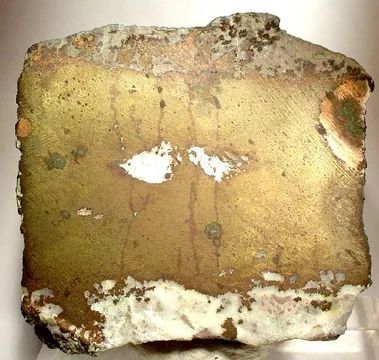
One of the most remarkable survivors from Wood’s vein is not in a private mineral cabinet at all. A block of rich silver ore weighing 1.995 tonnes from the Keeley mine is displayed in a glass case in the West Wing of the Ontario Legislative Assembly building at Queen’s Park, Toronto. Its silver content has been estimated at 821,000 grams. For collectors accustomed to thumbnails of wire silver and ruby-silver miniatures, the Queen’s Park block is a reminder that Keeley-Frontier was not merely a specimen locality. It was an industrial bonanza whose most delicate mineral treasures were saved from ore that otherwise went to the mill.