A collector's guide to Diamond Willow Mine, Canada: its geology, mining history and notable minerals, illustrated with the 63 specimens documented from this locality on EarthWonders.
Key facts
Diamond Willow Mine is one of the signature collector localities of the Thunder Bay amethyst district of northwestern Ontario: an active, family-operated open-pit amethyst mine near Pearl Station in McTavish Township, northeast of the city of Thunder Bay. Its importance is not that it is the largest amethyst quarry in the district, but that it has repeatedly produced unusually fine display specimens—lustrous purple quartz with vivid red hematite, often in compact, three-dimensional clusters whose crystals look almost varnished when fresh and well cleaned.
Geologically, the mine sits in the classic Lake Superior amethyst environment: a faulted and brecciated zone in the Proterozoic rocks of the Thunder Bay region, with quartz-rich breccia, Sibley Group sedimentary rocks, and local granite to quartz-monzonite basement all playing roles in the district’s mineralizing system. At Diamond Willow, amethyst occurs in cavities and vugs within a quartz-rich breccia/fault zone; the best pockets were lined with amethyst crystals and commonly packed with dense red clay. That clay is a nuisance to mine, but it is also part of the locality’s look: red iron oxide, especially hematite, gives many pieces their famous crimson spotting, internal “confetti,” rusty caps, and occasionally almost red-black crystal faces.
Historically, Diamond Willow belongs to the modern era of Thunder Bay amethyst collecting that followed the major McTavish Township discoveries of the 1950s and 1960s. Gunnard Noyes, his family, and later the father-and-son collecting team of David and Ian Nicklin are central to the mine’s specimen reputation. The Nicklins’ careful summer work over decades produced many of the sharpest, brightest, best-preserved examples collectors now associate with the locality, while the Noyes family continued the mine’s longer lineage. In recent years, Carol Fayle and Brandon Leroux revived and expanded the public and commercial operation, keeping Diamond Willow active both as a specimen source and as a pay-to-pick destination.
Regional View
Country View
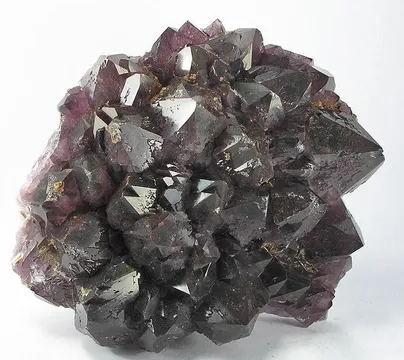
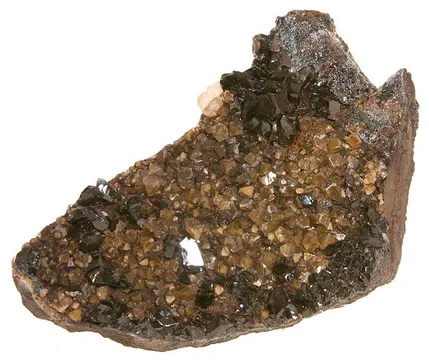
The finest Diamond Willow specimens are unmistakably “Thunder Bay” in style but have their own collecting cachet: squat amethyst groups with well-developed pyramidal terminations, flashes of deep violet at the crystal bases or along broken edges, and red hematite either as minute inclusions below the surface or as a natural cap on the terminations. Ordinary material can be pale, cloudy, iron-stained, massive, or garden-rock grade; the best pieces are lustrous, balanced, richly colored, minimally damaged, and show the red hematite as a natural accent rather than an obscuring crust.

Search for specimens: View all specimens from Diamond Willow Mine, Canada
Diamond Willow Mine is in McTavish Township, Thunder Bay District, Ontario, near Pearl Station and the Pearl–Big Pearl Lake area. In the Ontario Mineral Inventory, the principal Diamond Willow record is a producing amethyst mine in the Thunder Bay South Resident Geologist District; the locality is treated as part of the McTavish Township amethyst belt, an area where faulting, brecciation, and silica-rich hydrothermal fluids produced the district’s distinctive purple quartz.
The deposit is best understood as a hydrothermal amethyst-bearing breccia and vein system. The Diamond Willow workings are described at the western end of a roughly kilometer-long breccia/fault zone that also includes the nearby Blue Points mine system. The fault zone trends approximately east–west and separates Sibley Group mudstones on the south from Sibley Group conglomerates on the north. The breccia has a quartz-rich core, with angular fragments of the adjacent wall rocks becoming more abundant toward the margins. That texture matters to collectors because the amethyst is not distributed as a simple continuous sheet: worthwhile crystals occur in cavities, vugs, open seams, collapse zones, and intersecting veinlets rather than uniformly through the rock.
The mine has produced pale to medium purple amethyst in cavities in the breccia, and larger vugs have been reported at more than a meter across, lined with dark purple crystal points and commonly filled with dense red clay. The same clay-filled, collapsed-pocket character that damages many plates is also what allowed some crystal groups to be recovered as loose or semi-loose pieces rather than being entirely chiselled from solid walls. The best specimen mining therefore required a careful balance: enough drilling, wedging, or blasting to open the hard breccia, but not so much shock that the quartz plates and terminations were shattered.
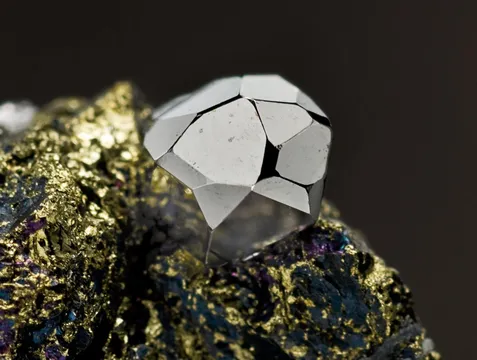
Ore and specimen mineralization is quartz-dominant. Amethyst is the principal commodity, with hematite responsible for much of the red coloration that gives Diamond Willow material its collector appeal. Ontario records also document galena at the west end of the exposed breccia zone, occurring as seams of crystals about 1 cm in size within quartz, between an earlier quartz generation and later amethyst. Pyrite and chalcopyrite are recorded in the broader mineral inventory for the Diamond Willow record, while baryte is a documented accessory mineral on the Mindat locality list and is also reported from specific recent trenching areas at the mine.
The historic workings are modest in scale but important in quality. Ontario records describe the Diamond Willow pit as about 70 m long, up to 10 m wide, and roughly 2.5 m deep; an original Diamond Willow pit, later associated with the adjacent Blue Points side of the system, is described as about 60 m long, nearly 10 m wide, and 4 m deep. These dimensions are those of a specimen and decorative-stone amethyst operation, not a large metal mine, but they were enough to expose a series of productive pockets and vein structures over several decades.
Gunnard Noyes is the name most strongly attached to the early Diamond Willow story. He prospected in the region in the 1960s, and the mine developed as a family operation in the 1970s. The name “Diamond Willow” refers not to diamonds but to the diamond willow tree, prized by wood carvers, that grew at the mine site. From the late 1970s onward, David and Ian Nicklin leased and worked a section of the vein during the summers for more than 30 years, recovering many of the mine’s most carefully collected fine-mineral specimens. The vein was also worked by Gunnard Noyes, his sons Doug and Clark, and later by his daughter Francis.
Recorded commercial production is small but useful for understanding the mine’s working life: Ontario Mineral Inventory entries list amethyst production in the late 1980s and early 1990s, including 35 tonnes in 1988, 30 tonnes in 1989, 35 tonnes in 1990, and 25 tonnes in 1991. Those figures represent a working specimen and decorative-amethyst quarry during a period when Thunder Bay amethyst was already established in the collector market.
The modern chapter began after a public-production closure in 2007 and a reopening in 2015 by Carol Fayle and Brandon Leroux. Assessment work since then records mechanical stripping, pitting, trenching, prospecting, and blasting on the property. A 2018 report documents new veins exposed in several areas, including a 6–12 inch amethyst vein in Area 1-b with thick solid quartz and drusy amethyst crystals varying from violet to red, as well as Area 3-a, where blasting opened a reddish-brown vug and exposed veinlets running in multiple directions. Later assessment work in 2021 described Area 9 near a hydro line, where the northeast section showed better red color and roughly 2 cm crystals, while parts of Area 8 carried thin veins with small pockets of light purple to clear amethyst.
Collecting access today is controlled by the operating mine. Diamond Willow is a public pay-to-pick locality during its season, with designated collecting areas supplied from active mining; visitors are not permitted in restricted working areas. The current operation describes the site as an active mine with drill-and-blast production in the pits, material added to picking piles, a rock shop, and visitor collecting areas located alongside the mined vein. Because the mine is active and privately operated, access, hours, tools, safety rules, and seasonal opening dates should always be confirmed directly with the operators before a trip.
Diamond Willow amethyst is classic Thunder Bay material: mostly pyramidal quartz terminations with little prism development, ranging from pale lavender and medium violet to dark purple, red-purple, and hematite-rich reddish brown. The best pieces came from vugs and collapsed clay-filled pockets in the breccia, where plates and clusters could be recovered with brilliant luster rather than dulled surfaces; individual crystals are commonly in the centimeter range, but the mine has produced display clusters well over hand size, and documented modern trenching has noted roughly 2 cm crystals in better red-colored zones. The most desirable specimens combine saturated purple, wet-looking luster, sharp undamaged points, and natural red hematite distributed as dots, internal zones, caps, or red faces, ideally with enough open space between crystals to give the cluster depth rather than a flat drusy surface.
Quartz at Diamond Willow is both the host vein material and the specimen mineral, appearing as massive white to gray vein quartz, drusy linings, clear to pale smoky crystals, amethystine zones, and iron-stained red or brown surfaces. The mine’s paragenesis includes earlier quartz associated locally with galena seams, followed by later amethyst growth in open cavities, so broken pieces may show white massive quartz beneath or behind the more attractive crystal faces. Collectors should look for quartz pieces that show distinct growth stages, open vugs, glassy crystal faces, and clean terminations; ordinary quartz from the dumps can be abundant and chunky, but well-composed quartz-amethyst groups with natural hematite color and minimal bruising are the locality’s true cabinet material.
Hematite is the visual signature of Diamond Willow specimens, most often present not as large metallic crystals but as Fe2O3 inclusions, dustings, red caps, and iron-rich zones in or on quartz. In fine amethyst it appears as tiny red disks or spherules suspended beneath lustrous crystal faces, as rusty-red concentrations on terminations, or as pervasive red coloration so strong that some clusters read at first glance as red quartz rather than purple amethyst. Good hematite-bearing pieces show the red as crisp natural contrast against purple quartz; less desirable examples are muddy, heavily clay-stained, or so coated that the amethyst luster and internal color are hidden.
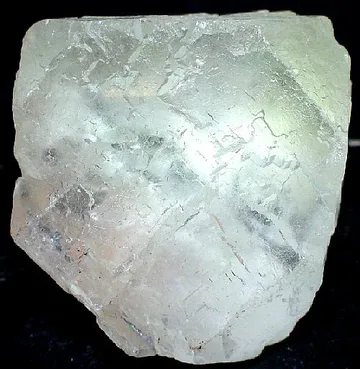
Other minerals documented from Diamond Willow and its immediate records include baryte, galena, pyrite, chalcopyrite, calcite, and feldspar, though most are accessory or incidental compared with the amethyst. Baryte is the most interesting accessory for specimen collectors because it is formally listed for the locality and has been reported attached to some amethyst from recent trenching areas. Galena is geologically important because Ontario records place it in seams of roughly 1 cm crystals within quartz at the west end of the breccia exposure, marking an early quartz/base-metal stage before later amethyst. No type-locality mineral is attached to Diamond Willow in the standard locality records; its rarity value rests instead on the quality and style of its hematite-rich amethyst.
The principal authenticity issue with Diamond Willow material is not a well-documented fake problem but locality precision. Many specimens from the Thunder Bay district are labelled simply “Thunder Bay, Ontario,” “Port Arthur,” or “Ontario amethyst,” and that is not enough to assign a piece to Diamond Willow. A reliable Diamond Willow label should ideally include Diamond Willow Mine, McTavish Township or Pearl Station/Pearl, Thunder Bay District, Ontario, and—when possible—a collector, miner, dealer, or date. Nicklin-era pieces, Noyes-family pieces, and modern mine-direct specimens all carry different kinds of provenance value.
Natural red hematite is expected on Diamond Willow amethyst, so red coloration alone should not be treated as suspicious. The warning sign is a piece that looks unnaturally uniform, waxy, dyed into cracks, or detached from any credible Thunder Bay provenance. Generic dyed quartz, heated amethyst, or iron-stained Brazilian amethyst can be misrepresented in the broader marketplace, but true Diamond Willow pieces have a characteristic geometry: stubby to pyramidal quartz terminations, compact clusters, purple interiors, and hematite as inclusions, caps, or zones rather than a simple painted-looking surface.
Condition is critical. The geology that made Diamond Willow collectible also made many pieces damaged before or during extraction: vug plates collapsed, clay pockets contained sharp quartz shards, and blasting was often needed to open the breccia. Expect many specimens to have bruised tips, cleaved-off edges, contacted bases, repaired plates, or clay-filled recesses. A piece with sharp terminations, bright luster, no obvious blast bruising, and aesthetic red hematite distribution deserves a premium.
Cleaning should be conservative. Dense red clay can cling deep between crystals, but aggressive mechanical cleaning can chip terminations or remove desirable natural iron-oxide contrast. Ultrasonic cleaning is risky for fractured clusters, and acid treatment should be approached carefully because the collector value of many pieces lies partly in their natural hematite color. Long-term display in intense sunlight is not recommended for amethyst because the purple color in quartz is light-sensitive over time.
Market availability is split into three tiers. Tourist and garden-grade material remains obtainable from the active mine and associated shops. Attractive small clusters with purple quartz and hematite are regularly available but vary widely in condition. Top-level Diamond Willow cabinet specimens—especially older, highly lustrous, undamaged clusters with strong red hematite zoning and firm provenance—are much less common and compete with the best classic Thunder Bay amethyst from any mine in the district.
One of the best Diamond Willow stories begins not with a crystal pocket but with a drill in a canoe. Ian Nicklin remembered first meeting Gunnard Noyes on the advice of an Ontario Geological Survey regional geologist during a summer collecting trip. Gunnard had worked in the Sudbury mines and retired to Pearl, the small railway-stop community northeast of Thunder Bay. At the time, the claims were only lightly developed and could be reached by a narrow, twisting trail or by canoe up Pearl Lake. On that first visit, Dave and Ian Nicklin canoed Gunnard’s old Atlas Copco Cobra plugger drill up the lake, then carried it through the bush toward the outcrop. Ian was 16 and strong enough to resent the weight. Gunnard, already well into his 60s, heard the complaint, laughed, took the drill, and put it on his own shoulder.
That same early visit introduced the Nicklins to the way Diamond Willow was opened before roads, loaders, and public picking piles shaped the modern mine. They reached a small clearing with blasting marks and amethyst rubble—the beginning of the mine as they knew it. Gunnard drilled holes with the plugger, set Forcite 40 charges, crimped caps onto pre-cut fuse, and lit the fuse. The burn time was about 30 seconds, and Ian remembered exactly how long half a minute could feel when the next sound would be the blast. Gunnard yelled “Fire!” and they walked away to cover. After the smoke and cordite smell drifted through the trees, they returned to the broken rock and found their first Diamond Willow amethyst specimens. They collected about 100 pounds of material and loaded it into the canoe for the trip back. Ian later described that day as the beginning of a 42-year relationship with Gunnard and then with Gunnard’s sons.
The technical work behind the fine pieces was slow and physically exacting. The Nicklins tried to use feather-and-wedge methods where possible because the goal was not tonnage but intact crystal plates. Blasting, however, was usually unavoidable in the hard breccia. They loaded holes lightly so the rock would crack rather than throw, protecting pockets as much as possible. A single blast layout could take a full day of drilling, and Ian recalled that after a day on the plugger his hands hurt too much to open fully. Those details explain why the best Diamond Willow specimens are rarer than the number of broken amethyst chunks on the dumps might suggest: preserving a lustrous pocket meant reading the rock, minimizing shock, and accepting the slow punishment of the tools.
The pockets themselves were both a gift and a trap. Crystals grew on pocket walls, but later movement along the fractured fault system collapsed many plates into jumbled masses. Then dense red clay filled the cavities. For collectors, collapse meant some plates could be recovered without sawing or chiselling them entirely from the walls. For the miners, it meant almost every pocket had already damaged some of its own contents. The red clay also hid tiny razor-sharp quartz shards, so working a productive pocket was a hand-cutting exercise in mud, broken glassy points, and patience.
Another memory, preserved by the modern Diamond Willow operators, comes from Larry, who visited with his young wife roughly 50 years earlier while camping around Lake Superior from Crown Point, Indiana. They had heard amethyst was being mined at Pearl Station and arrived late in the afternoon. Gunnard told them to come back the next morning. They camped at Silver Lake, returned, and climbed into Gunnard’s old pickup. The truck made a terrible noise; Gunnard got out, put a spark plug back in, and carried on. On the drive he talked about animals and birds, even stopping while grouse moved down the road. At the working area he showed them a huge crystal-lined vug big enough to put half a body into. Later he carried a heavy water pump by himself after Larry offered help, then took the couple to other areas overlooking the cleared power-line corridor. Before Larry’s wife sat down, Gunnard cleaned a place on the rock and found a soft spot for her. He warned them about bears in the regrowing cleared areas, recited poetry, and, when they tried to pay him back at his house, refused the money. After learning Larry’s wife was a first-grade teacher, he gave her small amethyst pieces for her students.
The modern reopening has its own practical romance. After the mine closed to the public in 2007, Carol Fayle and Brandon Leroux chose in 2015 to bring it back into full public and production life. The site had been reclaimed by the bush: trees and brush covered old mining areas, buildings needed repair or removal, the old shop had to be restored, and roads, equipment, and displays required fresh investment. Rather than erase the earlier mine, they kept and expanded the original shop that Doug Noyes had moved into place. The public face of the mine today—picking piles, rock shop, hand-built signs, school visits, and mine-direct specimens—sits on top of that rebuilding effort.
Even the off-season reads like a northern collecting story. In spring 2026, before the mine opened for the season, Brandon Leroux wrote about travelling by snow machine deep into the bush beyond the mine site. Snow was still about four feet deep in places; stepping off the travelled trail meant sinking to the waist. Winter winds had damaged part of a sign, and the gate was still buried in snow. While waiting for the melt and road ploughing, the work shifted to equipment maintenance and hand-painted roadside billboards: 3/4 inch plywood, 1/2 inch fir plywood, hand-cut letters, and an 8 by 10 foot sign being replaced at the McKenzie location. For a locality guide, those details matter because they show what “active mine” means in northwestern Ontario: the specimen season begins long before the first tourist fills a pail or the first pocket opens.
Ontario Mineral Inventory Record MDI52A10NE00003: Diamond Willow, Noyes North, G. Noyes — The key official mineral record for the producing Diamond Willow mine, including geology, mineralization, pit dimensions, and production data.
Ontario Mineral Inventory Record MDI000000002029: Sward Lake Amethyst, Diamond Willow Amethyst 2, Barret Claims, Noyes South — Useful for the adjacent/related Diamond Willow Amethyst 2 and Noyes-area exploration history.
Garland, M.I. (1994). Amethyst in the Thunder Bay Area. Ontario Geological Survey Open File Report 5891, 197 pp. — The essential Ontario Geological Survey treatment of Thunder Bay amethyst, including Diamond Willow’s location, access, ownership, and breccia-zone geology.
Kile, Daniel E. (2019). “Mineralogy of the Amethyst Mines in the Thunder Bay Area, Thunder Bay, Ontario, Canada.” Rocks & Minerals, 94(4), 306–343. — Modern mineralogical study of the district, including analytical work on hematite inclusions from Diamond Willow.
Kile, Daniel E. (1984). “Amethyst Deposits of the Thunder Bay Area, Ontario, Canada.” Rocks & Minerals, 59(6), 262–271. — Earlier district-level study cited in locality records for Diamond Willow quartz, amethyst, and baryte.
Elliott, Donald G. (1982). “Amethyst from the Thunder Bay Region, Ontario.” The Mineralogical Record, 13(2), 67–70. — Classic collector-period article on Thunder Bay amethyst, with useful historical context for the district.
Grice, Joel D. (1989). “Amethyst from Thunder Bay, Ontario: An Ancient Amulet.” In Famous Mineral Localities of Canada, Fitzhenry & Whiteside and the National Museum of Natural Sciences, pp. 62–72. — Cited by the Diamond Willow Mindat locality page and part of the broader Canadian famous-localities literature.
Sabina, Ann P. (1991). Rocks and Minerals for the Collector: Sudbury to Winnipeg. Geological Survey of Canada Miscellaneous Report 49. — Collector-oriented regional guide cited in the Diamond Willow locality record.
Technical Report 20000016978: Prospecting, Mechanical Stripping, Pitting and Trenching on the Diamond Willow Amethyst Mine Property, 2018 work — Assessment report documenting modern stripping, trenching, vein widths, amethyst colors, barite occurrences, and specific work areas.
Assessment File 20000019251: Diamond Willow Amethyst Mine, 2020 work — Official assessment-file record for 2020 prospecting, stripping, pitting, and trenching.
Technical Report 20000020248: Prospecting, Pitting and Trenching on the Diamond Willow Amethyst Mine Property, 2021 work — Modern exploration report describing Area 8 and Area 9 work, thin veins, crystal sizes, and red-colored amethyst zones.
Mindat: Diamond Willow Mine, McTavish Township, Thunder Bay District, Ontario, Canada — Concise locality page with coordinates, mineral list, references, and specimen gallery.
Wikimedia Commons: Diamond Willow Mine category — Open-license photographs of Diamond Willow quartz-amethyst-hematite specimens, mostly from Rob Lavinsky/iRocks material.
D. Joyce Minerals: Thunder Bay Amethyst — Collector-focused article by Raymond McDougall, David K. Joyce, and Ian Nicklin, with Diamond Willow history, specimen photos, and Ian Nicklin’s mining recollections.
Diamond Willow Amethyst Mine official site — Current operator information, mine-direct specimens, visit planning, public collecting rules, and shop details.
Diamond Willow: 10 Years Reopened, Over 50 Years of Family Heritage — First-person modern history of the Noyes/Fayle/Leroux family operation and the 2015 reopening.
Diamond Willow: Planning a Visit — Current visitor guidance, hours, seasonal notes, tool rules, and collecting preparation.
Diamond Willow: FAQ — Practical access information for public picking areas, safety, footwear, tools, children, pets, and restricted areas.
Diamond Willow: Amethyst Collecting — Operator note on collecting areas, active mining, pile refreshes, and minerals visitors may encounter.
Municipality of Shuniah: Diamond Willow Amethyst Mine — Municipal directory listing for address, phone, and public opening hours.
Destination Ontario: Rockhounding in Ontario — Provincial tourism overview that includes Diamond Willow among Ontario rockhounding destinations.
Thunder Bay Geology & Lapidary Club: Diamond Willow / Blue Points Amethyst Mines 2024 field trip — Local club trip page with practical collecting notes and related amethyst references.
Lake Superior Magazine: Minerals of the Lake Superior Region — Regional mineral overview that illustrates amethyst from Diamond Willow and summarizes Lake Superior amethyst uses and values.