A collector's guide to Northern Territory, Australia: its geology, mining history and notable minerals, illustrated with the 126 specimens documented from this locality on EarthWonders.
Key facts
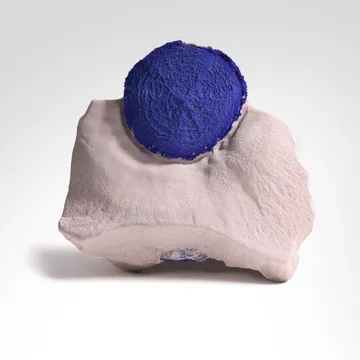
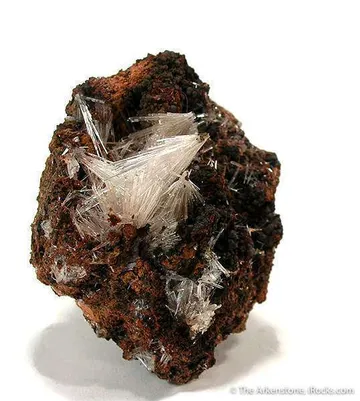
Northern Territory is not a single specimen locality in the narrow mine-catalog sense; it is a whole mineral province whose collector identity is built from a handful of very different, very distinctive deposits. For display minerals, three names dominate. Malbunka, west of Alice Springs, is the source of the famous azurite “suns”—flat, round, intensely blue disks set in pale kaolinitic siltstone. Brown’s Prospect at Rum Jungle produced the classic Australian association of velvety malachite, yellow-green pyromorphite and cerussite. Mount Bonnie, near Grove Hill in the Pine Creek Orogen, is one of Australia’s important localities for mimetite and duftite, especially gossanous lead-arsenate material from oxidized polymetallic ore.
Geologically, the Territory’s collector minerals span an unusually broad range: diagenetic copper carbonates in the Amadeus Basin at Malbunka; oxidized Pb-Cu-Co-Ni-Zn mineralization at Rum Jungle; Proterozoic polymetallic massive sulphide systems at Mount Bonnie; copper-bearing breccia pipes at Redbank; uranium phosphate minerals at Ranger; and pegmatitic, metamorphic and carbonatitic gem deposits in the Harts Range and Mud Tank district. That variety is why a Northern Territory label can mean anything from a blue azurite rosette, to a radioactive lemon-yellow saleeite, to a peach-colored zircon crystal, to epidote and smoky quartz from the hard-rock gem country northeast of Alice Springs.
The best specimens are unmistakable. Malbunka azurite suns have a painterly contrast—electric Prussian-blue circles against white to cream kaolinite—rather than the prismatic crystal clusters seen at most azurite localities. Brown’s pieces are sculptural, green, rounded and tactile, with malachite botryoids dusted or studded with pyromorphite and, in earlier material, glassy cerussite. Mount Bonnie mimetite and duftite pieces are more intimate but highly characterful: ochre to yellow mimetite, green duftite and dark gossan in small, precise combinations that reward magnification.
Regional View
Country View

Photo: Wikimedia Commons

Photo: Wikimedia Commons

Photo: Wikimedia Commons
Search for specimens: View all specimens from Northern Territory, Australia
Because this is a territory-level locality, the important collecting story is really a network of deposits. The central Australian localities supply the gem and specimen silicates—zircon, garnet, quartz, epidote, feldspar and rarer metamorphic species—while the Top End and Pine Creek districts supply much of the oxidized base-metal and uranium mineral material. For collectors, the most recognizable Northern Territory specimens usually come from Malbunka Copper Mine, Brown’s Prospect at Rum Jungle, Mount Bonnie Mine, Mud Tank Zircon Field, Harts Range, Ranger Mine and the Redbank copper breccia pipes.
Malbunka Copper Mine lies on Ltalaltuma Aboriginal Trust land near Areyonga, about 220 km west of Alice Springs, in the Amadeus Basin. The deposit is famous because the copper carbonate mineralization did not simply form ordinary crusts or vug linings: azurite grew as flattened disks within kaolinite-rich siltstone and clay, producing the “sun” morphology that is now one of Australia’s iconic mineral habits. The deposit was originally known as the Namatjira Prospect after its discovery in the 1950s by the Aboriginal artist Albert Namatjira. Work in the 1960s included bulldozer cuts and a short adit, but the copper occurrence was too small and low grade to be an ore mine in the conventional sense. Its modern importance is specimen production, carried out under mineral lease with traditional-owner consent; access is not casual public fossicking and requires proper permission.
Brown’s Prospect, in the Rum Jungle mineral field near Batchelor, is a small but celebrated Pb-Cu-Co-Ni-Zn occurrence. The specimen zone is associated with a vuggy, faulted and sheared oxidized interval containing quartz veining, near the contact between Whites Formation carbonaceous shale and the underlying Coomalie Dolostone. Its classic 1970s material consisted of malachite with cerussite and pyromorphite, while the later 2010–2012 collecting period produced a different look: plates and rolling masses of malachite partially to completely covered with drusy to millimetric pyromorphite, with cerussite scarce by comparison. The open workings later flooded, and the limited nature of the productive zones explains why good Rum Jungle combinations remain much scarcer than their fame suggests.
Mount Bonnie Mine, near Grove Hill roughly 44 km northwest of Pine Creek and about 140 km south-southeast of Darwin, is a small abandoned copper-lead-zinc-gold mine developed on a polymetallic massive sulphide system. The lode dips west and was traced originally as a surface gossan rich in limonite, hematite and clay with minor mimetite, duftite, cerussite, conichalcite, malachite, plumbojarosite and scorodite. Open-pit work showed two stacked stratabound sulphide lenses dominated by pyrrhotite and sphalerite with pyrite, galena, chalcopyrite, arsenopyrite and tetrahedrite. For collectors, the attraction is the oxidized cap: mimetite, duftite and related lead-copper arsenates on gossan, especially pieces collected around Sabine’s Shaft, the upper and lower adit levels, and the early-1980s open-pit operation.
The Redbank district in the Roper Gulf region is a very different copper system: a belt of copper-bearing breccia pipes near the Queensland border and inland from the Gulf of Carpentaria. At Sandy Flat, copper mineralization occurs in a pipe overlain by quartz-pebble conglomerate, with an oxide zone carrying malachite, azurite, cuprite, native copper, libethenite, pseudomalachite and chrysocolla. A chalcocite blanket and deeper supergene enrichment contain chalcocite, covellite, digenite and native copper. Redbank has been worked intermittently and is now a significant legacy-mining and remediation area, so old specimen labels are more common than present-day field-collecting opportunities.
The Ranger uranium mine near Jabiru, in the Alligator Rivers region, supplies one of the Territory’s most collectible radioactive suites. Ranger was an open-cut uranium mine operated by Energy Resources of Australia; mining ceased in 2012, ore processing ended in January 2021, and rehabilitation is ongoing. In the weathered zone, secondary uranium phosphates include saleeite, metatorbernite and related uranium minerals, with quartz matrix specimens from the No. 1 and No. 3 deposits particularly sought after. This is not a collecting locality today; specimens in circulation are older material from mine-related recovery and must be treated as radioactive mineral specimens.
For gem collectors, the Harts Range and Mud Tank district provide the Territory’s other great collecting theme. Harts Range includes abandoned mica mines, pegmatites, metamorphic rocks and declared fossicking areas where garnet, quartz, feldspar, zircon, epidote and other species occur. Mud Tank Zircon Field, on Alcoota Station, is a declared fossicking area noted for orange, pale brown, pink, purplish, yellow, colorless and parti-colored zircon, including small double-terminated crystals and chips from Zircon Hill and larger but commonly cracked crystals from Specimen Hill. Unlike Malbunka, Brown’s, Mount Bonnie or Ranger, some Harts Range and Mud Tank collecting is legally structured for recreational fossickers, but a Northern Territory fossicking permit, declared-area rules, landholder conditions, road conditions and safety restrictions all matter.
Northern Territory azurite is defined above all by Malbunka: round to slightly irregular “sun” disks of rich blue azurite in white kaolinitic siltstone, commonly a few centimeters across and prized when the disk is complete, sharply edged, intensely colored and cleanly displayed against pale matrix. The habit reflects growth constrained along bedding or clay-rich partings rather than ordinary open-vug crystal growth, so the best pieces are valued for symmetry, saturation and contrast more than for freestanding crystals. Azurite also occurs at Brown’s Prospect and in the Redbank copper pipes, where it is more typical of oxidized copper mineralization and may appear with malachite, cuprite, chrysocolla, chalcocite or quartz; however, those occurrences are overshadowed in the market by the unmistakable Malbunka suns.
Northern Territory pyromorphite is best known from Brown’s Prospect at Rum Jungle, where it occurs on malachite as drusy coatings, millimetric prismatic crystals, yellow to yellow-green crystals and, in better 2010 material, bright lime, grass-green or olive crystals scattered across rounded botryoidal malachite. The classic 1970s pieces tend to be richer in cerussite and may show pyromorphite as yellowish coatings or small crystals in a malachite-cerussite matrix, whereas the 2010–2012 recovery produced pyromorphite-on-malachite plates and sculptural masses with little cerussite. Good pieces have fresh green malachite, visible discrete pyromorphite crystals rather than a dusty coating, and intact rounded surfaces; ordinary pieces are dull, rubbed, or show only sparse microcrystalline yellow lead phosphate.
Malachite from the Northern Territory is most collectible from Brown’s Prospect, where it forms botryoidal crusts, rolling globules, velvety fibrous surfaces and, more rarely, crystallized “primary” malachite from an isolated pocket zone. Colors range from bright apple green through deep emerald and forest green to bluish-green, and the most desirable pieces combine color contrast with pyromorphite or cerussite rather than being plain green crusts. Malachite also occurs at Malbunka and Redbank, but Rum Jungle material is the classic display association: rounded green malachite hosting yellow-green pyromorphite and, in older pieces, glassy cerussite prisms or reticulated aggregates.
Northern Territory mimetite is especially associated with Mount Bonnie Mine, where the oxidized gossan of a polymetallic sulphide deposit produced yellow to orange-yellow, ochre and sometimes greenish mimetite on limonitic or hematitic matrix, commonly with duftite, cerussite, coronadite and other secondary lead-copper arsenates. Specimens from Sabine’s Shaft and the adit/open-pit levels are prized when the mimetite forms distinct lustrous crystals, rounded aggregates or rich crusts rather than mere powdery coatings, and some larger old pieces from the early-1980s open pit have become well-known Australian classics. Because mimetite, pyromorphite and arsenian pyromorphite can be visually similar, Mount Bonnie pieces with unusual color or mixed habits deserve careful labeling and, for high-value examples, analytical confidence.
Cerussite from the Northern Territory is best represented by Brown’s Prospect and Mount Bonnie, but the collector classic is Brown’s: simple prisms, centimeter-scale reticulated aggregates and rare trilling twins on malachite, sometimes with yellow to orange pyromorphite and tiny wulfenite. The 1970s Rum Jungle material is the benchmark, with malachite-cerussite-pyromorphite combinations recovered from small excavations before later commercial collecting produced material in which cerussite was nearly absent. Good cerussite pieces from here show transparent to cream-white crystals standing proud on green malachite, with minimal bruising to crystal tips; lesser pieces are incomplete, chalky, or so coated with secondary minerals that the cerussite form is difficult to read.
Native copper is recorded from the Redbank area breccia pipes, particularly Sandy Flat, where it occurs in the oxide zone with malachite, azurite, cuprite, libethenite, pseudomalachite and chrysocolla, and near the base of the oxide profile in association with chalcotrichite and a little pyrobitumen. These are not generally the bright arborescent “Michigan-style” coppers that dominate the world market; Northern Territory pieces are more likely to be compact, irregular native copper in weathered breccia or with copper oxides. The best examples show clean metallic copper with pleasing red-brown patina and clear association with Redbank’s oxide suite, while unattractive pieces can be visually difficult to separate from dark matrix, so locality and old labels carry real importance.
Northern Territory quartz specimens are diverse because quartz is present in several collecting environments: smoky, colorless and rose quartz at Harts Range mica and pegmatite localities; rutilated pale-yellow citrine reported from the Jinka Citrine Quartz Deposit; quartz veining in the Brown’s Prospect specimen zone; and quartz matrix for saleeite at Ranger. The most collectible quartz-labelled Territory pieces are usually not generic quartz clusters but specimens where quartz anchors a locality story—epidote-coated quartz from Harts Range, smoky or citrine material from Jinka or other central Australian pegmatites, or radioactive phosphate minerals on quartz from Ranger. Good pieces need clean faces, intact terminations and a precise sublocality, because “Northern Territory quartz” without mine-level attribution is too broad to carry much collector weight.
Duftite from the Northern Territory is strongly tied to Mount Bonnie Mine and Sabine’s Shaft, where it occurs in the oxidized lead-copper-arsenic assemblage with mimetite, cerussite, coronadite and gossan minerals. Fine pieces may show green duftite as microcrystalline coatings, spheroidal aggregates or tiny sharp crystals on yellow mimetite or dark limonitic matrix, and the best specimens depend on color contrast and magnification-grade definition rather than large crystal size. Because duftite can tint mimetite-bearing specimens green and can resemble other secondary arsenates, careful identification is important; attractive Mount Bonnie examples are valued when the duftite is visibly distinct rather than merely suspected as a green stain.
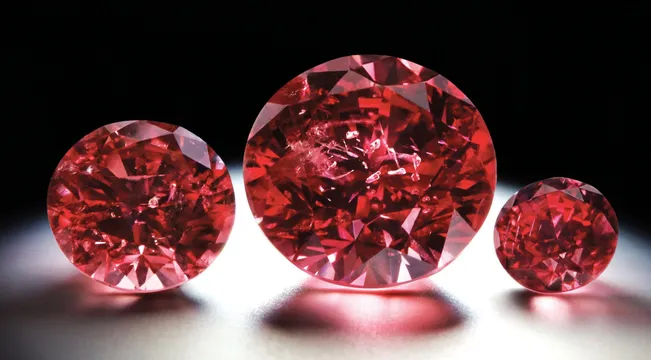
Zircon from the Northern Territory is famous from Mud Tank Zircon Field in the Harts Range district, where fossickers recover orange, pale brown, pink, purplish, yellow, colorless and parti-colored crystals and fragments by digging and sieving. Small double-terminated crystals and gemmy chips occur on and around Zircon Hill, while Specimen Hill is known for larger, better-faced crystals whose interiors are commonly cracked and less suitable for faceting. The finest collector pieces are complete, lustrous, tetragonal crystals with bipyramidal terminations and warm orange-brown to peach coloration; faceting rough is judged differently, with clarity and lack of internal fracturing more important than crystal completeness.
Epidote is a Harts Range mineral in the Northern Territory collector market, recorded from numerous localities around Mt Riddock Station, Harding Springs, Painted Canyon and nearby metamorphic or pegmatitic occurrences. Specimens range from lumps and granular epidote-bearing rock to small green crystals and coatings on quartz; particularly pleasing pieces show pistachio to dark green epidote in sharp contrast with clear, smoky or milky quartz. The better collector specimens carry exact Harts Range sublocalities and show crystal definition rather than simply green massive epidosite, and pieces from rough station country often have edge bruising or contact points that should be accepted only if the display face remains clean.
Saleeite from the Northern Territory is a Ranger Mine specialty, especially from the Ranger No. 1 and No. 3 deposits near Jabiru, where secondary uranium phosphates formed in the weathered uranium ore zone. Collector specimens are vivid yellow to yellow-green, often as bladed to tabular aggregates on quartz or iron-stained matrix, and the finest examples show freestanding crystals large for the species—up to about centimeter scale in the best documented pieces—rather than powdery crusts. Good saleeite is intensely colored, fluorescent and mineralogically important, but it is also radioactive and from a closed, rehabilitating uranium mine; provenance, legality of origin and safe storage are as important as aesthetics.
Other documented Northern Territory minerals include important type-locality and rarity material. Juno Mine at Tennant Creek is the type locality for the lead-bismuth seleniferous sulphosalts junoite, pekoite and proudite. Mount Stafford in central Australia is the type locality for boromullite, Al9BSi2O19, described from granulite-facies metapelites. The Ranger and South Alligator uranium fields add autunite-group and uranyl phosphate minerals such as metatorbernite, torbernite, dewindtite, dumontite and phosphuranylite. Harts Range contributes an exceptional gem and metamorphic suite, including almandine, hessonite, zircon, feldspar varieties, kyanite, titanite, beryl, smoky quartz, corundum, sapphirine, tourmaline, chrysoberyl, kornerupine and apatite, while Mud Tank adds magnetite, apatite and carbonatite-related material to the zircon story.
The first authenticity issue with Northern Territory specimens is sublocality. “Northern Territory, Australia” is often a market shorthand, but serious collectors should press for a mine or field name: Malbunka, Brown’s Prospect, Mount Bonnie, Mud Tank, Harts Range, Ranger, Redbank, Jinka, Tennant Creek and so on. The difference is not academic. A blue disk on kaolinite from Malbunka, a pyromorphite-on-malachite plate from Brown’s, a mimetite-duftite gossan from Mount Bonnie and a zircon crystal from Mud Tank belong to entirely different geological and historical stories.
Malbunka azurite suns are distinctive but not immune to market problems. Look for real integration of the blue disk with the soft kaolinitic siltstone rather than a glued disk or suspiciously sharp insert. Natural pieces often show irregular disk margins, radial or granular texture and clay matrix that undercuts or surrounds the azurite. The kaolinite matrix is soft and vulnerable; many pieces have been trimmed, stabilized, repaired or cleaned. Repairs are not necessarily fatal on a rare large sun, but they should be disclosed, and the specimen should be examined around the azurite-matrix boundary.
Brown’s Prospect material is commonly mislabeled simply as “Rum Jungle,” which is acceptable historically but less precise than Brown’s Prospect. Distinguishing 1970s pieces from 2010–2012 pieces matters: the older material more commonly features cerussite with malachite and pyromorphite, while the later material is typically richer in pyromorphite-on-malachite and poorer in cerussite. Condition is critical. Botryoidal malachite bruises, cerussite chips, and pyromorphite coatings can be rubbed off high points. Many specimens are naturally earthy in parts, so judge the best display surface rather than expecting all-around perfection.
Mount Bonnie mimetite and duftite should be treated as classic gossan specimens: small, complex, and sometimes analytically ambiguous. Visual separation of mimetite, pyromorphite, arsenian pyromorphite, duftite and related lead-copper arsenates can be difficult. Pieces with old labels from known collections, Sabine’s Shaft attribution, or references to the 1973 adit finds and 1982–1985 open-pit operation are more desirable. The limonitic matrix can be friable, and small crystals may be loose in vugs or on crumbly gossan.
Saleeite and other Ranger uranium minerals require radioactive-mineral handling. Keep specimens boxed, labeled, away from prolonged close contact, away from children, and away from food-preparation or sleeping areas. Avoid grinding, trimming, ultrasonic cleaning or any process that creates dust. Saleeite is also prone to hydration-state and surface changes; store it in a stable, dry environment and do not wash it. Because Ranger is a closed uranium mine under rehabilitation, modern “field-collected” claims should be viewed skeptically unless provenance is impeccable.
Mud Tank zircon is one of the few Northern Territory specimen themes still connected to legal recreational collecting in a declared fossicking area. Even there, collectors need current permits, declared-area compliance, water planning, station courtesy and road-condition awareness. For purchase, large Mud Tank crystals are often fractured internally; this is normal, particularly for impressive display crystals, but it affects cutting value. Faceted or facet-grade zircon should be sold on transparency, color and treatment disclosure, while crystal specimens should be judged on form and locality.
Market availability is uneven. Malbunka azurite suns appear regularly but fine, large, undamaged disks on attractive white matrix command strong prices. Brown’s Prospect combinations are much less available, especially older cerussite-rich pieces and large 2010 pyromorphite-on-malachite plates. Mount Bonnie mimetite and duftite are specialized and scarce in top condition. Ranger saleeite is rare and tends to circulate through advanced radioactive-mineral or Australian collections. Mud Tank zircon is obtainable, but top display crystals with complete form and attractive color are not common.
The Malbunka story begins with a name better known to art history than to ore geology. In the 1950s, Albert Namatjira—the Western Arrernte artist whose watercolors changed the way many Australians saw central Australia—recognized copper mineralization west of Alice Springs at what became known as the Namatjira Prospect. Later work proved the occurrence too small and low grade for ordinary copper mining, but the locality had something far more valuable to collectors: blue azurite disks in white clayey rock, a habit so unlike normal azurite that the pieces looked almost designed.
By the 1970s, Malbunka azurite suns were circulating beyond Australia. The deposit’s modern specimen fame rests on that improbable contrast: the hard, saturated blue of copper carbonate set into pale kaolinite, like a mineral target or a dried desert flower. The actual mine work was modest—bulldozer cuts, a short adit, specimen recovery—but the mineralogical result was world class. The best pieces are not merely blue; they show clean round disks with radial internal texture and just enough white matrix to frame the form.
Brown’s Prospect has its own two-act collecting history. The first act belongs to the 1970s, when small excavations in the Rum Jungle field produced malachite, cerussite and pyromorphite combinations that entered advanced Australian collections. Those early pieces are remembered for the cerussite: simple prisms, reticulated aggregates and rare twins set on green malachite, with pyromorphite as a yellow-green companion.
The second act came decades later. In May 2010, collectors returned to the specimen-producing zone on the south-facing scarp, and work continued in several bursts from late September to the end of November. The material was different enough that experienced collectors could recognize it as a new generation of Brown’s specimens: rolling and plate-like malachite, vivid green to bluish green, partially to completely covered with pyromorphite. Then the wet season intervened. An exceptionally wet February in 2011 flooded the open pit, stopping further collecting until late 2012. For a small deposit, that interruption mattered; when a producing face is limited and then underwater, the market supply changes almost overnight.
Mount Bonnie’s story is quieter and more underground. The mine’s gossan supplied mimetite and duftite long before most collectors saw them as mainstream Australian classics. Labels preserve oddly human details: mimetite from the “less vermin-infested upper adit” in November 1973, arsenian pyromorphite with duftite from the lower adit in December 1973, and larger mimetite pieces collected by Peter Nicholson during the 1982–1985 open-pit operation. That language belongs to real collecting—hot country, old workings, dark gossan, shafts and adits where the difference between a tolerable level and a miserable one might be the number of animals sharing it.
At Mud Tank, the field story is more democratic. Instead of a mine gate or a uranium lease, the collector follows the Plenty Highway east of Alice Springs, turns off near Mud Tank Bore, and enters a declared fossicking area known for zircon. The method is simple and ancient: dig, sieve, look closely. Zircons from the Flats, Zircon Hill and Specimen Hill reward patience with orange, peach, pale brown, pink, purplish and colorless fragments and crystals. Some are cutters; some are too fractured but make excellent crystal specimens. The pleasure is in the mismatch between the dry, open country and the weighty, brilliant little tetragonal crystals hiding in the wash.
Dehne McLaughlin and Ray Grant, “Azurite Suns from the Malbunka Copper Mine, Northern Territory, Australia,” Rocks & Minerals, 87(6), 490–501, 2012 — The major collector-oriented account of Malbunka azurite suns.
“Primary diagenetic copper carbonate at the Malbunka copper deposit, Amadeus Basin, Northern Territory, Australia,” Ore Geology Reviews, 82, 170–180, 2017 — Geological study of the Malbunka azurite-disk mineralization and its diagenetic interpretation.
Brian M. England and Norman Robinson, “Mimetite and Duftite from the Mount Bonnie Mine, Northern Territory,” The Mineralogical Record, 19(6), 441–450, 1988 — The key published reference for Mount Bonnie mimetite and duftite specimens.
“The Malachite-Cerussite-Pyromorphite Deposit at Brown’s Prospect,” The Mineralogical Record, 11(5), 287–291, 1980 — Classic reference for the Rum Jungle/Brown’s Prospect specimen association.
Maxwell J. Faulkner and James E. Shigley, “Zircon from the Harts Range, Northern Territory, Australia,” Gems & Gemology, Winter 1989 — Gemological description of Harts Range zircon, including its notable lack of radiation-related structural damage.
Dermot A. Henry, William D. Birch, Peter Stockman and Arnold van der Heyden, “Saléeite and associated minerals from the Ranger deposits, Jabiru, Northern Territory,” Australian Journal of Mineralogy, 5(1), 19–24, 1999 — Principal reference for Ranger saleeite and associated secondary uranium minerals.
W.G. Mumme and J.A. Watts, “Pekoite, CuPbBi11S18, a new member of the bismuthinite-aikinite mineral series,” The Canadian Mineralogist, 14, 322–333, 1976 — Type-mineral publication for pekoite from the Juno Mine, Tennant Creek.
Ian S. Buick, Edward S. Grew, Thomas Armbruster, Olaf Medenbach, Martin G. Yates, Gray E. Bebout and Geoffrey L. Clarke, “Boromullite, Al9BSi2O19, a new mineral from granulite-facies metapelites, Mount Stafford, central Australia,” European Journal of Mineralogy, 20(5), 935–950, 2008 — Type description of boromullite from Mount Stafford.
Museum Victoria specimen record M 43167, Saléeite, Jabiru, Northern Territory — Museum collection record for a Northern Territory saleeite hand specimen.
Museum Victoria specimen record M 45529, Mimetite, Northern Territory — Museum collection record for Northern Territory mimetite material.
Mindat — Northern Territory, Australia — Broad locality page with mineral list, photos and sublocalities across the Territory.
Mindat — Malbunka Copper Mine — Core locality reference for Malbunka azurite suns and associated copper minerals.
Mindat — Brown’s Prospect, Rum Jungle — Detailed locality page for malachite, pyromorphite, cerussite and related oxidized Pb-Cu mineralization.
Mindat — Mount Bonnie Mine — Essential reference for mimetite, duftite and the Mount Bonnie polymetallic gossan suite.
Mindat — Ranger Mine — Locality page for saleeite and associated secondary uranium minerals from Ranger.
Mindat — Mud Tank Zircon Field — Locality page for one of Australia’s best-known zircon collecting fields.
Northern Territory Government — Mud Tank Zircon Field — Practical access, discoveries and fossicking information for Mud Tank.
Northern Territory Government — Harts Range West — Official access and collecting information for the Harts Range West fossicking area.
Northern Territory Government — Declared Fossicking Areas — Starting point for legal recreational collecting areas in the Territory.
Northern Territory Government — Fossicking Rights and Obligations — Important rules for permissions, declared areas and fossicker responsibilities.
Northern Territory Government — Land Access for Fossicking — Guidance on landholder consent and access requirements.
NT Government — Sandy Flat Mine / Former Redbank Mine — Official background for the Redbank copper district and remediation setting.
DCCEEW — Ranger Uranium Mine — Official Commonwealth overview of Ranger’s location, history, closure and rehabilitation.
Department of Industry, Science and Resources — Regulating the Ranger Uranium Mine — Current regulatory and rehabilitation context for Ranger.
Geoscience Australia — Zircon — National overview noting Mud Tank as a leading Australian gem-zircon fossicking locality.
Australian Museum — Zircon — Museum guide noting Mud Tank among Australia’s most attractive zircon sources.