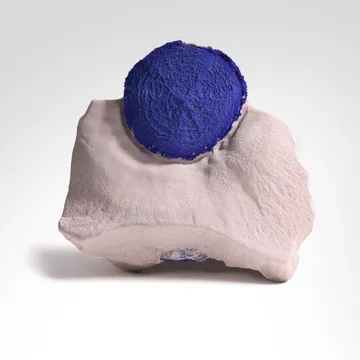
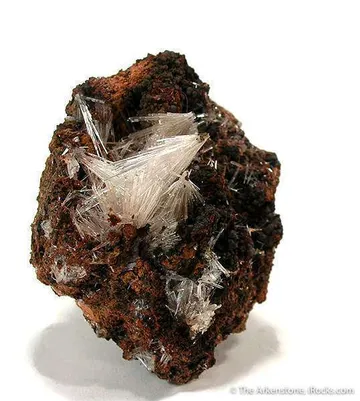
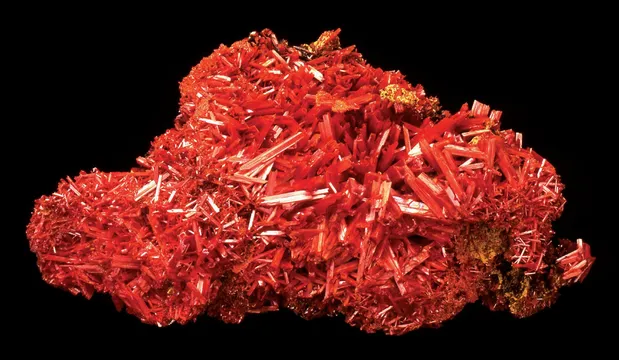
Brown's Prospect, Australia — famed locality yielding vivid malachite with pyromorphite and cerussite; prized for rare, intensely colored botryoidal specimens.
Key facts
Brown's Prospect is the collector name attached to the Browns Deposit at Rum Jungle, near Batchelor in the Northern Territory: a stratabound Pb-Cu-Co-Ni-Zn deposit in the Paleoproterozoic Pine Creek Orogen, set in black carbonaceous pelites of the Whites Formation near their contact with Coomalie Dolostone. To mining geologists it is an unusually metal-rich base-metal system; to specimen collectors it is one of the great Australian secondary-mineral localities, revered for compact but vivid combinations of malachite, pyromorphite and cerussite.
The locality’s best-known specimens are not large mine-wall plates in the Broken Hill tradition, but intimate, intensely colored supergene pieces: rolling botryoidal malachite, often deep green to apple green, sprinkled or crusted with yellow-green pyromorphite, and, in the classic 1970s material, set off by bright colorless cerussite crystals. The combination is immediately recognizable when good: lustrous green hemispheres and ridges of malachite, granular to prismatic pyromorphite in sharp contrast, and glassy cerussite flashes where the lead carbonate survived oxidation and later phosphate overgrowth.
Historically, Brown's Prospect occupies a special niche. The Rum Jungle field is famous in Australian mining history for uranium and copper, but Brown's became famous in mineral collections because short collecting windows—especially the 1970s excavations and the later 2010–2012 open-pit exposure—released a limited supply of distinctive, high-quality secondary lead-copper specimens. That scarcity is part of its appeal. Fine Brown's material is not merely “Australian malachite”; it is a classic association from a small, specific, flooded prospect whose specimen output was episodic and finite.
Regional View
Country View
Geologically, the Browns system is more complex than the display specimens suggest. The primary ore contains galena, sphalerite, chalcopyrite, pyrite and cobalt-nickel sulfides such as siegenite, with mineralization occurring both as fine wisps parallel to foliation and as coarser aggregates that cut across the foliation. The collectible supergene suite formed where that polymetallic ore was intensely oxidized, fractured and vuggy, producing the malachite-pyromorphite-cerussite assemblage that made the locality famous.

Photo: Wikimedia Commons
Search for specimens: View all specimens from Brown's Prospect, Australia
Brown's Prospect lies in the Rum Jungle Mineral Field, about 100 km south of Darwin and near Batchelor, within the Pine Creek Orogen of the Northern Territory. The locality is also described as Browns Deposit or Brown's Deposit; in specimen labels the names “Brown's Prospect,” “Browns Pit,” “Browns Open Pit,” and “Rum Jungle” are all encountered. The mapped locality is a flooded prospect, and its most important collecting zones were incorporated into the later Browns open pit.
The deposit is stratabound and polymetallic, with lead, copper, cobalt, nickel and zinc as the defining metal suite. The host sequence belongs to the Paleoproterozoic stratigraphy around Rum Jungle, where carbonaceous shale and pelitic rocks of the Whites Formation occur close to dolomitic units including the Coomalie Dolostone. Regional deformation and greenschist-facies metamorphism affected the sequence during the Barramundi orogeny, but the stratigraphic control of the ore remained important. In the specimen-producing zone, oxidation acted on fractured and sheared ore near the shale-dolostone contact, creating vuggy, quartz-veined, deeply weathered material.
The primary ore is not the part collectors normally see, but it is essential to understanding the secondary minerals. Galena supplied lead for cerussite, pyromorphite, anglesite, plumbogummite and related lead phases; chalcopyrite, bornite, chalcocite and other copper sulfides supplied copper for malachite, azurite, brochantite, chrysocolla, pseudomalachite and related copper phosphates. Cobalt and nickel occur in the primary sulfide assemblage, notably in siegenite and related cobalt-bearing phases, and manganese oxides locally played a role in concentrating cobalt in the weathered ore.
Brown's first entered mineral history long before the specimen boom. Mineralization in the Rum Jungle area was noted in the nineteenth century, and by the mid-twentieth century Brown's was recognized as a significant lead-copper prospect in the broader Rum Jungle field. Commercial specimen production, however, belongs mainly to three later episodes: the market appearance of Brown's specimens beginning in 1969; the reopened and trenched collecting of the 1970s, especially 1977; and the fresh exposures in the Browns open pit in 2010 and 2012.
The 1970s material established the locality’s reputation. That production yielded the now-classic Brown's association: botryoidal malachite with cerussite and pyromorphite, typically in small-cabinet to cabinet sizes rather than very large plates. The best older pieces show lustrous, rounded malachite with sharp colorless cerussite crystals and scattered green to yellow-green pyromorphite. These specimens have a mature, old-Australian-collection look, and many passed through institutional, dealer and private collections soon after the 1977 reopening.
The later open-pit work changed both the geology visible to collectors and the style of specimens recovered. The main pit excavated in 2009 was roughly 700 m long and 300 m wide, elongated northeast-southwest parallel to the mineralized stratigraphy. In the northeastern part of the pit, a remnant of pre-mining ground remained, near the line of the former sealed road into the old Rum Jungle uranium workings. The south-facing scarp of this remnant became the key modern specimen area. There, malachite-pyromorphite mineralization occurred in a steep, structurally disturbed, vuggy oxidized interval with quartz veining.
Collecting in the modern exposure began in May 2010 and continued intermittently from late September to late November of that year. These specimens differed markedly from the 1970s classics. Cerussite was scarce to almost absent in much of the 2010 production, while pyromorphite on malachite became the dominant association. Plates of malachite—botryoidal, flat, or locally crystalline—were partly to completely covered with drusy to millimetric prismatic pyromorphite. The colors were unusually varied: malachite ranged from bright apple green through deep emerald to bluish, turquoise-leaning green, while pyromorphite ranged from bright yellow and yellow-green to lime and grass green.
A few 2010 cerussite specimens came from the upper part of the bench face and recalled the older material, with simple prisms, centimeter-scale reticulated groups and rare trilling twins on malachite. One especially interesting style involved twinned cerussite aggregates coated and partly to fully replaced by yellow microcrystalline pyromorphite; in some pieces the original cerussite dissolved away, leaving pyromorphite casts. Tiny yellow to orange tabular wulfenite crystals were noted in these casts, making them among the most mineralogically engaging Brown's specimens.
Flooding curtailed collecting after an exceptionally wet February in 2011. A short follow-up collecting episode occurred late in 2012 when mine operations pumped the pit water level down several metres and re-exposed the 2010 bench. A small lot of malachite-pyromorphite specimens was recovered, somewhat different in morphology from the 2010 material. Nearby, a backhoe exposed a vuggy fracture in decomposed dolomite that yielded bright yellow-green to lime-green pyromorphite without associated malachite; crystals reached about 1 cm and sat on weathered dolomitic matrix with unusually strong luster.
Mining at Browns was brief. Compass Resources began mining the oxide deposit in 2008, first copper production from the Browns Oxide Plant followed in September 2008, and mining ceased in 2009 after the company entered voluntary administration. Later corporate work focused on resource evaluation, drilling and possible sulfide development, but for collectors the important point is straightforward: the old specimen-producing areas are on mine leases, the open pit is flooded, and Brown's should not be treated as an accessible casual collecting locality.
Malachite is the visual foundation of Brown's Prospect specimens: in the classic 1970s material it forms multihued spherical and botryoidal crusts, commonly with colorless cerussite and scattered pyromorphite, while the 2010–2012 open-pit material produced plates ranging from apple green and emerald green to bluish green, partly to completely dusted or draped with pyromorphite. Good Brown's malachite is not judged simply by size, but by the crispness and continuity of the botryoidal surface, the absence of bruised high points, the depth and variation of green, and the way associated pyromorphite or cerussite confirms the locality and breaks up the surface visually; the finest cabinet pieces have rolling, undulating relief rather than flat crusts, and their color has a saturated “wet” look without artificial polish.
Pyromorphite from Brown's Prospect occurs as yellow, yellow-green, lime-green, grass-green and olive-green crystals, from drusy coatings and millimetric prisms on malachite to bright individual crystals approaching 1 cm on weathered dolomitic matrix; the 2010 open-pit find is especially valued for pyromorphite scattered over dark botryoidal malachite, with some specimens tied to named pocket material such as the “golden pocket” and “pizza pocket.” The best pieces combine sharp luster, lively color contrast, and enough crystal size to read as pyromorphite rather than mere powdery coating; specimens from the dolomite fracture without malachite are less iconic visually but can show brighter, cleaner crystals, while the malachite-hosted pieces carry the classic Brown's identity most strongly.
Cerussite is the key discriminator of the older Brown's Prospect style and is much scarcer in the 2010 production than in the 1970s material: it appears as colorless to ivory-white, adamantine crystals on malachite, including simple prisms, reticulated centimeter-scale aggregates and rare trilling twins. Top Brown's cerussite specimens are valued for bright, undamaged lead-carbonate crystals set cleanly on green malachite, ideally with pyromorphite present but not obscuring the cerussite; particularly interesting pieces show yellow microcrystalline pyromorphite coating or replacing cerussite twins, sometimes leaving casts in which tiny tabular wulfenite may be found.
Beyond the three headline species, Brown's Prospect has a substantial documented mineral list for a compact locality. Collectors should watch for copper phosphates and related rarities including pseudomalachite, libethenite, ludjibaite and reichenbachite, as well as mimetite, wulfenite, anglesite, aurichalcite, brochantite, chrysocolla, azurite and osarizawaite. The ore-mineral suite includes galena, sphalerite, chalcopyrite, bornite, chalcocite, covellite, digenite, pyrite, marcasite, pyrrhotite, arsenopyrite, cobaltite, gersdorffite, linnaeite and siegenite, with secondary and gangue minerals including plumbogummite, heterogenite, coronadite, goethite, hematite, jarosite, kaolinite, dolomite, quartz, siderite, muscovite, clinochlore, tremolite, epidote, rutile, zircon, thorianite, cerianite-(Ce), molybdenite and neotocite. For thumbnail and micromount collectors, the small yellow-orange wulfenite associated with pyromorphite casts after cerussite is among the locality’s most intriguing minor occurrences.
Brown's Prospect specimens reward careful locality attribution. Isolated botryoidal malachite can resemble material from African copper deposits, and unlabeled green malachite crusts are not enough by themselves to prove Brown's. Strong supporting features include the classic association with colorless cerussite and yellow-green pyromorphite, old Australian collection labels, 1970s provenance, or modern 2010–2012 labels mentioning Browns Open Pit, Rum Jungle, the golden pocket, the pizza pocket, or the open-pit bench.
Condition matters sharply. Malachite botryoids bruise on exposed high points, and damage often shows as dull, lighter, abraded spots on otherwise satiny or lustrous green surfaces. Cerussite is heavy, brittle and comparatively soft, so protruding reticulated groups and trilling twins are commonly chipped. Pyromorphite druses can be rubbed down by handling or packing, especially where crystals sit on the crests of malachite. Because many attractive specimens are compact and visually busy, inspect under magnification for repaired cerussite, crushed pyromorphite patches, and old glue along fractures in malachite plates.
Cleaning should be conservative. Acid treatment is inappropriate for specimens containing cerussite and malachite, and even water cleaning can mobilize grime into porous botryoidal surfaces. Mechanical trimming of Brown's pieces is also risky because the attractive surface is typically a thin secondary rind over oxidized, vuggy matrix. Store and handle specimens as lead-bearing mineral specimens: avoid dust, wash hands after handling, keep pieces away from children, and do not use them in jewelry, aquaria or any setting involving abrasion or ingestion risk.
Fine Brown's Prospect material is genuinely scarce. The 1970s production was limited, the 2010 collecting area was small, and the later exposure was cut off by flooding except during brief water-level reductions. Pieces do appear on the market, but usually as recycled collection material rather than continuous new supply. Small-cabinet specimens with vivid pyromorphite on malachite remain obtainable with patience; large, undamaged cabinet specimens with strong cerussite are much harder, and high-quality reticulated cerussite on malachite can command a premium well above ordinary malachite from the locality.
The Brown's story is full of short windows. One of the most evocative came in July 1977, when the Australian Museum’s Department of Mineralogy and Petrology made Rum Jungle its major field trip of the year. The former mine at Brown's Prospect had been reopened for three weeks by invitation of the Bureau of Mineral Resources and the National Museum of Victoria, and the whole department took part. The annual report records a large number of very fine specimens collected from Brown's Prospect, while the same trip also reached secondary uranium localities in the East and South Alligator River areas. That 1977 effort sits behind many old-label Brown's specimens in Australian collections: malachite, cerussite and pyromorphite gathered in a brief institutional campaign before the locality fell quiet again.
More than three decades later, Brown's had a second act. In 2010, Paul Melville and David Rosewell revived the locality for collectors when the Browns open pit exposed a new specimen zone. The material was not simply a repeat of the 1970s finds. Instead of cerussite-rich classics, the new pieces were plates and rolling masses of malachite covered with small pyromorphite crystals, the crystals ranging from yellow-green to olive and, in good cases, reaching several millimetres to about a centimetre. The new specimens debuted to the wider collector world around the 2011 Tucson show, where their locality alone made collectors look twice: this was fresh Australian pyromorphite on malachite from one of the country’s old classics, not a new African or Chinese occurrence.
The collecting itself depended on mine geometry and water. The productive area was a south-facing scarp on a remnant of ground left in the northeastern part of the 2009 open pit. That remnant approximated the old surface and the former sealed road into the Rum Jungle uranium workings; beneath several metres of compacted fill, the vuggy oxidized zone still carried specimen pockets. Collecting began in May 2010, resumed late in September and continued episodically into November. Then the Territory wet season intervened. An exceptionally wet February in 2011 flooded the pit, stopping further work until late 2012.
The 2012 return was brief but memorable. Mine pumping lowered the water level by several metres and exposed the 2010 bench again, allowing a small additional lot of malachite-pyromorphite specimens to be collected. A backhoe then opened a vuggy fracture in decomposed dolomite several metres away from the main malachite-pyromorphite zone. That fracture yielded bright yellow-green to lime-green pyromorphite without malachite, crystals up to about 1 cm across the weathered dolomitic matrix. It was a different face of Brown's: less dramatic in color contrast, but sharper and cleaner as pyromorphite.
Collectors still repeat the pocket names attached to some of the 2010 material. Fabre Minerals listed specimens from Brown's Open Pit labeled from the “golden pocket” in November 2010 and the “pizza pocket” in October 2010. Those labels matter because the post-2010 production was not a broad, continuous mine output but a set of small, discrete recoveries from a limited exposure. A Brown's specimen with a credible pocket label is not just a mineral object; it is a map pin in one of the last productive moments of the locality.