A collector's guide to New Mexico, USA: its geology, mining history and notable minerals, illustrated with the 80 specimens documented from this locality on EarthWonders.
Key facts
New Mexico is not a single-species locality so much as a mineral province: a high-desert cross section through Proterozoic pegmatites, Paleozoic carbonate platforms, Laramide porphyry and replacement systems, Rio Grande rift structures, alkaline intrusions, volcanic epithermal veins, sandstone uranium belts, manganese blankets, and young supergene zones. For collectors, that breadth is the point. A New Mexico cabinet can move from velvety black manganese oxides and pyrolusite-rich ore, to “Blanchard blue” fluorite, to apple-green Kelly smithsonite, to classic Organ Mountains wulfenite, to Harding pegmatite phosphates and rare-element minerals, all without leaving the state.
The state’s best-known specimen districts fall into several collecting families. Hansonburg, in Socorro County, is the classic lead-fluorite-barite district: vugs and solution channels in carbonate host rock lined with galena, barite, fluorite, quartz, and later colorful secondary copper-lead minerals. The Organ Mountains gave New Mexico its most important wulfenite, especially from the Stevenson-Bennett mine, where oxidation of lead-zinc-silver replacement ore produced tabular crystals in a remarkable spread of yellows, browns, grays, and golden tones. The Luis Lopez and Cuba manganese districts, Lake Valley, Deming-area deposits, and smaller manganese occurrences provide the black oxide side of the state’s mineral personality. Harding and Petaca anchor the rare-element pegmatite story, while Wind Mountain in the Cornudas Mountains and the Grants uranium belt remind the systematic collector that New Mexico is also a state of type minerals.
The visual signature of good New Mexico material is desert-sharp and often architectural. Blanchard fluorite commonly shows frosted to glassy blue cubes, sometimes purple-edged or zoned, on pale quartz, cream barite, and metallic galena. Stevenson-Bennett wulfenite can be platy and stacked, translucent at thin edges, or partly veiled in pale quartz. Manganese specimens range from massive black ore to lustrous botryoidal, fibrous, radiating, and prismatic aggregates, with the best pieces showing form and sheen rather than merely black weight. Quartz is both a gangue and a specimen mineral here: smoky and amethystine crystals, drusy sugar coatings, clear clusters, and quartz matrices carrying fluorite, wulfenite, murdochite, or copper minerals.
Regional View
Country View
New Mexico’s importance is also historical. Indigenous turquoise and galena mining at Cerrillos long predates Euro-American mining; Spanish and Mexican-period prospects were followed by nineteenth-century rushes for silver, lead, copper, and gold; and twentieth-century production added fluorspar, barite, manganese, uranium, potash, beryllium, lithium, tantalum, and industrial minerals. The collecting record is equally layered. Some localities are long-closed historic mines known chiefly through old labels and museum drawers, while others—such as Rockhound State Park and the Harding Pegmatite Mine under controlled conditions—remain educational collecting destinations. Serious New Mexico collecting is therefore label-driven: county, district, mine, adit, level, and pocket names matter, because two specimens simply marked “New Mexico” may belong to entirely different geologic worlds.

Photo: Wikimedia Commons
Search for specimens: View all specimens from New Mexico, USA
New Mexico’s specimen localities are distributed across several geologic provinces rather than concentrated in one mine field. Northern New Mexico exposes Proterozoic crystalline terranes and pegmatites, including the Harding and Petaca districts. Central New Mexico includes rift-related structural blocks, Paleozoic carbonates, and carbonate-hosted lead-fluorite-barite systems such as Hansonburg. Southwestern New Mexico carries Laramide and younger intrusive centers, porphyry copper systems, skarns, carbonate-replacement bodies, epithermal veins, and manganese deposits. Northwestern New Mexico is dominated, for mineral collectors, by the Grants uranium belt and its vanadium-uranium mineralogy. In the southeast, the Permian Basin supplies potash and evaporite minerals on an industrial scale, less often as display specimens.
The Hansonburg district, especially the Blanchard and Mex-Tex mines near Bingham in Socorro County, is among the most collectible of the carbonate-hosted systems. Its ore occurs in Pennsylvanian limestone and shale as veins, replacement, rhythmically banded “coontail” ore, and open-space fillings in solution channels. The main assemblage—galena, barite, fluorite, and quartz with lesser sphalerite, pyrite, chalcopyrite, and late calcite—has produced both cabinet specimens and microminerals. Blanchard’s fame rests on blue fluorite and barite-fluorite-galena combinations, but the district has also yielded linarite, brochantite, murdochite, spangolite, wulfenite, and the lead oxide type mineral scrutinyite.
The Organ Mountains in Doña Ana County represent a different style: lead-zinc-silver replacement mineralization in Paleozoic carbonate rocks cut by faults, fractures, breccia zones, and intrusive rocks. At the Stevenson-Bennett mine, the Bennett ore body and related oxidized zones produced wulfenite with cerussite, quartz, limonite, calcite, and other secondary lead minerals. The mine’s wulfenite is a New Mexico classic, and because the workings are closed, significant examples now come from old collections rather than new mine-run production.
Manganese mineralization is widespread but uneven. In Socorro County, the Luis Lopez district includes manganese oxides in Tertiary rhyolite and rhyolite tuff, commonly as breccia cement, veinlets, open-space fillings, replacement bodies, and layered oxide-calcite patterns. In the Cuba district of Sandoval County, manganese occurs as stratiform blankets and pods of rounded to subrounded nodules in shale and fine-grained sandstone; modern analyses indicate pyrolusite is a major manganese phase there, accompanied by quartz, hematite/goethite, clay minerals, albite, and spinel-group material. Older reports use terms such as psilomelane and wad broadly, so collector labels should be read cautiously unless supported by analysis.
Luna County and the Deming region add fluorspar, manganese, and volcanic collecting material. Fluorite Ridge was one of the more productive New Mexico fluorspar districts, and fissure-vein deposits in Proterozoic granite of the Caballo Mountains, Cooke’s Range, Burro Mountains, and Zuni Mountains were among the most important fluorite deposit types in the state. Rockhound State Park, in the Little Florida Mountains southeast of Deming, is not a classic underground specimen mine but is important culturally because it was established for recreational rock and mineral collecting; agate, jasper, quartz, geodes, and related volcanic products define its collecting identity.
The Harding Pegmatite Mine near Dixon in Taos County is one of New Mexico’s great educational localities. It is a zoned Proterozoic pegmatite famous for lithium, beryllium, tantalum-niobium, phosphate, and mica minerals. Commercial mining began in the early twentieth century and included lepidolite, spodumene, beryl, microlite, and tantalite-columbite. Today the mine is preserved by the University of New Mexico as an outdoor geologic laboratory and mineral collecting locality, with access controlled by release forms and small-scale personal collecting expectations.
Historically, mining in New Mexico spans extraordinary time. Cerrillos turquoise and galena were worked by Indigenous miners long before modern mining records. Spanish-period activity centered on lead, silver, copper, and turquoise in districts such as Cerrillos, Old Placers, and the Burro Mountains. Santa Rita became one of the great copper names of the Southwest, while Lake Valley, Kelly, Magdalena, Silver City, Pinos Altos, Mogollon, and many smaller camps form the nineteenth-century mining backdrop behind today’s specimen labels. Twentieth-century mineral production expanded into fluorspar, barite, manganese during wartime demand, uranium in the Grants belt, potash near Carlsbad, and large open-pit copper operations in the southwest.
Collecting access today is highly variable. Some places are public educational or recreational collecting areas, such as Rockhound State Park and the Harding Pegmatite Mine under its own rules. Some BLM lands allow limited noncommercial surface collecting where not otherwise restricted, but active claims, private land, cultural sites, wilderness designations, military reservations, state trust lands, and mine-safety closures can all remove a locality from casual access. Many classic specimen mines—especially underground wulfenite and lead-zinc localities—are closed, unsafe, reclaimed, gated, or privately claimed. For serious collectors, the safest and most ethical route is to buy well-labeled specimens, join organized club trips, confirm land status before travel, and never enter abandoned workings.
Notable finds include Blanchard’s blue fluorite pockets in the Sunshine tunnels, fluorite and barite groups from Mex-Tex and Rose mine workings, thousands of pounds of small gemmy fluorite specimens from a Royal Flush pocket, Stevenson-Bennett wulfenite recovered during and after the mining era, Kelly Mine smithsonite and lesser wulfenite occurrences, Lake Valley ramsdellite and manganese oxides, Harding pegmatite rare-element suites, Wind Mountain rare zirconium and alkaline-silicate minerals, and Grants-belt vanadium-uranium type minerals. The state rewards locality-specific collecting more than casual state-name collecting: a New Mexico specimen is most meaningful when the label follows it down to the district and mine.
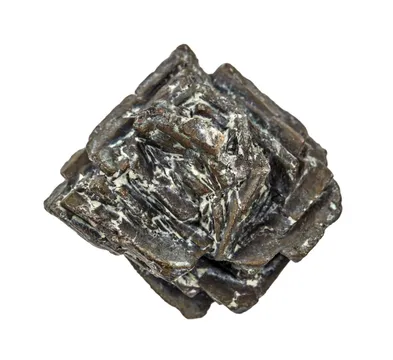
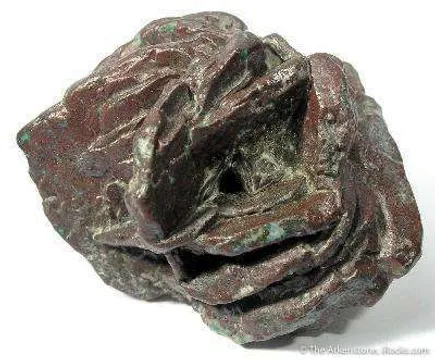
Pyrolusite from New Mexico is tied to the state’s many manganese districts rather than to one showpiece mine, and the best collector pieces come from occurrences where black manganese oxide is not merely massive “wad” but shows discernible crystal form, botryoidal layering, fibrous to radiating texture, or lustrous prismatic surfaces. Socorro County’s Luis Lopez manganese district is especially important in the collector literature, though many attractive “psilomelane” or pyrolusite-labeled pieces from there are complex intergrowths of manganese oxides such as hollandite, romanechite, cryptomelane-group minerals, coronadite, and pyrolusite. The Cuba district in Sandoval County yields pyrolusite-bearing stratiform nodules and blankets in shale and fine sandstone, typically associated with quartz, hematite/goethite, clay, albite, and other fine-grained phases. Deming- and Lake Valley-area material may occur as black ore with earthy, metallic, or radiating textures; good specimens show contrast, luster, and structure, while ordinary pieces are undiagnostic black manganese oxide that need analysis before a confident species name is attached.
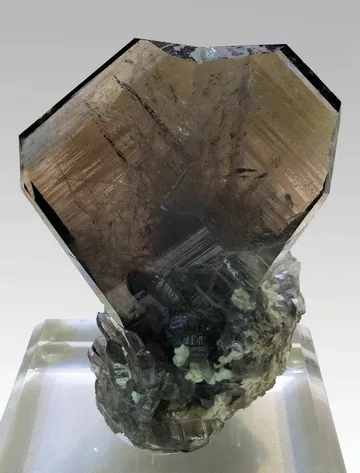
Quartz in New Mexico is both a specimen mineral and the stage on which many of the state’s better minerals sit. At Hansonburg, quartz occurs as terminated crystals, drusy “sugar” coatings, smoky or amethystine groups, and pale matrices carrying blue fluorite, barite, galena, murdochite, and copper-lead secondaries; the Mex-Tex mine produced fine amethystine and smoky quartz clusters, in some cases dusted with tiny dark murdochite crystals. In the pegmatite districts of northern New Mexico, quartz appears as massive zones, clear to smoky crystals, and pocket material associated with feldspar, muscovite, beryl, phosphates, and rare-element species. Surface localities across the state add rock crystal, smoky quartz, amethyst, and quartz-lined geodes or volcanic cavities. The most collectible New Mexico quartz is sharply crystallized, lustrous, and locality-rich—especially when it carries characteristic associations such as Blanchard fluorite, Mex-Tex murdochite, or Harding/Petaca pegmatite minerals—rather than plain milky vein quartz.
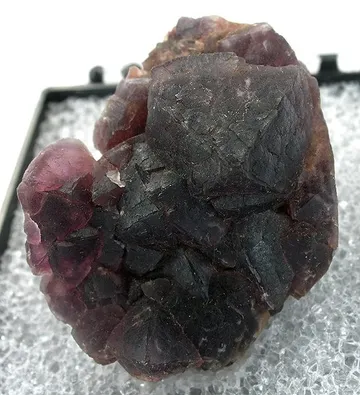
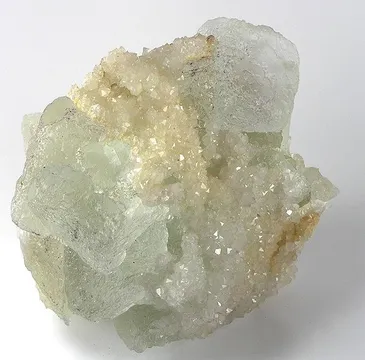
New Mexico fluorite is dominated, in collector terms, by the Hansonburg district and the Blanchard Mine’s famous blue crystals. Blanchard fluorite occurs mainly as cubes to modified cubes, but also in more complex forms including dodecahedral and hexoctahedral habits; colors range through sky blue, deeper “Blanchard blue,” purple-zoned blue, and pale green, with reported crystals reaching several centimeters on edge. Matrix pieces with cream barite, metallic galena, and sparkling quartz are the state classics, and the best specimens preserve color, transparency, crisp cubic form, and attractive placement in the vug rather than merely loose or cleaved crystals. Industrially, fluorite was also mined from fissure veins in Proterozoic granites and related rocks in districts such as Fluorite Ridge, Cooke’s Range, the Caballo Mountains, Burro Mountains, and Zuni Mountains, but the most recognizable cabinet specimens remain the Hansonburg blue fluorites and their barite-galena-quartz associations.
New Mexico’s wulfenite reputation rests first on the Stevenson-Bennett mine in the Organ Mountains, where oxidation of lead-zinc-silver replacement ore produced the state’s finest and most abundant wulfenite specimens. Stevenson-Bennett material is admired for its variety: tabular crystals, intergrown plates, yellow to golden-brown and gray-centered crystals, caramel and butterscotch tones, and associations with quartz, calcite, cerussite, goethite, hemimorphite, mottramite, pyromorphite, smithsonite, and other secondary minerals. The Denver shaft in Grant County and several Magdalena, Hillsboro, Palomas Gap, Kelly, and Hansonburg occurrences add locality breadth, including small yellow-green dipyramids at the Kelly mine and tiny butterscotch wulfenite on Blanchard fluorite and barite. Fine pieces are judged by undamaged thin edges, transparency, saturated color, sharp tabular or pyramidal form, and a fully documented mine label; mediocre examples are usually small, bruised, iron-stained plates with little locality character.
New Mexico’s wider mineral list is unusually strong in type-locality and rare species. Ramsdellite, the orthorhombic MnO2 polymorph, is tied to the Lake Valley Mining District and remains one of the state’s best systematic claims. Scrutinyite, α-PbO2, comes from the Sunshine No. 1 adit at the Blanchard Mine. Wind Mountain in the Cornudas Mountains is the type locality for georgechaoite and windmountainite, part of an alkaline-intrusive suite rich in zirconium and sodium-calcium silicates. The Grants uranium region is linked to vanadium-uranium species including grantsite and santafeite, while the Summit group at Cookes Peak has produced recently described molybdenum oxide hydrate species such as raydemarkite, tianhuixinite, and virgilluethite. Santa Rita is the type locality for meurigite, a hydrated potassium iron phosphate found as small pale spherical to hemispherical aggregates in oxidized copper-deposit material. Add Kelly smithsonite, Magdalena district lead-zinc secondaries, Harding pegmatite phosphates and rare-element minerals, Cerrillos turquoise, Kilbourne Hole peridot, Rockhound State Park agate and quartz, and New Mexico becomes one of the most satisfying state-level collecting specialties in the American West.
New Mexico specimens demand careful locality control. Old labels may say only “New Mexico,” “Bingham,” “Magdalena,” “Organ Mts.,” “Kelly,” “Deming,” or “Cooks Peak,” and those shorthand names are not always precise enough for modern collecting standards. “Bingham” may refer to the Hansonburg district and could mean Blanchard, Mex-Tex, Rose, Royal Flush, or another nearby working. “Magdalena” may be used loosely for the Kelly and Graphic-Waldo area. “Organ Mountains” wulfenite should be distinguished, when possible, from Stevenson-Bennett, Memphis, Torpedo-Bennett fault-zone prospects, and other Doña Ana County occurrences. A specimen with an old collection label, mine name, and district is much more valuable than the same mineral with only the state name.
The biggest mineralogical authenticity issue is manganese oxide naming. New Mexico black manganese specimens have long been sold as pyrolusite, psilomelane, wad, hollandite, romanechite, cryptomelane, coronadite, or ramsdellite, and older names were often used visually rather than analytically. “Psilomelane” in particular is a broad historical collector term, not a precise modern species label. Dendritic manganese oxides should not automatically be called pyrolusite; modern work has shown that many dendrites belong to other manganese oxide phases. High-grade New Mexico manganese specimens should be evaluated by habit, provenance, and, for serious systematic value, analytical confirmation.
Fluorite from Blanchard and Hansonburg is widely available compared with many New Mexico classics, but quality varies sharply. Many pieces have cleaved corners, bruised cube edges, iron staining, pocket clay, barite or calcite crusts, or etched surfaces. This is not surprising: the silicified limestone matrix can be extremely tough, and extraction commonly damages exposed crystals. Good “Blanchard blue” examples retain strong blue to blue-purple color, intact cubic form, and a natural matrix. Be wary of vague blue-fluorite labels; Arizona, Illinois, England, China, and Mexico can all produce blue fluorites, but the barite-galena-quartz matrix and frosted cubic New Mexico habit are often distinctive.
Wulfenite condition is critical. Thin New Mexico wulfenite plates chip readily, and old Stevenson-Bennett specimens may show edge bruising, repaired crystals, iron-oxide films, or partial quartz coatings that either add character or obscure crystals depending on aesthetics. The mine is closed, and significant fresh material is not expected from normal collecting, so provenance and old collection history matter. Because Mexico and Arizona produce abundant wulfenite, unattributed orange or yellow wulfenite should not be assumed to be New Mexico without a credible label.
Quartz and fluorite may require gentle cleaning, but aggressive acid treatment can damage associations. Calcite, barite, delicate wulfenite, linarite, brochantite, hemimorphite, and copper secondaries may be affected by careless chemical preparation. Fluorite can cleave with thermal shock or pressure, and wulfenite is brittle despite its high density. Radioactive minerals from the Grants belt, Harding rare-element minerals containing uranium or thorium traces, and some Cornudas rare minerals should be stored and handled with ordinary radioactive-mineral discipline: labeling, dust control, minimal handling, and separation from living spaces if activity is significant.
Market availability follows geology and access. Blanchard fluorite and barite-fluorite-quartz pieces remain obtainable in a wide range of prices, especially from older club-field-trip and dealer stock. Pyrolusite and other manganese oxide pieces are common as mineralized ore, but accurately labeled crystallized examples are less common. Stevenson-Bennett wulfenite, Lake Valley ramsdellite, strong Harding rare-mineral specimens, Wind Mountain type-locality material, and high-end Kelly smithsonite are much more competitive. New Mexico is an ideal state specialty because attractive entry-level pieces exist, while the top end still rewards archival labels, old collections, and analytical certainty.
In the late 1950s, Sherman Marsh and companions found their way into the Hansonburg district not by a map or a dealer tip, but by following ore like breadcrumbs. Near San Antonio, south of Socorro, they noticed large rocks beside a railroad loading dock. The pieces contained galena, barite, and quartz. Then they saw more of the same material near the highway turnoff. Curiosity did what curiosity does in mineral collecting: it became a route. The trail led them down the Bingham road to the Mex-Tex mine, where a large stope opened on the west side of a cliff above the old mine buildings.
Access was improvised in the manner of another era. A chain crossed the road to the stope, but Marsh’s group discovered that if two people lifted both sides, a car could just barely pass beneath it. About 200 feet inside the stope stood a pillar coated with linarite, malachite, fluorite, barite, and quartz. Nearby, quartz and fluorite were dusted with shiny black microcrystals that later proved to be murdochite. That small reidentification captures New Mexico collecting perfectly: what began as a visible blue-and-green underground haul became, under the microscope and in the lab, a more exact story of lead-copper oxide chloride-bromide chemistry.
One Mex-Tex trip became a chase scene. Marsh, Bill Atkinson, their wives, and two geology graduate students from Nepal—Biswa Man Pradhan and Yogendra Lal Singh—arrived just before sunset. Colleen Marsh was posted outside on the dump as lookout. When she ran in shouting that someone was coming, the collectors grabbed tools and packs and bolted for the car. The Nepalese students, not fully aware that the outing was a clandestine one, were bewildered. In total darkness the group rolled away with the engine and lights off, slipped under the chain, and headed down the dirt road. When lights from the other car began moving after them, caution vanished. Marsh later framed it with a question mark—“the chase was on!”—but the details were plain: they reached pavement at least a quarter mile ahead, floored the accelerator, and watched the pursuing car close the distance, pass, and disappear. The students were, understandably, reluctant to go collecting with them again.
At the Blanchard mine, the obstacle was not a chain but Mrs. Blanchard. The family had owned the mine for years, and she lived in a small cabin along the access road. Collectors stopped to chat and ask permission. She often greeted them carrying a shotgun, yet by Marsh’s account she was pleasant and let them collect. The real toll came afterward. On the way out, she wanted to see the finds. The collectors unpacked their specimens, she picked out pieces she liked, and set them beside her cabin. On later visits, the same specimens would still be there, weathering outside in the New Mexico sun and wind.
Mrs. Blanchard also provided one of the great small domestic images in New Mexico collecting lore. While Colleen Marsh was talking with her, a cat came around the corner of the cabin with a cowbell tied around its neck, so heavy that the animal could barely hold its head up. When Colleen asked what had happened, Mrs. Blanchard replied that the cat had been catching birds, so she had to “bell the cat.” It is an absurdly vivid footnote to a district better known for fluorite and galena, and it fixes the old Blanchard landscape in the mind as surely as any pocket description.
Lake Valley belongs to an older and more dramatic mining imagination. A rancher found the silver deposits in 1876, and within a few years miners entered the cavity that became the “Bridal Chamber,” a silver-lined pocket said to have yielded 2.5 million troy ounces of silver by itself. The chamber was exhausted quickly, the railroad arrived too late to save the boom, and by 1931 the district’s total silver production had reached 5.8 million ounces. For collectors, Lake Valley’s later manganese chapter is just as important: the same district that lives in western silver lore is also the type locality of ramsdellite, a serious systematic manganese oxide prize.
The Harding Pegmatite Mine tells a gentler story of preservation. After decades of production for lepidolite, spodumene, beryl, microlite, and tantalum-niobium minerals, Arthur Montgomery donated the property to the University of New Mexico. Instead of disappearing into a gated ruin or being erased by reclamation, Harding became an outdoor geologic laboratory where visitors can still see pegmatite zones in place and collect a few personal specimens under controlled rules. For a state with so many dangerous, closed, or private mines, Harding is the rare classic locality where the educational purpose is written into the land.
Wind Mountain, in the Cornudas Mountains, is another kind of New Mexico collecting story: remote, alkaline, systematic, and awkward to reach. Collectors seeking its zirconium silicates and rare minerals encountered locked gates and access complications severe enough that approaching from Texas and backtracking northwest could be more practical than trying a shorter-looking route. The mountain’s mineralogy rewards that persistence. It is the type locality for georgechaoite and windmountainite, and its cavities and altered alkaline rocks have made it a destination for collectors who care less about cabinet-size sparkle than about a tiny grain with a name few people can pronounce.