






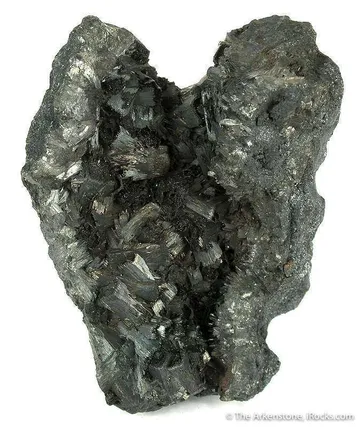
Pyrolusite - jet-black crystals and dramatic pseudomorphs with steel luster; prized display pieces from storied Mn deposits, Ilfeld and the Kalahari Field.
Key facts
Pyrolusite (MnO2) is the quintessential manganese oxide and a major ore of manganese. To collectors it offers striking metallic aesthetics across a wide range of habits: velvety to mirror-bright jet‑black crystals, radiating sprays, parallel prismatic bundles, stalactitic growths, and delicate dendritic patterns on rock surfaces. The finest cabinet specimens have a bold, sculptural presence—steel-black luster that looks “wet,” strong contrast on pale carbonates or quartz, and sharp crystal terminations. In many districts pyrolusite also forms pseudomorphs after manganite or other Mn minerals, preserving dramatic crystal shapes in a darker, more lustrous oxide. While common in massive ore form, top display specimens are far scarcer and come principally from a handful of storied manganese deposits. Good pyrolusite is relatively affordable for small pieces, whereas large, lustrous, undamaged clusters from classic localities can be surprisingly competitive and highly sought after.
Pyrolusite has been collected for centuries—both for its scientific significance as a primary manganese ore and for its distinctive, architectural beauty. The species spans two parallel markets: affordable dendrites and stalactites that appeal to newer collectors, and high-end, razor-lustrous crystal groups from famous mines (especially in the Kalahari Manganese Field) that advanced collectors pursue. Historic European localities like Ilfeld in Germany add pedigree and provenance value, while South African mines have set modern standards for luster and form. Because outstanding pyrolusite is less ubiquitous than its “common” reputation suggests, truly great examples, especially on attractive matrix or as sharp pseudomorphs, retain strong demand.
The following localities are renowned for producing distinctive, highly collectible pyrolusite specimens. Each locality is listed only where we can reference its EarthWonders locality ID.
A historic European manganese district famed since the 19th century, Ilfeld produced classic pyrolusite—often as pseudomorphs after manganite—preserving bold, striated prismatic forms in deep black oxide. These old specimens typically show elegant sprays or stout crystal “stacks,” sometimes with baryte or quartz. While many pieces reside in museums and older collections, well-labeled Ilfeld pyrolusite still appears on the market and is cherished for its pedigree. Condition varies due to age; undamaged, sharp, and well-composed examples are increasingly scarce and collectible.
Color and Luster:
Crystal Form and Habit:
Condition:
Size and Composition:
Locality and Provenance:
Repairs/Stabilization:
Cleaning:
Fakes and Misidentifications:
Handling:
Cleaning:
Light and Temperature:
Chemicals:
Storage and Display:
By focusing on luster, sharp form, and minimal damage—and by favoring well-provenanced pieces from renowned localities—you can build a pyrolusite suite that ranges from elegant thumbnails to sculptural cabinet centerpieces.