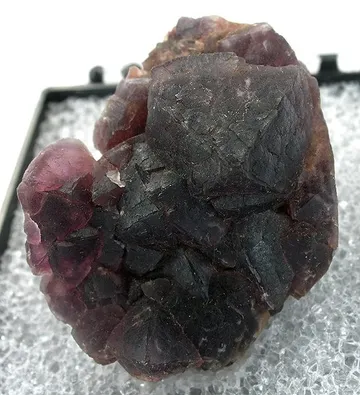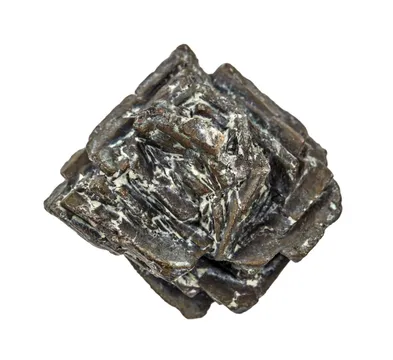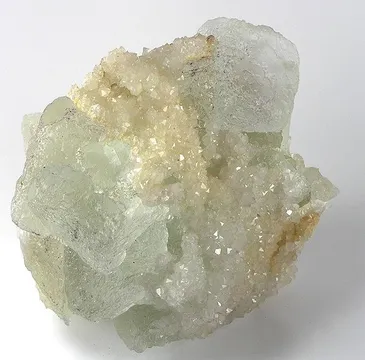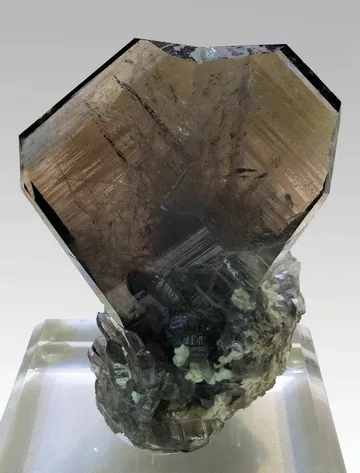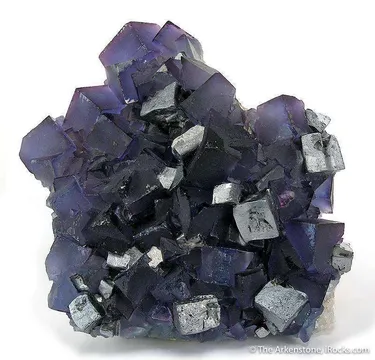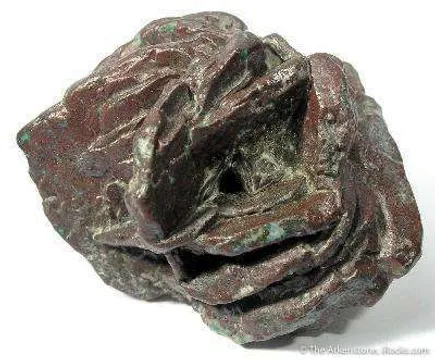
Emma Mine, USA: Montana rhodochrosite from the Butte system with rose-pink crystals; New Mexico azurite in oxidized zones; prized by collectors.
Key facts
“Emma Mine, USA” is a deceptively simple label. In serious collecting, it has to be handled with locality discipline, because at least two different American Emma mines have produced specimens that circulate under that heading. The great rhodochrosite Emma is the Emma Mine of the Butte Mining District, Silver Bow County, Montana, also known historically as the Ancient Mine and Black Chief Mine. That mine belongs to the world-class Butte hydrothermal system in the Boulder Batholith, where polymetallic veins cut Late Cretaceous Butte Quartz Monzonite and related intrusive rocks. It is the Emma that made its name with rose-pink to salmon rhodochrosite, commonly with quartz, pyrite, sphalerite, galena, and other sulfides, and it is the locality behind the best classic North American rhodochrosite specimens carrying the Emma name.
The azurite Emma is a different collector locality: the Emma Mine of the Hanover-Fierro Mining District, Grant County, New Mexico. There, bright to very dark blue azurite occurs in the oxidized zone of a copper-bearing replacement system related to limestone, diorite, and the Barringer Fault zone. These azurites are not large modern-production staples; they are old, scarce, and usually encountered as cabinet or miniature specimens with isolated rosettes or clusters on pale matrix. A well-labeled Emma specimen should therefore carry enough locality information to tell the Montana rhodochrosites from the New Mexico azurites.
Regional View
Country View
The Montana Emma matters because it gives collectors a Butte rhodochrosite with its own personality: not the saturated raspberry-red flattened scalenohedra of Sweet Home, and not the sculptural hot-pink South African rhombs of N’Chwaning, but old-time American material with rhombic cleavage faces, lustrous salmon to rose-red crystals, quartz caps, and metallic pyrite accents. The New Mexico Emma matters because its azurite is sharply localized in the collector literature and photograph record; the best pieces show separated, sparkling, deep-blue aggregates on pale, contrasting matrix, a look immediately different from the Montana carbonate ore.
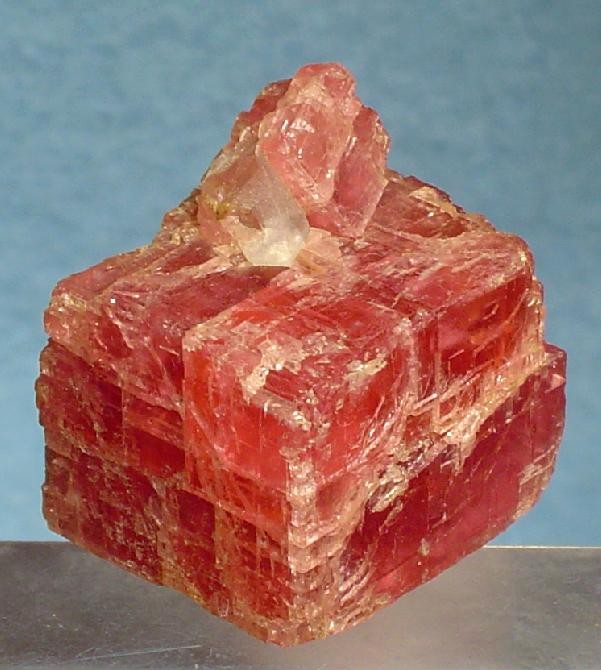
Photo: Wikimedia Commons
Search for specimens: View all specimens from Emma Mine, USA
For rhodochrosite and pyrite specimens, the operative locality is the Emma Mine in Butte, Montana. It was originally developed for silver under the Ancient Mine name, later worked as the Emma, and is also tied to the Black Chief name on old labels. The deposit is part of Butte’s great zoned lode system, a polymetallic hydrothermal vein deposit hosted in quartz monzonite of the Boulder Batholith region. The Emma vein system lay in the cooler, more peripheral part of the district compared with the central copper-rich Butte mines, which is why rhodochrosite became a major gangue mineral rather than a mere accessory. That setting is crucial to specimen identity: Emma rhodochrosite is not simply “pink carbonate from Butte,” but a manganese-rich vein carbonate from one of Butte’s most important manganese-producing mines.
The Montana Emma was worked underground. Records note dewatering to the 800-foot level in 1916, zinc-lead-silver ore on that level, a shaft sunk from the 800-foot level, crosscutting on the 1,600-foot level, and a 1,763-foot crosscut extended toward the Ophir Mine in 1920. By 1926 the main shaft was reported to the 1,200-foot level. The mine’s peak base-metal and manganese importance came later, especially from the 1930s through the 1950s; manganese production is recorded from 1934 to 1957, and the property was abandoned in 1957. The old analytical summaries are striking: high-grade zinc ore in 1922 was recorded with 21% Zn, 38 ounces of silver per ton, and 8% Pb on the 1,000-foot level, and manganese bodies of 41% were reported.
The best-known Montana specimens came from rhodochrosite-rich vein material, not from a modern collecting operation. Contemporary collector availability is therefore almost entirely through older collections, dealer stock, and estate dispersals. The most desirable pieces preserve actual crystal faces or open-space linings: rose to salmon rhombs, blocky translucent cleavage forms, crusts of intergrown blades, and contrasting associations with quartz and pyrite. Massive, pale, sawn, or lapidary-grade material is commoner than sharp display-grade crystal specimens, and the latter command a premium because they carry both the Butte pedigree and a recognizably crystallized habit.
For azurite, the documented Emma collector locality is the Emma Mine in the Hanover-Fierro Mining District of Grant County, New Mexico. That deposit is described as a replacement of Mississippian Lake Valley Limestone in the footwall of the Barringer Fault zone, with recorded rocks including limestone and diorite and mineralization tied to copper-bearing replacement and oxidized-zone conditions. Mindat’s mineral entry for that locality specifically places azurite “between first and second levels,” and the photo record shows deep-blue crystals and clusters, commonly with malachite noted as an association. Sub-locality names tied to the New Mexico Emma record include the Bluebell Tunnel, Davidson Tunnel, and Dewey Tunnel.
Access today should be approached conservatively for both localities. The Montana Emma is an abandoned underground mine in an urban, historically mined district with private, hazardous, and potentially regulated ground. The New Mexico Emma is likewise not a casual recreational collecting site; meaningful specimen material is best pursued through labeled old collections and reputable dealers rather than field entry. Any attempted visit would require current permission from land and mineral-rights holders and an assessment of mine-safety risks before travel.
Emma Mine rhodochrosite, in the classic collector sense, is the Butte, Montana material: delicate rose-pink, salmon, and locally rose-red MnCO3 occurring as rhombic cleavage forms, free crystals lining openings, crustlike layers, and broader intergrown bladed aggregates. Early USGS descriptions singled out Emma specimens with rhombic cleavage faces as large as about 1 inch across, while modern specimen records show crystals and cleavage rhombs in the thumbnail to small-cabinet range, including individual crystals around 2.7 cm and plates exceeding 10 cm across when preserved as intergrown crusts. Quartz caps or quartz matrix are especially characteristic and attractive, while pyrite, sphalerite, galena, and other Butte sulfides add the metallic contrast collectors like. Good Emma rhodochrosite is judged by translucency, luster, intact rhomb faces, saturated rose color, and a clean old-time Butte label; ordinary pieces are pale, massive, fractured, or so cleavage-dominated that little true crystal form remains.
Azurite under the Emma Mine name should be locality-checked carefully, because the best documented Emma azurite is from the Hanover-Fierro District, Grant County, New Mexico, not the Butte rhodochrosite mine. New Mexico Emma azurite occurs as very dark blue to bright deep-blue sparkly clusters and rosettes on pale matrix, with crystals reported to about 1.4 cm in a 4.5 x 3.8 x 3.7 cm specimen and with malachite as the common secondary copper association. The documented occurrence is between the first and second levels, placing it in an oxidized copper zone rather than the manganese-carbonate vein environment of the Montana Emma. Fine pieces have isolated, sharp blue groups standing proud on contrasting matrix; lesser examples are dark, massive-looking, rubbed, or insufficiently labeled to separate them from the many other Emma-named mines in the western United States.
Pyrite at the Montana Emma is best understood as an accessory and association mineral in a polymetallic Butte vein assemblage rather than as the main display species. It occurs with rhodochrosite, quartz, sphalerite, galena, chalcopyrite, and other sulfides in the Emma vein system, where it supplies the bright brassy microcrystalline to small-crystal sparkle that sets off the pink carbonate. The best collector pieces are not pyrite specimens in the Spanish-cube sense; they are rhodochrosite-pyrite combinations in which fine, fresh pyrite dusting or small crystals sharpen the visual contrast without obscuring the pink faces. Dull, oxidized, or iron-stained pyrite can make Emma pieces look muddy, so collectors reward specimens where the sulfide is clean, stable-looking, and compositionally integrated with the rhodochrosite rather than merely present in the matrix.
Other documented minerals from the Butte, Montana Emma Mine include native silver, sphalerite, chalcopyrite, alabandite, galena, molybdenite, quartz, calcite, ankerite, dolomite, baryte, rhodonite, muscovite var. sericite, chlorite-group minerals, and heulandite-subgroup minerals. The Emma is not best known as a type locality; its distinction is instead as Butte’s outstanding manganese and rhodochrosite locality. The New Mexico Emma record is far shorter and more specimen-specific, with azurite as the collector species and chalcopyrite and magnetite documented in the mineral list.
The chief risk with Emma Mine specimens is not laboratory fakery but locality confusion. “Emma Mine” labels occur for Montana, New Mexico, Utah, Nevada, California, and other western mining localities, and a stripped-down label reading only “Emma Mine, USA” is inadequate for serious cataloging. Rhodochrosite with quartz and pyrite should normally resolve to the Emma Mine at Butte, Montana, especially when old labels mention Ancient Mine or Black Chief. Azurite on pale matrix with small deep-blue clusters should be checked against the Hanover-Fierro District, Grant County, New Mexico. The famous Emma Silver Mine at Alta, Utah is a separate historic locality again, and should not be used to “explain” Montana rhodochrosite or New Mexico azurite without supporting provenance.
For Montana rhodochrosite, condition is everything. The mineral has perfect rhombohedral cleavage, and many Emma specimens show cleaved sides, edge bruises, pocket rub, or later handling damage. Old-time crystal faces can be confused with cleavage faces; the best examples show a convincing combination of luster, transparency, stepped growth, and undamaged terminations or open-space linings. Pale, massive rhodochrosite may be perfectly authentic but is far less desirable than rose, translucent, crystallized material. Avoid cleaning with acids: rhodochrosite is a carbonate and will react. It is also relatively soft, so specimens should be boxed, not allowed to rattle in trays, and kept away from harder quartz points or sulfide edges.
For azurite, watch for bruising, edge whitening, and dehydration-related dullness. Emma azurites from New Mexico are scarce, and good labels matter disproportionately because the specimens are small and could otherwise be mistaken for material from many southwestern copper localities. Malachite association is normal, but bright artificial-looking color, heavy oiling, suspicious repairs, or vague “New Mexico Emma” claims without district or county should prompt further questions. Pyrite-bearing combinations should be assessed for oxidation: fresh micro-pyrite is an asset, but decomposing sulfide, sulfurous odor, powdery iron staining, or unstable matrix can become a long-term storage problem.
Market availability is limited and episodic. Montana Emma rhodochrosite appears periodically from older Butte collections, classic dealer stock, and estate material, often as thumbnails to small cabinets and less often as large plates. New Mexico Emma azurite is noticeably scarcer and tends to surface as individual older specimens rather than steady production. In both cases, provenance adds value: labels from known dealers, old collections, and consistent district-level locality wording are worth preserving with the specimen.