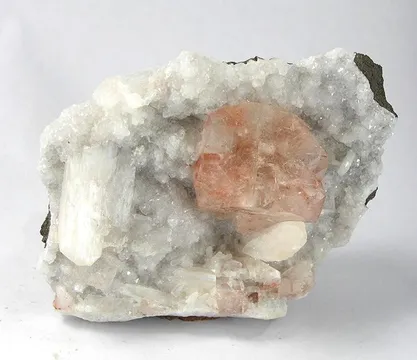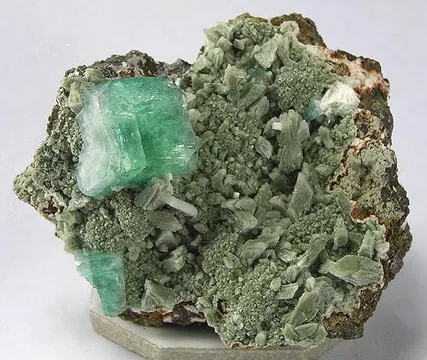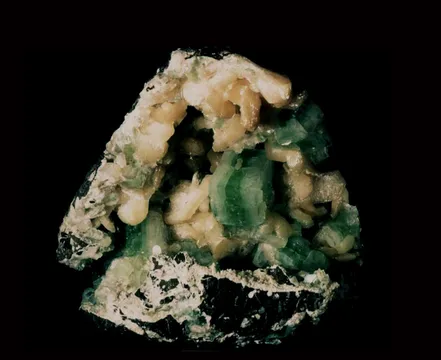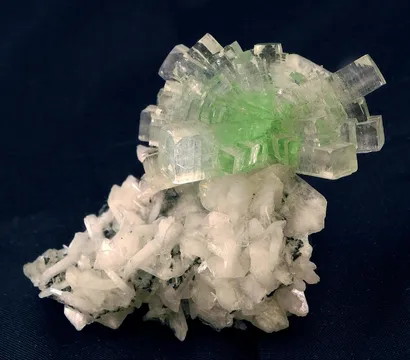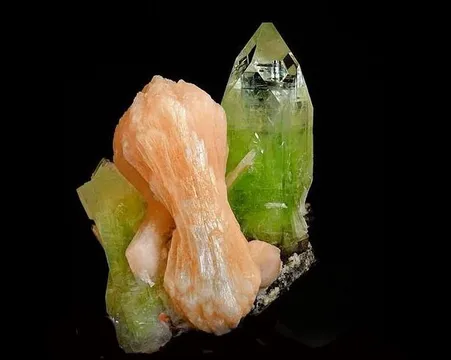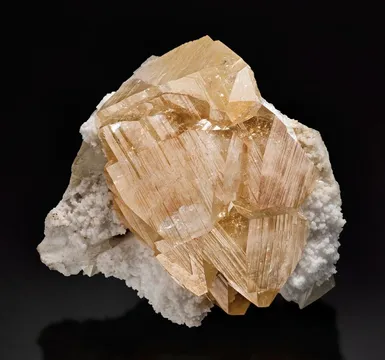
Nashik, India — Deccan Trap basalt pockets yield apophyllite, stilbite, scolecite, calcite, powellite; coveted by collectors for sharp, well-formed crystals.
Key facts
Nashik is one of the names by which the modern collector learned to recognize the Deccan Trap aesthetic: basalt cavities opened in road metal and building-stone quarries, lined first by silica and zeolites and then, in the best pockets, finished with brilliant apophyllite, lustrous stilbite, scolecite sprays, calcite, powellite, and the distinctive Mahodari fluorite–quartz assemblage. In strict locality work, “Nashik” can mean the city, the taluka, the quarry group, or the broader Nashik District; in the specimen trade it has long been used as a practical district label for a cluster of basalt quarries around Nashik, Sinnar, Pandulena Hills, Dindori, Mohu, Odha, Eklara, Deolali, and Mahodari. That broad label matters, because much historic material was exported simply as “Nasik” before individual quarry names were routinely preserved.
The specimens owe their character to vesicles, fractures, and larger cavities in Deccan Volcanic Province basalt. These lavas were erupted near the end of the Cretaceous and into the earliest Paleogene, then altered by circulating fluids over multiple episodes. The result is not an ore deposit in the usual sense, but a vast amygdaloidal basalt province in which construction quarrying has repeatedly intersected crystal-lined voids. Nashik’s best pieces show that history in miniature: a dark basalt rind, a lining of chalcedony or quartz, pearly salmon stilbite or heulandite, colorless to green apophyllite perched as a final architectural accent, and—at Pandulena—powellite that can leap under shortwave ultraviolet light.
Regional View
Country View
Historically, Nashik became important because it combined abundance with quality. Ordinary pieces are plentiful enough that Indian zeolite flats became familiar at mineral shows worldwide, but the best Nashik specimens are not ordinary: sharp, undamaged crystals on sculptural matrix; contrasting green apophyllite on pink stilbite; coarse, glassy scolecite; powder-yellow to amber powellite on stilbite; and Mahodari fluorite as rounded yellow, red, or rarely unusual colored masses on quartz, chalcedony, calcite, or amethyst. The locality’s prestige rests on this mixture of reliability and surprise—common species in uncommon arrangements, plus a few rarities that are unmistakably Nashik.
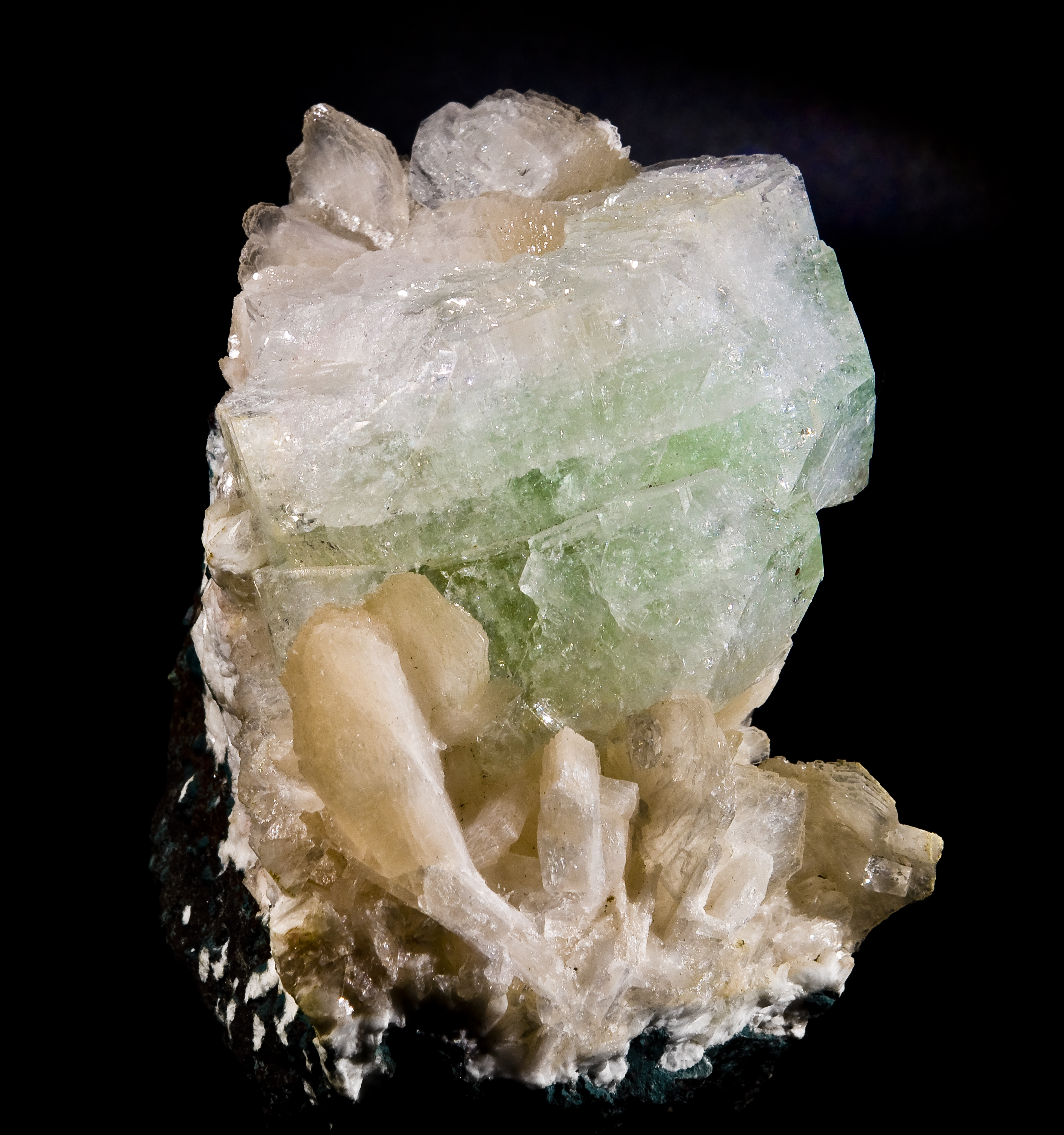
Photo: Wikimedia Commons

Photo: Wikimedia Commons
Search for specimens: View all specimens from Nashik, India
Nashik’s mineral deposit type is best described as secondary cavity mineralization in tholeiitic Deccan Trap basalt. Gas cavities, cooling fractures, brecciated flow tops, and other voids in the lava pile became chemical traps for low-temperature fluids. In broad sequence, many cavities began with wall coatings of green clay minerals such as celadonite or related phyllosilicates, followed by silica as chalcedony, quartz, or amethyst, then zeolites such as heulandite, stilbite, scolecite, mesolite, mordenite, stellerite, epistilbite, laumontite, and rarer species. Late mineralizing pulses could introduce calcite, powellite, and apophyllite, which explains why Nashik specimens so often show apophyllite and powellite sitting on, or partly embedded in, earlier zeolite and silica assemblages.
There are no conventional ore bodies here. The “ore” of interest to collectors is the open cavity: a vesicle or vug whose size, mineral sequence, and connection to fluid pathways determined whether it produced a drusy lining, a cabinet specimen, or a dramatic pocket. The same quarry face can yield neighboring cavities with very different mineral contents. Some are only thinly lined by chalcedony or stilbite; others are packed with stilbite, apophyllite, calcite, or scolecite. That variability is central to collecting Nashik—labels may name one quarry, but individual pockets within a quarry can have their own recognizable mineral habit and color.
The best-known collecting names include the Nashik quarries group, Pandulena Hills and its Aurora, Jagoda, Ghote, and Vilholi localities, Mahodari quarry near Sinnar, Eklara and the Kirloskar quarry, Odha quarry, Deolali quarry, Ganagpur, Makhmalabad, Dindori-area quarries, Mohu Quarry Complex, Ojhar/Ozar-area quarries, Sarol, and other road-metal workings across the district. Pandulena is especially tied to powellite and classic apophyllite–stilbite associations. Mahodari is the essential name for Nashik fluorite: rounded, commonly yellow to honey botryoidal or hemispherical fluorite on quartz, chalcedony, calcite, and, in prized examples, amethyst.
The mining history is a history of quarrying rather than metal mining. Basalt is one of the practical building and aggregate stones of the region, so quarry faces around Nashik have been worked for road metal, crushed stone, and construction material. Nineteenth- and early twentieth-century mineral records from western India mention important zeolite finds in railway cuttings and tunnels, including the Thul Ghat/Kasara Ghat area in the Nasik region. By the later twentieth century, as Indian zeolites entered the international specimen trade in volume, quarrymen, dealers, and collectors began preserving more pocket material rather than treating crystal cavities merely as interruptions in hard-rock extraction.
Specific commercial operators are not consistently preserved on old labels. Some quarry names, such as Kirloskar at Eklara, retain an operator-style identity, but many specimens reached the market through chains of quarry workers, local buyers, exporters, and show dealers. For that reason, older labels reading “Nasik quarry” should be treated with care: they may refer to an actual quarry near Nashik, to the Nashik quarry group, or simply to Nashik District. Modern labels that specify Mahodari, Pandulena Hills, Aurora Quarry, Jagoda quarry, Odha, Dindori, Mohu, or Eklara are more useful and should be preserved with the specimen.
Collecting access today is not casual field collecting. These are active or intermittently active industrial quarries, private workings, construction sites, and road-metal operations, with blasting, unstable faces, heavy equipment, and legal restrictions. Specimens available to collectors generally come through the established Indian mineral trade, from old collections, or from quarry material recovered with permission. A serious collector should value precise quarry provenance, especially for powellite, Mahodari fluorite, and unusual apophyllite–zeolite combinations, because Nashik-area names are easily blurred with Pune, Jalgaon, Ahmednagar, and other Deccan Trap localities.
At Nashik, “apophyllite” on specimen labels usually means fluorapophyllite-(K), although older labels may use apophyllite-(KF), apophyllite, or simply “Indian zeolite” even though apophyllite is not a zeolite. The classic Nashik habit is colorless to pale green, glassy, square to blocky crystals with sharp pyramidal terminations or tabular plates, commonly on salmon stilbite, heulandite, scolecite, chalcedony, quartz, calcite, or powellite-bearing matrix. Published work on Deccan cavities places apophyllite late in the mineral sequence, which fits the visual evidence: the best crystals sit cleanly on earlier zeolite or silica rather than being buried by them. Good pieces are separated from ordinary ones by transparency, intact terminations, strong luster, balanced matrix, and color contrast—especially green apophyllite against pink stilbite or white scolecite; damaged apophyllite edges and bruised pyramids are common faults on otherwise handsome Nashik specimens.
Stilbite is one of the foundation minerals of the Nashik district suite, appearing as pearly sheaves, bow-ties, bladed plates, and radiating groups in white, cream, peach, pink, and deep salmon tones. Nashik material is admired for unusually large, lustrous groups and for its role as the architectural base on which apophyllite, powellite, calcite, quartz, or heulandite can be displayed. In many specimens the exact species-level label is stilbite-Ca, but older and dealer labels often use “stilbite” or “stilbite subgroup,” especially where testing has not been done or where stellerite-like habits complicate visual identification. The finest Nashik stilbite has saturated salmon color that has not faded to dull beige, sharp bladed form, three-dimensional growth, and clean associations; ordinary pieces are often flat, massive, chalky, or crowded with broken blade tips.
Quartz at Nashik is not merely a background mineral; it is the silica stage that frames many of the district’s most collectible combinations. It occurs as drusy cavity linings, colorless rock crystal, smoky quartz, amethyst, and chalcedony-related growths, especially in the Mahodari style where sparkling quartz forms the bed for botryoidal fluorite or calcite. In Deccan cavity sequences, silica may appear early as chalcedony or later as crystalline quartz, so Nashik specimens can show quartz as a simple lining, a sparkling pedestal, or a visually dominant field. The best pieces have bright, undamaged druse, open vug geometry, and contrast with fluorite, apophyllite, stilbite, or calcite; lesser pieces are massive, iron-stained, flat, or so densely coated that the quartz contributes little sparkle or structure.
Nashik fluorite is famous above all through Mahodari, where the species departs from the usual cubic fluorite stereotype and appears as rounded, botryoidal to hemispherical yellow, honey, cream, red, or rarely unusual colored masses on quartz, chalcedony, calcite, or amethyst. The classic “fried egg” or “egg yolk” look—translucent yellow fluorite sitting on sparkling quartz—is one of the most recognizable Indian non-zeolite habits, and fluorite on grape-purple amethyst is markedly more selective than fluorite on white quartz. Good Mahodari fluorite needs a complete rounded form, translucency or warm internal glow, pleasing isolation on matrix, and minimal bruising to the satin surface; ordinary or compromised examples may be incomplete hemispheres, dull coatings, crowded clusters, or detached balls with little context.
Chalcedony in Nashik cavities is the quiet mineral that often makes the specimen: blue, grey, white, cream, or translucent silica linings that seal basalt walls, support quartz druse, and provide the base for stilbite, fluorite, calcite, or apophyllite. At Mahodari, chalcedony-lined vugs with amethyst and fluorite are among the most distinctive combinations, and some fluorite balls are described with a thin creamy chalcedony coating. In broader Deccan sequences, chalcedony can overgrow earlier material before later zeolites and calcite continue the cavity story. Collectors should favor chalcedony that preserves the vug shape, contrasts with later crystals, and is clean rather than chalky; detached slabs, dull crusts, and heavily bruised vug edges are less desirable unless the associated minerals are exceptional.
Scolecite is a major Nashik specialty, particularly in the broader Nasik region southeast of the city, where classic descriptions note excellent glassy crystals, near-perfect faces, radiating acicular aggregates, and coarse crystals that can reach extraordinary lengths. Nashik scolecite may occur alone, with stilbite, with laumontite, with colorless to green apophyllite, with calcite, or as sprays rising from a basalt cavity wall. It can be confused with mesolite or natrolite by habit, but the best collector specimens have a crisp, lustrous, radiating spray rather than a cottony mat. Condition is decisive: scolecite is easily broken at needle tips, and a top specimen should show intact terminations, airy spacing, and enough matrix or association to prove it is more than a loose white spray.
Powellite is one of Nashik’s great mineralogical signatures, especially from Pandulena Hills, Aurora Quarry, Jagoda quarry, and related Pandulena localities. The classic crystals are tetragonal, colorless to honey-yellow, amber, brownish, or greenish, commonly associated with stilbite, fluorapophyllite-(K), apophyllite group minerals, laumontite, and rarely calcite. Nashik powellite was important enough to receive focused treatment in the mineralogical literature in the early 1980s, and later work confirmed low tungsten contents in analyzed Nashik material. A fine specimen combines sharp powellite crystals with recognizable matrix and, ideally, strong shortwave ultraviolet fluorescence; small worn crystals, drusy crusts without form, or pieces lacking locality precision are less compelling, because genuine Pandulena provenance is a large part of the appeal.
Calcite is widespread in Nashik’s basalt cavities and commonly belongs to later stages of secondary mineralization, filling space among earlier zeolites or perching on them as rhombs, scalenohedra, twins, druses, or translucent blocky crystals. It is not always the star, but it can give a specimen rhythm: a honey or white calcite accent on stilbite, a sharp scalenohedron near Mahodari fluorite, or calcite that partially encloses earlier minerals. The best Nashik calcites are lustrous, well isolated, and compositionally useful rather than simply bulky; collectors should inspect cleavage bruises, etched faces, and pressure contacts, because calcite from quarry pockets is commonly dinged during extraction and transport.
Nashik amethyst is most strongly represented in the Mahodari suite, where glassy purple quartz points can line chalcedony vugs and provide a dramatic matrix for rounded fluorite. The color is typically grape-purple to pale violet rather than the deep South American geode style, and the crystal size is usually subordinate to the overall vug composition. Because Mahodari fluorite commonly occurs on white quartz, amethyst-backed fluorite is much more selective and can make a small cabinet specimen far more desirable. Good examples show rich, even purple points, a complete or aesthetically preserved vug, and a clean fluorite or calcite association; bruised quartz points, faded color, and broken vug halves reduce the premium unless the fluorite is exceptional.
Mordenite at Nashik is a collector’s identification challenge because it forms extremely fine, capillary to silky tufts, radiating sprays, or woolly tangles on cavity walls and earlier crystals, and it has historically been confused with mesolite in collections. In the Deccan Trap literature, mordenite is tied to silica-rich conditions and can occur with chalcedony, heulandite, stilbite, quartz, and calcite in multistage cavity sequences. Nashik pieces are at their best when the mordenite is fresh, snowy to silky, and clearly visible rather than compressed into anonymous white fuzz; provenance and confidence of identification matter, since untested fibrous zeolites from Maharashtra are often visually ambiguous.
Mesolite is part of the delicate white-fiber Nashik story, usually appearing as fine, silky needles, tufts, sprays, or intergrowths with coarser scolecite. Classic work on the Nasik region notes that mesolite is less frequent and generally less robustly crystallized than scolecite, and that it may resemble mordenite when it becomes very fine and woolly. For collectors, attractive mesolite from Nashik depends on freshness, three-dimensional spray form, and a convincing association with basalt-cavity zeolites such as stilbite, heulandite, scolecite, or apophyllite. Ordinary pieces are difficult to place visually because broken mesolite, scolecite, natrolite, and mordenite can all become white fibrous masses; the better the provenance and the sharper the habit, the stronger the specimen.
Heulandite from Nashik occurs as lustrous tabular to coffin-shaped crystals, bladed plates, pearly crusts, and radiating groups in colorless, cream, peach, salmon, pink, orange-red, and occasionally green tones when included by celadonite or related green minerals. It is commonly associated with stilbite, apophyllite, quartz, chalcedony, scolecite, mordenite, calcite, and other Deccan cavity minerals, and in hand specimen it is often confused with stilbite unless the crystal outline and cleavage luster are clear. The best Nashik heulandite has saturated color, sharp tabular form, undamaged pearly faces, and enough contrast with stilbite or apophyllite to keep the composition readable; dull crusts and massive bladed mats are much less desirable unless they host rarer associated species.
“Zeolite” on a Nashik label should be read as a group label, not a precise species. The Nashik district suite includes stilbite-Ca, stilbite subgroup minerals, heulandite subgroup minerals, scolecite, mesolite, mordenite, stellerite, epistilbite, laumontite, goosecreekite, yugawaralite, and other less common cavity silicates, and older flats of Indian material were often sold under the umbrella term before species-level identification became routine. Such pieces can still be collectible when they are aesthetic—pink zeolite sheaves with green apophyllite, white sprays in basalt cavities, or mixed zeolite plates on chalcedony—but serious collectors should avoid paying rarity prices for unidentified “zeolite” unless the habit, associations, locality, and preferably analytical history support a more specific name.
Stellerite from Nashik is a subtle member of the stilbite-family assemblage, visually close to stilbite and therefore easy to overlook or overclaim without testing. In the broader Deccan Trap literature, stellerite has been identified from several outcrops, while some similar pseudo-orthorhombic crystals elsewhere have proved to be stilbite-Ca, so Nashik collector labels should be treated conservatively when they read simply “stellerite.” The most convincing pieces are lustrous, well-formed sheaves or plates with good quarry provenance and association with other Nashik cavity minerals such as apophyllite, heulandite, quartz, or calcite. Good stellerite is desirable for suite builders precisely because it is less common on the market than ordinary stilbite, but visual similarity means that documentation is part of the specimen’s value.
Other minerals documented from Nashik-area localities include fluorapophyllite-(K), laumontite, epistilbite, goosecreekite, yugawaralite, okenite, gyrolite, prehnite, aragonite, opal, hematite, goethite, celadonite, gypsum including selenite, babingtonite, and smoky or rock-crystal quartz. Goosecreekite deserves special mention: it is not a Nashik type-locality mineral, having been named for the Goose Creek quarry in Virginia, but exceptional crystals have been documented from Pandulena/Nasik material. Babingtonite and yugawaralite are significant rarities for the district and should be approached with the same caution as stellerite and mordenite: a credible label, a recognizable habit, and, ideally, analytical support are worth more than an optimistic dealer name.
The largest authenticity issue for Nashik is not wholesale fakery; it is locality and species precision. Older specimens labeled “Nasik,” “Nasik quarry,” “Nashik,” “Maharashtra,” or simply “India” may be perfectly genuine Deccan Trap specimens while still being too vague to assign to a particular quarry. Nashik is frequently confused or blended with Pune, Jalgaon, Ahmednagar, Aurangabad, Mumbai-area, and broader Maharashtra localities. This matters for Mahodari fluorite, Pandulena powellite, and rare zeolite species, where quarry-specific provenance can change both scientific interest and market value.
Species mislabeling is common in the fibrous and platy zeolites. Scolecite, mesolite, natrolite, and mordenite can be difficult to separate by eye when they occur as white needles or woolly tufts. Stilbite, stellerite, and heulandite can also be confused, especially in old collections and in mixed Indian flats. “Zeolite” is acceptable as a group label but should not be priced as a rare species. Likewise, “apophyllite” is usually a practical collector name for fluorapophyllite-(K), but older labels may use obsolete nomenclature.
Condition is the other major concern. Nashik specimens come from blasted quarry rock, so contacts, sheared vug edges, bruised apophyllite pyramids, broken scolecite tips, chipped calcite cleavage faces, and abraded stilbite blades are common. Apophyllite can look deceptively perfect until viewed from the side, where a missing corner or repaired crystal becomes obvious. Stilbite should be checked for faded color, crushed blade edges, and white scuffed patches. Scolecite and mesolite are fragile; even minor pressure in a flat can turn sharp sprays into fuzzy broken bundles. Mahodari fluorite should be inspected for surface bruising to the rounded satin skin, detached or reattached balls, and broken quartz points in the matrix.
Fluorescence adds both pleasure and diagnostic value for powellite. Pandulena powellite is prized for its response under shortwave ultraviolet light, commonly yellow. A shortwave UV lamp should be used with eye and skin protection, and fluorescence should be treated as supporting evidence rather than a complete identification, because matrix minerals, coatings, and mixed molybdate–tungstate chemistry can complicate interpretation.
Market availability remains good for ordinary Nashik apophyllite, stilbite, heulandite, scolecite, and mixed zeolite specimens, but fine examples are far more selective than the volume of Indian material suggests. Strong green apophyllite on undamaged pink stilbite, crisp scolecite sprays, well-documented Pandulena powellite, and Mahodari fluorite on amethyst or complete chalcedony-lined vug matrix command the most attention. A specimen with an old collection label, a named quarry, and a visually coherent association is usually preferable to a larger but generic “India zeolite” piece.
One of the earliest collecting stories behind Nashik is not a single romantic pocket but a pattern repeated wherever engineers cut through the western Deccan basalt. Railway cuttings and tunnels in the Sahyadri Mountains exposed cavities that had been sealed since the lavas cooled and altered. Mineralogists writing in the twentieth century still pointed back to beautifully developed large specimens recovered from places such as Bhor Ghat in the Poona region and Thul Ghat, also known as Kasara Ghat, in the Nasik region. That is an important image for collectors: the Deccan zeolite trade did not begin with a purpose-built gem mine, but with the practical breaking of basalt for transport, stone, and infrastructure.
By the late twentieth century, the trade had become international. One documented old-collection trail follows a specimen purchased at the 1981 Austin Gem and Mineral Show and later recorded in the Richard Gunter collection. The card reportedly called it “Apophyllite (blue) and Stilbite, Nasik, India.” The later cataloguer noted that the crystals were actually water-clear and gemmy, and that blue apophyllite was not supported by the literature he knew. It is a small but useful collector’s lesson: old labels can be historically valuable and mineralogically imprecise at the same time.
Nashik’s color combinations also produced show-floor excitement. A Wikimedia-hosted Rob Lavinsky photograph of stilbite and apophyllite from Nasik District preserves a dealer’s memory of a pocket that had appeared only a few years before the image was posted: large red-pink bladed stilbite crystals to about 3.0 cm intergrown with gemmy yellow-green apophyllite crystals to about 4.2 cm on an 18.5 cm cabinet specimen. The note says that when the pieces reached Tucson, “most collectors and dealers grabbed them as fast as possible.” That phrase captures the difference between common Indian zeolites and a genuinely great Nashik pocket: the species may be familiar, but exceptional color contrast makes experienced buyers move quickly.
Mahodari fluorite has its own modern mythology. One Charlie Key collection specimen was described as a complete two-piece chalcedony-lined vug, 9.8 x 9.4 x 6.5 cm on the larger half, filled with glassy grape-purple amethyst and accented by hemispherical fluorite with a thin creamy chalcedony coating. Another Mahodari story from the auction market described a rare purple fluorite from the Charlie Key collection; the writer emphasized that after more than twenty years of seeing Indian minerals, he would have bought “ONE SINGLE specimen” of purple Indian fluorite had one appeared. Somehow, Charlie Key had acquired and stored a previous pocket of fluorites in a novel Indian color. For collectors, that is exactly why old labels and old stock matter: they can preserve a pocket that never became a standard commercial supply.
Sukheswala, R. N., Avasia, R. K., and Gangopadhyay, M. (1974). “Zeolites and associated secondary minerals in the Deccan Traps of Western India.” Mineralogical Magazine, 39, 658–671. A foundational scientific paper for Deccan Trap zeolite zoning, paragenesis, and Nashik-region scolecite, mesolite, apophyllite, laumontite, and associated minerals.
Currier, Rock H. (1976). “The Production of Zeolite Mineral Specimens from the Deccan Basalt in India.” The Mineralogical Record, 7(5), 248–264. A classic collector-oriented account of how Indian Deccan basalt specimens entered the mineral trade.
Kothavala, Rustam Z. (1982). “The Discovery of Powellite at Nasik, India.” The Mineralogical Record, 13(5), 303–309. The key publication for Nashik/Pandulena powellite history and occurrence.
Hurlbut, Cornelius S. (1982). “Powellite from Nasik, India.” The Mineralogical Record, 13(5), 310. A short companion note to the 1982 Nashik powellite reports.
Embrey, Peter G., and Couper, A. G. (1982). “The Morphology of a Large Powellite Crystal from Nasik, India.” The Mineralogical Record, 13(5), 311–313. A focused crystallographic treatment of a major Nasik powellite crystal.
Cook, Robert B. (1994). “Connoisseur’s Choice: Powellite, Pandulena Hill, Nasik, Maharashtra State, India.” Rocks & Minerals, 69(4), 248–250. A collector-focused feature on Pandulena powellite as a connoisseur mineral.
Ottens, Berthold (2000). “Neuigkeiten aus dem Indischen Dekkan Trapp.” Mineralien-Welt, 11(1), 48–62. A German-language report cited for Pandulena and broader Deccan Trap specimen occurrences.
Ottens, Berthold; Götze, Jens; Schuster, Ralf; Krenn, Kurt; Hauzenberger, Christoph; Benkó, Zsolt; and Vennemann, Torsten (2019). “Exceptional Multi Stage Mineralization of Secondary Minerals in Cavities of Flood Basalts from the Deccan Volcanic Province, India.” Minerals, 9(6), article 351. Essential modern scientific work on cavity mineralization, paragenesis, fluid history, and geochronology, including Nashik-area samples.
Dunn, P. J.; Peacor, D. R.; Newberry, N.; and Ramik, R. A. (1980). “Goosecreekite, a new calcium aluminum silicate hydrate, possibly related to brewsterite and epistilbite.” The Canadian Mineralogist, 18, 323–327. Not a Nashik type-locality paper, but important because goosecreekite is documented from Nasik/Pandulena material and should not be confused with its Virginia type locality.
Mindat: Nashik quarries, Nashik District, Maharashtra, India — Best starting point for the quarry-group mineral list, locality hierarchy, and the important warning about old “Nasik quarry” labels.
Mindat: Pandulena Hills, Nashik, Maharashtra, India — Key locality page for Pandulena, including apophyllite, stilbite, powellite, stellerite, laumontite, quartz, calcite, and related minerals.
Mindat: Mahodari quarry, Sinnar, Nashik District, Maharashtra, India — Essential reference for Mahodari fluorite, amethyst, quartz, calcite, powellite, and associated species.
Mindat: Fluorite from Mahodari quarry — Species occurrence page documenting Mahodari fluorite and its photo-based associations with quartz, amethyst, chalcedony, calcite, opal, hematite, apophyllite, and powellite.
Mindat: Powellite from Pandulena Hills — Species occurrence page for one of Nashik’s most important rarities, with associated stilbite subgroup, fluorapophyllite-(K), apophyllite, laumontite, and calcite.
Mindat: Scolecite from Nashik quarries — Useful for Nashik scolecite occurrence data and associated minerals.
Wikimedia Commons: Apophyllite-(KF) with stilbite, Nasik quarry — High-quality specimen photograph showing a classic Nashik apophyllite–stilbite combination.
Wikimedia Commons: Stilbite–Apophyllite from Nasik District — Rob Lavinsky image and description documenting large pink stilbite with yellow-green apophyllite from a memorable pocket.
Wikimedia Commons: Fluorite on quartz from Mahodari — Reference image for the rounded yellow Mahodari fluorite habit on quartz.
Ottens et al. 2019, Minerals: Exceptional Multi Stage Mineralization of Secondary Minerals in Cavities of Flood Basalts from the Deccan Volcanic Province, India — Modern scientific reference for Deccan basalt cavity mineralization, including Nashik-area dating and paragenesis.
Sukheswala, Avasia, and Gangopadhyay 1974, Mineralogical Magazine — Classic paper on Deccan Trap zeolite zones and secondary-mineral sequences, with specific discussion of the Nasik region.
Handbook of Mineralogy: Goosecreekite — Concise reference for goosecreekite, including Nasik/Pandulena occurrence notes and type-material information.
The Fluorescent Mineral Society: Powellite with Stilbite and Apophyllite, Pandulena Hills — Fluorescence-focused entry documenting yellow shortwave UV response for a Pandulena powellite specimen.
MineralAuctions: Amethyst with Fluorite and Chalcedony vug, ex Charlie Key, Mahodari — Useful market and provenance record for a complete Mahodari amethyst–fluorite–chalcedony vug.
MineralAuctions: Fluorite on Quartz, Nashik District, ex Charlie Key — Market record illustrating the scarcity and collector interest around unusual Nashik fluorite colors.