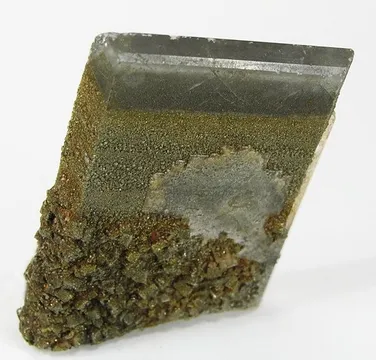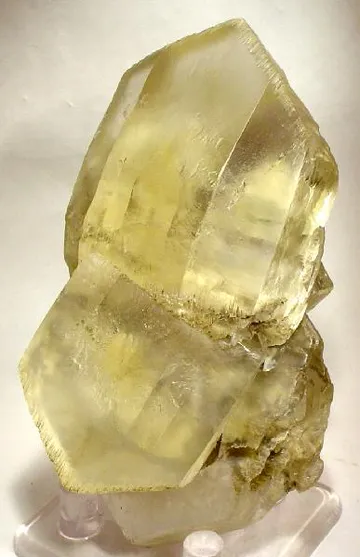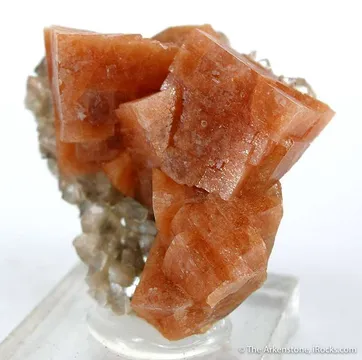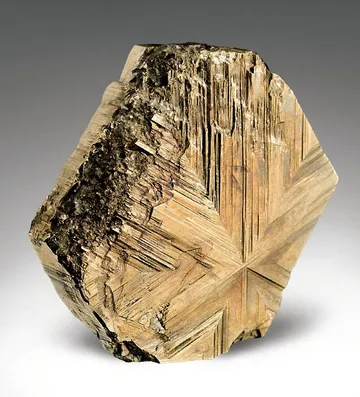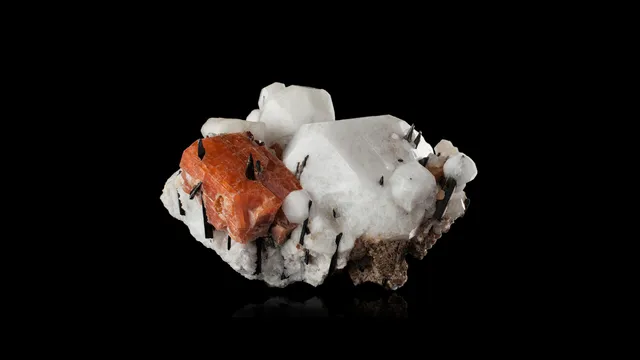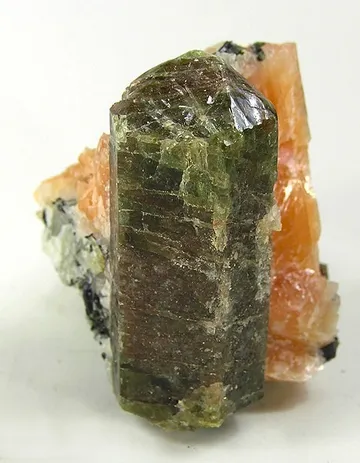
Nanisivik Mine, Canada — iconic Arctic locality with pyrite pseudomorphs after marcasite, brassy pyrite, amber calcite, and rare sulfides; prized by collectors.
Key facts
Nanisivik is one of the classic Canadian Arctic mineral localities: a closed Zn-Pb-Ag mine on northern Baffin Island, near Arctic Bay and Strathcona Sound, where a commercially important Mississippi Valley-type orebody also produced some of the most distinctive pyrite specimens in the world. The deposit is hosted in Mesoproterozoic dolostone of the Society Cliffs Formation in the Borden Basin, where metalliferous brines moved along normal faults and replaced carbonate host rock with massive sulphides. For collectors, however, the mine’s identity is not ordinary massive sphalerite-galena ore; it is the extraordinary suite of pyrite pseudomorphs after marcasite, pyrite after pyrrhotite, bright modified pyrite crystals, amber calcite, smoky to clear quartz, dolomite, sphalerite, galena, and a small but intriguing group of sulphide and sulphate rarities.
The best Nanisivik specimens have a sculptural, almost metallic-floral architecture: bladed or spear-like forms of former marcasite completely replaced by brassy pyrite, often with later pyrite crystals oriented on the earlier forms. Some pieces are compact miniatures with sparkling yellow metallic surfaces; others are cabinet plates in which radiating pyritized blades are set against grey dolomite, honey calcite, quartz points, and dark sphalerite. The finest examples are instantly recognizable and difficult to confuse with ordinary cubic pyrite localities, because the geometry is inherited from marcasite twinning and then complicated by pyrite overgrowth.
Regional View
Country View
Nanisivik also matters historically. Opened in the mid-1970s, it was Canada’s first High Arctic mine and one of the northernmost underground base-metal operations of its day. It ran year-round in permafrost, stockpiling concentrate through the dark season for summer shipping from the Arctic coast. The mine closed in 2002, but the specimen legacy remains very much alive: Nanisivik pyrite after marcasite has become a standard by which many collectors learn what a sharp, complete sulphide pseudomorph can look like.

Photo: Mike Beauregard / Wikimedia Commons

Search for specimens: View all specimens from Nanisivik Mine, Canada
The Nanisivik deposit lies on the Borden Peninsula of northern Baffin Island, in the Qikiqtaaluk Region of Nunavut, roughly in the Arctic Bay–Strathcona Sound area. Geologically it is a carbonate-hosted Zn-Pb-Ag sulphide deposit, widely treated as Mississippi Valley-type, although it is unusual in age, setting, structural style, and the sheer volume of iron sulphide present. The host succession belongs to the Mesoproterozoic Bylot Supergroup, with the economically important mineralization concentrated in dolostone of the Society Cliffs Formation. The broader district includes basal siliciclastic rocks, platform carbonates, and younger cover, cut by normal faults and affected by broad open folds.
The ore was not a single neat vein. It formed as massive sulphide bodies, mantos, and replacement zones localized by permeable dolostone, faults, anticlines, and fluid traps. The Main Lens was the principal orebody, with additional production from Oceanview and smaller contributions from zones such as K-Baseline and Area 14. Geological work has emphasized the importance of east-trending normal faults as fluid conduits, with mineralization spreading outward into favourable carbonate beds. Sphalerite, galena, pyrite, and sparry dolomite form the heart of the ore; the famous collector specimens came from open spaces, replacement fronts, and zones where sulphide crystallization was not simply massive but strongly crystallized.
The mine’s development history spans much of modern Arctic mining. Sulphides in the district were noted before mining began, and Texas Gulf Sulphur/Texasgulf carried out important early exploration and drilling during the late 1950s and 1960s. Mineral Resources International obtained an option on the property in 1972, Nanisivik Mines Ltd. was formed in 1974, and the mine and company town were built soon afterward. Production began in 1976, with zinc as the main commodity and lead and silver as important by-products. Later corporate history included Breakwater Resources and its CanZinco subsidiary. The mine closed permanently in September 2002 after declining resources and weak metal prices made continued operation uneconomic, and reclamation planning and work followed.
For specimen collectors, the most important underground labels are those that identify the Main Level, Area 29 North, the Main Lens, and other specific mine areas. Area 29 North is especially associated with pyrite that grew epitaxially on marcasite and then replaced it, producing the celebrated pseudomorphs. Other Main Lens material is valued for banded sphalerite-pyrite-galena-dolomite ore, amber calcite on pyrite, smoky or clear quartz, dolomite rhombs, and rare sulphides such as grimmite. Old labels from mine employees, Canadian dealers, the Marty Lewadny collection, the Reimer family collection, and other early dispersals can add useful confidence, because the best material entered the market during the operating life of the mine and shortly after closure.
Collecting access today should be regarded as essentially closed. Nanisivik is remote, the former mine is reclaimed or under managed industrial/mineral tenure, and the area has had ongoing strategic and infrastructure interest. Serious collectors should assume that specimens now available are legacy material from the operating period, former worker collections, institutional material, or old dealer stock. Any modern visit would require permission from the relevant land, mineral, and regulatory authorities, and underground collecting is not a realistic or safe prospect.
Pyrite is the signature collector species of Nanisivik, especially where it forms brassy, highly lustrous pseudomorphs after marcasite and, more rarely, pyrite after pyrrhotite. The best pieces from Area 29 North and related Main Level workings show former marcasite blades, twins, fourlings and fivelings replaced by pyrite, with later pyrite crystals oriented on the earlier forms; reported fivelings reach cabinet-specimen scale, and Mineralogical Record indexing notes Nanisivik examples to 12.5 cm. Individual pyrite crystals may be blocky cubes modified by dodecahedral, pyritohedral, trapezohedral and octahedral faces, generally bright yellow metallic, with no fluorescence. Ordinary Nanisivik pyrite is massive or damaged ore material; good specimens are sharp, three-dimensional pseudomorphs with crisp bladed form, lively sparkle, intact terminations or twin geometry, and attractive associations with calcite, dolomite, sphalerite or quartz.
Marcasite at Nanisivik is collector-important less as surviving fresh marcasite than as the precursor and structural template for the mine’s famous pyrite specimens. Genuine remaining marcasite is very rare and has been described as tiny greenish-yellow wedge-shaped prisms only a few millimetres long, most notably as reverse epitaxial remnants on pyrite cube faces; in Area 29 North, the marcasite formerly reported in specimens is now understood to have been replaced by pyrite. Thus a Nanisivik piece labelled “marcasite” usually needs careful reading: the prize is commonly pyrite after marcasite, not stable marcasite itself. The best marcasite-related specimens preserve the former tabular, spear-like or fiveling geometry cleanly, preferably with later pyrite crystals outlining the original structure and with sphalerite, calcite or dolomite providing contrast.
Sphalerite was the principal zinc ore mineral at Nanisivik and appears both as massive to banded ore and as crystals of collector interest. In polished section, Main Lens sphalerite can show complex colour zoning, with dark red to clearer zones reflecting changing minor-element and iron contents; hand specimens range from dark brown “cruddy” tetrahedra in some mine areas to gemmy deep orange twins around centimetre size in the best crystallized material. Sphalerite is commonly associated with pyrite, galena, dolomite, calcite and quartz, and it may occur in the twin boundaries or crevices of pyrite-after-marcasite specimens. Fine collector pieces need luster and translucency, or a clean association with the pyrite pseudomorphs; massive black-brown ore alone is historically important but usually less desirable unless it shows strong banding, high-grade texture, or old mine provenance.
Calcite from Nanisivik is a classic companion mineral rather than the mine’s headline species, but good examples are very attractive: yellow to amber crystals, commonly scalenohedral and in some specimens doubly terminated, may reach several centimetres and sit on pyrite, dolomite, quartz and sulphide matrix. Particularly appealing pieces show lustrous amber calcite perched against brassy pyrite after marcasite, or calcite partly included with or coated by pyrite, giving a strong colour and texture contrast. The best Nanisivik calcites are sharply terminated, transparent to translucent, undamaged, and securely tied to the locality by the associated sulphide suite; pale pink dolomite-calcite combinations resembling Lockport, New York material have been discussed as mislabelled, so unusual “Nanisivik calcite” without typical amber colour, pyrite, dolomite, quartz or mine-style matrix deserves skepticism.
Other documented Nanisivik minerals include galena, dolomite, quartz, pyrrhotite, wurtzite, chalcopyrite, covellite, greenockite, linnaeite, grimmite, possible siegenite, anglesite, baryte, celestine, gypsum, jarosite, goethite, native sulphur and several secondary sulphates such as bianchite, boyleite, chalcanthite, copiapite, gunningite, hexahydrite, melanterite, rozenite and zincocopiapite. Grimmite is a notable modern rarity for the locality: old “siegenite” or “bravoite” labels on grey metallic Ni-Co sulphide microcrystals from Nanisivik may require analytical confirmation under current nomenclature, and specimens verified as NiCo2S4 are of special interest to systematic collectors. Quartz and dolomite can also be excellent accessory minerals, especially when they complete balanced combination pieces rather than appearing as isolated gangue.
Nanisivik is a locality where labels matter. The name has been attached to a lot of legitimate legacy material, but it has also been confused with superficially similar calcite-dolomite assemblages from the Lockport Dolostone of New York and Ontario. A credible Nanisivik specimen should look geologically at home: brassy pyrite after marcasite, amber calcite, grey to tan dolomite, smoky or clear quartz, dark sphalerite, galena, or massive sulphide/dolostone matrix. Bright pastel dolomite with dogtooth calcite of the Buffalo–Lockport look is a warning sign unless provenance is unusually strong.
The most common descriptive trap is “marcasite.” Many Nanisivik specimens historically sold as marcasite are in fact pyrite pseudomorphs after marcasite, sometimes with pyrite overgrowths preserving or exaggerating the original marcasite geometry. That is not a defect; it is exactly what makes the locality famous. The problem arises when a seller claims abundant fresh marcasite where the specimen is actually pyrite after marcasite. Genuine surviving marcasite from the mine is rare and generally not the large bladed material seen in showy specimens.
Condition varies widely. Pyrite-after-marcasite blades can be thin, projecting, and brittle, so look for broken tips, repaired sprays, bruised edges, and cleaved-off attachment points. Large cabinet plates often have some peripheral damage; what matters is whether the main display face remains sharp and complete. Calcite on Nanisivik pieces is more vulnerable than the pyrite and may show edge bruising, etched faces, or cleavages. Quartz crystals can be snapped or contacted, especially where they project from sulphide-rich matrix.
Handling should be conservative. Pyrite is generally stable, but Nanisivik material may contain or be associated with marcasite, pyrrhotite, and soluble secondary sulphates. Store specimens dry, avoid sealed damp microclimates, keep them away from acidic paper or wood vapors, and do not wash sulphide-rich pieces unless you are prepared to dry them thoroughly. Secondary sulphates such as melanterite, rozenite, copiapite and chalcanthite are potentially fragile and humidity-sensitive; they are of systematic interest but not ideal for casual display.
Market availability is moderate for average examples and much tighter for top pieces. Small pyrite-after-marcasite specimens still appear regularly from old collections and dealer stock, while undamaged, architectural miniatures and cabinet specimens command stronger attention. Sphalerite, calcite and quartz combinations are less common than pyrite pseudomorphs but not unobtainable. Analysed grimmite and other rare sulphides are specialist material and should ideally be accompanied by analytical notes or a trusted collection history.
Nanisivik is an apt name for a mineral locality. In Inuktitut it is commonly rendered as “the place where people find things,” and in this case the phrase seems almost prophetic: first as a place where Arctic Bay people knew the land, then as a place where geologists found sulphides, then as a place where miners and collectors found some of Canada’s most distinctive pyrite specimens.
The modern mine story began not with a town but with options on what kind of Arctic industrial community should exist at all. By the early 1970s, development proposals considered three possibilities: a stripped-down bunkhouse operation, a plan to relocate the Arctic Bay settlement to Strathcona Sound, or a separate townsite built with government assistance. The third choice won. Construction was underway by 1974, and in 1976 a road of roughly 37 kilometres connected the mine and townsite with Arctic Bay. The road became more than a mine road: the Nanisivik airstrip and settlement infrastructure also became part of everyday regional movement and supply.
Underground, the mine was a study in cold geometry. Published descriptions emphasize permafrost reaching 500 metres or more, with mine rock temperatures averaging about minus 12°C. Those figures are more than climatological trivia; they shaped how the mine worked. Nanisivik operated year-round but shipped seasonally, accumulating concentrate through the long winter and moving it during the navigable Arctic shipping window. It was an industrial rhythm tied to darkness, ice, permafrost, and a short season of open water.
The specimen story is inseparable from the people who worked in the mine. Many of the best pyrite pseudomorphs were saved because miners and mine geologists recognized that the brassy blades in the ore were not merely mining waste. Labels naming Area 29 North, the Main Level, or other underground areas preserve a level of context that later dealer labels often lost. Some of the most admired specimens passed into Canadian collections and museum displays, where they helped turn an Arctic base-metal mine into a locality every serious pyrite collector eventually learns.
The closure story was far less tidy. In 2002, as Nanisivik approached shutdown, residents of Arctic Bay and Nanisivik wanted useful infrastructure saved rather than buried or demolished. News reports from the time describe community concerns about equipment, vehicles, buildings, contamination, and the fate of a purpose-built town that had existed for a generation. The end of mining was not simply the end of an orebody; it was the unraveling of a company town and the beginning of a long argument over what should remain in the North after the ore was gone.