A collector's guide to Montreal Mine, USA: its geology, mining history and notable minerals, illustrated with the 285 specimens documented from this locality on EarthWonders.
Key facts
The Montreal Mine at Montreal, Iron County, Wisconsin, is one of the great sleeper localities of the Lake Superior iron ranges: an industrial iron mine whose specimen fame rests not on iron ore blocks alone, but on vug minerals saved from deep underground pockets in the Ironwood Iron-formation. The deposit belongs to the Gogebic Range, a narrow Paleoproterozoic iron-bearing belt shared by northern Wisconsin and Michigan’s western Upper Peninsula. Here, steeply north-dipping banded iron formation was altered, oxidized, cut by diabasic dikes, and locally opened into cavities that produced a startlingly collector-oriented suite: pink to lavender manganoan calcite, white to pink platy barite, rhodochrosite, manganite, goethite, botryoidal hematite, quartz, celestine, kutnohorite, romanechite, and other iron-manganese minerals.
What makes Montreal specimens distinctive is the contrast. The best pieces are not showy in the modern “gem crystal” sense; they are old American classics with black, brown, steel-gray, and iron-red matrices carrying soft rose carbonates, waxy manganese oxides, sparkling druses, and lustrous blades. Many were recovered from ore vugs during active mining rather than from later collecting, and the locality’s best material reached collections through a remarkably narrow human channel: working miners and a handful of Midwestern collectors who recognized that the crystal pockets of a deep iron mine deserved to be preserved.
Regional View
Country View
The look of Montreal is inseparable from its geology. The mine exploited soft iron-oxide ore bodies developed from the Ironwood Iron-formation, but the collector pieces came from those parts of the altered iron formation where open space survived: seams, pockets, and vugs in which manganese-rich carbonate and oxide minerals could crystallize. Fine Montreal calcite may appear as pale pink to lavender spherical or crested aggregates; barite commonly forms bladed to platy groups, sometimes with rhodochrosite or kutnohorite; hematite and goethite can be massive, botryoidal, satiny, or drusy; and rhodochrosite ranges from massive cleavable pink carbonate to delicate arborescent or rosette-like crystals on dark ore.
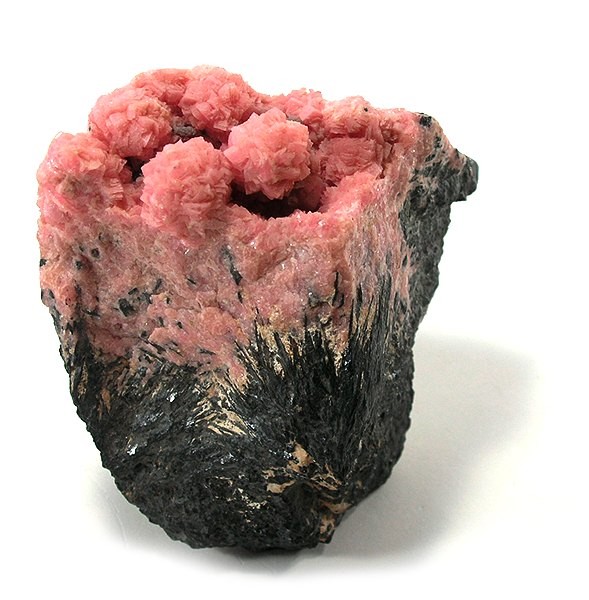
Photo: Wikimedia Commons

Photo: Wikimedia Commons

Photo: Wikimedia Commons
Search for specimens: View all specimens from Montreal Mine, USA
The Montreal Mine is an Fe-Mn mine in the Gogebic Range of Iron County, Wisconsin, near the city of Montreal and just west of Hurley. It lies in sections 27, 28, and 33, T46N, R2E, along Wisconsin State Highway 77 between the Hennepin and Cary properties. Historical names associated with the property include Ottawa, Trimble, Odanah, Moore, Jupiter, Bourne, 33 Company Mine, and Section 33 Mine. The iron formation trends roughly northeast-southwest, dips north, and is part of the Ironwood Iron-formation of the Menominee Group within the Marquette Range Supergroup.
Geologically, Montreal is a Lake Superior-type banded iron-formation deposit. The mined ore bodies were stratabound, steeply dipping, and produced by oxidation and leaching of unaltered banded iron formation to form soft iron-oxide ores dominated by hematite and goethite. Diabasic dikes cut the iron formation and played an important local role in mineralization: intersections between dikes and less permeable members of the iron formation formed structural and chemical traps, with ore bodies described as lying in eastward-pitching troughs. These same altered zones were favorable for open cavities, and it is those cavities—not the run-of-mine ore—that made Montreal important to mineral collectors.
The regional setting is classic Gogebic Range geology. The Ironwood Iron-formation is one of the major iron-bearing units of the Lake Superior region, with associated quartz, iron oxides, iron carbonates, silicates, and manganese-bearing minerals. In the Montreal-Hurley area, glacial drift is thin, Precambrian bedrock dips steeply north, and the iron-bearing ridge stands south of a valley underlain by less resistant slate. The adjacent Cary Mine was geologically and hydrologically linked to Montreal; their underground workings were connected at several places, and studies of the abandoned mines describe a vast, water-filled underground reservoir extending miles laterally and more than 4,000 feet below the surface.
Mining at Montreal began with test pits and early shafts in the 1880s. Oglebay, Norton & Company began operating the Montreal Mine in 1886, and the Montreal Mining Company became the name most closely associated with the property. Production rose after development to very large annual tonnages; historical summaries describe roughly a million tons per year at its peak and a workforce exceeding 400. The operation incorporated or engulfed several neighboring workings as mining advanced, and its shaft system included the No. 4, No. 5, and No. 6 shafts, with workings reported on levels as deep as the 42nd. Published and locality records give slightly different depth figures: local histories often cite 4,335 feet below surface, while mineral locality records report workings to 4,518 feet. Either way, Montreal stood among the deepest iron mines in the world and became a defining industrial landmark of northern Wisconsin.
The mine’s life spans the full arc of the Gogebic iron boom: early prospecting, deep underground development, company-town paternalism, mid-century industrial maturity, and closure when high-cost deep mining could no longer compete with taconite. The Montreal Mine closed in 1962, with the last ore commonly reported as shipped in the early 1960s. The nearby Cary Mine closed shortly afterward. The two mines together are reported to have produced more than 64 million tons, while the City of Montreal’s own historical summary gives about 45 million tons for Montreal itself. After closure, the deep workings filled with water; hydrologic studies in the 1960s and 1970s evaluated the mine-water reservoir as a possible municipal water supply or heat source, and overflow from the Montreal shaft system still figures in local accounts of the site.
The city around the mine is unusually important to understanding the locality. Montreal is not simply a place name on specimen labels; it was a planned mining community. The Montreal Company Location Historic District, listed in the National Register of Historic Places, preserves the built environment of the mining company’s housing policy. Early miners first built homes informally on leased company land near the shafts. Between 1907 and 1917 the company shifted toward company-owned rental housing, and in 1918 it erected 50 pre-cut Aladdin bungalows. In 1924 a second townsite was planned by landscape architect Albert D. Taylor, with a curving street pattern, houses for workers and supervisors, and proposed civic amenities such as a school, hospital, chapel, company store, and garages. For collectors, those white company houses and tailings piles are part of the same story as the pink calcite and black manganite: all are remnants of a deep iron mine that shaped a community.
Collecting access today should be treated conservatively. The mine is closed, water-filled, reclaimed or otherwise inactive, and locality data identify the property as private land. The remaining dumps and tailings are not a free-collecting public site unless current landowner permission has been obtained. Old shafts, caved ground, steep waste piles, unstable openings, and mine-water discharges add real hazards. Most serious Montreal specimens in collections came from miners, old dealer stocks, or historic collections rather than modern field collecting.
The specimen-producing pockets were encountered during mining in the oxidized and manganese-rich parts of the iron formation. Published accounts describe large open vugs in the iron formation containing barite, rhodochrosite, manganiferous calcite, manganite, quartz, gypsum, magnetite, hematite, goethite, psilomelane-group material, and related species. The lower mine levels are especially tied to fine rhodochrosite on manganite, including material reported from the 38th level of the No. 5 shaft. A small galena-lined vug was described from the 27th level near the top of the Palms Quartzite. The memorable Montreal specimens are therefore not surface weathering curiosities alone; many are deep-mine vug specimens recovered from an active industrial environment that is no longer accessible.
Calcite from the Montreal Mine is most prized in its manganese-bearing form: pale pink to lavender, commonly as spherical aggregates, crested masses, cleavable material, and sparkling druses on dark iron-manganese matrix. Documented Montreal calcite is associated with barite, celestine, manganite, hematite, goethite, quartz, and pyrite, and the best pieces show a strong contrast between pastel carbonate and black or reddish-brown ore. Fine examples can reach cabinet size; individual rhombohedral forms and rounded aggregates are the collector targets, especially when sharply crystallized, lustrous, naturally isolated on matrix, and free of the bruising that affects many old mine pieces. Manganoan Montreal calcite is also notable for bright red fluorescence, making locality-confirmed pieces appealing both to classic Midwestern collectors and fluorescence specialists.
Barite is one of the signature Montreal display minerals, occurring as white, pinkish, tan, brown, and locally translucent platy to bladed crystals, cleavable masses, and cavity linings in the manganese-rich zones of the iron formation. It is closely associated with rhodochrosite, manganoan calcite, manganite, quartz, gypsum, magnetite, hematite, goethite, psilomelane-group oxides, and kutnohorite, with the most desirable specimens showing sharp, lustrous blades or plates aesthetically perched on dark matrix or combined with pink carbonates. Because celestine has been identified in some material historically labeled as barite from Montreal and nearby Cary, old “barite” labels should be respected but not accepted blindly for unusual pale blue or strontium-rich-looking material. The best barites are balanced combination pieces: clear crystal form, pleasing color, undamaged edges, and a demonstrable old Montreal provenance.
Hematite was one of the principal ore minerals at Montreal and appears in specimens as massive ore, soft ocherous material, specular to steely surfaces, and especially botryoidal “kidney ore” forms that can be surprisingly sculptural for a Lake Superior iron mine. Montreal hematite commonly accompanies goethite, quartz, manganese oxides, manganoan calcite, rhodochrosite, barite, and manganite, and good collector pieces depend less on sheer size than on surface quality: rounded botryoids with bright luster, dense black-to-steel color, clean sculptural form, and minimal abrasion. Ordinary pieces are simply ore; fine ones are three-dimensional, lustrous, and visually alive, often with the black hematite surface acting as a dramatic base for pink carbonate or as the specimen’s main aesthetic feature.
Rhodochrosite from Montreal is a classic Wisconsin rarity rather than a common commodity: it occurs as pink crystals, druses, massive cleavable material, rosettes, and delicate arborescent aggregates, with associated barite, quartz, manganoan calcite, manganite, talc, hematite, and pyrite. The most admired pieces are pale to medium pink rhombs or radiating crystal groups on lustrous black manganite or hematite-rich matrix; documented lower-level material includes light pink rhodochrosite as rhombohedra and radiating groups of thin crystals to about 3 cm on manganite. Dickey’s description of arborescent aggregates resembling flos ferri remains the locality’s most evocative habit note. Good Montreal rhodochrosite has recognizable crystal form, contrast, and freshness; ordinary material is massive pink carbonate or bruised pocket material with little separation from the ore.
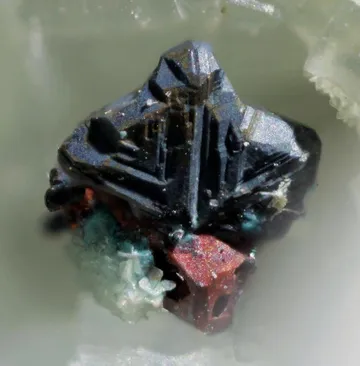
Manganite is a defining Montreal manganese mineral, especially as lustrous black bladed crystals and crystalline matrices carrying rhodochrosite, calcite, quartz, celestine, pyrolusite, and other manganese minerals. The finest specimens are not merely black ore; they show discrete, bright, bladed or ribbed manganite surfaces with enough relief to catch light, often serving as the dark architectural base for pink rhodochrosite. Montreal manganite is important because it links the locality’s manganese geochemistry to its specimen aesthetics: black Mn oxide-hydroxide blades against pink Mn carbonate are among the mine’s most characteristic combinations. Condition is crucial, as manganite blades and associated carbonates are prone to edge wear, pocket bruising, and old handling damage.
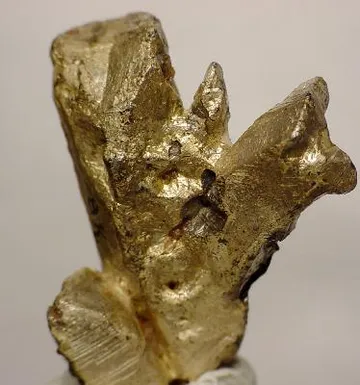
Goethite at Montreal occurs as large botryoidal masses, iridescent to brown-black crusts, stalactitic forms, and satiny drusy crystal masses historically nicknamed “golden glint.” It formed as a secondary alteration product of iron minerals in the iron formation and associated ferruginous rocks, commonly with hematite and replacing or overprinting earlier magnetite, siderite, and related iron carbonates. Good Montreal goethite has luster, texture, and form: satiny sprays, velvety druse, botryoidal relief, or warm golden-brown highlights rather than dull brown ironstone. It is also one of the locality’s best reminders that Montreal specimens are products of an ore system—iron oxidation, manganese mobility, and open-space crystallization all written into one piece.
Quartz is a supporting but important Montreal species, occurring in vugs and veins with rhodochrosite, manganoan calcite, barite, manganite, celestine, sulfides, and iron oxides. It is not usually the star mineral here, but drusy quartz provides the sparkling pale ground on which pink calcite spheres, pyrite, manganese oxides, or carbonate druses may sit, and it also helps define the cavity environment in the altered Ironwood Iron-formation. Fine quartz-bearing Montreal specimens are valued as combinations rather than as isolated quartz crystals: clean druse, sharp sparkle, attractive contrast, and undamaged associated minerals make the piece. A quartz-only Montreal specimen is generally of locality interest; quartz with pink carbonate or manganese minerals is much more desirable.
“Psilomelane” on older Montreal labels should be read with modern caution, because the term has long been used as a field or trade name for hard black botryoidal manganese oxide material rather than a single currently accepted species. At Montreal and nearby Cary, romanechite and related manganese oxides formed spectacular large botryoidal, banded cavity linings in the iron formation, commonly associated with hematite, goethite, pyrolusite, rhodochrosite, manganite, and calcite. The collector appeal lies in glossy black botryoidal surfaces, concentric banding, clean rounded forms, and old labels documenting the mine. Fine pieces are sculptural and lustrous; ordinary ones are dull black Mn-oxide masses better kept as geological reference material unless the provenance is excellent.
Other minerals documented from Montreal broaden the locality well beyond the eight headline species. The recorded suite includes actinolite, analcime, braunite, celestine, cryptomelane, dickite, dolomite, galena, gypsum including selenite, hollandite, kaolinite, kutnohorite, magnetite, marcasite, minnesotaite, neotocite, pyrite, pyrolusite, romanechite, siderite, stilpnomelane, talc, and a questioned vanadinite occurrence. Celestine is a particularly important cautionary rarity: tiny bluish crystals to about 0.3 mm were described with quartz and manganite, and later analytical work showed that some material labeled barite from Montreal and Cary was partly or wholly celestine. Kutnohorite is another noteworthy carbonate, especially in pinkish sprays with barite, and neotocite is recorded as dark brown resinous material. Pyrolusite deserves special mention because some formed as a modern precipitate from mine waters, coating walls, floors, broken rock, nails, and steel railings in the workings; that history makes it fascinating, but also different in origin and desirability from primary pocket minerals.
Montreal Mine specimens are classic, finite, and provenance-sensitive. The mine is closed and inaccessible for normal collecting, and the best material came out during active mining, so old labels matter. Names such as Montreal Mine, Montreal Mining Co., Ottawa, Odanah, Trimble, Moore, Jupiter, Bourne, 33 Company Mine, and Section 33 Mine may all point to the same mine complex or associated historical workings, but labels placing the mine in “Ironwood, Michigan” should be checked carefully: the Montreal Mine is in Iron County, Wisconsin, near Ironwood, Michigan. Nearby Cary Mine material can be visually and mineralogically similar, and old lots may mix the two.
The most important identification issue is the barite-celestine problem. Some specimens historically labeled barite from Montreal and Cary have been shown by EDS work to be celestine or partly celestine. Ordinary white or pink platy material is still reasonably sold as barite when the label and context support it, but unusually pale blue, dense, or atypical crystals merit analytical caution. The other recurring label issue is “psilomelane,” which should be treated as an old descriptive name for hard black manganese oxide unless analysis supports a current species such as romanechite, hollandite, or cryptomelane.
Condition is central to value. Montreal specimens were mined in an industrial iron operation, not carefully quarried from a collector pocket by modern methods. Carbonates may show bruised rhomb tips, chipped druses, repaired matrix, old trimming scars, or iron-oxide staining. Manganite blades and botryoidal manganese oxides are vulnerable to rubs and edge wear; hematite and goethite may be naturally massive but lose appeal if dull, abraded, or freshly broken. For calcite and rhodochrosite, saturation of color, undamaged crystal faces, and contrast against dark matrix separate fine pieces from study specimens.
Fluorescence is a real plus for manganoan calcite from Montreal, which can fluoresce bright red, particularly under shortwave ultraviolet. Handle fluorescent calcite pieces as mineral specimens first, lamp specimens second: avoid prolonged strong UV exposure for labels and adhesives, and protect pink carbonates from acids, humidity extremes, and rough washing. Do not acid-clean mixed Montreal pieces casually; carbonates, manganese oxides, and iron oxides respond differently, and aggressive cleaning can strip surface character or damage delicate pocket minerals.
Market availability is sporadic. Specimens appear through old Midwestern collections, museum deaccessions, classic-dealer inventories, and estate material, but fresh production is not expected. Rhodochrosite on manganite, large aesthetic manganoan calcite, sharp barite combinations, lustrous botryoidal hematite, “golden glint” goethite, and well-provenanced psilomelane/romanechite pieces are the most competitive. A modest Montreal specimen with a strong old label may be more desirable than a prettier unlabeled iron-manganese piece from an uncertain Gogebic source.
For most of its working life, Montreal was an iron mine first and a mineral locality almost by accident. The men driving the levels were not there to save rhodochrosite rosettes or satiny goethite; they were there to move ore. That is why the survival story of Montreal specimens feels so narrow. Collector literature points again and again to John Allen Brottlund, a Montreal miner who cared about the pockets when almost nobody else underground did. During the mine’s productive years he spent after-hours time locating crystal pockets and removing specimens, preserving material that otherwise would have been blasted, trammed, crushed, or lost in waste rock.
Those saved pockets later moved through a small Midwestern collector network. Brottlund sold specimens to collectors including Don Olson, Lance Hampel, and Karen and David DeBruin, and in 1979 he sold his personal hoard—already regarded as rare old classics—to F. John Barlow. That chain of custody matters. When a Montreal barite or rhodochrosite appears today with an old Brottlund, DeBruin, Barlow, or related collection history, it carries more than a name; it carries the story of the one miner who recognized that the deep iron mine was also a specimen locality.
The city around the mine tells a second story in wood, streets, and paint. Early miners built haphazardly on company-leased land near the shaft, with streets and houses arranged as need and terrain allowed. Then the company imposed order. In 1918, 50 pre-cut Aladdin bungalows arrived from Bay City, Michigan, part of a national kit-house movement brought into a remote iron-mining town. In 1924, landscape architect Albert D. Taylor planned a second townsite with family blocks, double houses, single houses, future lots, and a curving “City Beautiful” street pattern. A centrally located school, hospital, chapel, company store, and garages were proposed. The Montreal specimens on collectors’ shelves and the historic district along Highway 77 are two faces of the same enterprise: one underground, crystalline, and manganese-stained; the other above ground, planned, painted, and lived in.
After closure, the mine became an enormous hidden reservoir. Hydrologic studies described Montreal and Cary as connected underground workings stretching roughly 3.5 to 4 miles laterally and reaching more than 4,100 feet below the surface, with billions of gallons of water filling the old stopes and shafts. By the mid-1970s, water from the Montreal No. 5 shaft had risen high enough to seep through the overlying drift, and flow was noticed from the base of a spoil pile into the West Fork of the Montreal River. The same mine that once yielded ore, barite, calcite, and rhodochrosite had become a cold, dark, mineralized aquifer beneath the town.