






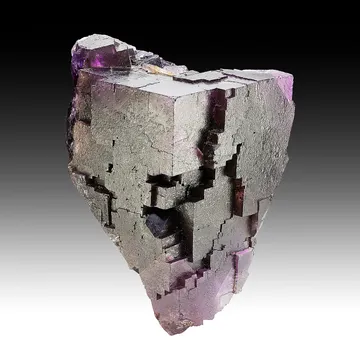
A collector's guide to Minerva No. 1 Mine, USA: its geology, mining history and notable minerals, illustrated with the 725 specimens documented from this locality on EarthWonders.
Key facts
Minerva No. 1 is one of the defining specimen localities of the Illinois-Kentucky Fluorspar District: a deep, bedding-replacement fluorspar-zinc mine north of Cave-in-Rock in Hardin County, southern Illinois. Its importance rests on two things at once. Industrially, it exploited the great Cave-in-Rock orebody, a manto-style replacement system developed in Mississippian carbonate strata around the structurally complex Hicks Dome region. Collectors know it for something finer: large, glassy, color-zoned fluorite cubes; golden and white witherite; lustrous barite; delicate strontianite sprays and bowties; bright sphalerite; rare Ba-Ca carbonates; and the type-locality mineral paralstonite.
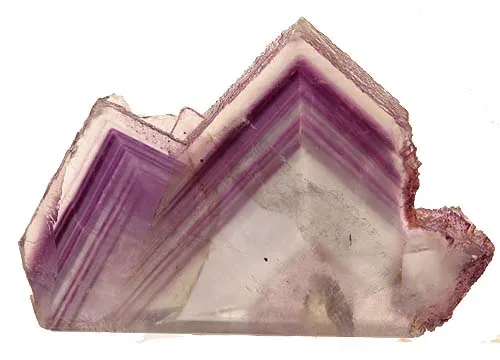
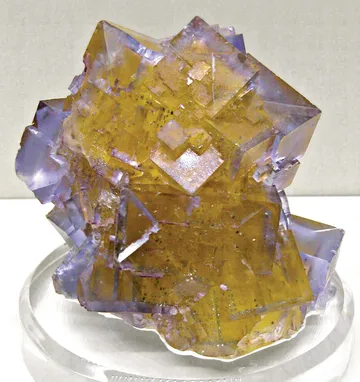
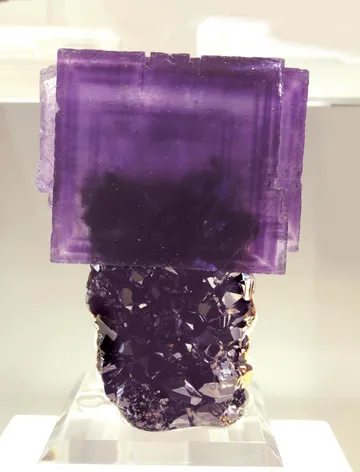
The finest Minerva pieces have a visual signature that separates them from ordinary “Cave-in-Rock” fluorite. The best fluorites are often honey-yellow to amber inside, edged or capped by purple, lavender, blue, or smoky gray zones, sometimes with visible hydrocarbon inclusions, chalcopyrite dusting, marcasite phantoms, or white calcite overgrowths. Minerva carbonate specimens are just as distinctive: pseudohexagonal witherite crystals in pale golden tones, bowtie strontianite aggregates, and benstonite-over-calcite “Christmas tree” growths that were long confused with calcite before collectors and mineralogists learned what they were looking at.
Regional View
Country View
Minerva’s productive life spanned the classic era of southern Illinois fluorite collecting. The mine was discovered in 1940 after exploration by Minerva Oil Company, developed through a deep shaft system, operated intermittently under changing ownership, dewatered and reopened by Ozark-Mahoning, and finally closed after the mid-1990s collapse of domestic fluorspar mining in the face of cheaper imported material. That late Ozark-Mahoning period is disproportionately important to collectors, because it produced superb Rosiclare and sub-Rosiclare level fluorites and the celebrated Cross-Cut Orebody specimens, including the 1990 Blue Cap Pocket.

Photo: Wikimedia Commons

Photo: Wikimedia Commons
Search for specimens: View all specimens from Minerva No. 1 Mine, USA
Minerva No. 1 was a zinc-fluorspar mine in the Cave-in-Rock Mining Sub-District of Hardin County, Illinois, north of the Ohio River village of Cave-in-Rock. In collector usage the locality appears under several closely related names: Minerva No. 1 Mine, Minerva #1, Minerva Mine, Ozark-Mahoning No. 1, Mahoning No. 1, and occasionally simply “Cave-in-Rock.” The last of these is imprecise. Serious labels should retain the mine name, and when known the working level or orebody: Bethel Level, Rosiclare Level, sub-Rosiclare Level, or Cross-Cut Orebody.
The deposit was a bedding-replacement, or manto-type, fluorspar-zinc-lead system rather than a simple vein. Ore-forming fluids moved through fractures and permeable horizons in Mississippian sedimentary rocks, replacing limestone beneath key sandstone units. At Minerva, working levels included the Upper Renault or Downeys Bluff interval, commonly associated with the Bethel Level; the Levias; the Rosiclare Level, related to the Aux Vases Sandstone; and sub-Rosiclare ore. These named levels matter on specimen labels because they often correlate with different habits: Bethel Level material is especially associated in the collector market with witherite, benstonite-bearing calcites, and classic early Minerva carbonate-fluorite combinations, while many of the famous late fluorites came from the Rosiclare and sub-Rosiclare workings.
The orebody was large by any specimen-locality standard. Published accounts describe the Cave-in-Rock orebody at Minerva as roughly 20,000 feet long and the largest bedding-replacement orebody in the United States. The orebodies were irregular, commonly tens to hundreds of feet wide and a few to many feet thick, following northeast-southwest fractures and favorable stratigraphic horizons. The southeast part of the system was reported as relatively shallow and richer in sphalerite, while fluorite became dominant deeper in the mine. Calcite, fluorite, sphalerite, galena, barite, and later Ba-Sr carbonates formed a paragenetically complex assemblage, with open pockets and corroded earlier crystals later overgrown by cleaner, more transparent stages.
Minerva Oil Company discovered the orebody in 1940, following exploration begun in 1939. Development included the Ledbetter Shaft, sunk to about 645 feet and completed in 1943, and a second shaft of roughly 580 to 590 feet, completed around 1949 for service and emergency escape. A differential flotation mill was constructed on site in 1944, capable of producing acid-grade and ceramic-grade fluorspar concentrates, and the mine also recovered zinc concentrates. Later improvements included underground diesel haulage equipment, a new mill for fluorspar pellets, heavier loading and haulage equipment, and barite recovery that helped keep lower-grade fluorspar ore economic. In its long life the mine produced several million raw tons of ore.
Ownership and operation changed repeatedly. Minerva Oil Company developed and ran the mine during the early classic period. Allied Chemical acquired it in the mid-1970s and shut it down soon after. Inverness Mining Company worked the property in the early 1980s, then kept it pumped before equipment was removed and the mine was allowed to flood. Ozark-Mahoning acquired the property in 1988, dewatered it on a massive scale, and resumed mining around 1989–1990. Under Ozark-Mahoning the locality label often changed in the trade: earlier pieces tend to read “Minerva No. 1,” while later pieces may read “Ozark-Mahoning No. 1” or “Mahoning No. 1.” Both can be legitimate for the same mine, but the label date and provenance matter.
The reopening produced some of the most prized specimens. The Cross-Cut Orebody was not part of the planned reserves; it was followed from a small exposure in an older drift and proved to be a real ore zone cutting across the main Minerva trend at a high angle. It yielded specimens from about 1990 to 1994 and is remembered for heavy hydrocarbons, etched early fluorite, transparent late overgrowths, and spectacular color-zoned crystals. The September 1990 Blue Cap Pocket is the famous one-time event: a small, isolated pocket said to have produced only about two flats of that particular color and combination. Those specimens sit near the top of the Minerva market.
The mine is closed, sealed, reclaimed, and not a modern public collecting operation. The former site has been described as reclaimed ground with the old buildings, adit, ponds, and mine infrastructure removed; regulatory records identify the Minerva Mine #1 site near Tucker Hill Road, Cave-in-Rock. Reports of casual collecting on surface material exist from earlier years, particularly among fluorescent-mineral collectors, but the former mine property is private and has been reported as patrolled. No collector should treat Minerva as an open dig site. Permission, current land status, and safety must be established before any visit; underground access is not an option.
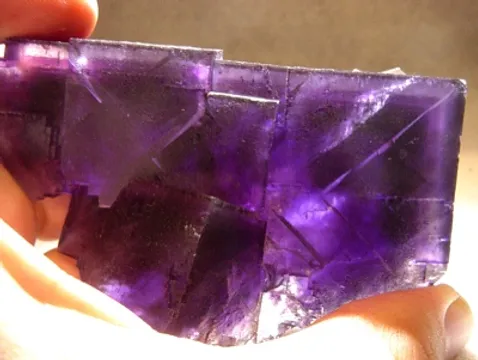
Fluorite is the mineral that made Minerva No. 1 famous: sharp to stepped cubes and cube groups, commonly honey-yellow, amber, blue, lavender, purple, gray, or colorless, with the most desirable pieces showing strong internal zoning, purple or blue edge definition, and enough transparency to reveal suspended chalcopyrite, marcasite phantoms, or hydrocarbon inclusions. Cabinet specimens can be substantial, but many top pieces are prized less for bulk than for glassy luster, undamaged cube edges, compositional balance with calcite or barite, and backlit color architecture. The Cross-Cut Orebody material is especially distinctive for etched, distorted early fluorite later coated by clearer, sharply zoned fluorite; Blue Cap Pocket examples from September 1990 are the elite subcategory, admired for their rarity, saturated blue-purple caps, and once-only production.
Calcite from Minerva No. 1 is more than a common gangue mineral: it is one of the locality’s strongest visual partners to fluorite and a host for several of the mine’s rare Ba-Ca carbonates. Collectible habits include pale yellow to amber rhombs, doubly terminated “pencil” crystals, scalenohedrons, creamy white druses on fluorite, etched or nubby amber masses, and the distinctive Bethel Level elongated or stacked calcite forms that may carry benstonite overgrowths. The best calcites are clean, lustrous, and undamaged at the terminations, either perched in elegant contrast on blue-purple fluorite or carrying recognizable secondary species; ordinary pieces are massive, bruised, or poorly individualized, while the exceptional ones show the strange hydrocarbon-influenced growth and carbonate overprinting that identify Minerva at a glance.
Barite is a classic Minerva associate, especially as lustrous ivory to white blades, rosettes, cockscombs, and tabular clusters on color-zoned fluorite or calcite. In the mine’s paragenesis, barite belongs among the later minerals of the Cave-in-Rock replacement systems, and it can appear as clean, pale blades accenting amber-purple fluorite cubes or as more massive white baritic crusts in carbonate-rich pockets. Strong specimens have bright luster, well-separated blades, and a sharply contrasting placement on colored fluorite; average examples are dense, chalky, bruised, or visually lost against pale calcite. Because barite is common across the district, a good Minerva label is valuable only when backed by old collection provenance, level information, or a convincing association with unmistakable Minerva fluorite or carbonate habits.
Minerva No. 1 produced some of the finest American witherite specimens: translucent to nearly opaque, pale golden, beige, cream, or white pseudohexagonal crystals, commonly stepped, hoppered, or doubly terminated, and often associated with calcite, purple-blue fluorite, or minor barite. Good crystals range from thumbnail size to several centimeters, with documented market examples around 3 to 4.5 cm and larger cabinet groups known; a 7.9 cm doubly terminated pseudohexagonal group has been described from the locality. The best pieces show complete terminations, lustrous faces, warm color, and minimal bruising, while lesser examples are partial, contacted, or chalky. Because witherite is a barium carbonate and not a sulfate, it is also denser and chemically distinct from barite, a point worth remembering when old Minerva labels use casual or miner’s terminology.
Sphalerite at Minerva No. 1 is both an ore mineral and a specimen component, occurring as brown to reddish-brown and rubyjack crystals in the zinc-rich parts of the system and as matrix for fluorite, calcite, barite, and chalcopyrite. Published district records note sphalerite crystals to several centimeters from Minerva with barite, fluorite, and calcite, while specimen records show plates of rubyjack sphalerite richly dusted with brassy chalcopyrite and topped by glassy fluorite cubes. The best sphalerite-bearing specimens combine bright resinous to adamantine luster, deep red-brown translucency at the edges, and clean contrast with blue-purple or honey fluorite; ordinary examples are massive ore fragments with little crystal definition. Since the shallow southeast orebody was comparatively sphalerite-rich, zinc-mineral specimens should be judged with their mining context in mind rather than treated as incidental matrix.
“Baryte” is the formal spelling of the same species commonly labeled “barite” in American collections, and at Minerva No. 1 the distinction is mainly one of label convention rather than mineralogy. Baryte specimens from the mine are prized when the BaSO4 forms crisp white to ivory blades, rosettes, or late coatings in aesthetic contrast with yellow-purple fluorite, pale calcite, sphalerite, or strontianite. Collectors should look for undamaged blade tips, natural luster, and a clear Minerva association, since many Illinois-Kentucky district barytes are broadly similar and loose labels can drift between Cave-in-Rock, Annabel Lee, Denton, and Minerva. The strongest Minerva barytes are not merely “white mineral on fluorite”; they are balanced combination pieces where the baryte gives structure and contrast to the locality’s color-zoned fluorite.
Strontianite is one of Minerva’s great specialties, occurring as white, cream, light yellow, brown, and rarely pink radiating balls, bowties, tufts, and sprays of acicular crystals, commonly with fluorite and calcite. Rosiclare Level and Cross-Cut Orebody specimens are especially important; recorded pieces include spherical aggregates several centimeters across, stacked white crystals from advance mining, and delicate bursts with gemmy pale calcite. Brown Cross-Cut Orebody strontianite can be particularly attractive but also unforgiving, because the acicular needles are easily damaged and often required careful cleaning where hydrocarbons coated associated fluorite and calcite. Top specimens have complete, undamaged needles, strong three-dimensional form, bright contrast against fluorite, and credible provenance, while ordinary ones are compact crusts or abraded balls with the sparkle knocked off.
Chalcopyrite is usually a fine accessory rather than the main mineral on Minerva specimens, but it can make a fluorite piece sing. The typical occurrence is as tiny brassy crystals sprinkled on stepped fluorite faces, dusting sphalerite, or suspended as 1 mm inclusions within transparent yellow, blue, or purple fluorite. In the best specimens, chalcopyrite adds glitter without obscuring the fluorite’s zoning; in backlit pieces the metallic inclusions can create a depth effect that is instantly recognizable as southern Illinois material. It is seldom the reason to buy a Minerva specimen by itself, but a clean, sharp, color-zoned fluorite with well-distributed chalcopyrite, calcite, and perhaps sphalerite is far more desirable than a plain damaged cube with the same label.
Marcasite from Minerva No. 1 is a subtle collector’s mineral, best known as microcrystalline inclusions, phantoms, or thin internal layers in fluorite rather than as showy freestanding crystals. Documented Minerva fluorites include yellow and purple zoned cubes in which a thin marcasite layer appears between growth zones when the piece is backlit, and Mindat-indexed records note microcrystals on fluorite. A marcasite-bearing Minerva specimen is strongest when the marcasite records visible growth history without clouding the fluorite or creating instability; weak examples are simply dull sulfide specks on damaged fluorite. As with all marcasite, long-term storage should be dry and stable, because altered or decomposing marcasite can create acidity that threatens labels, boxes, and neighboring specimens.
Other documented Minerva minerals include galena, pyrite, quartz, dolomite, strontium-rich calcite, alstonite, barytocalcite, benstonite, paralstonite, azurite, malachite, anglesite, celestine, gypsum, hemimorphite, wad, petroleum, and bitumen. Paralstonite is the locality’s formal type-mineral claim: a rare BaCa(CO3)2 carbonate described from Minerva No. 1 in 1979, associated with alstonite, baryte, calcite, fluorite, and sphalerite. Benstonite is not a Minerva type mineral, but Minerva is one of its great collector localities; many of the best pieces show white benstonite rhombs epitaxially overgrowing calcite, a habit miners reportedly called “Christmas Tree” calcite before the species was understood. Alstonite and barytocalcite are important rarity species for specialists, and hydrocarbon-bearing fluorites with petroleum or bitumen inclusions are among the most diagnostic and characterful Minerva specimens.
Minerva No. 1 is a label-sensitive locality. The most common problem is not outright faking but imprecision: “Cave-in-Rock,” “southern Illinois,” “Rosiclare,” “Minerva,” “Mahoning,” and “Ozark-Mahoning” can be used loosely in the market. That looseness matters because several mines in the district produced superficially similar yellow-purple fluorite with calcite, barite, sphalerite, and chalcopyrite. A strong specimen should have an old label, named collector provenance, a working level, or an orebody designation if the seller is claiming a premium sublocality such as Bethel Level, Rosiclare Level, sub-Rosiclare Level, Cross-Cut Orebody, or Blue Cap Pocket.
There is no well-documented, locality-specific fake industry for Minerva comparable to the dyed, glued, or wholesale-labeled material seen from some modern localities. The real concern is relabeling and over-attribution. Attractive Illinois fluorite from Annabel Lee, Denton, Deardorff, Hill-Ledford, or other Cave-in-Rock district workings may be promoted as Minerva because the name is more marketable. Conversely, later Ozark-Mahoning No. 1 labels can be misunderstood as a different mine rather than the reopened Minerva property. For high-end pieces, the safest approach is to buy the specimen, label history, and mineralogical context together.
Condition is critical. Fluorite has perfect octahedral cleavage and Minerva cubes often show edge bruises, cleaved backs, contact faces, or repaired-looking natural rehealing. Minor edge wear is common and tolerable on older cabinet pieces, but the price difference between “slightly bruised” and “clean” can be dramatic. Backlighting is useful for evaluating color zoning, but it can also hide surface scuffs in photographs; always inspect under normal display lighting as well. Hydrocarbon-bearing pieces may have tacky, brown, or black bituminous coatings. Those coatings can be natural and desirable, but aggressive cleaning can strip context, damage delicate strontianite, or turn an important Cross-Cut specimen into a merely pretty fluorite.
Witherite and strontianite need special care. Witherite is relatively soft for a display carbonate and its stepped pseudohexagonal crystals chip on edges and terminations. Strontianite sprays and bowties are fragile; broken needle tips greatly reduce value. Barite blades also chip easily. Marcasite-bearing specimens should be stored in low humidity and checked periodically for signs of decomposition. If pyrite or marcasite “disease” develops, isolate the specimen from labels and neighboring minerals.
Fluorescence adds real collector interest at Minerva. Fluorite may show blue to violet responses; witherite is known from the mine as a strong white fluorescent mineral; calcite, sphalerite, dolomite, strontianite, benstonite, and hydrozincite have all been noted by fluorescent-mineral collectors from Minerva material. Hydrocarbons add another layer: live oil can fluoresce straw-yellow, while dead oil or bitumen may be non-fluorescent. For fluorescent display, record the wavelength used, because longwave and shortwave reactions differ and vague “fluorescent” claims are less useful to advanced collectors.
Market availability is steady but finite. Minerva specimens continue to circulate from old collections, especially fluorite, calcite, barite, witherite, strontianite, and occasional benstonite or alstonite combinations. Fresh mine production is over. Ordinary damaged fluorites remain obtainable, but clean cabinet fluorites with saturated zoning, documented Blue Cap or Cross-Cut provenance, fine witherite crystals, rich strontianite balls, and true rare-carbonate pieces have become increasingly competitive. The best Minerva specimens should be treated as closed-locality classics rather than replaceable stock.
The origin story of Minerva No. 1 is unusually appropriate for a mine famous for fluorite and petroleum-like inclusions: it began with an oil company. Minerva Oil Company was prospecting in Hardin County before the United States entered World War II, and by 1940 the company had found not oil in commercial quantity but a great fluorspar-zinc orebody. The Ledbetter Shaft went down roughly 645 feet, making Minerva one of the deepest operations in the district. By 1944, a differential flotation mill stood at the property, turning the underground replacement ore into industrial fluorspar concentrates while collectors, miners, and local mineral buyers began noticing what the pockets could do.
The mine also produced one of the better student-origin stories in American mineralogy. On October 25, 1948, Charles E. Tothill collected witherite specimens during a senior trip through the fluorspar mine. Those specimens reached Dr. O. R. Grawe at the Missouri School of Mines in Rolla, and Grawe recognized that the material deserved attention. Matthew Peter Nackowski’s 1949 master’s thesis began as a study of that witherite occurrence, then expanded into a broader study of Minerva’s geology and mineralization. In other words, a field-trip specimen helped push Minerva from an ore producer into the scientific mineralogical record.
The Ozark-Mahoning reopening reads like a mining gamble. After Inverness stopped production and the workings flooded, Ozark-Mahoning bought the property in 1988 and had to dewater it before real mining could resume. Accounts associated with Alan Goldstein’s work preserve the memorable scale: about one billion gallons of water had to be removed. When the mine returned to production around 1989–1990, it did so under a new trade identity as Ozark-Mahoning No. 1 or Mahoning No. 1, but collectors quickly learned that the old Minerva had not exhausted its specimen potential.
The Cross-Cut Orebody was the kind of discovery every mine geologist hopes for and every collector retells. It was not on the plan map. No reserves had been assigned to it. Miners followed a small exposure in an old drift that previous work had left behind, expecting the zone to pinch out in the usual way. Instead, the mineralization kept going into ground that had not been drilled or mapped. The zone cut across the main Minerva trend nearly at right angles, which gave it the Cross-Cut name, and it remained productive for several years. For collectors, its signature was not merely more ore; it was weird, oil-rich, etched, overgrown fluorite unlike the cleaner habits from other parts of the mine.
Hydrocarbons gave those Cross-Cut specimens their personality and their problems. In some pockets, oil and bitumen coated fluorite and calcite so heavily that the ore itself became troublesome in the flotation mill. Specimen accounts describe material from a “very highly petroliferous zone,” with live oil fluorescing straw-yellow and dead oil remaining dark. Richard Gunter’s notes on a related Minerva specimen preserve the most concrete image: natural liquid oil could seep from pockets at the face and had to be collected in barrels. That is hard to reconcile with the polished calm of a display case, but it explains the smoky coatings, yellow fluorescence, and strange etched surfaces that make certain Minerva fluorites unmistakable.
Then came the Blue Cap Pocket. In September 1990, within the Cross-Cut Orebody, miners hit a small isolated pocket with a color and combination that reportedly appeared once and did not recur. Only about two flats of specimens were recovered. Those pieces—transparent, sharply zoned, blue-purple-capped fluorite over earlier etched material—became a shorthand for the best of late Minerva. The phrase “Blue Cap Pocket” is now used carefully by serious collectors, because it is not just a color description; it is a claim of a specific, limited, one-time find.
The last years were bittersweet. By 1995 the economics of keeping Minerva open were failing as cheaper fluorspar from China undercut domestic production. Miners resorted to pillar robbing, recovering remaining ore from support pillars and, with it, a final trickle of specimens. The mine closed permanently in the mid-1990s; equipment was removed, the shaft and plant were demolished, and the property was reclaimed. That ending is part of the locality’s present value. The best Minerva specimens are not just attractive fluorites and carbonates; they are survivors from the closing chapter of a once-great American fluorspar industry.
_6.jpg)

