






Cave-in-Rock, Illinois — premier fluorite locality in the Illinois-Kentucky Fluorspar District, famed for lustrous zoned cubic crystals and Minerva No. 1 herit…
Key facts
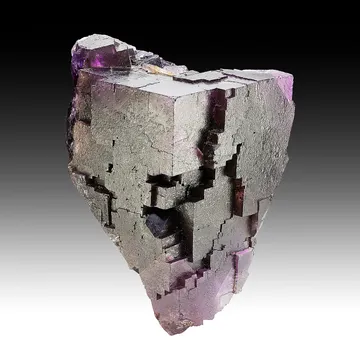
Cave-in-Rock is the collector’s shorthand for one of the great American fluorite fields: the Cave-in-Rock mining subdistrict of Hardin County, southern Illinois, on the Illinois side of the Illinois-Kentucky Fluorspar District. Its finest specimens are not merely “Illinois fluorites” but products of a particular kind of orebody—flat, bedding-replacement fluorspar mantos developed in Mississippian carbonate strata, locally guided by faults, fractures, collapse structures, and permeable horizons around the Rock Creek graben and nearby Hicks Dome. In collecting terms, that geology produced a signature look: lustrous cubic fluorite, often strongly zoned in yellow, amber, purple, blue, and colorless layers, accompanied by bright calcite, black to reddish-brown sphalerite, galena, chalcopyrite, barite, witherite, strontianite, alstonite, and rare benstonite.
The subdistrict matters because it combines scale, beauty, and history. The Illinois-Kentucky Fluorspar District was the principal domestic source of fluorspar for much of the twentieth century, but Cave-in-Rock is remembered by collectors above all for the Minerva No. 1, Crystal, Victory, Hill-Ledford, Oxford, Davis-Deardorff, Green, and related workings. The Minerva No. 1 mine in particular became a benchmark locality: a deep underground bedding-replacement operation that produced world-class display fluorite and a suite of barium-, strontium-, lead-, zinc-, and carbonate minerals rarely matched in aesthetic combination.
Regional View
Country View
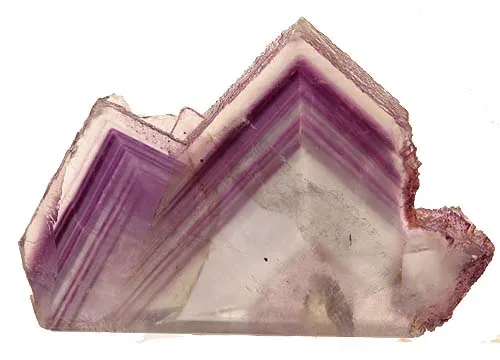
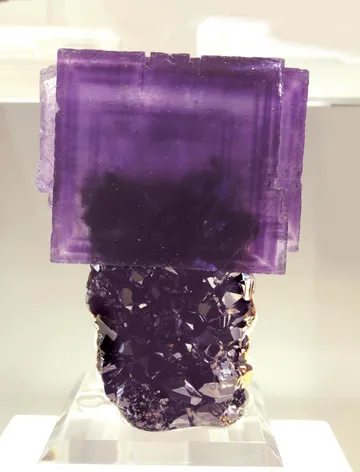
The best Cave-in-Rock pieces have a visual vocabulary collectors recognize at a glance: modified cubes with glassy faces; purple interiors glowing through yellow bodies; blue “caps” and edges; phantoms; etched earlier generations partly overgrown by later transparent fluorite; and pockets where hydrocarbons, bitumen, calcite, barite, and sulfides complicated both the ore and the specimens. Ordinary pieces can be attractive, but the elite ones carry a sense of architecture—crystals perched cleanly, color zoning readable from across a room, and associations placed rather than merely present.

Photo: James St. John / Wikimedia Commons

Search for specimens: View all specimens from Cave-in-Rock, USA
The Cave-in-Rock mining subdistrict lies north and west of the village of Cave-in-Rock, in eastern Hardin County, Illinois, along the Ohio River region. It is part of the larger Illinois-Kentucky Fluorspar District, a structurally complex fluorspar-lead-zinc province developed in Mississippian limestones, dolostones, and sandstones. Unlike the classic steep vein deposits around Rosiclare, much of Cave-in-Rock’s fame rests on bedding-replacement ore—flat to gently irregular fluorite-rich bodies replacing favorable carbonate beds, especially around the Bethel, Renault, Levias, Rosiclare, sub-Rosiclare, and related stratigraphic levels.
The ore system is tied to faults, fractures, karstic and collapse features, and fluid pathways around the district’s broader extensional structure. The Cave-in-Rock orebodies were not simple sheets of purple spar. In the mines they could form blankets, V-shaped enrichments, pods, channels, and irregular replacements ranging from thin seams to thick bodies of acid-grade fluorspar. In places, fluorite mineralization followed small faults or fracture sets; in others it was concentrated where structures intersected or where collapse pipes and solution features provided vertical fluid access. The result was a district where ore grade, mineral association, crystal style, and specimen quality could change dramatically over short distances.
The Minerva No. 1 mine is the locality name collectors encounter most often. Located north of Cave-in-Rock, it exploited the Cave-in-Rock orebody and became one of the most important underground fluorspar-zinc operations in the subdistrict. The Minerva Oil Company discovered the orebody in the early 1940s and developed a deep shaft operation; later history involved Ozark-Mahoning and successor ownerships. The mine worked multiple levels, including the Bethel and Rosiclare levels, and became famous not only for fluorite but also for sphalerite, barite, witherite, strontianite, alstonite, and benstonite. Modern labels may read “Minerva No. 1,” “Mahoning No. 1,” “Ozark-Mahoning No. 1,” or simply “Cave-in-Rock,” and the distinction can reflect both mine history and collecting habit rather than a neat geological boundary.
The Crystal and Victory mines represent the older Cave-in-Rock story. The Victory Mine began in the 1920s on Spar Mountain and worked one of the few westerly trending orebodies in the subdistrict. Its ore was described as a blanket that locally split into two horizons; shafts such as the Addison and Carlos were used to hoist ore. The Crystal-Victory workings, along with the Minerva No. 1, were important enough that the U.S. Bureau of Mines published a detailed 1960 report on their mining methods, haulage, ventilation, milling, and costs.
The Davis-Deardorff and Oxford areas are important for understanding the specimen suite. The Davis-Deardorff mine was among the richest Cave-in-Rock orebodies and contained fluorite, sphalerite, galena, barite, and locally abundant quartz. The S.E. Oxford mine worked Bethel-level ore, including purple replacement fluorite and yellow high-grade zones, with barite concentrated along ore-zone margins and sphalerite along minor faults or fractures. The Hill-Ledford mine, north of Oxford, was associated with collapse and breccia features, and drilling showed sphalerite-fluorite mineralization continuing downward into those structures.
Mining continued in the subdistrict through the twentieth century, but the end came with changing economics and cheaper imported fluorspar. The last major Illinois operations closed in 1995. At Minerva, buildings were later demolished and the mineshaft capped; former tailings and ponds remain part of the post-mining landscape. Collecting access today is therefore not a matter of strolling into an old famous mine. The historic underground workings are abandoned, flooded, capped, on private or industrial land, or otherwise unsafe. Some fluorite has been recovered during modern limestone quarrying where abandoned fluorspar workings were intersected, but active quarries are industrial sites, not public collecting grounds. Serious collectors should treat all old Cave-in-Rock mine areas as permission-only at minimum, and often as effectively closed.
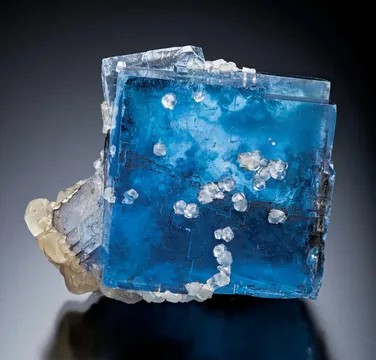
Specimen production came from ore pockets, vugs, and replacement cavities encountered during mining, and from the miners and collectors who saved crystals from the crusher. The most famous finds include the early 1990s Rosiclare-level “toadstool” fluorites, in which selective dissolution left fluorite “stalks” with lustrous caps; the late Minerva cross-cut orebody, where hydrocarbons and repeated growth produced extraordinary zoning and etched-to-glassy contrasts; and the September 1990 “Blue Cap Pocket,” widely regarded as one of the finest fluorite pocket events in the history of the Illinois-Kentucky district.
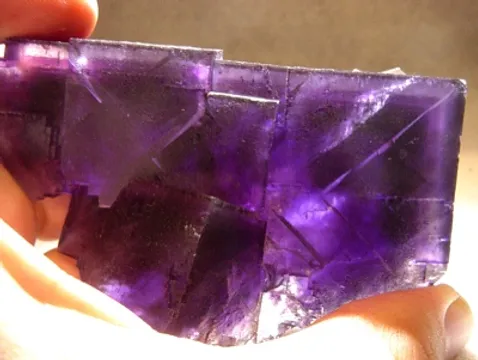
Cave-in-Rock fluorite is the standard by which many American fluorites are judged: cubic, sharply zoned, and richly colored, especially from the Minerva No. 1 mine and associated Ozark-Mahoning workings. Typical specimens range from thumbnail and miniature crystals to cabinet plates and large single cubes, with colors including amber-yellow Bethel-level material, purple to blue Rosiclare and sub-Rosiclare styles, colorless overgrowths, and dramatic yellow-purple-blue phantoms. The finest pieces show transparent late fluorite over etched earlier generations, sharp luster, balanced three-dimensional crystal groups, and clean associations with calcite, sphalerite, barite, chalcopyrite, or hydrocarbons; ordinary material tends to be cleaved, massive, dull, or poorly zoned. The great Minerva pockets—especially the early 1990s Rosiclare-level toadstool material and the 1990 Blue Cap Pocket—set the aesthetic ceiling for the locality.
Calcite at Cave-in-Rock is much more than a gangue mineral: it is the pale architectural counterpoint that makes many Illinois fluorites displayable. It occurs as colorless, white, cream, honey-yellow, and occasionally tinted crystals, commonly perched on fluorite or lining cavities with sulfides and barite. The best Cave-in-Rock calcites are sharp, lustrous, and well placed—single prisms, scalenohedral to prismatic sprays, or bright contrasting groups on blue, purple, or yellow fluorite—whereas ordinary pieces are chalky, bruised, or aesthetically lost in massive carbonate. In paragenetic terms calcite could be early and later, so collectors should expect multiple calcite generations, including delicate late druses that may obscure or enliven fluorite faces depending on the specimen.
Sphalerite is one of the key Cave-in-Rock associates and, in the Minerva, Davis-Deardorff, Oxford, and related orebodies, was important both as a zinc ore mineral and as an aesthetic partner to fluorite. It appears as lustrous dark brown, reddish-brown, black, and sometimes resinous crystals or crystalline masses, commonly with fluorite, calcite, barite, galena, chalcopyrite, and quartz. Good collector pieces show discrete, bright sphalerite crystals placed against color-zoned fluorite or pale calcite, with enough contrast to avoid becoming a dark mass; the most desirable examples preserve sharp crystal form and avoid the bruised sulfide edges common in mined material. Geologically, sphalerite is often tied to fractures, minor faults, and later stages of the ore sequence, which helps explain why it can be concentrated locally rather than evenly spread through a fluorite plate.
Galena from Cave-in-Rock is present as lead ore and as a classic metallic accent, but it is not equally abundant in every mine; on Minerva labels it is notably less common than fluorite, sphalerite, calcite, or barite. It occurs as gray metallic cubes, cleavages, and crystalline masses associated with fluorite, sphalerite, calcite, chalcopyrite, and quartz, and in some parts of the broader district galena carries minor silver and antimony. The best specimens are those in which galena is sharp, bright, and compositionally useful—small cubes or blocky crystals set against purple or yellow fluorite—rather than isolated battered fragments. Because galena is heavy, cleavable, and easily nicked, undamaged crystals on intact Cave-in-Rock matrix are much scarcer than loose or massive ore pieces.
Quartz is a subordinate but locally important Cave-in-Rock mineral, most notably reported as abundant in association with fluorite bodies at the Davis-Deardorff mine compared with many other bedding-replacement orebodies in the subdistrict. It occurs as colorless to white crystals, drusy coatings, and vein or cavity quartz with fluorite, calcite, sphalerite, galena, chalcopyrite, barite, oil, and bitumen. The best quartz-bearing pieces are not judged by quartz size alone but by contrast and paragenesis: sharp quartz points or druse framing colored fluorite, or quartz that documents a particular pocket sequence without covering the fluorite’s zoning. Ordinary examples are common-looking drusy matrix pieces unless the association is clearly Cave-in-Rock and aesthetically integrated.
Barite is one of Cave-in-Rock’s great supporting species and, in some pockets, one of the visual keys to recognizing late-stage mineralization. It occurs as bladed, tabular, platy, and sometimes pale to honey, cream, tan, or gray crystals associated with fluorite, calcite, sphalerite, witherite, strontianite, and alstonite. Barite was commonly late in the mineral sequence, could occur along ore-zone margins, and in some places complicated milling; for collectors, it often appears as blades on fluorite, pale plates beside calcite, or partial inclusions and epimorphic effects related to dissolution. The best pieces have sharp, undamaged blades with good separation and contrast, while ordinary barite is massive, stained, or broken into dull plates.
Chalcopyrite at Cave-in-Rock is usually a minor but desirable accent mineral rather than the principal draw. It occurs as brassy crystals, grains, and small aggregates with fluorite, sphalerite, galena, calcite, quartz, barite, pyrite, and marcasite, commonly adding warm metallic contrast to blue, purple, or yellow fluorite. Strong examples show bright, distinct chalcopyrite crystals placed on clean fluorite faces or in association with sphalerite, not merely scattered tarnished flecks. Because chalcopyrite can be confused visually with pyrite or tarnished sulfide grains in mixed ore, well-labeled specimens from known mines and pockets carry extra value, especially when the chalcopyrite is crystallized and not just disseminated.
Baryte is the same mineral species commonly called barite in American collecting usage, but on Cave-in-Rock labels both spellings appear. From this district it is especially prized where it forms crisp blades, tabular crystals, or pale platy groups with fluorite and calcite, and where it accompanies rarer barium-strontium carbonate species from Minerva. The best baryte specimens are aesthetic mineral specimens in their own right—sharp, lustrous, three-dimensional, and cleanly perched—rather than heavy gangue plates. Collectors should also watch for older labels that use “baryte” in the British or systematic style, because they may accompany classic material saved during active mining rather than later dealer relabeling.
Other documented Cave-in-Rock minerals include pyrite, marcasite, dolomite, aragonite, strontianite, witherite, alstonite, paralstonite, benstonite, hydrozincite, smithsonite, cerussite, malachite, azurite, bitumen, and oil-bearing inclusions or coatings. Minerva is especially celebrated for barium and strontium carbonates: witherite crystals, bow-tie to acicular strontianite, tiny pseudohexagonal alstonite, and rare benstonite make the locality far more than a fluorite producer. Benstonite is not a Cave-in-Rock type species—the original type locality is in Arkansas—but Minerva is one of the classic world occurrences and a premier source of attractive specimens. Published mineralogical notes also document rare calcium carbonate polymorph material from the Cave-in-Rock district as coatings on barite with yellow calcite, gray alstonite, purple fluorite, and dark brown sphalerite.
Cave-in-Rock specimens are finite classics from a closed mining district. The Illinois operations ended in 1995, and the underground mines that produced the famous material are abandoned, flooded, capped, reclaimed, on private land, or otherwise hazardous. Freshly recovered pieces do appear from old collections, estate holdings, dealer stocks, and occasional legally recovered material from active quarry or private-property contexts, but the collector market is dominated by old stock.
The most important authenticity issue is locality precision. “Cave-in-Rock” is often used broadly for the subdistrict, while labels may also say Minerva No. 1, Mahoning No. 1, Ozark-Mahoning No. 1, Rosiclare Level, Bethel Level, Victory, Crystal, Oxford, Hill-Ledford, or simply Hardin County. Some of these names are historically linked; others can be overgeneralized. A specimen acquired before certain mines operated cannot logically come from those later mines, and collectors should treat undated “Cave-in-Rock” labels as district-level unless provenance is strong. Associations can help—witherite and benstonite strongly suggest Minerva-style material, while certain deep purple fluorites, quartz-rich pieces, or barite-rich assemblages may point elsewhere—but visual identification alone is rarely definitive.
No widespread, well-documented treatment industry comparable to dyed agate or irradiated quartz is associated with Cave-in-Rock fluorite, but repairs and restorations are common on significant specimens. Fluorite cleaves easily; large cubes and plates were mined in an industrial environment; and calcite, barite, and sulfide associations are vulnerable. Expect minor edge bruising, cleaved corners, sawn or trimmed bases, and occasional restoration on important cabinet pieces. These are not necessarily disqualifying, but they should be disclosed, especially on Blue Cap, toadstool, and large color-zoned Minerva pieces.
Handling requires respect for both mineralogy and mine residue. Fluorite has perfect octahedral cleavage and should not be knocked, ultrasonically cleaned, or exposed to thermal shock. Calcite will react to acids, barite blades can detach, sphalerite and galena can bruise or tarnish, and old mine-pocket clay or hydrocarbon films may be part of the specimen’s history rather than dirt to be aggressively removed. Some Cave-in-Rock fluorites fluoresce blue to violet under long-wave ultraviolet, and hydrocarbon-bearing zones may produce additional fluorescence or visual interest; however, UV response varies by specimen and should not be used as a sole locality test.
The market separates Cave-in-Rock material sharply by quality. Common purple or amber cubes with cleaves are widely available; aesthetic miniatures with good zoning are increasingly desirable; large undamaged cabinet plates, sharp fluorite with calcite and sphalerite, toadstool forms, blue-capped Minerva crystals, fine witherite, and rare carbonate associations are premium pieces. Strong provenance—Ross Lillie, Ben E. Clement-related material, old Minerva Oil or Ozark-Mahoning-era labels, or documented pocket names—adds real value because the best finds are historically specific and unlikely to be repeated.
One of the best Cave-in-Rock stories begins not with a glittering pocket but with deception underground. The Minerva No. 1 orebody was said to have been discovered after a night-shift driller salted drill-hole cuttings to disguise absences from his nighttime work. The trick backfired spectacularly. Instead of concealing idleness, the salted cuttings pointed toward what became the premier specimen mine of the subdistrict, a deep, long-lived operation that would furnish classic fluorite, witherite, alstonite, benstonite, strontianite, and sphalerite for decades.
The September 1990 Blue Cap Pocket has become almost mythic among fluorite collectors because its look is so specific: yellow fluorite bodies with intense blue margins or caps, transparent enough to read the internal architecture and sharp enough to feel less like ore than sculpture. The pocket was isolated, and its best pieces have remained instantly recognizable. Collectors prize them not simply because they are blue, but because the blue is placed—an edge, cap, or overgrowth on earlier yellow fluorite, with the kind of color geometry that turns a cubic mineral into a miniature landscape.
The late Minerva cross-cut orebody adds another layer to the story. Rather than thinning and disappearing where miners might have expected the ore to run out, mineralization moved into ground that had not been mapped or drilled. It cut across the main Minerva trend, hence the “cross-cut” name, and lasted long enough to become important to Ozark-Mahoning. The mineralized sections were rich in hydrocarbons, sometimes so much so that the hydrocarbons interfered with fluorspar recovery in the flotation mill. For collectors, that same chemically messy environment helped produce etched early fluorite, late transparent overgrowths, phantoms, and strange contrasts between dull, dissolved cores and glassy later skins.
The underground work itself was industrial, not romantic. At Minerva No. 1, trucks hauled ore from production faces along underground roads for about half a mile to the No. 1 shaft-bottom crusher station, including grades up to 6 percent against the load. Before a 1957 haulage change, ore was trucked to a feeder and crusher, reduced to minus-3-inch material, and carried on a 30-inch conveyor belt 1,700 feet to a 200-ton ore-storage pocket at the shaft. Those numbers matter to collectors because they explain both the survival and the damage of specimens: every crystal had to escape an efficient mining system designed to crush and process ore, not preserve cabinet fluorites.
The post-mining landscape has its own sober history. At Minerva, the mine and mill buildings were demolished after closure, the shaft was capped, and tailings piles and ponds remained as environmental features. Early slurry disposal reportedly sent waste into nearby creeks and streams; later tailings were impounded. Modern health assessments focused on barium, cadmium, and lead in soil, tailings, and sediment. That legacy is part of the collecting story too: the great Cave-in-Rock specimens are survivors of an industrial fluorspar district, not souvenirs from a casual public dig.
_1_(34521863256).jpg)
_4.jpg)