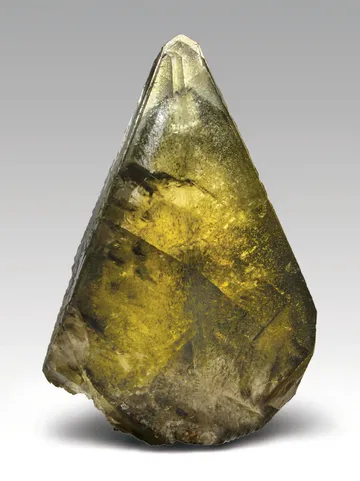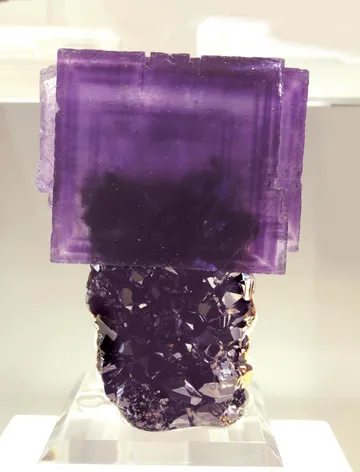
Annabel Lee Mine, Illinois — late-period fluorite locality famed for sharp color-zoned fluorite cubes, rare celestine, and historic collector appeal.
Key facts
Annabel Lee Mine is one of the defining late-period localities of the Illinois-Kentucky Fluorspar District: a deep, mechanized Ozark-Mahoning fluorspar operation in Hardin County, Illinois, where industrial ore mining and modern specimen collecting briefly overlapped at a very high level. It sits in the Harris Creek Mining Sub-District near the northern edge of the Illinois-Kentucky district, in the faulted ground between the Illinois Basin and the Mississippi Embayment. Unlike the older Rosiclare-area lead-fluorspar veins, Annabel Lee worked fluorite mineralization in both vein and bedding-replacement settings, principally within Mississippian carbonate horizons. For collectors, that geology matters because it produced open spaces, breccias, replacements, and late-stage pockets in which fluorite, calcite, baryte, celestine, sphalerite, galena, chalcopyrite, pyrite, and rare barium-calcium carbonates could develop as aesthetic specimens rather than only massive ore.
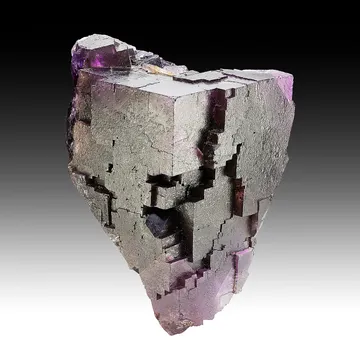
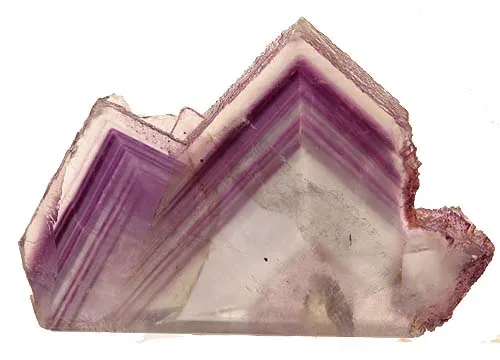
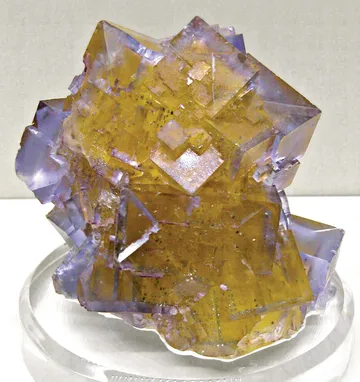
The mine’s reputation rests first on fluorite. The best Annabel Lee pieces show the unmistakable southern Illinois combination of sharp cubic geometry, transparent to translucent interiors, and intense color zoning: violet rims over honey-yellow cores, blue to purple-blue cubes, smoky lavender plates, and stepped growth surfaces that come alive with backlighting. Annabel Lee also added its own accents to the district’s visual vocabulary. Pale blue celestine on fluorite is especially characteristic and far scarcer across the district as a whole than fluorite-calcite combinations. White to cream baryte, lustrous calcite, reddish-brown sphalerite, and occasional metallic galena or chalcopyrite make the locality’s better association pieces immediately recognizable.
Historically, Annabel Lee has an end-of-an-era importance beyond the beauty of its specimens. It opened in the mid-1980s and closed in 1995, standing among the final fluorspar operations in Illinois and among the last major domestic sources of fluorspar in the United States. The surviving headframe gave the mine a powerful visual afterlife: a modern steel relic in a district whose fluorspar history reaches back to the nineteenth century. Its name, taken from Edgar Allan Poe’s final poem, has always felt uncannily appropriate for a mine remembered as the district’s last great specimen producer.
Regional View
Country View
Annabel Lee specimens reward careful viewing. Many pieces appear subdued under flat room light but become electric when backlit: purple zoning sharpens, yellow cores warm up, blue fluorite turns glassy, and petroleum-rich areas may reveal internal texture or fluorescence. The strongest cabinet pieces are not merely “Illinois fluorite”; they preserve the architecture of a pocket—stepped cube faces, clean terminations, contrasting sulfate or carbonate overgrowths, and the sense that the crystals grew in a narrow, mineral-charged void deep below the fields of Hardin County.
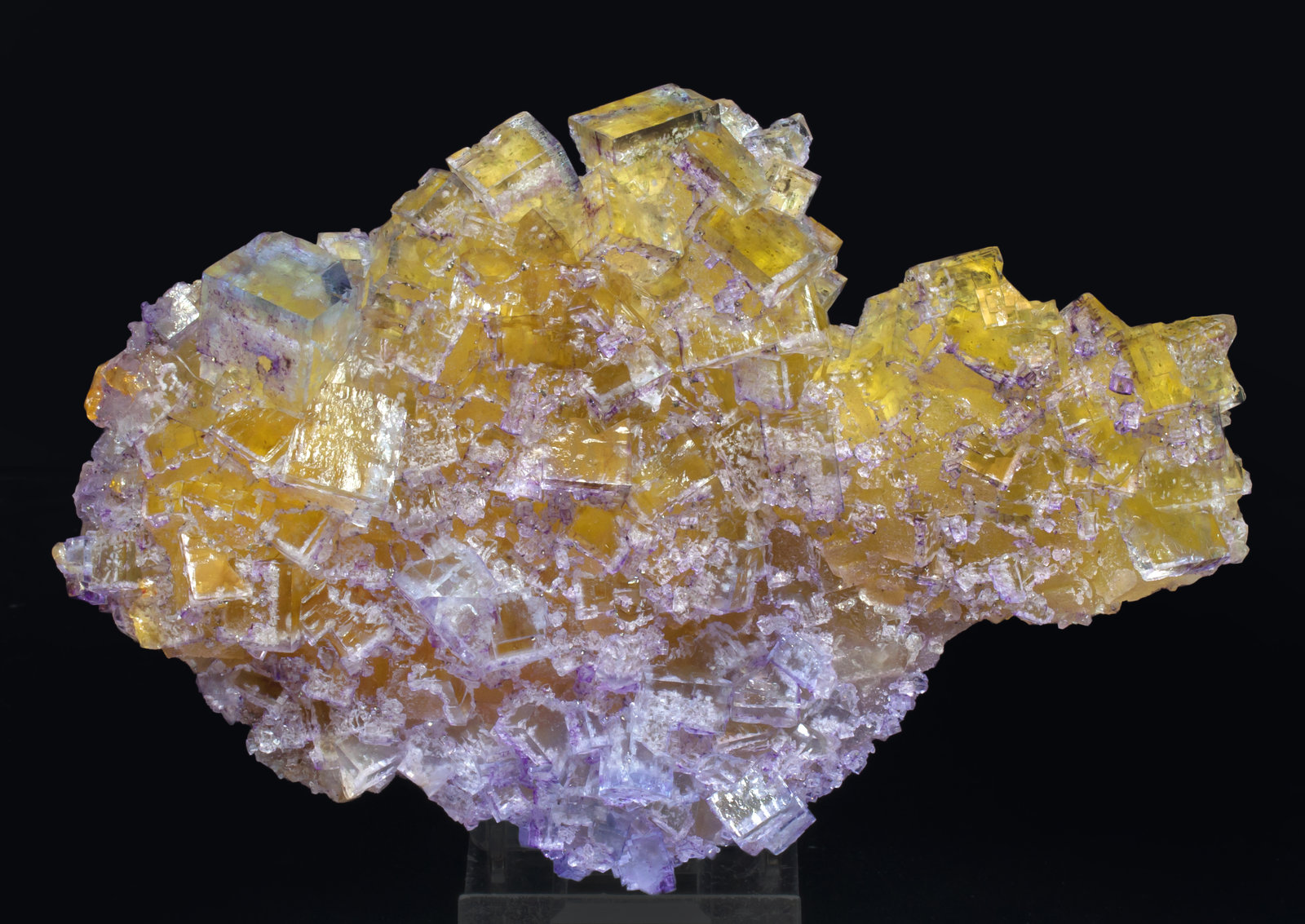
Photo: Fabre Minerals
Search for specimens: View all specimens from Annabel Lee Mine, USA
Annabel Lee Mine is in the Harris Creek Mining Sub-District, Hardin County, Illinois, at the northern side of the Illinois-Kentucky Fluorspar District. Its recorded position is near the center of Sec. 10, T11S, R9E, on the Saline Mines 7.5-minute quadrangle. The mine lies along a northeast-southwest-trending fault system associated with the northwest boundary of the Rock Creek Graben. In the district framework, this is a highly faulted region between the Illinois Basin to the north and the Mississippi Embayment to the south, where fluorine-bearing hydrothermal fluids interacted with carbonate host rocks and deposited fluorite-dominant ore bodies rather than the lead-zinc-dominant assemblages more typical of many Mississippi Valley-type districts.
The mine shaft was sunk on the northwest side of the fault and reached roughly 996 feet. Published field-trip descriptions record Mississippian Palestine Sandstone on the northwest side of the fault and Pennsylvanian Tradewater Formation on the southeast side, reflecting down-dropping on the southeast side. Annabel Lee produced ore from both vein and bedding-replacement deposits, with fluorite-bearing horizons in the Downeys Bluff Limestone and in the Joppa and Spar Mountain members of the Ste. Genevieve Limestone. Later syntheses also describe a thin, sandy limestone near the base of the Ste. Genevieve Limestone—locally described by miners as the St. Louis Level—as mineralized at Annabel Lee; this unit could be less than a foot thick and difficult to recognize in core.
Mining was by underground room-and-pillar methods. The ore pods were narrow, commonly less than 100 feet wide, and trended parallel to the major Rock Creek Graben structures. Ozark-Mahoning operated Annabel Lee as one of its late major fluorspar mines, and company records summarized in modern ISGS work indicate that the Denton and Annabel Lee mines together produced more than 900,000 tons of mined material. The mine opened in the mid-1980s—Mindat gives November 1984 from Lillie’s work—and ceased production in 1995. The final closure reflected both local reserve and cost pressures and the wider collapse of domestic fluorspar mining under competition from imported fluorspar.
The specimen story tracks the mine’s short operating life. Commercial mining exposed pockets and mineralized breccias at working depths that collectors could never have reached from the surface. Material came from at least two operational areas described by visitors as north and south orebodies, separated by hundreds of feet. The north orebody yielded needle-like calcite and sphalerite-rich material; the south orebody, including the 900-foot level, produced calcite on fluorite, oil- and gas-bearing calcite, broken but significant fluorite pockets, and the kind of fluorite-bearing cavities that fed the dealer and collector market in the late 1980s and early 1990s. Surge piles and spoil piles also produced specimens of fluorite, baryte, calcite, quartz, sphalerite, dolomite, celestine, selenite, and other accessory minerals.
Collecting access has changed sharply. Earlier geological field-trip guides described collecting from surrounding spoil piles during organized visits, but the present mine property is not an open collecting site. Current locality records note “No Trespassing” signs, patrol by the Hardin County Sheriff, and a blocked mine-site gate. Serious collectors should treat Annabel Lee as a closed classic locality: specimens are obtained through old collections, dealer stock, auctions, and documented estate dispersals, not by casual field collecting.
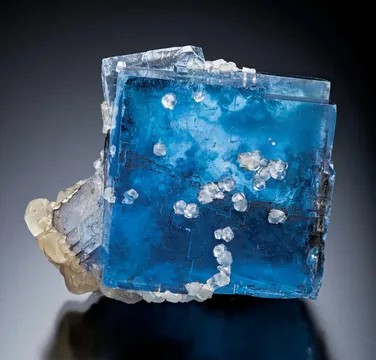
Annabel Lee fluorite is classic late Illinois material: cubic, commonly stepped, strongly zoned, and unusually responsive to backlighting. Crystals range from small drusy cubes on matrix to cabinet-size groups with individual cubes several centimeters across, and documented show specimens include crystals exceeding 10 cm; colors include deep violet, purple-blue, pale lilac, gray-blue, honey-yellow, and yellow cores with violet rims. The best pieces are transparent enough to reveal phantoms, growth zoning, petroleum or sulfide inclusions, and internal color changes, while ordinary pieces tend to be massive, bruised, flatly trimmed, or too heavily coated to show the geometry. Associations with calcite, baryte, celestine, sphalerite, galena, chalcopyrite, pyrite, quartz, and bituminous material are all part of the locality’s identity, with particularly desirable examples showing blue celestine, white baryte, or metallic sulfides perched cleanly on sharp fluorite.
Calcite from Annabel Lee is far more than a gangue afterthought: it occurs as white to honey-colored crystals, large scalenohedrons, short prismatic forms, needle-like aggregates, and lustrous coatings on fluorite, with different habits noted from different mine areas. North-orebody calcite has been described as more needle-like, while south-orebody material produced many calcite-on-fluorite specimens and crystals in brecciated limestone at the 900-foot level. The finest collector pieces show bright, undamaged calcite in sculptural contrast with purple or blue fluorite, sometimes with baryte or celestine; lesser pieces are common where calcite is dull, chalky, contacted, or masks the fluorite without adding form. Oil- and gas-bearing calcite is a memorable Annabel Lee specialty, but such pieces require careful handling because internal inclusions and cleavage can make them vulnerable.
Barite from Annabel Lee is usually seen as white, cream, or pale tan tabular crystals, granular coatings, nodules, “stringy” growths, or altered inclusions associated with fluorite and calcite. It is important here both aesthetically and genetically: some fluorite specimens show baryte perched on cube faces, others have microcrystalline baryte in corroded zones, and some “bore-hole” impressions in fluorite are interpreted by collectors as places where spherical baryte inclusions were later dissolved. Top Annabel Lee barite specimens have distinct blades or airy groups standing proud of rich purple fluorite; more ordinary examples show baryte as a dull crust, a massive white patch, or a coating that hides the fluorite’s color zoning.
Annabel Lee sphalerite ranges from microscopic and millimeter-scale crystals to attractive clusters of deep red to reddish-brown “ruby jack” crystals on fluorite, calcite, or sulfide-rich matrix. Dealer and collection records describe sharp lustrous sphalerite crystals to several millimeters on purple fluorite, and field notes record numerous sphalerite specimens recovered from surge-pile material, including sparkling boulders from the mine. The most desirable pieces combine transparent zoned fluorite with bright, discrete sphalerite crystals rather than a dark, indistinct sulfide crust; the species is much scarcer in fine display quality than fluorite or calcite from the locality, especially when the sphalerite is well isolated on purple fluorite.
Celestine is one of Annabel Lee’s signature collector minerals because blue celestine on Illinois fluorite is distinctive, attractive, and relatively uncommon across the broader fluorspar district. Annabel Lee produced pale blue to blue-gray celestine as prismatic, bladed, and tabular crystals on fluorite, calcite, and baryte-coated matrix, with published district summaries noting excellent crystals to about 5 cm and specimen records documenting isolated, sharp, glassy crystals to several centimeters. Fine pieces have clean blue crystals standing in contrast against purple fluorite or white calcite, ideally with chisel-like terminations and minimal edge wear; ordinary examples are small, crowded, partially hidden, or broken from the thin, brittle nature of the crystals.
Under the formal mineral name baryte, the same BaSO4 species at Annabel Lee deserves attention for its variety of presentation: fine white tabular crystals on fluorite, pale microcrystalline coatings, stalactitic or cast-like forms noted in the literature, and delicate stringy aggregates preserved in old collections. Baryte commonly accompanies purple to yellow fluorite and calcite, and some of the most attractive pieces show baryte attached high on fluorite cubes in a way that gives the specimen height and movement. Collectors should prize cleanly formed, three-dimensional baryte groups with good contrast and minimal bruising; flat crusts, chalky overgrowths, and heavily corroded baryte are commoner and less desirable unless they document an unusual paragenetic feature such as dissolution textures or casts.
Galena from Annabel Lee is a subordinate but important sulfide, turning up as cubes and modified cubo-octahedral crystals with fluorite, sphalerite, and calcite. Documented specimens include lustrous galena crystals to nearly 3 cm on sphalerite with minor fluorite, as well as cabinet pieces with complex cubo-octahedra set against pale lilac fluorite and contrasting calcite. Good Annabel Lee galena is about contrast and freshness: bright metallic faces, sharp edges, and an undamaged perch on purple or blue fluorite are far more collectible than massive, dull, or cleaved galena embedded in sulfide matrix. Because the mine’s fame is overwhelmingly fluorite-centered, fine galena associations from Annabel Lee are much less common in the marketplace than fluorite-only plates.
Chalcopyrite at Annabel Lee is typically an accent mineral: small brassy crystals, inclusions, or scattered grains associated with fluorite, sphalerite, quartz, calcite, and sometimes galena. Its collector appeal comes from contrast rather than size—tiny metallic sparks on purple fluorite, brassy flecks included in yellow-violet fluorite, or chalcopyrite accompanying reddish sphalerite on transparent fluorite. The best examples show discrete, visible chalcopyrite without overwhelming the fluorite’s color zoning; routine examples are essentially fluorite specimens with minor sulfide specks that require magnification to appreciate.
Pyrite from Annabel Lee is a minor but attractive accessory, most often valued when it adds sparkle to otherwise classic purple or blue fluorite. Documented Annabel Lee fluorite-with-pyrite specimens show small pyrite crystals scattered on stepped, phantomed fluorite, and the best examples use that metallic contrast to sharpen the visual rhythm of the piece without distracting from the fluorite. Fine pyrite associations are uncommon compared with calcite or baryte combinations; most pyrite occurrences are small, localized, or best appreciated as part of a broader sulfide assemblage with sphalerite, galena, chalcopyrite, and fluorite.
Other documented Annabel Lee minerals include dolomite, gypsum var. selenite, malachite, marcasite, quartz, and paralstonite. Paralstonite is the most mineralogically significant rarity: a rare BaCa(CO3)2 polymorph known from the Illinois fluorspar district and recorded from Annabel Lee as well as the Minerva No. 1 area. At Annabel Lee it belongs to the same late-stage barium-calcium carbonate story that makes the district important beyond fluorite alone. Selenite needles with calcite, malachite as a secondary copper mineral, marcasite and pyrite as iron sulfides, and quartz as a minor gangue species round out the locality’s verified species list, but most of these are collected as associations or micromount interests rather than as major display minerals.
The central authenticity issue with Annabel Lee specimens is locality precision. Many older labels use broad terms such as “Cave-in-Rock,” “Hardin County,” “Illinois fluorite,” or “Rosiclare Level,” and those phrases are easily confused with actual mine names such as Rosiclare, Minerva No. 1, Denton, or Annabel Lee. A label reading “Rosiclare Level, Annabel Lee Mine” can be perfectly plausible if it refers to a stratigraphic or mining level, but it can also be misread by later owners as a hybrid of two separate localities. Serious collectors should preserve old labels, ask for provenance, and compare the specimen’s associations: Annabel Lee is especially persuasive when purple, blue, or yellow zoned fluorite occurs with pale blue celestine, white baryte, reddish sphalerite, or the mine’s characteristic calcite habits.
Documented treatment concerns are less prominent than attribution concerns, but lighting can mislead. Many Annabel Lee fluorites are photographed with backlighting because the crystals genuinely become more transparent, more saturated, and more strongly zoned when light passes through them. That is a legitimate display method, not a treatment, but buyers should insist on normal-light photographs as well. A specimen that glows in a backlit image may appear much darker, grayer, or more included in ambient light.
Condition is the other major issue. Fluorite has perfect octahedral cleavage and many Annabel Lee specimens came from active ore mining, blasting, mucking, surge piles, and old dealer stock; edge wear, cleaved corners, contacted backs, bruised cube faces, and repaired breaks are common. Stepped faces can be natural, so they should not automatically be read as damage, but fresh white chips on cube edges are obvious under magnification. Baryte and celestine are brittle and often show edge nicks or incomplete terminations. Calcite can cleave or crack, and oil- or gas-bearing calcites from depth deserve extra caution because internal inclusions and pressure changes have been associated with breakage in documented collector experience.
Fluorescence is variable. Dark purple fluorite may show little response, while petroleum-bearing fluorite can show yellowish fluorescence under ultraviolet light; some Annabel Lee and district fluorites also show minor fluorescence under longwave or shortwave UV depending on inclusions and impurities. UV examination is useful, but it should not be treated as a definitive mine test. Handle petroleum-inclusion specimens gently, avoid heat and harsh chemical cleaning, and do not soak composite pieces without considering calcite, baryte, celestine, sulfides, and possible bituminous material.
Market availability remains relatively good for a closed American classic because the mine produced significant quantities of specimens during the 1980s and 1990s, and old collections continue to release material. The commonest offerings are fluorite plates and fluorite-calcite associations; better zoned cubes, blue fluorites, celestine-on-fluorite combinations, sharp baryte-on-fluorite pieces, and sulfide-rich association specimens are much scarcer. Top cabinet pieces with sharp geometry, clean color zoning, strong provenance, and minimal damage command a premium because they represent both a beautiful mineral specimen and the closing chapter of American fluorspar mining.
In May 1987, Alan Goldstein visited Annabel Lee with photographer Chris Anderson and spent an entire eight-hour shift underground documenting the mine’s operations and geology. Mine geologist Eric Livingston later suggested that it may have been the only time an eight-hour shift in an Illinois-Kentucky fluorspar mine was recorded so thoroughly in photographs. The trip reads like a last full-color glimpse of a working district: the headframe, compressor room, hoist, cage, ore bucket, drill jumbo, air ducting, loaders, ore cars, grizzlies, roof bolts, and the raw mineralized face all caught while the mine was still alive.
The descent itself had drama. Goldstein noted the entry point to the cage at 868 feet, “almost 90 stories of rock” between the men and the surface. In one image he and Tom Rose stand in the cage attached to the skip—the ore bucket—while another caption notes that the hoist operator had their lives in his hands. Underground, the scale changed again. At one point the party was 1,300 feet down in the north orebody, watching a jumbo drill two horizontal holes into the ore face; Goldstein called the drill scene “the noisiest place on the planet” and noted that ear protection was critical.
The visit also fixed important specimen details that would otherwise have vanished into old labels. Goldstein recorded two separate deposits hundreds of feet apart: a north orebody and a south orebody. The north produced needle-like calcite and sphalerite-rich material. In the south orebody, at the 900-foot level, he inspected pockets, photographed calcite on the roof, saw oil- and gas-filled calcite crystals, and examined a large pocket of mostly broken fluorite crystals with a small amount of flowing water behind him. Another photograph shows Tom Rose scaling loose slabs from the roof near a big fluorite pocket; the pocket crystals were visible to the left, but the rock would be drilled and blasted on the next shift.
One of the most memorable Annabel Lee collecting anecdotes concerns a doubly terminated calcite crystal with a visible gas bubble. Goldstein kept it, only to have the crystal “explode” a day or two later when the bubble ruptured along a cleavage plane. The aftereffect was unmistakable: his townhouse smelled like an oil well until the doors were opened. Few stories better capture the depth and chemistry of the mine—calcite grown under pressure, hydrocarbons trapped inside, then the quiet violence of a pocket specimen adjusting to the surface world.
Even the mine’s name acquired a kind of literary folklore. Geological field-trip authors pointed out that Annabel Lee took its name from Edgar Allan Poe’s poem “Annabel Lee,” Poe’s last poem, and found it ironic that a mine so named became the last to operate in the district. For collectors, that coincidence has become part of the locality’s aura: a final poem, a final mine, and a final flowering of Illinois fluorite specimens before the headframes went silent.
Ross C. Lillie, “Minerals of the Harris Creek Fluorspar District, Hardin County, Illinois,” Rocks & Minerals, Vol. 63, No. 3, 1988, pp. 210–226 — The essential contemporary collector-mineral article for the Harris Creek district, including Annabel Lee-era mineralogy and specimen context.
Alan Goldstein, “Famous Mineral Localities: The Illinois-Kentucky Fluorite District,” The Mineralogical Record, Vol. 28, No. 1, 1997, pp. 3–49 — The key modern Mineralogical Record treatment of the district, widely cited for Annabel Lee fluorite, celestine, calcite, baryte, sulfides, and rare species.
Wayne T. Frankie and Russell J. Jacobson, Guide to the Geology of Cave-In-Rock Area, Hardin County, Illinois, Illinois State Geological Survey Field Trip Guidebook 2006B — Includes a stop description for Annabel Lee Mine, with details on the shaft depth, stratigraphy, fault setting, room-and-pillar mining, and specimen minerals in spoil piles.
Wayne T. Frankie and Russell J. Jacobson, Guide to the Geology of the Garden of the Gods Recreation Area, Shawnee National Forest, Saline, Gallatin, Pope, and Hardin Counties, Illinois, Illinois State Geological Survey Field Trip Guidebook 2009B — Repeats and updates the Annabel Lee field-trip stop, emphasizing its final-mine status and the surviving headframe.
F. Brett Denny, W. John Nelson, Jeremy R. Breeden, and Ross C. Lillie, Mines in the Illinois Portion of the Illinois-Kentucky Fluorspar District, Illinois State Geological Survey Circular 604, 2020 — A modern mine-by-mine synthesis with history, mining methods, production figures, ore models, maps, and district geology.
Andrew C. Roberts, “Paralstonite, a new mineral from the Minerva No. 1 mine, Cave-in-Rock, Illinois,” Geological Survey of Canada Paper 79-1C, 1979, pp. 99–100 — The original new-mineral reference for paralstonite; later data sources record the species from both Minerva No. 1 and Annabel Lee in Hardin County.
T. H. Maughan Jones and colleagues, “Time-Resolved Fluorescence Microspectroscopy for Characterizing Crude Oils in Bulk and Hydrocarbon-Bearing Fluid Inclusions,” 2004 — Includes hydrocarbon-bearing fluorite inclusion samples from Annabel Lee, tying the locality to analytical work on petroleum inclusions.
Mindat locality page: Annabel Lee Mine, Harris Creek Mining Sub-District, Hardin County, Illinois, USA — The most useful consolidated online mineral list and locality reference, including coordinates, closure notes, and species documentation.
EarthWonders specimen record: Celestine, Fluorite, Annabel Lee Mine, published in Mineralogical Record: Mineral Collections in American Midwest, p. 105 — A documented small-cabinet Annabel Lee celestine-on-fluorite specimen photographed by Jeff Scovil and tied to a published Midwest collection feature.
“Calcite on Fluorite, Illinois” — JB Gems and Minerals — Dealer specimen page with a linked video short showing a small Annabel Lee calcite-on-fluorite specimen.
“Fluorite” — EarthWonders specimen record — Video-supported record of a cabinet-size blue Annabel Lee fluorite with crystals reported to 5.2 cm on edge.
“Galena with Fluorite, Sphalerite” — EarthWonders specimen record — Video-supported record of an Annabel Lee galena-sphalerite-fluorite association specimen collected in the early to mid-1980s.
“Annabel Lee Mine, Hardin Co., Illinois” — Alan Goldstein — A photographic underground record of the mine during an eight-hour 1987 shift, with operating scenes and specimen examples.
Mindat: Annabel Lee Mine, Harris Creek Mining Sub-District, Hardin County, Illinois — Best single online locality page for coordinates, mineral list, references, and access notes.
Mindat: Harris Creek Mining Sub-District — Useful for understanding Annabel Lee alongside Denton and the bedding-replacement character of Harris Creek mineralization.
ISGS: Guide to the Geology of Cave-In-Rock Area, Hardin County, Illinois — Field-trip guide with the strongest accessible geological summary of Annabel Lee’s fault setting, depth, mining method, and host formations.
ISGS: Mines in the Illinois Portion of the Illinois-Kentucky Fluorspar District — Modern district-scale mine report and map set for production, mining history, and ore models.
Alan Goldstein: Annabel Lee Mine, Hardin Co., Illinois — Rare underground photographic documentation from a working shift in 1987.
Rocks & Minerals, Vol. 63, No. 3, 1988 — Issue containing Ross C. Lillie’s article on the minerals of the Harris Creek Fluorspar District.
Mindat reference: Alan Goldstein, “The Illinois-Kentucky Fluorite District,” The Mineralogical Record, 1997 — Bibliographic record for the classic Mineralogical Record district article.
Phil Persson, “The Top Five Mineral Localities in the World,” Mineral City Show Guide, 2023 — Collector-oriented district overview noting Annabel Lee celestine and late Illinois fluorite specimen characteristics.
Fabre Minerals: Fluorite, Annabel Lee Mine — High-quality specimen photograph illustrating yellow-purple Annabel Lee fluorite zoning.
EarthWonders: Celestine, Fluorite, Annabel Lee Mine — Jeff Scovil-photographed specimen record for the locality’s celestine-on-fluorite association.
Fluorescent Mineral Society Database: Barite, Celestine and Aragonite, Annabel Lee Mine — Useful specimen record for the locality’s sulfate-carbonate-fluorite associations and fluorescent-mineral interest.