






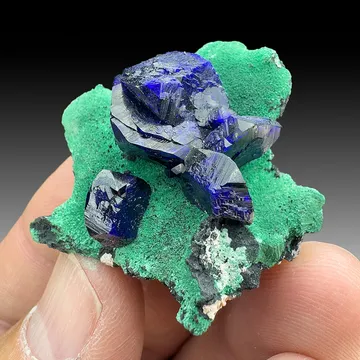
Milpillas Mine, Mexico — defining modern locality famed for electric indigo azurite and sculptural malachite, with rare volborthite, dioptase, and cuprite.
Key facts
Milpillas is one of the defining mineral localities of the early twenty-first century: an underground copper mine in northern Sonora whose specimen fame rests not on long antiquity, but on an intense, modern run of superb secondary copper minerals. The mine exploited a deeply oxidized and supergene-enriched porphyry copper system in the Cananea district, part of the great Laramide copper belt of Sonora, Arizona, and New Mexico. For collectors, that geological history matters directly: repeated weathering and enrichment cycles produced open fractures, clay-lined cavities, and oxidized copper zones in which azurite, malachite, brochantite, cuprite, volborthite, olivenite, plancheite, shattuckite, dioptase, and related species crystallized at specimen quality.
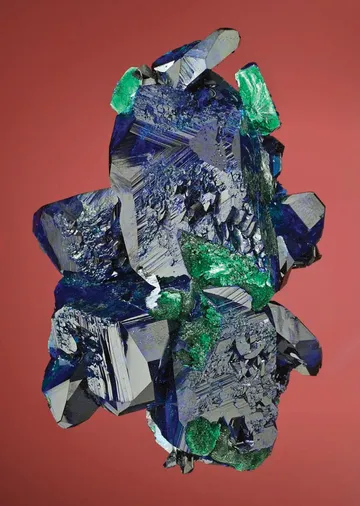
What separates Milpillas from many copper mines is the combination of abundance, color, and crystallographic sharpness. The best azurites are not merely blue; they have the saturated “electric” indigo-blue that became a market shorthand for the locality, with glassy to almost metallic luster, razor-edged terminations, tabular blades, thick wedge-shaped crystals, and sculptural groups on white dickite, malachite, or dark iron oxides. Malachite from the mine is equally important, especially as crisp pseudomorphs after azurite, preserving the architecture of earlier blue crystals while replacing them in velvety, fibrous, forest-green material. Later finds added world-class rarity value: Milpillas reset expectations for volborthite, produced exceptional brochantite and olivenite, and yielded small but striking pockets of dioptase, shattuckite, cuprite, native copper, and other secondary copper species.
Regional View
Country View
The locality entered the international market quickly after mine opening. By 2007, Mexican dealers were bringing azurite and malachite specimens across the border into Arizona, at first without widely revealing the source. Within a few years the mine had become a fixture of major shows, and by the 2010s it was no longer just a “new Mexican azurite locality” but a benchmark against which modern copper-mineral finds were judged. The mine’s best specimens now sit comfortably in the conversation with Bisbee, Tsumeb, Chessy, Touissit, and Kerrouchen, while retaining a look that is unmistakably Milpillas: hard blue azurite against chalk-white dickite, emerald malachite pseudomorphs on velvet-blue plancheite, apple- to olive-green vanadates on pale clay, and occasional red cuprite and native copper flashes from the oxidized ore zone.

Photo: Wikimedia Commons

Photo: Wikimedia Commons
Search for specimens: View all specimens from Milpillas Mine, Mexico
Milpillas, also known in Peñoles records as La Parreña, lies in the Santa Cruz Municipality of Sonora, near Cuitaca and north of the older Cananea mining center. Economically, it is a porphyry copper deposit with a strongly developed supergene enrichment profile. The hypogene system began as low-grade disseminated copper mineralization related to Laramide intrusive activity; subsequent uplift, extension, weathering, and burial concentrated copper into much richer secondary zones. In geological terms, Milpillas is particularly instructive because its enriched blanket and oxidized cap were preserved beneath post-mineral gravels in the Cuitaca Norte semigraben, rather than being stripped away by erosion.
The deposit’s vertical profile is the key to both ore mining and specimen mineralogy. A post-mineral gravel cover, locally tens to hundreds of meters thick, overlies a thick leached cap and oxidized copper zone. Below that lies the chalcocite-rich supergene enrichment zone, and beneath it the lower-grade hypogene porphyry system. Published geological work describes ore bodies at roughly 150 to 700 meters depth, with the weathered profile locally reaching several hundred meters in thickness. In the oxidized zone, chalcocite was partly destroyed or replaced, producing brochantite, malachite, tenorite, cuprite, and related copper oxides, sulfates, carbonates, silicates, arsenates, and vanadates. The clay gangue—especially dickite, kaolinite, sericite, and related alteration products—helped preserve sharp crystal pockets and provided the pale matrix that makes so many Milpillas specimens visually distinctive.
The principal ore minerals of the supergene blanket are chalcocite and lesser covellite, replacing earlier chalcopyrite and other hypogene sulfides. Oxidation of these copper sulfides generated a complex secondary suite. Acidic stages favored copper sulfates such as brochantite and antlerite; later neutralization and carbonate activity produced azurite and malachite; silica-bearing fluids were responsible for chrysocolla, plancheite, shattuckite, dioptase, and quartz coatings; vanadium-bearing microenvironments produced volborthite, tangeite, vesignieite, mottramite, and turanite. This is why Milpillas specimens often show several paragenetic chapters on one hand specimen: a malachite pseudomorph after azurite on plancheite, azurite over malachite on dickite, dioptase with shattuckite and quartz, or volborthite perched on pale clay with stray azurite.
Exploration began in the 1980s, and an aggressive drilling program through 2001 outlined approximately 35 million tonnes of ore at an average grade near 1.95% copper, sufficient to justify mine construction. Production began in 2006 as an underground operation using cut-and-fill mining with yielding pillars and long-hole drilling. The crushed ore is heap-leached, copper is recovered by solvent extraction, and grade-A copper cathode is produced by electrowinning. Peñoles suspended the unit in July 2020 because of high operating costs, lower copper prices, and weaker head grades, then resumed mining, crushing, and ore placement in the second quarter of 2022. The company lists the operation as its only copper mine, wholly owned by Peñoles, with underground workings, leach pads, and an electrolytic plant.
Collecting access is not public. Milpillas is an active industrial underground mine, and the specimens that made the locality famous came out through mining activity, mine personnel, and commercial channels rather than by open collecting. This matters for provenance: level numbers, pocket names, find dates, and early dealer labels are especially valuable. A good Milpillas label may record a level such as 890, 992, 1100, 1160, or 1280; a pocket name such as Tolvas Duales, Rosette, or Watercourse; or a year tied to a known market event.
Several specimen-producing episodes have become part of the locality’s collecting vocabulary. Early azurite and malachite material began appearing in 2006–2007. The 2008 malachite pseudomorph material, including specimens with plancheite from the 1160 level, established the mine as a premier pseudomorph locality. The Tolvas Duales Pocket on the 1100 level produced azurite on malachite in 2010. The Rosette Pocket, also on the 1100 level, yielded large sculptural azurites in 2011, including pieces over 10 cm and the famous 11.5 cm “Cannonball.” The Watercourse Pocket on the 1280 level produced important azurites in 2013–2014. In 2015, the mine produced outstanding volborthite from what dealers often labeled Level 26 or the 890 level, resetting the standard for the species. In 2019, levels around 992 and 1100 yielded unusual dioptase, shattuckite, quartz, olivenite, and associated copper silicates and vanadates. After the operational restart, late-2022 or early-2023 material described as zincolivenite entered the market, showing that the mine was not completely finished as a specimen source even after the 2020 suspension.
Azurite is the signature Milpillas mineral and the reason the mine became famous almost overnight: specimens range from thumbnail clusters to major cabinet pieces, with sharp, lustrous, deep-blue crystals that may be tabular, thick-bladed, wedge-terminated, doubly terminated, or the stout “chicle” habit noted from 2014 finds on dickite. Important pockets include the 2010 Tolvas Duales material from the 1100 level, the 2011 Rosette Pocket on the same level, and the 2013–2014 Watercourse Pocket on the 1280 level; notable crystals and groups reached roughly 10 to 12.7 cm, and an early four-inch single crystal was already causing excitement in 2007. Associations include malachite, dickite, quartz, barite, shattuckite, brochantite, and iron oxides, but the best pieces are judged by saturated “electric blue” color, intact terminations, luster, architectural openness, minimal pocket bruising, and contrast against white dickite or green malachite rather than by size alone.
Milpillas malachite is most prized as a pseudomorph after azurite, preserving sharp blades, doubly terminated crystals, and radiating clusters in velvety to silky green replacement material; the famous 2008 material, including specimens from the 1160 level on velvet-blue plancheite, gave the mine a second world-class identity beyond azurite. Other malachite occurs as fibrous sprays, botryoidal crusts, dark green coatings, and mixed blue-green specimens where azurite survives partly unreplaced. Fine examples have crisp azurite form, a three-dimensional silhouette rather than a flat wall plate, rich forest-green color, silky surface texture, and minimal edge wear; ordinary examples are flatter, more bruised, or less completely shaped, while top pieces show the paradox collectors love here—malachite with all the geometry of azurite.
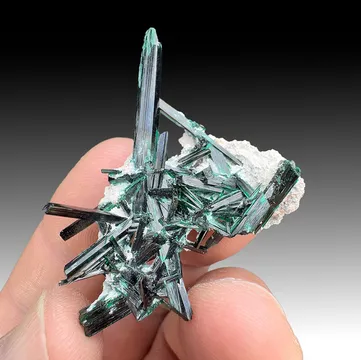
Brochantite at Milpillas belongs to the mine’s oxidized chalcocite-replacement story: geological work on the deposit describes chalcocite being replaced chiefly by brochantite, with lesser malachite, tenorite, and cuprite, and the specimens show this chemistry as bright to dark green acicular, bladed, fibrous, and radiating sprays on pale clay, dark matrix, or associated copper minerals. Large display pieces are known, including published examples around 9 and 13 cm, but the appeal is in the dense, lustrous, well-separated sprays and fine color rather than cabinet dimensions alone. Because brochantite, olivenite, and some green vanadates can be visually confusing in Milpillas material, especially in small acicular aggregates, better specimens benefit from solid provenance or analysis; the finest brochantites have fresh luster, upright crystal groups, undamaged terminations, and enough matrix contrast to avoid reading as a dull green crust.
Milpillas volborthite was a revelation: the 2015 finds, commonly labeled from Level 26 or the 890 level, produced lustrous yellow-green to deep olive-green tabular crystals in small fans, rosettes, and isolated aggregates on hardened white dickite or clay, and contemporary reports described them as among the best, if not the best, volborthites known. Most specimens are thumbnails to miniatures, often with one or several aggregates scattered across pale matrix; rarer combinations include malachite and azurite, including specimens with a sharp azurite crystal perched on volborthite. The best pieces show distinct bladed crystals rather than powdery coatings, strong olive color, bright luster, clean separation from the white matrix, and verified Milpillas provenance, because attractive green microcrystalline vanadates and arsenates from the mine can be visually treacherous.
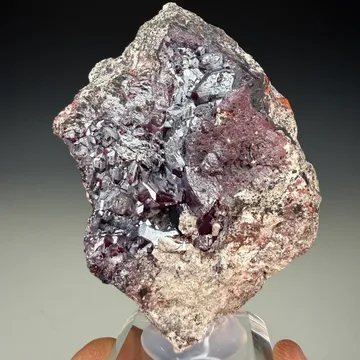
Cuprite from Milpillas comes from the red-copper-oxide side of the oxidized ore zone, where breakdown of chalcocite and related copper sulfides fixed copper as cuprite, tenorite, native copper, and sulfates; collector specimens are typically small but can be extremely attractive, with translucent to semi-translucent carmine-red crystals on white dickite, malachite, or dark matrix. A notable 2015–2016 style shows sharp octahedral to cuboctahedral crystals, sometimes with minor cube and dodecahedral modifications, rising from fibrous white dickite rather than forming flat seam coatings, and published examples include crystals and groups in the 1.5 to 3 cm range. Top cuprites have glowing red color, high luster, individual crystals standing clear of the matrix, and little abrasion; lesser examples are blackish, massive, or seam-like without isolated crystal form.
Milpillas olivenite is a late-period surprise from the 2019 992-level finds, appearing as sharp, flattened, deep olive-green crystals on matrix, with some individuals doubly terminated and with very well-defined faces and terminations; dealer and publication records repeatedly describe these as among the best examples of the species. Crystal sizes around 1 to 2 cm are significant here, and the finest specimens are miniatures in which one or several lustrous bottle-green crystals stand freely enough for the form to be read clearly. It is rarer than the common azurite-malachite material and can resemble brochantite to the unaided eye, but the best olivenites tend to be more compact, flatter, and more sharply terminated than the fibrous brochantite sprays, making analyzed or well-documented examples especially desirable.
Dioptase is rare at Milpillas, but the 2019 material from levels reported around 992, 890, and 1100 produced highly attractive specimens with small elongated to rhombohedral, transparent, lustrous blue-green crystals on matrix, commonly with quartz, chrysocolla, darker malachite, pale blue shattuckite, calcite, and locally mottramite. Published specimens around 6 cm overall show dioptase crystals as bright druses or scattered crystals rather than the larger isolated prisms of classic Tsumeb or Altyn-Tyube material, so Milpillas value lies in the unexpected association and locality rarity. The best pieces have visibly crystalline dioptase, not just green staining, plus color contrast with white quartz, pale shattuckite, or blue-green copper silicates; small contacts are common because the crystals are delicate and grew in tight cavities.
Quartz crystals are surprisingly uncommon at Milpillas despite the porphyry setting, and most specimen-quality examples are modest: small milky crystals with cuprite and malachite, thin drusy layers on dioptase or plancheite, rare doubly terminated crystals on azurite, and 2019 992-level druses or sunburst-like groups of water-clear crystals to about 1 cm over shattuckite and dioptase. The most distinctive pieces are thumbnails to miniatures where quartz is part of a rare association rather than the main event, especially quartz with dioptase, shattuckite, conichalcite, chenevixite, or natrojarosite. Because a later shattuckite-quartz-ajoite material from near Rancho Jacalito was initially confused with Milpillas by some in the trade, true Milpillas quartz combinations should show the right association, provenance, and often the presence of dioptase rather than abundant ajoite-bearing shattuckite with thick quartz crusts.
Native copper at Milpillas is a specimen rarity within the cuprite-tenorite portion of the oxidized copper assemblage, and published examples include substantial pieces around 6.8, 8, and 14 cm. Rather than the classic Michigan look of heavy metallic sheets or arborescent masses, Milpillas copper is valued as part of the mine’s supergene copper story, typically occurring with red and black copper oxides, iron oxides, dickite, or altered ore matrix. Good specimens show recognizable native copper form or bright metallic surfaces with minimal oxidation dulling, but many pieces are darkened, partly embedded, or visually subordinate to cuprite and matrix; the most desirable examples combine clear identity, sculptural shape, and documented Milpillas provenance.
Plancheite at Milpillas is best known from the 2008 malachite-pseudomorph assemblage, especially the striking specimens from the 1160 level in which malachite after azurite sits on velvet-blue plancheite. It also occurs with shattuckite, chrysocolla, quartz, and malachite as pale sky-blue to turquoise fibrous, velvety, or crustiform copper silicate, sometimes forming colorful seams in rounded nodular material. Top collector pieces show plancheite as an aesthetic matrix or contrasting carpet rather than an anonymous blue coating: the best have a saturated but lighter blue than shattuckite, fine silky texture, crisp contact with malachite pseudomorphs, and a composition or association that separates it from chrysocolla and shattuckite, both of which are common sources of misidentification in blue copper-silicate suites.
Siderite is an unusual Milpillas occurrence and was reported from a single August 2013 pocket in a narrow seam, producing matrix plates with gemmy brown scalenohedral crystals, some individuals reaching about 1 cm. The material is not abundant and lacks the immediate color drama of azurite or malachite, but it is important to advanced locality collectors because it broadens the chemistry of the Milpillas pocket suite and contrasts sharply with the copper-rich species that dominate the mine’s reputation. Good siderites are judged by clean brown transparency, sharp scalenohedral form, and intact crystal tips; ordinary pieces are small, dull, iron-stained, or easily overlooked unless accompanied by a reliable label.
Barite is not a headline species at Milpillas, but good locality examples exist, including crystals on dickite-bearing matrix with small cuprite, and some azurite specimens carry barite as part of the secondary-cavity assemblage. Crystals around 1 to 2 cm can be meaningful for the mine, where barite is valued less as a stand-alone species than as a provenance-rich accessory in the oxidized zone. The best examples show distinct, lustrous tabular crystals with clear separation from the pale matrix and, ideally, an association with cuprite, azurite, or dickite; ordinary examples are blocky, partly corroded, or visually lost in the matrix.
Shattuckite at Milpillas reached the market in notable 2019 finds, especially from the 1100 and 992 levels, as deep blue felted inclusions in transparent quartz, sky-blue botryoidal coatings on matrix, and associations with quartz, chrysocolla, dioptase, plancheite, and malachite. The most attractive specimens show two textural generations at once: darker shattuckite included in or under clear quartz and lighter blue coatings or spherules on the surrounding matrix. Because shattuckite-rich material from Rancho Jacalito was at one point confused with Milpillas, top specimens need careful provenance and should fit the Milpillas association, particularly where dioptase, thin quartz druse, or the documented 2019 level information is present; the best pieces are crisp, color-zoned, and not simply polished blue lapidary nodules.
Goethite is part of the iron-oxide fabric of the Milpillas leached cap and oxidized zone, where hematite, jarosite, and goethite record the long weathering history that concentrated the copper minerals. As specimens, goethite is most collectible when it provides glossy black to brown botryoidal or pitchy matrix for malachite pseudomorphs, azurite, or other copper minerals; some Milpillas malachite after azurite pieces are especially dramatic when a single green blade sits on black goethite. The best examples have lustrous botryoidal surfaces, strong contrast, and no greasy artificial-looking coating; ordinary goethite-rich matrix is abundant-looking, friable, or merely a dark support unless it improves the composition of the copper species.
Chrysocolla at Milpillas occurs as pale green to blue-green coatings, seams, and thin crystalline-looking layers associated with malachite, plancheite, shattuckite, dioptase, quartz, and copper oxides. It is particularly interesting in the rare 2008-style malachite pseudomorph association where a thin, very bright chrysocolla layer forms the base beneath malachite after azurite, and in later quartz-shattuckite assemblages where chrysocolla partly coats the matrix. The best collector pieces use chrysocolla as a color accent or association marker rather than as massive blue-green material; because chrysocolla, plancheite, and shattuckite can intergrow and be confused, fine labels or analysis are valuable for specimens sold primarily as chrysocolla.
Mottramite is a scarce Milpillas vanadate seen in the late-stage silicate-vanadate assemblage, notably as olive-green to nearly black clusters associated with dioptase over colorless quartz. It does not usually make large, isolated display crystals here; its value lies in complex combinations, especially dioptase-quartz-mottramite specimens where the dark mottramite clusters deepen the color palette and document the vanadium-rich microenvironment of the pocket. Good examples show distinct mottramite clusters rather than vague black staining, and because Milpillas also produced volborthite, vesignieite, tangeite, turanite, and green arsenates, analytical confirmation is advisable for high-value mottramite-labeled specimens.
Pyrite is part of the original acid-generating hypogene sulfide assemblage at Milpillas and occurs as isolated to matrix-supported crystals, including complex, bright, many-faced crystals with dominant octahedral forms; published examples range from small 1.9 cm crystals to larger pieces around 5.7 cm. It is far less common on the collector market than azurite or malachite and is mostly of interest to locality specialists, especially when a crystal shows unusual morphology or association with chalcocite coating. The best pieces are sharp, lustrous, and crystallographically interesting, but dark-coated pyrite from Milpillas requires caution because some specimens historically marketed as other copper sulfides were later shown to be pyrite with a very thin chalcocite coating.
Zincolivenite is a very recent and still specialized Milpillas entry, reported from a late-2022 or early-2023 find after the mine resumed activity, with specimens described as toothy clusters on matrix and spherical aggregates composed of smaller early crystals overgrown by a second generation of larger blockier crystals. The material is important because Milpillas had already produced excellent olivenite, and a zinc-bearing olivenite-series occurrence fits the mine’s diverse arsenate-vanadate secondary chemistry. For collectors, the best examples show discrete green crystalline balls or toothy clusters, not just olive crusts, and should be treated as an analysis-sensitive purchase: a reliable label, dealer documentation, or laboratory confirmation is more important here than for common azurite or malachite.
Beyond the headline minerals, Milpillas has a deep documented suite that rewards systematic collectors: antlerite, atacamite, clinoatacamite, chalcanthite, chalcocite, chalcopyrite, chenevixite, clinoclase, conichalcite, covellite, delafossite, dickite, fluorapatite, gypsum, halotrichite, hematite, hydroniumjarosite, marshite, molybdenite, natrojarosite, neotocite, rutile, sericite, spangolite, tangeite, tenorite, turanite, vesignieite, and others have all been recorded from the mine or its published specimen suite. No single type-mineral status defines Milpillas; its importance is instead that several rare species—especially volborthite, olivenite, vesignieite, tangeite, and tenorite—occurred at a quality rarely seen elsewhere, often as small but visually compelling specimens from tightly constrained pockets.
Milpillas specimens are abundant enough that ordinary examples are always available, but genuinely top-level pieces are much scarcer than the flood of blue and green material might suggest. Fine azurite still appears regularly on the market, yet the best examples from named pockets, especially Rosette, Watercourse, and Tolvas Duales material, command strong prices when sharp, undamaged, and vividly blue. Malachite pseudomorphs after azurite were once comparatively plentiful, but high-grade three-dimensional pseudomorphs with clean terminations and rich velvet texture have become more difficult to replace. Volborthite, olivenite, dioptase, cuprite, plancheite, and shattuckite combinations are far less common and should be bought with more attention to provenance and identification.
Condition is the chief grading issue. Milpillas azurite can be brittle along edges and terminations, and many crystals show tiny chips, contacts from extraction, or bruising on exposed corners. Malachite pseudomorphs may have rubbed high points or broken backs where they were removed from pocket walls. Brochantite and olivenite sprays are vulnerable to bent or missing crystal tips. Cuprite can darken or appear nearly black if lighting is poor or surfaces are oxidized, and isolated crystals are easily damaged. White dickite matrix is visually prized but can be soft, powdery, or prone to soiling; specimens should be handled by the matrix or mount, not by crystal groups.
The most important locality-specific authenticity concern is misidentification and mislocality rather than wholesale fabrication. A documented Milpillas problem involves pyrite specimens that were thought by some to be covellite or bornite; analysis found pyrite coated by a very thin chalcocite layer. Dark metallic sulfide pieces from Milpillas should therefore be treated cautiously if the label claims covellite, bornite, or chalcocite without analysis. Another well-documented issue concerns shattuckite-quartz material from near Rancho Jacalito, several kilometers from Cuitaca and not from the Milpillas mine; it was reportedly confused with Milpillas material when it entered the market. It differs by abundant shattuckite, thicker quartz encrustations, fibrous ajoite largely replaced by chrysocolla, and lack of dioptase.
For azurite, be alert to over-cleaning and cosmetic enhancement. I have not found a reliable locality-specific record of systematic oiling, dyeing, or coating of Milpillas azurite, but the species is soft enough that suspiciously greasy surfaces, filled-looking cracks, or unnaturally even gloss deserve scrutiny. For malachite, the main risk is not dye but overbroad labeling: chrysocolla-after-malachite-after-azurite, malachite after azurite, plancheite-bearing malachite, and simple fibrous malachite can all be visually similar in photographs. For green acicular species, do not rely on color alone—brochantite, olivenite, zincolivenite, volborthite, and mottramite can overlap visually, and advanced specimens are best supported by analysis or by publication-quality provenance.
Milpillas minerals are not notable fluorescent specimens in the way that Franklin calcites or willemites are; fluorescence should not be a buying criterion unless a specific accessory mineral is being evaluated. Handling is straightforward but conservative: keep specimens dry, avoid acidic cleaners, avoid ultrasonic cleaning, and store delicate azurite, brochantite, and olivenite away from abrasion. Chalcanthite and halotrichite-type post-mining sulfates, when present, may be soluble or humidity-sensitive; such material belongs in stable, dry storage.
The Milpillas story began with a puzzle at the border. Within a year of the mine opening in 2006, itinerant Mexican dealers were crossing into Arizona with azurite crystals and malachite pseudomorphs that did not look quite like anything established from Mexico or the classic Arizona camps. The dealers kept the source quiet, and the combination of decent quality, unfamiliar style, and secrecy set collectors guessing. Then the name emerged: the material was coming from the newly opened Milpillas mine. In 2007, a four-inch single azurite crystal acquired by Jimmy Vacek was enough to “raise some eyebrows,” and Gene Schlepp was already marketing strong early examples. Those first pieces were not the climax; they were the overture.
In early 2008, the excitement was strong enough that The Mineralogical Record sent Thomas Moore to the mine. He toured underground with the miners and prepared the first major locality article with Marcus Origlieri. At that moment Milpillas was still a fresh phenomenon: seven azurites and two malachites from the first surge were enough to document the locality’s promise. Thirteen years later, the magazine returned to the subject with a vastly larger monograph by Evan A. Jones and Peter K. M. Megaw, because the mine had kept producing, semi-regularly and unpredictably, pocket after pocket of azurite, malachite, and then rarities that nobody had expected from a modern industrial copper mine.
The named pockets read like chapters in a collector’s field diary. In 2010, the Tolvas Duales Pocket on the 1100 level produced azurite on malachite groups, including 7.5 and 13.3 cm specimens that showed the blue-green Milpillas contrast at its best. In 2011, the Rosette Pocket, also on the 1100 level, yielded some of the most memorable sculptural azurites. One 11.5 cm specimen was nicknamed “the Cannonball,” a name that fits the dense, rounded power of the piece; another published Rosette azurite measured 12.7 cm. By 2013–2014, the Watercourse Pocket on the 1280 level was producing a different run of important azurites, including specimens of 11, 5, and 4.2 cm that were later illustrated in the 2021 monograph.
The mine also kept springing traps for anyone who thought it had become predictable. In 2015, only a handful of volborthites reached the Tucson show, and roughly 30 more appeared with one dealer at Sainte-Marie-aux-Mines. They were small, mostly thumbnail to miniature specimens, but the crystals were lustrous, yellow-green to forest-green, and arranged as fans or rosettes on hardened white clay. For a rare species that collectors usually knew as microscopic or visually modest, the Milpillas pieces were startling. Contemporary market commentary described them as “far and away the best examples” then known, and within months they had helped broaden Milpillas from an azurite-malachite locality into a rare-species landmark.
The 2019 surprises were quieter but more mineralogically intricate. Shattuckite appeared as dark felted crystals inside transparent quartz and as sky-blue botryoidal coatings on matrix, with pale chrysocolla providing a third copper-silicate color. Dioptase, rare for the mine, turned up as small bright crystals with quartz, chrysocolla, malachite, and pale blue shattuckite. Quartz itself, unexpectedly uncommon at Milpillas, formed drusy coatings, sunburst-like groups, tiny scepters, and water-clear crystals to about 1 cm on the 992 level. These were not the huge electric-blue trophies of the earlier years, but for locality collectors they were irresistible: little pieces of chemistry that showed how much was still happening in the oxidized system after the obvious azurite pockets had made their reputation.
One of the more instructive episodes came not from a spectacular pocket, but from a mistake. A large find of attractive shattuckite-quartz material entered the market as purported Milpillas material, close enough in general copper-silicate appearance to fool people at first glance. It was later determined to have come from a small copper property near Rancho Jacalito, several kilometers west of Cuitaca and many kilometers southwest of the Milpillas mine. The distinction is not academic: true Milpillas material from the 2019 dioptase-quartz-shattuckite assemblage differs by association, texture, and the presence of dioptase, whereas the Rancho Jacalito material carries abundant shattuckite, thicker quartz encrustations, fibrous ajoite largely replaced by chrysocolla, and lacks dioptase. For collectors, it became a cautionary tale about how quickly a famous locality name can migrate onto nearby material.

_Milpillas,_Sonora,_Mexico_(8459815326).jpg)