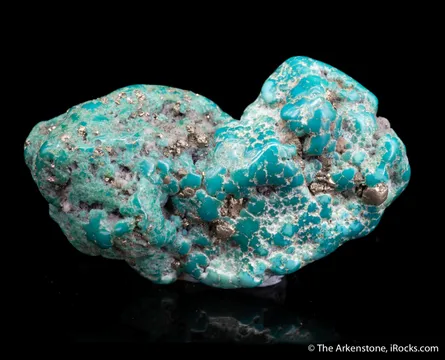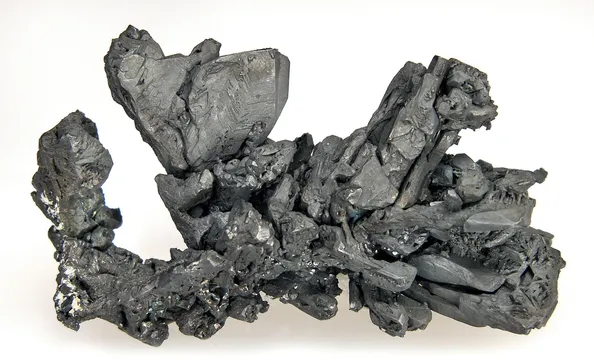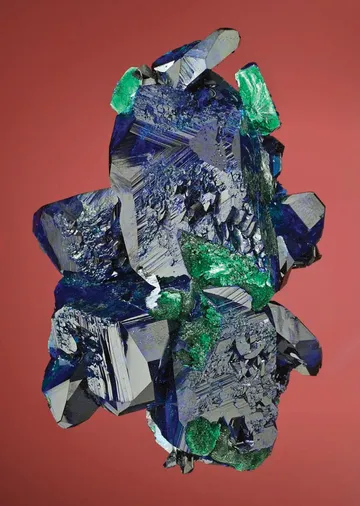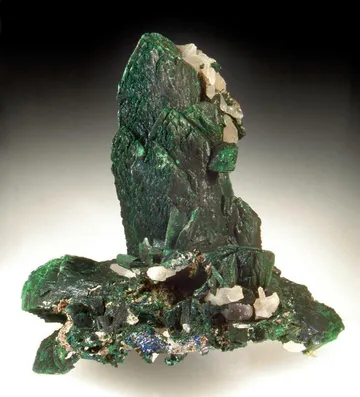
Sonora, Mexico: a premier locality with Milpillas azurite and malachite, and Moctezuma tellurites; prized for color, rarity, and locality diversity.
Key facts
Sonora is not a single collecting site so much as a mineral province: a broad, copper-and-gold country along the Arizona border and down into the Sierra Madre Occidental, where Laramide porphyry copper systems, epithermal precious-metal veins, oxidized tellurium-gold deposits, lead-silver districts, skarns, and desert secondary zones all overlap in a way that has made the state one of Mexico’s indispensable specimen regions. For collectors, its modern fame rests first on the Milpillas Mine near Cuitaca, whose deep oxidized copper ore bodies produced electric-blue azurite, velvety malachite pseudomorphs after azurite, cuprite, brochantite, volborthite, vesignieite, olivenite, tenorite, plancheite, shattuckite, dioptase, native copper, and other secondary copper minerals in quality that immediately put the mine beside Bisbee, Tsumeb, Touissit, and the great Moroccan and Namibian copper classics.
The second pillar of Sonora’s collecting importance is Moctezuma, especially the Moctezuma or La Bambolla Mine and nearby Bambollita and San Miguel workings. There, an erratic epithermal gold-tellurium system oxidized into one of the world’s richest tellurium-mineral laboratories, giving collectors and mineralogists a remarkable suite of tellurites and tellurates. Many are micromount or thumbnail-scale rarities, but the locality’s scientific weight is enormous: moctezumite, sonoraite, denningite, poughite, schmitterite, mroseite, zemannite, xocolatlite, bambollaite, paratellurite, and other species anchor the state in the history of new-mineral description.
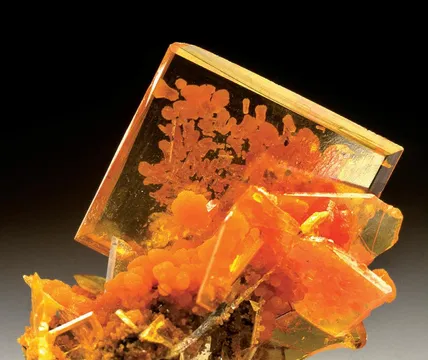
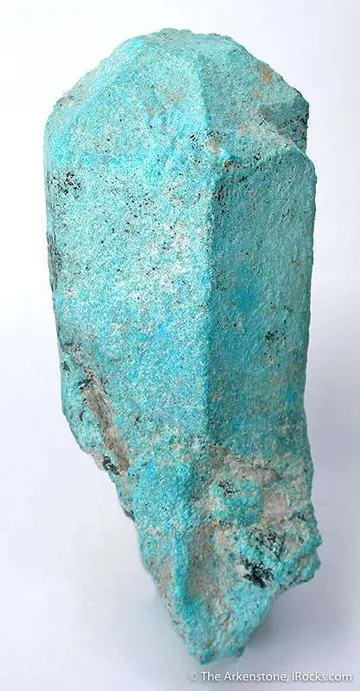
Sonora’s best cabinet pieces have a distinctive look. Milpillas azurites can be almost black at first glance, then flash indigo and royal blue from glassy, sharply striated faces; many sit on white dickite, pale quartz, malachite, or dark iron oxide matrix. Malachite-after-azurite specimens preserve the original bladed or blocky azurite forms in plush green. Moctezuma specimens are smaller and more esoteric: resinous yellow to orange moctezumite blades in microscopic rosettes, tellurite crystals in quartz-lined cavities, lemon-yellow poughite, green or blue copper-zinc tellurates, and rare metallic tellurides tucked into oxidized vein rubble.
Regional View
Country View
Sonora’s geography matters to its mineral character. The northern copper belt belongs to the same great Southwest porphyry copper province that continues into Arizona and New Mexico, and the Cananea district includes Buenavista del Cobre, Mariquita, Milpillas, María, Lucy, El Alacrán, and El Pilar. Farther southeast, Álamos preserves the memory of old silver-lead mining and the type locality for alamosite. In central Sonora, Moctezuma’s tellurium veins sit apart from the great porphyry systems: narrower, more erratic, but chemically extraordinary. The result is a state where a collector can build several very different sub-collections under one geographic label: world-class display copper minerals, rare tellurium species, historical Mexican lead-silver minerals, and modern mine specimens with precisely documented pocket names and levels.

Photo: Wikimedia Commons

Photo: Wikimedia Commons
Search for specimens: View all specimens from Sonora, Mexico
For specimen collectors, “Sonora” is best approached as a cluster of important districts rather than a single locality. The most visible modern source is Milpillas, an underground porphyry copper mine in the Cananea district of northern Sonora. Peñoles identifies the operation as La Parreña, also known as Milpillas, located in Santa Cruz, Sonora. Exploration began in the 1980s, and enough work had been completed by 2001 to justify building the mine. The deposit was developed for soluble copper minerals and operated with underground cut-and-fill mining with vanishing pillars and long-hole drilling; crushed ore was heap leached, processed by solvent extraction, and electrowon as Grade A copper cathode. Commercial production began in 2006, was suspended in July 2020, and resumed in 2022.
Geologically, Milpillas is a deeply oxidized and supergene-enriched porphyry copper deposit. The broader Cananea district is part of the Laramide porphyry copper belt of northwestern Mexico and the U.S. Southwest. Studies of the district describe Milpillas and La Mariquita about 14 km northwest of the Cananea mine, within the Cananea Lineament, and geochronology places Milpillas mineralization around 63.0 to 63.1 Ma. The oxidized ore bodies were the specimen engine. Geological work described upper blankets carrying oxide copper assemblages of green copper oxides and carbonates, including antlerite, brochantite, malachite, azurite, and chrysocolla; red copper oxides including cuprite and native copper; and black copper oxides including tenorite and related copper wad minerals.
The specimen production at Milpillas was a byproduct of mining, not a hand-dug collecting venture. Pockets and veins were encountered on working levels, and their contents reached the collector market through miners, Mexican dealers, Tucson dealers, and later the high-end international specimen trade. The great collector levels and pocket names now read almost like a modern stratigraphy of desirability: the 1100 level Rosette Pocket, the Tolvas Duales Pocket on the 1100 level, the 1160 level malachite-after-azurite and plancheite material, the Watercourse Pocket on the 1280 level, the 890 level volborthite finds, and the 992 level dioptase, shattuckite, quartz, and conichalcite assemblages. The finest azurites are lustrous, striated, bladed to blocky crystals in deep blue to midnight blue, commonly on white dickite or pale matrix, and many specimens show partial or complete replacement by malachite while keeping the azurite crystal form.
Moctezuma is a different kind of locality. The Moctezuma Mine, better known locally as La Bambolla, lies south of the town of Moctezuma in east-central Sonora. It was worked for gold ore from 1936 to 1945, even though the ore also contained native tellurium and tellurium minerals that were not of commercial interest at the time. Later re-examination showed that the mine and nearby workings were exceptionally rich in both the quantity and variety of tellurium minerals. The tellurium-gold veins occupy subparallel fractures cutting strongly hydrothermally altered sedimentary or tuffaceous rocks; quartz and barite are the principal gangue minerals, and primary metallic minerals include gold, native tellurium, and pyrite. Oxidation extends to at least 80 m and produced a suite of secondary tellurites and tellurates containing iron, zinc, manganese, calcium, uranium, lead, copper, and other elements.
The ore at Moctezuma was famously erratic, occurring in short, discontinuous ore shoots rather than broad, steady bodies. That irregularity is partly why the locality is so frustrating and so rewarding: rich seams and vugs can be astonishingly mineralized, while nearby vein quartz may be low grade. Collectors should think of Moctezuma specimens as rarity pieces rather than display-mineral bulk. Cabinet-size showpieces are not the normal currency there; the important specimens are micromounts, thumbnails, and small miniatures whose value lies in species, association, and provenance.
Álamos, in southern Sonora, adds an older historical layer. The mining district is tied to colonial and later silver-lead mining, and Álamos is the name source and type area for alamosite, PbSiO3, a rare lead silicate described from the district. Alamosite occurs as colorless to white radiating fibrous aggregates associated with lead secondary minerals such as wulfenite, leadhillite, and cerussite. Although not a common show mineral, its type-locality status makes Sonora essential to collectors of Mexican type minerals.
Access today is limited and should be treated conservatively. Milpillas, Buenavista del Cobre, La Caridad, and other major mines are industrial operations; they are not collecting grounds. Any visit to an active mine, private ranch, prospect, or abandoned working requires permission from land and mineral-rights holders, and old workings in Sonora carry the usual hazards of bad ground, deep shafts, heat, wildlife, remoteness, and changing security conditions. Most serious collectors acquire Sonora specimens through established dealers, older collections, mineral shows, or mine-connected provenance rather than through self-collecting.
Azurite is the signature Sonora display mineral. Milpillas crystals are among the finest modern azurites ever placed on the market: sharply formed, lustrous, saturated blue, and often arranged as sculptural clusters rather than simple crusts. The best pieces show individual crystals large enough to dominate a miniature or cabinet specimen, with striated faces and a deep optical density that can make them appear nearly black until turned into the light. The Smithsonian’s National Mineral Collection describes Milpillas azurites as among the most spectacular ever found and comparable with the classic azurite localities of Bisbee and Tsumeb, a fair comparison for the best examples.
Malachite from Milpillas is equally important, especially as pseudomorphs after azurite. These specimens preserve bladed, tabular, or blocky azurite habits while replacing the original blue carbonate with fibrous to velvety green malachite. The best examples are not merely green casts; they retain crisp edges, terminations, and clustered architecture, sometimes with residual azurite, plancheite, or contrasting white matrix. The Milpillas pseudomorphs became one of the defining Mexican mineral products of the early 21st century.
Cuprite, native copper, tenorite, brochantite, volborthite, vesignieite, olivenite, plancheite, shattuckite, chrysocolla, dioptase, conichalcite, and dickite round out the Milpillas collector suite. Cuprite occurs as sharp red to dark red crystals, sometimes with copper minerals and iron oxides. Native copper appears as sculptural metallic groups. Brochantite, volborthite, vesignieite, and olivenite are far rarer on the market than azurite, but Milpillas produced unusually fine examples for several of them. Dioptase with chrysocolla, shattuckite, malachite, and quartz from the 992 level forms one of the most attractive late assemblages, and the white clay mineral dickite is an important matrix mineral on many azurites.
The Moctezuma district is Sonora’s scientific jewel. The Moctezuma Mine is the type locality for a long roster of tellurium-bearing minerals, including bambollaite, burckhardtite, chenzhangruite, cuzticite, denningite, eztlite, konzettite, moctezumite, mroseite, paratellurite, poughite, rozhdestvenskayaite-(Zn), schmitterite, shenganfuite, sonoraite, spiroffite, stankeithite, sugarwhiteite, tomiolloite, xocolatlite, and zemannite. Nearby Bambollita is also critical for rare copper tellurium minerals, including xocomecatlite, tlalocite, cesbronite, and quetzalcoatlite.
Moctezumite, Pb(UO2)(TeO3)2, is one of the locality’s emblematic species. It is typically seen as minute yellow to orange blades and rosettes in cracks and vugs of oxidized ore. Its uranium content is worth noting for handling and storage, though most specimens are very small. Sonoraite, named for the state, is another locality-defining species; it belongs to the oxidized tellurium assemblage and is best appreciated in magnification. Xocolatlite, named for its chocolate-brown color and the Nahuatl-derived word connected with chocolate, adds both mineralogical and cultural resonance to the suite.
Tellurite and paratellurite are important at Moctezuma as the natural oxide expressions of tellurium in the oxidized zone. Poughite, schmitterite, denningite, mroseite, zemannite, burckhardtite, and emmonsite-rich associations are the kind of material that appeals to micromounters, systematic collectors, and students of tellurium geochemistry. Many are visually modest without magnification, but the associations are extraordinary because they record oxidation of native tellurium and tellurides in a chemically unusual gold-tellurium vein system.
Alamosite gives Sonora another type-locality mineral outside the tellurium suite. From Álamos, the rare lead silicate PbSiO3 was described as colorless to white radiating fibrous aggregates, associated with secondary lead minerals. It is not commonly encountered in broad market circulation, but for collectors of Mexican type minerals its importance is out of proportion to its size or flash.
Silver sulfosalts and other historical metallic minerals also occur widely in Sonora, especially in old districts such as Álamos, Arizpe, and other vein camps. Acanthite, pyrargyrite, miargyrite, galena, sphalerite, chalcopyrite, pyrite, quartz, calcite, barite, cerussite, wulfenite, and anglesite appear across the state’s district records, but they should be labeled to the specific mine or municipality whenever possible. “Sonora” alone is too broad for serious cataloging unless the specimen is old and no better locality is recoverable.
The first rule with Sonora specimens is locality precision. A label reading only “Sonora, Mexico” is acceptable for an old collection piece when nothing more is known, but it is inadequate for a modern Milpillas azurite, Moctezuma tellurium mineral, or Álamos alamosite. For Milpillas, the best labels include mine, town or district, municipality, level, pocket name, date range, and dealer or miner provenance when available. “Milpillas Mine, Cuitaca, Santa Cruz Municipality, Sonora, Mexico” is the modern standard, though older labels may say Cananea Municipality. For Moctezuma material, distinguish Moctezuma Mine or La Bambolla from Bambollita, San Miguel, and other nearby workings; these names matter for type-locality status.
Milpillas azurite is valuable enough that repairs, composites, and enhanced-looking pieces deserve scrutiny. Documented assembled fakes have been reported in which real azurite fragments were cobbled together with a teal-colored glue or filler containing ground malachite. Under magnification, look for seams that cross matrix and crystals unnaturally, colored filler in cracks, mismatched matrix fragments, and glossy adhesive in protected recesses. A cautious solvent test on a hidden area should be left to experienced conservators or dealers, but the collector’s loupe will often reveal the story.
Mislabelling is another specific Milpillas issue. A 2019-style assemblage of quartz, shattuckite, chrysocolla, and related copper silicates was at one point marketed as Milpillas material, but later work tied similar material to a small copper property near Rancho Jacalito, west of Cuitaca and many kilometers southwest of Milpillas. The distinction is not trivial. Milpillas 992-level quartz-dioptase-shattuckite pieces tend to include dioptase and a specific suite, whereas Rancho Jacalito material is characterized by abundant shattuckite, thicker quartz encrustations, fibrous ajoite largely replaced by chrysocolla, and lack of dioptase.
Condition issues are predictable but important. Azurite is softer and more brittle than its high luster suggests; edge chipping, bruised terminations, and contact marks on prominent blades are common. Malachite pseudomorphs after azurite can shed fibers or show worn high points. Dickite matrix can be powdery or undercut. Cuprite crystals may look robust but chip easily at corners, and copper oxide coatings can be altered by aggressive cleaning. Avoid prolonged soaking, acids, household cleaners, ultrasonic cleaning, and heat. Display away from direct sun and from sulfurous environments; azurite can alter over time under unfavorable humidity and chemistry.
Moctezuma tellurium specimens demand a different collector discipline. Most should be treated as analytical or micromount specimens. Accurate identification often requires prior analysis, expert visual comparison, or a trustworthy provenance trail. Many species are visually similar at hand-lens scale, and some are intergrown in the same cavity. Uranium-bearing moctezumite and related associations should be stored in labeled, closed boxes, handled minimally, and kept away from children; ordinary small micromount specimens are not a dramatic hazard, but the radioactive-mineral rules of good hygiene and sensible storage apply.
Market availability is split. Milpillas azurite and malachite remain regularly available because the mine produced many specimens from 2006 onward, but top-quality pieces with major crystals, named pocket provenance, strong aesthetics, and minimal repair are expensive and increasingly collection-bound. Fine brochantite, volborthite, vesignieite, dioptase assemblages, and exceptional cuprite are much less common than the azurite. Moctezuma specimens appear mainly through micromount dealers, specialist rarity inventories, old collections, and occasional new lots; species-level rarities can be far scarcer than their modest price history might suggest because confirmed, attractive examples are few.
Milpillas entered the specimen world almost like a rumor. Within a year of the mine opening in 2006, itinerant Mexican dealers were crossing into Arizona with azurite and malachite-after-azurite specimens that were good enough to cause talk but not yet fully understood. The source was kept quiet. The pieces did not match familiar Mexican or Arizona material, and the combination of sharp blue crystals, pseudomorphs, and pale matrix triggered exactly the kind of speculation that collectors love. Then the secret came out: the material was from the new Milpillas Mine. Even the early production had surprises. A single 4-inch azurite crystal acquired by Jimmy Vacek in 2007 was large enough to raise eyebrows, while Gene Schlepp and other dealers helped move the first wave of the material into serious collections.
The pockets that followed turned the mine from a curiosity into a contemporary classic. The Rosette Pocket on the 1100 level produced some of the great 2011 azurites, including an 11.5 cm specimen nicknamed “the Cannonball.” Other Rosette Pocket pieces reached 10 cm and 12.7 cm. The Tolvas Duales Pocket, also on the 1100 level, yielded azurite on malachite specimens around 7.5 and 13.3 cm in 2010. The Watercourse Pocket on the 1280 level, worked in 2013–2014, produced deep-blue azurites recorded at 11 cm, 5 cm, and 4.2 cm. These names now carry real meaning: they are not marketing flourishes but collecting coordinates within the mine’s short, spectacular specimen history.
The 1160 level gave Milpillas another identity: not just blue azurite, but green ghosts of azurite. Malachite pseudomorphs after azurite on velvet plancheite came out in 2008, including documented specimens of 9 cm and 4 cm. Their appeal is immediate to any collector who likes replacement textures: the form says azurite, the color says malachite, and the surface can look like green plush laid over the geometry of a vanished blue crystal.
The 992 level added a final flourish in 2019, when quartz, dioptase, shattuckite, chrysocolla, and conichalcite assemblages appeared. Quartz is surprisingly uncommon at Milpillas as good freestanding crystals, so the 992-level pieces with water-clear drusy coatings, small sunburst-like quartz clusters, dioptase, and shattuckite were especially memorable. Some reached miniature scale, including quartz crystal clusters on dioptase and quartz druse over dioptase and shattuckite. Almost immediately, the market had to learn a cautionary lesson: similar-looking quartz and copper-silicate pieces were being sold as Milpillas, but some were traced instead to Rancho Jacalito. In a market hungry for the Milpillas name, mineralogy itself became the policing tool.
Moctezuma’s story begins with a different kind of oversight. The La Bambolla Mine was worked from 1936 to 1945 for gold ore rich enough to ship, but the native tellurium and tellurium minerals in the ore were not treated as commercially important. No smelter record from El Paso captured the mineralogical oddity that collectors now prize. Only later did re-examination show that the deposit was not just a small gold mine with a tellurium accessory, but one of the richest tellurium-mineral localities known.
A later specimen episode gave the old tellurium camp a second life. Around 2007, several European-led collecting teams reworked the famous Bambolla area for specimens, and material appeared at Munich in 2008 and later in Tucson. One rich tellurite specimen from this period carried a 1.2 cm tellurite crystal projecting into a quartz vug, with other crystals lining the cavity. For Moctezuma, where many earlier tellurium species were available only as microcrystals from decades-old workings, a centimeter-class tellurite crystal was not just large; it was almost shocking.
Jones, Evan A., and Peter K. M. Megaw. “The Milpillas Mine, Cuitaca, Sonora, Mexico.” The Mineralogical Record, 52(5), 493–626, 2021. The major modern specimen monograph on Milpillas, documenting geology, production history, pocket names, levels, and the full secondary copper assemblage.
Moore, Thomas P., and Marcus Origlieri. “Famous Mineral Localities: The Milpillas Mine, Cananea District, Sonora, Mexico.” The Mineralogical Record, 39(6), 25–34, 2008. The first major collector article on Milpillas, published as the mine’s azurite and malachite specimens were becoming an international sensation.
Gaines, Richard V. “Mineralización de telurio en la mina La Moctezuma, cerca de Moctezuma, Sonora.” Boletín del Instituto de Geología, no. 75, 1965. Foundational Spanish-language account of the La Bambolla/Moctezuma tellurium-gold deposit, its geology, oxidation, ore shoots, and secondary tellurium minerals.
Mindat Type Locality Report for the Moctezuma Mine, Moctezuma Municipality, Sonora. A compact reference listing the many type-locality minerals tied to the Moctezuma Mine, including moctezumite, sonoraite, poughite, schmitterite, xocolatlite, and others.
Gaines, Richard V. “Moctezumite, a new lead uranyl tellurite.” American Mineralogist, 50, 1158–1163, 1965. The type description of moctezumite from the Moctezuma Mine, one of the emblematic Sonora tellurium minerals.
Harris, D. C., and E. W. Nuffield. “Bambollaite, a new copper telluro-selenide.” The Canadian Mineralogist, 11, 738–742, 1972. Type-mineral publication for bambollaite from the Moctezuma Mine.
Grundler, P. V., Brugger, J., Meisser, N., Ansermet, S., Borg, S., Etschmann, B., Testemale, D., and Bolin, T. “Xocolatlite, Ca2Mn4+2Te2O12·H2O, a new tellurate related to kuranakhite: Description and measurement of Te oxidation state by XANES spectroscopy.” American Mineralogist, 93, 1911–1920, 2008. Type description for xocolatlite from the Moctezuma Mine, important for modern analytical work on tellurium oxidation state.
Switzer, George, and H. E. Swanson. “Paratellurite, a new mineral from Mexico.” American Mineralogist, 45, 1272–1274, 1960. Early new-mineral work connected with the Moctezuma tellurium suite.
Mandarino, J. A., Williams, S. J., and Mitchell, R. S. “Denningite, a new tellurite mineral from Moctezuma, Sonora, México.” The Canadian Mineralogist, 7(3), 443–452, 1963. Type description for denningite, one of the classic Moctezuma tellurium minerals.
Valencia, Victor A., Ruiz, Joaquín, Barra, Fernando, Gehrels, George, Ducea, Mihai, Titley, Spencer R., and Ochoa-Landín, Lucas. “Re-Os molybdenite and LA-ICPMS-MC U-Pb zircon geochronology for the Milpillas porphyry copper deposit: insights for the timing of mineralization in the Cananea District, Sonora, Mexico.” Revista Mexicana de Ciencias Geológicas, 23(1), 39–47, 2006. Key geochronology paper placing Milpillas within the Laramide evolution of the Cananea porphyry copper district.
Alamosite mineral data, Handbook of Mineralogy. Concise mineralogical reference for alamosite, the rare lead silicate named for Álamos, Sonora.
“Prep Work: Azurite crystals and Malachite, Milpillas Mine, Sonora, Mexico - Part 1 of 3” — Mine Rat Minerals. Mark Kielbaso demonstrates preparation work on a Milpillas azurite and malachite specimen, including the use of a diamond rope saw.
“Prep Work: Azurite crystals and Malachite, Milpillas Mine, Sonora, Mexico - Part 2 of 3” — Mine Rat Minerals. Continuation of the Milpillas specimen preparation sequence, useful for understanding how delicate matrix and display faces are handled.
“Azurite from Milpillas Mine, Sonora, Mexico” — Vimeo. Short specimen video showing the visual character of Milpillas azurite in motion.
Mindat: Sonora, Mexico — The broad state-level index for Sonora mineral localities, commodities, and species records.
Mindat: Milpillas Mine, Milpillas, Santa Cruz Municipality, Sonora — The main locality page for Milpillas, with species list, references, and photo records.
Peñoles: Milpillas — Operator information on ownership, mining method, processing, production status, and reserves.
Smithsonian National Museum of Natural History: Azurite, NMNH 177311 — Museum description of a major Milpillas azurite and the locality’s world-class status.
Wikimedia Commons: Milpillas Mine — Open image category with numerous Milpillas azurite, malachite, cuprite, dickite, and copper-mineral photographs.
Mindat: Moctezuma Mine, Moctezuma Municipality, Sonora — The central database entry for La Bambolla/Moctezuma Mine and its rare tellurium assemblage.
Mindat: Type Locality Report for Moctezuma Mine — The most efficient checklist of Moctezuma type-locality species.
Wikimedia Commons: Moctezuma Mine — Useful photographic reference for Moctezuma tellurium minerals including moctezumite, tellurite, poughite, sonoraite, xocolatlite, and zemannite.
Mindat: Álamos, Álamos Municipality, Sonora — Locality page documenting alamosite and the broader Álamos district mineral suite.
USGS: Mexico Mineral Industry Overview — Current national mining context, including Sonora’s central role in Mexican copper and gold production.
Revista Mexicana de Ciencias Geológicas: Supergene enrichment and mass balance analysis in the Milpillas porphyry copper deposit — Technical geology paper on Milpillas supergene enrichment and oxide-copper mineralization.
Mineralogical Record: August 2008 What’s New article — Contemporary market commentary from the period when Milpillas was emerging as a “contemporary classic.”