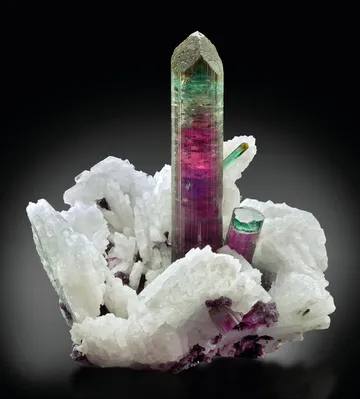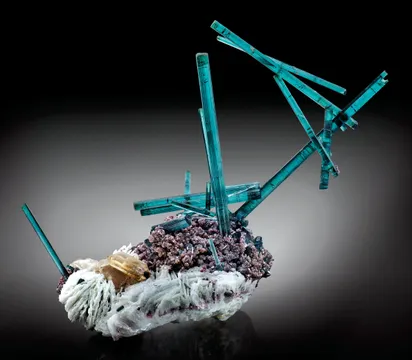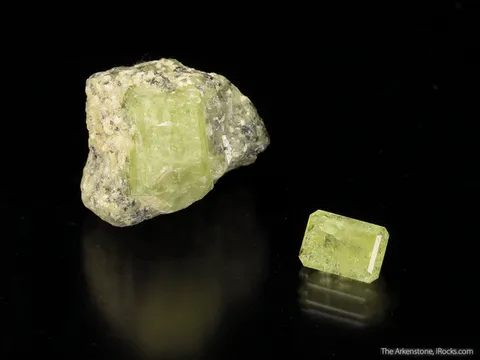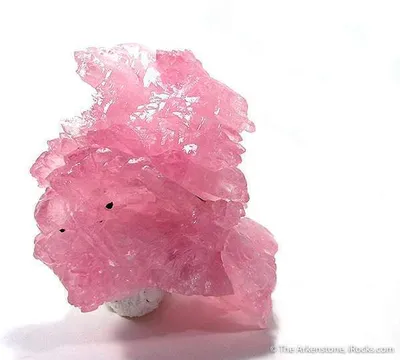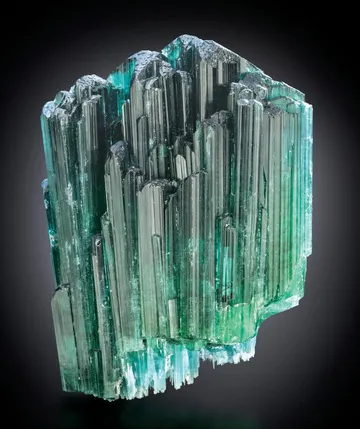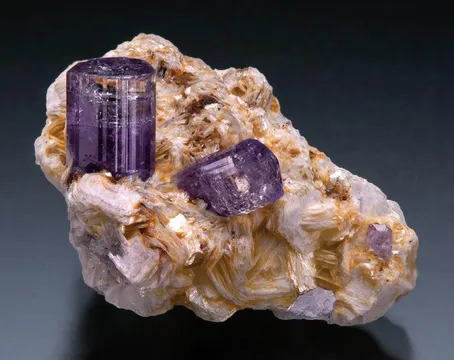
Medina pegmatite field, Brazil — renowned aquamarine crystals in sea-blue to blue-green beryl, with fluorapatite and topaz; a standout locality for collectors.
Key facts
The Medina pegmatite field is one of the great aquamarine names of northeastern Minas Gerais: not merely a place that produced gem rough, but a field whose best crystals have a look so specific that seasoned collectors recognize them at a glance. The field lies in the Pedra Azul pegmatite district of the Eastern Brazilian Pegmatite Province, in the Jequitinhonha-region gem belt where granitic pegmatites supplied aquamarine, topaz, beryl-group varieties, apatite-group phosphates, and rare Be-P-F species to both the gem trade and specimen market. Geologically, Medina belongs to the Medina–Pedra Azul suite of NYF-affinity granitic pegmatites—beryllium-, niobium-, phosphorus-, rare-earth-, fluorine-, uranium- and thorium-enriched bodies related to I-type granitic magmatism rather than the lithium-rich LCT pegmatites farther west and south.
For collectors, Medina means etched aquamarine first. The finest crystals are not just blue beryl; they are water-clear, sea-blue to blue-green hexagonal prisms, commonly tapered or naturally dissolved at the terminations, with rectangular “window” etch marks and a glassy, almost wet luster. The best examples from the celebrated late-1990s pocket are now benchmark Brazilian aquamarines: sculptural, gemmy, saturated, and far scarcer on the market than their fame would suggest. Around that central identity sits a distinctive supporting cast—sherry to root-beer fluorapatite clusters, colorless to blue topaz from Serrinha and Funil, golden to yellow-green heliodor, and true F-dominant herderite from Funil, one of the most mineralogically important occurrences in the field.
Regional View
Country View
Medina is also important because it sits at the intersection of specimen aesthetics and hard mineralogical evidence. The same F-rich residual systems that gave collectors blue beryl and topaz also produced herderite at Funil, where analyzed greenish-gray centimetric crystals proved to be fluorine-dominant. In the broader Medina–Pedra Azul district, the pegmatites are generally small to medium bodies, commonly less than 5 m thick, biotite-rich, tourmaline-poor or tourmaline-free, and lacking lithium minerals—features that help separate Medina material from the more Li-rich tourmaline and spodumene pegmatites elsewhere in Minas Gerais.
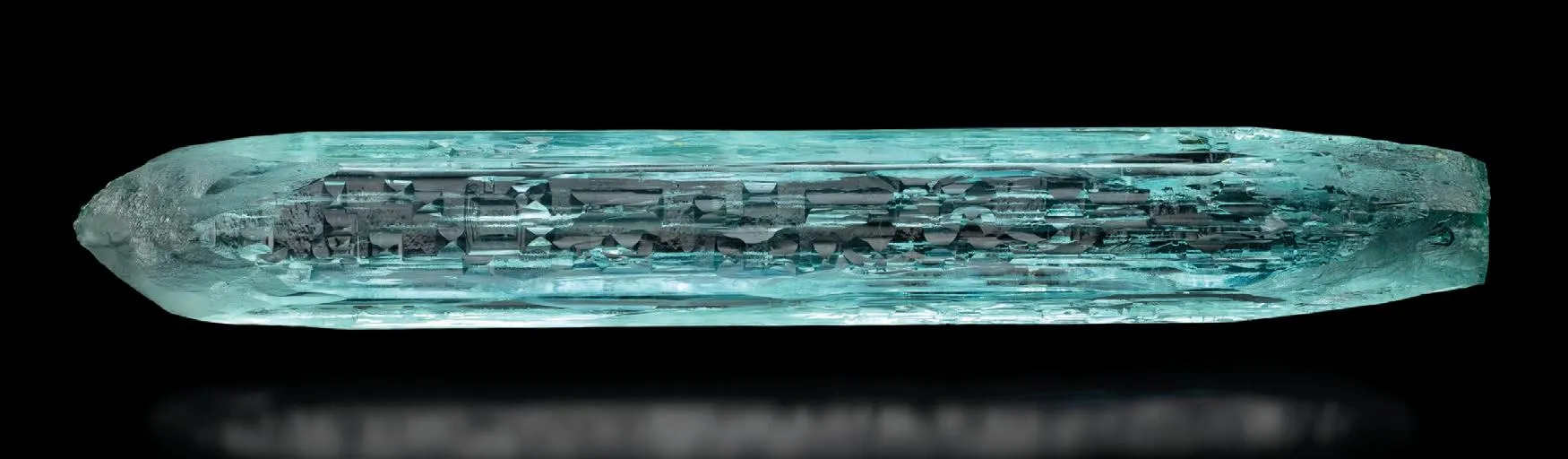
Photo: EarthWonders
Search for specimens: View all specimens from Medina pegmatite field, Brazil
The Medina pegmatite field is part of the Pedra Azul pegmatite district in northeastern Minas Gerais, Brazil, within the Eastern Brazilian Pegmatite Province. It is usually discussed together with Pedra Azul because the two form a coherent NYF-type granitic pegmatite suite, distinct from the lithium-rich LCT pegmatites of the Araçuaí–Itinga–Coronel Murta belt. In the Medina–Pedra Azul area, the pegmatites are related to metaluminous, I-type, syenogranitic to granitic source rocks, including the Medina granite system, and are hosted mainly by granites and biotite-rich gneisses rather than the classic mica-schist settings of many Li-bearing pegmatites farther west.
The economic and collector mineralization is controlled by simple but highly effective zonation. Productive bodies commonly have wall and intermediate zones of feldspar, quartz, muscovite, albite, and biotite, with quartz-rich cores and late albitic replacement bodies. Beryl and aquamarine occur close to quartz cores and in small pockets in intermediate zones; topaz is tied to the fluorine-rich upper and late-stage parts of the systems; and phosphate species—including fluorapatite and herderite-series minerals—occur in late replacement assemblages. The general Medina–Pedra Azul accessory suite includes topaz, beryl, columbite-(Fe), zircon, apatite, rutile, titanite, fluorite, allanite, monazite, samarskite, euxenite, autunite, herderite, fergusonite, and alteration products such as kaolinite, epidote, autunite, and plumbogummite.
Medina’s mining history is the familiar Minas Gerais pattern of small mines, claims, and garimpo-style work rather than one large industrial mine. The field has produced both cuttable gem material and high-end cabinet crystals. Aquamarine production was already significant by the late 1970s and early 1980s: a 7.9 kg Medina crystal cut in 1978 reportedly yielded about 8,000 carats of fine gems, including an intense 107 ct octagonal stone in the Kalil Elawar collection in Teófilo Otoni, and about 3,000 carats of aquamarine were reported from Medina in October 1983. Those numbers describe the gem trade; the specimen trade remembers Medina more sharply for later preserved crystals, especially the great 1997 Angico pocket.
The Angico or Angicos mine name is attached to the best-known modern aquamarine specimens. A 22.5 cm crystal published from that mine is among the crystals recovered in 1997 from a single pocket and later purchased from Brazilian agent Wilson Tomich by Pierre Laville on behalf of Wayne Thompson and Gene Meieran. The crystal displays the Medina hallmarks: rectangular etch features on the prism faces and tapered, dissolution-shaped terminations. Three other crystals from the same pocket appeared on the March–April 2002 cover of The Mineralogical Record, helping fix Medina’s etched aquamarines in the modern specimen canon.
The Funil mine, within Medina municipality, is the key locality for herderite and also important for topaz and aquamarine. It lies in the Medina pegmatite field and was documented as a small to medium pegmatite system targeted for gem beryl and topaz. The herderite samples studied from Funil came from euhedral, centimetric, greenish-gray crystals collected near the hanging wall, where important topaz finds had occurred in the 1990s. A later small group discovered in 2011 showed the same general appearance and included faces coated with thin schorl crystals.
The Serrinha pegmatite is the main named Medina occurrence for scientifically studied topaz. It is described as a system of branched, thin pegmatite veins hosted by the pink facies of the Medina granite. Its topaz is colorless to blue, large, prismatic, and commonly bi-terminated. A 13 cm gem-quality topaz crystal from Serrinha famously broke spontaneously during washing in warm water, splitting into an 11 cm crystal and three fragments; those pieces became the basis for a Raman and microthermometric inclusion study that identified mineral inclusions including microcline, albite, quartz, rutile, wolframite, uranophane, and topaz itself, along with CO2-bearing fluid inclusions.
Collecting access today should be understood as mine- and claim-controlled rather than recreational. Medina specimens enter the market through Brazilian miners, local agents, and international dealers; serious field access requires local permission and current knowledge of which workings are active, safe, or abandoned. Loose “Medina” labels are common in the trade and can refer variously to the Medina municipality, the Medina pegmatite field, the Serrinha pegmatite, Funil, or the Angico/Angicos occurrence. For high-value pieces, especially etched aquamarine, the distinction matters.
Medina aquamarine is prized for a combination of color, clarity, sculptural dissolution, and historic scarcity: the finest crystals are gem to water-clear blue, sea-blue, or blue-green hexagonal prisms, commonly doubly terminated or tapering at one or both ends, with rectangular “casement-window” etch pits and smooth natural dissolution on prism faces and terminations. The most celebrated material came from the 1997 Angico pocket, where a small number of major crystals were preserved rather than cut; published examples reach 22.5 cm, while other Medina crystals documented in major collections and dealer records are in the 15–23.5 cm class, with smaller thumbnails and miniatures from older 1970s–1980s production also circulating. Associations are usually sparse—quartz, feldspar, muscovite, and local pocket clay are more typical than elaborate matrix groups—so the best specimens are judged primarily by saturation of blue, gem transparency, complete natural terminations, sharp hexagonal form, undamaged edges, and the quality of the etching; ordinary Medina aquamarine may be pale, contacted, rehealed, or cuttable rather than display-quality, but the great pieces have a deep internal glow and unmistakable etched architecture.
Beryl at Medina is not merely the parent species behind aquamarine and heliodor; it is a field guide to the chemistry of the district. Common beryl occurs in the beryl–topaz–phosphate pegmatites as pale green, bluish, yellowish, colorless, or less gemmy crystals associated with quartz, microcline, albite, muscovite, and local biotite-rich pegmatite zones, with crystals ranging from small embedded prisms to large single crystals from the core-margin and intermediate zones. Good non-varietal beryl specimens from Medina are those that still show sharp hexagonal habit, translucency, attractive pale color, and undisturbed natural surfaces; many lesser pieces are opaque, fractured, etched beyond elegance, or so broadly labeled “beryl” that they need careful comparison with aquamarine, heliodor, goshenite-like material, or alkali-rich beryl labels from the broader Pedra Azul district.
Medina fluorapatite is a connoisseur’s mineral, far less famous than the aquamarine but instantly recognizable when good: transparent, glassy, sherry, citrine, golden, or root-beer colored crystals forming loose matrixless clusters or floaters rather than the more common green apatites of many Brazilian pegmatites. Documented specimens include complete all-around clusters around 4–5 cm across, with individual crystals to roughly 3.3 cm and a style that can be doubly terminated, razor sharp, unusually lustrous, and sometimes almost “faden”-like in growth. The best pieces are damage-free, 360-degree clusters with high internal gemminess and strong luster; some show soft yellow to lemon-yellow fluorescence, making Medina apatites unusually appealing under longwave ultraviolet light as well as in daylight.
Topaz from the Medina field is best documented from the Serrinha pegmatite and the Funil mine, where fluorine-rich residual pegmatitic fluids produced colorless to blue, large, prismatic, commonly bi-terminated crystals. Serrinha topaz is specifically noted for gem-quality crystals and for inclusions that record late pneumatolytic to hydrothermal processes; one 13 cm crystal broke during warm-water washing and was studied as an 11 cm crystal plus fragments, revealing inclusions of microcline, albite, quartz, rutile, wolframite, uranophane, and topaz, together with CO2-bearing fluids. Good Medina topaz specimens are transparent, lustrous, sharply terminated, and preferably show natural etching or complex pinacoidal terminations without obvious cleavage damage; ordinary examples may be colorless but fractured, contacted, or reduced to gem rough, and they should not be confused with imperial topaz from the Ouro Preto region, which is a different geological and collecting story.
Medina heliodor is a scarce but important yellow to yellow-green expression of the same Be-rich, F-bearing pegmatite environment that produced its aquamarines. Documented specimens include gemmy light yellow, yellow-green, and golden crystals in the 5.5–10.3 cm range, some naturally etched into spear-like or almost stalactitic forms, and the best pieces combine true yellow color, transparency, complete doubly terminated form, and minimal bruising. Compared with aquamarine, heliodor from Medina is much less abundant and usually less celebrated, but high-quality examples are highly desirable because the color is tied to a classic Brazilian beryl district rather than a generic “Brazil” label, and because natural etching gives them a field-specific morphology rather than simply a cuttable yellow beryl look.
Other minerals documented from the Medina pegmatite field and its named workings include albite, microcline, muscovite, quartz, schorl, fluorite, phenakite, and herderite, with biotite-rich pegmatite assemblages distinguishing the district from more tourmaline-rich LCT fields elsewhere in Minas Gerais. The standout rarity is herderite from the Funil mine: analyzed F-dominant CaBe(PO4)F crystals from Medina represent one of the very few confirmed true herderite occurrences, and the 2009 Funil material was initially thought capable of establishing Funil as the species’ type locality before other confirmed work on Mogok, Myanmar material took precedence. In the broader Medina–Pedra Azul NYF suite, accessory and late-stage minerals reported include columbite-(Fe), zircon, rutile, titanite, REE-rich allanite, monazite, samarskite, goyazite, bobierrite, zwieselite, euxenite, autunite, fergusonite, kaolinite, epidote, and plumbogummite; many of these are small, analytical, radioactive, or field-suite records rather than common cabinet specimens, but they explain why Medina is more than an aquamarine locality.
The first authenticity issue with Medina is labeling. “Medina,” “Medina pegmatite field,” “Medina mine,” “Serrinha,” “Funil,” “Angico,” and “Angicos” are not interchangeable labels, even though older dealer tags and collection labels often use them loosely. High-value aquamarine from the 1997 Angico pocket should be treated as a provenance-sensitive object: ask for old invoices, collection history, published references, or photographs tying the specimen to the pocket. The best pieces have a distinctive etched habit, but etching alone is not proof; aquamarine from Pakistan, China, Nigeria, and other Brazilian districts can also be etched.
Treatment is another concern. Aquamarine is commonly heated in the gem trade to improve blue color, and Brazilian beryl rough has long been subjected to this practice. For mineral specimens, heating is difficult to prove without laboratory work unless there is clear documentation, and it should be disclosed if known. Medina’s most desirable collector crystals are valued as natural crystals, not as faceted gem material, so any cutting, polishing, or reworking matters. Polished terminations are known on older Medina aquamarines; they may have been done decades ago in Brazil to improve saleability, but a polished termination materially changes specimen value. Look closely for unnaturally flat end faces, uniform polish crossing broken growth features, rounded termination edges, or luster mismatch between prism and termination.
Condition is central. Medina aquamarines often owe their beauty to natural dissolution, so distinguish true solution etching from bruising, saw marks, and post-mining abrasion. Natural etch marks tend to be integrated into the crystal surface and may repeat as rectangular windows or smooth tapering; damage cuts across luster and edges. Topaz requires special caution because of perfect basal cleavage: even fine crystals may have hidden cleavage feathers, repaired breaks, or popped contacts, and the documented Serrinha crystal that broke during warm-water washing is a useful reminder that topaz should not be subjected to thermal shock. Wash Medina topaz only gently, in room-temperature water, and avoid ultrasonic cleaners.
Fluorapatite from Medina is comparatively delicate and should be checked for repaired intergrown clusters, edge bruising, and broken terminations. The best sherry or root-beer clusters are complete floaters with crystals exposed on all sides; broken bases and glued contacts can be easy to miss under strong luster. Some Medina fluorapatites fluoresce soft yellow to lemon-yellow, but fluorescence is not a universal authentication test. Herderite and hydroxylherderite cannot be reliably separated by eye; any specimen sold as true F-dominant herderite from Funil deserves analytical support or a provenance chain back to studied material.
Market availability is uneven. Small Medina aquamarines and older pale etched beryls still appear, but major 1997-pocket crystals are trophy-level and generally trade privately or through top-tier dealers. Fluorapatite clusters are scarcer than their modest size might suggest, and high-quality heliodor from Medina is notably uncommon. Topaz is available less often as locality-specific display crystals than as broader Minas Gerais material, so a reliable Serrinha or Funil label carries weight.
The most repeated Medina story begins with a pocket opened in 1997 at the Angico mine. It was not the kind of find that filled barrels with gem rough and vanished into cutting houses; enough of the crystals survived as specimens to change the way collectors talked about Brazilian aquamarine. One published crystal measured 22.5 cm, with a blue-green body, rectangular etch figures running along the prism faces, and terminations narrowed by natural dissolution. The specimen passed through a chain of people whose names are part of late-20th-century mineral history: Brazilian agent Wilson Tomich, Pierre Laville, Wayne Thompson, and Gene Meieran. Three other crystals from the same pocket later appeared on the March–April 2002 cover of The Mineralogical Record, giving the find an afterlife far beyond the mine.
There was an earlier Medina gem story, less visible in specimen cases but impressive in numbers. In 1978, a 7.9 kg Medina aquamarine crystal was cut and reportedly yielded about 8,000 carats of fine gems. Among them was a 107 ct octagonal stone, described as the largest and most intense faceted Medina aquamarine known to the reporting author at the time, in the collection of Kalil Elawar in Teófilo Otoni. A few years later, in October 1983, Medina was still producing enough gem aquamarine for a monthly output of about 3,000 carats to be recorded. Those figures sit behind the specimen market like a shadow: many superb crystals from the district must have disappeared into parcels of rough before collectors learned to save them whole.
The Serrinha topaz episode is smaller but unforgettable. A 13 cm gem-quality crystal was being washed in warm water when it broke spontaneously. Instead of ending merely as a collector’s mishap, the accident became science: the crystal split into an 11 cm crystal and three smaller fragments, which were then studied by Raman microspectroscopy, scanning electron microscopy with energy-dispersive analysis, and microthermometry. The broken topaz revealed a history of high-temperature pneumatolytic growth followed by hydrothermal overprinting, with inclusions of microcline, albite, quartz, rutile, wolframite, uranophane, and topaz itself, plus CO2-bearing fluids. For collectors, it is a cautionary tale with a practical moral: Medina topaz may look invincible, but topaz is a cleavable mineral, and warm water can be too much.
The Funil herderite story is a mineralogical near-miss. For many years, the distinction between herderite and hydroxylherderite was clouded by old descriptions, inadequate chemistry, and the habit of labeling either member simply “herderite.” When F-dominant material from Funil was studied, it seemed possible in August 2009 that the Medina mine might become the type locality for confirmed herderite. The samples were not dramatic gem crystals but euhedral, centimetric, greenish-gray crystals from near the hanging wall, in the same general zone where important topaz had been found in the 1990s. Almost simultaneously, however, herderite from Mogok, Myanmar, was described and structurally studied, and another F-rich occurrence in China was recognized. Funil did not become the type locality, but it remained one of the key confirmed localities for true herderite—an analytical triumph hidden inside an unassuming gray-green phosphate.
Keith Proctor, “Gem Pegmatites of Minas Gerais, Brazil: Exploration, Occurrence, and Aquamarine Deposits,” Gems & Gemology, 20(2), 78–100, 1984 — The classic gemological source for Minas Gerais aquamarine production, including Medina output, the 1978 7.9 kg crystal, the 107 ct cut stone, and the October 1983 production figure.
Nelson Angeli, “The Districts of the Eastern Pegmatite Province of Brazil,” in PEG 2011 Contributions, Asociación Geológica Argentina, 2011 — Summarizes the Medina–Pedra Azul NYF pegmatite suite, its geological setting, accessory minerals, zonation, aquamarine pockets, and Be–Nb–P–REE–F–U+Th enrichment.
Luiz Alberto Dias Menezes Filho, Mario Luiz de Sá Carneiro Chaves, Coralie Heinis Dias, and Daniel Atencio, “Recent mineral discoveries in the Coronel Murta, Taquaral, and Medina pegmatite fields, northeastern Minas Gerais, Brazil,” REM: International Engineering Journal, 69(3), 301–307, 2016 — The essential paper for Funil mine herderite, including chemistry, geological context, and the broader significance of rare pegmatite minerals in the Eastern Brazilian Pegmatite Province.
Magdalena Dumańska-Słowik, Tomasz Toboła, Lucyna Natkaniec-Nowak, and Antonio Carlos Pedrosa-Soares, “Characteristics of inclusions in topaz from Serrinha pegmatite (Medina granite, Minas Gerais State, SE Brazil) studied by Raman spectroscopy,” Vibrational Spectroscopy, 85, 196–201, 2016 — Documents the Serrinha topaz inclusion assemblage, the 13 cm topaz crystal that broke during washing, and the pneumatolytic-to-hydrothermal history of the topaz.
Michael A. Menzies, “Connoisseur’s Choice: Aquamarine, Medina Pegmatite Field, Pedra Azul District Minas Gerais, Brazil,” Rocks & Minerals, 100(5), 454–473, 2025 — A recent specialist article focused on Medina aquamarine as a connoisseur specimen locality.
Wendell E. Wilson, “The Medina Pegmatite Field, Pedra Azul District, Minas Gerais, Brazil,” The Mineralogical Record, 52(3), 225–250 — A major locality treatment for Medina, widely cited by collectors for the field’s aquamarine history and specimen context.
EarthWonders specimen record: Aquamarine, 22.5 cm, Angico mine, Medina pegmatite field — Published specimen record quoting The Mineralogical Record figure label and documenting the 1997 Angico pocket provenance through Wilson Tomich, Pierre Laville, Wayne Thompson, and Gene Meieran.
Mindat minID 8G4-K5D: Beryl var. aquamarine, Medina pegmatite field — Important documented Medina aquamarine specimen, 152 x 40 x 36 mm, with ownership history and statement of no treatment, cleaning, or repairs.
Mindat minID CQN-CHT: Herderite with schorl, Funil mine, Medina — Documented Funil herderite specimen, 55 x 40 x 25 mm, noted as F-dominant and confirmed by Luiz Menezes.
Mindat: Medina pegmatite field, Pedra Azul pegmatite district, Minas Gerais, Brazil — Core locality page for species list, specimen photographs, and locality hierarchy.
Mindat: Pedra Azul pegmatite district, Minas Gerais, Brazil — Useful district-level context for the Medina field and associated species including aquamarine, heliodor, topaz, fluorapatite, phenakite, and herderite.
Mindat: Funil mine, Medina, Minas Gerais, Brazil — Named Medina mine page important for herderite, aquamarine, topaz, quartz, albite, microcline, and biotite records.
SciELO: Recent mineral discoveries in the Coronel Murta, Taquaral, and Medina pegmatite fields — Open-access paper with the most important analytical information on Funil herderite.
GIA: Gem Pegmatites of Minas Gerais, Brazil: Exploration, Occurrence, and Aquamarine Deposits — Classic gemological overview with Medina production details and historical aquamarine context.
PEG 2011 Contributions: The Districts of the Eastern Pegmatite Province of Brazil — Technical geological reference for the Medina–Pedra Azul NYF pegmatite suite and its accessory mineralogy.
ScienceDirect: Characteristics of inclusions in topaz from Serrinha pegmatite — Abstract and article page for the Raman study of Serrinha topaz.
CODemge/Recursos Minerais de Minas Gerais: Gemas e minerais de coleção — Portuguese-language state mineral-resource overview with Pedra Azul district notes on aquamarine, topaz, apatite, herderite, and hydroxylherderite.
Mineral Auctions archive: Fluorapatite from Medina pegmatite field — Market record illustrating the distinctive sherry-colored, glassy, matrixless Medina fluorapatite style.
Mineral Auctions archive: Aquamarine from Medina pegmatite field — Market record for an older etched Medina aquamarine from the Richard A. Kosnar collection.