A collector's guide to Maharashtra, India: its geology, mining history and notable minerals, illustrated with the 111 specimens documented from this locality on EarthWonders.
Key facts
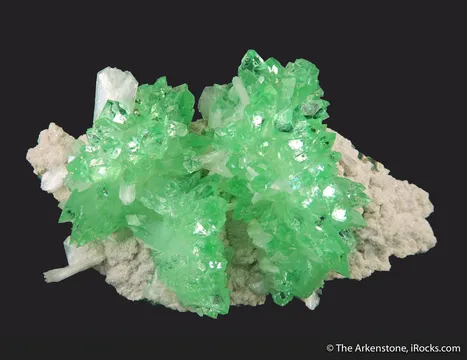
Maharashtra is one of the great mineral-specimen provinces of the world because most of the collector material comes from the amygdaloidal and brecciated basalts of the Deccan Traps, a vast Late Cretaceous–Paleogene flood-basalt province that underlies more than 80 percent of the state. For collectors, the name “Maharashtra” immediately evokes cavities in dark basalt lined with celadonite, chalcedony, quartz, zeolites, calcite, and apophyllite: glassy green fluorapophyllite-(K) crystals rising from pearly stilbite; peach, orange, and chocolate heulandite fans; white scolecite and mesolite sprays; snowy okenite balls; and, from Wagholi near Pune, vivid blue cavansite and pentagonite on zeolite matrix.
The geological setting is deceptively simple in hand specimen and highly complex in detail. The lavas were erupted as stacked basalt flows, each with dense interiors and vesicular, rubbly, or brecciated flow tops. Those porous zones became pathways and reservoirs for late fluids. Over long periods, circulating low-temperature hydrothermal fluids and burial-diagenetic solutions reacted with basaltic glass, plagioclase, pyroxene, and clay-lined cavities, depositing a sequence of silica minerals, calcic zeolites, apophyllite, calcite, and rare accessories. The resulting specimens are not “vein minerals” in the classic ore-mining sense; they are cavity minerals, liberated mainly when road-metal and construction-stone quarries cut through the right flow tops.
Regional View
Country View
Historically, Maharashtra’s collector significance reaches back to the older “Poona” and “Bombay” labels of 19th- and early-20th-century mineralogy. The Oxford University collections studied by H. L. Bowman included classic specimens from the neighbourhood of Bombay carrying pale green apophyllite, white stilbite, and silky needles then labelled “poonahlite,” a historical name later shown to belong with mesolite. The construction of the Great Indian Peninsula Railway through the Western Ghats produced magnificent early zeolite specimens, and later urban quarrying around Pune, Mumbai, Nashik, Jalgaon, Chhatrapati Sambhajinagar, and nearby districts made Maharashtra an almost continuous source of fresh collector material.
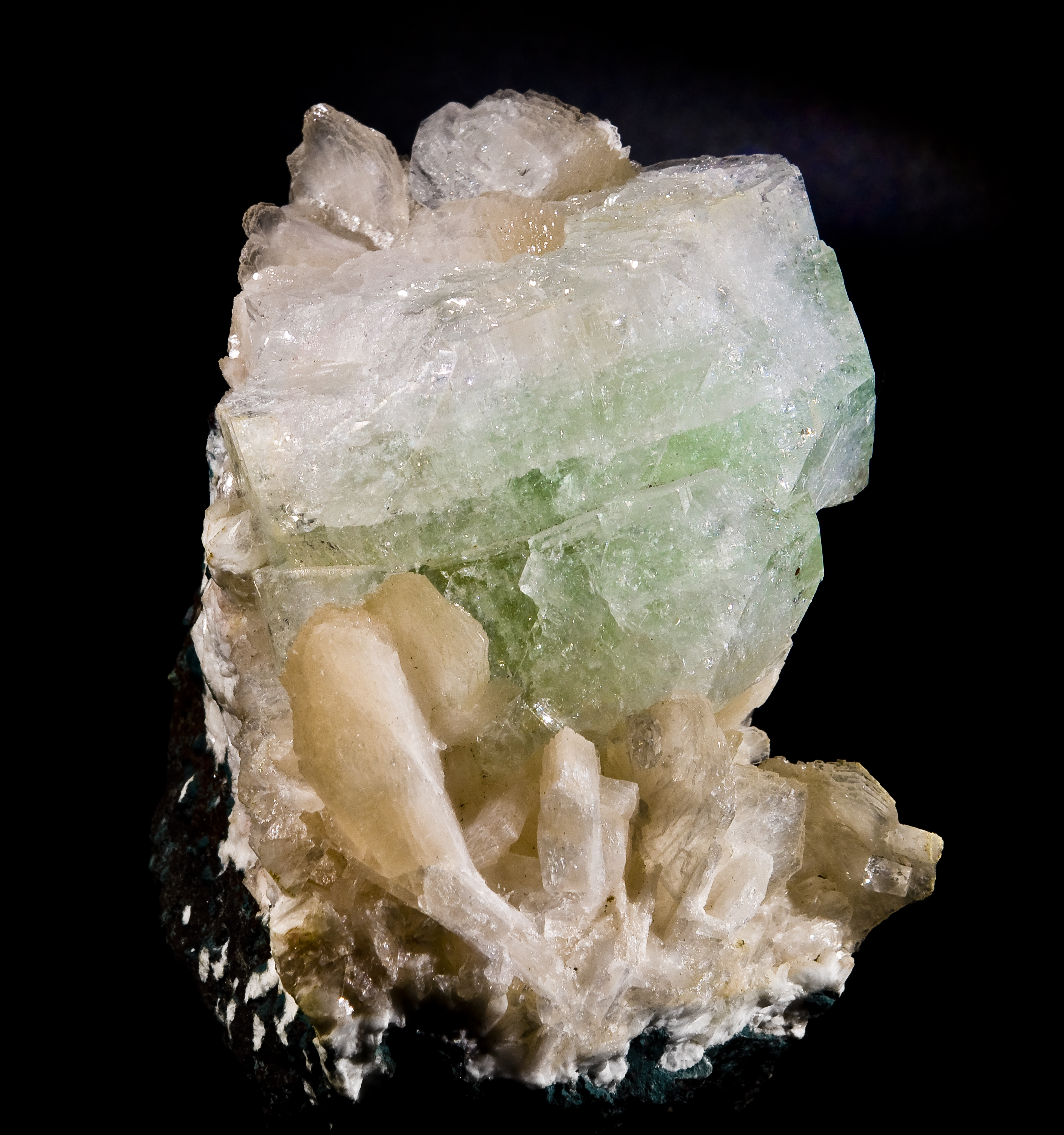
Photo: Wikimedia Commons
At their best, Maharashtra specimens have a look that no other basalt province quite duplicates: clean, sculptural crystals on dark basalt or sparkling silica; green apophyllite glowing against warm stilbite; radial scolecite combs that look fragile but architectural; and heulandite blades that range from delicate peach to saturated orange-red. The very abundance of ordinary material can obscure how rare the finest pieces are. A top Maharashtra specimen is not just “Indian zeolite”; it has undamaged terminations, deliberate-looking composition, strong contrast, and an honest locality history that narrows the specimen beyond the broad state label.
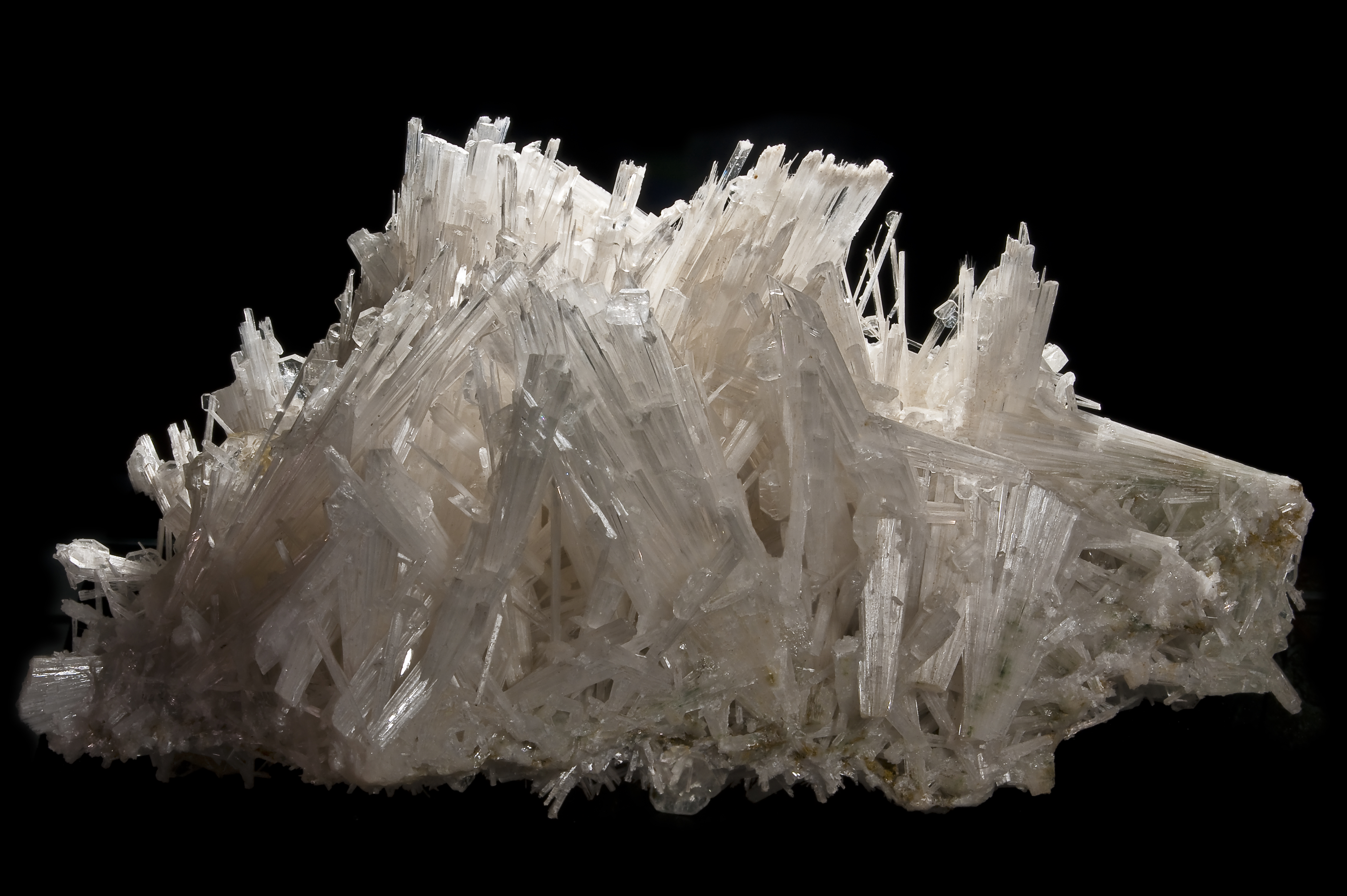
Photo: Wikimedia Commons
Search for specimens: View all specimens from Maharashtra, India
Maharashtra’s collector deposits are chiefly secondary-mineral assemblages in Deccan Trap basalts. The state geology is dominated by Deccan Trap lava flows, with local intertrappean and infratrappean beds, laterites, alluvium, and older Precambrian and Gondwana rocks in parts of eastern Maharashtra. For the specimen collector, the decisive rocks are the basalt flows: dense grey to black basalt cores, vesicular tops, scoriaceous zones, rubbly flow tops, red bole horizons, hyaloclastite or brecciated zones in some areas, and fracture networks that allowed late fluids to move through the pile.
The famous zeolite and apophyllite specimens formed in cavities rather than continuous ore bodies. Individual pockets may be small vesicles, irregular amygdules, inter-connected open spaces between breccia fragments, pipe-like or stockwork zones, or large geode-like cavities opened by blasting. The mineralizing solutions deposited celadonite or smectitic clay linings, silica skins, chalcedony and quartz, then various zeolites such as heulandite-Ca, stilbite-Ca, mordenite, scolecite, mesolite, epistilbite, laumontite, natrolite-group species, and rarer members, followed in many cavities by apophyllite and calcite. The old geological literature recognized zeolite zoning in the Western Deccan Traps, with laumontite, scolecite, and heulandite zones broadly reflecting depth, temperature, and fluid conditions; later studies refined this picture with multistage mineralization models from specific localities such as Savda/Jalgaon, Salsette-Mumbai, and Wagholi.
The main specimen districts are best understood as quarry belts rather than formal mines. Pune District, especially the old Poona/Pashan, Wagholi, Lonavala, Kamshet, Chakan, Moshi, Pashan, Sus, Hadapsar, and nearby quarry names, has yielded green apophyllite, stilbite, heulandite, mesolite, scolecite, gyrolite, prehnite, cavansite, pentagonite, and associated silica minerals. Nashik District and the wider Nashik Division, including Sinnar/Mahodari, Dindori, Pathardi, Ozar, Saikheda, Pandulena/Panduleni Hill, Rahuri, Sangamner-area localities, and Jalgaon District, supplied much of the modern market’s finest apophyllite, stilbite, heulandite, scolecite, quartz, chalcedony, epistilbite, stellerite, mordenite, powellite, and goosecreekite. Mumbai and the old Bombay/Salsette quarries, including Malad and Khandivali-type labels, are historically important for okenite, gyrolite, apophyllite, natrolite/scolecite, heulandite, stilbite, laumontite, quartz, calcite, and related secondary minerals.
Wagholi deserves special attention because it is the most famous rare-mineral sublocality within Maharashtra. The quarry complex lies northeast of Pune and, by recent geological study, consists of a belt of many quarries extending over several kilometres. It was worked for dense “black rock” basalt used as construction aggregate; the mineral specimens came from otherwise less valuable breccias and altered porous zones associated with basalt flow tops. Field studies in 2024 specifically examined Dhoot Quarry, Para Plateau Quarry, and Bhawadi Quarry. The mineralized zones occur in altered flow-top breccia and associated open spaces between two lava flows, with cavansite, pentagonite, stilbite, heulandite-Ca, mordenite, calcite, chalcedony, quartz, cristobalite, okenite, opal, celadonite, smectite, native copper, djurleite, hydrohalite, and other species documented from the complex.
Mining history in Maharashtra is mostly the history of building stone and road metal. Quarrying around cities repeatedly exposed pockets as a byproduct of blasting and crushing basalt. The great mineral flow to the international market accelerated in the late 20th century, when dealers and local collectors learned which quarry zones were worth watching and which pocket types could survive extraction. At Wagholi, quarrying began in the 1960s in the southwest around the Dhoot Quarry area and later expanded northeastward. Abundant cavansite became famous from discoveries beginning in the late 1980s, and by the 1990s Maharashtra zeolites, especially apophyllite–stilbite–heulandite combinations, were fixtures at major mineral shows.
Collecting access today should be treated as restricted and industrial. Most productive sites are working or former basalt quarries, not public rockhounding localities. Some classic Pashan and urban Pune quarries have been closed or absorbed by city growth. Other sites may be active, dangerous, legally controlled, or inaccessible because of quarry permits, blasting, crushing operations, environmental rules, and private ownership. Serious collectors should assume that field collecting requires explicit permission, local guidance, and safety arrangements; for most buyers, Maharashtra is now a market locality, best approached through specimens with good labels, old dealer records, and, where possible, district- or quarry-level provenance.
The notable finds were pocket events. Pashan became famous for pointed, vanadium-green apophyllite crystals, sometimes perched dramatically on pearly heulandite and stilbite. Jalgaon and Savda-type material produced warm heulandite, lustrous stilbite bow-ties, green apophyllite, quartz druse, chalcedony-lined geodes, and rarer goosecreekite and epistilbite combinations. Nashik-area quarries produced some of the most admired scolecite sprays and apophyllite–stilbite compositions. Mahodari is known in the trade for attractive stilbite and quartz combinations, including peach stilbite bow-ties on grey to translucent quartz. Wagholi pockets produced cavansite rosettes, tabular cavansite, pentagonite fiveling clusters, blue crystals on heulandite, mordenite, stilbite, calcite, chalcedony, and quartz, with mineralization changing from cavansite-rich to pentagonite- and mordenite-rich zones as quarrying moved through the breccias.
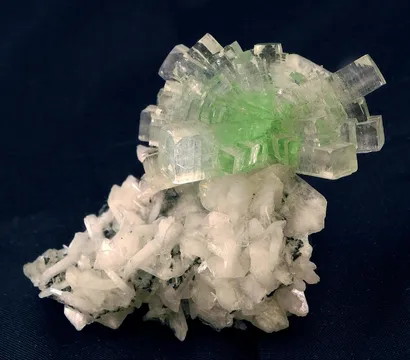
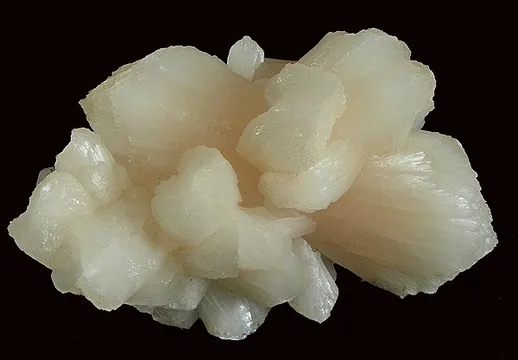
Stilbite from Maharashtra is the warm, pearly counterpoint to the state’s glassy apophyllite and quartz: typically cream, white, peach, salmon, honey, or pinkish, forming sheaf-like aggregates, bow-ties, radiating fans, bladed clusters, and occasional ball-like groups in basalt cavities from Pune, Nashik, Jalgaon, Ahilyanagar/Sangamner-area localities, Chhatrapati Sambhajinagar-area quarries, and Wagholi. Individual crystals are less common than composite sheaves, but good pieces may show lustrous doubly terminated bow-ties several centimetres across, perched on drusy quartz, chalcedony, mordenite, heulandite, calcite, or blocky green apophyllite. Maharashtra stilbite grades from abundant ordinary pocket lining to true competition material: the best pieces have undamaged terminations, high pearly luster, strong three-dimensional placement, clean contrast against dark basalt or sparkling silica, and a precise locality such as Jalgaon, Nashik, Mahodari, Pashan, Lonavala, or Wagholi rather than a vague “India” label.
Most collector “apophyllite” from Maharashtra is apophyllite-group material, commonly fluorapophyllite-(K), and it is central to the Deccan Trap look: sharp tetragonal crystals, pseudo-cubic blocks, steep pyramidal points, tabular forms, glassy clusters, and rare bow-tie-like habits in colorless, white, pale green, mint, emerald, yellowish-green, and occasionally more saturated green tones. The famous green color in Pune and other Maharashtra specimens is associated with vanadium, and the best old Pashan/Pune material combined pointed green crystals up to several centimetres with pearly white heulandite or stilbite; Nashik, Jalgaon, Rahuri, Mahodari, and related Deccan Trap quarries add their own variants, including blocky transparent crystals on scolecite sprays, green apophyllite with stilbite bow-ties, and glassy crystals on chalcedony, quartz, calcite, or mordenite. Fine pieces are separated from ordinary abundant apophyllite by transparency, saturation of natural green color, undamaged tips and beveled edges, balanced placement on matrix, and a believable association rather than a suspicious glued cluster of attractive crystals on unrelated basalt.
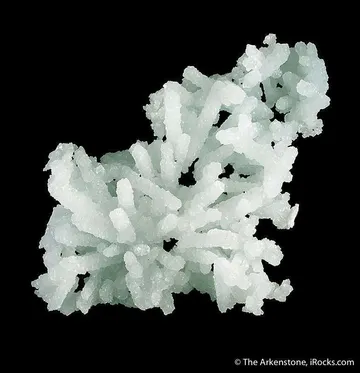
Quartz in Maharashtra is both a main display mineral and the quiet architectural surface on which many zeolite specimens are built: it occurs as colorless to milky druse, sparkling microcrystalline coatings, amethystine or smoky-tinted crystals in some pockets, stalactitic and compound-stalactitic forms, recrystallized chalcedony textures, and later overgrowths in basalt cavities. Jalgaon District is especially prolific for quartz-associated collector pieces, including stilbite bow-ties on glittering druse, epistilbite with quartz, heulandite and apophyllite on quartz/chalcedony, and unusual greenish drusy quartz contrasts; Wagholi has documented quartz, chalcedony, cristobalite, mordenite, cavansite, pentagonite, calcite, and stilbite in multistage breccia mineralization. Ordinary pieces may be only pale druse on basalt, but good Maharashtra quartz specimens show crisp, sparkling surfaces, sculptural stalactitic or geode form, attractive zeolite placement, and unbruised crystal tips, with the best pieces carrying enough matrix and association to prove their Deccan Trap origin.
Maharashtra scolecite is prized for radiating white to colorless sprays, coarse bladed clusters, delicate acicular fans, comb-like aggregates, and fibrous or prismatic groups from Nashik, Pune, Jalgaon, Pashan, Chandanapuri/Sangamner-area localities, and related basalt quarries. Nashik-region pieces are famous for large, well-terminated colorless sprays, often twinned with V-shaped terminations and fine striations, while Pune and Pashan-area material can occur in impressive radiating groups associated with heulandite cavities, apophyllite, stilbite, mesolite, laumontite, powellite, quartz, or chalcedony. The finest scolecite pieces are open and undamaged rather than matted: look for clean terminations, separation between sprays, strong white-on-green or white-on-basalt contrast, and minimal bruising along exposed needles, because even a superb-looking cabinet spray loses much of its quality if the crest is shaved or the fragile tips are broken.
Heulandite from Maharashtra is one of the state’s most collectible zeolites, occurring as tabular crystals, wedge-like plates, stacked blades, fans, sheaves, geode linings, and saddle-like groups in colorless, white, cream, peach, salmon, orange-red, reddish-brown, chocolate, and greenish celadonite-included tones. Jalgaon and Savda/Sawda-type material is especially admired for glossy peach to orange crystals on mordenite, chalcedony, quartz, stilbite, calcite, and green apophyllite, while Nashik and Pune-area pieces can show larger tabular crystals and strongly sculptural plates; in Wagholi, heulandite-Ca is an early and important cavity mineral and a common substrate for blue cavansite and pentagonite. Good heulandite is defined less by rarity than by architecture: crisp blades, bright pearly luster on cleavage faces, saturated but natural color, no obvious cleavages or glued repairs, and enough matrix contrast to avoid the dull “brown zeolite plate” look common in bulk material.
Calcite is widespread in Maharashtra Deccan Trap cavities and appears in multiple generations, from early cavity fillings to late crystals deposited over zeolites, apophyllite, quartz, chalcedony, and mordenite. Collector pieces may show colorless, white, honey, yellow, cream, or iron-stained crystals; rhombohedral, scalenohedral, tabular, twinned, rounded, or etched habits; and in Wagholi, calcite belongs to the documented cavansite–pentagonite assemblage along with stilbite, heulandite-Ca, mordenite, quartz, and chalcedony. Fine Maharashtra calcite specimens stand out when the crystals are clear, lustrous, and intentionally placed among contrasting zeolites rather than merely filling a cavity; damage is common because calcite cleaves readily and is often intergrown with brittle zeolite sprays, so sharp edges, unchipped corners, and natural attachment are especially important.
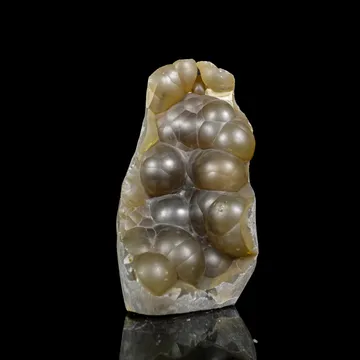
Chalcedony is one of the essential silica phases of Maharashtra’s basalt cavities, appearing as pale blue-grey, white, colorless, smoky, greenish, brownish, or translucent linings; botryoidal skins; agate bands; chalcedony-coated stalactites; and drusy quartz-overgrown geodes from Jalna, Killari, Latur, Malad, Vaitarna Dam, Nighoj, Chandanapuri, Jalgaon, Nashik-area quarries, Pune-area quarries, and Wagholi. In the best mineral specimens, chalcedony is not merely a lapidary material but a stage-setting matrix for stilbite, heulandite, apophyllite, quartz, mordenite, calcite, epistilbite, and rare species; in Wagholi, chalcedony and later quartz are part of the multistage silica-rich history associated with cavansite, pentagonite, mordenite, and calcite. Collectible pieces have crisp botryoidal form, translucent skins, attractive banding or stalactitic architecture, and clean later crystals; ordinary pieces are abundant, but specimens combining graceful chalcedony sculpture with undamaged zeolites are far scarcer.
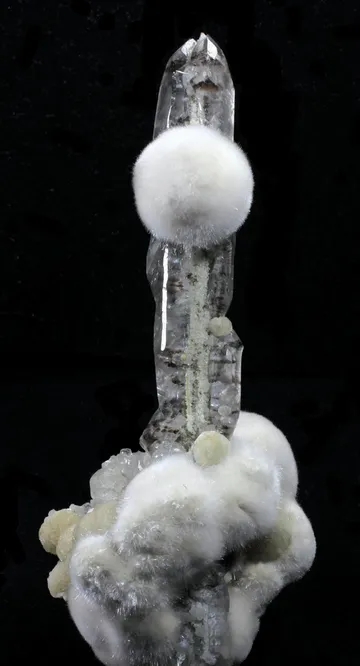
Mesolite from Maharashtra occupies the delicate, silky end of the zeolite spectrum, forming white, colorless, transparent, or locally orange-tinted needles, sprays, tufts, cottony masses, and large ball-shaped aggregates, especially from Pune-area localities such as Pashan and Kamshet, as well as Jalgaon and other Deccan Trap quarry districts. Pashan is a classic locality for high-quality mesolite, with abundant material in heulandite cavities and some very large spherical or clustered aggregates; the historical name “poonahlite,” coined for slender crystals from Poonah associated with apophyllite, was later shown to belong with mesolite rather than standing as a valid separate species. Good mesolite needs preservation more than size alone: the best examples have complete sprays or spheres, silky luster without dusting, minimal crushing of the needle tips, and attractive contrast with apophyllite, heulandite, stilbite, quartz, or basalt.
Other documented Maharashtra minerals broaden the locality far beyond the eight headline species. Wagholi is internationally important for cavansite and pentagonite, the blue calcium vanadium silicate dimorphs best known to collectors from Pune-area basalt quarries, though their type locality is in Oregon, not India. Jalgaon and related Deccan Trap localities have produced goosecreekite, epistilbite, stellerite, mordenite, powellite, natrolite, thomsonite-subgroup material, prehnite, gyrolite, okenite, laumontite, chabazite-Ca, opal-CT, cristobalite, and celadonite-bearing assemblages. Outside the classic zeolite belt, Maharashtra also includes manganese, coal, iron, limestone, bauxite, chromite, kyanite, corundum, pyrophyllite, quartz, silica sand, and lateritic mineral occurrences, but these are generally less central to the international specimen identity of the state than the Deccan Trap cavity minerals.
The first collector challenge with Maharashtra material is locality precision. Labels reading only “India,” “Poona,” “Pune,” “Nasik,” “Bombay,” “Jalgaon,” or “Maharashtra” may be historically normal, but they are not equivalent. Old “Poona” may mean Pune District generally, Pashan-area quarries, railway-cutting material, or another Pune-region basalt quarry. “Nasik” may mean Nashik District, a Nashik city-area quarry, Nashik Division, or, in looser commercial use, even neighboring Maharashtra material. “Jalgaon” may refer to the district, Savda/Sawda-area quarries, or broad trade sorting. For higher-end specimens, a quarry name, old dealer label, collection history, or analytical note is a real value factor.
Repairs are common enough that advanced buyers should inspect carefully. Maharashtra zeolites and apophyllites were often extracted from hard basalt by blasting, chiseling, or breaking pockets apart; delicate terminations, cleavages, and contact points suffer easily. Repaired stilbite bow-ties, reattached apophyllite crystals, glued matrix joins, stabilized scolecite sprays, and restored cavity plates occur in the market. A repair is not necessarily fatal on a large display specimen, but it should be disclosed and priced accordingly. Use magnification and side lighting to look for glue shine, unnatural debris packed around bases, mismatched matrix, repeated crystal orientation that looks arranged rather than grown, and fresh fractures hidden by clay or powder.
Dyed or enhanced material is less common than in some mineral categories, but it exists in the broader trade. The usual concern is not lab-grown apophyllite or synthetic zeolite; it is dyed color, refitted clusters, or composite “decorator” pieces. Green color in Maharashtra specimens can be perfectly natural: apophyllite may be vanadium-colored, and heulandite or stilbite can appear greenish from celadonite or related clay inclusions and linings. Conversely, unnaturally intense uniform color, pigment concentrated in cracks, colored water during washing, or green material smeared in glue around crystal bases deserves suspicion. Loose celadonite-rich clay in basalt can also release greenish residue, so the test is context and consistency, not color alone.
Species misidentification is routine. Stilbite and heulandite are often confused on mixed Indian zeolite plates, especially in peach, salmon, or creamy aggregates. Scolecite, mesolite, natrolite-group minerals, and fibrous mordenite can be casually mislabelled as one another. Apophyllite-group labels may use old names such as “apophyllite-(KF)” or generic “apophyllite” where modern nomenclature would require more specificity. Cavansite and pentagonite are especially important: both are vivid blue calcium vanadium silicates from Wagholi, but cavansite usually forms rosettes, balls, and acicular aggregates, while pentagonite more often forms sharper, bladed, starburst, or fiveling crystals. Visual identification can be strong on good specimens, but unusual habits or high-value pieces deserve expert confirmation.
Condition matters intensely. Apophyllite cleaves and chips; calcite cleaves; heulandite blades break along cleavage; stilbite tips bruise; scolecite and mesolite needles snap or mat down; okenite and some fibrous zeolites trap dust and are almost impossible to clean once contaminated. Avoid ultrasonic cleaning for delicate pieces, avoid aggressive soaking of clay-rich matrices, and never scrub fibrous zeolites. A gentle air bulb, soft brush used sparingly, and stable display environment are usually safer than water. For fluorescence, calcite and powellite-bearing pieces may respond under ultraviolet light, but most classic apophyllite–stilbite–heulandite specimens are bought for daylight aesthetics rather than fluorescence.
Market availability remains high at the entry level and selective at the top. Ordinary Maharashtra zeolite plates are common worldwide because decades of quarrying supplied huge quantities. Fine specimens, however—undamaged green apophyllite from old Pune/Pashan pockets, sculptural Jalgaon heulandite, balanced stilbite–apophyllite combinations, complete scolecite sprays, large mesolite balls, well-documented Wagholi cavansite or pentagonite, and unusual species such as goosecreekite, epistilbite, stellerite, powellite, or djurleite combinations—are genuinely competitive. The best buying strategy is to prioritize locality, composition, condition, and natural attachment over size alone.
The old “Poona” zeolites entered mineral history with a railway-age drama that collectors still feel in the labels. The Great Indian Peninsula Railway cut through the Western Ghats at a time when the basalt hills around Bombay and Poona were being opened on a scale earlier collectors could hardly have imagined. Out of those cuttings and tunnels came the magnificent Poonah specimens that later sat in institutional collections: pale green apophyllite, white stilbite, silky needles, and bluish-green cavity linings on purplish-brown amygdaloid. The old labels used the name “poonahlite” for the needles, a reminder of a period when field occurrence, habit, and locality often came before modern structure and chemistry. Bowman’s later work folded that old name back into mesolite, but the romance of it remains: a mineral name born from Poonah, preserved in the language of collectors even after it lost formal species standing.
The Wagholi cavansite story is even more modern and more industrial. The quarrymen were not mining blue crystals; they were after building stone. The useful rock was compact basalt, the “black rock” that could be crushed and sold. Beneath it, in altered, brecciated, economically unattractive material, the blue vanadium silicates appeared. The first great excitement began in 1988, when abundant cavansite was found in a newly opened quarrying zone near Pune. By the following year, the blue rosettes had reached the international mineral-show circuit, and a locality that might otherwise have been just another basalt quarry belt became one of the most recognizable names in mineral collecting.
What makes Wagholi especially memorable is that the blue crystals were never distributed evenly. Later mapping and field work showed a quarry complex kilometres long, with around 40 mostly shut-down quarries, but only small, irregular zones carried significant cavansite or pentagonite. In the Dhoot Quarry area, a flow-top breccia only a few metres thick at the quarry base yielded rich cavansite finds. A heavily mineralized pillar-like zone was once interpreted by collectors as something like a vent or feeder, but later geological interpretation treated it as a breccia ramp or mound cut by mineralizing veins and stockwork. That pillar is gone now—excavated and destroyed—leaving specimens and field notes as the surviving evidence.
The 2024 study of Wagholi gave the old collecting lore a sharper geological frame. In the southwest Dhoot Quarry, the flow-top breccia of the lower lava was exposed beneath the massive core of an upper lava. In another section about 100 metres north-northeast, the same contact showed a flow-top breccia around 4.6 metres thick, with mineralization confined to small breccia pockets. About 500 metres away, cavansite and pentagonite shifted position again: stilbite–cavansite–pentagonite in one part of the breccia, stilbite–calcite and cavansite near an upper flow contact, and cavansite with mordenite and calcite higher in the section. To a collector, that means a very practical thing: one blast could reveal nothing, and another could open a pocket of blue crystals that would be remembered for decades.
The most dramatic scientific twist is pentagonite. Collectors long knew the Wagholi blue minerals by eye—rounded cavansite rosettes and sharper pentagonite clusters—but the quarry relationships showed that the two could occur together, that pentagonite could be larger than expected, and that stilbite could grow later on pentagonite. Recent work concluded that cavansite and pentagonite formed under low-temperature zeolite-relevant conditions, not in the extreme thermal regime once assumed for pentagonite, and that the famous pentagonite “fivelings” are not actually built from five individuals but six. Few localities give collectors such a neat progression: beautiful specimens first, then better field geology, then a correction to the way the mineral itself had been imagined.