A collector's guide to Aurangabad District, India: its geology, mining history and notable minerals, illustrated with the 60 specimens documented from this locality on EarthWonders.
Key facts
Aurangabad District—now officially Chhatrapati Sambhajinagar District, but still overwhelmingly labelled “Aurangabad” in the mineral trade—is one of the Marathwada windows into the great Deccan Trap zeolite province of Maharashtra. Its collector importance is not an ore mine story but a cavity story: basaltic lava flows, stacked one upon another, with vesicular and amygdaloidal flow tops that later became nurseries for apophyllite, stilbite, calcite, quartz, heulandite, mordenite, laumontite, mesolite, fluorite and related secondary minerals. The district sits in a landscape of terraced trap hills, water wells, road cuts, basalt quarries and ancient rock-cut monuments; those same basalt flows that held the Ajanta and Ellora caves also host the mineral pockets prized by collectors.
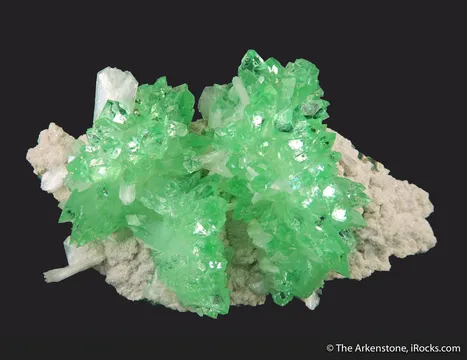
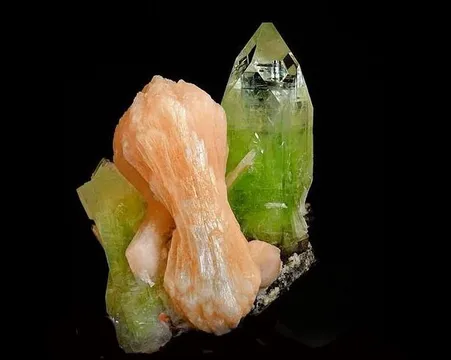
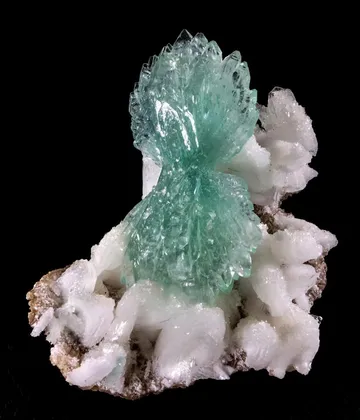
The classic Aurangabad look is unmistakably Deccan: pale green to green-yellow fluorapophyllite rising from peach, salmon, pink or ivory stilbite; white to colorless calcite set on sparkling quartz or chalcedony; and, more rarely, blue to colorless barite blades and sceptres from the broader Aurangabad–Jalna trade area. The finest specimens are not simply “Indian zeolites” in a generic sense. They have a soft, luminous palette and a basaltic architecture of drusy linings, stalactitic quartz growths, vug-wall plates and isolated crystals perched cleanly on contrasting matrix. Bidkin is the name that gives the district its strongest modern claim: a late-2006 discovery in a water well near Bidkin produced a cavern complex lined with green apophyllite, with several tonnes of fine specimens recovered during the dry-season work of 2007.
Regional View
Country View
For collectors, Aurangabad occupies an interesting middle ground between the famous Mumbai–Pune–Nasik–Jalgaon Deccan localities and the lesser-known rural finds that surfaced through wells and small workings. Labels can be broad, old-fashioned or imprecise: “Aurangabad,” “Aurangabad District,” “Aurangabad Division,” “Jalna, Aurangabad,” and “Maharashtra, India” may all appear on specimens from different administrative eras or trade routes. The serious collector should treat Aurangabad as both a district locality and a collecting-label convention, then look closely at the exact species, associations and old labels to judge how much locality precision the specimen really carries.

Photo: Mineral Auctions / The Arkenstone
Search for specimens: View all specimens from Aurangabad District, India
Aurangabad District is a secondary-mineral locality in Deccan Trap basalt, not a conventional metallic mining district for specimen collectors. The collector minerals occur in cavities, seams and amygdules in basaltic lava flows whose lower parts are massive and whose upper parts are more vesicular, amygdaloidal and zeolitic. The older gazetteer accounts describe the trap throughout the district as mainly augitic basaltic lava, with purple, grey and reddish vesicular to amygdaloidal horizons, red bole partings, compact scarp-forming trap and small dikes near Aurangabad, Chikalthana, Harsul and Daulatabad. Modern groundwater mapping describes the district as dominated by Deccan Trap basalt, with small alluvial tracts along rivers; individual flows are layered, generally horizontal and separated by bole horizons.
The “ore bodies” here are pocket systems rather than ore bodies in the mining sense. Mineralization is best understood as late-stage to post-volcanic cavity filling: silica, calcite, zeolites and apophyllite deposited in vesicles and fractures as fluids moved through cooling and later-altered basalt. A single cavity can carry several generations—chalcedony or drusy quartz lining the wall, zeolites forming sheaves or sprays, apophyllite perched as glassy tetragonal crystals, and calcite overgrowing or cross-cutting earlier phases. In the wider Deccan province, zeolite-bearing cavities are patchy and highly localized; a productive pocket may be exhausted in a single operation, while the next quarry bench or well shaft gives only ordinary amygdaloidal basalt.
The district’s best-documented modern specimen occurrence is Bidkin Well, near Bidkin in Paithan taluka. It is not a formal mine but a water-well discovery. The 2006–2007 Bidkin find exposed a cavern complex entered during the dry season, before the monsoon, and produced green apophyllite in divergent sprays with pink stilbite, rhombohedral calcite, heulandite-group minerals and celadonite-bearing associations. Chittegaon well, also in Paithan taluka, is recorded for green apophyllite-group material, and Vaijapur is recorded for stilbite-Ca, heulandite-Ca and associated apophyllite-group specimens. Kannad has produced epistilbite, mesolite and mordenite-bearing material, while the Ellora and Ajanta areas are part of the same basaltic district setting and have documented quartz, fluorite and amethyst occurrences nearby. Dealer and collection records also preserve labels from Valunj basalt quarry near Aurangabad, Wani, and broader “Aurangabad” finds that are meaningful historically even when exact coordinates are not available.
Mining history is therefore mostly a history of construction, groundwater and opportunistic specimen recovery. Basalt has long been quarried locally for road metal and building stone, and wells have intersected zeolitic cavities in villages where groundwater is the practical goal. Professional specimen extraction at a Deccan pocket can become intensive once a good cavity is known, but it is typically brief: the pocket is opened, trimmed, removed and distributed, often before the locality can be mapped with the precision collectors later wish it had. That is why Aurangabad specimens with old labels, exact well or village names, dates, dealer provenance, or references to a specific pocket—Bidkin 2007, Aurangabad January 2014, Vaijapur 2003-style heulandite/stilbite material—carry more locality value than attractive but anonymous “India zeolite” plates.
Collecting access today should be treated as private and permission-based. Wells, village excavations, active quarries and road projects are not public collecting grounds, and a historic pocket may no longer exist physically. Even where basalt exposures remain, the hazards are real: unstable cavity roofs, loose benches, monsoon flooding in wells, and freshly blasted quarry faces. Collectors usually encounter Aurangabad material through dealers, older collections and show stock rather than through field collecting.
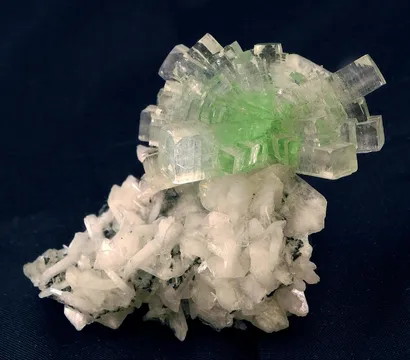
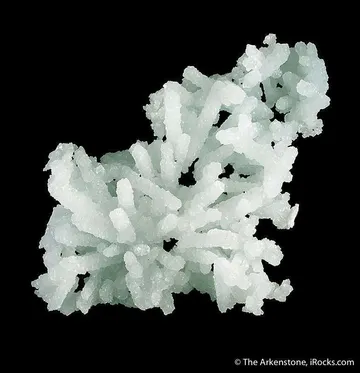
Stilbite from Aurangabad District ranges from tiny pink leafy crystals in the Bidkin Well assemblage to elegant white, ivory, peach and salmon blades, sheaves and bow-tie groups on basalt, quartz, heulandite or apophyllite. Vaijapur is an important labelled source for stilbite-Ca with heulandite-Ca and apophyllite-group associations, while Bidkin pieces are known for pink stilbite accompanying green apophyllite and rhombohedral calcite. The most desirable Aurangabad stilbites have separated, lustrous, undamaged sheaves or doubly terminated blades that stand proud of the matrix rather than forming a chalky crust; excellent combination pieces use the species as a color bridge between pale green apophyllite, white calcite and sparkling quartz.
Aurangabad’s apophyllite reputation rests especially on green fluorapophyllite-(K) and apophyllite-group crystals from Bidkin Well and later Aurangabad-labelled finds. Bidkin produced green divergent sprays from a well cavity system, commonly associated with pink stilbite, calcite, heulandite-group minerals and celadonite; the January 2014 Aurangabad pocket produced pale green to green-yellow, lustrous, thick-tabular to pseudocubic crystals, in some specimens exceeding 5–6 cm, set among pink bulbous stilbite sheaves and small white laumontite. Good examples show sharp glassy faces, attractive green color through the body of the crystal, minimal bruising on edges, and a natural composition in which the apophyllite is visibly perched rather than buried in zeolite.
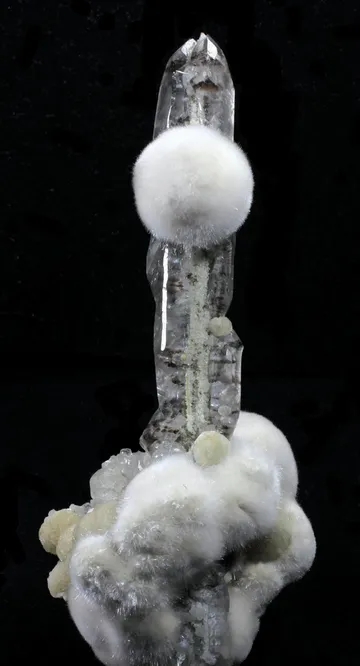
Quartz in Aurangabad District is chiefly a cavity-lining and matrix mineral: drusy quartz, chalcedony, agate and local amethyst form the sparkling foundation on which stilbite, apophyllite, calcite and occasional barite are displayed. The best-known collector style is not large isolated quartz crystals but sculptural stalactitic quartz or chalcedony coated with fine druzy faces, as in Aurangabad District specimens where salmon-pink stilbite blades sit on hollow quartz stalactites; broken backs of such pieces can reveal the tube-like growth structure through which silica-rich fluids once moved. The strongest quartz specimens from the district are those where the quartz provides architecture, contrast and glitter without overwhelming the zeolite or calcite association.
Calcite is abundant in the Aurangabad basalt cavities and occurs as rhombohedra, scalenohedra, white to colorless crystals, and later overgrowths on earlier zeolite and silica linings. Bidkin Well calcite is specifically documented as rhombohedral and associated with green apophyllite, pink stilbite and heulandite-group minerals; trade specimens from Aurangabad also show milky white calcite on chalcedony with green apophyllite and pink stilbite, or calcite rising from quartz-rich bases. The best Aurangabad calcites are transparent or cleanly white, sharply crystallized and compositionally placed; ordinary pieces are often visually heavy, bruised, or so overgrown with fine druse that the calcite form is lost.
Barite is much scarcer than stilbite, apophyllite, quartz and calcite in Aurangabad-labelled material, and it is one of the species where old trade geography matters: specimens are often labelled “Aurangabad,” “Aurangabad Division,” or “Jalna, Aurangabad,” reflecting the broader Aurangabad–Jalna Deccan collecting area rather than a simple modern district label. Documented examples include light blue, mostly gemmy tabular crystals, colorless thick blades to about 4 cm on quartz with scalenohedral calcite, elongated blue-white blades, and distinctive sceptre-like crystals; some pieces sit on chalcedony or quartz-rich bases and some are reported fluorescent under longwave ultraviolet light. The best barites are sharp, lustrous, translucent to transparent, undamaged, and accompanied by quartz, chalcedony or calcite in a way that makes their Indian Deccan origin obvious.
Other documented minerals and varieties from the district include fluorapophyllite-(K), heulandite-Ca, heulandite-subgroup minerals, stilbite-Ca, probable stilbite-Na, celadonite, epistilbite from Kannad, mesolite, mordenite, laumontite, stellerite, thomsonite-subgroup minerals, fluorite, amethyst, chalcedony and agate. I have not verified a valid mineral species whose type locality is Aurangabad District itself; the district’s mineralogical importance lies instead in excellent Deccan Trap zeolite-apophyllite-calcite associations and in rarer locality pieces such as stellerite from the Valunj basalt quarry, epistilbite from Kannad, and blue to greenish barite from the broader Aurangabad-labelled collecting area.
Aurangabad labels need scrutiny. The single biggest authenticity issue is not synthetic material but locality looseness: specimens from Jalgaon, Nasik, Pune, Ahmadnagar, Aurangabad District, Aurangabad Division and former Jalna/Aurangabad trade channels can look superficially similar and have often moved through the same dealers. “Aurangabad, India” may be accurate, approximate, inherited from an older administrative label, or simply a broad Deccan label. When a specimen is expensive because of locality, insist on supporting provenance: an old collection label, a dealer label naming Bidkin, Vaijapur, Kannad, Valunj or a dated pocket, or a published reference.
Species identification can also be slippery. Stilbite-Ca, stilbite-Na, stellerite and heulandite-group minerals are not reliably separated by casual appearance, and older labels may simply say “stilbite” or “heulandite.” Stellerite from Aurangabad-area material is especially worth confirming; it can resemble stilbite, and collector descriptions often rely on termination style unless analytical work has been done. Apophyllite should be treated as apophyllite-group or fluorapophyllite-(K) unless there is analysis or a reliable published basis for the exact species name. Green color alone does not prove fluorapophyllite-(K), and older “apophyllite” labels remain common.
Condition is the other decisive factor. Aurangabad zeolites and apophyllites are cavity minerals with delicate edges, stepped terminations, cleavages and contact points from pocket walls. Look for bruising on apophyllite cube-like corners, cleaved calcite tips, broken stilbite sheaves, abraded quartz stalactites and missing crystal tips along the high points of the specimen. Many matrix pieces are naturally contacted on the back or base, which is acceptable; fresh white breaks across display faces, repaired stilbite fans or glued matrix joins are far more serious. Calcite and some associated minerals may fluoresce, and at least some Aurangabad-labelled stilbite and barite specimens have been reported as fluorescent, but fluorescence is not a substitute for locality evidence.
Treatments are not widely documented for Aurangabad specimens, but washing, trimming and stabilization are common practical concerns for Deccan basalt specimens. Avoid soaking friable zeolite plates, mordenite-rich pieces or specimens with clayey green celadonite coatings. Laumontite-bearing pieces require special care because laumontite can dehydrate and become chalky; keep suspected laumontite associations away from heat, dry display lights and repeated wetting. For market rarity, stilbite, apophyllite, quartz and calcite combinations remain available, with fine large cabinet pieces and sharply crystallized Bidkin or 2014-pocket material commanding a premium. Barite, convincing stellerite, epistilbite, and exact-locality well specimens are much less common and should be valued partly for documentation.
The Bidkin discovery has the rhythm of a true Deccan collecting story: not a planned mine, not a mapped ore shoot, but a well. In late 2006, the first scattered news reached Europe that green apophyllite had been found near Bidkin, a small town roughly 25 km from the old city of Aurangabad. A few attractive specimens appeared briefly at the Munich Show, enough to catch attention but not enough to reveal the scale of the occurrence. Then, in early May 2007, just before the monsoon, the locality was pinned down: the apophyllite came from a well that could be entered only in the dry season.
What had been opened at the bottom of that well was not a minor vug but an “extraordinary cavern complex” lined with green apophyllite crystals. The timing mattered. Once the rains came, the work would become impossible or dangerous, so the specimen recovery took place in the narrow seasonal window before the monsoon. During the summer of 2007, several tonnes of fine specimens were removed. For collectors accustomed to seeing Deccan zeolite plates neatly trimmed and washed on show tables, Bidkin is a reminder that the origin of such pieces may be a confined rural shaft, seasonal groundwater, basalt cavity walls, and rapid work before the weather closed the place.
The January 2014 Aurangabad pocket made a different kind of entrance: through the fine-mineral market. Seventeen large fluorapophyllite-with-stilbite specimens were offered from the find, ranging from about 10 to 30 cm across. The best examples had pale green, translucent, lustrous, thick-tabular to pseudocubic apophyllite crystals to more than 6 cm resting among gleaming pink bulbous sheaves of stilbite. Thomas P. Moore’s market report captured the paradox of these Indian zeolite specimens: they had become familiar enough that collectors could take them for granted, but if they had emerged from a less productive province, the combination of color, scale and luster would have seemed startling.
A 2024 Dallas Mineral Collecting Symposium benefit auction preserved one of those 2014-pocket specimens as a market snapshot. The large-cabinet piece, 15.5 x 13.3 x 6.4 cm, carried pseudocubic green-yellow fluorapophyllite crystals to 5 cm, ivory stilbite crystals to 3.8 cm, and small white laumontite. Donated by The Arkenstone, it sold for $536, with proceeds benefiting mineralogical organizations. That is a useful number not because every Aurangabad apophyllite should be priced from it, but because it shows where documented, aesthetic, large-cabinet Aurangabad material sits in the modern collector economy: accessible compared with world-class rarities, but far beyond anonymous bulk “India zeolite” stock when the pocket, date, size and aesthetics line up.