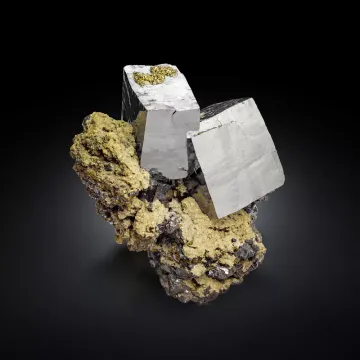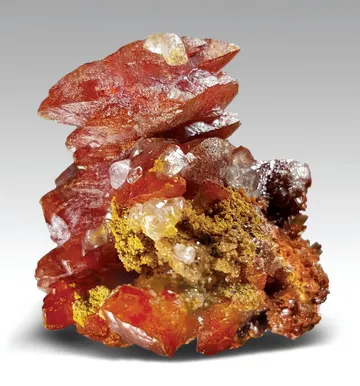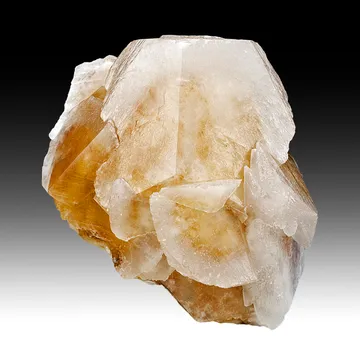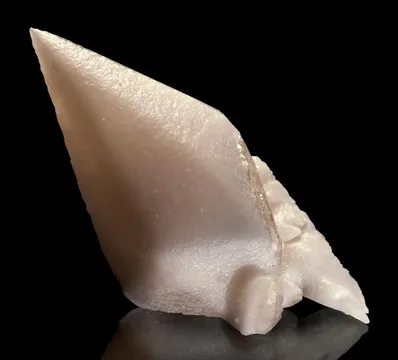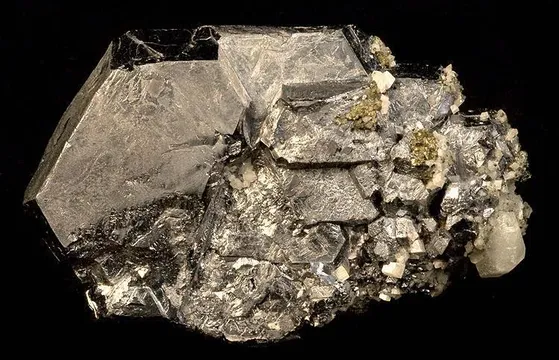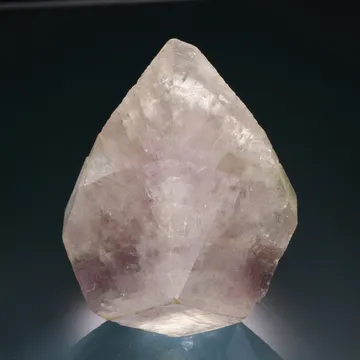
Joplin Field, USA, Missouri heart of the Tri-State lead-zinc district; famed for layered galena-sphalerite specimens with calcite, dolomite, and marcasite.
Key facts
Joplin Field is the Missouri heart of the old Tri-State lead-zinc district, one of the great Mississippi Valley-type ore provinces of North America and a locality name that still carries immediate weight with collectors of American classics. In specimen terms, “Joplin” means much more than ore: it means chert and jasperoid cavities lined with pink dolomite, lead-gray galena, ruby to honey sphalerite, bright calcite, brassy chalcopyrite, marcasite, and the delicate secondary zinc minerals that formed in the oxidized upper ground. The best Joplin pieces are unmistakable—dense, old-time cabinet specimens in which the ore minerals do not look isolated but layered, as if a whole mining district’s paragenesis has been compressed into one hand specimen.
Geologically, the field belongs to the carbonate-hosted lead-zinc mineralization of southwestern Missouri, adjacent to the Kansas and Oklahoma parts of the Tri-State district. The ores formed in Mississippian limestones, dolomitic rocks, chert, and their silicified equivalents, with mineralization occupying irregular breccias, replacement bodies, sheet-like zones, fractures, solution openings, and pockets. That combination of chemically reactive carbonate host rock and open-space cavities is why Joplin produced both industrial tonnage and specimens good enough for museums: the same ore solutions that cemented broken chert also left room for sharply crystallized galena, sphalerite, dolomite, calcite, chalcopyrite, and marcasite.
Historically, the field matters because Joplin became one of the great boomtowns of American mining. Lead had been worked in the region before the Civil War, but the 1870 strike along Joplin Creek triggered the camp’s transformation. Within a few years the locality shifted from a lead camp into a zinc-driven mining center, because sphalerite—“jack” to the miners—became the metal that built the town. Old labels from the field may read simply “Joplin,” “Joplin Field,” “Jasper Co.,” or “Tri-State District,” but more precise examples may preserve names such as Combination Mine, Empire Mines, Lone Elm Mine, Zig Zag Mine, Franklin, Mildred, Audrain, or Crystal Cave at the Ino mine.
Regional View
Country View
For collectors, Joplin’s enduring appeal is visual contrast. Galena may appear as modified cubes and octahedra, sometimes etched or hoppered, on chert or jasperoid. Sphalerite ranges from dark “black jack” to translucent honey and cherry-red “ruby jack.” Calcite may be colorless, amber, white-coated, or frosted, in rhombs, scalenohedra, and “dogtooth” forms. Pink dolomite gives many specimens their warm matrix, while chalcopyrite and marcasite provide metallic sparks. Secondary hemimorphite, greenockite, cerussite, smithsonite, pyromorphite, anglesite, and related minerals add the oxidized-zone signature, though fine examples of these are far scarcer than the common sulfide-carbonate combinations.

Photo: Wikimedia Commons

Photo: Wikimedia Commons
Search for specimens: View all specimens from Joplin Field, USA
Joplin Field is best understood as the Jasper County, Missouri collecting and mining-field designation for part of the Tri-State Mining District, the historic lead-zinc province spanning southwestern Missouri, southeastern Kansas, and northeastern Oklahoma. In modern mineral databases and specimen labels, Joplin Field is also a practical catch-all locality for older specimens whose exact mine, lease, shaft, or pocket was not preserved. That matters: a cabinet specimen labeled only “Joplin” may still be entirely legitimate, but a more detailed label naming Crystal Cave, Lone Elm, Combination, Empire, Zig Zag, Franklin, Mildred, Audrain, or a particular mining company tract is significantly more informative and should never be discarded.
The deposit is classic Mississippi Valley-type lead-zinc mineralization. The ore is hosted chiefly by Mississippian carbonate rocks and chert-rich units, especially the Boone-related limestone-chert succession and associated Burlington-Keokuk and Warsaw stratigraphic intervals recognized in the Missouri portion of the district. Ore solutions moved through fractures, solution openings, porous zones, breccias, and bedding-controlled pathways, depositing sphalerite and galena with dolomite, calcite, jasperoid, quartz, chalcopyrite, marcasite, pyrite, and lesser accessory minerals. The local rock vocabulary of the old mines—chert, limestone, jasperoid, gray spar, pink spar, jack, lead, tiff, and mundic—still reads directly on good specimens.
The ore bodies were irregular rather than vein-like in the narrow sense. Early geological descriptions separated Joplin ore into breccia bodies and blanket-vein or sheet-ground deposits. Breccia ore consisted of broken chert and limestone cemented or impregnated by sphalerite, galena, dolomite, jasperoid, calcite, and iron sulfides. Sheet-ground ore formed as flatter, bedding-related mineralization, with thin ore sheets intercalated among nearly horizontal chert beds. The district also used terms such as “runs” for linear ore trends controlled by fracture and shear zones, and “circles” for sinkhole-related mineralized ground. These differing ore-body styles explain the variety of specimen appearances: some pieces are sculptural cavity plates, while others are dense chert-breccia ores or jasperoid matrices carrying sparkling sulfides.
The principal ore minerals were sphalerite and galena. Sphalerite was the great zinc mineral of the district and occurs in massive, granular, disseminated, stalactitic, and well-crystallized forms. Galena, the lead mineral, occurs as disseminated grains, replacement masses, and crystals in vugs, channels, pockets, and caves. Chalcopyrite was a common but minor copper-iron sulfide, generally in small tetrahedral-looking sphenoids, while marcasite and pyrite formed abundant iron sulfide accompaniments. Dolomite commonly preceded the major sulfides in cavities; calcite was a major later gangue mineral and could grow spectacularly large in open voids. Oxidation near the surface produced smithsonite, hemimorphite, cerussite, anglesite, pyromorphite, gypsum, limonite, and related secondary species.
Mining history in the Joplin area began with small-scale lead work before the Civil War, with early mining reported near Leadville east of Joplin in 1848. The decisive Joplin boom followed the 1870 lead strike along Joplin Creek by E. R. Moffet and John Sergeant. By 1871 mining camps had filled the valley, John C. Cox platted Joplin City on the east side of the creek, and Patrick Murphy platted Murphysburg on the west. The rival settlements were permanently incorporated as Joplin on March 23, 1873. Lead was initially the metal that drew miners, but zinc soon transformed the field: sphalerite, first discarded or neglected in places because the early market and mills favored lead, became the “jack” that made Joplin a regional metropolis.
Production was enormous by nineteenth- and early twentieth-century standards. Missouri’s portion of the Tri-State district extended eastward from the Kansas line across parts of Jasper, Newton, and Lawrence counties, and Joplin became the commercial and smelting center. The district operated under a distinctive lease-and-royalty system in which landowners divided ground into small claims and miners leased, subleased, or worked shafts on royalty. Early “Joplin-type” mills recovered lead effectively but were much less efficient for sphalerite; the later zinc boom brought furnaces, concentrating mills, rail connections, and larger companies. Missouri’s record year came in 1916, with major zinc and lead output valued at tens of millions of dollars. The Missouri portion of the district closed in 1957, while mining in the broader Tri-State district ended by about 1970.
Specimen pockets came wherever mining intersected open spaces. Crystal Cave, at the Ino mine beneath the city near 4th Street and Gray Avenue, is the legendary example: a large natural cavity lined throughout with calcite crystals, described in old and modern accounts as a giant geode-like chamber with “glass tiff” scalenohedra from inches to roughly two feet long. Other pockets produced galena-sphalerite combinations, pink dolomite plates with chalcopyrite, sphalerite stalactites with intergrown galena and wurtzite-like material at the Combination and Zig Zag-related occurrences, and secondary hemimorphite-greenockite specimens from oxidized zinc-rich ground. Many old pieces entered university, museum, and private collections while the mines were active; today, the locality is essentially a historical specimen source.
Collecting access today is very different from the old days. The mines are closed, many workings are flooded, much land is private or developed, and the former mining belt is environmentally sensitive because of lead, zinc, and cadmium-bearing waste. The Oronogo-Duenweg Mining Belt Superfund site encompasses all of Jasper County and a small part of northwestern Newton County, and cleanup work has involved mine and mill wastes, residential soils, groundwater, and stream sediments. Casual digging on chat piles, mine dumps, shafts, or abandoned workings is not a responsible collecting strategy here; permission, safety, and environmental restrictions are decisive. The best “field trip” for most collectors is the Joplin History & Mineral Museum, especially the Everett J. Ritchie Tri-State Mineral Collection, where major local minerals and mining artifacts preserve the district’s visual memory.
Calcite is the showiest non-ore mineral from Joplin Field and ranges from common small vug linings to exceptional old specimens with colorless, amber, white, or frosted crystals on limestone, chert, dolomite, sphalerite, and galena. The classic habits are scalenohedral “dogtooth” crystals and complex rhombs, with the largest known open-cavity occurrences tied to Crystal Cave at the Ino mine, where “glass tiff” calcites lined the chamber and individual crystals were reported from inches to roughly two feet or more. Good Joplin calcite is judged by transparency, luster, undamaged terminations, sculptural matrix, and association: a well-placed colorless rhomb in a sparkling vug, an amber scalenohedron on ore, or a calcite plate with galena, sphalerite, chalcopyrite, marcasite, or pink dolomite is far more desirable than a loose, bruised, milky crystal without locality context.
Galena from Joplin Field is a classic lead-gray Tri-State mineral, found as cubes, modified cubes, cubo-octahedra, octahedral crystals, etched crystals, hoppered forms, disseminated grains, replacement masses, and unusual skeletal or stalactitic intergrowths with sphalerite. Older geological descriptions note that Joplin galena crystals are commonly medium-sized to small, with crystals around two inches already unusual, though district galenas could be larger; collector specimens more often show bright crystals from millimeters to a few centimeters perched on chert, jasperoid, dolomite, sphalerite, calcite, quartz, marcasite, or chalcopyrite. The best pieces have sharp form, high metallic luster, minimal bruising on cube edges, attractive contrast with cherry-red sphalerite or white calcite, and, when possible, a preserved mine name such as Combination, Lone Elm, Empire, Franklin, or another Joplin Field sublocality.
Sphalerite is the zinc mineral that made Joplin economically famous and one of the species that gives its specimens their deepest color. It occurs as disseminated grains in jasperoid, masses cementing chert breccia, lustrous crystals in cavities, small later crystals on earlier sphalerite or calcite, and locally as stalactitic or skeletal intergrowths with galena, especially in the Combination Mine style of “combination ore.” Collectors prize the translucent honey, rosin, and cherry-red “ruby jack” material most, particularly where sphalerite crystals sit with galena cubes, pink dolomite, calcite, chalcopyrite, greenockite, hemimorphite, or drusy quartz; ordinary black, massive, or heavily contacted ore is common, but sharp, lustrous, red to honey crystals with strong association and old provenance are the Joplin pieces that stand out.
Chalcopyrite at Joplin Field is an accessory sulfide rather than a bulk ore mineral, but it is one of the district’s best visual accents. Old descriptions emphasize small, well-defined tetragonal sphenoids with a tetrahedral aspect—“copper points” to miners—generally not exceeding about 1 cm, commonly tarnished, iridescent, frosted, or golden-brassy on pink dolomite, sphalerite, calcite, or other sulfides. The most desirable Joplin chalcopyrites are not large crystals but well-scattered metallic points on clean dolomite or sphalerite matrices, especially where the crystals are sharp, iridescent, undamaged, and clearly part of an old Tri-State association rather than stray brassy grains in massive ore.
Dolomite is the “spar” of the old Joplin mines and is fundamental to the look of the locality. It occurs as massive gray spar, granular replacement material, and cavity-lining rhombs, most famously as delicate pink spar or pearly white druse beneath sulfides and later calcite. In the paragenetic sequence of many Joplin cavities, dolomite formed early and provided the sparkling foundation on which chalcopyrite, galena, sphalerite, marcasite, pyrite, and calcite could grow; hence the miners’ saying that “spar is the mother of jack.” Fine collector pieces show clean pink or pale buff rhombs with sharp galena, ruby sphalerite, iridescent chalcopyrite, or calcite, while ordinary dolomite is merely a dull gray carbonate gangue without crystal sparkle or association.
Hemimorphite from Joplin Field belongs to the oxidized zinc story rather than the primary sulfide stage, and fine specimens are much less common than galena-sphalerite-calcite combinations. It was historically grouped under “calamine” and occurs in near-surface zinc deposits as bladed crystals, cavity coatings, aggregates, boxwork, crystalline masses, and pseudomorphic material, commonly associated with smithsonite, limonite, sphalerite, calcite, and greenockite. The best Joplin hemimorphites are old, delicate, and highly aesthetic: glassy blades or radial sprays, sometimes colored yellow to olive by greenockite inclusions, on sphalerite or limestone matrix; chipped, chalky, massive “dry bone” material is far less compelling unless it carries a strong old label or unusual association.
Greenockite is one of Joplin’s distinctive small minerals, important because the district’s sphalerite contained cadmium and greenockite formed as thin yellow to yellow-green coatings, dustings, films, or inclusions on zinc-bearing minerals and gangue. It is closely associated with sphalerite and may color hemimorphite sprays or other secondary zinc minerals, producing the canary-yellow to olive tones prized in old Joplin hemimorphite-greenockite combinations. Good pieces are evaluated less by crystal size than by color, visibility, association, and freshness: a bright greenockite dusting or inclusion field on lustrous sphalerite or gemmy hemimorphite is desirable, while dull yellow staining without clear mineral identity is much less convincing.
Cerussite from Joplin Field is a secondary lead carbonate of the oxidized zone, historically important because oxidized lead and zinc ores were mined in the shallow early workings, but fine collectible crystals are scarce compared with the district’s primary galena and sphalerite. It occurs with galena, anglesite, pyromorphite, hemimorphite, smithsonite, limonite, calcite, and altered limestone or chert matrix, usually as colorless to pale crystals, impregnations, or coatings rather than large free-standing showpieces. The best Joplin cerussites are old and well-documented, with bright luster, identifiable crystals, and ideally an association such as minor green pyromorphite; nondescript oxidized lead ore from the field is much harder to place confidently and commands far less collector interest.
Marcasite is common in Joplin Field ores but only occasionally becomes the visual star of a specimen. It occurs as crystals, crystal aggregates, cockscomb or bladed forms, coatings, botryoidal or hemispherical growths, and stalactitic material, typically with galena, sphalerite, quartz, calcite, chert, jasperoid, dolomite, pyrite, and chalcopyrite; old descriptions note cavity marcasites reaching roughly half an inch or more, while disseminated crystals are often microscopic. The best collector pieces show bright brassy blades or rosettes sharply perched on galena, ruby sphalerite, quartz, or calcite, with minimal oxidation or crumbling; dull, powdery, or decomposing marcasite is a condition liability, especially on old cabinet specimens.
Other documented Joplin Field minerals include quartz, pyrite, barite, gypsum, smithsonite, anglesite, pyromorphite, hydrozincite, aluminite, cobaltite, ktenasite, picropharmacolite, wurtzite, and the wurtzite polytype Wurtzite-10H, whose first recorded locality is Joplin Field. Wurtzite-related material is particularly tied to the district’s unusual stalactitic zinc sulfide occurrences, including material described from east Joplin and compared with the Combination and Zig Zag mine occurrences. Bornite, enargite, luzonite, millerite, fluorite, and other rarities are recorded more broadly in the Tri-State literature, but on the collector market Joplin remains overwhelmingly recognized for calcite, galena, sphalerite, dolomite, chalcopyrite, marcasite, hemimorphite, greenockite, and scarce oxidized lead-zinc minerals.
The principal authenticity issue with Joplin Field specimens is locality precision, not a famous tradition of outright fake manufacture. Thousands of old Tri-State specimens circulated through dealers, schools, museums, estate collections, and Midwestern rock clubs, and many were labeled simply “Joplin,” “Tri-State,” “Jasper Co.,” or “Missouri.” That is normal for the locality, but it also means collectors should distinguish between Joplin Field, the broader Tri-State District, Picher Field in Oklahoma-Kansas, Granby, Aurora, Webb City, Oronogo, and later Missouri lead-zinc districts such as the Viburnum Trend. A specimen may be genuinely Tri-State without being specifically Joplin Field.
Mislabelling most often happens by over-precision. A vague “Joplin” label should not be upgraded to a named mine unless the old label, catalog number, collection history, or a reliable prior publication supports it. Conversely, a specimen with an old mine name—Combination, Lone Elm, Empire, Zig Zag, Crystal Cave, Franklin, Mildred, Audrain, or another specific Joplin-area locality—should be kept with every scrap of provenance, even if the specimen itself looks like ordinary Tri-State ore. The mine name can make a large difference in scientific and collecting value.
Condition is a serious issue. Galena bruises along cube edges and corners, and older galena may be etched, resorbed, or naturally skeletal in ways that should not automatically be mistaken for damage. Sphalerite can chip, cleave, or show contacted crystal faces where it grew against pocket walls. Calcite from Joplin is easily scratched and commonly has cleaved or broken tips, especially on old pieces removed before modern specimen preparation standards. Pink dolomite druse can be abraded, and chalcopyrite points may be rubbed or tarnished. Marcasite deserves special attention: bright, stable crystals are desirable, but altered, powdery, sulfurous, or crumbling marcasite can threaten the specimen and nearby labels or boxes.
Secondary zinc and lead minerals require careful handling and identification. Greenockite is typically a coating, film, or inclusion rather than a large crystal; yellow staining alone is not proof. Hemimorphite may occur as delicate blades, crusts, or pseudomorphs and can be confused with smithsonite, hydrozincite, or old “calamine” labels. Cerussite and anglesite may be subtle and colorless, so specimens with claimed secondary lead minerals benefit from magnification, old labels, or analytical confirmation. Because Joplin ores can contain lead, cadmium, zinc, and arsenic-bearing rarities, wash hands after handling, keep friable oxidized material contained, and avoid creating dust.
Fluorescence is not the main reason collectors buy Joplin specimens, though some secondary zinc minerals from the broader district may respond under ultraviolet light. For most classic Joplin pieces, aesthetic value rests on form, luster, association, and provenance rather than fluorescence. Cabinet-quality galena-sphalerite-calcite and chalcopyrite-dolomite pieces are available only intermittently because the mines are long closed; attractive examples generally come from old collections. Exceptional calcites from Crystal Cave, hemimorphite with greenockite, fine ruby-jack sphalerite, and well-documented secondary lead minerals are genuinely scarce and should be evaluated as historical specimens as much as mineral specimens.
The founding story of Joplin reads like a boomtown miniature. In the spring of 1870, J. Morris Young of the Granby Company offered a $500 prize to the miners who could hoist the most lead from a single shaft over four months. Elliott R. Moffet and John Sergeant won it. With that stake they leased ten acres from John C. Cox and pitched a tent in the Joplin Creek valley in August 1870. Their money and patience nearly gone, they set off one last shot with borrowed gunpowder and hit the rich lead vein that made the camp. Within the first 90 days, one local history account valued the strike at $64,000—a staggering sum for a rough creek-bottom operation of tents, shafts, mud, and hand labor.
The town itself formed almost as two towns glaring at each other across the creek. John C. Cox platted Joplin City on the east side of the valley in 1871, naming it for the nearby spring and creek associated with Reverend Harris G. Joplin, an early Methodist preacher and settler. Patrick Murphy, from Carthage, platted Murphysburg on the opposite side. The nearest sheriff was in Carthage, and the camp’s disorder became memorable enough for the period to be called the “Reign of Terror.” The rival settlements first merged as Union City, split when that merger was found illegal, and finally joined permanently on March 23, 1873, as the City of Joplin.
The early town was built on lead, but zinc changed its destiny. Sphalerite was “jack,” and at first much of it was an annoyance or waste in a lead-focused camp. The old story of Joplin’s zinc awakening has miners throwing away what later made fortunes. Buyers eventually convinced the field to save the blende, competition for zinc ore sharpened, and the town’s industry shifted. Within a few years smelters, mills, rail lines, furnaces, banks, saloons, boarding houses, and brick commercial blocks turned the mining camp into a regional city. Joplin’s famous House of Lords saloon captured the mood of the boom: bar and restaurant below, gambling upstairs, and a brothel above that.
Then there was Crystal Cave, the mineral story that every Joplin collector eventually encounters. In early 1893, the Honorable James Roach broke into a natural cavity while digging a mine shaft near 4th Street and Gray Avenue. About 80 feet below the city streets was a chamber lined on floor, walls, and ceiling with closely packed calcite crystals—Joplin “glass tiff”—some reported around two feet long. Local accounts remembered it as a giant geode-like wonder, and the museum tradition has preserved its image as perhaps the district’s most spectacular open crystal pocket. Unlike most ore cavities, which were broken, milled, or forgotten, Crystal Cave became a place people talked about, visited, photographed, and mourned after closure and flooding erased direct access.
Even the terminology of the mines carries stories. “Spar is the mother of jack” was not poetry for poetry’s sake; it was a practical miner’s observation that dolomite and zinc ore traveled together. “Copper points” named chalcopyrite by its visual role rather than its chemistry. “Mundic” covered the iron sulfides that could be beautiful in the cabinet but troublesome in the mill. “Combination ore” at the Combination Mine was not a compliment: the intergrown stalactitic galena and sphalerite could be fascinating to a mineralogist and maddening to a millman because the fine skeletal intergrowths resisted clean separation. What collectors now admire as texture, the miners often knew as a milling problem.
The modern survivor of these stories is the Joplin History & Mineral Museum. Its Everett J. Ritchie Tri-State Mineral Collection keeps the district from becoming only a Superfund map and a shelf of old labels. The museum’s Crystal Cave material, lead-zinc ores, calcite, dolomite, chert, galena, sphalerite, and mining equipment make the field visible again. At Spiva Park, the public memory took a different form: a miner statue, unveiled on July 7, 1966, with mineral samples donated by Matt Vickery, including a 700-pound chunk of lead and zinc ore. For a district whose finest pockets are gone underground or dispersed into collections, those civic fragments matter.