A collector's guide to Gilgit District, Pakistan: its geology, mining history and notable minerals, illustrated with the 160 specimens documented from this locality on EarthWonders.
Key facts
Gilgit District sits at one of the most dramatic mineralogical junctions in Asia: the high valleys around Gilgit, Hanuchal, Sassi, Dache, Khaltaro, Ishkapal, Laila, Kargah, and the southern Haramosh approaches occupy the collision zone where the Kohistan island arc, Karakoram crust, and deeply uplifted Himalayan rocks meet. For specimen collectors, its fame rests chiefly on miarolitic granitic pegmatites—especially those around Haramosh-Dache, Sassi, Khaltaro and nearby glaciated valleys—that yield pale to saturated blue aquamarine, white albite, lustrous muscovite, smoky to clear quartz, topaz, fluorite, schorl, and occasional phosphate and Be-bearing rarities. The district is also a locality of mineralogical nuance: Gilgit town itself is primarily a trading center, while the specimen localities lie in rugged side valleys and high mountain pockets, many of them historically labeled under older “Northern Areas,” “Gilgit,” “Skardu Road,” or “Haramosh” geography.
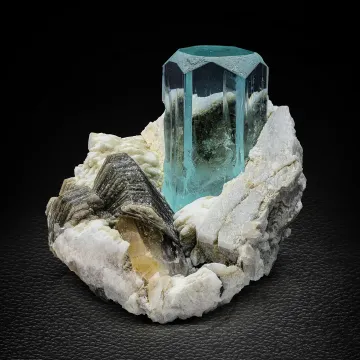
The best Gilgit District specimens have the instantly recognizable Pakistani pegmatite look: water-clear to icy blue beryl prisms rising from bright mica or albite, blocky quartz and feldspar matrix with clean pocket faces, and the high luster that comes from crystals grown into open cavities rather than broken from massive pegmatite. Dache aquamarines may be stout, tabular, or prismatic, often accompanied by albite, quartz, muscovite, schorl or topaz. Laila’s contribution is very different but equally memorable: green-blue lazulite and sharp black schorl, including unusually steep pyramidal “pencil” terminations that give the locality a distinct identity apart from the more familiar aquamarine pockets.
Regional View
Country View
The district’s pegmatites are not an isolated curiosity but part of a broad belt of evolved Himalayan-Karakoram granitic pegmatites. Modern petrogenetic work on the Haramosh pegmatite field interprets the aquamarine-bearing bodies as highly fractionated, LCT-type, S-type granitic pegmatites related to leucogranitic magmatism, with beryl crystallizing as beryllium became concentrated toward pocket-rich core zones and late magmatic volatile phases promoted growth in miarolitic cavities. That mechanism explains why the district’s best aquamarine is often so specimen-friendly: the crystals grew with space, in feldspar-quartz-mica cavities, rather than as merely fractured masses in solid rock.

Photo:
Gilgit District also records a second, less specimen-market-oriented mineralizing environment at Kargah: a Cu-Pb polymetallic vein system in the Kohistan Island Arc with quartz-pyrite, quartz-sulfide and carbonate stages, carrying pyrite, chalcopyrite, galena, zincian tetrahedrite, minor native silver and native gold. It is not the reason most collectors know Gilgit, but it matters geologically because it shows that the district is not a single “aquamarine locality”; it is a mountain district where pegmatitic, metamorphic, and magmatic-hydrothermal systems overlap in a compact, tectonically intense landscape.

Photo: Wikimedia Commons
Search for specimens: View all specimens from Gilgit District, Pakistan
The collector localities of Gilgit District are best understood as a group rather than a single mine. Gilgit town is the administrative and commercial hub, but published locality data repeatedly caution that specimens simply labeled “Gilgit” are commonly from elsewhere in the region. The better-defined collecting names include Dache, also written Dassu, Dasu, Haramosh-Dassu or Dacha; Sassi; Ishkapal or Ishkapul; Khaltaro, also spelled Kaltoro or Rayjud; Hanuchal and the Anzar army camp area; Laila near Laila camp; and Kargah Valley. The older literature and old specimen labels complicate matters because administrative boundaries changed: places now in separate districts were once sold, reported, or catalogued under larger “Gilgit,” “Skardu,” “Northern Areas,” or “Gilgit-Skardu Road” labels. For a serious collector, the exact valley name is therefore more valuable than a broad district tag.
The principal specimen deposit type is complex granitic pegmatite, commonly zoned and locally miarolitic. Around Dache, numerous complex granitic pegmatites have produced albite, beryl var. aquamarine, cassiterite, fluorite, garnet-group minerals, hydroxylherderite, microcline, muscovite, quartz, schorl and topaz. Dache lies in the Haramosh area north of the Indus River and should not be confused with the better-known Dassu of the Braldu Valley in Shigar District or with other similarly named villages in northern Pakistan. This matters not only for map accuracy but for aesthetics: Dache/Haramosh-Dassu material tends to be associated with Haramosh pegmatites and often appears in the trade as aquamarine with albite, muscovite, quartz or topaz, whereas Braldu Valley Dassu specimens belong to a different pegmatite district.
The Haramosh pegmatite field has recently been treated as an aquamarine-bearing LCT pegmatite system related to highly evolved S-type leucogranitic magmatism. The studied pegmatite is dominated by feldspar, quartz, muscovite and tourmaline and contains gem-quality aquamarine and topaz in miarolitic cavities. Zircon dating published for the system gives very young Himalayan ages for the pegmatite and adjacent Jutial leucogranite compared with the much older Iskere gneiss country rock. The field interpretation is especially useful for collectors because it explains the specimen assemblage: beryllium enrichment, volatile exsolution, albitization and pocket growth all favor sharp, lustrous beryl on feldspar-mica-quartz matrix.
Historical observation of Haramosh beryl goes back well before the modern collector boom. Early geological reconnaissance noted beryl-bearing pegmatite veins near Iskere and reported aquamarine occurrences around Dache, Iskere and Jutial; the early material observed was mostly pale green to opalescent blue-green and fractured, with some crystals only about half an inch to one inch across. Later collecting and mining clearly found better pockets, and by the late twentieth century Dache, Sassi, Ishkapal and Khaltaro had become part of the collector vocabulary for aquamarine, topaz, fluorite and associated pegmatite minerals.
Khaltaro adds an emerald story to the district. The emerald-bearing pegmatite field lies high in the northwest Haramosh Mountains, on the northeastern side of Khaltaro Valley, several kilometers north of Darchan village and roughly 4,200–4,500 m above sea level. Emerald was found there during Gemstone Corporation of Pakistan reconnaissance work in the mid-1980s. Small-scale work produced a limited quantity of gem-quality emerald, but the deposit was not sustained as a commercial operation because access was difficult and much of the emerald was pale or fractured. Collectors should note that Khaltaro is not only an emerald name: aquamarine and fluorite have also been recovered from nearby pegmatites, with albite, muscovite, quartz, schorl, feldspar and titanite documented from the locality.
Hanuchal and the Parri-Hanuchal pegmatite belt are different in flavor again. Geological Survey of Pakistan work on the Gilgit-Jaglot-Hanuchal area described numerous pegmatites along the Gilgit and Indus river corridors, with pegmatite thickness ranging from stringers to larger bodies, hosted by amphibolite, metavolcanic, quartzitic, schistose, orthogneissic and locally migmatitic rocks. The reported minerals include feldspar, quartz, mica and accessory species, and at one noted sample point red spessartine garnet occurred with quartz and magnetite. Modern specimen records from Hanuchal and Anzar army camp add cleavelandite, schorl, titanite, epidote and diopside to the district’s specimen suite.
Laila, near Laila camp between Chogo Lungma and the Haramosh glacier, is best known to collectors for lazulite and unusual schorl rather than aquamarine. It is a high, remote mineral occurrence area associated with the mountain named Laila Peak. The documented mineral list is concise—garnet-group minerals, lazulite, magnetite, quartz and schorl—but the specimen impact is outsized because of the rarity and quality of the lazulite and the distinctive lustrous black tourmalines with steep pyramidal terminations. Some dealer and collector discussions note uncertainty over whether some of the sharp “Laila” schorl came from Laila proper or from the Dache/Dassu valley leading toward the Laila Peak base; that uncertainty is exactly why old labels should be preserved rather than “corrected” without evidence.
The district’s ore-mineral side is represented by Kargah Valley. The Kargah Cu-Pb polymetallic vein deposit, in the Kohistan Island Arc, has been described as a newly studied intrusion-related magmatic-hydrothermal system with silicification, sericitization, chloritization and minor carbonatization. Its paragenesis includes an early quartz-pyrite stage, a main quartz-sulfide stage, and a later carbonate stage. Major ore minerals include pyrite, chalcopyrite, galena and zincian tetrahedrite, with minor native silver and native gold. This is primarily an ore-geology locality rather than a classic cabinet-specimen producer, but it expands the district’s mineralogical identity beyond pegmatites.
Access today is not casual recreational collecting. Many occurrences lie in high mountain terrain reached by rough roads, jeep tracks, footpaths, glaciated approaches, or communal village lands. Some areas are seasonally snow-covered; others are affected by landslides, altitude, security considerations, private or communal mineral rights, and active local mining. Published locality pages and field reports repeatedly emphasize that permission, local guidance, and safety precautions are essential. For most collectors outside Pakistan, the realistic route to Gilgit District specimens is through reputable dealers who preserve specific locality data and can distinguish Dache/Haramosh-Dassu from Braldu Valley Dassu, old Gilgit labels from modern Nagar or Hunza attributions, and Laila material from similar black-tourmaline localities elsewhere in Gilgit-Baltistan.
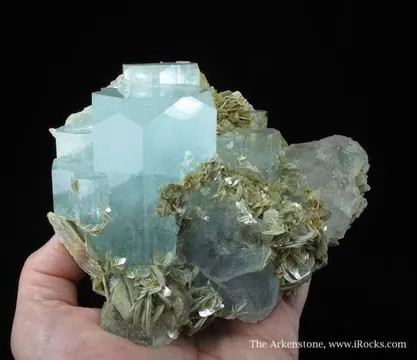
Aquamarine from Gilgit District is most securely documented from the Haramosh-side pegmatites around Dache, Sassi, Ishkapal and Khaltaro, with many older specimens simply labeled “Gilgit” because Gilgit town functioned as the regional trading center. The classic material is pale icy blue to richer aqua blue beryl in stout hexagonal prisms, tabular crystals, or clusters, commonly set on white albite, cleavelandite, muscovite books, quartz, microcline or topaz; Dache photo records show albite, quartz and muscovite as the most frequent visible companions. Good pieces from this district are judged less by sheer size than by the full specimen equation: undamaged glassy terminations, saturated natural-looking blue color, transparency through the prism, attractive height above matrix, and a matrix that confirms pocket growth rather than a detached, water-worn or recut crystal. The finest examples convey the open-cavity origin of the Haramosh pegmatites—clean faces, sharp edges, and a crisp relationship to mica or feldspar—while ordinary pieces tend to be pale, frosted, chipped, heavily contacted, or too massive to display the geometry of the crystal.
Beryl in Gilgit District includes aquamarine, goshenite-like pale to colorless beryl, and emerald from Khaltaro, but on the specimen market the term “beryl” is often used for crystals that are too pale, too color-zoned, or too ambiguous to sell confidently as top-grade aquamarine. Early Haramosh reconnaissance near Iskere saw pale blue-green and fractured beryl crystals in narrow pegmatite veins, while later Dache, Sassi, Ishkapal and Khaltaro collecting produced more aesthetic pocket specimens. Habits range from simple hexagonal prisms and stout barrel-like crystals to tabular aquamarine plates, sometimes frosted on the prism faces but clearer internally; associations include albite, quartz, muscovite, microcline, schorl, topaz and fluorite. Strong Gilgit District beryl specimens are those with clean six-sided form, visible color even without backlighting, minimal internal shattering, and convincing original matrix, whereas lower-tier pieces are often broad pale prisms, etched fragments, or attractive but locality-vague “Pakistan beryl” that cannot be tied more tightly than the regional trade.
Muscovite is one of the defining matrix minerals of the Gilgit District pegmatites, especially around Dache and the broader Haramosh-Sassi belt, where it occurs as silvery to pearly books, bladed clusters, and flaky masses with aquamarine, quartz, albite, microcline, schorl and topaz. It is rarely the reason a specimen is collected on its own, but it can make or break the composition: sharp mica books provide sparkle, contrast and a natural pedestal for blue beryl, while compact mica masses help prove the specimen’s pocket origin. Better muscovite-bearing pieces show intact lustrous books that have not been crushed during extraction, with aquamarine or quartz rising naturally from the mica rather than glued into a mica base; ordinary examples show bruised, bent, exfoliated or dirty mica, and the books can be so soft and flaky that the specimen sheds during handling.
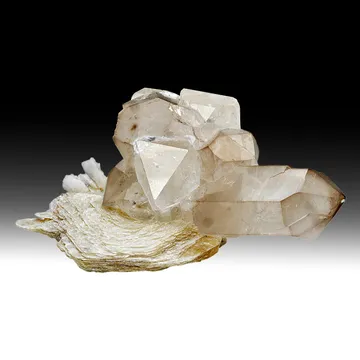
Quartz from Gilgit District occurs both as a major pegmatite constituent and as a collector species in its own right, documented from Dache, Sassi, Khaltaro, Laila, Kargah and other district localities. In the pegmatites it may be colorless, slightly smoky, blocky, or prismatic, often with aquamarine, albite, muscovite, topaz or schorl; Dache quartz photo associations are especially strong with topaz and albite, followed by aquamarine and muscovite. The best quartz specimens from this district are not merely clear crystals but balanced pegmatite associations: sharp quartz that frames beryl or topaz, smoky crystals with good luster, or quartz matrices carrying contrasting black schorl. Lower-grade material is abundant as broken pegmatite quartz, etched masses, or fractured points, and broad “Gilgit quartz” labels should be approached cautiously unless a more specific valley or mine name accompanies the piece.
Albite is the white sculptural framework of many Gilgit District pegmatite specimens, especially in Dache, Sassi and Hanuchal material, where it occurs as blocky feldspar, cleavelandite blades, and bright cavity linings associated with aquamarine, quartz, muscovite, schorl and topaz. Around Dache it is one of the most common visual companions to aquamarine, and in Hanuchal-Anzar material it appears with schorl and, in some records, cleavelandite. Good albite pieces show crisp, clean, snowy matrix that sets off blue beryl or black tourmaline; the best examples have natural relief and undisturbed pocket surfaces rather than flat sawed feldspar backs. Ordinary albite-rich specimens can look chalky, bruised, or too massive, and heavy feldspar matrix is prone to edge chipping during extraction from steep pegmatite pockets.
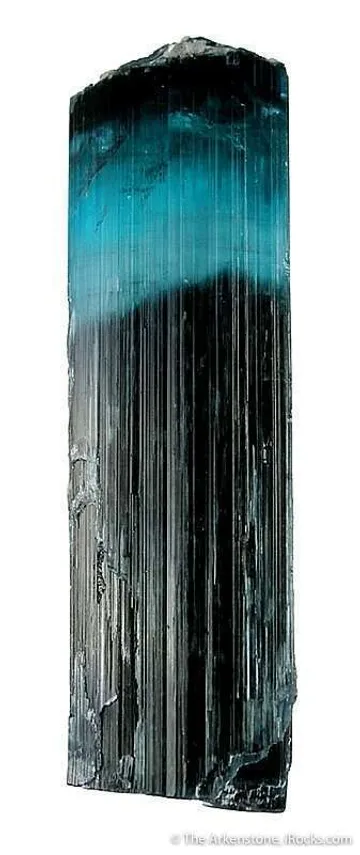
Tourmaline in Gilgit District is documented both as the broad tourmaline group and as schorl, with additional trade references to indicolite from the Sauda Mine area and historic use of wider “Gilgit” labels for tourmaline-bearing pegmatites along the Gilgit-Skardu route. In the Haramosh pegmatite system, tourmaline is part of the feldspar-quartz-muscovite assemblage and can be a useful genetic indicator of evolved, volatile-rich granitic melt; in specimens it commonly appears as black to very dark greenish-black prisms with albite, quartz or aquamarine. The district’s colored tourmaline is far less consistently represented than the famous Stak Nala material of neighboring Roundu District, so a “Gilgit District tourmaline” label deserves scrutiny. The strongest examples have sharp prism faces, lustrous terminations and a credible specific locality such as Laila, Dache, Hanuchal/Anzar or Sauda Mine, while ordinary pieces are black pegmatitic rods without termination, broken across the c-axis, or old-stock material carrying obsolete regional labels.
Schorl is one of Gilgit District’s most distinctive non-beryl minerals, documented from Dache, Khaltaro, Gilgit, Hanuchal-Anzar and especially Laila. Dache schorl belongs to the classic pegmatite assemblage with albite, quartz, muscovite, topaz and aquamarine, but Laila schorl stands out for lustrous black crystals with unusually steep pyramidal terminations, a habit so recognizable that collectors have informally called it a “pencil” style. Laila specimens may occur as single crystals or clusters, sometimes with minor albite, generally in miniature sizes of a few centimeters rather than large cabinet groups. Good Gilgit District schorl is complete, lustrous, sharply terminated and three-dimensional; average pieces are common black tourmaline prisms, broken crystals, or matrix fragments that need a strong locality label to carry real collector interest.
Lazulite from Gilgit District is a Laila specialty and one of the district’s great rarities: green-blue to blue-green phosphate crystals from a limited find around the turn of the millennium, celebrated because fine crystals exceeded the expectations for the species and were quickly absorbed into major collections. The best examples are lustrous, sharp, internally gemmy, and visibly zoned or color-shifting from dark blue-green to lighter greenish tones under transmitted light; crystals above about 2 cm were notably scarce, making well-formed pieces of that size serious locality specimens. Laila lazulite is not a matrix-driven aquamarine-style occurrence but a rarity locality where color, transparency, crystal completeness and provenance dominate value. Ordinary pieces may still be important reference specimens, but contacted tips, bruised faces, dark opacity, and weak locality documentation reduce their appeal sharply.
Spessartine is documented in Gilgit District chiefly from Hanuchal and from older “Gilgit” specimen records, with Geological Survey work in the Gilgit-Jaglot-Hanuchal pegmatite belt noting red spessartine garnet with quartz and magnetite in pegmatitic material. Compared with the celebrated orange spessartine specimens from other Pakistani pegmatite districts, Gilgit District spessartine is a subordinate and much less abundant collector mineral. When encountered, it is most likely to appear as small red to orange-red garnet crystals or granular garnet on feldspar-quartz-mica pegmatite matrix, sometimes valued more for locality completeness than for gem display. Good examples need sharp crystal form, fresh color, and a specific Hanuchal or well-documented Gilgit District provenance; ordinary garnet grains in pegmatite should not be overvalued unless the locality is unusually well preserved.
Other minerals documented from Gilgit District include emerald from Khaltaro, topaz from Dache, Sassi and Ishkapal, fluorite from Dache, Ishkapal and Khaltaro, hydroxylherderite and cassiterite from Dache, microcline, fluorapatite, phenakite, titanite, zoisite, diopside, epidote, ilmenite, magnetite and a suite of Kargah ore minerals including pyrite, chalcopyrite, galena, tetrahedrite-(Zn), native silver and native gold. Khaltaro emerald is historically important but generally pale or fractured as gem material, while hydroxylherderite and phenakite add beryllium-phosphate and beryllium-silicate interest to a district already defined by beryl. No widely accepted type-locality mineral is tied to Gilgit District in the sources consulted, but the Laila lazulite find and the sharply terminated Laila schorl are distinctive enough to rank among the district’s most memorable specialty occurrences.
The central authenticity issue for Gilgit District is locality accuracy, not a famous documented fake. “Gilgit” on an old label may mean the city market, the administrative district, the old Northern Areas, or simply the place where a dealer bought the specimen. Likewise, “Dassu” is hazardous: Dache/Haramosh-Dassu in Gilgit District is not the world-famous Braldu Valley Dassu in Shigar District, and it is also distinct from other similarly named villages. Old “Skardu Road,” “Haramosh,” “Northern Areas,” “Gilgit,” “Skardu,” “Hunza Valley,” and “Nagar” labels may reflect pre-2014/2015 administrative usage rather than modern district boundaries. For important pieces, preserve every old label and ask for the most specific valley name rather than replacing historical geography with a guessed modern one.
Aquamarine specimens should be examined for repairs, reattachments, and matrix manipulation. Pakistani beryls are commonly extracted from steep, fragile pockets; detached crystals may be glued back onto mica or albite, and loose crystals may be placed in convenient matrix clefts. Strong magnification around the contact, UV/white-light examination of glue seams, and careful inspection of dust-filled crevices are worthwhile for high-value cabinet pieces. Heat treatment is a known gem practice for aquamarine generally, but it is not usually the main concern on matrix specimens; locality, repair status, color naturalness, and whether the beryl is actually aquamarine rather than nearly colorless beryl are more important collector questions.
Condition is often subtle. Beryl can show bruised terminations, edge chatter along the hexagonal prism, internal fractures that are natural but visually distracting, and frosted or etched faces that reduce transparency. Muscovite books bend, delaminate and shed; albite and microcline matrices chip along cleavage; quartz and topaz tips are easily bruised; and schorl prisms commonly break perpendicular to the c-axis. Laila lazulite is rare enough that minor contact may be tolerable, but the best crystals should still show lustrous faces, recognizable monoclinic form, and undisturbed termination geometry.
Market availability is uneven. Dache/Haramosh-style aquamarine on albite or muscovite appears periodically but truly fine pieces with rich blue color, transparent prisms and undamaged matrix are limited. Broadly labeled “Gilgit” beryl is more common, but less desirable unless the specimen itself is exceptional or carries old collection provenance. Laila lazulite is genuinely scarce on the market, and good crystals were limited from the beginning. Laila schorl is available occasionally in miniatures, but the best steeply terminated examples are distinctive and should not be lumped with ordinary black tourmaline. Khaltaro emerald specimens are mineralogically interesting but should be bought as locality pieces unless they are unusually sharp, saturated and transparent.
The earliest written accounts of Haramosh aquamarine read almost like a cautionary prelude to the later collector boom. In the early 1950s, geological observers followed reports of beryl in the Hunza and Haramosh areas and examined pegmatite veins near Bulchidas and about a mile south of Iskere. The Haramosh pegmatites they could reach were narrow—only about one to five feet wide—and the terrain was so steep that individual veins could not be traced for more than about twenty feet along strike. One beryl-bearing pegmatite held pale blue-green crystals only half an inch to one inch across, and just two crystals were actually seen. Reported aquamarine-bearing veins around Dache, Iskere and Jutial were snow-covered part of the year; the few crystals available locally were pale, fractured or opalescent. The official conclusion was pessimistic: if commercial gemstone deposits existed, they would be hard to find. Later pockets proved that the mountains were not finished speaking.
Khaltaro’s emerald story has the same high-altitude flavor. The emerald deposit lies far above the valley floor in the northwest Haramosh Mountains, around 4,200 m or more above sea level, on the northeastern side of Khaltaro Valley. The Gemstone Corporation of Pakistan discovered emerald there in 1985 during reconnaissance of the Haramosh gem pegmatites. Work began with an open trench and later a short inclined drift with crosscuts, but the remoteness and the nature of the stones defeated sustained mining. Published accounts give production on the order of hundreds to about a thousand carats of gem-quality emerald, after which the workings were abandoned. The emeralds were real, but often pale, fractured, or included; local people later worked small quantities of emerald and nearby aquamarine and fluorite rather than turning Khaltaro into a major mine.
The Laila lazulite find has become one of those short, bright mineral episodes that collectors still recognize by sight. Around 1998–1999, green-blue lazulite crystals from Laila entered the market in small numbers and caused immediate excitement because good lazulite crystals are rare anywhere, and these were larger, sharper and more gemmy than many collectors expected from the species. One widely reproduced 3.1 x 1.5 x 0.8 cm crystal was described as internally gemmy, with mixed yellow and blue tones, and as large by the standards of the find; crystals over 2 cm were few. The best pieces disappeared quickly into advanced collections, leaving later buyers to hunt for miniatures, repaired survivors, or cut stones that preserve the unusual blue-green body color.
The Laila schorl story is quieter but wonderfully specific. A cluster measuring 46 mm x 25 mm x 15 mm circulated among collectors as a recent Laila find, showing lustrous black crystals with steep pyramidal terminations rather than the more familiar flat-ended black tourmaline prisms. John S. White reportedly called the habit “pencil” style, a simple phrase that captures the look exactly. Some collectors questioned whether the precise source was Laila or the Dache/Dassu valley leading toward the base of Laila Peak, but the habit itself became the clue: sharp, black, glossy, steeply terminated tourmaline from the Laila-Dache high country, different enough that a trained eye pauses before calling it just another schorl.
The human geography of Haramosh mining is equally important. Field-development studies of Gilgit District record that gemstone mining in most of Haramosh Valley has long contributed to household income, with local memory placing mining activity as far back as about 1930. The gemstone-bearing mountains and peaks are communal areas, divided among valleys by customary rules, and within each valley groups from individual villages divide their mines among themselves. Working groups may number roughly five to ten people, and much of the excavation knowledge has been learned by trial and error rather than formal training. The collector sees a blue beryl on mica; the valley sees seasonal labor, dangerous slopes, family income, and a pocket that may or may not pay.