A collector's guide to Galiléia, Brazil: its geology, mining history and notable minerals, illustrated with the 105 specimens documented from this locality on EarthWonders.
Key facts
Galiléia is one of the great names of the Rio Doce pegmatite country of eastern Minas Gerais: a municipality whose labels gather together several very different collector stories—Sapucaia’s phosphate science, Berilo Branco and Pitorra’s crystallized rose quartz, and Urucum’s gem beryl and spodumene. Geologically, the district sits in the Galiléia–Mendes Pimentel pegmatite field of the Eastern Brazilian Pegmatite Province, within the Araçuaí Orogen and the broader Rio Doce magmatic arc. Its pegmatites cut or lie near Neoproterozoic schists of the São Tomé Formation, tonalitic to granitic rocks of the Galiléia and Urucum suites, and related metasedimentary units; in practical collector terms, that means strongly differentiated granitic pegmatites with quartz cores, feldspar-rich zones, cleavelandite, muscovite, lithium minerals, beryl, tourmaline, cassiterite, tantalum-niobium minerals, and locally spectacular phosphate alteration.
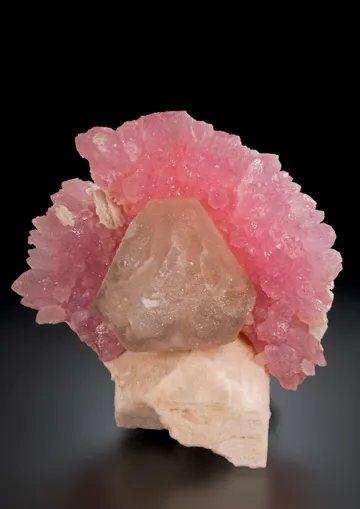
The best Galiléia specimens do not all look alike. A top Berilo Branco piece may be a smoky quartz crystal girdled by lustrous pink rose-quartz crystals, the pink seeming to wrap the older quartz like a sash. A Pitorra piece may be a compact, flower-like cluster of translucent pink quartz crystals, with little or no matrix. A Sapucaia specimen may be a small but mineralogically important phosphate association—frondelite, moraesite, variscite, roscherite-group minerals, or jahnsite-group phases in albite, muscovite, or altered triphylite. A Urucum cabinet specimen may be a flat, tabular, naturally etched morganite, a long kunzite blade, or aquamarine on cleavelandite and muscovite. Few localities reward precise sublocality knowledge more than Galiléia; the difference between “Sapucaia,” “Berilo Branco,” “Pitorra,” and “Urucum” is not pedantry, but the difference between several distinct mineralogical histories.
Regional View
Country View
The district’s historical importance is unusually broad. Sapucaia, also known in older literature as Proberil, is a classic LCT pegmatite and one of Brazil’s great phosphate localities, with a suite of type-locality phosphates that placed it in the mineralogical literature from the mid-twentieth century onward. Urucum, also known as Córrego do Urucum or Lavra do Tim, is a classic source for morganite, kunzite, aquamarine, and associated rare-element pegmatite minerals. Berilo Branco and Pitorra made Galiléia central to the modern collector concept of crystallized rose quartz—rose-colored quartz not as lapidary massive material, but as sharp, lustrous, euhedral crystals.


Search for specimens: View all specimens from Galiléia, Brazil
Galiléia lies east of Governador Valadares in the Doce Valley mineral belt, in a pegmatite field historically worked for mica, feldspar, beryl, quartz, spodumene, cassiterite, tantalum-niobium minerals, gem rough, and collector specimens. The municipal name is often used on specimen labels, but collectors should read it as a regional label unless a sublocality is specified. The main names encountered on serious labels are Sapucaia mine or Proberil, Berilo Branco claim, Boca Rica claim, Pitorra claim, Alto da Pitorra, and Urucum claim or Córrego do Urucum.
The Sapucaia pegmatite is the scientific anchor. It lies near Sapucaia do Norte, roughly east to east-northeast of Galiléia, in the Galiléia–Mendes Pimentel field. Brazilian Geological Survey descriptions give it as an LCT pegmatite discovered in the 1920s, with an elliptical body about 80 m long, 40 m thick, and 50 m deep. Geological descriptions place it in schists of the São Tomé Formation of the Rio Doce Group and related quartzites; pegmatite literature describes a well-zoned, lithium-rich body with spodumene and triphylite, later altered by internal hydrothermal fluids and weathering to produce one of the richest phosphate suites in Brazilian pegmatites. The phosphate story is not an accessory footnote: it is why Sapucaia appears again and again in mineralogical references. Frondelite, faheyite, moraesite, barbosalite, tavorite, lipscombite, ruifrancoite, arrojadite-(PbFe), jahnsite-(MnMnMg), and jahnsite-(NaMnMg) have all been tied to Sapucaia as newly recognized species or type-locality material in modern locality summaries. As a municipality, Galiléia also includes Urucum, the type locality of coutinhoite, giving the Galiléia label additional significance for rare-species collectors.
The mineralization is best understood as two overlapping collector worlds. In the phosphate-bearing Sapucaia-style pegmatites, primary phosphates such as triphylite broke down into secondary iron-, manganese-, aluminum-, beryllium-, and uranium-bearing phosphates. These occur in seams, vugs, alteration masses, and cavity linings, commonly in albite, muscovite, quartz, and altered phosphate nodules. Specimens from this side of Galiléia may be small, dull-looking to a casual buyer, and scientifically important: reddish-brown frondelite aggregates, white to silky moraesite, green to reddish variscite, roscherite-group minerals, jahnsite-group crystals, strengite, phosphosiderite, vivianite, wavellite, and other phosphates are typical of the collector vocabulary here.
In the gem-bearing Urucum–Boca Rica–Berilo Branco–Pitorra side of the district, the visual language is different. Urucum, on the Serra do Urucum east of Galiléia, is a large lenticular pegmatite associated with the Urucum granite and São Tomé schists. The Urucum suite itself is part of the Neoproterozoic magmatic history of the Rio Doce region, and published geological work gives U-Pb ages in the high 570s to low 580s Ma range for related Urucum-suite granitic rocks. At Urucum, the body has been worked as a mine, not merely as a specimen dig; historical accounts describe exploitation for muscovite, lepidolite, beryl, feldspar, and gems. Important production episodes include the 1968 discovery of rose spodumene, yielding about 3,000 kg of gem and collector material, with crystals weighing up to about 2 kg, and a 1973 pocket that yielded kunzite together with roughly 300 kg of morganite. Urucum’s best morganites are tabular to thick hexagonal beryl crystals, commonly pink to salmon and naturally etched, sometimes with schorl or albite; its kunzites range from pale to intense purplish pink and may be long, transparent blades with etched faces and color zoning.
Boca Rica, in the Sapucaia do Norte area, is another important name for Galiléia labels. Published regional studies describe active or recent workings in the Sapucaia do Norte group, with feldspar as a major industrial product and beryl as an important byproduct; rare phosphates have also been recovered as collector material. For aquamarine collectors, Boca Rica is a meaningful sublocality because Galiléia aquamarine specimen records include Boca Rica pieces on cleavelandite and muscovite. Such specimens sit at the intersection of industrial pegmatite mining and specimen recovery: not every beryl crystal from these mines is a cabinet specimen, but a sharp, well-colored, matrix aquamarine from Galiléia carries the right combination of species, district, and geological context.
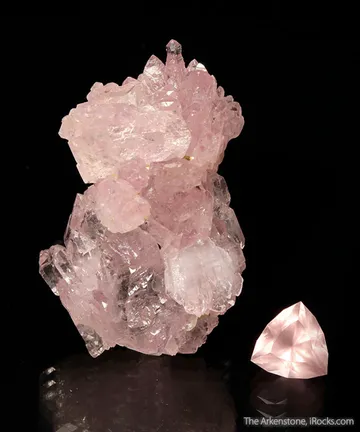
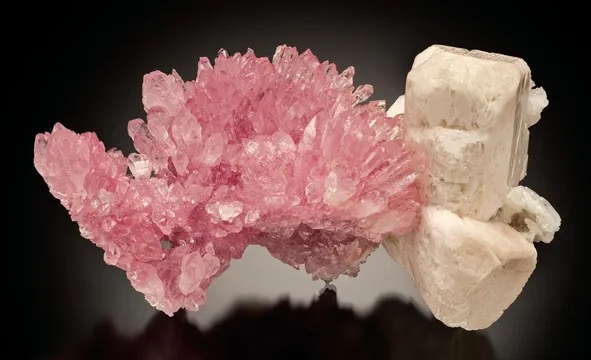
Berilo Branco and Pitorra are the localities that made Galiléia famous to rose-quartz collectors. Berilo Branco, or Lavra Berilo Branco, is near Sapucaia do Norte and has been repeatedly confused with Sapucaia on older labels. That confusion is understandable historically but important to correct: many classic “Sapucaia rose quartz” specimens are more precisely Berilo Branco specimens. Berilo Branco is the source of the celebrated “Van Allen Belt” rose quartz in the Smithsonian tradition—a smoky quartz crystal encircled by a belt of rose-quartz crystals—and it produced the style most collectors picture when they hear “Galiléia rose quartz”: pink crystals in belts, halos, partial draperies, and sprays on smoky, milky, or colorless quartz with albite or feldspar. Pitorra and Alto da Pitorra, in the Laranjeiras area of Galiléia, produced smaller but often exceptionally crystallized rose quartz: compact pink clusters, fans, rosettes, and all-rose-quartz specimens with glassy faces and distinct terminations.
Collecting access today should be treated as private-mine access throughout the district. These are not public recreational collecting sites. Some mines have been commercial operations, some are intermittent claims, and some classic specimen pockets are long exhausted. Mine portals, pits, weathered pegmatite faces, and dumps may be unstable; permissions must come from the owner or operator, and specimen acquisition for most collectors will realistically be through dealers, Brazilian miners, old collections, or established marketplaces. The best pieces with precise Galiléia sublocalities—especially Berilo Branco rose quartz, Pitorra rose quartz, Urucum morganite, Urucum kunzite, and well-documented Sapucaia phosphates—are now substantially historical material.
Quartz from Galiléia spans several specimen styles, and the sublocality matters: Berilo Branco and Pitorra are famous for rose quartz on or with older smoky, milky, and colorless quartz; Urucum has produced large quartz crystals and quartz-core material in gem-bearing pockets; Sapucaia contributes quartz as a major pegmatite mineral and host for phosphate-bearing assemblages. The most collectible quartz pieces from Galiléia are not ordinary milky pegmatite quartz but sculptural associations—smoky quartz crystals partly wrapped by pink rose-quartz overgrowths, flattened doubly terminated quartz supporting rose-quartz sprays, or quartz with contrasting albite, muscovite, microcline, and phosphate minerals. Good pieces show clean crystal geometry, glassy luster, three-dimensional composition, and undamaged terminations; ordinary pieces are massive, broken, iron-stained, or lack the distinctive Galiléia associations.
Rose quartz is the signature display mineral of Galiléia when crystallized rather than massive, especially from Berilo Branco near Sapucaia do Norte and from Pitorra/Alto da Pitorra at Laranjeiras. Berilo Branco specimens commonly show lustrous pale to deep pink quartz crystals forming halos, belts, sprays, or partial crusts on smoky or colorless quartz, with albite, microcline, and muscovite as common contrasts; Pitorra material is often smaller but can be exceptionally crystallized, with clustered pink compound crystals, rosettes, finger-like groups, and matrix-free specimens. Sizes range from thumbnails and miniatures through small-cabinet pieces, with a few celebrated large cabinet and museum specimens defining the locality’s reputation. The best pieces combine true pink color, distinct faces and terminations, transparency or translucency, and a sculptural relationship to older quartz; sugary massive rose quartz, abraded clusters, and poorly localized “Brazil rose quartz” do not carry the same collector weight.
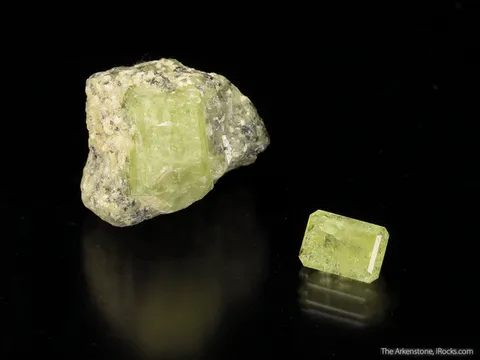
Variscite from Galiléia is best tied to the phosphate-rich Sapucaia mine, where both manganese- and iron-bearing variscite are documented among the secondary phosphate assemblage. Unlike the familiar massive green variscite lapidary material from some other localities, Sapucaia variscite is a collector’s phosphate occurrence: small crystals, globules, crusts, and colored micro- to miniature-scale associations formed during alteration of primary phosphates in the pegmatite. The locality is especially prized when variscite occurs with frondelite, strengite, phosphosiderite, roscherite-group minerals, jahnsite-group minerals, albite, and muscovite, because the association places it squarely in Sapucaia’s famous phosphate paragenesis. Quality here is judged less by cutting color and more by verified locality, fresh surface, distinct habit, strong color—green, red, or manganian tones where present—and association with other identified Sapucaia phosphates.
Beryl in Galiléia is both an industrial pegmatite mineral and a gem-specimen mineral, with the finest collector material coming especially from Urucum and related district workings rather than from Sapucaia’s phosphate fame. Urucum is a classic source for morganite and aquamarine, with beryl crystals ranging from pale blue-green and blue aquamarine to pink, peach, and salmon morganite; old literature also treats beryl as one of the economically important minerals in the district’s pegmatites. Specimen-quality Galiléia beryl is typically valued for intact hexagonal form, tabular or blocky habit, natural etching, transparency, color zoning, and associations with albite/cleavelandite, muscovite, schorl, quartz, lepidolite, and spodumene. Good beryl pieces preserve natural faces and termination geometry; ordinary pieces are etched fragments, cuttable rough, opaque industrial beryl, or crystals whose surfaces have been polished into a gem-object rather than retained as mineral specimens.
Kunzite from Galiléia is principally an Urucum story: the Serra do Urucum workings produced rose to purplish pink spodumene crystals, including major 1968 and 1973 discoveries that placed the mine among Brazil’s classic kunzite sources. Crystals may be long, bladed, transparent to translucent, and strongly striated or etched, with colors from pale lilac-pink to saturated purplish pink; associated minerals include morganite, aquamarine or beryl, albite/cleavelandite, quartz, lepidolite, tourmaline, garnet, and tantalum-niobium minerals. The best kunzites retain complete terminations, strong color without severe fading, gem transparency, crisp prism form, and minimal cleavages or bruises along the broad faces. Lesser pieces are partial blades, cleavage fragments, or pale gem rough, though even those can be meaningful when they carry an old Urucum label and a documented collection history.
Spodumene at Galiléia occurs in lithium-rich pegmatites, with Urucum providing the most collector-relevant material and Sapucaia representing the LCT, phosphate-rich geological context in which spodumene is part of the broader lithium pegmatite vocabulary. At Urucum, spodumene is best known as kunzite but also occurs as paler, non-gem, and locally greenish material; documented museum material includes transparent, gem-quality, twinned Urucum spodumene with intense purplish pink and pale greenish yellow color zones. Collectors should look for complete blades with honest natural surfaces, visible color zoning, etched but not abused faces, and associations with beryl, albite, quartz, muscovite, lepidolite, or tourmaline. Because spodumene has perfect cleavage and can be light sensitive in the kunzite variety, clean, undamaged, unfaded Galiléia crystals are much scarcer than broken mine-run pieces.
Albite is one of the essential matrix and zone minerals of Galiléia specimens, especially as cleavelandite in gem pockets and as altered albite in phosphate assemblages. At Berilo Branco it provides white contrast beneath rose quartz and smoky quartz; at Pitorra it appears with crystallized rose quartz, microcline, muscovite, and quartz; at Urucum, cleavelandite is a common associate of morganite, aquamarine, tourmaline, spodumene, and rare tin-niobium-tantalum minerals; at Sapucaia, albite is part of the matrix and alteration environment for important secondary phosphates. The best albite-bearing pieces use albite compositionally: sharp white cleavelandite blades framing pink quartz, blue beryl, or morganite, or fine-grained albite hosting rare phosphates. Ordinary albite alone is abundant and seldom commands interest unless it carries a fine associated species or a strong, well-documented sublocality label.
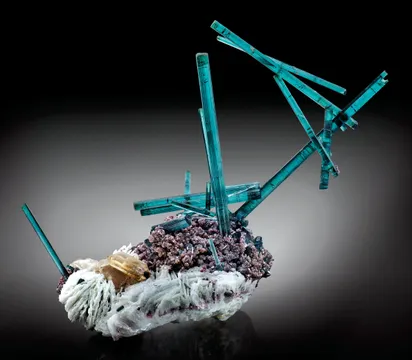
Aquamarine from Galiléia is a beryl-variety occurrence within the Rio Doce pegmatite province, with Urucum and Boca Rica the most meaningful sublocality names for collector labels. Specimens may be pale blue, blue-green, or greenish before heating, and they are most attractive when perched on cleavelandite, muscovite, quartz, or feldspar rather than presented merely as gem rough. The best Galiléia aquamarines show recognizable hexagonal beryl form, good luster, pleasing blue to blue-green color, and a natural pegmatite matrix; the district is not chiefly famous for dark blue aquamarine in the way some other Minas Gerais localities are, so locality, crystal integrity, and association matter. Be wary of vague “Galiléia aquamarine” labels without sublocality data, and distinguish collector specimens from heated faceting rough, which belongs to a different market category.
Morganite is one of Urucum’s great claims to fame: the Córrego do Urucum mine produced pink, peach, and salmon beryl crystals, including the famous 1973 pocket in which roughly 300 morganite crystals—some up to about 10 kg—lined a large cylindrical cavity. Galiléia morganites are commonly tabular to thick hexagonal crystals, often naturally etched, sometimes with concentric color zoning, dissolution channels, schorl inclusions or attachments, and albite matrix. Fine pieces are judged by natural crystal completeness, saturated pink color rather than washed-out peach, transparency, luster, intact edges, and unpolished surfaces that still tell the pegmatite-pocket story. Because morganite rough is valuable as gem material and heat treatment is common in the broader gem trade, the best collector specimens are those with convincing natural surfaces, old Urucum provenance, and no evidence of recutting, polishing, or color manipulation.
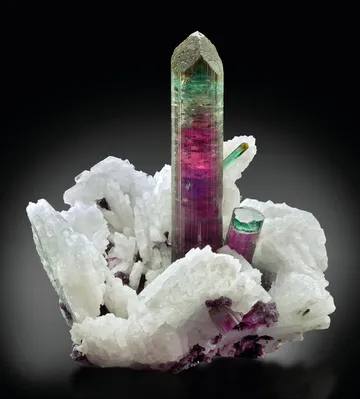
Other minerals documented from Galiléia make the municipality far more than a gem-pegmatite label. Sapucaia’s phosphate suite includes type-locality frondelite, faheyite, moraesite, barbosalite, tavorite, lipscombite, ruifrancoite, arrojadite-(PbFe), jahnsite-(MnMnMg), and jahnsite-(NaMnMg), along with many additional phosphates such as vivianite, strengite, phosphosiderite, eosphorite, childrenite, beraunite, wavellite, saléeite, phosphuranylite, xenotime-(Y), cyrilovite, meurigite, and roscherite-group minerals. Urucum adds coutinhoite as a type-locality mineral and contributes a rare-element assemblage that includes schorl, elbaite, cassiterite, stokesite, microlite-group minerals, uraninite, weeksite, phosphuranylite, and tantalum-niobium species. For collectors of Brazilian pegmatites, Galiléia is therefore unusual: it is a locality where thumbnail-scale phosphate rarities, classic cabinet rose quartz, and gem beryl or spodumene can all be legitimate expressions of the same municipal label.
Locality precision is the first collector issue. Many older rose-quartz specimens labeled “Sapucaia” are more accurately from Berilo Branco, and the distinction is important: Sapucaia proper is the classic phosphate locality, while Berilo Branco is the original source for many of the famous rose-quartz-on-smoky-quartz pieces. Similarly, “Galiléia,” “Conselheiro Pena,” “Doce Valley,” “Urucum,” and “Córrego do Urucum” can appear inconsistently on older labels because municipal boundaries, trade habits, and district names were used loosely. A serious label should ideally state the sublocality: Berilo Branco claim, Pitorra claim, Alto da Pitorra, Sapucaia mine/Proberil, Boca Rica claim, or Urucum claim.
The second issue is species accuracy in the phosphate suite. Sapucaia has many visually similar secondary phosphates, and confident identification often requires analytical support. White fibrous or hairy material historically or casually called faheyite is especially treacherous; mineralogical discussions of Brazilian type minerals note that many such specimens from Sapucaia proved to be moraesite rather than faheyite. Small reddish-brown, green, yellow, and white phosphate crusts should not be over-named from appearance alone. If a specimen is sold as ruifrancoite, jahnsite-(NaMnMg), arrojadite-(PbFe), or another rare type-locality species, expect analytical documentation or a provenance traceable to a known specialist, museum, or published collection.
Condition standards vary sharply by species. Rose-quartz crystals from Berilo Branco and Pitorra are vulnerable at their edges, terminations, and contact points; broken pink crystal tips, trimmed backs, repaired overgrowths, and bruised smoky quartz are common. The finest specimens should show naturally terminated pink crystals rather than sugary broken surfaces. Kunzite and other spodumene from Urucum cleave readily and may fade with prolonged strong light exposure, so display under moderate, indirect light and avoid sunny cases. Morganite and aquamarine should be inspected for polishing: natural etching is common and desirable in Urucum beryl, but reworked faces, buffed terminations, or reshaped gem rough reduce specimen value. Aquamarine and morganite are commonly heat treated in the gem trade; that is acceptable for faceted stones when disclosed, but less desirable for a mineral specimen whose color and surface history are part of its value.
Market availability is uneven. Modest Galiléia rose-quartz specimens appear periodically, but fine Berilo Branco and Pitorra pieces with strong color, glassy crystals, and old labels are scarce and increasingly collection-bound. Urucum morganite and kunzite remain recognizable in the trade, yet the best crystals are generally older-production pieces. Sapucaia phosphates are available mostly as small specimens from specialists, old collections, or Brazilian rare-mineral dealers; attractive, well-identified phosphate associations are much less common than the broad mineral list might suggest. A good Galiléia specimen should be bought for sublocality, condition, association, and documentation—not merely because the label says “Minas Gerais.”
The most famous Galiléia rose-quartz story begins with a deceptively small opening. The classic Berilo Branco material came from a narrow rose-quartz-bearing seam near Sapucaia do Norte, remembered in mineral literature and collector accounts because it produced specimens wildly out of proportion to the size of the pocket. The seam was described as only about six inches wide and 12 inches high, extending for roughly 16 feet, yet it held the deep pink rose quartz on smoky quartz that established the Berilo Branco style. In a province of huge pegmatite bodies, one of the most influential rose-quartz finds came from a space that sounds more like a crack than a mine.
From that find came the specimen collectors know as the “Van Allen Belt.” Its name is perfect mineral poetry: a belt of lustrous rose-quartz crystals encircling a larger smoky quartz crystal, like charged particles trapped around a planet. The piece entered the Smithsonian tradition through Fred C. Kennedy and became a reference image for the entire locality. Ever since, when collectors describe a Galiléia rose quartz as having a belt, sash, halo, or wreath of pink crystals on smoky quartz, the unspoken comparison is that Smithsonian specimen.
Then there is “La Madona Rosa,” the Pink Madonna, a Berilo Branco specimen whose size and silhouette pushed crystallized rose quartz into the realm of mineral icons. Heritage’s auction record described a towering rose-and-smoky quartz specimen from Lavra Berilo Branco, with the smoky quartz forming a central figure and the rose quartz creating the halo-like outline that gave it its name. At about 15.5 x 8 inches, it dwarfed normal cabinet rose-quartz specimens and even stood apart from the best-known earlier pieces. Its provenance is unusually tangled: one account places it with the late-1950s discovery, while another says it surfaced in Brazil in 1972, when the mine was still being worked sporadically. It passed to a London gemstone collector in 1972, then to a U.S. gem collector in 1977, where it stayed for about two decades before the mineral world fully recognized it. After it appeared at Tucson in 1997, cleaning and trimming revealed the specimen’s full power; in 2013, as part of the Hoppel Collection, it sold for $662,500.
Urucum’s story has a different scale and tempo. Published Brazilian accounts describe the mine high on the Serra do Urucum, southeast of Galiléia, worked from the 1960s for muscovite, lepidolite, beryl, and feldspar before its greatest gem discoveries. In 1968, miners encountered a zone rich in rose spodumene—kunzite—and recovered about 3,000 kg of gem and collector material, with individual crystals weighing up to about 2 kg. In 1973 another pocket followed, again with kunzite, but this time accompanied by about 300 kg of morganite. GIA’s account of the same 1973 Urucum find describes an immense cylindrical pocket lined with approximately 300 morganite crystals, some reaching 10 kg. That is the kind of number that explains why Urucum morganite is still a classic term in the trade: not because every piece is fine, but because one pocket produced a geological banquet of pink beryl.
The modern museum story of Urucum continues in Washington, D.C., where the Smithsonian records a transparent, gem-quality, twinned spodumene var. kunzite specimen from the Urucum Mine. The crystal is 42 cm long and carries two colors: intense purplish pink and pale greenish yellow. Its pink zone shows geometric etch pits and translucent tunnel-like structures visible from the side. For a locality often reduced to “kunzite from Brazil,” that specimen is a reminder of what Urucum really produced at its best: not just gem rough, but complex, large, naturally sculpted pegmatite crystals worthy of national collections.
Cassedanne, Jacques P., and Augusto Baptista. “Famous Mineral Localities: The Sapucaia Pegmatite, Minas Gerais, Brazil.” The Mineralogical Record, 30(5), 347–366, 1999. — The essential collector-oriented locality article for Sapucaia, widely cited for its phosphate assemblage, mining history, and specimen context.
Wilson, Wendell E. “Famous Mineral Localities: Lavra Berilo Branco, the Original.” The Mineralogical Record, 30(5), 361–365, 1999. — The key reference for Berilo Branco as the original “Sapucaia” crystallized rose-quartz occurrence and the source of classic mislabeled material.
Cassedanne, Jacques P., and Jeanete Alves. “Crystallized Rose Quartz from Alto da Pitora, Minas Gerais, Brazil.” The Mineralogical Record, 21(5), 409–412, 1990. — The standard published reference for crystallized rose quartz from Alto da Pitorra in the Laranjeiras area of Galiléia.
Clifford, Janet H. “Connoisseur’s Choice: Rose (Pink) Quartz, Lavra da Pitorra, Laranjeiras, Galiléia, Minas Gerais, Brazil.” Rocks & Minerals, 87(6), 530–539, 2012. — A focused collector treatment of Pitorra rose quartz as a connoisseur locality.
Baijot, Maxime; Hatert, Frédéric; and Philippo, Simon. “Mineralogy and geochemistry of phosphates and silicates in the Sapucaia pegmatite, Minas Gerais, Brazil: Genetic implications.” The Canadian Mineralogist, 50(6), 1531–1554, 2012. — Modern technical work on Sapucaia phosphate and silicate mineralogy and the pegmatite’s genetic interpretation.
Atencio, Daniel; Chukanov, Nikita V.; Coutinho, José M. V.; Menezes Filho, Luiz Alberto Dias; Dubinchuk, Vladimir T.; and Möckel, Stephan. “Ruifrancoite, a new Fe3+-dominant monoclinic member of the roscherite group from Galiléia, Minas Gerais, Brazil.” The Canadian Mineralogist, 45, 1263–1273, 2007. — Type-mineral paper for ruifrancoite from Sapucaia.
Vignola, Pietro; Hatert, Frédéric; Baijot, Maxime; Rotiroti, Nicola; Risplendente, Andrea; and Varvello, Sergio. “Jahnsite-(MnMnMg), Mn2+Mn2+Mg2+2Fe3+2(PO4)4(OH)2·8H2O, a new phosphate mineral species from Sapucaia pegmatite, Sapucaia do Norte, Galiléia, Minas Gerais, Brazil.” The Canadian Mineralogist, 57, 363–370, 2019. — Full description of jahnsite-(MnMnMg), found in dumps of the Sapucaia pegmatite.
Kampf, Anthony R.; Elliott, Peter; Nash, Barbara P.; Chiappino, Luigi; and Varvello, Sergio. “Jahnsite-(NaMnMg), a new jahnsite-group mineral from the Sapucaia Mine, Brazil and the White Rock No. 2 Quarry, Australia.” The Canadian Mineralogist, 56(6), 871–882, 2018. — New-mineral description linking Sapucaia to jahnsite-(NaMnMg).
Atencio, Daniel; Carvalho, Flávio M. S.; and Matioli, Paulo A. “Coutinhoite, a new thorium uranyl silicate hydrate, from Urucum mine, Galiléia, Minas Gerais, Brazil.” American Mineralogist, 89(5), 721–724, 2004. — Type description of coutinhoite from the Urucum mine.
Lindberg, M. L., and Murata, K. J. “Faheyite, a new phosphate mineral from the Sapucaia pegmatite mine, Minas Gerais, Brazil.” American Mineralogist, 38, 263–270, 1953. — One of the classic mid-century Sapucaia type-mineral papers.
Lindberg, M. L.; Pecora, W. T.; and Barbosa, A. L. M. “Moraesite, a new hydrous beryllium phosphate from Minas Gerais, Brazil.” American Mineralogist, 38, 1126–1133, 1953. — Original description of moraesite from the Sapucaia pegmatite mine.
Lindberg, M. L., and Pecora, W. T. “Tavorite and barbosalite: Two new phosphate minerals from Minas Gerais, Brazil.” Science, 119(3099), 739, 1954. — USGS-indexed notice for two classic Sapucaia phosphate species; the full mineral descriptions followed in American Mineralogist.
Proctor, Keith. “Gem Pegmatites of Minas Gerais, Brazil: Exploration, Occurrence, and Aquamarine Deposits.” Gems & Gemology, Summer 1984. — Important GIA overview of Minas Gerais gem pegmatites, including Urucum morganite and the 1973 Córrego do Urucum pocket.
Governo de Minas Gerais / CODEMGE. “Gemas e minerais de coleção – Recursos Minerais de Minas Gerais.” — Portuguese-language regional resource with specific notes on Urucum production, Sapucaia phosphate fame, and Galiléia gem-mineral history.
Smithsonian National Museum of Natural History. “Spodumene (var. kunzite), NMNH 177815.” — Museum record for a 42 cm Urucum kunzite specimen donated by Michael and Patricia Berns.
“Beryl (variety morganite) from Urucum Mine, Galiléia, Brazil” — Fabre Minerals, Vimeo — Short specimen video showing a naturally etched morganite crystal from Urucum, with hexagonal profile, transparency to translucency, and color zoning.
“Morganite Description” — Gemological Institute of America — GIA educational media page including an Urucum morganite crystal photographed by Jeff Scovil and a short “Morganite Crystal from Brazil” media segment.
Mindat — Galiléia, Minas Gerais, Brazil — Broad municipality record summarizing the many documented minerals and sublocalities under the Galiléia label.
Mindat — Sapucaia mine, Sapucaia do Norte, Galiléia, Minas Gerais, Brazil — Core locality record for the Sapucaia/Proberil pegmatite, its mineral list, type-locality species, references, and phosphate assemblage.
Brazilian Geological Survey Geossit — Pegmatito Sapucaia — Authoritative Portuguese/English geosite summary for Sapucaia’s geology, dimensions, LCT classification, discovery history, and type minerals.
Mindat — Berilo Branco claim, Sapucaia do Norte, Galiléia, Minas Gerais, Brazil — Essential sublocality page for Berilo Branco rose quartz, including the Van Allen Belt note and the Sapucaia mislabeling issue.
Mindat — Rose Quartz from Berilo Branco claim — Occurrence record documenting Berilo Branco as a world-class rose-quartz locality with smoky quartz, albite, muscovite, and microcline associations.
Mindat — Rose Quartz from Pitorra claim, Laranjeiras, Galiléia — Occurrence record for Pitorra crystallized rose quartz and its common associated minerals.
Mindat — Laranjeiras, Galiléia, Minas Gerais, Brazil — Regional record for Laranjeiras-area localities, including Pitorra and Alto da Pitorra.
Mindat — Urucum claim, Barra do Cuieté, Conselheiro Pena/Galiléia district, Minas Gerais, Brazil — Key record for the Urucum/Córrego do Urucum pegmatite and its rare-element, beryl, spodumene, and type-mineral assemblage.
GIA — Morganite Description — Useful gemological overview with Urucum morganite imagery and market context for Minas Gerais morganite.
USGS Publications Warehouse — Tavorite and barbosalite — Government-indexed bibliographic record for the classic Sapucaia tavorite and barbosalite publication.
Wikimedia Commons — Quartz-Albite-197781.jpg — Freely licensed Rob Lavinsky image of rose quartz with albite from Berilo Branco.
Wikimedia Commons — Quartz-138044.jpg — Freely licensed Rob Lavinsky image showing Berilo Branco rose quartz on smoky quartz.
Wikimedia Commons — Quartz-159385.jpg — Freely licensed Rob Lavinsky image of crystallized rose quartz from Pitorra claim.
Smithsonian NMNH — Spodumene var. kunzite, NMNH 177815 — Public museum record for a major Urucum kunzite specimen.