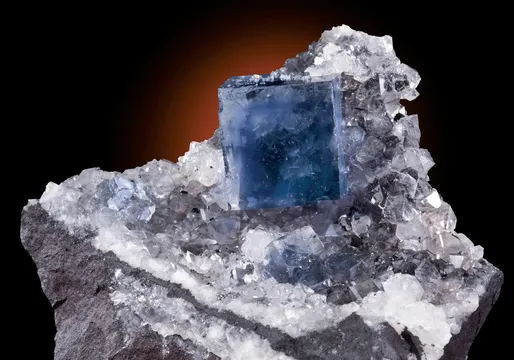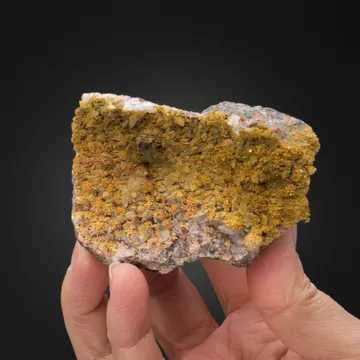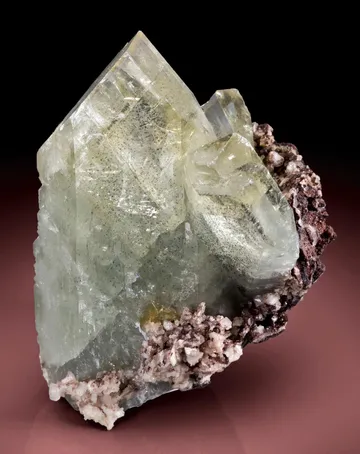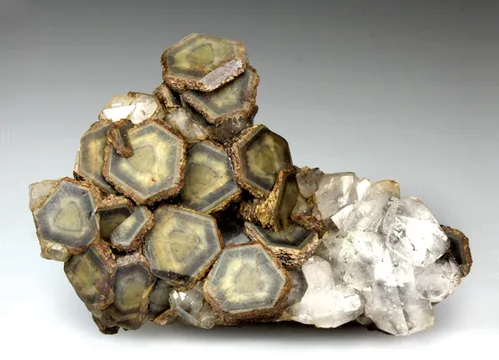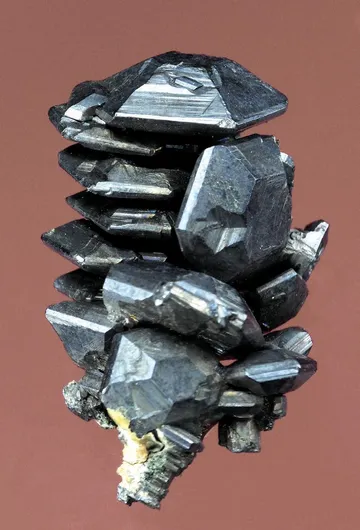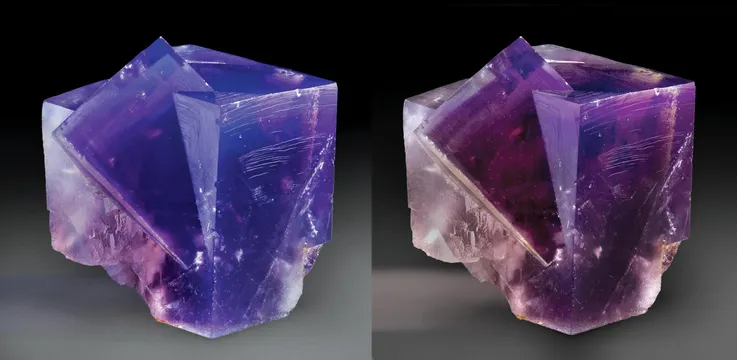
Frazer's Hush Mine, UK — renowned Weardale locality yielding purple fluorite cubes with quartz and galena, prized by collectors for color, rarity and display.
Key facts
Frazer's Hush Mine belongs to the late, highly productive chapter of the Northern Pennine Orefield: not the romantic hand-picked lead mines of the eighteenth and nineteenth centuries, but the modern fluorspar workings of upper Rookhope, driven into the Greencleugh Vein and tied underground into the broader Frazer's Grove–Grove Rake complex. For collectors, its importance is sharply defined. It produced some of the most memorable late Weardale purple fluorites—glassy, transparent to translucent cubes and interpenetration twins, commonly on quartz and locally with galena, sphalerite or calcite—from the same fluorite-rich central zone of the orefield that made Rookhope, Boltsburn, Blackdene, Heights and Cambokeels famous.
Geologically the mine sat in a particularly favourable part of the Alston Block, where mineralized veins cut flat-lying Carboniferous limestones, sandstones, siltstones and shales above the concealed Weardale Granite. The most productive workings at Frazer's Hush were in and around the Great Limestone, a thick, competent limestone horizon that gave both ore width and open cavities. The specimen story is inseparable from that setting: purple fluorite formed as lustrous cubes and twins in cavities, quartz lined and later overgrew voids, and sulphides—especially galena, with subordinate sphalerite—added the metallic contrast that turns the best pieces from attractive purple fluorite into classic Weardale combination specimens.
Regional View
Country View
The look of a fine Frazer's Hush specimen is distinctive: rich violet to grape-purple fluorite, often twinned, with a wet glass lustre, stepped or cross-hatched faces, and enough transparency at the edges to glow under light. Quartz may appear as a white, sparkling druse, as squat glassy points, or as thicker coatings that partly cloak the fluorite; calcite may sit as pale nail-head or small scalenohedral crystals; galena appears as bright, modified metallic cubes or cube-octahedra. Green fluorite is much scarcer here than purple and is prized when securely attributed to the mine.

Photo: Wikimedia Commons

Photo: Wikimedia Commons
Historically, Frazer's Hush matters because it was among the last industrial fluorspar mines of Weardale, and its closure in 1999 closed a major modern phase of mining in the North Pennines. Collectors still encounter the mine through specimens released during commercial production and through later dispersals of English collections; the underground source itself is no longer a collecting locality in any practical sense, with the decline sealed and the workings largely flooded.
Search for specimens: View all specimens from Frazer's Hush Mine, UK
Frazer's Hush Mine lies near Rookhope in Weardale, County Durham, within the Northern Pennine Orefield. The mine proper was developed on the Greencleugh Vein, regarded as a westward continuation or split related to the Red Vein system of the Rookhope Valley. The name preserves an older surface-mining landscape: a hush was produced by damming water and releasing it in a controlled torrent to strip overburden from mineralized ground, and the nearby hushing ground almost certainly long predates the twentieth-century fluorspar mine.
The deposit is a carbonate-hosted vein system of the Alston Block. The enclosing stratigraphy is mainly Lower Carboniferous limestone, sandstone, siltstone and shale, with the Great Limestone forming the key ore horizon. At Frazer's Hush, the levels were numbered by elevation relative to Ordnance Datum rather than by depth below the portal, which is why specimen labels citing the 340, 325, 295, 280 or 260 levels refer to elevations in metres above sea level. The main Frazer's Hush 1-in-4 dib, the local term for an inclined drift or decline, was driven from a portal at about 433 m above Ordnance Datum and descended into the Great Limestone.
The broader Frazer's Grove complex combined several workings: the older Grove Rake shafts, the Rake Level and Firestone workings, the Frazer's Hush dib, and the Greencleugh dib. Mine plans distinguished the Grove Rake Vein, Red Vein and Greencleugh Vein, but geological interpretations have treated them as related splits of the Red Vein, the “mother lode” of this reach of Rookhope. The vein system occupied one of the most highly mineralized pieces of ground in the North Pennines. In the Grove Rake intersection zone, the apparent width of spar in some workings exceeded 20 m; individual ore shoots could extend vertically for as much as 200 m, and productive widths varied from centimetres to more than 10 m.
Unlike some North Pennine mines where the Great Limestone developed broad replacement “flats,” Frazer's Hush was chiefly a vein mine. The most valuable industrial product was fluorspar, with galena recovered as a lead by-product and sphalerite present in smaller quantities. Run-of-mine ore during the Sherburn Minerals period averaged about 30% fluorspar, about 3% lead sulphide as galena, and about 0.3% zinc sulphide, with gangue dominated by siderite, quartz and country rock. Quartz was especially abundant as cavity linings, while pyrite occurred as fine-grained material associated with galena masses and chalcopyrite appeared locally in siderite near vein walls.
The modern Frazer's Hush Mine followed exploration in the early 1970s, when drilling on the Greencleugh Vein identified substantial fluorspar reserves below the Great Limestone. Work began under the Weardale Lead Company and was soon taken over by Swiss Aluminium Mining UK Ltd, which drove the inclined access from surface. Minworth Ltd later acquired the North Pennine interests of SAMUK and British Steel around 1985, operating the former SAMUK mines under Weardale Minerals. After Minworth and Weardale Minerals entered receivership in 1991, Sherburn Minerals Ltd acquired the Frazer's Grove/Broadwood operation and kept mining going through the difficult fluorspar market of the 1990s.
Ore from Frazer's Hush was hauled to surface in rakes of tubs and then trucked about 15 km down-dale to the Broadwood processing plant at Frosterley. There it was crushed, milled and concentrated, with lead-zinc sulphide concentrates recovered first and fluorspar recovered in a second flotation stage. The plant produced powdered fluorspar grading about 98% CaF2, and annual fluorspar production through the 1990s generally ranged from roughly 10,000 to 20,000 tonnes until the final decline of the operation.
The specimen-producing reputation of Frazer's Hush rests especially on the late 1980s and early 1990s. A single very large cavity encountered in 1990 in the Great Limestone, extending from the 340 level down toward the 325 level, yielded beds of transparent twinned purple fluorite, commonly to around 4 cm, with coatings or associations of calcite, sphalerite and galena. Collectors and dealers have long singled out the lustre of this material; the best examples are sharply crystallized, glassy, and more transparent than much purple Weardale fluorite. The same general levels produced fine quartz combinations, bright galena, and sphalerite-on-quartz specimens.
Other zones had their own character. Green fluorite, rare at Frazer's Hush, was reported from the 280 level and from Greencleugh Vein material, sometimes as clusters of dark green twinned crystals partly coated with fine quartz. The 295 level yielded combination specimens with modified galena, pyrite, sphalerite, quartz and small gemmy fluorites, including pieces noted as having come from the roof of the workings. The final 260 level produced smaller but excellent purple fluorite groups, while higher Greencleugh workings produced larger, more opaque purple-white cubes and twins, often attractive but commonly with frosted faces.
The mine's industrial life ended in stages. The last production shift in the Frazer's Hush workings took place on the 260 East Level on 11 December 1998. Salvage and water-level monitoring continued until the final withdrawal of pumps on 5 March 1999. A short final burst of production from shallow Firestone workings continued into July 1999, after which the Frazer's Grove operation ceased. The site was formally abandoned, the plant removed, and the Frazer's Hush and Greencleugh portals sealed because of flooding and the risk of oxygen-deficient mine air. Today collectors should regard Frazer's Hush as a closed historical mine locality; worthwhile specimens come from old mine production, collection dispersals, dealer stock and auctions, not from underground collecting.
Fluorite is the defining Frazer's Hush mineral, and the classic material is violet to deep purple, glassy, transparent to translucent cubic crystals and interpenetration twins, most famously from Great Limestone cavities on the 340 and 325 levels during late 1980s–early 1990s production. Typical good crystals are around 1–4 cm, but much larger cubes are recorded from the mine, with 10–15 cm crystals not unusual in some production and exceptional near-complete cubes reputedly reaching about 25 cm. The best specimens show high lustre, sharp cubic form, stepped or cross-hatched growth on the faces, gemmy purple zoning or water-clear edges, and aesthetic association with white quartz, metallic galena, dark sphalerite or pale calcite; ordinary pieces tend to be cloudy, edge-worn, heavily coated, or made of crowded small cubes without a dominant crystal. Green fluorite is distinctly scarcer, with examples reported from the 280 level and Greencleugh Vein material, sometimes partly coated by fine quartz, and secure green Frazer's Hush specimens command extra attention because purple is the mine's usual colour.
Quartz at Frazer's Hush is most important as a specimen-making associate rather than as a standalone show mineral: it lines cavities, forms sparkling white druse, covers fluorite faces selectively, and in some exceptional pieces develops stubby glassy to milky points or di-pyramidal “beta-style” crystals around large purple fluorite cubes. The best quartz-bearing specimens come from the same Great Limestone cavities and Greencleugh Vein levels that yielded purple fluorite, including 340-level material, where quartz may form a bright white base or a snow-like coating over fluorite and galena. Collector-grade examples are those in which the quartz enhances contrast without smothering the fluorite completely: a thin glittering seam under purple twins, a partial cloak over cube edges, or well-separated points around a large fluorite are far more desirable than dull massive quartz with only damaged fluorite remnants.
Galena from Frazer's Hush occurs both as ore and as handsome specimen crystals, most often in association with purple fluorite and quartz. Mine-production descriptions record galena as nodular aggregates of large crystals, and specimen records include modified cubes, cube-octahedra and octahedral groups, with individual crystals on fine combination pieces reaching roughly 2.5 cm and exceptional compound crystals much larger. Particularly desirable pieces show bright metallic lustre, clean bevelled or modified crystal form, and well-placed galena on white quartz or beside transparent purple fluorite, such as 295-level roof specimens with galena, pyrite, sphalerite, fluorite and quartz, or late-1980s 340-level Greencleugh Vein combinations. Commoner galena-rich pieces may be heavy and historically interesting but less aesthetic if the sulphide is dull, massive, internally corroded, or overwhelms the fluorite.
Calcite at Frazer's Hush is a subordinate but very useful associate, appearing as white to pale, tan or waxy crystals on fluorite, quartz and sulphide-rich matrix. Specimen descriptions note calcite crystals to about 12 mm on fluorite, small waxy calcites only a few millimetres across on quartz-coated fluorite, and nail-head calcite coatings on fluorite cubes from the productive 1990 Great Limestone cavity. The best calcite-bearing Frazer's Hush pieces are balanced combinations: pale calcite accenting purple fluorite without hiding its lustre, or calcite providing a final generation over sphalerite and quartz in a visible paragenetic sequence. Heavy calcite encrustation can protect crystal surfaces, but it can also obscure the purple fluorite that makes the locality desirable, so collectors judge these pieces by placement and contrast rather than calcite abundance alone.
Sphalerite from Frazer's Hush is usually an accessory sulphide, but it gives some of the mine's combinations their dark, high-contrast character. It occurs as fine-grained material with galena in ore, as lustrous black to dark brown crystals on quartz, and as small crystals—commonly millimetric, with documented examples to around 7 mm on quartz—associated with fluorite, galena, pyrite, calcite and dolomite. Noted specimen material includes gemmy sphalerite on quartz from the 340 level and 295-level combinations where sphalerite clusters accompany pyrite, modified galena and small fluorescent fluorites. The most collectible examples show distinct, lustrous sphalerite crystals set on pale quartz or nestled among purple fluorite; less desirable pieces are those where sphalerite is merely a dull granular matrix or an indistinct dark mass below the fluorite.
Other documented Frazer's Hush minerals include siderite, dolomite, pyrite, marcasite, pyrrhotite and bismuthinite. Siderite was a common iron carbonate gangue, locally called “white iron,” especially near vein walls and in brecciated ground. Pyrite occurs as small bright crystals or fine-grained material with galena and sphalerite, while dolomite is known as tan to light brown later coatings in some fluorite-quartz-sphalerite-calcite assemblages. The notable rarity is bismuthinite, recorded from Frazer's Hush in late-1990s mineral news and later locality summaries; its presence ties the mine to the unusual bismuth-bearing assemblages recognized around the Rookhope and Tynehead cupolas of the buried Weardale Granite. Occasional cerussite has also been reported from the upper Greencleugh-associated workings, but it is not a defining Frazer's Hush species in the way it is at some other North Pennine localities.
Frazer's Hush specimens are not generally surrounded by a folklore of manufactured fakes, but attribution deserves care. The mine is part of a dense Weardale mining district whose purple fluorites can resemble material from Blackdene, Cambokeels, Boltsburn, Groverake and other Rookhope-area workings. Labels may also blur Frazer's Hush, Greencleugh, Grove Rake and the larger Frazer's Grove complex. Secure old labels citing level, vein, collector or miner provenance are valuable, especially for green fluorite, 340/325-level Great Limestone material, 295-level galena combinations, and late-production 260-level fluorite.
Condition is the principal issue. Fluorite from Frazer's Hush cleaves readily and many pieces have edge nicks, bruised cube corners, contacted faces, or partial crystals where the specimen broke from a pocket wall. Large purple cubes and floaters are particularly vulnerable to cleavage scars. Quartz, calcite and sulphide coatings can be either an aesthetic advantage or a disguise for damage, so inspect the fluorite edges, high points and crystal intersections carefully. Galena may dull or develop minor alteration on exposed surfaces, while pyrite and marcasite, though not the main species here, should be kept dry and stable as a precaution.
The best Frazer's Hush fluorites fluoresce strongly under long-wave ultraviolet light, typically blue to violet-blue, and some pieces show a pleasing glow even in strong daylight or under cool lighting. Fluorescence alone is not proof of locality—many Weardale fluorites fluoresce—but it is part of the locality's appeal. Avoid prolonged display in harsh sunlight for any coloured fluorite, and store specimens where humidity swings are modest, especially sulphide-rich combinations.
Rarity depends strongly on quality. Ordinary small purple fluorite plates from Frazer's Hush are still obtainable because the mine produced significant specimen material during its commercial years, and EarthWonders alone carries a meaningful number of examples. Fine, transparent, sharply twinned purple fluorites with minimal damage are much scarcer. Large clean cubes, green fluorite, convincing level-specific pieces, bright galena combinations, and specimens with old Weardale collection provenance are the strongest buys. Because the mine is closed, sealed and flooded, the market is fed by old production and collection dispersals rather than renewed collecting.
The most evocative story of Frazer's Hush begins not underground but on the fellside. The word “hush” is a survival from an older, more violent style of mining: water was gathered behind a temporary dam, then released in a sudden rush to tear soil from the hillside and expose vein ground. The modern mine that collectors know for glassy purple fluorite was opened by drilling, machinery and declines, but its name carries the memory of a landscape first interrogated by water, gravity and patience.
The great specimen episode came in 1990, when miners broke into an enormous cavity in the Great Limestone. It stretched from the 340 level down toward the 325 level and carried beds of transparent twinned purple fluorite, typically up to about 4 cm, with calcite, sphalerite and galena in places. For collectors, that cavity is the Frazer's Hush moment: a late twentieth-century Weardale pocket big enough to move the market, producing purple fluorite with the kind of lustre usually spoken of in superlatives by people who had already seen the best of the district.
Paul Younger, who worked professionally with the mine during its final years, left one of the most intimate accounts of its underground life. Frazer's Hush was not a picturesque tourist adit; it was a remote working mine, raising ore 15 km from the Broadwood plant and fighting a market that had turned against fluorspar powder. The men still rode the 1-in-4 dib, tubs clanking up the incline, with levels marked by elevation rather than the older fathom system. In February 1998 Younger wrote a poem to mimic the rhythm of a rake of four tubs and the man-riding set being hauled to bank. The details are not romanticized: the 260 level roof is “solid,” the “Durham hazle” stands like “cathedral walls,” but the platy shale above needs timber, an old ore chute at 270 sticks out too far, and at 360 a bent girder forces the warning, “keep ya arms tucked well inside the car.”
The mine's final production shift has the precision of a closing entry in a ledger. It was worked by Bob Forster and Joe Forster on the 260 East Level on 11 December 1998, with Younger present while carrying out hydrogeological work. Salvage continued, but the working mine was already finished. Pumps were finally withdrawn on 5 March 1999, and after that the underground story became one of rising water levels, mine-water chemistry and safety.
Closure brought a different kind of drama. With ventilation removed and water rising, the Frazer's Hush and Greencleugh declines developed dangerous accumulations of stythe—oxygen-deficient air. The first warning came in March 1998 in the Greencleugh dib after a fan breakdown. A similar problem followed in the Frazer's Hush dib once rising water forced the withdrawal of the fan from the 310 level. A monitoring system was installed so water levels could be observed without sending people into poorly ventilated workings, and the risk to trespassing explorers was serious enough that the portals were sealed earlier than might otherwise have been expected. It is a sobering end for a locality now represented in cabinets by bright purple cubes: the mine that produced them became a flooded, oxygen-poor void.
Even after Frazer's Hush production ended in December 1998, the broader Frazer's Grove operation had one last flare. Between January and July 1999, shallow Firestone workings produced several thousand tonnes of impressive green spar. Then that too stopped. The site entered abandonment, the plant was removed, and the last great commercial fluorspar phase in Weardale passed into history.