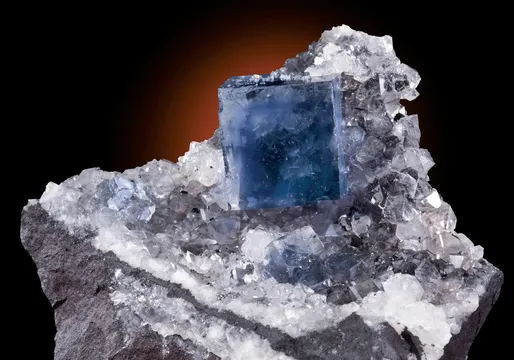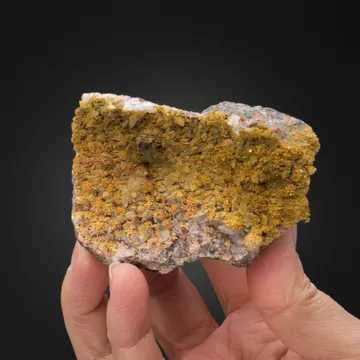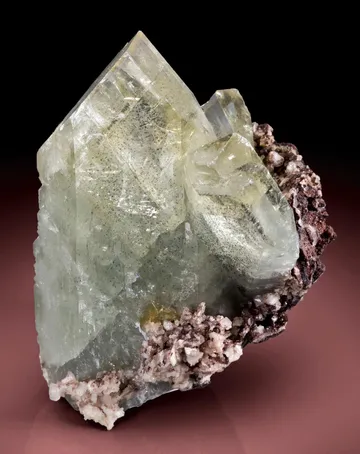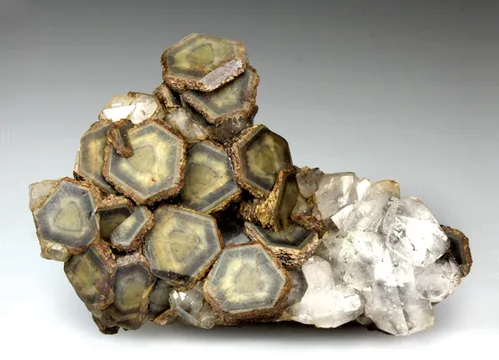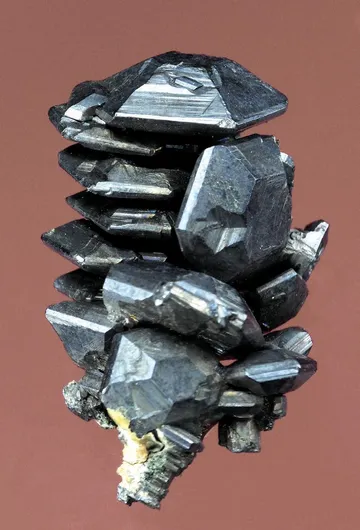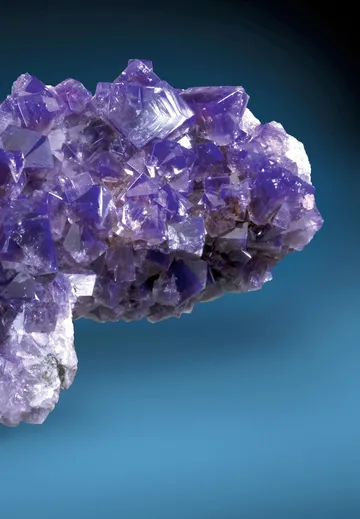
Boltsburn Mine, UK - a classic Weardale locality known for large, color-zoned fluorite cubes with siderite, galena, and quartz pockets, prized by collectors.
Key facts
Boltsburn is one of the great names in English mineral collecting: a Weardale lead mine whose fame now rests less on tonnage than on the extraordinary fluorite and sulphide-lined cavities opened in its “flats.” The mine lies at Rookhope, County Durham, in the Northern Pennine Orefield, where Carboniferous limestones, sandstones and shales are cut by mineralised faults and by limestone-replacement bodies. Boltsburn worked the northeast-trending Boltsburn Vein and, crucially, its associated metasomatic flats in the Great Limestone. Those flats gave the mine its collector identity: broad, cavernous replacement zones in which galena, fluorite, quartz, siderite, ankerite and calcite could crystallise with a freedom seldom allowed in ordinary fissure veins.
To collectors, Boltsburn means fluorite first: large, often twinned cubes in purple, violet, blue, smoky, yellowish, pale green and colour-zoned combinations, many with a distinctive iron-carbonate setting. Its best pieces are not merely “Weardale fluorite” in a generic sense. They have a specific Boltsburn architecture: bold cubes on brown siderite or ankeritic limestone, quartz dusting across cube faces, metallic galena cubes or cube-octahedra tucked into the same pocket, and enough transparency in the finest crystals to reveal internal phantoms and glowing colour zones. Historic accounts describe crystals large enough to make the mine legendary even by Weardale standards, including clear penetration twins selected for optical use.
Regional View
Country View
Historically, Boltsburn also matters because it was a serious industrial mine. The mine began as a lead operation, came under important nineteenth-century development, and became one of the major late lead producers in Weardale after the rich flats were encountered in 1892. The same underground openings that supplied lead ore and fluorspar also exposed the specimen cavities that placed Boltsburn among the classic mineral localities of Europe. The mine closed in the early 1930s for economic and logistical reasons rather than for want of remaining mineralisation, leaving behind a locality whose finest specimens entered museum and old private collections while the mine itself largely vanished from the landscape.

Photo: Didier Descouens / Wikimedia Commons
Search for specimens: View all specimens from Boltsburn Mine, UK
Boltsburn Mine is situated at Rookhope in County Durham, on the south side of Rookhope Burn near the intersection of the Boltsburn and Red vein systems. The principal mine followed the Boltsburn Vein northeastward; the West Level explored the continuation southwest of the village. In geological terms, the locality sits within the central fluorite-bearing zone of the Northern Pennine Orefield, a classic zoned Pb-Zn-F-Ba mineral province influenced by the buried Weardale Granite. The nearby Rookhope Borehole, drilled in 1960–61, proved that granite beneath Carboniferous cover at a depth of about 390.5 m, close to Boltsburn’s workings, giving this small village an importance to economic geologists well beyond the history of the mine itself.
The deposit is best understood as a vein-and-flat system. The vertical fissure vein acted as the feeder, while mineralising fluids reacted laterally with the Great Limestone to form tabular replacement bodies known locally as flats. In ordinary North Pennine mine language, “flat” is not a vague descriptive term: it refers to essentially horizontal replacement mineralisation in limestone adjacent to a vein. At Boltsburn these flats were unusually extensive and unusually productive. Published descriptions record flat mineralisation developed in the Great Limestone on both sides of the Boltsburn Vein, with ankerite and siderite forming a large part of the replacement rock and with galena, fluorite, quartz and calcite concentrated in bands, pockets and open cavities.
The mine’s early workings date to at least the eighteenth or early nineteenth century, with West Level following the vein southwest of Rookhope and East Level and Walt’s Level accessing ground to the northeast. During the nineteenth century, the Beaumont Company developed part of the mine; later, the Weardale Lead Company operated Boltsburn and made the decisive discovery of rich lead-bearing flats at the end of the century. The year 1892 is the hinge point in Boltsburn history: once the flats were found, the mine changed from a relatively modest lead vein into a major lead producer and one of Britain’s great specimen sources.
The ore assemblage was typical of the fluorite-galena zone but exceptional in its cavity development. Galena was the principal ore mineral, with fluorite abundant enough to be worked as fluorspar and clear enough in selected crystals to be used for optical purposes. The replacement rock was rich in siderite and ankerite; quartz formed druses, crusts and free crystals; calcite occurred as crystals and, memorably, as stalagmitic forms. Sphalerite, pyrite, marcasite, chalcopyrite and millerite are also recorded from the mine, though they are much less central to the collector reputation than fluorite, galena, siderite, quartz and calcite.
Production records and later summaries show Boltsburn as a substantial mine by Weardale standards. It was active in the late nineteenth and early twentieth centuries, with lead ore recorded through multiple reporting years and fluorspar recorded in the twentieth century. The mine closed in 1931 or 1932 in the standard historical accounts, with the discrepancy reflecting different reporting conventions rather than a different geological event. The usual explanation is practical: the workings had advanced far from the main shaft, haulage and winding costs were high, labour difficulties were significant, and ore remained but had become expensive to reach.
The physical locality today is not a casual collecting site. Boltsburn is an abandoned mine, and little remains on the surface apart from features such as the shaft collar area and traces of former mine infrastructure. Underground access is dangerous and requires the permission of land and mineral-rights holders. The West Boltsburn Level has had a limited modern collecting chapter: in the mid-2010s, local mine explorers cleared access through falls and recovered a small number of specimens from old flat workings. Those pieces are now a recognisable sub-group in the market, often described as Boltsburn West or West Boltsburn, with blue-grey to electric-blue fluorite, brown siderite or ankerite, white calcite and quartz.
The finest historic finds came from cavities in the flats rather than from narrow vein faces. Contemporary and later accounts describe “loughs” or open chambers lined with fluorite, galena and carbonate crystals. Some cavities were low and wide, some more cavernous, and the most spectacular were large enough to give miners and visitors the impression of walking through a natural crystal room. This is why the best Boltsburn pieces often look architectural: they are fragments of larger crystal-lined spaces, not isolated crystals broken from a single narrow seam.
Boltsburn fluorite is among the classic fluorites of the world, prized for large cubic crystals, penetration twins, strong internal zoning and associations that immediately place it in the Great Limestone flats. Historic material is most often purple to violet, smoky purple, lavender, yellowish, colourless or pale green, while West Boltsburn pieces from the 2010s introduced a striking blue-grey to rich blue look unusual for Weardale. Crystal size ranges from thumbnail cubes to large cabinet crystals; old accounts describe complete penetration-twinned cubes to around 6 inches on edge and partly developed cubes as much as 15 inches on a side. The best specimens combine lustrous, transparent or translucent cubes with strong phantoms, sharp edges, minimal cleaving, and natural contrast from brown siderite or ankerite, sparkling quartz, white calcite and metallic galena.
At Boltsburn, siderite is not a minor accessory but part of the character of the deposit: the flats were strongly replaced by iron carbonate, and many collector specimens show brown, tan, orange-brown or chocolate-coloured siderite as the matrix, coating, or late overgrowth around fluorite, quartz and galena. It occurs as rhombic crystals, aggregated rosettes, saddle-shaped or curved carbonate forms, and fine coatings that can soften the surfaces of galena and fluorite while giving the specimen a warm Weardale contrast. In West Boltsburn material, siderite and ankerite form a dominant iron-carbonate setting for pale to blue fluorite, with quartz and calcite adding brightness. Good siderite pieces from Boltsburn are those where the carbonate is crystallised, not merely massive: rosetted or rhombic siderite framing fluorite, outlining former pocket surfaces, or contributing to the classic fluorite-siderite-quartz-galena assemblage.
Quartz at Boltsburn is usually a companion mineral rather than the star, but it is essential to the locality’s visual signature. It occurs as sparkling druses, small clear crystals, coatings on fluorite and galena, and in some cases as selective linings on fluorite cube faces. Historic descriptions of the flats specifically note fine white quartz glittering against darker fluorite, while modern West Boltsburn specimens commonly show pale blue or blue-grey fluorite on a bed of quartz and brown siderite. Good quartz-bearing Boltsburn specimens are not judged by large individual quartz crystals, but by how well the quartz clarifies the paragenesis and aesthetics: bright, intact druse over galena, crisp clear crystals between fluorite cubes, or a white sparkling skin that strengthens the colour contrast without masking the fluorite.
Galena was the economic heart of Boltsburn and remains one of the most desirable associated minerals on its specimens. It occurs as cubes and cube-octahedra, as massive ore, as strings and lenticles in the flats, and in spectacular old accounts as thick roof linings and bosses of crystallised ore. Collector pieces may show silvery galena crystals partly coated by siderite and quartz, set beside purple, greenish, smoky or blue-grey fluorite cubes. The best galena specimens balance form, lustre and association: sharp metallic crystals, preferably undamaged and visibly crystallised rather than massive, with fluorite and siderite providing the unmistakable Boltsburn context. Because galena cleaves easily and is dense, impact bruising and missing corners are common condition issues on old combination pieces.
Calcite from Boltsburn occurs with the fluorite-flat assemblage as white to cream crystals, nailhead-style forms and, more unusually, stalagmitic calcite growths for which the mine is specifically remembered in collector literature. On many fluorite specimens calcite is a supporting mineral, appearing as white crystals along cube edges or as late accents with siderite and quartz, especially in West Boltsburn material. Historic descriptions also mention thick calcite deposits abutting fluorite in the loughs. The best calcite-bearing pieces are those where calcite adds structure rather than clutter: clean white crystals contrasting with blue-grey or purple fluorite, undamaged nailhead groups on veinstuff, or distinctive stalagmitic pieces that document the unusual open-cavity environment of the mine.
Other minerals recorded from Boltsburn include ankerite, sphalerite, pyrite, marcasite, chalcopyrite and millerite. Ankerite is especially important geologically because much of the altered Great Limestone was formerly described as dolomitic or ferruginous limestone before detailed work clarified the iron-rich carbonate nature of the replacement rock. Sphalerite, pyrite, marcasite and chalcopyrite are present but subordinate in the known specimen population, usually valued most when they occur as sharp accents on classic fluorite-siderite-quartz assemblages. Millerite is the notable rarity: recorded from a cavity in the Great Limestone flats, it gives Boltsburn interest beyond the familiar lead-fluorite suite. Boltsburn itself is not credited as a type locality for a valid mineral species in the standard locality record; its fame rests instead on world-class crystallisation of common species in an exceptional geological setting.
Boltsburn is a closed classic, and that fact shapes the market. True old Boltsburn specimens are finite, while modern Boltsburn West pieces form a separate, limited chapter rather than a continuing mine supply. Serious collectors should pay close attention to labels: older pieces may carry “Bolts Burn,” “Boltsburn,” “Rookhope,” “Weardale,” or simply “Durham,” and a documented chain through recognised British collections adds real value. Specimens from Boltsburn West should ideally be identified as such, because their blue to blue-grey colour, strong phantoms and siderite-quartz associations can differ from the older mine’s more familiar purple and mixed-colour classics.
The main authenticity problem is not a well-known Boltsburn-specific fake industry but mislabelling. Weardale fluorites from Boltsburn, Heights, Blackdene, Cambokeels, Frazer’s Hush, West Pasture, Eastgate, Rogerley, Diana Maria and Lady Annabella can overlap in colour and habit, particularly after labels are lost. Boltsburn attribution is strongest when the specimen shows the correct combination of old label, flat-style iron-carbonate matrix, fluorite-galena-quartz-siderite association, and a plausible historic or West Boltsburn style. Large deep purple cubes without matrix are attractive but can be harder to prove than matrix specimens with multiple diagnostic associations.
Condition is a central issue. Fluorite cleaves readily, and Boltsburn’s largest crystals often show edge nicks, internal cleavage cracks, contacted faces, or old mining bruises. Galena adds another vulnerability: it is soft, dense and perfectly cleavable, so sharp corners are easily lost. Quartz coatings can hide minor bruising but can also be a natural part of the pocket history. Siderite may be altered, earthy or friable on some specimens, and aggressive cleaning can ruin the warm carbonate contrast that gives many Boltsburn pieces their character.
Fluorescence is a bonus rather than a substitute for quality. Many Boltsburn fluorites are strongly fluorescent, often bright blue under ultraviolet light, and some show striking changes between daylight, incandescent light and UV. Collectors should still judge the specimen first in daylight: transparency, zoning, lustre, crystal form, composition and provenance matter more than fluorescence alone. Avoid prolonged harsh sunlight for display if a specimen shows delicate colour, and keep heavy galena-bearing pieces on stable supports.
Market availability is uneven. Small to cabinet-size Boltsburn fluorites appear periodically through specialist dealers, auctions and old-collection dispersals; exceptional large, damage-light, well-provenanced pieces are scarce and command a premium. West Boltsburn material from the 2010s appears more often than great nineteenth- and early twentieth-century classics, but the best blue pieces were a limited discovery and are already being treated as modern classics. For a serious locality suite, a balanced group would include an old purple fluorite, a fluorite-galena-siderite-quartz combination, a West Boltsburn blue example, and, if possible, one specimen documenting calcite or unusual carbonate growth.
The most vivid Boltsburn story comes from underground, not from a display case. Stephen Watson, mine manager and agent for the Weardale Lead Company, described the flats in 1904 with the eye of someone who had seen them fresh from the miners’ tools. He asked readers to imagine the ordinary fissure vein first: a crack through the rocks, perhaps 3, 6 or 9 feet wide, filled with spar, ore and other minerals. Then he contrasted it with Boltsburn’s flats, horizontal bodies in the Great Limestone, normally a few feet thick elsewhere but at Boltsburn swollen into something much larger. Instead of three cleanly separated high, middle and low flats, the mine had in places one great flat, and with it came cavities on a scale that made the usual word “pocket” feel inadequate.
Watson’s account turns from geology into a candlelit mineral cabinet large enough to walk through. Entering one newly opened cavern, the miner or visitor was surrounded by crystallised fluorite, with the only stepping places being “points and angles of six inch cubes.” The colours were not a single purple wash but “purple blue and heliotrope,” with cloudy pale crystals mixed among the translucent ones. Some cubes were studded with calcite; others were coated with fine white quartz, the sparkle of it standing out against the dark fluorite. After 20 or 30 feet of cautious movement, the passage could be blocked while the crystal-lined view still continued beyond the candlelight.
One of Watson’s details is almost surreal: a low, wide lough paved with fluorite and roofed with pure galena 6 to 12 inches thick. The image is mineralogically memorable because it reverses expectation. Heavy galena was not merely underfoot or in lumps in the walls; in some places it formed a roof, making Watson remark that chemical affinity seemed to have acted “antagonistic to the force of gravitation.” Elsewhere, galena and fluorite were more evenly distributed across roof and floor, but the picture of a lead-ore ceiling above a fluorite floor is one of the great set pieces in North Pennine mineral lore.
The same account also records loose cubes and rectangular blocks lying on the floor, smooth on all faces and showing no sign of fracture. They ranged from a quarter inch to 10 inches across and did not appear to have grown on an obvious nucleus. Watson saw in the loughs not just ore but mineralogical theatre: brown, pale yellow or whitish chalybite rounding and combing the pocket surfaces, minute fluorite crystals scattered over it, smaller cavities sometimes more showy than the large ones because the fluorite had a finer finish and the galena a brighter silver lustre.
A second underground glimpse came in 1926, when the Mineralogical Society’s Jubilee Celebration visited Boltsburn. The party was received by H. S. Willis, general manager of the Weardale Lead Company, and guided by Thomas Maddison, the mine manager. After descending the shaft, they travelled more than two miles in ore-wagons along a level driven on the vein, then descended again and walked to No. 3 Flat. There they entered a large room-like working, 10 to 15 feet high, with work still in progress. The walls showed lenticles and strings of galena, cavities lined with brilliant galena cube-octahedra, cubes of fluorite, and saddle-shaped crystallisations of chalybite or ferruginous dolomite.
The Jubilee party collected enthusiastically but was pulled onward to more workings. Their reward was the sight of cavities lined with fluorite cubes up to 6 and even 10 inches on a side. The published account called the visit to the flats the “culminating point” of the excursion and referred to Boltsburn as a “treasure house.” For collectors today, that phrase is more than Edwardian or interwar flourish. It captures the reason Boltsburn pieces feel different from many later Weardale fluorites: the best specimens are survivors from rooms, roofs, floors and low loughs that were once continuous crystal landscapes.
Modern Boltsburn has a smaller but still striking coda. In the mid-2010s, mine explorers reopened the West Level and worked through falls into old ironstone-flat ground southwest of Rookhope. By 2015 they had accessed a large area of flat workings, and limited specimen recovery followed. The most memorable material came from a cavity more than a mile from the adit entrance, where rich blue fluorite appeared with small white calcite crystals and brown siderite or ankerite. Collectors accustomed to the classic purple Weardale palette immediately noticed the difference: this Boltsburn West blue looked closer in spirit to West Cumberland than to the usual Rookhope fluorites, yet its matrix and pocket style rooted it firmly in Boltsburn’s own underground story.