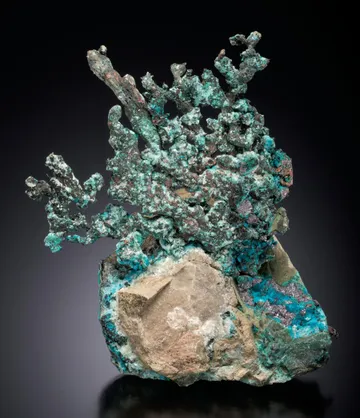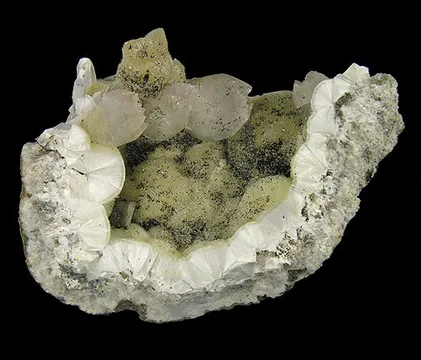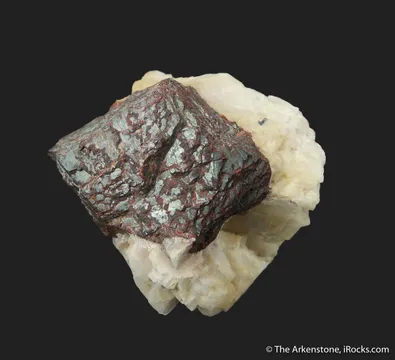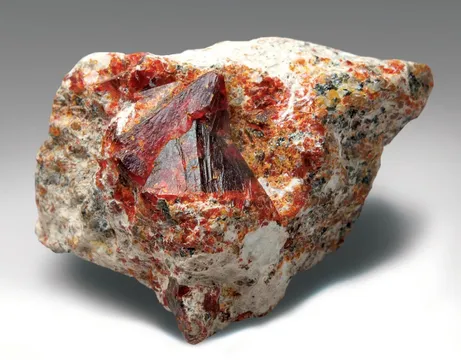
Fanwood Quarry, USA - New Jersey locality famed for mint-green prehnite after glauberite, calcite, and zeolites in amygdaloidal basalts, prized by collectors.
Key facts
Fanwood Quarry—better known in older labels as the Weldon Quarry, Scotch Plains Quarry, or Fanwood Crushed Stone quarry—is one of the classic northern New Jersey trap-rock mineral localities. Its collector importance comes from a very particular setting: cavities, fissures, scoria breccia pockets, and flow-top amygdales in the Orange Mountain Basalt, the First Watchung lava unit of the Newark Basin. The quarry exposed three basalt flows, and within their amygdaloidal horizons low-temperature secondary mineralization produced the familiar Watchung suite of prehnite, calcite, zeolites, apophyllite, datolite, pectolite, chalcopyrite, bornite, galena, pyrite, hematite, quartz, albite, pumpellyite-group minerals, and related species.
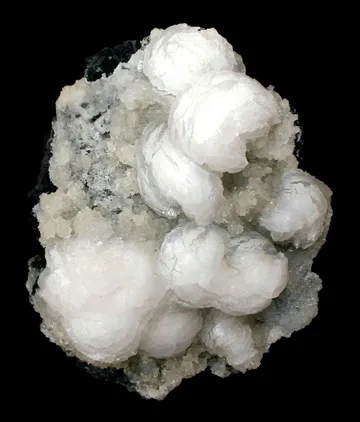
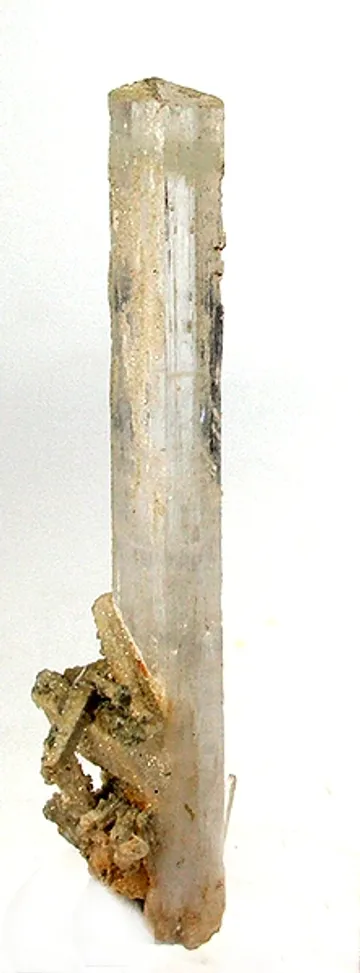
What made Fanwood famous is not just “prehnite from New Jersey,” but prehnite after glauberite: sharp, hollow, mint-green to yellow-green casts and epimorphs preserving the forms of a soluble sulfate that later disappeared. Fine pieces can show mounded carpets of glistening prehnite blades and sugary microcrystals, individual casts to several centimeters, and, on the best plates, a sculptural array of rhombic or elongated “french fry” forms on dark basalt. Calcite, commonly colorless to white and locally gemmy, gives a second line of interest, especially on older pieces with sharp rhombs or butterfly twins. The zeolite side of the locality is quieter but significant: heulandite-group and stilbite/stellerite-like hemispheres and fans in cream, yellow, orange, or beige-brown tones, commonly accompanied by albite and calcite.
Regional View
Country View
Fanwood belongs to the same broad collector tradition as Paterson, Prospect Park, Upper and Lower New Street, Millington, Chimney Rock, and the old Summit/Houdaille workings, but its personality is distinct. The quarry’s finest specimens are typically not the long, finger-like prehnite after anhydrite so familiar from Paterson, but compact, sharp, blocky or rhombic prehnite casts after glauberite, often with a paler seafoam or mint-green color and a glittering surface. That combination—recognizable form, uncommon precursor, New Jersey trap-rock matrix, and a short-lived pocket history—has made good Fanwood pieces highly desirable in East Coast, pseudomorph, and basalt-cavity collections.

Photo: Wikimedia Commons
Search for specimens: View all specimens from Fanwood Quarry, USA
Fanwood Quarry is a large crushed-stone quarry at Watchung, Somerset County, New Jersey, in the Orange Mountain Basalt of the Newark Supergroup. This is the First Watchung basalt, an Early Jurassic flood-basalt unit erupted during rifting of eastern North America. The Orange Mountain Basalt is described in the regional literature as basalt and volcaniclastic rock; the Watchung basalts form the northeast-southwest ridges of northern New Jersey and dip generally westward with the enclosing Newark Basin section. At Fanwood, the quarry exposes three flows, and the mineral-bearing zones occur in the flow interiors and especially near amygdaloidal, scoriaceous, and fractured horizons rather than in any conventional orebody.
The “deposit” is therefore a basalt-cavity secondary-mineral occurrence, not a metallic ore deposit. The quarry was worked for hard trap rock used as aggregate, road stone, asphalt, and construction material. The collectible minerals crystallized after the basalt had cooled and fractured, when circulating low-temperature fluids used vesicles, cooling joints, brecciated scoria, and larger isolated cavities as reaction sites. The productive mineralization is recorded principally in three amygdaloidal horizons, in fractures, in scoria-breccia pockets, and in isolated cavities, some of them large, within the interior of the flows. In weathered scoriaceous basalt below the basal part of the third flow, structures interpreted as pillows or more probably pahoehoe toes have also been noted, a reminder that the quarry face is a cross-section through individual lava-flow architecture rather than a simple homogeneous trap-rock mass.
Commercially the quarry is historically tied to the Weldon family and Fanwood Crushed Stone/Fanwood Stone Crushing and Quarry Company names. It has been operated since the 1890s, and older mineral labels may read Fanwood Quarry, Weldon Quarry, Scotch Plains Quarry, Fanwood Crushed Stone Co. Quarry, or simply “Fanwood, N.J.” The name can mislead modern collectors because the quarry is in Watchung, Somerset County, not in the Borough of Fanwood; it lies near Fanwood and Scotch Plains, which explains the older usage. Municipal and company records continue to treat the Watchung operation as an active quarry, and current collecting should be regarded as closed except by explicit written permission through the operator. Loose stories of “getting in” should not be treated as access information; this is an active industrial pit with blasting, haulage, highwalls, and private-property restrictions.
The best known specimen-producing structures were dome-like “diapirs” in the basal columnar basalt of the second flow. The term, used in the New Jersey basalt-mineral literature, refers here to large dome-like structures with many irregular cavities. Three of the best remembered prehnite-producing diapirs were located by Mark Bianchi: one in late 1987, another in 2002, and a third in 2007. All yielded prehnite after glauberite, with rare prehnite after anhydrite, but each pocket system had its own visual signature. The 1987 discovery was chiefly two large voids at the base of a bench, filled with light green prehnite; some pieces carried calcite crystals to 5 cm or more, and the largest elongated casts had the distinctive “french fry” look often associated with Fanwood. The 2002 diapir, found halfway up the side of a bench, consisted of at least ten cavities and produced many hundreds of specimens; one smaller pocket was coated with acicular natrolite crystals to about 2 cm. The 2007 diapir was about 3 m above a quarry access road and contained numerous cavities, but comparatively few quality specimens; its best material was darker green and thicker, closer in look to some Paterson-area prehnite than to the paler 2002 Fanwood material.
Zeolite and calcite finds were not confined to those famous prehnite pockets. Calcite occurs in fractures and cavities throughout the Watchung basalt and is a common associated mineral on Fanwood specimens. Stilbite/stellerite-like zeolite specimens, heulandite-group crystals, albite, and calcite are documented from cavity finds, including self-collected material from June 13, 1994 showing stilbite-group aggregates with heulandite, albite, and calcite. Good zeolite plates are much less available than prehnite casts, but they add important depth to the locality: Fanwood was not a one-pocket wonder, but a long-lived quarry exposing multiple mineralized horizons in a complex volcanic pile.
Fanwood prehnite is the quarry’s signature species and occurs in two broad styles: widespread thin crusts, isolated small spheres, and botryoidal linings in central amygdaloid bands near the tops of the three exposed basalt flows; and the much more coveted prehnite after glauberite from diapir cavities in the second-flow columnar basalt. Ordinary pieces are pale green to yellow-green coatings or modest botryoidal patches on dark basalt, attractive but not rare for New Jersey trap rock. Good pieces show thick, lustrous, sparkling prehnite in sharp epimorphs and casts after glauberite, commonly light mint to seafoam green, locally darker green in the 2007 material, and sometimes partly overgrown or accompanied by calcite. The best Fanwood specimens are selected for crisp glauberite form, undamaged hollow casts, strong color, generous coverage, and sculptural arrangement on matrix; individual prominent casts around 3 cm are especially desirable, and older cabinet pieces from the 1987 and 2002 diapirs remain the benchmark.
Fanwood calcite occurs in fractures and cavities in the Watchung basalt and is most collectible when it rises above the role of accessory mineral. It appears with prehnite, stilbite-group minerals, heulandite-group crystals, albite, quartz, pumpellyite-group minerals, and other basalt-cavity species. Documented pieces include sharp gemmy calcite specimens on basalt, a self-collected butterfly twin with a largest crystal of about 3.3 cm, calcite to about 1.4 inches on thick breccia, and a 3.0 cm calcite rhomb included with a prehnite epimorph after glauberite. The best calcites have sharp form, transparency or bright white contrast, minimal bruising on cleavage edges, and a clean relationship to matrix or prehnite; ordinary pieces are smaller fracture fillings or scattered rhombs that lack the clarity, size, or sculptural isolation of the older classic examples.
At Fanwood, “glauberite” on collector labels almost always means the vanished precursor preserved by prehnite, not fresh, stable glauberite crystals in the cabinet. The soluble sodium-calcium sulfate originally grew as sharp crystals in basalt cavities and was later dissolved or replaced, leaving hollow prehnite epimorphs and casts that retain its rhombic to elongate forms. Fanwood is exceptional among New Jersey trap-rock localities because its best prehnite pseudomorphs are after glauberite rather than the more familiar anhydrite. The finest examples preserve crisp glauberite geometry in mint-green, sparkling prehnite, sometimes in dense carpets and sometimes as isolated blocky or elongate casts to around 3 cm or more; weaker examples have rounded, incomplete, broken, or ambiguous forms where the original sulfate habit is only partly readable.
Fanwood heulandite-group minerals occur in basalt cavities as small pearly zeolite crystals, most often valued as an association rather than as the visual centerpiece of a specimen. The best documented pieces pair heulandite with stilbite-group spheres or fans, albite, and calcite, including 1994 material with a 3.1 cm stilbite group and other specimens with stilbite spheres to several centimeters. Collectors should expect heulandite here as lustrous, modestly sized cavity crystals tucked among zeolite aggregates or sprinkled on matrix; the best pieces show fresh pearly luster, clean separation from associated calcite and albite, and a balanced composition with the more colorful stilbite or orange-golden zeolite spheres. Because the heulandite subgroup includes several chemically distinct species that are not always separated analytically, older labels may sensibly read “heulandite” or “heulandite subgroup” rather than a fully cation-qualified species name.
Fanwood stilbite is a quieter classic than the prehnite-after-glauberite, but good examples are distinctive: radiating fans, sheaves, smooth hemispheres, and spherical aggregates in beige-brown, yellow, orange, golden, or white tones on basalt, commonly associated with heulandite-group crystals, albite, and calcite. Documented Fanwood pieces include stilbite-group spheres to about 3.5 cm with heulandite, albite, and calcite, and a 3.8 cm stilbite sphere with heulandite; smaller market pieces often show orange-golden spheres around 1.1–1.3 cm with pearly heulandite and white calcite. The best specimens combine full, undamaged hemispheres or balls, warm color, good luster, and open matrix presentation. Label discipline matters: some published descriptions have discussed similar Fanwood radiating fans and smooth hemispheres as stellerite, while many collector and marketplace labels use stilbite subgroup, so analytical certainty is preferable for high-value pieces.
Other documented Fanwood minerals include albite, anhydrite, apophyllite-group minerals, fluorapophyllite-(K), bornite, chalcopyrite, galena, pyrite, hematite, chlorite-group minerals, datolite, epidote, gmelinite subgroup, natrolite, pectolite, pumpellyite subgroup, quartz, chalcedony, and stellerite. The most interesting rarities for collectors are not type-locality species, but locality-specific associations and microminerals: modified cubic galena, usually as microcrystals on prehnite; small sulfides in fractures and cavities; gmelinite-group zeolites; natrolite needles in at least one small pocket related to the 2002 prehnite diapir; and the stellerite/stilbite subgroup problem, which makes careful labeling especially important for zeolite specialists.
The first authenticity issue is nomenclature. A Fanwood “glauberite” specimen is normally a prehnite epimorph, cast, or pseudomorph after glauberite; fresh glauberite is not what gives the classic Fanwood pieces their value. Labels that simply say “glauberite” should be read carefully. The desirable object is the preserved glauberite form, expressed in prehnite. Broken hollow casts, filled casts, and rounded botryoidal prehnite are all legitimate Fanwood material, but only sharp, readable casts with strong color and good coverage should command the premium associated with the famous finds.
The second recurring issue is locality wording. Older labels may say Fanwood, Scotch Plains, Fanwood Quarry, Fanwood Crushed Stone, Fanwood Stone Crushing and Quarry Co., Weldon Quarry, or Watchung Quarry. These can refer to the same quarry, but a modern locality label should place it at Watchung, Somerset County, New Jersey. Mislabeling as Union County is understandable because of nearby Fanwood and Scotch Plains, but the quarry itself is in Somerset County. Labels from old East Coast collections, especially those mentioning Charlie Key, Ken Hollman, Robert Batic, Herb Obodda, Frank Imbriacco, Nick Facciolla, or the Batic brothers, deserve to be preserved with the specimen because the quarry’s best material has moved through a relatively small collector network.
Condition is crucial. Fanwood prehnite casts are often hollow or partly open, and the sparkling prehnite crust can be bruised on exposed ridges. Check the ends of elongated casts, high points on rhombic forms, and edges of matrix plates under magnification. Calcite is softer and cleaves readily; sharp, transparent rhombs commonly show edge nicks, cleavage flashes, or internal cracks. Zeolite specimens should be handled as fragile basalt-cavity pieces: stilbite and heulandite aggregates can shed points, and natrolite needles, where present, are easily crushed. Avoid aggressive cleaning. Water is generally safe for calcite and prehnite in moderation, but iron-stained basalt-cavity pieces can react unpredictably to acids, and acid cleaning can damage calcite or alter the visual balance of associated minerals. Glauberite itself is soluble, which is part of why the classic specimens survive as casts rather than fresh sulfate crystals.
No well-established fake industry is known for Fanwood, but upgrading and misdescription are possible. Watch for “crystals” of prehnite described without noting that the sharp forms are pseudomorphs or casts after glauberite; inflated claims of “glauberite crystals”; and zeolite pieces sold as fully determined stilbite, stellerite, or heulandite species without analytical support. For high-end examples, provenance to the 1987, 2002, or 2007 diapirs, old collection labels, or publication-quality photographs adds real value.
Market availability is intermittent. Fanwood remains an active private industrial quarry, so new legal collecting is not a normal supply channel. Most good specimens on the market are recirculated from old collections or from stock released by dealers who handled the 2000s finds. Thumbnail to small-cabinet prehnite-after-glauberite pieces appear periodically; large, aesthetic cabinet plates with sharp casts, strong mint color, calcite association, and minimal damage are much scarcer. Calcite and stilbite/heulandite specimens are less famous but can be excellent buys when well documented, especially if they show the quarry’s basalt matrix and old provenance.
The quarry’s best story is the sequence of diapir discoveries that turned an active crushed-stone operation into one of the great modern New Jersey pseudomorph localities. In late 1987, Mark Bianchi located the first of the well-known prehnite-bearing diapirs in the basal columnar basalt of the second flow. It was not a single neat pocket, but mainly two large voids at the base of a bench. Inside was light green prehnite after glauberite, some of it carrying calcite crystals to 5 cm or larger. Collectors still remember the longest casts from this zone because they did not look like the familiar Paterson prehnite fingers after anhydrite; the elongated glauberite forms had the unmistakable “french fry” shape that has become part of Fanwood vocabulary.
The second major act came in 2002. Again the structure was a diapir, but this one sat halfway up the side of a quarry bench and opened into at least ten cavities. This was the great abundance find: many hundreds of specimens came out, and the Fanwood name began circulating widely beyond regional collectors. The best pieces had crisp, light green to mint-green prehnite preserving the shapes of glauberite crystals, with sparkling surfaces and enough three-dimensional form to stand apart from common basalt-cavity prehnite. One smaller pocket in the same system added a delicate twist: acicular natrolite crystals to about 2 cm coated the prehnite, a far more fragile association than the rugged green casts for which the locality is best known.
By 2007, the quarry still had surprises. A third noted diapir appeared in a wall roughly 3 m above an access road. It contained many cavities, but the yield of fine pieces was small. The material looked different: thicker and darker green, less like the pale 2002 seafoam casts and more reminiscent of some Paterson-area prehnite. For collectors, that 2007 pocket is a cautionary lesson in basalt localities. The structure can look promising, the cavities can be numerous, and still only a small fraction of the pocket may produce specimens that survive extraction with the color, coverage, and form needed for a fine cabinet piece.
Fanwood’s quieter zeolite history has its own charm. On June 13, 1994, Frank A. Imbriacco III self-collected specimens with stilbite-group aggregates, heulandite, albite, and calcite, including a 3.1 cm stilbite group and other pieces later illustrated in the Fanwood literature. Those specimens show another side of the quarry: warm-toned zeolite spheres and fans in basalt cavities rather than green prehnite casts. They are easy to overlook beside the famous pseudomorphs, but in a serious New Jersey suite they make the difference between a one-mineral locality representation and a true Fanwood assemblage.
Frank A. Imbriacco III, “The Fanwood quarry, Somerset County, New Jersey,” The Mineralogical Record, Vol. 41, No. 2, March–April 2010, pp. 161–174 — The essential modern article on the locality, including the prehnite-after-glauberite finds and illustrated specimens.
Warren Cummings, “Mineralization at the Fanwood & Summit Quarries, New Jersey,” Rocks & Minerals, Vol. 62, No. 3, 1987, pp. 150–159, doi:10.1080/00357529.1987.11762647 — The key comparative paper for Fanwood and the related Summit/Houdaille trap-rock mineralization.
James G. Manchester, The Minerals of New York City and Its Environs, Bulletin of the New York Mineralogical Club, Vol. 3, No. 1, 1931 — An older regional reference that includes Fanwood/Weldon material in the broader New York–New Jersey collecting context.
P. E. Olsen, “The latest Triassic and Early Jurassic formations of the Newark basin (eastern North America, Newark Supergroup); stratigraphy, structure, and correlation,” New Jersey Academy of Science Bulletin, Vol. 25, No. 2, 1980, pp. 25–51 — Foundational stratigraphic work naming and correlating the Orange Mountain Basalt.
John H. Puffer, “The Watchung Basalts of Northern New Jersey,” New York State Geological Association field guide, 1989 — Useful geological context for the Orange Mountain, Preakness, and Hook Mountain basalt flows and their volcanic structures.
U.S. Geological Survey Geolex entry for the Orange Mountain Basalt — Concise stratigraphic reference for the Early Jurassic Orange Mountain Basalt of the Newark Supergroup.
Mindat locality page: Fanwood Quarry (Weldon Quarry), Watchung, Somerset County, New Jersey — Best single online locality summary, with mineral list, coordinates, alternate names, references, and photo links.
Mindat photo gallery for Fanwood Quarry — Large gallery of prehnite, calcite, zeolite, and quarry-view photographs, including specimens illustrated in the 2010 Mineralogical Record article.
Wikimedia Commons: Fanwood Quarry category — Freely licensed images of Fanwood prehnite, prehnite after glauberite, and calcite specimens.
Mineralogical Record back issue, Vol. 41, No. 2, 2010 — Back-issue listing for the number containing Frank A. Imbriacco III’s detailed Fanwood Quarry article.
Mindat: Prehnite from Fanwood Quarry — Focused occurrence entry summarizing Fanwood prehnite habits, diapir pockets, and associated minerals.
Mindat: Calcite from Fanwood Quarry — Focused occurrence entry for Fanwood calcite and its common associations.
Weldon Materials locations page — Current company context for the Watchung quarry operation.
USGS Geolex: Orange Mountain Basalt — Stratigraphic background for the basalt unit hosting the Fanwood mineralization.
NYSGA field guide: The Watchung Basalts of Northern New Jersey — Broader geological treatment of the Watchung basalt flows and volcanic structures.