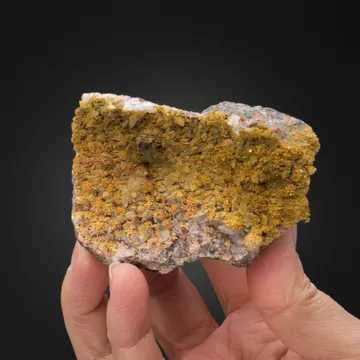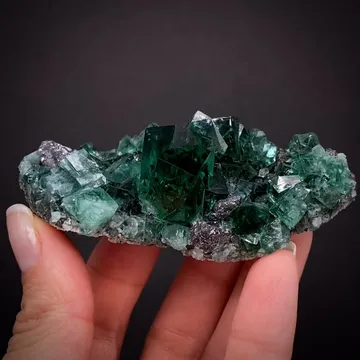
Diana Maria Mine, UK — a key fluorite locality near Frosterley, Rogerley extension, known for gemmy green, purple, yellow fluorite on quartz and calcite.
Key facts
Diana Maria Mine is one of the modern names that serious fluorite collectors now say in the same breath as the classic Weardale localities. It is not an old lead mine reopened for nostalgia, but a deliberately developed specimen mine in the western extension of Rogerley Quarry, near Frosterley in County Durham. The workings follow the Sutcliffe Vein and related flats in the Great Limestone, a Carboniferous carbonate unit that here forms part of the Northern Pennine Orefield. Mineralizing fluids used steep fractures, shear zones, karstic voids, and bedding-parallel replacement flats to deposit fluorite, galena, quartz, calcite, and a smaller suite of supergene and accessory minerals.
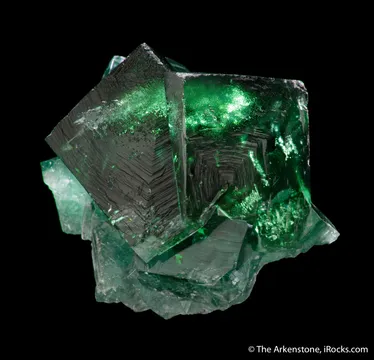
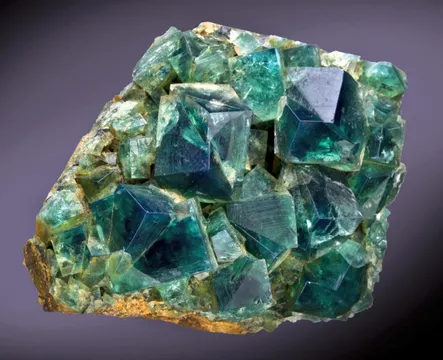
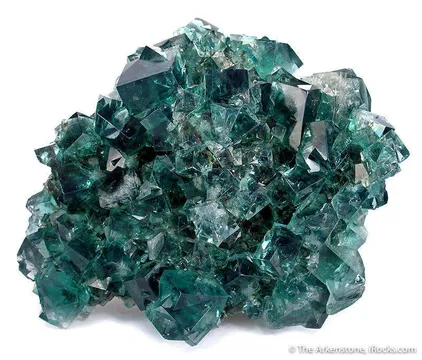
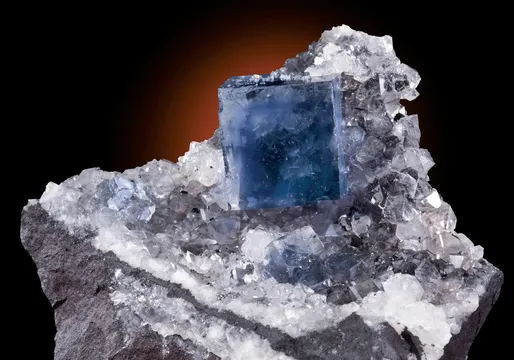
For collectors, Diana Maria’s importance rests above all on its fluorite: gemmy green, purple, yellow, multi-zoned, and often visibly daylight-fluorescent crystals, many of them on sparkling quartz or set against snow-white calcite. The best specimens are instantly recognizable—razor-edged cubes and interpenetrant twins with mossy or emerald-green interiors, blackberry-purple corners or cores, glassy faces, and in some pockets the pale blue to violet glow that makes Weardale fluorite so theatrical in sunlight. The mine’s named pockets have become an unusually well-documented modern collecting story, with pocket names, discovery dates, mineral associations, and specimen characteristics recorded in real time by UK Mining Ventures and collectors.
Regional View
Country View
Diana Maria is historically significant because it extends the Rogerley story westward onto the Sutcliffe Vein, a structure known from the quarry face long before it became the focus of modern underground specimen mining. Early collecting by Lindsay Greenbank and Mick Sutcliffe proved that good fluorite existed there, but the vein was difficult to work from the old quarry exposure. The decisive change came in 2017, when Ian and Diana Bruce’s UK Mining Ventures began opencast work and then developed the mine underground. Since then, Diana Maria has supplied the market with carefully recovered, pocket-attributed specimens rather than anonymous “Weardale fluorite,” giving collectors a rare chance to build suites that follow a mine’s evolving geology pocket by pocket.

Photo: Hiroaki Kikuchi, Wikimedia Commons
Search for specimens: View all specimens from Diana Maria Mine, UK
Diana Maria Mine lies in Rogerley Quarry near Frosterley, on the south side of Weardale in County Durham, England. The mine is developed in the western quarry extension, around mineralized cross-veins and flats in the Great Limestone. Mindat records the locality as Diana Maria Mine, Rogerley Quarry, Stanhope, County Durham, England, UK, with the historic name Sutcliffe Vein; UK Mining Ventures records the portal as roughly 125 m north-northwest of the Rogerley Mine main portal.
Geologically, Diana Maria belongs to the carbonate-hosted vein and replacement-flat mineralization of the Northern Pennine Orefield. The host rock is the Great Limestone, a Carboniferous limestone unit locally interbedded with shale and mudstone partings. The broader district is the Alston Block, underlain by the North Pennine Batholith, including the Weardale granite. The mineralization is best understood as a fluorine-rich, metal-bearing hydrothermal system with affinities to Mississippi Valley Type deposits, though the North Pennine Orefield also shows zoned hydrothermal features more complex than a simple MVT model.
The Diana Maria orebody is not a single simple vein. UKMV’s mapping distinguishes the Greenbank Vein worked by Rogerley Mine, the Sutcliffe Vein worked by Diana Maria, and the River Catcher Vein, recognized during geological mapping in 2017. At Diana Maria, the Sutcliffe Vein is a densely mineralized shear structure trending broadly east-west through old karst horizons. It divides the workings into Northern Flats and Southern Flats. The flats are bedding-parallel replacement bodies and cavity systems developed outward from the steep vein, where impermeable shale horizons helped mineralizing fluids pond laterally through the limestone.
This structural setting explains the collector aesthetics. The brecciated vein zones and open flats provided vuggy porosity in which fluorite and galena could grow as euhedral crystals. The iron-rich altered limestone and ironstone matrix gives many specimens a dark, rusty, or gossan-like base, while later quartz and calcite episodes add sparkle and contrast. Northern Flats material has tended toward purple fluorite and larger crystals, while Southern Flats material is especially known for green fluorite in many shades and zoning styles. Green Sugar Pocket, for example, is defined by pervasive druses of small, colorless quartz crystals over green fluorite, whereas November Gem and Queen of Green are remembered for gemmy emerald to moss-green crystals with snowy calcite.
The mining history begins before the specimen mine. The quarry itself was worked for limestone in the mid-19th century, with minerals from the veins and flats apparently discarded on the waste dump. In 1976 Lindsay and Patricia Greenbank, together with Mick and Brenda Sutcliffe, found good green and purple fluorite on what was then an unnamed vein on the top bench of the disused quarry. In 2000 the U.S.-based UK Mining Ventures partnership of Cal and Kerith Graeber and Jessie and Joan Fisher formally recognized and named the Sutcliffe Vein for Mick Sutcliffe, but it was not developed as the Diana Maria Mine until the Bruce ownership period began in 2017.
The modern Diana Maria operation began in summer 2017, when UK Mining Ventures Ltd., under Ian and Diana Bruce, was refurbishing Rogerley Mine to meet HM Inspectorate of Mines standards. While that work was underway, the team turned to the Sutcliffe Vein in the quarry face. Removing 3 to 6 m of overburden exposed a richly mineralized cavity about 6 x 10 m, producing emerald-green and blackberry-purple cubic fluorites to 6 cm on edge, commonly on drusy clear to milky quartz, with strong daylight fluorescence. This success led to underground development.
The earliest opencast pockets include Graeber Jones, Snowstorm, Pavel’s, Emerald Peaks, and Green Hill. Graeber Jones, found in June 2017, produced sea-green to emerald-green twinned fluorites on stubby, sometimes stalactitic quartz, with strong color zoning and blackberry-purple centers in some crystals. Snowstorm occurred at the contact of the Sutcliffe Vein and a mineralized flat and became known for gemmy green fluorite twins coated with white calcium carbonate, originally described as aragonite but later discussed by UKMV as calcite in some analyzed pieces. Pavel’s Pocket, found in hard jasperized limestone on the south side of the Sutcliffe Vein, produced deep purplish-green fluorite, often directionally coated with white drusy carbonate. Emerald Peaks and Green Hill added further variations on emerald-green, gemmy, twinned, daylight-fluorescent fluorite.
Underground work began after the opencast phase became less economical under the increasing overburden of Fatherley Hill. In late April 2018, the quarry face near the Sutcliffe Vein was made safe, a shallow recess was excavated, and a pre-engineered RSJ portal was installed, timber-clad, and protected by graded rock. The drive follows the vein along strike so that tunneling remains close to the mineralized structure and its adjacent flats. Development uses compressed-air drills and short blasting rounds to reduce shock near pockets; specimen recovery is done with more delicate hand and power tools, including prybars, hydraulic splitters, and diamond chainsaws.
Named underground pockets read almost like a stratigraphy of modern Weardale specimen collecting. Queen of Green, discovered in January 2018, produced some of the mine’s finest lime to leaf-green fluorite, including modified faces, interpenetrant twins, and at least one specimen with a movable bubble fluid inclusion. Purple Haze and Galena Pocket, discovered in autumn 2018, are adjacent and connected; Purple Haze is known for smoky, almost black-purple fluorite against snow-white calcite or quartz, while Galena Pocket is prized for metallic cuboctahedral galena with fluorite and quartz. November Gem, found in November 2018, is a benchmark Southern Flats pocket for gemmy mossy emerald-green single and twinned cubes with creamy-white calcite. Frosterley Pocket followed in December 2018, and Green Sugar in February 2019 brought distinctive green fluorite on sucrosic quartz.
Later pocket names record both mineral appearance and mining circumstances. Gushing Water Pocket, found in late June 2019, was named for a large water flow connected to a permeable fracture in the Great Limestone. 4th July Pocket was discovered in July 2019 and became known for intense blackberry-purple fluorite with tan calcite. Heavy Metal Pocket, found in late autumn 2019 near the Sutcliffe-Greenbank intersection zone, was named for galena-rich, heavy specimens that had to retain brecciated matrix. Bypass Pocket reflects a small unplanned drive around poor roof conditions. Truffle Pig Pocket records miners recovering large fluorites on hands and knees. Milky Way, Hidden Forest, Naughty Gnome, Supernova, Midnight Oil, and other later pockets show that Diana Maria has remained an active, evolving source rather than a single exhausted 2017 event. A 2026 Tucson Fine Mineral Gallery publication reported that, by October 2025, 38 pockets had been discovered and named at Diana Maria, with Tiny Twins Pocket then the most recent.
Access is not casual field collecting. Diana Maria is an operating professional specimen mine run by UK Mining Ventures, and collectors should treat it as a controlled industrial and private mineral-rights site. Visits require permission and appropriate safety arrangements; most specimens reach collectors through UKMV, Crystal Classics, show releases, dealers, and secondary-market resales. The detailed pocket labeling that accompanies much Diana Maria material is one of the locality’s strengths, and labels should be preserved with the specimen.
Fluorite is the signature mineral of Diana Maria Mine, occurring mainly as cubic crystals and interpenetrant twins in green, purple, yellow, smoky, and complex zoned combinations, commonly with conspicuous daylight fluorescence. The best pieces are pocket-specific: Graeber Jones specimens show sea-green to emerald-green twins on stubby quartz, sometimes with blackberry-purple centers; Queen of Green produced exceptionally gemmy lime to leaf-green crystals, modified faces, and rare fluid inclusions; November Gem yielded mossy emerald-green cubes and twins, commonly 0.7 to 1.4 cm and up to 2.6 cm in one recorded crystal, set in creamy-white calcite; Green Sugar pieces place green fluorite among 1 to 3 mm sucrosic quartz; River Catcher specimens are often honey-yellow to root-beer brown with quartz and subtle zoning; 4th July pieces can carry intense blackberry-purple fluorite with tan calcite; Hidden Forest is noted for transparent cubes with dark purple core zones and forest-green rims. Good Diana Maria fluorite is separated from ordinary pieces by transparency, undamaged edges, strong zoning, intense natural fluorescence, elegant contrast with quartz or calcite, and a secure pocket attribution.
Galena from Diana Maria is most desirable when it is not merely a dark accessory but an active aesthetic partner to the fluorite. Galena Pocket, discovered in late 2018, is characterized by light metallic grey cuboctahedral galena crystals to about 3 cm across, with naturally etched and pitted faces, associated with lilac-pink, purple, and greyish sea-green fluorite cubes to about 0.8 cm and sparkling micro-quartz druse between the crystals. Green Sugar Pocket also produced small black to tarnished galena crystals to about 4 mm as modified cubes and octahedral crystals with flattened apexes, scattered among quartz, calcite, and green fluorite. Frosterley Pocket specimens may show dull grey, naturally etched galena as octahedral or mixed cubic-octahedral forms nestled between sea-green fluorites. Top galena-bearing Diana Maria pieces are heavy, well-balanced combinations with visible metallic crystals, good contrast against quartz or green fluorite, and minimal abrasion to galena corners and fluorite edges.
Calcite at Diana Maria is most familiar as the white, cream, pinkish, or tan companion that frames and partly coats fluorite. In November Gem Pocket, creamy-white calcite occurs as undulating botryoidal coatings and delicate platy rosettes to about 4 mm, often covering smaller fluorite while leaving larger gemmy single and twinned crystals exposed; this natural selective coating is a prized Diana Maria texture. Frosterley Pocket also produced fluorite set against pervasive snow-white drusy calcite, with larger green crystals standing proud, while 4th July Pocket specimens may carry iron-stained light tan lenticular calcite on blackberry-purple fluorite, sometimes coating two or three adjacent sides and revealing the “way-up” direction during growth. A distinctive one-off calcite geode from the surface opencast workings contained meandering, stalactitic and tube-like calcite structures with drusy coatings in an ironstone vug measuring about 8.0 x 7.0 x 4.5 cm. The finest calcite-bearing pieces are those where the calcite is intact, textural, and compositionally natural rather than a distracting crust.
Quartz at Diana Maria is a key matrix and textural mineral, especially in pockets where it contributes sparkle, contrast, and diagnostic character. Graeber Jones fluorites are consistently reported on stubby quartz crystals, in places stalactitic, while the original 2017 Sutcliffe Vein cavity produced fluorite covering drusy beds of clear to milky-white quartz. Green Sugar Pocket is the most quartz-forward Diana Maria assemblage: colorless to light smoky brown and tan quartz crystals, typically 1 to 3 mm, coat ironstone matrix and may partly envelope green fluorite, producing the pocket’s “sucrosic” appearance. River Catcher Vein specimens include honey-yellow fluorite on crystalline quartz, and some fluorite faces preserve sunken hexagonal casts where quartz crystals once grew or were partly enveloped, a particularly interesting micro-texture for collectors who like growth-history evidence. Better quartz-associated specimens have bright, clean druse, undamaged fluorite sitting above rather than buried within it, and enough contrast that the quartz reads as a deliberate aesthetic component rather than simply matrix.
Other documented minerals from Diana Maria include aragonite, cerussite, chalcopyrite, dolomite, goethite, greenockite, gypsum, hydrocerussite, malachite, petroleum or bitumen, pyrite, siderite, smithsonite, and sphalerite. Mindat records several of these from PXRD-confirmed determinations by Martin Števko, while UKMV’s own checklist emphasizes a smaller working suite of calcite, fluorite, galena, greenockite or possible hawleyite, hydrocerussite, quartz, and sphalerite. The cadmium sulphide material is especially worth treating cautiously: UKMV notes small powdery patches discovered in 2019 and recorded as greenockite, with the possibility of hawleyite not yet fully resolved in their published note. Diana Maria is not known as a type locality for a new mineral species; its rarity value is instead in pocket-specific fluorite aesthetics, documented growth textures, rare fluid inclusions, and unusual fluorite-galena-quartz-calcite combinations.
Diana Maria specimens reward careful label discipline. A label that gives only “Weardale” or “Rogerley” may be less useful than one naming Diana Maria Mine and, ideally, the pocket: Queen of Green, November Gem, Green Sugar, Galena Pocket, 4th July, Hidden Forest, Supernova, Pocket 42, and so on. Many pockets have quite distinctive combinations of color, matrix, and associated minerals, but there is overlap between them; confident pocket attribution should come from original UKMV or dealer documentation rather than later visual guesswork.
The most common condition issues are bruised fluorite corners, cleaved cubes, detached or glued crystals, quartz-druse abrasion, and crushed or dirty calcite coatings. Diana Maria fluorite can be exceptionally transparent, which makes even small internal fractures, contact marks, and bruised edges obvious. Interpenetrant twins with sharp, glassy edges are particularly vulnerable. Calcite coatings and rosettes can be powdery, drusy, or delicate, so avoid aggressive brushing and avoid acid cleaning unless there is a documented reason and you fully understand what will be lost. Some specimens, especially Hidden Forest material, are valued after calcite removal reveals undamaged fluorite beneath, but blanket assumptions about preparation are dangerous; natural selective calcite coating is itself part of the locality’s character.
There is no widely documented locality-wide fake problem comparable to dyed agates or assembled Chinese fluorite combinations, but Diana Maria material is not immune from treatment or misrepresentation. At least one dealer listing has offered an aura-treated fluorite labeled from Diana Maria Mine, and such coated material should be clearly described as treated. The natural Diana Maria look is strong enough that metallic coatings are easy to spot when compared with genuine glassy fluorite. More subtle concerns are mislabeling between Rogerley and Diana Maria, omission of pocket information, and confusion over white carbonate coatings formerly called aragonite on some early Snowstorm material but later analyzed as calcite in specific examples.
Fluorescence is central to the locality’s appeal. Diana Maria and Rogerley fluorites commonly show strong response under long-wave ultraviolet and, most famously, a visible daylight fluorescence that can shift apparent color toward blue, violet, or purple in natural light. Evaluate pieces under several lighting conditions: warm indoor light, neutral LED, indirect daylight, and long-wave UV. Photographs can exaggerate or suppress the color shift, so in-hand viewing is valuable for expensive specimens. Store the best transparent pieces away from strong display heat and direct impact; fluorite is relatively soft and cleaves readily.
Market availability is better than for most classic 19th-century Weardale localities because Diana Maria is a modern professional specimen mine, but the best pocket pieces are finite and can disappear quickly after release. Small fluorite clusters and single-pocket thumbnails remain obtainable, while large cabinet specimens with undamaged gemmy twins, strong color zoning, daylight fluorescence, attractive quartz or calcite, and original pocket documentation command a premium. Galena Pocket and Heavy Metal material, unusual yellow River Catcher pieces, intense blackberry-purple 4th July fluorite, Hidden Forest zoning, and top Queen of Green or November Gem combinations are especially desirable in advanced suites.
The Diana Maria story begins with a practical inconvenience. In the early 1970s, collectors already knew the Sutcliffe Vein existed in the quarry face, but reaching it was awkward. Lindsay Greenbank and Mick Sutcliffe collected from the exposure with ropes and abseiling equipment, an approach difficult enough that attention shifted instead to the Greenbank Vein and what became Rogerley Mine. For decades the Sutcliffe Vein remained the less-worked sibling of Rogerley’s famous structure, visible, promising, but not yet transformed into a year-round specimen mine.
In summer 2017, that changed quickly. Rogerley was under refurbishment for mine-safety compliance, so the UKMV team turned to the Sutcliffe Vein about 400 m west of the Rogerley portal. What had been a grassy slope around the old quarry extension was stripped back with an excavator. Under 10 to 20 ft of overburden, the team exposed a collapsed mineralized flat and then a richly mineralized cavity about 6 x 10 m. The early finds were enough to justify the new venture: emerald-green and blackberry-purple fluorite cubes up to 6 cm on edge, richly zoned and glowing purple in daylight, commonly on drusy quartz. The mine was named Diana Maria in honor of Diana Maria Bruce, joint director of UKMV and Ian Bruce’s wife.
The pocket names preserve the human texture of the mine. Graeber Jones honored Cal Graeber and British collector Ian Jones. Pavel’s Pocket honored Pavel Škácha, who found it. Papa Pocket was named for Diana Bruce’s father, Peter Schlegel, a German mineral collector and dealer. Why-Aye Pocket took its name from the local “Wey-Aye” greeting, rendered phonetically so outsiders would say it correctly. Gushing Water Pocket was more literal: it issued a large flow of water through a permeable fracture in the Great Limestone. Heavy Metal Pocket needed no poetry, because the galena content made the specimens heavy and forced the miners to leave attached brecciated matrix.
Some pocket names are almost specimen descriptions. Snowstorm referred to white carbonate druse over green fluorite. Green Sugar captured the sparkling sucrosic quartz that coats green fluorite in that pocket. Milky Way, discovered by Tom Costes, was named for night-sky-black fluorite speckled by star-like bursts of white fluorite. Hidden Forest was named because forest-green fluorite lay hidden beneath a thick brown calcite coating until preparation revealed it. Midnight Oil, discovered in January 2024, was named for ethereal, oily midnight teal-blue colors displayed by some crystals. The mine’s language is unusually useful to collectors because the names are not marketing afterthoughts; they often encode real mineralogical character.
One of the most vivid episodes is the transition from open cut to underground mine. On Sunday 29 April 2018, the quarry face beside the Sutcliffe Vein was scraped clean of unstable material and inspected. A pre-engineered RSJ portal was then set into a shallow recess, timber-clad, and packed around with graded stone and boulders placed below their angle of repose. Rail track ran out from the new adit across what had been the opencast area. The white ventilation tube, power, water, compressed air, and service pipes made clear that this was no casual dig; it was an engineered specimen mine built to pursue fragile mineral pockets without destroying them.
The mine’s specimen-recovery methods are part of its modern character. Development rounds are kept short to avoid shock near mineralized pockets. When a pocket is exposed, specialized recovery miners take over with hand tools, nylon prybars, hydraulic splitters, and diamond chainsaws. UKMV describes a hydraulic splitter capable of exerting more than 400 tons of force, not to blast a specimen free, but to open rock gently with minimal vibration. The image of Miroslav using a diamond chainsaw outside Rogerley to trim Diana Maria matrix is a reminder that many of the clean, balanced specimens now in cabinets began as awkward ironstone blocks extracted with industrial care.
A Russell Society visit on 25 June 2019 captured the mine in action from a collector’s perspective. The group was led by Ian Dossett and reported by John Davidson. They were escorted by Keith, who worked at the mine in a geophysical role, and who explained the vertical cracks and discontinuous flats controlling the fluorite. He showed examples of large crystals recording multiple growth stages—yellow, purple, then green. The visitors collected from mine waste tips rather than the active pockets, finding green, purple, and yellow fluorite, some partly covered in white aragonite, and small octahedral galena on the backs of some specimens. The report records a team of ten miners, a railed mine for efficient waste haulage, and rails or points made on site when needed.
The River Catcher name has its own small comedy. The vein was discovered in spring 2017 during geological mapping north of the Sutcliffe Vein. UKMV records that the SRK Consulting survey team intended the name as a tribute to “Rivet Catcher,” a local golden ale and a nod to traditional shipbuilding skill. Somewhere between drinking the beer and naming the structure, Rivet Catcher became River Catcher. There is no such river; the mistaken version simply sounded better and stayed.