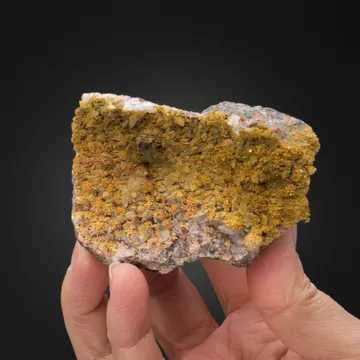
A collector's guide to County Durham, UK: its geology, mining history and notable minerals, illustrated with the 36 specimens documented from this locality on EarthWonders.
Key facts
County Durham is one of the classic mineral specimen regions of Britain, and for collectors its name is almost inseparable from Weardale fluorite. The county occupies a key part of the Northern Pennine Orefield, where Carboniferous limestones, sandstones and shales of the Alston Block are cut by mineralized faults and associated replacement “flats.” The concealed Weardale Granite beneath the Pennines acted not as the direct intrusive source of the ores, but as a heat engine for long-lived brine circulation; those brines deposited galena, sphalerite, fluorite, quartz, calcite, iron carbonates and, outward from the fluorite heart of the system, barium minerals such as baryte and witherite.
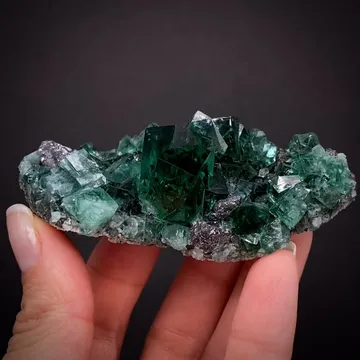
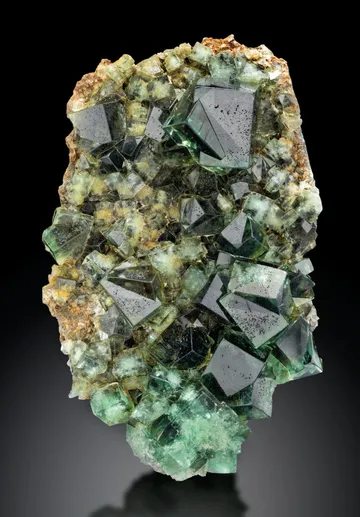
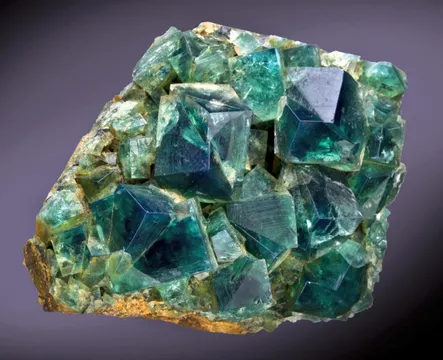
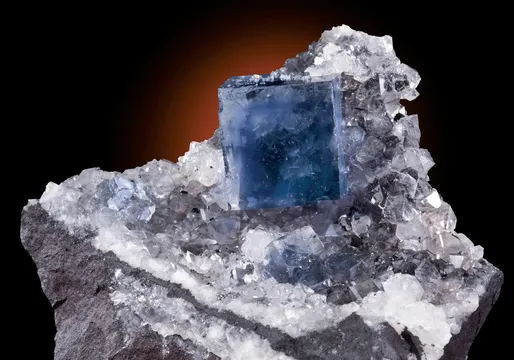
What gives County Durham its world standing is the combination of geological scale and specimen beauty. The central fluorite zone embraces Weardale, Rookhope, parts of Teesdale and neighbouring districts, and it produced cabinet classics from Boltsburn, Groverake, Frazer’s Hush, Cambokeels, Heights, Eastgate, Rogerley and Diana Maria. The best pieces are not merely colourful: they have a particular northern-English look — crisp cubic fluorite, often green, purple, lilac, blue-purple or yellow, set on snowy quartz, ironstone, galena, calcite or aragonite-rich coatings, and in the finest Rogerley-family material showing extraordinary daylight fluorescence.
Regional View
Country View
Historically, County Durham minerals bridge two collecting worlds. In the 18th and 19th centuries, lead mining and its associated hushes, shafts, levels, dressing floors and smelt mills shaped Weardale and Teesdale. In the 20th century, industrial fluorspar and baryte mining reworked some of the old lead country. In the late 20th and 21st centuries, Rogerley and later Diana Maria transformed the district again, this time as deliberate commercial specimen mines, proving that carefully mined mineral specimens could be the principal product rather than a by-product of ore extraction.

Photo: Wikimedia Commons

Photo: Wikimedia Commons
Search for specimens: View all specimens from County Durham, UK
County Durham’s collectible minerals come chiefly from the Northern Pennine Orefield, a carbonate-hosted Pb-Zn-F-Ba system developed in Carboniferous strata and, locally, the Whin Sill. The ore bodies are principally steep fissure veins along normal faults, together with bedding-parallel replacement bodies known locally as flats. Veins widen and become productive where they cut competent beds such as limestone, sandstone and dolerite; they narrow or become poor in shale and softer rocks. In the flats, mineralizing fluids moved laterally from the main vein conduits and replaced limestone with iron carbonate, quartz, fluorite, baryte or other gangue, leaving open cavities where crystals could grow freely.
The regional mineral zonation is one of the defining features of the orefield. The central zone, covering much of Weardale and Rookhope, is fluorite-rich and commonly quartz-bearing. Galena is widespread, sphalerite becomes important in parts of the surrounding system, and chalcopyrite appears locally in the hotter central areas. Moving outward, fluorite gives way sharply to barium minerals: baryte, witherite and, locally, the rare barium-calcium carbonates alstonite and barytocalcite. This zonation is a practical collecting clue as much as a geological one: a label from central Weardale suggests fluorite-quartz-galena possibilities, while Lunedale and the Durham coalfield barium veins suggest baryte, witherite and related rarities.
Mining history is long and layered. Lead extraction in Weardale is recorded from medieval times and may have still earlier roots; by the 18th and 19th centuries the London Lead Company and Beaumont interests dominated parts of the field. Rookhope, Stanhope, Westgate, Eastgate, Ireshopeburn, Cowshill and adjacent valleys became mining landscapes of hushes, levels, shafts and spoil. Fluorite, long merely “spar” in the eyes of lead miners, became economically important when fluorspar found industrial use as a flux and later as a fluorine raw material. In the late 20th century, Weardale saw major fluorspar investment: the Broadwood plant at Frosterley and the Blackdene plant near St John’s Chapel were commissioned in 1978 and 1979, respectively. Ownership later consolidated under Minworth plc, and Sherburn Stone acquired Weardale Minerals assets in 1991, operating Frazer’s Hush and Groverake as the combined Frazer’s Grove operation until closure in 1999.
Groverake is a particularly important bridge between ore geology and specimen collecting. At the mine, several major veins unite, with the east-west Groverake Vein the main producer. Purple and green fluorite, quartz and chalcedony are abundant there, and chalcopyrite, traces of bismuthinite and microscopic cassiterite reflect its position close to a central mineralizing focus. The banded purple-green fluorite with white quartz and bluish chalcedony seen in Groverake is one of the iconic underground textures of the North Pennines.
Rogerley, west of Frosterley, is the modern collector’s landmark. The old quarry worked the Great Limestone during the 19th century; in the early 1970s collectors recognized specimen-grade green fluorite on the quarry floor and face. Raymond Blackburn is credited with the first documented specimen-grade find around 1970. Lindsay and Patricia Greenbank, with Michael “Mick” and Brenda Sutcliffe, then formed the Cumbria Mining and Mineral Company in 1972, making Rogerley the first commercial mineral specimen mining project in the British Isles. The Greenbank and Sutcliffe veins, named for the collectors involved, became the framework for decades of pocket collecting.
From 1999 through 2016, the USA-based UK Mining Ventures LLC group worked Rogerley during summer seasons, rehabilitating wet and clay-choked workings, opening new adits and documenting named pockets. The Black Sheep Pocket, Weasel Pocket, Birthday Pocket, West Cross Cut, Rat Hole, Rat Tail, Jewel Box, Blue Bell, Penny’s Pocket, Bluebirds zones and others established a pocket-by-pocket provenance culture unusual in British mineral collecting. In 2012, Penny’s Pocket produced the “Weardale Giant,” a fluorite specimen about 1 m wide and roughly 300 kg before reduction, coated with hundreds of deep green cubes showing intense blue daylight fluorescence.
In 2017, Ian and Diana Bruce’s UK Mining Ventures Limited took over the Rogerley project and began new geological mapping, laser survey work and development. The Diana Maria Mine, opened on the Sutcliffe Vein at Rogerley Quarry, exposed collapsed flats and cavities rich in green, purple and colour-zoned fluorite on quartz, calcite and ironstone. Diana Maria pocket names now form their own collector vocabulary: Graeber Jones, Snowstorm, Queen of Green, Purple Haze, November Gem, Frosterley, Green Sugar, River Catcher, Papa’s, Why-Aye, Gushing Water, 4th July, Northern Flats, Autumn, Heavy Metal and others. The mine has yielded especially vivid colour zoning, pale to mossy and emerald greens, blackberry-purple corners, quartz-rich plates, calcite-coated specimens and pieces whose daylight response is central to their value.
Collecting access today is necessarily limited. Many old mine sites are dangerous, reclaimed, protected, privately owned, or within designated conservation landscapes. Underground access should never be assumed, and collecting at any locality requires permission from landowners and mineral-rights holders. Rogerley and Diana Maria are commercial specimen operations, not public collecting sites. For collectors, the realistic routes to County Durham specimens are old labelled collections, reputable British and international dealers, documented mine releases from UK Mining Ventures, and occasional legal collecting opportunities on permitted spoil or quarry material where access has been explicitly arranged.
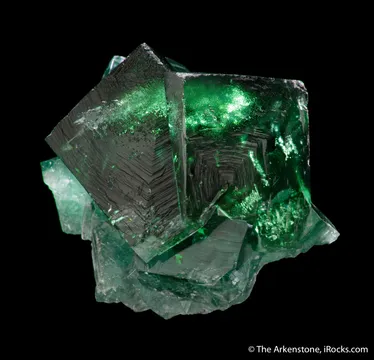
County Durham fluorite is at its best in Weardale and Rookhope specimens: sharp cubes and penetration twins in emerald green, lilac, purple, blue-purple and occasional yellow, commonly on quartz, ironstone, galena, calcite or aragonite/calcite druse. Classic 19th-century pieces from Boltsburn and Middlehope Shield sit beside 20th-century material from Heights, Cambokeels, Groverake, Blackdene and Frazer’s Hush, while modern Rogerley and Diana Maria specimens are prized for gemmy green crystals, colour zoning, pocket provenance and daylight fluorescence. At Rogerley, vein fluorite may form larger untwinned crystals up to about 8 cm on edge, often darker and more opaque, while flat-style fluorite is typically smaller, greener and more often twinned; top examples combine transparency, undamaged edges, lively colour zoning, strong daylight response, good contrast on quartz or ironstone, and exact pocket labels.
County Durham quartz is rarely collected as a detached “quartz specimen” in the alpine sense; its importance is as the bright, sugary to drusy matrix and overgrowth that makes Weardale fluorite sing. In central-zone mines such as Cambokeels, Groverake, Frazer’s Hush, Rogerley and Diana Maria, quartz occurs as white, colourless, greyish or iron-stained druse, as coatings on fluorite, as plates under green cubes, and locally as chalcedonic or bluish-banded material in vein assemblages. The best quartz-bearing pieces show clean contrast — emerald or purple fluorite on bright white quartz, or colourless quartz over ironstone giving a warm brown undertone — and collectors value specimens where the quartz enhances rather than smothers the fluorite; microcrystalline “sucrosic” quartz coatings from pockets such as Weasel, Corner, Purple Haze and Green Sugar are part of the locality’s unmistakable texture.
Calcite in County Durham is both a common vein mineral and, in the best modern specimens, a decisive aesthetic associate of fluorite. At Rogerley and Diana Maria it occurs in fractures, vugs and flats in the Great Limestone, as white to creamy druse, botryoidal coatings, delicate platy rosettes and, in some pockets, pervasive coatings that selectively blanket smaller fluorite while leaving larger green cubes exposed. Diana Maria has made calcite especially visible to collectors through pockets such as Snowstorm, Queen of Green, November Gem, Frosterley and Green Sugar, where fluorite on calcite or calcite-dusted fluorite can reach cabinet scale; good pieces have clean white contrast, undamaged fluorite protruding from the calcite, and correct identification, since some early Diana Maria material thought to be aragonite was later analysed as calcite.
Beyond these three, County Durham is rich in minerals that serious collectors should know even when fluorite dominates the market. Galena, sphalerite, chalcopyrite, siderite, ankerite, pyrite, baryte, witherite, aragonite, dolomite, goethite, cerussite, smithsonite and hydrocerussite occur in the vein and flat assemblages. The county’s barium-mineral story is especially important: witherite was worked commercially in the Durham coalfield, notably at South Moor, and New Brancepeth Colliery yielded alstonite in a baryte-witherite vein together with unusually fine ullmannite. Closehouse Mine in Lunedale is notable for baryte and secondary lead-copper-zinc minerals including leadhillite, rosasite, malachite, aurichalcite, cerussite, anglesite and pyromorphite. Cambokeels is noted for apophyllite and pyrrhotite crystals, Stanhopeburn and Redburn for cerussite, and Lady’s Rake in Upper Teesdale for a distinctive niccolite-magnetite assemblage with nickel-bearing sulphides.
County Durham specimens reward precise locality discipline. “Weardale” is useful regionally but too broad for high-end collecting: Boltsburn, Groverake, Cambokeels, Heights, Middlehope Shield, Rogerley, Diana Maria and individual pocket names can imply different age, habit, colour, associations and value. Vague labels such as “Durham fluorite” or “Weardale fluorite” are common in older collections, and some classic green fluorite has been misassigned. Middlehope Shield’s large 1818 green fluorite find is known to appear in modern collections erroneously labelled as Heights Mine, and Rogerley specimens from earlier CMMC production were sometimes incorrectly attributed to Eastgate or the Blue Circle Cement quarry.
Documented mineral misidentification is also part of the modern collecting record. Some Diana Maria material initially described as aragonite has later been analysed as calcite, notably Snowstorm Pocket coatings and a calcite geode from the surface opencast workings. Conversely, aragonite is real at Rogerley-family localities, so a blanket correction in either direction is careless; pocket provenance and analytical confidence matter.
Condition issues are typical of fluorite but magnified by value. Cleavage bruises, contacted cube corners, edge nicks, internal fractures, iron staining, etched or frosted faces, clay films and quartz or calcite overgrowths can all affect desirability. Some pockets produced naturally corroded or opaque crystals, so “damage” and “natural surface” must be judged with locality knowledge. Rogerley flat material often shows penetration twinning and gemmy green edges around cloudy or frosted centres; that texture is not automatically a defect. On the other hand, a top piece should have crisp visible crystal geometry, good lustre, limited distracting bruising, and a matrix that supports the display.
Fluorescence is central to County Durham fluorite collecting. Many Weardale specimens fluoresce blue to bluish-white under longwave UV, and Rogerley/Diana Maria material can show vivid violet-blue daylight fluorescence, best seen in diffuse natural light rather than harsh direct sun. A strong daylight response adds value, but it is not uniform across every mine, pocket or crystal. Photographs can exaggerate or understate the effect, so serious purchases should ask how the specimen looks under artificial light, diffuse daylight and longwave UV. Fluorite is also relatively soft and cleavable, so fine cubes should be handled by the matrix and stored where they cannot knock against harder minerals.
Market availability is unusually good for a classic British locality because Rogerley and Diana Maria brought fresh, documented material to international shows and dealer inventories. Still, the finest County Durham fluorites — Boltsburn classics, early green Middlehope-type material, major Groverake plates, top Cambokeels combinations, and exceptional Rogerley/Diana Maria pocket pieces — are not common. Strong provenance, old labels, pocket names, publication history, museum comparables and honest condition reporting can matter as much as colour.
In the old Rogerley quarry, the modern story begins with a collector who saw where the fluorite was coming from and decided not to climb for it. Around 1970, Raymond Blackburn found specimen-grade green fluorite and galena in the derelict limestone quarry west of Frosterley. He recognized that the source lay high on the north face, but the zone was awkwardly placed and he was “not being keen on heights.” Instead, he sold specimens to Lindsay and Patricia Greenbank, whose first quarry visits in 1971 turned up sharp mid-sea to peppermint-green cubes to about 20 mm, with small etched octahedral and cuboctahedral galenas. Within a year, the Greenbanks and Mick and Brenda Sutcliffe had formed the Cumbria Mining and Mineral Company, turning a forgotten quarry into Britain’s first commercial specimen mine.
The naming of the Greenbank Vein has a pleasingly old-school Durham pedigree. Sir Kingsley Dunham, then Professor Emeritus at Durham and former Director of the British Geological Survey, named it in honour of Lindsay and Patricia Greenbank. The Sutcliffe Vein likewise preserves Mick Sutcliffe’s role in the project. For a collector, these names are not ornamental; they mark real structures in the quarry and mine, and they still appear on labels that separate ordinary “Weardale fluorite” from properly documented Rogerley material.
When the American UK Mining Ventures crew took over in 1999, the mine was wet, muddy and battered by time and highgraders. They had to muck out and re-timber parts of the tunnel, relay track, rebuild stairs to the upper entrance, crane equipment into place and install a steel security door. The most useful exploration tool at first was not a drill but pressurized water. Washing mud from the walls revealed mineralized zones that had been hidden in plain sight.
One of those first openings became the Weasel Pocket, named for an animal that was actually a stoat and had to vacate quickly. It held large clusters of purple cubic fluorite coated with white, finely crystalline quartz. The crystals were not the glassiest Rogerley would ever produce — opaque except around the edges — but the pocket set the tone for the mine’s modern vocabulary: named pockets, remembered moments, mineral character tied to a precise place underground.
The Black Sheep Pocket was the breakthrough. On 12 June 1999, while stabilizing an alcove roof, the miners noticed a mud seam on the eastern face. As mud washed away and slabs came off, a sizeable cavity lined with green fluorite appeared. Within days the opening measured about 1 x 1.5 m; by the end of August it had been opened to roughly 1 m high, 1.3 m wide and 5 m deep. Hundreds of specimens came out, some by hand and some cut from intact ceiling plates with a diamond chain saw. The pocket was not a single theatrical cave but an interconnected series of solution cavities — exactly the kind of flat-style space in which fluorite could grow as clean, collectable crystals.
Rogerley’s pocket names read like a field diary. The Solstice Pocket was found on 21 June 2001, Midsummer’s Day, about 10 m north of the Black Sheep opening. The Rat Hole was a long narrow tube, so confined that only one person could collect in it at a time, yet it produced hundreds of good specimens with larger untwinned fluorite crystals, often on white quartz and almost no galena. The Rat Tail, an extension of the Rat Hole, yielded deeper-coloured, more gemmy fluorite but was close enough to the quarry face that it began collapsing in July 2010 and had to be backfilled for safety. The Dodgy Bugger Pocket got its name honestly: the best specimens were in large loose roof rocks, making extraction difficult and dangerous.
In July 2012, Penny’s Pocket produced the locality’s most famous monster. The “Weardale Giant” was a single fluorite specimen about 1 m wide and approximately 300 kg, its limestone matrix coated with hundreds of deep green cubic crystals. Scattered among the smaller crystals were interpenetrant cubes to about 7 cm, and the whole mass showed intense deep ink-blue daylight fluorescence. It was named for one of three legendary Giants of Weardale, blacksmith brothers said to have worked on surrounding hilltops. Displayed at Tucson in 2013, the Giant later met a collector’s paradox: it was too large to live easily as one specimen and was eventually reduced to make many smaller pieces.
Diana Maria’s story begins with new ownership and a new reading of the old quarry. In 2017, while Rogerley was being refurbished to meet modern mine standards, UK Mining Ventures shifted attention about 400 m west of the main Rogerley portal to the Sutcliffe Vein. What had been a grassy slope since the 19th-century quarrying days gave way, under overburden removal, to richly mineralized collapsed flats full of daylight-fluorescent fluorite. The new mine was named for Diana Maria Bruce, and its pocket names quickly entered the collector’s lexicon: Graeber Jones, Snowstorm, Queen of Green, Purple Haze, November Gem and many more.
The Queen of Green Pocket supplied exactly the kind of specimens the name promises: lime- to leaf-green and mossy-green fluorite, some with snowy-white calcite and indigo daylight fluorescence. One crystal showed a spherical fluid inclusion and modified tetrahexahedral faces. The Purple Haze Pocket added another personality, producing deep purple fluorite partly overgrown by microcrystalline quartz or calcite, including distorted cubic crystals unusual for Weardale. In the November Gem Pocket, the roof itself showed extensive fluorite and calcite mineralization, with deep mossy-emerald cubes and creamy-white calcite forming undulating botryoidal coatings and delicate platy rosettes to about 4 mm.
County Durham’s older mining landscape has its own drama. The hushes — great elongated trenches cut along vein outcrops — record a method in which water was released from dams high on the hillside to scour loosened rock and reveal ore. At Dowgang Hush above Nenthead, the artificial valley stands as a vivid reminder that prospecting could be hydraulic, manual and violent all at once. In Weardale and Teesdale, those scars are not just archaeological features; they are the surface expression of the same mineralized fracture system that gave collectors their fluorites, galenas, barytes and witherites.
Dunham, K. C. (1990). Geology of the Northern Pennine Orefield, Volume 1: Tyne to Stainmore. British Geological Survey Economic Memoir. The foundational modern geological treatment of the orefield, its structure, mineral zoning and economic history.
Bevins, R. E., Young, B., Mason, J. S., Manning, D. A. C., and Symes, R. F. (2010). Mineralization of England and Wales. Geological Conservation Review Series No. 36. Joint Nature Conservation Committee. Includes the Northern Pennines chapter and conservation context for key mineralized sites.
Stone, P., Millward, D., Young, B., Merritt, J. W., Clarke, S. M., McCormac, M., and Lawrence, D. J. D. (2010). British Regional Geology: Northern England, 5th edition. British Geological Survey. Regional geological framework for the Weardale Granite, Carboniferous host rocks and mineralization.
Bouch, J. E., Naden, J., Shepherd, T. J., McKervey, J. A., Young, B., Benham, A. J., and Sloane, H. J. (2006). “Direct evidence of fluid mixing in the formation of stratabound Pb-Zn-Ba-F mineralisation in the Alston Block, North Pennine Orefield (England).” Mineralium Deposita, 41, 821–835. Important fluid-inclusion and ore-genesis work on the Alston Block system.
Fisher, J. E., and Greenbank, L. (2003). “The Rogerley Mine, Weardale, County Durham, England.” UK Journal of Mines & Minerals, 23, 9–20. Cited by UK Mining Ventures as a key account of Rogerley’s specimen mining history and mineralization.
Ixer, R. A. (2003). “The Distribution of Rare Earth Elements in North Pennine Fluorspar and Fluorite.” UK Journal of Mines & Minerals, 23, 21–26. The key cited source for rare-earth-element distribution and fluorescence discussion in North Pennine fluorite.
Fisher, J. E. (2013). “The Weardale Giant — A Large Fluorite Specimen Recovered from the Rogerley Mine, Weardale, Northern England, July 2012.” Rocks & Minerals, 88, 12–18. The published account of Rogerley’s most famous giant fluorite specimen.
Spencer, L. J. (1910). “On the occurrence of Alstonite and Ullmannite (a species new to Britain) in a Barytes-Witherite vein at the New Brancepeth Colliery near Durham.” Mineralogical Magazine, 15, 302–311. Classic paper documenting alstonite and ullmannite from New Brancepeth.
Young, B., Styles, M. T., and Berridge, N. G. (1985). “Niccolite-magnetite mineralization from Upper Teesdale, North Pennines.” Mineralogical Magazine, 49, 555–559. Describes the unusual Lady’s Rake nickel-arsenide and magnetite assemblage.
Symes, R. F., and Young, B. (2008). Minerals of Northern England. National Museums Scotland and the Natural History Museum, London. Standard collector-facing reference on Northern England minerals, cited in UKMV’s bibliography.
Mindat: Weardale, County Durham, England, UK — Fluorite occurrence Broad photo-rich database entry for Weardale fluorite and associated species.
Mindat: Weardale, County Durham, England, UK — Quartz occurrence Useful for checking quartz-bearing associations and locality-level records.
Mindat: Middlehope Shield Mine, Westgate, Stanhope, County Durham Important page for the 1818 green fluorite find and its later mislabelling history.
Mindat: New Brancepeth Colliery, County Durham Key reference for alstonite, witherite and ullmannite from the Durham coalfield barium veins.
Mindat: Closehouse Mine, Lunedale, County Durham Baryte and secondary lead-copper-zinc mineral locality with a useful species list.
British Geological Survey Earthwise: Northern Pennine Orefield Clear geological overview of vein orientations, mineral zoning and the Weardale Granite’s role.
GeoGuide: The Northern Pennine Orefield — Weardale and Nenthead Field-guide style geological account, including Rookhope, Boltsburn and Groverake context.
GeoGuide: Mineral veins in the North Pennines Concise explanation of veins, flats, hushing and regional mineral zoning.
County Durham Geodiversity Audit: Minerals and mineralogy County-level summary of important species, notable mines and conservation concerns.
British Geological Survey/NERC: Mineral Resources Report for Durham and the Tees Valley Detailed planning and economic geology report with fluorspar, baryte, witherite and ironstone context.
UK Mining Ventures: Fluorite Specimen Mining at Frosterley, Weardale Operator’s overview of Weardale fluorite, Rogerley/Diana Maria geology and fluorescence.
UK Mining Ventures: Rogerley Mine Essential pocket-by-pocket and history reference for Rogerley specimens.
UK Mining Ventures: Diana Maria Mine Essential source for modern Diana Maria pockets, specimen styles and mine development.
Mineraltown: The Rogerley Mine, Weardale — A Condensed History Jessie Fisher’s narrative account of the 1999 reopening and early modern pocket discoveries.
Fluorescent Mineral Society FMDB: Fluorite from the Rogerley Mine Useful fluorescence-focused specimen entry with longwave and shortwave observations.
Wikimedia Commons: Fluorite from Rogerley Mine Reusable image and specimen description for green Rogerley fluorite on quartz.
Wikimedia Commons: Fluorite from Boltsburn Mine High-resolution image of a classic purple Boltsburn fluorite.
Killhope Lead Mining Museum Public heritage resource for understanding Weardale’s lead-mining landscape and culture.