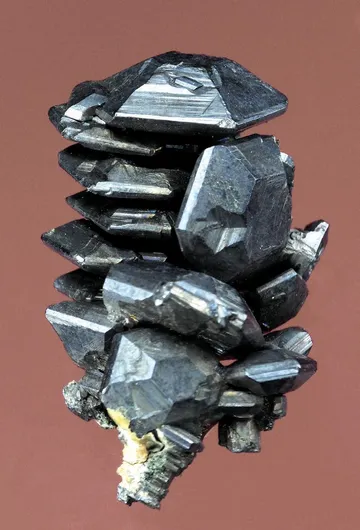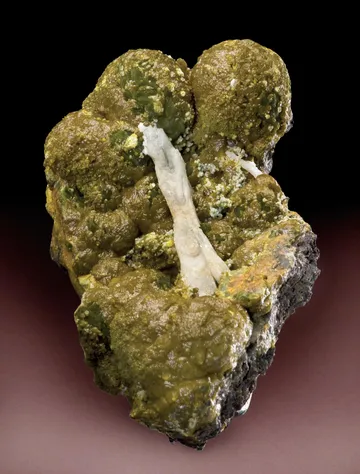
A collector's guide to Cumbria, UK: its geology, mining history and notable minerals, illustrated with the 74 specimens documented from this locality on EarthWonders.
Key facts
Cumbria is not one locality in the collector’s sense so much as a compact mineral province: the modern county gathers the old names Cumberland, Westmorland and the Furness district of Lancashire, and those older labels still matter greatly when assigning specimens. Its fame rests on several sharply different mineral districts pressed into one county—West Cumberland and Furness for hematite, Alston Moor and Nenthead for lead-zinc-barium mineralization, the Caldbeck Fells for vivid supergene lead-copper-arsenate and phosphate species, Carrock Fell for tungsten minerals, and the central Lake District for older copper, graphite, baryte and fluorite-bearing veins.
For specimen collectors, Cumbria’s signature is the West Cumberland hematite field around Egremont, Florence, Ullcoats, Beckermet, Bigrigg, Frizington and Cleator Moor. There, iron-rich brines replaced Lower Carboniferous limestones along faults and permeable horizons, producing great bodies of almost pure hematite: massive blue-black ore, fibrous mammillated “kidney ore,” conical “pencil ore,” and glittering specularite in lough holes lined with quartz, calcite, dolomite, baryte, fluorite and occasional aragonite. The best pieces are unmistakable—heavy, red-streaking, sculptural masses with glassy quartz, metallic hematite blades, pale blue fluorite cubes or snowy carbonate rosettes perched against deep maroon ore.
Regional View
Country View
Cumbria’s historical importance is equally substantial. The hematite deposits supplied the west and south Cumbrian iron and steel industries, while the North Pennine mines of Alston Moor formed part of one of Britain’s great lead-zinc orefields. Specimen collecting here became established early: nineteenth-century Cumberland minerals entered private cabinets, dealer stocks and museum collections when British mineral collecting was becoming fashionable, and the county’s best pyromorphite, mimetite, plumbogummite, fluorite, hematite and barytocalcite specimens still carry an old-world prestige.

Photo: Wikimedia Commons
The county is also a place where label precision matters. “Cumbria” may mean Florence hematite from a flooded iron mine, Smallcleugh sphalerite from a lead-zinc flat in the Great Limestone, Roughton Gill pyromorphite from the Caldbeck Fells, Dry Gill campylite, or Alston Moor barium carbonates. The name is useful as a regional umbrella, but serious collectors should always prefer a mine, vein, shaft, level or pocket attribution when one can be preserved.
Search for specimens: View all specimens from Cumbria, UK
Cumbria’s collectible mineralization falls into several geological families. The most famous collector suite comes from the hematite replacement deposits of West Cumberland and South Cumbria, where warm, saline, iron-bearing fluids moved through faults, permeable Permo-Triassic rocks and Carboniferous limestones. The principal west Cumbrian belt extends from the Lamplugh–Frizington–Cleator Moor district through Egremont toward Calder Bridge, with the southern concealed orebodies including Florence, Ullcoats and Beckermet. South Cumbria includes the Furness peninsula around Barrow, Dalton, Askam, Roanhead, Lindal and Ulverston, and the Millom–Hodbarrow area across the Duddon Estuary.
In West Cumberland the ore is mainly metasomatic hematite replacing limestone, commonly adjacent to faults and bedding-controlled horizons in the Chief Limestone Group. The ore bodies may be flat-lying replacements, irregular masses or vein-like bodies; original limestone textures, mudstone partings, bedding and even fossils can remain ghosted through the hematite. The Florence–Ullcoats orebody at Egremont lay in a graben between the Ullcoats and Florence faults, mostly concealed beneath Brockram breccia and St Bees Sandstone. Florence became the best-known specimen source because late workings exposed abundant lough holes: small cavities, commonly under 5 cm across but sometimes larger, lined by specular hematite, quartz, fluorite, calcite, dolomite, baryte and aragonite.
The South Cumbrian iron ores include the distinctive Furness “sops,” roughly conical dissolution hollows in Carboniferous limestone filled with hematite and commonly sand in their centres. Large orebodies were worked at Park, Roanhead, Mouzell, Elliscales, Lindal Moor and Hodbarrow; Hodbarrow near Millom was one of the great British iron mines, exploiting a vast hematite body close to the sea and ultimately protected by large sea barriers. Furness is less prolific than West Cumberland for fine cabinet minerals, but it produced good kidney ore and occasional calcite, and old Furness labels remain desirable when the mine name is secure.
Mining history reaches back to medieval and probably earlier work. In West Cumberland, documented mining at Bigrigg is recorded in the twelfth century, and large-scale industrial mining expanded during the nineteenth century as high-grade hematite fed local ironworks and the acid Bessemer steel process. The west Cumbrian field produced more than 100 million tons of high-grade hematite, while combined west and south Cumbrian output has been estimated at about 250 million tons. Florence was sunk in the early twentieth century and later connected underground with Ullcoats and Beckermet. Large-scale west Cumbrian iron mining ended in the late 1970s, but Florence was partly reopened by redundant miners as a small specialist producer of hematite for pigment and steel-making uses. The final small-scale operation ended in 2006–2008 as pumping ceased and the workings flooded.
The Alston Moor and Nenthead district, now in Cumbria’s eastern uplands, belongs to the Northern Pennine Orefield rather than the Lake District hematite province. Here the key host is the Carboniferous Great Limestone and related strata cut by veins, cross-veins and replacement “flats.” Smallcleugh Mine is the classic example: its Handsome Mea or Smallcleugh Flats are large metasomatic replacement deposits in the Great Limestone, rich in ankerite, siderite, silica, galena and sphalerite, with cavities lined by ankerite, quartz, calcite and ore minerals. Sphalerite is especially important there, generally in smaller crystals than the galena but forming attractive black to brown crystalline masses and vug linings. Rampgill, Brownley Hill, Nentsberry Haggs and related Nenthead workings add fluorite, baryte, witherite, barytocalcite, alstonite and supergene zinc minerals to the county’s specimen palette.
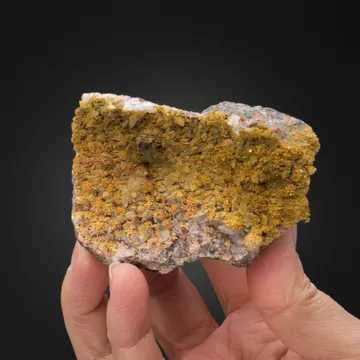
The Caldbeck Fells form another great Cumbrian collector district. Roughton Gill, Mexico Mine, Brae Fell, Dry Gill, Driggith, Sandbed, Red Gill, Wet Swine Gill and Carrock Fell sit in a structurally complex northern Lake District setting where Ordovician volcanic and intrusive rocks, Skiddaw Group rocks and later mineralizing events produced copper-lead-arsenic-barium-tungsten assemblages. Roughton Gill and Mexico Mine are celebrated for pyromorphite and associated plumbogummite; Dry Gill for orange-brown to green mimetite, the barrel-shaped “campylite” variety, together with plumbogummite and pyromorphite; Red Gill for linarite and leadhillite; and Carrock Fell for wolframite, scheelite, quartz, fluorite, apatite and greisen-related tungsten mineralization.
Collecting access today is uneven and should never be assumed. Florence Mine’s underground workings are flooded and protected for geological interest; the surface site survives as an arts centre and heritage landscape, not as a collecting mine. Hodbarrow is a flooded former mine and nature reserve landscape. Nenthead Mines are managed for conservation and education, with public open days and guided access rather than free underground collecting. Many Caldbeck Fells workings lie within sensitive upland, SSSI or scheduled landscapes; digging, damage to exposures and collecting from protected sites can be illegal or destructive. Modern Cumbria collecting is therefore mostly a matter of old collections, documented dealer material, estate dispersals and carefully permitted field work.
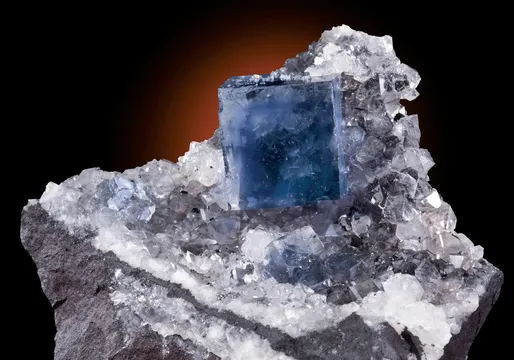
The most important specimen pockets were the hematite lough holes of Florence and Ullcoats, the kidney-ore bands and pockets within West Cumberland iron ore bodies, the Smallcleugh Flats and Nenthead vugs for sphalerite-galena-ankerite-quartz-calcite, and the oxidized lead-copper zones of the Caldbeck Fells. Florence’s deeper workings produced the much-admired sky-blue fluorite cubes, sometimes several centimetres across, while the later accessible Lonely Hearts Orebody yielded kidney ore, specularite, quartz, small fluorite and carbonate-lined cavities before closure.
Cumbria hematite is the county’s defining mineral, especially from the West Cumberland Iron Orefield at Florence, Ullcoats, Beckermet, Bigrigg and nearby Egremont mines, and from the Furness–Hodbarrow district. It occurs as massive bluish-purple ore, mammillated fibrous “kidney ore,” conical “pencil ore,” and sparkling specularite blades in vugs; the best specimens show sculptural botryoidal surfaces or a thin kidney-ore layer carrying bright metallic specularite with clear, smoky or hematite-red quartz. Florence pieces range from small hand specimens with 5–15 mm crystal-lined lough holes to heavy cabinet masses exceeding 10 cm, and what separates the fine examples from ordinary ore is surface integrity, lustre, three-dimensional kidney form, visible fibrous structure, sharp specularite, and undamaged associations with quartz, calcite, dolomite, baryte, pale blue fluorite or aragonite.
Quartz from Cumbria is most prized in the West Cumberland hematite assemblage, where lough holes in massive ore are lined with bipyramidal crystals, commonly colourless but also smoky brown or deep red from finely divided hematite inclusions, the latter traditionally called eisenkiesel or “tomato quartz.” Florence Mine produced classic combinations of gemmy quartz crystals a few millimetres to around 1–2 cm on kidney ore and specular hematite, and old specimens may show quartz perched over glittering hematite blades like frost on black metal. Good Cumbrian quartz is not valued merely for crystal size; it is the association, contrast and paragenesis that matter—sharp transparent crystals, red hematite phantoms or tinting, bright specularite, and an undisturbed cavity surface beat larger but dull isolated points.
Cumbria fluorite has several identities, but for this locality suite the most distinctive is the West Cumberland material from Florence and Ullcoats, where fluorite occurs in hematite vugs as colourless to pale blue cubes and, in older deeper-workings specimens, as beautiful sky-blue cubes that could reach several centimetres across. At Florence, fluorite is commonly associated with hematite, dolomite, calcite, baryte and quartz, and the finest pieces show clean, lustrous blue cubes on contrasting cream dolomite or iron-black hematite rather than isolated damaged grains. Eastern Cumbria adds Northern Pennine fluorite from Rampgill and related Nenthead veins, where fluorite is more localized than in Weardale but can be strongly fluorescent and associated with quartz, sphalerite, galena and later barium-carbonate minerals.
Calcite in Cumbria is a collector mineral of associations rather than a single county-wide habit: at Florence it occurs in a variety of forms in hematite lough holes and marginal veins, often with dolomite, baryte, aragonite, quartz, fluorite and specularite; in the Nenthead–Smallcleugh system it appears in vugs with ankerite, quartz, galena and sphalerite, including nailhead-style white rhombs. Florence calcite may cement hematite breccia, line vugs, or provide pale contrast against dark red ore, and desirable pieces retain sharp carbonate crystals without iron staining that obscures form, or show calcite as part of a balanced hematite-quartz-fluorite assemblage. Many Cumbrian “calcite” labels require care, because cream ankerite or dolomite from lead-zinc flats and hematite mines can be visually similar; acid response, cleavage, matrix and locality style are all important.
Sphalerite is most characteristic of eastern Cumbria in the Alston Moor–Nenthead lead-zinc deposits, especially Smallcleugh Mine, where it occurs in metasomatized Great Limestone flats with ankerite, siderite, silica, galena, quartz and calcite. In the Smallcleugh Flats, sphalerite forms coarsely crystalline lenses, bands and well-crystallized masses in vugs, commonly as black to dark brown crystals generally under 1 cm, with rarer specimens showing fossils coated by white calcite and sprinkled with sphalerite crystals. The best pieces have bright lustre, individual crystal definition, attractive contrast with cream ankerite or calcite, and a precise mine or flat attribution; ordinary examples are simply dark massive zinc ore on altered limestone.
Aragonite from Cumbria is a minor but attractive carbonate in the West Cumberland hematite association, especially at Florence Mine, where it occurs locally in vugs and on hematite-rich breccia with calcite, dolomite, baryte, quartz, fluorite and specularite. Specimens are typically small to miniature or small-cabinet pieces, with pale cream to white radiating needles, balls or sprays set on red-brown to black hematite; aragonite is much less abundant than hematite or quartz, so good examples depend on delicate preservation and clean contrast rather than large crystal size. The best Florence aragonites show discrete spherical sprays or needle clusters on a stable hematite-calcite matrix, while ordinary pieces may have bruised, dusty or incomplete needles easily mistaken for late calcite unless the habit is clear.
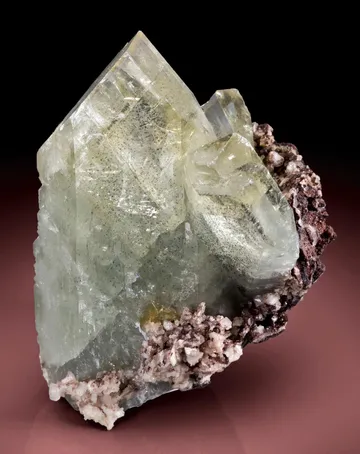
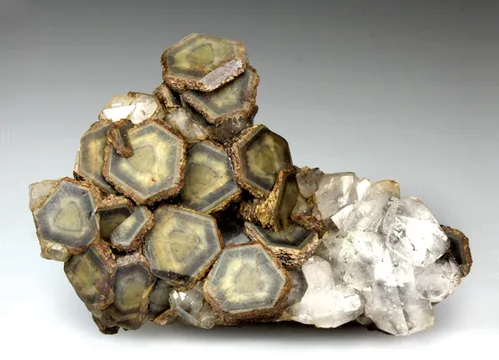
Cumbria’s other documented minerals are a major part of its reputation. The Caldbeck Fells have produced superb pyromorphite, mimetite var. campylite, plumbogummite, linarite, caledonite, leadhillite, cerussite, hemimorphite, brochantite, wulfenite, mottramite and rare supergene arsenates and phosphates. Dry Gill is particularly important for mimetite-campylite and plumbogummite, while Roughton Gill and Mexico Mine are classic pyromorphite localities. Alston Moor contributes the barium-carbonate rarities alstonite and barytocalcite, both tied historically to Cumbrian localities, along with witherite, baryte, galena, sphalerite, ankerite, fluorite and post-mining species such as hydrozincite and brianyoungite. Carrock Fell adds a separate tungsten signature—wolframite, scheelite, quartz, fluorite, apatite, molybdenite, arsenopyrite and associated greisen minerals—making Cumbria one of the most mineralogically diverse counties in Britain.
For Cumbria specimens, locality discipline is the first authenticity issue. “Cumbria” alone is often too broad: a hematite-quartz specimen might be Florence, Bigrigg, Beckermet or simply “West Cumberland Iron Orefield”; a calcite-sphalerite piece labelled Nenthead should not be confused with hematite-mine calcite from Egremont; and old “Cumberland” or “West Cumberland” labels may predate modern county boundaries. Retain every old label, even if vague, and avoid upgrading a general district attribution to a specific mine unless there is a reliable old label, collection record or unmistakable paragenetic match.
Florence and West Cumberland hematite is heavy and usually robust, but condition matters. Kidney ore bruises on high mammillations, specularite blades chip and dull easily, and quartz-on-hematite surfaces are often damaged by trimming or cleaning. The best specimens should show intact botryoidal form, continuous lustre, clean quartz terminations and no smeared red iron mud in crystal pockets. A red streak is normal for hematite, but loose red powder in boxes can indicate abrasion or friable ore.
Blue Florence fluorite is uncommon and often more valuable when precisely labelled. Check cube edges carefully for bruising; pale blue cubes on dolomite or hematite can be small, and damage may be hard to see without side lighting. Some Nenthead and Northern Pennine fluorites fluoresce strongly, but fluorescence is not a reliable stand-alone locality proof. UV response is best treated as an added diagnostic clue alongside matrix, associations and label.
Calcite and aragonite from Florence should be handled conservatively. Aragonite sprays are fragile, and carbonate crystals in iron-ore vugs can be loosened by aggressive washing. Do not acid-clean mixed hematite-carbonate specimens unless the loss of carbonate is acceptable; even weak acids can destroy calcite and aragonite and alter the aesthetic balance of a classic association.
Sphalerite from Smallcleugh, Rampgill and related Nenthead mines is readily confused with dark resinous sphalerite from elsewhere in the Northern Pennines. Look for ankeritized limestone matrix, cream curved ankerite rhombs, quartz-lined vugs, galena, and documented Nenthead labels. Smallcleugh ankerite is also often mislabelled as dolomite; for higher-value pieces, avoid relying on old habit-based identifications alone.
Documented locality falsification is a real concern for some rare Lake District and Caldbeck Fells species. A. W. G. Kingsbury’s disputed and falsified localities affected numerous British rare-mineral labels, including Lake District material, so extraordinary Caldbeck claims—especially for rare arsenates, phosphates and unusual species not duplicated by later collectors—should be treated with caution unless supported by analysis and strong provenance. For classic visible species such as Roughton Gill pyromorphite, Dry Gill mimetite-campylite and Florence hematite-quartz, the market is healthier, but precise mine labels still command a significant premium.
Current market availability is strongest for Florence and West Cumberland hematite-quartz specimens, which appear regularly from old British collections, and for smaller Caldbeck Fells pyromorphite/mimetite specimens from historic and modern collecting. Fine blue Florence fluorite, undamaged aragonite on hematite, top-grade kidney ore, well-provenanced nineteenth-century Roughton Gill pyromorphite, and good Smallcleugh sphalerite with exact mine attribution are all much scarcer.
At Hodbarrow, the story of hematite became a battle against the sea. The ore lay so close to the Duddon Estuary that ordinary mining was not enough; the company had to build walls to hold back the tide while men worked the red ore beneath ground that nature wanted to flood. The inner barrier was rebuilt in the late nineteenth century, but mining-induced subsidence and shifting estuarine conditions kept testing it. In 1898 the sea broke in near the western end of the wall. Instead of abandoning the ground, the company pushed outward and enclosed a still larger area with the great Outer Barrier, built in the early twentieth century from limestone rubble, steel piling, clay and thousands of massive concrete blocks. The result was part engineering work, part coastal fortress: a mine protected by a wall over a mile long, with hematite beneath and the Irish Sea just outside.
Florence Mine had a quieter but no less distinctive afterlife. When large-scale iron mining failed, redundant miners reopened part of the workings as the Egremont Mining Company, supplying specialist hematite while pumping water from the mine. The arrangement survived partly because pumped mine water had an industrial customer at Sellafield. When that water was no longer needed and pumping became uneconomic, the underground workings finally flooded. What remained above ground was not simply ruin: the old shower block, infirmary and offices became Florence Arts Centre, and the red ore that had once fed furnaces found a second life as artists’ pigment. “Egremont Red” is still an apt name for the place—the same hematite that stains miners’ clothes and specimen boxes now colours paints, pastels and watercolours.
The Florence lough holes are the collector’s counterpoint to the industrial story. In a mine built to ship ore by the ton, the memorable pieces were often small cavities saved by miners or collectors because they flashed under lamplight. A pocket only a few centimetres across could carry a skin of kidney ore, a glitter of specularite blades, little quartz bipyramids and pale blue fluorite cubes. Those cavities explain why Florence is not just an iron mine in mining history, but a name on specimen labels in major mineral collections.
Cumbria also belongs to the story of British mineral dealing. Bryce McMurdo Wright, raised in the Caldbeck area and later active as a professional dealer, helped move Cumberland minerals from remote fells into the cabinets of serious collectors. By the mid-nineteenth century, the Caldbeck Fells were already known for vivid pyromorphite, mimetite, linarite and other oxidized lead-copper minerals. Wright’s role matters because many of the old “Cumberland” specimens that still circulate today passed through the hands of collectors and dealers at a time when exact mine naming was less consistent than modern standards demand. A handsome old label can be historically valuable, but it also requires interpretation.
The county’s red ore entered literature as well as cabinets. Norman Nicholson, who lived in Millom among the iron mines and works, made hematite part of his language of place. In poems about Hodbarrow, Millom and the west Cumbrian coast, the mineral is not an abstract chemical species; it is red dust on berries, drowned workings, ironworks glare and a town whose purpose rose and fell with ore. For collectors, that cultural afterimage is worth remembering: Cumbria hematite is not merely botryoidal Fe2O3. It is the mineral form of a regional history that stained walls, boots, railway wagons, poems and pockets.