Caldbeck Fells, UK - a premier collector locality yielding lead phosphates, arsenates, copper sulfates, and the famed campylite; micromounts and mining lore.
Key facts
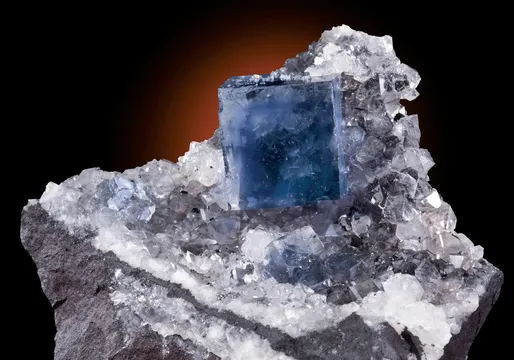
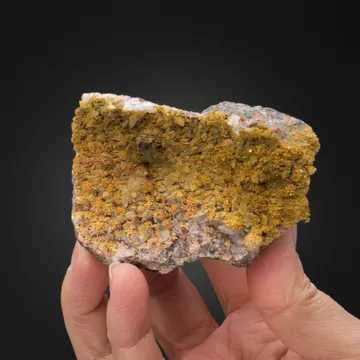
Caldbeck Fells is one of Britain’s great collector districts: a compact, bleakly beautiful upland mining field on the northern edge of the Lake District where Ordovician volcanic and intrusive rocks are cut by lead-copper-zinc veins, baryte-quartz-carbonate structures, and intensely altered supergene zones. For specimen collectors, its reputation rests less on bulk ore than on chemistry in miniature: lead phosphates and arsenates, brilliant copper sulphates, unusual Pb-Zn-Cu secondary species, and one of the most famous local varieties in British mineralogy, the barrel-shaped mimetite known as campylite. The district’s classic display pieces are immediately recognizable—olive to apple-green pyromorphite crusts and “cauliflower” aggregates from Roughton Gill and Mexico, orange-brown to yellow campylite barrels from Dry Gill seated in quartz vugs, deep-blue linarite and associated leadhillite from Red Gill, and micromount rarities from Driggith, Sandbed, Silver Gill, Brae Fell, Potts Gill, Brandy Gill, Ingray Gill, and the Carrock area.
The geological charm of Caldbeck Fells lies in the way different episodes of mineralization are packed into a small tract of fell country. Veins cut the Ordovician Eycott Volcanic Group, the Skiddaw Group, and intrusive rocks of the Carrock Fell Complex; several lodes occupy fault systems with complex wall-rock contacts, and the supergene minerals owe their diversity to the oxidation of primary galena, chalcopyrite, sphalerite, arsenopyrite, pyrite, baryte, carbonates, and locally tungsten-bearing assemblages. The result is a district where a specimen label reading simply “Cumberland” can hide a very particular mineral story.
Historically, Caldbeck Fells is equally weighty. Silver Gill, Roughton Gill, and Red Gill preserve evidence of early and Elizabethan mining, including operations associated with the Company of Mines Royal and German-speaking miners working in the region in the 16th and early 17th centuries. Victorian and later operators returned for lead, copper, zinc, barytes, umber, and tungsten; Carrock remained significant for wolframite and scheelite, while Dry Gill was unusual—perhaps unique in Britain—in being worked in part for mimetite, the miners’ “coloured lead ore,” sold for glass-making rather than for lead metal.
Regional View
Country View
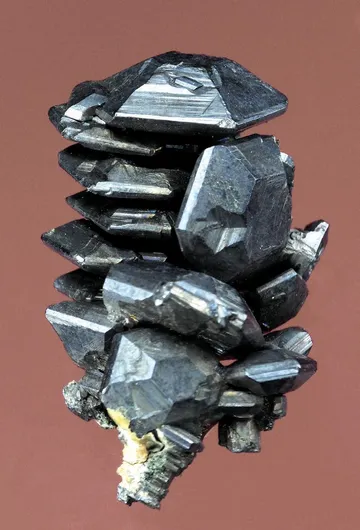
The best Caldbeck pieces reward close looking. A fine pyromorphite from Roughton Gill should show undamaged, lustrous, well-individualized crystals rather than merely a green crust; the most desirable Dry Gill campylite combines rounded barrel crystals, saturated orange to ochre-yellow colour, and open quartz cavities that let the form breathe. Many important Caldbeck specimens are not large by international standards, but they have the authority of place: this is one of the districts where British supergene mineralogy became a collecting language of its own.

Photo: Wikimedia Commons

Photo: Wikimedia Commons
Search for specimens: View all specimens from Caldbeck Fells Mining Region, UK
The Caldbeck Fells mining region covers the high ground south of Caldbeck village in northern Cumbria, historically Cumberland, with the most mineralogically important workings spread through Roughton Gill, Red Gill, Silver Gill, Dry Gill, Driggith, Sandbed, Potts Gill, Brandy Gill, Carrock, Ingray Gill, Brae Fell, and adjacent small trials. It is not a single mine but a district of structurally related veins and old workings, much of it on Caldbeck and Uldale Commons, within sensitive geological, archaeological, and ecological land. The collector’s “Caldbeck” label therefore needs refinement whenever possible: a specimen from Dry Gill, Roughton Gill, Red Gill, or Driggith tells a much more useful story than one labelled only “Caldbeck Fells” or “Cumberland.”
The ore deposits are chiefly low-temperature hydrothermal Pb-Zn-Cu veins, locally with arsenic-rich and baryte-rich phases, cutting the Ordovician Eycott Volcanic Group and associated intrusive rocks of the Carrock Fell Complex, with Skiddaw Group rocks present in parts of the district. At Roughton Gill, roughly NE-SW veins occupy substantial faults and juxtapose volcanic rocks, microgranite, gabbro, and Skiddaw Group sediments. At Dry Gill, the celebrated E-W vein occupies a fault between Upper Ordovician Drygill Shales and the Eycott Volcanic Group, and is offset by N-S structures related to the Carrock system. Driggith and Sandbed lie on a NE-SW fracture system in Eycott volcanic rocks, with older lead workings partly overprinted or obscured by mid-20th-century baryte-quartz-carbonate working.
The primary ores were galena, chalcopyrite, sphalerite, arsenopyrite, pyrite, and locally tungsten minerals, with gangue of quartz, baryte, calcite, dolomite, and chalcedony. The spectacular collector minerals are mainly supergene: oxygenated waters attacked sulphides and arsenides in the upper parts of the veins, producing pyromorphite, mimetite, cerussite, anglesite, malachite, brochantite, linarite, leadhillite, caledonite, hemimorphite, plumbogummite, tsumebite, beudantite, bayldonite, carminite, and a long list of rarer species. In several veins, manganese oxides and iron oxides form the dark, earthy, or botryoidal backgrounds against which the coloured lead and copper minerals stand out.
Mining history here is unusually deep for a British specimen district. Silver Gill has documentary evidence for exploitation from the medieval period, and the area is closely tied to the Company of Mines Royal, which brought German-speaking mining expertise into the Lake District in the 1560s. Roughton Gill and Red Gill preserve ancient hand-cut levels, coffin levels, hushes, leats, smelting remains, and mine roads; Roughton Gill became one of the largest and most productive Caldbeck mines, while Red Gill, though smaller, became famous for linarite and other supergene rarities. Work continued intermittently through the 18th and 19th centuries for copper, lead, zinc, baryte, and umber. Dry Gill appears to have become a serious mining site only in the mid-19th century, despite specimens of mimetite being known earlier, and was abandoned as a commercial venture in 1869. Carrock and Brandy Gill add a tungsten chapter, with wolframite and scheelite worked in the 20th century.
Roughton Gill is the district’s great pyromorphite name. Its South Vein produced abundant supergene lead and copper minerals, and the famous “Great Bunch” was recorded in places as a vein zone up to about 9 m wide in calcite-rich copper-lead ground. In the 1990s, an excavation known as Barstow’s Trench on the Roughton Gill South Vein above Mexico Mine exposed a rich pocket of well-crystallized pyromorphite, now largely backfilled and overgrown. The large dumps from the 30-, 60-, and 90-fathom levels, the Iron Crag exposures, Balliway Rigg, and Mexico workings have all figured in the modern collector literature, though many of the finest historic specimens left the fells generations ago.
Dry Gill is the classic home of Caldbeck campylite. The quartz vein, locally up to about 1.5 m wide and exposed as a conspicuous rib along the gill, contains abundant mimetite with lesser pyromorphite, baryte, quartz, manganese oxides, and plumbogummite. Its rounded, barrel-like mimetite crystals are usually orange-brown to ochre, but yellow, greenish-yellow, and green crystals are also documented, often with visible colour zoning. Crystals around 10 mm are familiar in good specimens, and exceptional crystals exceeding 30 mm have been recorded. Galena is notably scarce in the exposed workings compared with the amount of lead now locked in arsenate-phosphate minerals.
Driggith and Sandbed are less famous for big display pyromorphite than for analytical and micromount mineralogy. Their lead-zinc-copper veins, baryte overprint, arsenopyrite-rich gossans, and post-mining sulphate assemblages have yielded a long list of rare and newly recognized district records. Green to khaki pyromorphite, mimetite, arsenate gossans, aurichalcite, hemimorphite, linarite, philipsburgite, brochantite, langite, serpierite, and schulenbergite all belong to the collector vocabulary here, but precise mine and dump attribution matters because older and fraudulent labels have complicated the literature.
Collecting access today is controlled. The Lake District National Park Authority and Dalemain Estate operate a permit-based system over Caldbeck and Uldale Commons, with green, amber, and red zones reflecting sensitivity. Even in green zones a permit is required; amber-zone collecting normally needs a scientific or educational justification, and red-zone collecting is generally prohibited except in exceptional, well-defined research or rescue circumstances. Underground access is not granted by an ordinary mineral-collecting permit, and the old adits, shafts, stopes, and fenced areas are dangerous as well as archaeologically sensitive. Responsible collecting is limited to small representative samples from loose surface material, with significant finds reported and precisely recorded.
Mimetite is the signature mineral of Caldbeck Fells when it appears as Dry Gill campylite: rounded to barrel-shaped, often curved or swollen crystals of Pb5(AsO4)3Cl, locally phosphatian and grading chemically toward pyromorphite. The best Dry Gill specimens show lustrous orange-brown, ochre, honey-yellow, or greenish-yellow crystals perched in open quartz vugs, commonly with baryte, plumbogummite, manganese oxides, and massive or crystalline quartz; ordinary pieces are dull crusts or damaged patches in stained quartz. Crystals of roughly 10 mm are already desirable, and exceptional crystals over 30 mm place a specimen in the historic class. Mimetite is also documented at Roughton Gill, Driggith, Sandbed, Ingray Gill, and other Caldbeck localities, but without analysis it can be difficult to separate visually from pyromorphite, especially in mixed mimetite-pyromorphite series material.
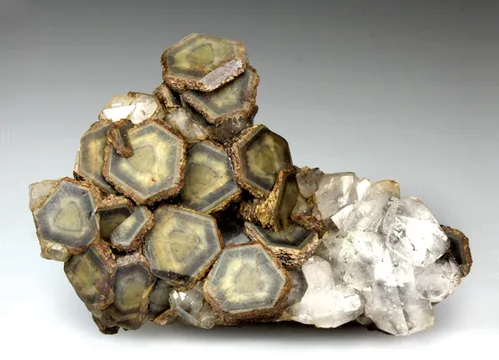
Caldbeck pyromorphite is most prized from Roughton Gill, Mexico, and the Roughton Gill South Vein, where 19th-century finds and later discoveries such as Barstow’s Trench produced green, yellow-green, olive, botryoidal, barrelly, cauliflower-like, and hexagonal-prismatic aggregates on quartz, chalcedony, iron-manganese oxides, and altered veinstone. Fine crystals around 10 mm are recorded from the wider Roughton Gill–Mexico area, while Driggith and Sandbed tend to yield smaller khaki-green coatings and hand-size coverage rather than the dramatic old-time Roughton display forms. Good Caldbeck pyromorphite has lively resinous to vitreous lustre, saturated colour, and undamaged crystal terminations; mediocre pieces are commoner crusts with bruising, abrasion, or indistinct granular surfaces. At Dry Gill, some arsenic-free pyromorphite is present but may be visually indistinguishable from the much more abundant mimetite.
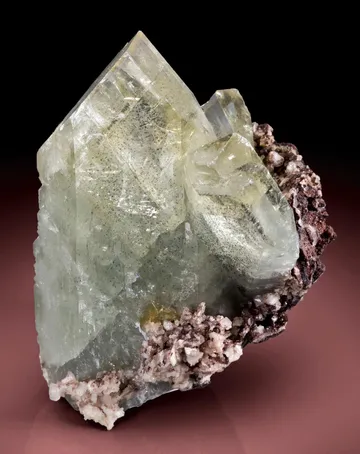
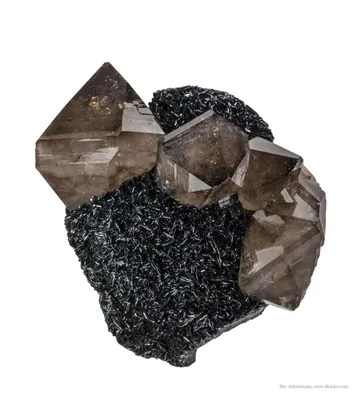
Quartz is the essential stage on which Caldbeck’s phosphates and arsenates are displayed. At Dry Gill it forms the main veinstone, locally massive but also as well-formed pyramidal crystals, and it preserves epimorphs and pseudomorphs after tabular or cockscomb baryte; the finest campylite specimens owe much of their appeal to open quartz cavities that set off orange mimetite barrels. At Roughton Gill, quartz and chalcedony fill fractured country rock in the lead-copper-zinc veins and commonly host pyromorphite, mimetite, cerussite, brochantite, and related supergene minerals. Collectible quartz from the district is therefore rarely valued as a standalone quartz specimen; its importance is as clean, architectural matrix, especially when sharp colour contrast and vug geometry make the secondary minerals legible.
Beyond mimetite, pyromorphite, and quartz, Caldbeck Fells is famous for an unusually rich supergene suite. Redgillite, Cu6(OH)10(SO4)·H2O, was described from the Silver Gill vein and named for Red Gill, one of its best-known occurrences; Red Gill also produced notable deep-blue linarite, leadhillite, caledonite, and the first British occurrence of queitite. Roughton Gill is important for plumbogummite, hemimorphite, brochantite, anglesite, cerussite, tsumebite, mattheddleite, scotlandite, arsentsumebite, and numerous lead-copper secondary minerals. Driggith and Sandbed are especially important for micromineralogy, including arsenate gossans with barium-pharmacosiderite, beudantite, segnitite, scorodite, mimetite, and records such as mawbyite, reported there as the first British occurrence. Carrock and Brandy Gill add scheelite, wolframite, molybdenite, stolzite, and associated tungsten-vein species to a district otherwise dominated in collectors’ minds by lead and copper oxidation chemistry.
The most important authenticity issue for Caldbeck is locality discipline. Many old labels read only “Cumberland,” “Caldbeck,” “Roughton Gill,” or “Caldbeck Fells,” and older use of Roughton Gill sometimes included adjacent workings such as Mexico, Silver Gill, Balliway Rigg, and nearby exposures. A precise old label with a named mine, vein, level, or pocket is worth preserving even when the specimen itself seems modest. Conversely, handsome specimens with vague labels should be treated cautiously if their species or style is not typical of the stated locality.
Arthur W. G. Kingsbury’s name is unavoidable in Caldbeck collecting. Published re-examinations showed that he falsified localities for numerous British minerals, with many problematic labels involving the Lake District and especially the Caldbeck Fells. This does not mean every Caldbeck specimen connected with his era is wrong, but extraordinary rare-species claims, unusually fine specimens of a species not otherwise supported at the locality, or labels relying only on unverified Kingsbury information need analytical and provenance scrutiny. Driggith and Sandbed are especially affected in the literature: some claimed species should be removed from those mine lists, and even some common species represented by fine Kingsbury-labelled specimens are regarded as fraudulent where independent, well-provenanced material is much poorer or absent.
Mimetite and pyromorphite are another identification trap. Caldbeck material commonly lies within or near the mimetite-pyromorphite series, and Dry Gill pyromorphite cannot reliably be distinguished by eye from the more abundant mimetite. Colour alone is not enough: orange, yellow, greenish-yellow, olive, and green occur across the series. For serious catalogue work, especially on small Driggith, Sandbed, Roughton Gill, or Dry Gill material, analytical confirmation by Raman spectroscopy, SEM-EDS, or comparable methods is preferable.
Condition matters greatly. Roughton Gill pyromorphite is often found as old, heavy, lead-rich pieces with exposed crystals on ridges and vug edges; abrasion and bruised terminations are common, and many attractive old specimens have peripheral damage. Dry Gill campylite is brittle on quartz and easily knocked from vugs; look for intact rounded barrels, glossy faces, and minimal rubbing. Plumbogummite crusts and pseudomorphs can be earthy or fragile, copper sulphates such as linarite, langite, brochantite, and redgillite should be kept dry and stable, and lead arsenates should be handled with normal toxic-mineral discipline: wash hands after handling, avoid dust, do not trim dry without protection, and keep specimens away from children, pets, food surfaces, and humid storage.
Market availability is uneven. Small modern-collected pieces from permitted surface material do appear, but the district is controlled, heavily collected, and archaeologically sensitive, so high-grade contemporary finds are limited. Fine historic Roughton Gill pyromorphite, Red Gill linarite, and Dry Gill campylite command strong collector interest, especially with old labels or museum/dealer provenance. The most attainable Caldbeck specimens are small pyromorphite coatings, mimetite/campylite fragments, quartz veinstone with secondary minerals, and micromount rarities; the hardest to acquire are undamaged cabinet-scale old-time pyromorphite, large lustrous campylite, and well-documented rare species from specific veins or levels.
In 1997, a group investigating the old Silver Gill workings cleared into a hand-cut level that had been hidden on the steep flank of Balliway Rigg. Inside, the crosscut ran 14.4 m on a barren string before striking the Silver Gill vein, which dipped steeply north. At the junction they found hand-cut levels extending in more than one direction, a rectangular shaft sunk directly on the vein, and a simple wooden jackroll with iron handles set above a backfilled shaft. The work had the feel of early mining rather than Victorian blasting: neat walls, cramped passages, old waste packed nearly to the roof, and evidence that later miners had merely re-entered and re-timbered parts of an already ancient system.
A careful survey in 2000 made the discovery much more than a picturesque old adit. Using a Cooke V22 theodolite, tape, compass, and stadia methods over extremely steep ground, the team measured the levels and compared them with Elizabethan records. The upper hand-cut working stood at 553.8 m above Ordnance Datum; the newly discovered middle level was at 525.0 m; the level below was 501.6 m. The old records described Fortune, Emanuel, and New Stolne as separated by 15 fathoms, or 90 feet. The measured spacings—28.8 m between Fortune and Emanuel, and 23.6 m between Emanuel and New Stolne—fit well enough to identify the workings. A lower level at Balliway Rigg matched the recorded Blinde Wastel, about 30 fathoms below New Stolne. The names that had sat for centuries in documents suddenly attached themselves to openings in the fell.
Then the timber appeared. Clearing the dead-filled Emanuel Stolne produced pieces of wood and wooden artefacts embedded in old fill. One small timber lay in the floor, about 10 inches long by 4 inches broad, and further sleepers and flat boards suggested not ordinary mine timbering but track. The interpretation was startling: the remains appeared to be a primitive wooden wagonway, the sort of system German-speaking miners knew as hund transport. A sleeper sent for radiocarbon dating proved to be mature oak, giving a calibrated date range consistent with late medieval or early post-medieval timber. Dr Michael Lewis judged the evidence strongly enough to say that he had “very little doubt” the timbers were from track work and that Silver Gill might preserve the oldest known survival of such track, perhaps even in Europe.
The wagonway story also corrected a translation. At a 2008 early railways conference, discussion of Daniel Hechstetter the Younger’s records led to the conclusion that Collingwood had mistranslated berg truchen as water courses when the Austrian mining term should refer to rowle wagons, and Gesteng as pit props when it should refer to rails. The documentary vocabulary and the physical timbers now pointed in the same direction. Caldbeck, a place collectors know for pyromorphite and campylite, had also produced a railway-history object hidden in a silver-lead vein.
The human geography of the German mines is just as vivid. Between 1564 and 1576, at least 150 German speakers came to work in the Lake District mines alongside local men, many of them probably Austrian rather than German in the modern national sense. About 35 came from the Tirol, including 23 from Schwaz near Innsbruck, one of Europe’s great mining centres. In the fellside above Silver Gill, slight foundations, black occupation earth, footpaths, and smithy remains suggest where miners lived and worked beside the vein. At the foot of Balliway Rigg, contaminated ground, structural foundations, a water supply, and a probable dam or weir point to the site of the stamping mill erected in 1571.
Dry Gill tells a different kind of story: a mine worked not primarily for metallic lead, but for beautiful secondary lead minerals. The old miners called mimetite “coloured lead ore,” and several hundred tons are recorded as having been sold to the glass-making industry. It is an almost perverse inversion of specimen value. What later generations would prize as one of the world’s classic campylite occurrences was once a marginal industrial material, dug from a quartz vein in a gill where galena was scarce and the lead had largely been transformed into arsenate-phosphate crystals.