Central Mine, USA locality - classic Keweenaw native copper site with sharp crystals, copper on calcite, arborescent masses, and mining heritage for collectors.
Key facts
Central Mine is one of the classic native-copper localities of the Keweenaw Peninsula, and for collectors it occupies a special place between mining history and specimen mineralogy. The mine worked a copper-bearing fissure vein on the eastern side of the Greenstone Bluff, north of present-day US 41 near the former village of Central in Keweenaw County, Michigan. It belongs to the Lake Superior native copper district, a Mesoproterozoic rift-related province where hydrothermal fluids deposited native copper, native silver, calcite, prehnite, epidote, chlorite, zeolites and related silicates in fractures, amygdules, brecciated basalt, and porous flow-top rocks of the Portage Lake Volcanics.
Collectors value Central not merely because it produced copper, but because it produced copper with personality: sharp and sometimes large crystallized groups, dodecahedral and hoppered forms, arborescent masses, copper in calcite, copper on white calcite, copper with green prehnite and epidote, “shot copper,” and handsome old-patina pieces recovered from the extensive dumps long after mining ceased. The finest Central specimens have the look serious Keweenaw collectors want: warm red-brown to chocolate copper, open crystallization rather than shapeless metal, contrasting white or colorless gangue, and enough basaltic matrix or old surface to keep the piece rooted in the fissure-mining history of the place.
Historically, Central was one of the great exceptions among Keweenaw fissure mines. Most of the early transverse-vein ventures were rich in promise and poor in dividends; Central, like Cliff, actually paid. The mine was organized in 1854 after copper was found in an ancient Indigenous mining pit, and it was famous for turning a profit in its first year. It went on to produce nearly 52 million pounds of copper before closing in 1898, making it the most productive of the old Keweenaw fissure-deposit mines and one of the district’s defining nineteenth-century operations.
Regional View
Country View
Central’s best mineral specimens reflect the physics of fissure mining. In the tight parts of the vein, copper may occur as seams, plates, ragged masses, and granular pieces. Where the fissure opened into altered, brecciated, or more porous rock, it could form cavities and pockety zones lined or partly filled with copper crystals, calcite, prehnite and zeolites. That is why Central pieces range from blunt mine-run copper to refined cabinet specimens with sculptural crystal groups. It is also why the locality still rewards careful attribution: a Central label can mean a crude fragment, a historic mass-copper relic, or a world-class crystallized native copper specimen.

Photo: Wikimedia Commons

Photo: Wikimedia Commons
Search for specimens: View all specimens from Central Mine, USA
Central Mine is at the former settlement of Central, in Houghton Township, Keweenaw County, Michigan, on the northern Keweenaw Peninsula. The mine lies near the Greenstone Bluff, above the East Branch of the Eagle River, in the northern part of the Lake Superior native copper district. The country rock is part of the Portage Lake Volcanics, a thick Mesoproterozoic volcanic sequence associated with the Midcontinent Rift. Native copper mineralization in the Keweenaw district is generally tied to a later hydrothermal event, broadly dated around 1.05–1.06 billion years, that moved through fractures, faults, breccias, amygdaloidal flow tops, conglomerates and other permeable horizons.
The Central ore body was a transverse fissure vein rather than one of the later, larger stratiform amygdaloid or conglomerate lodes that made the central Keweenaw so productive. The vein was described historically as having an approximately north-south course and an easterly dip. Like other productive fissure veins near the Greenstone, it cut across the tilted volcanic beds rather than following them. The old geological descriptions emphasize that the vein was not simply a clean open crack filled with metal; it was a mineralized alteration zone in shattered rock, locally swelling to several feet, narrowing to mere seams, and carrying fragments of country rock enclosed in the vein matter.
The principal ore mineral was native copper. Historical accounts describe mass copper as the dominant product, with smaller fragments and minute copper mixed through the veinstone as well as enormous irregular slabs. The common gangue and associated minerals included calcite, prehnite, chlorite, epidote, laumontite and other zeolitic or low-temperature hydrothermal species. Later mineral lists and museum records also document albite, analcime, azurite, cuprite, datolite, fluorapophyllite-(K), hematite, K-feldspar var. adularia, malachite, manganite, muscovite var. sericite, native silver, natrolite, pumpellyite minerals including chlorastrolite, quartz, tenorite and thomsonite-Ca, with some reported or uncertain entries requiring caution.
Central’s discovery belongs to the earliest phase of the Keweenaw copper rush. In 1854 the newly formed Central Mining Company acquired ground from the Northwestern Mining Company of Detroit after an ancient mining pit had been recognized on the property. Men working under the direction of the early Central interests cleaned out the pit and found native copper in the vein. The first shaft work quickly encountered mass copper, and during the first year of operation the mine produced 83,836 pounds of copper. That first-year profit became one of Central’s enduring claims to fame.
By 1859 Central had four shafts climbing the hillside and employed nearly a hundred men. Its work force and village grew rapidly, drawing heavily on Cornish hard-rock mining skill, along with Irish, German and other immigrant families. By the late 1860s and early 1870s the mine and village had become a substantial community with mine buildings, houses, churches, a school, shops, fraternal organizations and services. At its height Central had more than 1,200 residents and roughly 130 homes, a remarkable settlement for such a remote Lake Superior mining location.
The mine’s economics were built on mass copper. The old reports describe blocks of copper weighing several tons being cut and hoisted, with some larger bodies requiring miners to work on both sides, remove the enclosing vein rock, expose a face, and then cut the copper into pieces manageable enough for transport. Central ultimately paid $2,130,000 in dividends on an initial capital investment of $100,000, a record that set it apart from most fissure-vein properties. By the early 1890s, however, the ore was diminishing at depth. A fault encountered on the lower levels effectively terminated the ore body, and after attempts to locate new rich ground failed, the mine closed in July 1898. Calumet & Hecla later acquired the land in 1905 but did not reopen Central.
For specimen collectors, Central is important both as an old mine and as a long-lived dump locality. Fine crystallized copper was recovered during mining, but the locality continued to yield specimens through the twentieth and twenty-first centuries as collectors worked the poor-rock piles with hammers, screens and metal detectors. The upper and lower dump areas have produced crystallized copper, copper in calcite, copper with prehnite, “chisel chips” cut from larger masses by nineteenth-century miners, and occasional native-silver-bearing pieces. The dumps are large, steep and historically significant; collectors should observe posted rules, avoid unstable slopes and ruins, and confirm current collecting permission because parts of Central are preserved and interpreted by the Keweenaw County Historical Society.

Photo: Wikimedia Commons
Copper is the signature mineral of Central Mine, occurring as mass copper, shot copper, ragged seams, hackly fragments, arborescent groups, hoppered crystals and handsome dodecahedral to modified crystal clusters from vugs and fissure openings. The finest Central pieces show open crystallization rather than compact metal, with sharp copper-red to brown patinated crystals set against white calcite, green prehnite or dark basaltic matrix; museum examples include groups around 10 cm and larger, and published Central specimens reach cabinet scale. Ordinary Central copper is common as dump material, but good pieces are separated by crystal definition, undamaged terminations, attractive old patina, meaningful matrix contrast, and a label that distinguishes Central from the many other Keweenaw copper mines.
Calcite at Central is not just a gangue mineral; it is part of the locality’s classic specimen identity. It occurs as white to colorless, translucent, sometimes lustrous crystals and massive vein filling associated with native copper, and in particularly desirable pieces the copper is either perched on calcite or enclosed within transparent to translucent calcite crystals, giving a glowing peach to metallic-orange interior effect. The best Central calcites are clean, sharp, and visibly tied to copper mineralization, while lesser examples are simply white vein calcite with scattered copper or iron staining; collectors should value intact calcite faces, clear copper inclusions, and unetched surfaces, because many copper-cleaning methods can dull or dissolve associated carbonate.
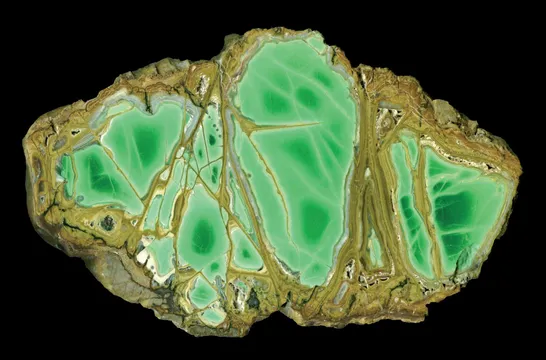
Prehnite from Central Mine is documented especially as green botryoidal aggregate material, part of the same low-temperature hydrothermal assemblage that accompanied the copper-bearing fissure mineralization. On Central specimens it is most desirable when it provides a fresh green contrast to native copper and calcite rather than appearing as dull, massive coating; rounded botryoidal prehnite with copper blebs, small copper crystals, epidote, chlorite or quartz gives a piece far more locality character than isolated pale green material without copper association. Because Central is much better known for copper than for display-quality prehnite, attractive copper-prehnite combinations with solid provenance are scarcer and more collectible than the species count alone suggests.
Other documented Central minerals broaden the story beyond the three familiar species. Native silver occurs at the Central No. 2 shaft and is the most important rarity for collectors, especially where it forms natural copper-silver intergrowths rather than loose specks on weathered copper. Datolite, analcime, natrolite, laumontite, adularia, epidote, quartz, chlorite, pumpellyite-group minerals, thomsonite-Ca, cuprite, malachite, azurite and tenorite are all part of the broader Central mineral record, though their display quality varies greatly. No widely accepted type-locality mineral is tied specifically to Central Mine, but the locality remains significant in the literature for classic fissure-vein copper, crystallized copper, copper-in-calcite specimens and the northern Keweenaw low-temperature hydrothermal suite.
Central Mine specimens are usually authentic native copper, but presentation and attribution deserve close attention. The main issue is not laboratory fakery so much as cleaning, relabeling and overconfident mine assignment. Keweenaw copper has been cleaned for generations with acids and commercial copper brighteners to remove calcite, oxidation, basaltic grime or green patina. A uniformly bright salmon-pink surface, stripped cavities, powdery residues, or oddly dull calcite can indicate aggressive cleaning. Brightly cleaned copper is still natural, and many collectors enjoy it, but old-patina Central copper with sharp crystals and a credible label is generally more desirable than a shiny but contextless piece.
Mislabelling is common in the broader Keweenaw market because many mine dumps produce superficially similar native copper. Central should not be used as a default label for any Keweenaw copper. Good provenance matters: old collection labels, documented museum/dealer history, or collector notes from Central’s dumps are worth preserving. Be especially cautious with copper-silver “halfbreed” claims. Natural copper-silver intergrowths are real in the Keweenaw and silver is documented from Central, but the contact should look grown together, not like a loose silver-colored flake wedged into a copper crevice.
Condition is a major grading factor. Copper is soft, malleable and easily bent, so crystal edges, thin branches and hackly projections can be flattened by collecting tools, tumbling in the dump, or later handling. Calcite associations are more fragile than the copper and may show bruises, cleavage breaks, acid etching or missing crystal tips. Prehnite and zeolite-bearing pieces should be cleaned conservatively; a treatment that improves massive copper may ruin the mineral association that makes the specimen interesting. Store copper in a stable, dry environment, keep fingerprints off bright cleaned surfaces, and avoid packing delicate arborescent pieces so tightly that their projections are pressed flat.
Central is available on the market in a broad sense but rare in top quality. Small copper bits, massive fragments, chisel chips and dump-collected pieces appear regularly. Fine crystallized groups, good copper on calcite, copper included in calcite, and attractive copper-prehnite combinations are much less common. The strongest Central specimens combine crystallization, old color, matrix or gangue contrast, and locality documentation; without those features, a piece competes with abundant Keweenaw copper from many other mines.
Central began with a clue left by earlier miners. In 1854, an ancient pit on the property attracted the attention of the men behind the Central Mining Company because old Keweenaw prospectors had learned a practical lesson: Indigenous workings often marked real copper-rich ground. When the pit was opened, mass copper appeared in the vein. Within the first forty feet of sinking, more than forty tons of pure mass copper were reportedly removed, and in the first year Central produced 83,836 pounds of copper. In a district where many companies spent years of assessment money before finding payable ground, Central’s first-year profit was extraordinary.
The mine’s best ore was not a neat, powdery “ore” in the usual sense. It was copper in masses: heavy, stubborn, malleable slabs of metal that miners could not simply blast to gravel. Historical descriptions tell of enormous irregular bodies enclosed in talcspar, sugar spar, laumontite, chlorite and other vein minerals. Miners worked along the sides, stripped away the enclosing rock, blasted the exposed copper face with sand blasts and powder, then cut the mass with chisels into four- to eight-ton blocks that could be hoisted and sent to the smelter. Later collectors on the dumps found “chisel chips,” small pieces produced by that brutal hand-cutting of porous native copper. A little curved chip in a collection can be both a mineral specimen and a tool mark from nineteenth-century mining.
The village that grew below the workings became a Cornish place in the woods. Alfred Nicholls, who worked as a miner at Central before an injury led him toward education and later the principalship of the Central school, remembered a self-contained settlement: a general store, meat market, church, schoolhouse and modest social life. His description of the homes is wonderfully specific: whitewashed kitchen walls, bare clean floors, home-made furniture, a black and shining cook stove, cane-seated chairs with tidies fastened by pink ribbon, and a feather-cushioned rocking chair reserved for company or convalescence. The chair, he wrote, was not for ordinary use; a wife known to indulge in it too freely risked being thought neglectful of household duties.
Central’s isolation was real. Supplies came up Lake Superior and then inland; once ice closed the lake, winter had to be endured on what had already arrived. In November 1860 the company wharf at Eagle Harbor burned, destroying much of the winter’s food and material. Replacement supplies were sent, but the ship carrying them was caught in a storm and had to throw many of those supplies overboard to keep from sinking. The alternative route to Central was an overnight stagecoach ride over the rough road toward Calumet. The mineral locality that collectors know today as a set of labels and specimens was, for its residents, a remote company village balanced between lake, forest, weather and vein.
On April 22, 1872, Central suffered its best-known tragedy. Thirteen men were being lowered into the No. 2 shaft in a skip, the same general kind of rail car used to bring rock to the surface, when the wire rope snapped. Ten men died and three were seriously injured or miraculously spared. A poem titled “Sad News From Central Mine” circulated afterward in Cornwall, carrying the story back across the Atlantic to the families and villages from which many of the miners had come. It names the dead and saved, and its opening lines turn a local mine accident into a transoceanic grief: “Sad news from across the ocean we hear, / Sad news from the Central Mine.” In a village of Central’s size, the loss was intimate; the dead were not anonymous labor but neighbors, cousins, fathers and husbands.
By 1882 Central was still strong enough to support a town of more than 1,200 people, 130 homes and a school serving 352 students. Its civic life included churches, lodges, a post office, shops, hotel and boarding houses, tradesmen, a doctor, a lawyer, a justice of the peace, and a livery said to hold more than 100 horses. Yet the mine’s future was already narrowing. The rich fissure ground became harder to find as the workings went deeper. In 1892 James P. Edwards called Central “The Last of the Mohicans,” recognizing it as the last remaining fissure mine in the state. Work was suspended in 1894, the mine finally closed in July 1898, and without pumps the water rose into the old workings.
The town did not vanish all at once. Families left for other Keweenaw mines; stores and the school closed; houses were abandoned, moved or dismantled for lumber. By 1905 the Central Mining Company was dissolved, and Calumet & Hecla bought the property without reopening it. The post office was discontinued in 1909. But in 1907 former residents and descendants began the Central Reunion at the old Methodist church, a tradition that has continued for more than a century on the last Sunday in July. The church, built in 1868 with Cornish character, became the emotional anchor of a ghost town.
Modern collectors added another chapter. Long after the shafts filled and the village quieted, the dumps continued to produce. Field accounts describe rockhounds climbing steep poor-rock slopes, hearing metal detectors chatter across the piles, and finding Central copper with original patina. One collector remembered the dump face at roughly a 45-degree angle and noted that detectorists were turning up specimens, including chisel chips. Another field account from a day when fresh rock was being moved describes collectors watching new material arrive, causing small slides on the slope, and spotting crystallized copper just before it was buried again. Central remains that kind of locality: historically preserved, geologically classic, and still capable of giving up a piece of copper that looks as if it has just stepped out of the nineteenth century.