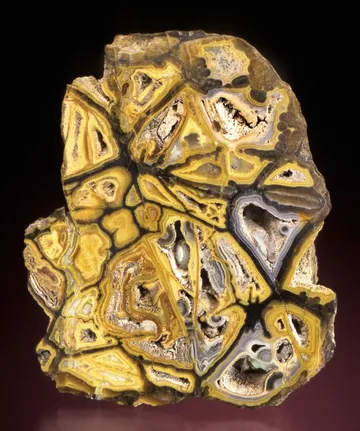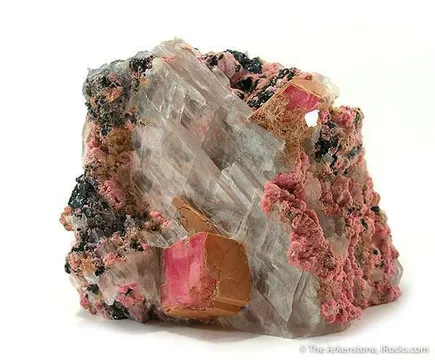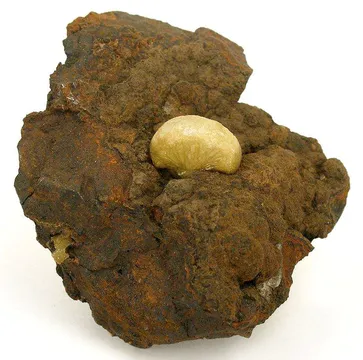
Centennial Eureka Mine, USA — a classic Tintic locality known for olive-green olivenite, malachite, rare tellurites, and micromounts; prized oxidized dumps.
Key facts
The Centennial Eureka Mine—old labels often give the name as the Blue Rock or Centennial-Eureka—is one of the classic mineral localities of the Tintic district at Eureka, Juab County, Utah. For ore historians it was among the “Big Four” mines that made Eureka the financial heart of Tintic; for mineral collectors it is a remarkably concentrated study in oxidized copper-arsenic-tellurium chemistry, with an older fame for cabinet-size olivenite and a modern fame for micromount tellurates. The mine worked polymetallic replacement and pipe-like ore bodies in the steep, structurally broken carbonate section of the East Tintic Mountains, a setting where copper, gold, silver, lead, and zinc ores were altered by oxidation into a dense suite of secondary minerals.
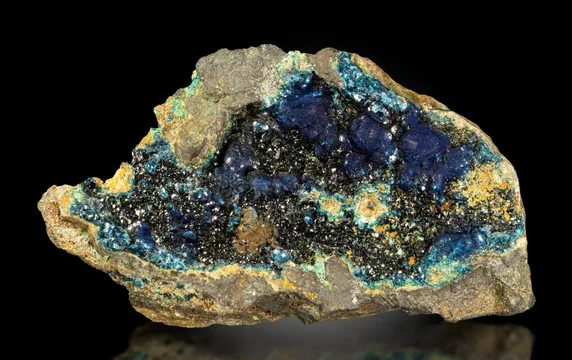
The look of the best Centennial Eureka specimens is instantly Tintic: dark, heavy, iron-stained or quartzose matrix opened by small vugs, with brilliant olive-green to blackish-green olivenite, malachite, tyrolite, azurite, conichalcite-group minerals, arsenates, tellurites, tellurates, and uncommon uranyl arsenates in tiny cavities. The locality’s reputation rests on two scales at once. At hand-specimen scale it produced old-time olivenite pieces with sparkling vugs and malachite contrast; under the microscope it became one of North America’s great type-locality dumps, yielding frankhawthorneite, jensenite, leisingite, juabite, utahite, and eurekadumpite.
Regional View
Country View
Centennial Eureka sits close to the town of Eureka, in the same mineral belt as Eureka Hill, Bullion Beck, Gemini, Grand Central, Mammoth, and Chief Consolidated. Its underground workings were extensive: deep shaft levels, long stopes, and connections toward neighboring properties turned what began as a steep hillside mine into a large integrated Tintic producer. The mine’s collecting importance is inseparable from those dumps and oxidized stopes, because the secondary minerals formed where primary enargite, galena, sphalerite, pyrite, chalcopyrite, tellurides, and related ore minerals met oxygenated waters in fractured carbonate and quartz-rich gangue.

Photo: Wikimedia Commons
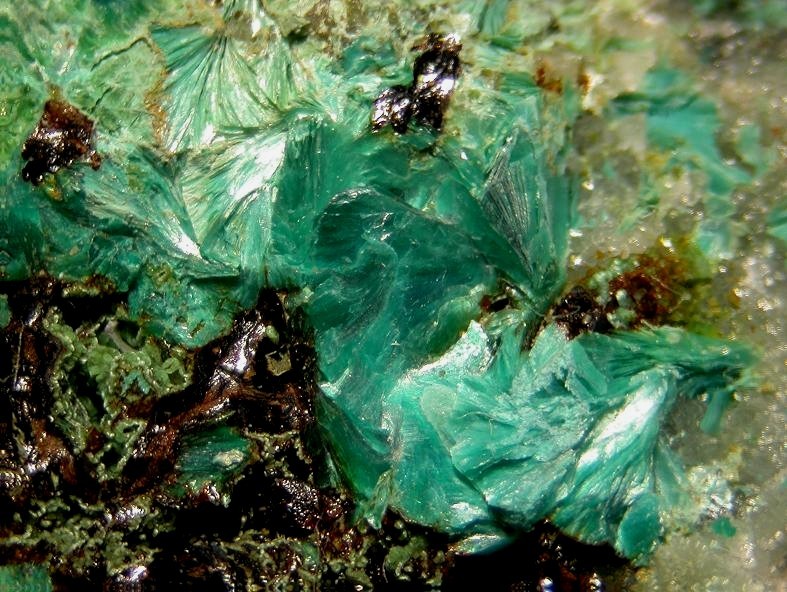
Photo: Wikimedia Commons
Search for specimens: View all specimens from Centennial Eureka Mine, USA
The Centennial Eureka Mine is in the Tintic district near Eureka, Juab County, Utah, at roughly 6,900 feet elevation. It was a former underground producer of lead, silver, zinc, copper, and gold, and the locality is recorded as lying on private land. Historic and modern locality descriptions place it in section 24, T10S, R3W, about 0.75 mile north of Eureka and northwest of Eureka Peak; older specimen labels commonly add “Blue Rock,” the mine’s early name.
Geologically, Centennial Eureka belongs to the main Tintic system of hydrothermal polymetallic replacement deposits. The productive ground is hosted chiefly in dolomite and related Cambrian carbonate rocks, with mineralization controlled by strong structural preparation: the Centennial fault, California fault, east-west fractures, and “easterly cross breaks” all played a role in channeling ore fluids. The orebodies are described as lenticular to pipe-shaped, and the California pipe or column was singled out in the mining literature as the best ore body in the mine. At depth, bedding was noted to roll toward flatter attitudes in the Centennial Eureka and adjoining mines, a structural detail that mattered in following ore shoots across levels.
The primary ore suite included galena, enargite, chalcopyrite, sphalerite, pyrite, silver minerals, and gold, with abundant secondary alteration in the oxidized zone. Local alteration included calcite, sericite, pyrite, and metallic minerals in rhyolitic material, while the carbonate host and quartzose cavities provided the stage for the later arsenate, carbonate, sulfate, tellurite, tellurate, and uranyl minerals that now interest collectors. This is why Centennial Eureka specimens may look deceptively ordinary at first glance: an iron-stained quartz or dolomite fragment can carry, in millimeter-scale cavities, minerals of very high mineralogical importance.
Mining began in the nineteenth century. The Centennial-Eureka lode was located on June 2, 1876, by N. P. Lake, and the Centennial-Eureka company began serious work in the mid-1880s under J. D. Kendall. The mine was actively shipping by 1886 and, together with Eureka Hill, Bullion Beck and Champion, and Gemini, became one of the “Big Four” properties associated with Eureka’s growth. By 1888 the company had built a sizable surface plant, including shaft house, boarding house, bunk house, tack house, water pipeline, and improved hoisting works, and the shaft had reached about 300 feet.
The mine grew rapidly in the 1890s. Centennial-Eureka stock became one of the notable Utah mining securities of its day, and in 1899 the property was sold to interests associated with United States Smelting, Refining and Mining. At the time of that transaction the property comprised about 30 mining claims, and the new management moved quickly to improve transport. Before the aerial tramway, ore had to be hauled by teams and wagons down the steep slope to the railway. The aerial tramway, built around 1900, ran about 4,000 feet from the mine to ore bins at railroad level and was reported capable of handling 125 tons in ten hours.
The aerial tramway era was short because the mine kept getting deeper. In 1909 work began on the Holden Tunnel, a transportation and drainage adit driven from the road west of Eureka to intersect the shaft well below the collar. By 1910 it had replaced the aerial tramway for ore haulage, timber, coal, supplies, and pumping logistics. Descriptions from the period give the main shaft as more than 2,200 feet deep, with the tunnel cutting off hundreds of feet of hoisting and saving an estimated $15,000 per year in transport and water-handling costs. The old tramway machinery was later dismantled and shipped to Arizona.
Production figures convey the scale. Centennial Eureka was described by the U.S. Geological Survey as the most productive property in the district, notable more for large continuous orebodies than for spectacularly rich ore. Around 1900 it shipped 1,633 carloads—about 40,825 tons—of gold, silver, copper, and lead ore at an average value of $53 per ton. Early twentieth-century reports describe annual production in the tens of thousands to more than 100,000 tons, including about 80,000 tons in 1907, 112,000 tons in 1908, 109,430 tons in 1909, 90,419 tons in 1910, and 117,957 tons in 1912. The mine’s total historic value has been given as about $50,000,000 in period dollars, and average production has been summarized as about 100,000 tons of ore per year during its main life.
Specimen collecting at Centennial Eureka has two distinct chapters. The older chapter is the mine and dump collecting that produced olivenite, tyrolite, azurite, malachite, conichalcite, cornwallite, zeunerite-metazeunerite, and other oxidation minerals. The modern chapter emerged when the old dumps were reworked, including for gold recovery, exposing and concentrating microcrystalline secondary tellurium minerals in quartzose dump material. Those finds turned Centennial Eureka into a type locality for several rare copper tellurates and copper-zinc tellurate-arsenate minerals, many of them recognizable only with a microscope and analytical confirmation.
Collecting access today should be treated as restricted. Published locality databases and collecting reports identify the mine area as private land, and modern visits described by collectors have been by permission, often through organized rock-club arrangements. The dumps are historically productive, but the combination of private ownership, unstable mine openings, steep waste piles, oxidized arsenic-bearing material, and uranium-bearing species in the mineral list makes casual collecting inappropriate. Serious collectors should acquire specimens through established collections, reputable dealers, documented club-permission trips, or material with reliable labels and analytical notes.
Centennial Eureka olivenite is the mine’s signature collector mineral at cabinet and miniature scale: dark olive-green to nearly black, bright, sharp crystals lining vugs in heavy oxidized ore and quartz-rich matrix, commonly relieved by lighter green malachite and other copper arsenates. The most desirable pieces show open cavities completely carpeted by lustrous crystals rather than mere crusts, and the best vugs can carry crystals up to about 2 cm or more, unusually robust for Tintic olivenite. Old labels, including early dealer and institutional examples, are prized because fine Centennial Eureka olivenite circulated long before the later micromount tellurate discoveries; some specimens were even associated with the miners’ term “Wood Copper,” reflecting massive to vuggy copper arsenate ore rather than the tiny rare species that came to define the locality later. Condition matters greatly: ordinary pieces are dark, granular, and visually flat, while good ones have sparkle, open vugs, contrasting malachite, and enough unbruised crystal coverage to show the classic Tintic oxidation character.
Beyond olivenite, Centennial Eureka is a major locality for secondary tellurium minerals and an important source of Tintic arsenates, carbonates, sulfates, oxides, sulfides, and native elements. Its six valid type-locality minerals are frankhawthorneite, Cu2Te6+O4(OH)2; jensenite, Cu3Te6+O6 · 2H2O; leisingite, Cu2MgTe6+O6 · 6H2O; juabite, CaCu10(TeO3)4(AsO4)4(OH)2 · 4H2O; utahite, Cu5Zn3(Te6+O4)4(OH)8 · 7H2O; and eurekadumpite, (Cu,Zn)16(TeO3)2(AsO4)3Cl(OH)18 · 7H2O. Other documented species include acanthite, native copper, native gold, native silver, chalcocite, covellite, chalcopyrite, galena, sphalerite, enargite, tetradymite, pyrite, cuprite, goethite, hematite, quartz, dolomite, calcite, azurite, malachite, aurichalcite, rosasite, conichalcite, adamite and copper-bearing adamite, tyrolite, mixite-group minerals, bayldonite, beudantite, pharmacosiderite-group minerals, scorodite, spangolite, stolzite, tellurite, mcalpineite, cesbronite, quetzalcoatlite, xocomecatlite, zemannite, zeunerite, and metazeunerite. The rarities are seldom display minerals in the conventional sense; their value lies in verified identity, type-locality status, unusual paragenesis, and delicate color under magnification.
Centennial Eureka material rewards documentation. Older olivenite specimens may carry only a mine name and district, while later micro specimens may require much more: collector, date, analytical method, and association. Because the mine sits in a dense cluster of Tintic producers, labels that say only “Eureka,” “Tintic,” “Centennial,” or “Blue Rock” deserve scrutiny. The most common practical mislabelling issue is confusion among nearby mines—especially Eureka Hill, Mammoth, Grand Central, North Star, and other Tintic dumps—rather than deliberate fabrication. Specimens of rare tellurates without analysis should be treated cautiously unless they come from a trustworthy micromount collection with clear provenance.
No standard treatment is associated with Centennial Eureka specimens in the way that oiling, dyeing, or acid-brightening is known from some gem and specimen localities. The more serious concern is overconfident species identification. Blue-green microcrusts from the mine may be malachite, tyrolite, rosasite, aurichalcite, conichalcite, utahite, eurekadumpite, xocomecatlite, or something less common; green crystals may be olivenite, adamite-series material, jensenite, frankhawthorneite, conichalcite, or related phases. For high-value micromounts, EDS alone may establish elemental plausibility but not always a species; XRD, Raman, or single-crystal work can be decisive for closely related tellurates and arsenates.
Condition problems are typical of oxidized Tintic material. Vuggy olivenite can be bruised on the high points, and dark matrix makes small edge damage easy to miss until viewed under strong light. Tyrolite and other platy hydrated copper minerals can be soft, cleavable, and sensitive to rough handling. Uranyl species such as zeunerite and metazeunerite are uncommon at the locality but require sensible radioactive-mineral handling: keep dust contained, avoid cutting or grinding, wash hands after handling, and store small specimens in closed boxes with labels noting the species.
Market availability is uneven. Old-time olivenite miniatures and cabinet pieces appear intermittently and are most desirable when they have older labels, open vugs, and good sparkle. Commoner oxidized copper specimens from the dumps—malachite, azurite, tyrolite, conichalcite-type material, barite, quartz, and mixed arsenates—are obtainable but often unattributed or broadly labelled. Verified type-locality tellurates are specialized micromount material; even tiny specimens can be important if the identity is analytical and the association is good. The best purchases are not necessarily the largest pieces, but those with a trustworthy chain of custody and a precise species determination.
Centennial Eureka’s most persistent story begins with the inconvenience of a mountain. The shaft stood high on the slope above Eureka, and before the turn of the twentieth century ore had to be dragged downhill by teams and wagons to the railroad. In 1899 the new management decided to change that by building an aerial tramway like the one at Highland Boy. Lumber was ordered from Oregon; machinery came from the East; work began in November. By February 1900 the tram was described as virtually complete, capable of moving 125 tons every ten hours. For a decade buckets ran down the hill toward the railroad bins, translating a steep Utah mining camp into industrial rhythm.
Then depth made the tram obsolete. As Centennial Eureka pushed lower, the hoist, pumps, and water problem grew more important than the hillside haul. The Holden Tunnel was driven from west of Eureka to meet the shaft hundreds of feet below the collar, a double-tracked haulage and drainage adit intended to save the company $15,000 a year. By 1910 ore, coal, timber, and supplies were moving through the tunnel instead of over the aerial tram. In 1911 the great gravity tramway—about 4,000 feet of hardware that had once solved the mine’s transport problem—was dismantled and shipped away to a United States company property at Kingman, Arizona. For collectors looking at a small oxidized vug today, it is worth remembering that the same mine was also an engineering problem of buckets, tunnels, pumps, and miles of underground levels.
The darkest Centennial Eureka episode came on September 17, 1914. At about three o’clock in the afternoon a cave-in occurred in the Oklahoma stope. Twelve men were caught in the fall of rock, dirt, and timber; contemporary accounts called it the worst accident in Tintic history. Rescue workers could hear rapping on timbers from within the debris, and the work had to proceed slowly because rushing into the broken ground risked burying more men. Crews were changed at intervals through the night as exhausted men came out and fresh men went in. A federal mine rescue car was offered from Denver, but the problem was not gas or lack of air in the usual coal-mine sense; it was crushed ground, timbering, and the desperate need to reach anyone still alive.
Only Jacob Pinterella survived. Later accounts state that he was entombed for 74 hours before rescue. Eleven men died: Edward Allen, Edward J. Barrick, Thomas Bottrell, Earl D. Brison, John Hewson, William Knipe, John Knipe, Bert Lossee, Fred Sundquist, Mike Rosa, and Kurt Zierrold. The recovery of bodies took days. For the mineral collector, the story is a sober counterweight to the beauty of the specimens: the same vuggy oxidized ground that produced olivenite and rare tellurates was part of a vast and dangerous underground workplace.
A quieter but more mineralogical story unfolded much later on the dumps. When Centennial Eureka dump material was reworked, collectors and mineralogists began recognizing tiny, unfamiliar copper tellurium minerals in quartz cavities—blue, green, yellow-brown, and pale turquoise crystals far below the scale of the mine’s ore shipments. Martin C. Jensen’s name became attached to jensenite, J. F. Leising’s to leisingite, Utah itself to utahite, Juab County to juabite, Frank Hawthorne to frankhawthorneite, and the dump to eurekadumpite. The latter name carries a collector’s joke and a truth: “eureka” means “I have found it,” and here the thing found was not a bonanza stope but a new mineral species hiding in waste rock.