A collector's guide to Carbonia-Iglesias Province, Italy: its geology, mining history and notable minerals, illustrated with the 60 specimens documented from this locality on EarthWonders.
Key facts
Carbonia-Iglesias Province, in southwestern Sardinia, is one of Europe’s classic lead-zinc specimen regions: a coastline and inland belt of old mines where Paleozoic carbonate rocks were repeatedly fractured, dolomitized, mineralized, karstified, oxidized, and mined for nearly everything a collector associates with the great Sardinian name—galena, sphalerite, pyrite, barite, “calamine” zinc ores, cerussite, anglesite, phosgenite, hemimorphite, smithsonite, rosasite, and a long tail of secondary species. The locality name used by collectors is partly historical; many labels still read Carbonia-Iglesias Province, while modern administrative usage often places these same mines in South Sardinia or the Sulcis-Iglesiente. For specimens, the important point is the mining geography: Monteponi, San Giovanni, Campo Pisano, Masua, Nebida, Buggerru, Acquaresi, Sa Duchessa, Rosas, Barega, and allied workings around Iglesias, Domusnovas, Gonnesa, Fluminimaggiore, and Narcao.
The central collecting story is Monteponi. Its oxidized lead-zinc ore bodies—famous “columns” of mineralization in the Gonnesa Formation carbonates—produced European-classics in which glassy phosgenite and anglesite grew in cavities on massive or granular galena. The best pieces have an old-collection elegance: amber to smoky or greyish phosgenite with mirror luster on dark lead ore, creamy to colorless anglesite blades lining vugs, and sharp white cerussite twins perched on gossanous matrix. The wider province adds another look entirely: vivid robin-egg to electric-blue botryoidal hemimorphite from Sa Duchessa, calamine-zone smithsonite and hydrozincite from the zinc mines, and blue-green rosasite from the Rosas mine, the type locality of the species.
Regional View
Country View
The geology is a large reason the specimens are so distinctive. The Iglesiente ore bodies are hosted mainly in Cambrian carbonates of the Gonnesa Formation—the traditional “Metallifero” or “Metalliferous Ring”—with mineralization controlled by both rock type and structure. Primary Pb-Zn-Fe sulfide bodies were later overprinted by oxidation, groundwater movement, and karst development. That repeated vertical movement of oxidation and reduction fronts is why attractive secondary lead minerals are not confined to a simple shallow gossan; well-crystallized lead carbonates and sulfates are documented even from deep Monteponi stopes.
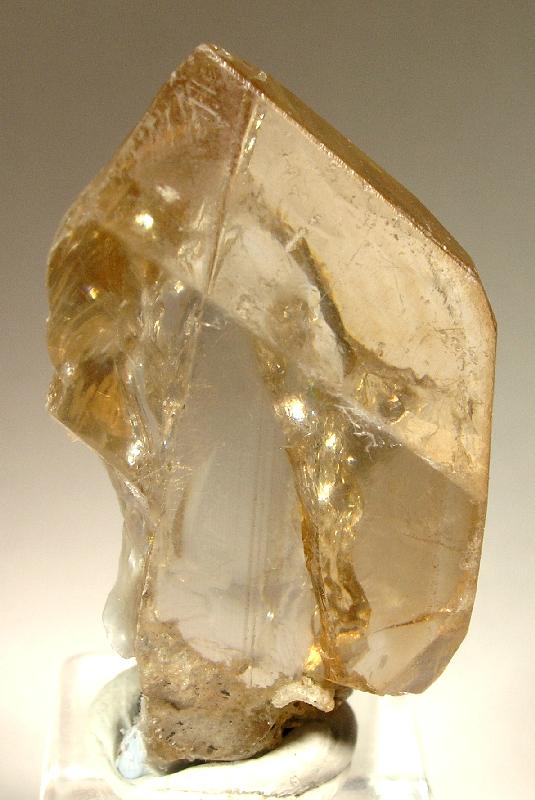
Photo:

Photo: Wikimedia Commons
Search for specimens: View all specimens from Carbonia-Iglesias Province, Italy
The Carbonia-Iglesias collecting district is best understood as two overlapping mineral provinces. The first is the Iglesiente Pb-Zn-Ag-barite district, centered on carbonate-hosted ore bodies in the Cambrian sequence around Iglesias and the west coast. The second is the broader Sulcis-Iglesiente metallogenic region, which includes skarn, vein, barite, copper-zinc, and coal-related mining sites beyond the classic Monteponi lead-zinc system. For collectors, the former is the source of the great phosgenite, anglesite, cerussite, galena, smithsonite, hemimorphite, and barite material; the latter explains why the same old provincial label may accompany specimens from Sa Duchessa, Rosas, Barega, or other mines with quite different mineral styles.
The main Iglesiente host is the Gonnesa Formation, especially its carbonate units, with subordinate occurrences in calcareous lenses of the underlying Nebida Formation and in nodular limestone at the base of the Cabitza Formation. The ore bodies occur as massive, columnar, lens-like, and vein-like bodies. Near the base of the carbonate package, Fe-Zn-bearing sulfide masses were deeply oxidized into limonite-rich “calamine” ores dominated by smithsonite and hemimorphite, with grades high enough to sustain major zinc production. Higher in the formation, the best-known Pb-Zn bodies include those at Monteponi, San Giovanni, Monte Agruxiau, Nebida, Masua, Acquaresi, Buggerru, and Marganai.
Monteponi’s famous “columns” were not simple solid pipes of ore. They were sets of centimeter- to meter-scale veins, striking roughly north-northwest and dipping steeply eastward, separated by poorer or nearly barren carbonate. These columns were exploited through hundreds of meters of vertical extent, from outcrop down below sea level. Oxidized ores near the surface yielded lead carbonates and sulfates; deeper zones passed into sulfides, and the interaction of karst cavities, brines, and repeated groundwater-level changes created the cavities that later became the source of fine cabinet specimens.
The primary ore assemblage of the district is dominated by galena, sphalerite, pyrite, and locally marcasite, with barite and fluorite as important low-temperature associates in some systems. The secondary assemblage is what made Carbonia-Iglesias famous with collectors: cerussite, anglesite, phosgenite, smithsonite, hemimorphite, hydrozincite, rosasite, aurichalcite, wulfenite, pyromorphite, malachite, chrysocolla, goethite, and many rarer lead, zinc, copper, cadmium, and vanadium species.
Mining in the Iglesiente is ancient. Silver-rich galena attracted Phoenician, Carthaginian, Roman, medieval Pisan, and later industrial attention. At Monteponi the Romans worked oxidized outcrops and rich galena, sometimes by open cuts and shafts; the modern industrial phase accelerated in the nineteenth century. The Monteponi company was founded in 1850 under Paolo Antonio Nicolay’s leadership, and the mine expanded with shafts, washing plants, drainage works, rail links, and processing facilities. The Villamarina gallery, driven at about +174 m, connected the Vittorio Emanuele and Sella shafts and remains one of the best-known visitable underground monuments of the district.
The zinc story is equally important. “Calamine” in old Sardinian mining usage refers not to a single valid mineral species but to non-sulfide zinc ore—mainly smithsonite, hemimorphite, and hydrozincite, mixed with iron oxides and residual clays. These ores were mined intensively at Campo Pisano, San Giovanni, Monteponi, and allied localities, and difficult silicatic zinc ores rich in smithsonite and hemimorphite were treated at specialized plants such as the Galletti washery at Monteponi. The red waste dumps around Iglesias are part of that metallurgical legacy.
Masua and Nebida are the coastal face of the district. Their mines worked the same grand carbonate-hosted Pb-Zn system, but the topography is unforgettable: mineralized limestone cliffs above the sea, the white Pan di Zucchero sea stack offshore, and abandoned washing plants and ore chutes built into the coastal slope. Porto Flavia, the ship-loading installation cut through the cliff at Masua, was built in the 1920s for the Belgian Vieille Montagne company and became the engineering emblem of the district.
Collecting access today is fundamentally different from the mining years. The mines are closed industrial sites, many areas belong to public or regional bodies such as IGEA, and several workings are preserved as cultural, archaeological, and geomining sites rather than open collecting ground. Galleria Villamarina at Monteponi, Porto Flavia at Masua, the Rosas mining village, and other sites may be visited through organized or scheduled tours, but these are heritage visits, not collecting trips. Dumps and adits can be unstable, contaminated by lead, zinc, arsenic, cadmium, or mine drainage products, and legally restricted. Serious collectors should treat modern self-collecting claims with caution unless the specimen has clear, lawful provenance.
The notable specimen finds are mostly old. Monteponi phosgenite, anglesite, and cerussite entered European collections through mining activity and old dealer networks, and the finest pieces today usually carry older labels—sometimes only “Monteponi,” “Iglesias,” “Sardinia,” or “Cagliari Province.” Sa Duchessa hemimorphite appears on the market more often than great Monteponi phosgenite, but the best older bright-blue botryoidal plates are still sought after. Rosas material is important less for size than for pedigree: the type-locality heritage of rosasite gives even modest blue-green crusts collector interest when provenance is solid.
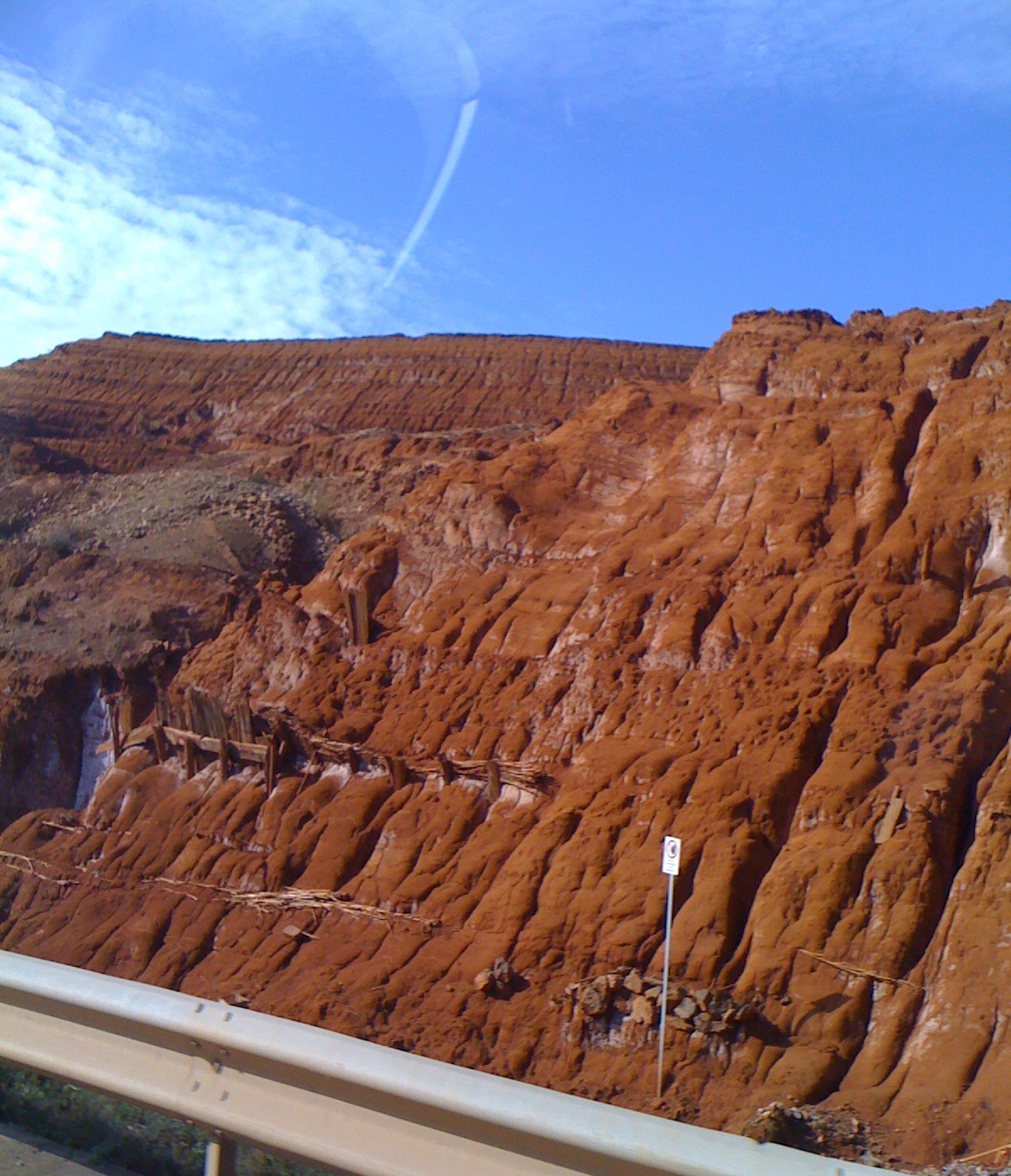
Photo: Wikimedia Commons
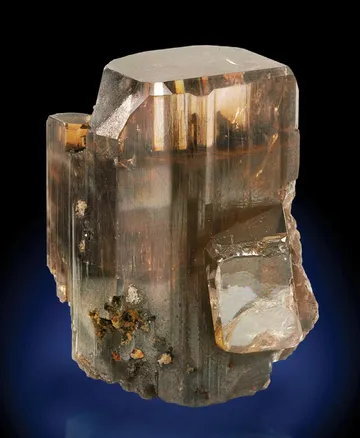
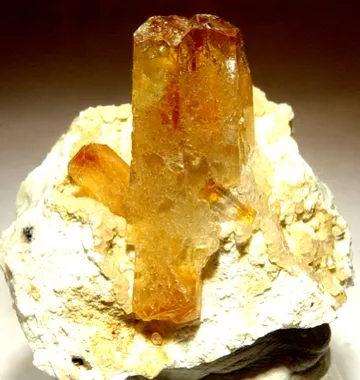
Phosgenite from Carbonia-Iglesias means, above all, Monteponi: sharp tetragonal crystals grown in cavities in galena, commonly amber, smoky brown, greyish, pale honey, or nearly colorless, ranging in most traded examples from thumbnail crystals around 1 cm to small-cabinet crystals of several centimeters, with exceptional historic crystals larger. The best pieces show transparent to translucent, lustrous, well-terminated crystals standing on black or silvery granular galena, sometimes with cerussite or anglesite; ordinary pieces are more fractured, etched, cloudy, or visually lost in dark matrix. The chemistry fits the locality beautifully—alteration of galena in a chlorine-bearing oxidized environment—and the species’ bright yellow response under longwave ultraviolet light adds another layer of desirability, especially when the daylight aesthetics are strong.
Hemimorphite from the province has two collector identities: the economic “calamine” mineral of the oxidized zinc ores at Monteponi, Campo Pisano, San Giovanni, Monte Agruxiau, San Benedetto, and related Iglesiente mines, and the much showier vivid blue botryoidal material from Sa Duchessa in the Oridda valley near Domusnovas. The finest Sa Duchessa pieces are smooth to sharply rounded botryoidal crusts and plates in robin-egg to saturated sky blue on tan or limonitic matrix, with subtle banding and association with chrysocolla, aurichalcite, cerussite, malachite, fluorite, and other oxidation-zone species; lesser examples are dull, chalky, thinly coated, or ambiguous blue crusts requiring confirmation. Older white, tabular, or bladed hemimorphite from the zinc-ore zones is more geological than flashy, but it is important because it records the actual mined non-sulfide zinc assemblage.
Anglesite from Carbonia-Iglesias is another Monteponi classic, typically occurring as colorless, white, creamy, pale grey, or faintly honey-toned crystals in vugs on galena, with habits ranging from bladed and tabular to more equant, highly modified crystals. Fine specimens show glassy luster, sharp blades or blocky crystals up to a few centimeters, open spacing, and strong contrast against dark galena or brown gossan, and old pieces may have goethite staining or inclusions that give warm zoning. Ordinary pieces are massive, bruised, coated, or confused with other white lead secondary minerals; the best Monteponi anglesites have enough transparency, relief, and matrix contrast to read instantly as old European cabinet specimens rather than anonymous oxidized lead ore.
Galena is the foundation of the province rather than merely a display species: it was the principal lead and silver ore at Monteponi, San Giovanni, Masua, Nebida, Buggerru, Acquaresi, Rosas, and allied workings, and it is the matrix on which many of the great phosgenite and anglesite specimens grew. Collectible galena from Monteponi is commonly massive, granular, or cavernous rather than composed of large freestanding cubes; its value is often as a dark, metallic stage for secondary lead minerals, especially when the galena surface is fresh enough to contrast with transparent phosgenite or pale anglesite. Better galena pieces from the district preserve sharp metallic faces, bright granular vugs, or clear paragenetic relationships, while ordinary ore chunks are heavy, oxidized, crumbly, and visually inferior unless they carry well-placed secondary crystals.
Other documented minerals give the province unusual depth. Rosasite, (Cu,Zn)2(CO3)(OH)2, is the most important type-locality mineral for collectors here, named for the Rosas Mine at Narcao, where Domenico Lovisato recognized the blue-green copper-zinc carbonate. Monteponite, CdO, is another locality-name species, described from the Genna Rutta area of the Monteponi mining complex in cadmium-bearing calamine material. Smithsonite, hydrozincite, cerussite, barite, sphalerite, pyrite, fluorite, wulfenite, pyromorphite, aurichalcite, malachite, chrysocolla, goethite, otavite, and cadmium-bearing or vanadium-bearing rarities round out a district where economic ore mineralogy and specimen mineralogy are inseparable.
Carbonia-Iglesias labels demand careful reading. A specimen labeled “Monteponi, Sardinia” may also appear in old collections as Cagliari Province, Carbonia-Iglesias Province, Sud Sardegna, South Sardinia, Iglesias, or simply Sardinia; these are often administrative-label shifts rather than mineralogical contradictions. Conversely, “Carbonia-Iglesias Province” is broad enough to cover several very different mines. A blue botryoidal hemimorphite from Sa Duchessa, an amber phosgenite from Monteponi, and a rosasite crust from Rosas can all carry the same old provincial wording, but they should not be collapsed into one vague locality if a more precise mine name is known.
The most specific authenticity issue for Monteponi phosgenite is misattribution, not widespread artificial treatment. Classic Monteponi material has been used as a comparison point in discussions of suspect phosgenite from other localities because its galena matrix and crystal style are so recognizable. A phosgenite crystal on matrix labeled to a rarer locality should be checked against Monteponi habits, especially if the matrix is dark granular galena and the specimen has the unmistakable Sardinian look. Within Monteponi material itself, phosgenite, anglesite, and cerussite can be confused by casual sellers; transparent lead minerals on galena should be verified by habit, density, luster, fluorescence, and, for valuable examples, analytical confirmation.
Condition is a central market factor. Monteponi phosgenite is brittle, heavy, and commonly contacted or cleaved; even attractive crystals often have rear contacts, internal fractures, edge bruises, or repaired-looking but natural healed areas. The best pieces justify their price by sharp terminations, high luster, transparency, and secure placement on matrix. Anglesite is also easily bruised and may be partly opaque or stained; a little iron color can be attractive, but chalky coatings and broken blades reduce value quickly. Galena matrix is heavy and can shed oxidized crumbs, so old labels and boxes should be preserved separately rather than stored directly against friable ore.
Blue hemimorphite from Sa Duchessa is attractive enough that buyers should be alert to vague “Sardinia hemimorphite” listings, dyed-looking blue crusts, and confusion with chrysocolla, smithsonite, aurichalcite, aragonite, or other blue botryoidal minerals. The best Sa Duchessa hemimorphite has a smooth botryoidal surface, convincing matrix, and old or dealer provenance; intense color alone is not proof. Because hemimorphite may be associated with copper minerals, mixed blue crusts can be legitimate but should be described honestly.
Fluorescence can help but should not be the sole identification tool. Monteponi phosgenite is documented as bright yellow under longwave ultraviolet light, with weaker or different responses under midwave and little useful shortwave response in some specimens. Cerussite and anglesite may also fluoresce, so a yellow response in a mixed oxidized lead assemblage is useful supporting evidence, not a complete diagnosis. Handle all Carbonia-Iglesias lead and cadmium-bearing specimens as toxic mineral specimens: wash hands after handling, avoid dust, do not acid-clean casually, and keep friable material away from children, pets, food areas, and ultrasonic cleaners.
Market availability is uneven. Ordinary ore, small anglesite, and Sa Duchessa hemimorphite appear periodically, but great Monteponi phosgenite is an old-classic market item and cannot be replaced by modern collecting. Fine matrix phosgenite with sharp amber crystals, old labels, and no significant damage commands a premium. Monteponi anglesite remains more obtainable than equivalent phosgenite but truly aesthetic cabinet pieces with lustrous crystals on galena are still scarce. Rosasite from Rosas is usually modest as a display mineral but important to species and type-locality collectors.
At Monteponi, the specimen story begins long before mineral dealers. The oxidized outcrops were rich enough to draw ancient miners to the hill above Iglesias, and Roman work cut into the silver-bearing galena with a seriousness that still shows in the archaeological scale of the workings. Open pits followed the richest columns, and shafts were reportedly driven as much as 100 meters down from the surface where ore justified the effort. The later industrial mine pushed far deeper, eventually developing a vertical range of roughly 500 meters and carrying the exploitation down below sea level. For a collector holding a phosgenite on galena, that history matters: the specimen is not just a pretty secondary mineral, but the late, delicate afterlife of an ore body pursued for two thousand years.
The nineteenth-century mining landscape around Iglesias became an industrial townscape. Monteponi’s management buildings, shafts, washing plants, workers’ housing, and galleries spread across the slope, while red zinc-processing wastes accumulated in the valley below. The palazzina Bellavista, the Vittorio Emanuele and Sella shafts, the Villamarina gallery, and the great abandoned plants still give the hill its theatrical presence. The place can look almost like a ruined fortress, but every arch, terrace, and engine-house wall had a practical relation to ore: hoist it, wash it, drain it, sort it, ship it, or smelt it.
Porto Flavia is the district’s great engineering set-piece. Before it existed, concentrates from the mines had to be moved from beaches such as Masua, Funtanamare, Cala Domestica, Canal Grande, and Buggerru by Galanzé watermen from San Pietro Island, then handled again in storehouses before final loading onto ships. The repeated loading and unloading cost time and money. Cesare Vecelli’s answer for Vieille Montagne was to put the harbor inside the cliff. At Masua, facing the pale limestone stack of Pan di Zucchero, workers cut two superimposed galleries through the rock: an upper railway gallery hundreds of meters long and a lower conveyor gallery opening out over the sea. Between them, nine vertical silos were excavated, each capable of holding up to 10,000 tons of galena, sphalerite, and calamine concentrate. Ore dropped from the upper level, fed onto the lower conveyor, and passed out through the cliff to ships waiting below. Vecelli named the installation for his daughter, Flavia.
Buggerru gives the district a much darker memory. In the early twentieth century the mining settlement was prosperous enough to be nicknamed “little Paris,” but the contrast between managerial culture and miners’ conditions helped set the scene for one of Italian labor history’s defining tragedies. On Sunday, September 4, 1904, during a strike at the Malfidano mine involving roughly two thousand workers, soldiers opened fire on the crowd. Three miners died, and the episode became known as the Buggerru massacre. Its consequence reached far beyond Sardinia: it helped trigger Italy’s first general strike. For collectors, Buggerru is not merely a locality name on old lead-zinc specimens; it is one of the places where ore, labor, capital, and state power collided in the open.
The Rosas mine at Narcao tells a different kind of story, one mineralogists repeat because it gave a name to a species. Among the oxidation products of the Pb-Zn-Cu system, Domenico Lovisato identified a blue-green copper-zinc carbonate and named it rosasite for the mine. Today the village and mine have been reworked as a heritage site, but for a mineral collector the key detail remains intimate: a small blue-green crust from Rosas can carry type-locality significance out of all proportion to its size.